Interview
“Capitalism does not require a free social order”

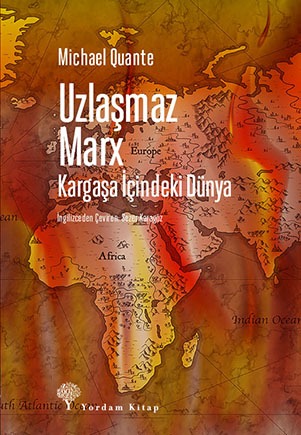
We sat down with the German philosopher Michael Quante—known to readers through his work The Uncompromising Marx (German: Der unversöhnte Marx), published in recent years by Yordam Kitap—to discuss his book, the intersecting crises currently gripping Germany, and the interpretive tools philosophy can offer to make sense of a world in turmoil.
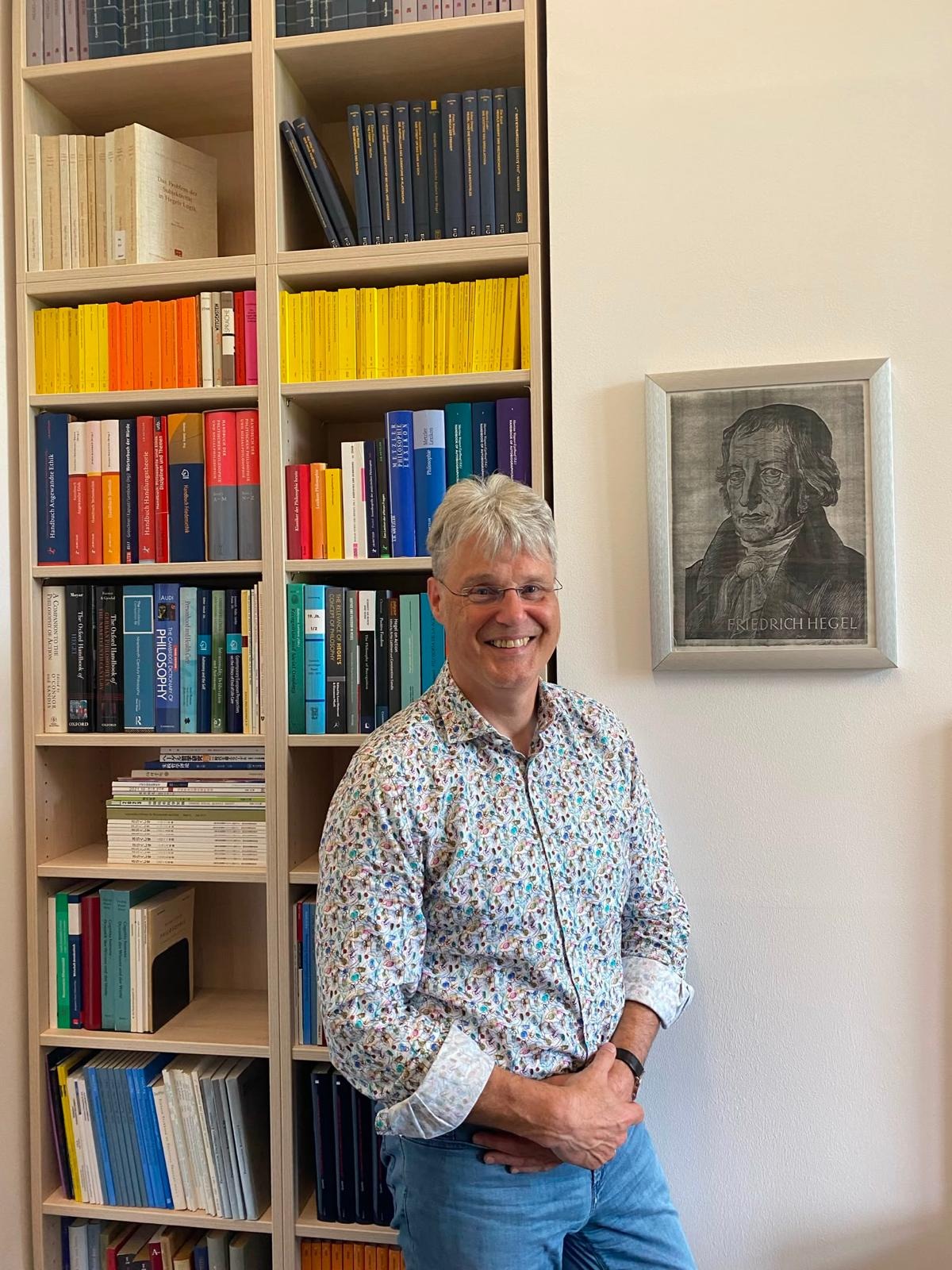
Michael Quante completed his doctorate on the philosophy of Hegel at the Westfälische Wilhelms-Universität Münster, where he currently serves as a faculty member in the Department of Philosophy. He is the Director of the Centrum für Bioethik (Center for Bioethics) and a board member of the Centre for Advanced Studies in Bioethics. Furthermore, Quante has held editorial positions at Ethical Theory and Moral Practice and Hegel-Studien. He has authored numerous books and articles, with a particular focus on German Idealism (Hegel and Marx), action theory, ethics, and biomedical ethics.

Ferhan Bayır: We are living in strange times! People can easily imagine that capitalism will bring about the end of the world, yet they cannot imagine the end of capitalism. Why does the political anxiety lurking in the subconscious of the masses fail to elevate itself into a political consciousness?
Michael Quante:
My diagnosis is somewhat different. I believe we are currently experiencing a profound crisis of democracy, particularly within Western democratic societies, and bearing witness to the erosion of the Enlightenment. We are in an era of Counter-Enlightenment. This is inextricably bound up with nationalism, identity politics, and cultural antagonisms. However, capitalism is perfectly capable of coexisting with these reactionary currents; the profit mechanisms—driven by vast financial resources that serve not the public, but rather the interests of corporations and select cliques—remain entirely insulated from this friction. This is not a crisis of capitalism; it is a crisis of the free, emancipatory social order. Capitalism does not require a free social order in order to function. I do not believe capitalism is weakening at present. Rather, I think capitalism is currently revealing its ugly face on a global scale.
F.B.: On the other hand, given that Marx has been at the very center of contemporary debates since the 2008 crisis, how do you interpret the glaring absence of discussions regarding alternative systems to capitalism? Is it not a paradox to live in an era where Marx is constantly debated, yet which remains entirely devoid of utopia?
Quante:
Marx has been discovered—or rediscovered—as a contemporary thinker precisely because of these crises. Yet, what is visibly lacking today is the existence of a vast, unified political movement organized upon the foundation of Marx’s critique of capitalism. We see interest at an intellectual level, and isolated political factions where Marx continues to live on. But the idea of mobilizing politically on a societal or global scale simply does not exist.
Add to this the increasingly complex communication and information networks generated by new media. This dynamic causes debates to endlessly circulate within small, hermetic bubbles, inside their own echo chambers. These discussions do not enable people to cultivate a global consciousness regarding fundamental problems and conflicts. Accompanied by a concurrent nationalist turn, the people affected by these very processes are pitted against one another; they fail to organize themselves as part of a larger, cohesive movement.
Marx’s intellectual relevance remains visible to certain segments of society. Many love to quote Marx; but very few actually read him. He is treated almost like a Church Father. However, the project of organizing and synthesizing social processes through a cohesive philosophical-political worldview is no longer functional.
“Marx relies on revolution, whereas Hegel relies on reform. They are diametrically opposed at the level of tactics and strategy.”
F.B.: Your book is described as an attempt to reconstruct Marxist philosophy within the Hegelian tradition, framing it as both a critical and an anthropological approach. Especially after the Second World War, numerous thinkers in Germany and France attempted to reunite Marx and Hegel. In what specific ways does your interpretation of the relationship between Hegel and Marx diverge from these earlier approaches?
Quante:
What I am attempting to do situates itself firmly within the tradition of Western Marxism. That is correct. Where my approach consistently advances the discourse is by placing the tradition of philosophical anthropology forcefully at the center. It involves uniting Marx’s early conception of the human being with his critique of capitalism, while simultaneously integrating certain theorems and thought patterns from contemporary systematic philosophy into this framework. I believe this precise combination is what was previously absent.
We had Analytical Marxism, in which the Hegelian tradition played absolutely no role. There was Hegelian Marxism, which gravitated toward the early writings. Then there was Structuralism, which concerned itself predominantly with the late Marx. And, of course, there was the purportedly scientific worldview embedded within Orthodox Marxist thought. My objective is to synthesize the finest elements of all these traditions. I am pursuing two distinct aims here.
The first is to genuinely understand Marx better; in this regard, I operate as a Marx scholar. The second is to understand the present better through the conceptual tools of Marx’s philosophy. These are two entirely different objectives. In this book, I offer both. In other books I have written on Marx, I function much more strictly as a scholar. But the message I wish to convey in this book is this: examine this thinker carefully; we can learn a great deal from him in order to better comprehend the world.
I always say this: you will not find ready-made prescriptive solutions in Marx; you must develop them yourself. Marx is not a Church Father; he is a critical philosopher.

F.B.: How should we interpret the fact that whenever Marx becomes the central figure of debate, interest in Hegel simultaneously surges? Is Hegel an unavoidable waystation for deepening Marx’s ideas? Or, as Althusser suggested, is the return to Hegel an attempt to tame Marx’s radicalism?
Quante:
These are two different questions. Let me state this first: I am also a Hegel scholar, and I follow a parallel path with Hegel as I do with Marx. On the one hand, as a Hegel scholar, I am developing an interpretation that includes new dimensions distinct from traditional readings. On the other hand, I deploy Hegelian concepts in systematic debates, arguing that Hegel, too, is a thinker with whom one can think and work contemporaneously. So, for me, these are two foundational reference points—thinkers I both research and utilize as conceptual arsenals for doing my own philosophy.
The second question pertains to the relationship between Hegel and Marx. In Marxism-Leninism, Hegel is viewed merely as a precursor figure; to foreground him too much is to deviate from the official interpretation of Marx. Conversely, in orthodox Hegel scholarship, Marx is often dismissed as someone who fundamentally misinterpreted Hegel’s core philosophical insights. In both paradigms, Hegel and Marx are positioned as diametrically opposed poles. I find this unconvincing, because there are profoundly strong Hegelian elements embedded within Marx’s thought. The relationship between them is far more complex.
That being said, there are also fundamental differences between them. One of the most critical is this: Hegel believed that bourgeois society—and by extension, capitalism—could be integrated into a socially rational order. Marx, however, believed it had to be abolished. We are looking at a very deep schism here. From a political standpoint, this corresponds to the divide between a social market economy and left-socialist visions. Thus, these two philosophers effectively become the namesakes for two entirely divergent social models.
Another issue concerns political activism. Marx relies on revolution, whereas Hegel relies on reform. They are diametrically opposed at the level of tactics and strategy as well. For this reason, they have always represented two distinct projects within the Left; at times, they have even symbolized the demarcation between the “Left” and the “non-Left,” which is to say, the antagonism between a bourgeois theory of society and a leftist theory of society. But it is time to move past these impasses.
Today, an intelligent left-wing politics cannot be derived exclusively from Marx, nor exclusively from Hegel. They are merely sources of inspiration. To formulate a responsible politics, we require other thinkers, other scientific disciplines, and other orientations. All these internal debates within the Left morph into an endless war waged over the legacy of great thinkers. Consequently, rather than building solidarity through collective political action, this dynamic spawns countless splintered factions. I believe we must abandon this habit and ask the essential question: With which philosophical arguments can we organize a good, socially and normatively sound politics?
“For Marx, capitalism is wrong because it is based on a false conception of life, not because it is a flawed system of distribution.”
F.B.: You make a striking assertion in your book: “Marx’s critique of political economy is not a theory of justice.” Could you elaborate on this view?
Quante:
Yes, this is very closely linked to the distinction between social democracy and socialist visions—a divide present in Hegel and Marx, and generally across the Left. Marx read the first party program of the SPD [Social Democratic Party of Germany] in 1875 and ruthlessly critiqued it. In his critique of social democracy, he argues that they view the problem of justice under capitalism purely as a matter of wealth distribution, and thus, they seek the solution solely in redistribution. For Marx, this analysis is not nearly deep enough. The true pathology of capitalism is human alienation. This alienation afflicts both the capitalist elite and the impoverished worker in equal measure. He demands not a redistribution within the existing social order, but the total transformation of the social order itself.
Thus, the divergence that can be read through Hegel and Marx resurfaces within Marxism itself. In the Analytical Marxist tradition—partly under the influence of John Rawls—there is an attempt to reconstruct Marx’s critique of capitalism as a theory of justice. However, this cannot be seriously maintained unless one deliberately ignores the anthropological dimensions of Marx’s thought and his critique of Hegel.
Because, for Marx, capitalism is wrong because it is based on a false conception of life, not because it is a flawed system of distribution. He would not have opposed the idea of a different redistribution between rich and poor; but he would have insisted that this is merely treating a symptom. Even if everyone were rendered perfectly equal within capitalism, alienation would persist. Marx’s core critique of social democracy is precisely that they lose sight of this radical anthropological utopia.
F.B.: We live in an era rife with innumerable injustices. We face distributional injustice fueled by profound economic inequality; on the other hand, we are witnessing an epoch of legal injustices where fundamental rights and freedoms are suspended, even in countries with deep-rooted constitutional traditions. At a time when we need a theory of justice more than ever, how can Marx help us?
Quante:
Marx can, of course, help with questions of justice; because his critique of political economy clarifies why capital accumulates, why it monopolizes, and why political intervention has lost its efficacy due to the private ownership of capital. Real power no longer resides in political institutions. All of this can be reconstructed perfectly well using Marx’s analysis.
However, there is another dimension to Marx: the capitalist world order devastates nature and strips humanity of its capacity to grasp its own life as a meaningful whole. The devastation of nature is essentially the “green Marx”; this is the ecological problem. It is no longer merely a matter of distributive justice; it is also about utilizing resources without irreparably damaging the natural world.
The problem of meaning, meanwhile, is addressed by the theory of alienation. It is worth noting here: earlier, we mentioned identity politics, esoteric trends, and the resurgence of nationalist and religious interpretations of the world. These are all symptoms of a deficiency. They arise because it has become increasingly difficult for people to conceptualize their lives as meaningful and successful within their everyday social practices.
This is not merely an issue of material resources. If you look at quality-of-life research, whether a person considers their life “successful” or “meaningful” does not directly correlate with wealth. Much deeper anthropological questions come into play here. In Marx, it is possible to glean insights into these questions from other parts of his corpus, and these extend far beyond distribution and its optimization. Ultimately, it boils down to how humanity wishes to relate to its own existence and to nature, and the categories through which it defines the “good life.”
F.B.: So, you disagree with the view held by some thinkers that Marx lacks an ethical philosophy. How do you interpret the moral dimension of Marx’s critique of capitalism?
Quante:
First of all, we must acknowledge this: during Marx’s time, there was a highly heterogeneous intellectual current in Europe criticizing the ascending bourgeois society. This movement critiqued capitalism using strictly moral concepts. Marx found this approach unconvincing for a variety of reasons. According to him, the critique of capitalism must be grounded not in normative interpretations, but in the rigorous analysis of economic structures. This is the precise meaning of the famous eleventh thesis: “The philosophers have only interpreted the world, in various ways; the point is to change it.”
That being said, the critique of capitalism that Marx develops through economic analysis also harbors an implicit ethical dimension. That is to say, his critique fundamentally carries an ethical orientation. Marx does not believe that capitalism can be critiqued in purely economic terms; for him, the economic critique ultimately rests on the following question: Can human beings lead a good and meaningful life within these institutions or not? This is an ethical question, not an economic one. Yet, Marx utilizes this not as his starting point, but as the implicit guiding principle of his economic critique.
Alongside Hegel, Marx is a fierce critic of the moral philosophy of his era (particularly that of Kant and Fichte). Through Hegel, he is far closer to the Aristotelian ethical tradition. This is an ethics of the good life, not an ethics of duty and justice. Therefore, a shift in orientation occurs. In this sense, Marx, much like Hegel, creates a synthesis between the Kantian idea of autonomy and the Aristotelian idea of the polis.
For this reason, I prefer to speak of an “ethical Marx” rather than a “moral Marx”; the critique of morality in both Hegel and Marx is exceedingly harsh. What is meant by “morality” here is the Kantian and Fichtean conception of goodwill—formal, a priori, independent of experience, and profoundly non-anthropological.
But that is a separate topic entirely.
FB: Another pillar of this debate extends into contemporary politics. How do you respond to the commentary that, over the last fifty years, left-wing parties have neglected political morality and ceded numerous issues of freedom to the far right? Particularly during the pandemic, how do you interpret the fact that left-wing parties were largely demanding state restrictions, while right-wing parties objected to these measures in the name of individual liberty?
Quante:
Let me answer by returning to a comment you made at the very beginning. I am discussing the philosophy of Marx here, not Marxist philosophy. There is a slogan I frequently use at conferences: “We must rescue Marx from the rubble of Marxism.” Because, beginning with Engels, Marx’s thought was flattened into a single, unidirectional trajectory.
Distinct branches formed within Marxism. One of them is the line that dictates: “We no longer do philosophy, we do science; we do not preach morality, we elucidate economic laws.” According to this logic, anyone who fails to adhere to this is not a Marxist, but a petty-bourgeois intellectual. Such an approach rejects moral and ethical debate outright, deeming it sufficient to speak exclusively of economic interests. This is not Marx; it is a specific positivist strain entrenched within Marxism-Leninism.
Alongside this, there is the Trotskyist and Luxemburgist tradition, which relies on the spontaneous organization of the masses, possessing a rather anarchistic character. In stark contrast, the Bolshevik tradition centers on centralized, state-driven planned political intervention. Consequently, while some leftist factions view the state as the sole potent instrument of political agency, the anarchist left argues that the state is fundamentally an apparatus of bourgeois domination. Thus, a schism forms within the Left between the “pro-state” and “anti-state” camps.
The less left-wing parties address the question of a meaningful life, the wider the vacuum they leave behind. This void is subsequently filled by religion, nationalism, and various esoteric movements, which offer people the sense of meaning sorely lacking in their everyday lives. At this juncture, the Left must urgently generate a comprehensive educational and cultural politics.
Let me share another slogan I use frequently: “We must not surrender the concept of Heimat [homeland/belonging] to the Right.” Because we, posing as Marxist economists, refuse to speak about such matters. This is a colossal cultural-political error. Thinkers like Gramsci or Walter Benjamin understood this. However, the classical Left remains fractured into internal factions, each fiercely battling the other over trivial fragments.
From Engels onward, the political ideal within Marxism frequently devolved into a top-down authoritarian model. This is entirely incompatible with the reality that Marx was, at heart, a philosopher.
“We initiated world wars twice driven by imperialist motivations, and twice we devastated Germany and Europe.”
F.B.: At the beginning of your book, you mention that core capitalist countries are no longer able to export their problems to peripheral countries. Today, Germany is also mired in a deep economic and social crisis. What path will Germany take? How can it solve these problems?
Quante:
What is happening in Germany right now is a severe crisis; indeed, we are facing a democratic crisis reminiscent of the interwar period. There are immense uncertainties. Geopolitical power balances are shifting. Many people have lost faith in political institutions. There are people who are disoriented and plagued by anxiety.
In the face of fears regarding downward social mobility and general unease, people rarely respond with universal left-wing values; instead, they default to exclusionary, nationalist reactions. That is the core problem. Germany is experiencing struggles economically and as a society, but this is the problem of a country ranked among the top five economies worldwide; it is not a scenario of total collapse. The true measure requires a comparison with the Global South.
The fundamental issue here is that the people in Germany no longer actively defend democratic institutions and the values of an open society. They have begun to view them not as principles to be fiercely protected, but as things that can be casually risked. Furthermore, there is severe income inequality in Germany; however, the standard of living for the vast majority would still be considered remarkably high when juxtaposed with the nations of the Global South.
Therefore, the crisis in Germany is not fundamentally an economic collapse, but rather a fading identification with democracy and a lingering hope of returning to the “good old days.” People want to believe that everything can become great again without them having to change themselves. This is deeply irrational.
In addition to this, there are, of course, ecological problems; but these are global, not national, issues. They are not uniquely German. A specifically German peculiarity is that the country is now forced to take the issue of geopolitical military alliances seriously. My generation believed this could be safely ignored; however, it must now be painfully re-debated.
Amidst this uncertainty, many people are searching for quick and simple answers. Yet, we must seriously consider this question: Do we wish to defend ourselves against aggressors? If Europe intends to preserve the European way of life, it must decide whether or not it will defend itself.
Germany’s post-war society, sheltered under the protective umbrella of NATO, assumed it no longer needed to contemplate these matters, styling itself as a pacifist society. This posture is no longer sustainable.
On the domestic social plane, conflicts must be resolved: there are acute issues of income distribution and justice. However, these do not constitute a class war; such metaphors are misguided. Moreover, none of this can be solved purely at the nation-state level. In Europe, social policies remain confined to the national level, which is a total failure of scale. There is an urgent need for European-wide social policy. By the same token, international justice and global health policies are imperative.
The world has become a far more aggressive and troubled place today. Consequently, German society is engulfed in a state of disorientation. The grand narratives that held true for so long—the welfare state, the compromise between capital and labor, the vow that “never again will war emanate from German soil,” the export-driven model, and the open society—are currently collapsing. This leaves people grappling with a profound question: What are the values truly worth living for?
There are no clear answers to this question, and so people gravitate toward the simplistic answers peddled by the Right; these answers are inhumane, but they are seductive to those unwilling to engage in complex thought. The allure lies in the promise: “You don’t need to change anything; we can restore everything to the way it was.” But the “old days” were not good. That is sheer romanticism.
F.B.: Several historians and thinkers describe Germany as a country that has long been adrift in uncertainty, continuously searching for itself and struggling to find its identity. As a German philosopher, how do you define Germany?
Quante:
We initiated world wars twice, driven by imperialist motivations, and twice we devastated Germany and Europe. This forms a profound part of the biographical identity of my generation—those born after ’45 and those slightly older than me: the absolute conviction that Germany must never do such a thing again, and must never become so powerful that it turns aggressive once more.
At the same time, thanks to NATO and the “Economic Miracle,” the bloody wars were externalized to the Global South and waged largely by the Americans themselves. Especially with the advent of ecological crises, financial meltdowns, and similar processes from the 2000s onward, massive waves of migration occurred.
What these migrations signify is this: populations with absolutely no prospects in the Global South are arriving in Europe on boats, putting immense strain on our systems, and creating a sense of disruption. In 2015, this sparked a massive wave of humanitarian goodwill in Germany; three years later, however, that attitude had soured.
We must view this through a broader lens. For far too long, we lived under the illusion that others were quietly solving the “uncomfortable” problems for us, allowing us to posture as “democrats who do everything morally right.” Now, we are discovering that democracy is an exceedingly fragile construct. Democracy does not begin in the parliament; it begins in educational processes—it starts in kindergarten.
This is why I always say: if Marx were alive today, before addressing the proletariat, he would visit kindergartens and schools. Because we are losing our youth in the first ten years of their lives. We are failing to instill the right attitudes in them. The framework for this is found not in Marx’s critique of capitalism, but in his philosophical anthropology.
F.B.: In a speech critiquing the EU, Alain Badiou stated, “Personally, I have long advocated for the unification of France and Germany… A single country, a single federal state, two sovereign languages. It is perfectly possible… thus, philosophy would become truly French-German philosophy, and perhaps experience its most glorious era.” Is there any real possibility of this coming to pass, or is it merely nostalgic yearning?
Quante:
Twenty years ago, I co-authored an interdisciplinary book with nine colleagues. In it, we argued that Europe must transcend being merely a free-movement market and establish a genuine European welfare state. We asserted that without a common social state and robust European-level social institutions, Europe would eventually fracture under the weight of national egoisms.
I am also in total agreement with Jürgen Habermas: if we wish to lead a free and emancipatory life, Europe must evolve into federal components; we cannot settle for a European Parliament structured solely around strategic alliances driven by national egoism. National sovereignty must be transferred to the European level.
The critical question here is: What values and norms does Europe actually represent? This is not at all clear; in fact, it is remarkably ambiguous. There is no shared consensus on values. There is only a common enemy. And that is a profound problem. Suddenly, we find ourselves with multiple “enemies”: Russia, China, and the United States. This situation breeds massive disorientation and a paralyzing fear of downward mobility. In such circumstances, people become significantly more aggressive. That is the predicament.
The only antidote to this is education and enlightenment.
F.B.: Finally, one last question on a highly contemporary issue. In your book, you underscore alienation as a foundational concept in Marx. To overcome the alienation induced by capitalist exchange relations, you invoke Marx’s concept of human recognition (Anerkennung). In the face of today’s artificial intelligence technologies, has the struggle for human recognition become even more arduous? Or does it also present new possibilities for transcending alienation?
Quante:
At present, there is no such thing as “artificial intelligence.” There are only highly complex computational programs; they are not intelligent.
Every major technology carries certain potentials, and these must be controlled. Technology is never entirely neutral; it harbors inherent risks, and it can be wielded both for human emancipation and for subjugation. This represents the external, instrumental dimension of technology.
I believe we should not underestimate the current capabilities of artificial intelligence, but we must equally refrain from demonizing it. That is philosophically flawed. Moreover, the following question is paramount: Should the means of production for such globally networked information technologies remain in private hands, or should they be placed under societal control?
That is a profoundly Marxist question. If we possess globally networked information technologies, they must fall under public sovereignty, not be left in the hands of technocrats or socially detached specialists.
Technology is highly beneficial for certain purposes; it liberates us from burdens. But if misused, it can be extraordinarily dangerous. This holds true even for a hammer—it applies to the simplest of tools. Everything depends entirely upon how it is used.