Asia
China showcases advanced nuclear and hypersonic weapons in massive parade

China held a military and diplomatic show of force to celebrate the 80th anniversary of its victory over Japan in World War II, showcasing the country’s newest and most advanced weapons in a grand military parade on Changan Avenue in central Beijing.
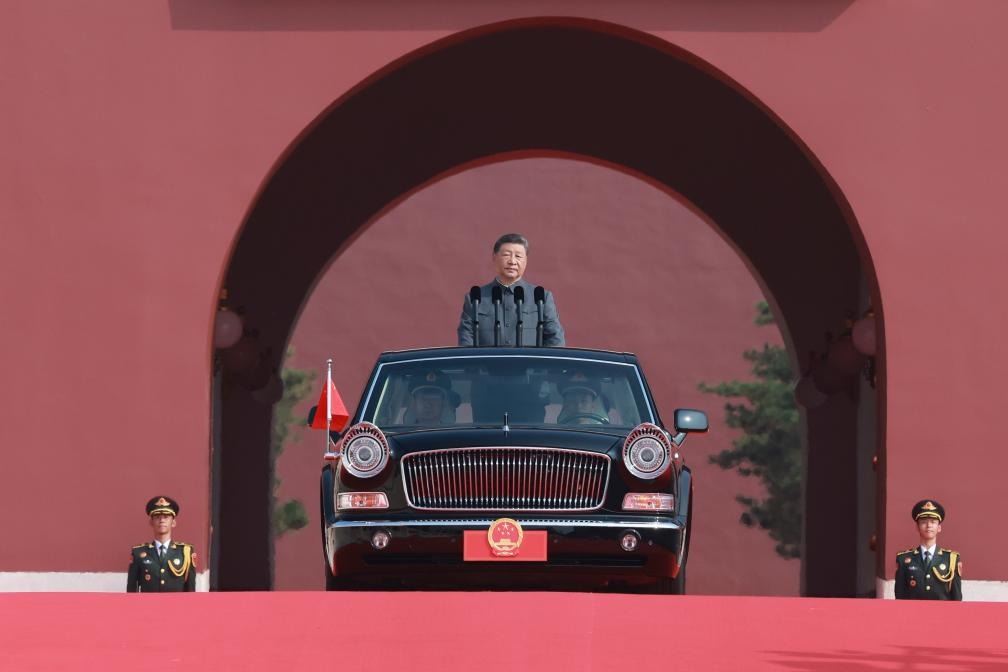
President Xi Jinping delivered a speech from the Tiananmen rostrum and subsequently inspected the People’s Liberation Army (PLA) troops from his parade vehicle. This was the third major military parade in Tiananmen Square that Xi has overseen as president. In his speech, Xi stated that the world is once again facing “a choice between peace and war.”
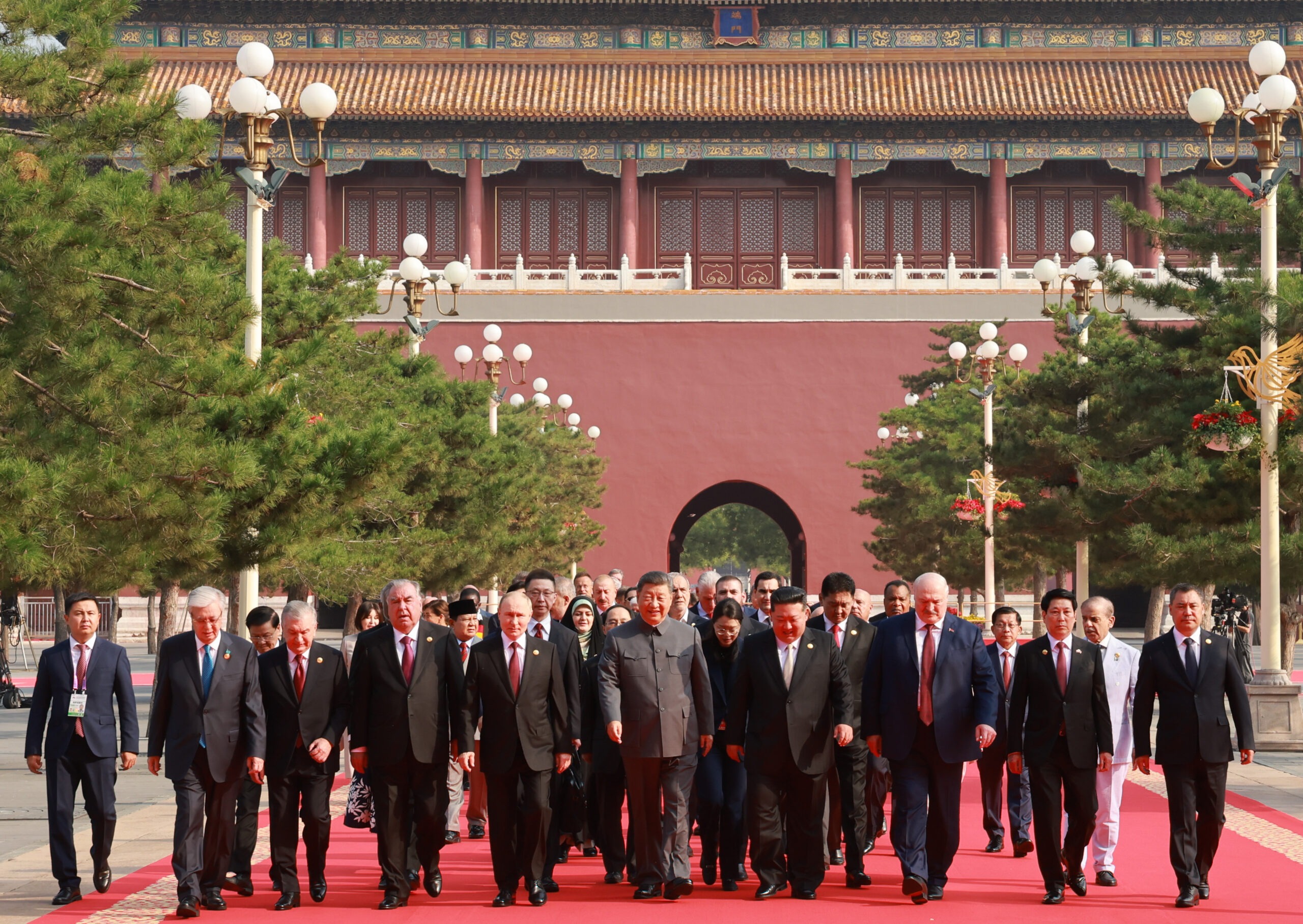
World leaders, including Russian President Vladimir Putin, North Korean leader Kim Jong-un, Belarusian President Alexander Lukashenko, and Malaysian Prime Minister Anwar Ibrahim, were present on the rostrum alongside current and former senior officials and generals.
Iranian President Masoud Pezeshkian, Pakistani Prime Minister Shehbaz Sharif, Uzbek President Shavkat Mirziyoyev, Kazakh President Kassym-Jomart Tokayev, and Azerbaijani President Ilham Aliyev were also among the leaders who attended the ceremony. Turkey was represented by Foreign Minister Hakan Fidan.
At the conclusion of the parade, 80,000 peace doves and balloons were released over Tiananmen Square.

Xi: We face a choice between peace and war
In his opening speech, Xi said, “Comrades and friends, the Chinese nation is a great nation that does not fear brute force and stands strong through self-reliance.” He added, “Today, humanity is once again faced with a choice between peace and war, dialogue and confrontation, win-win cooperation or zero-sum competition.”
“The great rejuvenation of the Chinese nation is unstoppable, and the noble cause for humanity’s peace and development will surely prevail,” Xi declared, calling on the armed forces to “resolutely safeguard national sovereignty, unity, and territorial integrity.”
Following his speech, Xi inspected the People’s Liberation Army soldiers from the open roof of a black limousine. Afterward, Xi continued to watch the parade, standing alongside Putin and Kim.
Military show
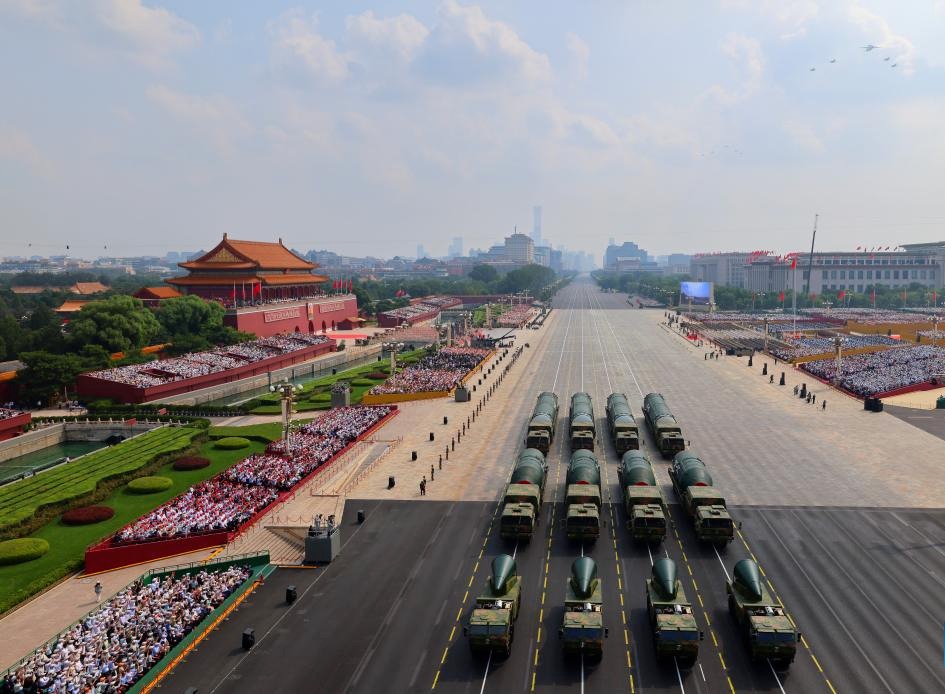
This was a demonstration of China’s military might, featuring a choreographed display of advanced military equipment such as unmanned aerial vehicles, hypersonic missiles, and fighter jets.
China introduced nuclear-capable missiles that can be launched simultaneously from land, sea, and air, publicly displaying its nuclear “triad” readiness for the first time. These included the air-based long-range missile Jinglei-1, the submarine-based intercontinental missile Julang-3, and the land-based intercontinental missiles Dongfeng-31 and Dongfeng-61.
China also unveiled the hypersonic anti-ship missiles Yingji-17, Yingji-19, and Yingji-20, which it has tested against prototypes of US aircraft carriers.
State media outlet CCTV noted that these missiles, along with the DF-61 and DF-31, represented the “first intensive display” of the PLA’s “land, sea, and air triad of strategic nuclear forces,” constituting a “strategic trump card for safeguarding national sovereignty and defending national honor.”
China had not held such a parade since 2019, which celebrated the 70th anniversary of the founding of the People’s Republic of China. This year’s event was held to honor the victory in the “War of Resistance Against Japanese Aggression and the World Anti-Fascist War.”
Strict security measures were implemented in and around Tiananmen Square. Some subway and bus lines were suspended on Tuesday night, while popular tourist attractions like the Forbidden City and various parks were temporarily closed. Even some hospitals limited their operations.

‘China is ready to play a larger role’
Ghulam Ali, former deputy director of the Hong Kong Asia Research Centre, stated, “For China, this event provided an opportunity to demonstrate its defense capabilities and its readiness to play a larger role in shaping the global and regional order, especially amidst escalating US-China tensions and the conflict in Ukraine.” He added that it also aimed to “unify the public around national security objectives.”
China also hosted the Shanghai Cooperation Organisation (SCO) summit in nearby Tianjin on Monday and Tuesday. At this summit, Xi met with foreign leaders such as Putin and Indian Prime Minister Narendra Modi.
At the SCO summit, Xi proposed a Global Governance Initiative, underscoring his goal of reshaping the global order. Xi emphasized principles such as the rule of international law, multilateralism, equality, and justice. He called on the leaders of SCO countries to “stand against hegemonism.”
Some leaders remained for the military parade after the SCO summit. Participants included many Southeast Asian leaders, such as Min Aung Hlaing, the head of Myanmar’s military regime, Laotian President Thongloun Sisoulith, and Malaysian Prime Minister Anwar Ibrahim. Vietnam sent President Luong Cuong, while Cambodia was represented by King Norodom Sihamoni. Indonesian President Prabowo Subianto, who had seemed ready to cancel his trip to China due to protests in his country, decided to make a brief visit.
Analyst Ghulam Ali commented, “Such a strong attendance was unprecedented and demonstrates China’s growing diplomatic and economic influence in the region.”
Indian Prime Minister Modi, however, skipped the parade and returned to India after the SCO summit.
The divide between China and the West and its allies was also apparent: the US did not send a representative, while Serbian President Aleksandar Vucic and Slovak Prime Minister Robert Fico were the only heads of state from Europe to attend. Former Japanese Prime Minister Yukio Hatoyama participated and was among the guests who shook hands with Xi. South Korea sent National Assembly Speaker Woo Won-shik.