
Middle East
Netanyahu Arab party attack triggers crisis over coalition

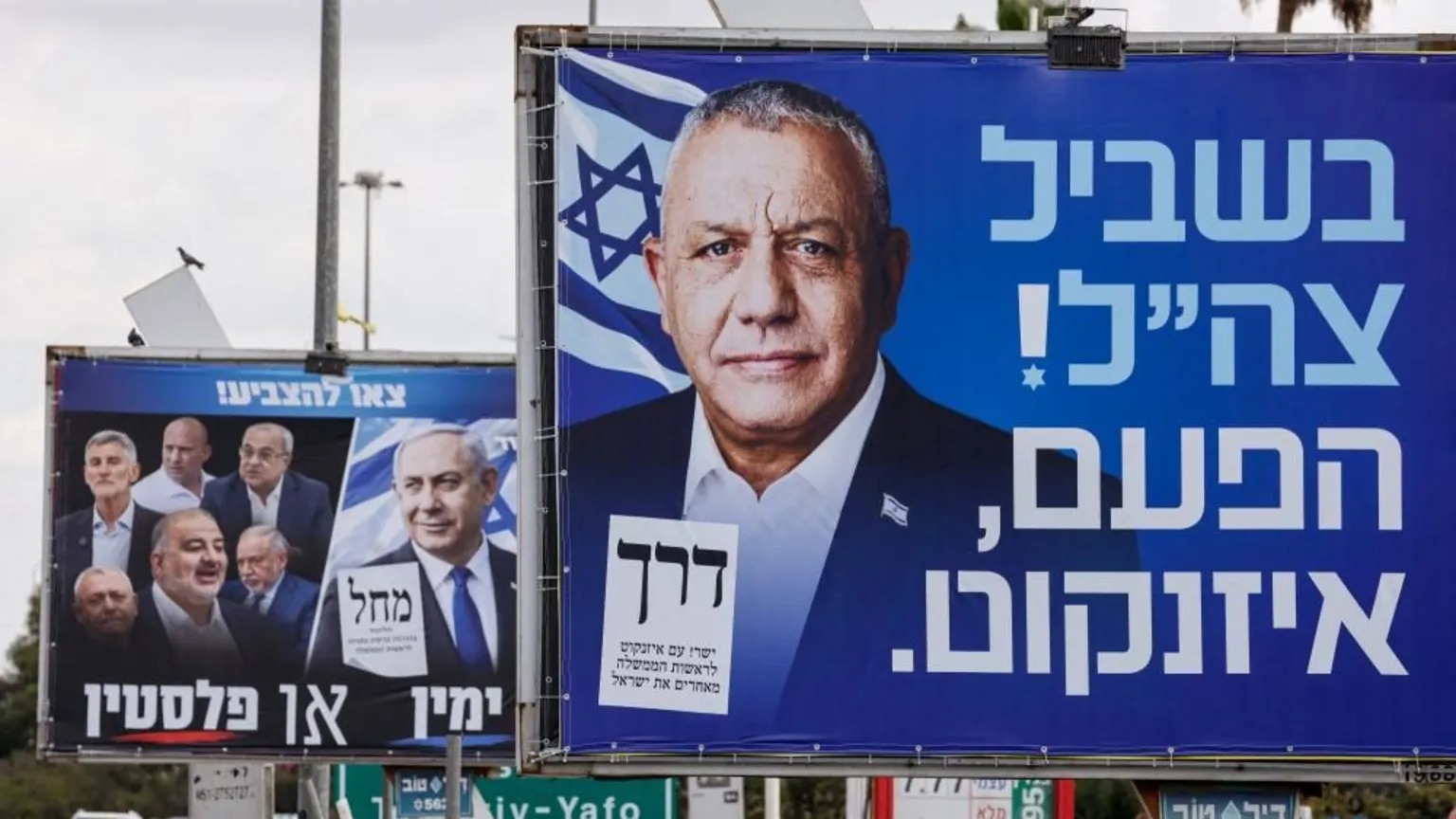
Israeli Prime Minister Benjamin Netanyahu reiterated his call for a unity government in a speech delivered on Tuesday, 10 November, following the swearing-in ceremony of the new Knesset.
Opposing the prospect of forming a government with the backing of parties representing Palestinian citizens of Israel, Netanyahu accused the lawmakers of those factions of “supporting terrorism” and “seeking the destruction of the Jewish state”.
According to a report by The Times of Israel, Netanyahu’s remarks drew sharp backlash from the opposition.
Gadi Eisenkot, leader of the Yashar Party and tasked with forming the government, cancelled a scheduled meeting with Likud representatives.
Netanyahu’s efforts since the election campaign to delegitimise the Arab parties target the possibility of Eisenkot forming an administration with their support.
In the parliamentary arithmetic, Netanyahu’s bloc remains at 53 seats, whereas the parties recommending Eisenkot for the premiership hold a combined total of 67 seats.
Objections by Jewish opposition parties to collaborating with Arab parties, however, complicate the translation of that numerical majority into a government.
Netanyahu opened his address by turning to Iran, claiming that Tehran is once again seeking to advance its nuclear programme.
“The only way to permanently eliminate this existential threat is to bring down the regime of the ayatollahs,” Netanyahu said.
Citing security risks as the justification for establishing a national unity government, Netanyahu assessed: “We must set aside all other considerations and form a national unity government. Only a government of this kind can handle challenges of this scale.”
Netanyahu devoted the bulk of his speech to the prospect of opposition parties cooperating with Arab lawmakers.
Refusing to distinguish between Ra’am and the Joint List, Netanyahu asserted that both political movements aim to bring about the downfall of the Jewish state.
On this subject, Netanyahu said: “They differ only over what kind of Palestinian state will be built on the ruins of the Jewish state: an Islamic state on the Muslim Brotherhood model, like Hamas in Gaza, or a nationalist Palestinian state on the Fatah model? That is the entire difference between them.”
Ra’am leader Mansour Abbas had previously stated on multiple occasions that Netanyahu held negotiations with him in 2021 with the aim of forming a government.
Netanyahu’s attempt at the time yielded no result, and Ra’am subsequently joined the Bennett-Lapid coalition government.
Netanyahu also opposed Eisenkot’s efforts to engage ultra-Orthodox parties, addressing Haredi lawmakers and arguing that Israel’s Jewish identity is under threat.
Urging Haredi representatives not to trust the pledges made by the Eisenkot bloc, Netanyahu said: “They will make you a mountain of promises. But as soon as a government led by the left is formed, all those promises will evaporate. They will have a guarantee from the Arab parties and do whatever they want.”
Netanyahu reiterated his commitment to establish a legal framework for the status of yeshiva students and to pass a military conscription law through consensus with rabbis.
The United Torah Judaism party has expressed anger at the Netanyahu administration over its failure to implement legislation exempting religious school students from mandatory military service.
During the process of recommending a candidate to the President for forming the government, the party did not put forward any name.
The Shas party, by contrast, continues to maintain its place within the Netanyahu bloc.
The principle of mandatory national service for all, advocated by Eisenkot, remains one of the primary obstacles to any potential partnership with United Torah Judaism.
During Netanyahu’s address to parliament, protests erupted from the opposition benches regarding his advisers’ connections to Qatar and the failure to establish a state commission of inquiry into the attacks of 7 October 2023.
Former prime minister Naftali Bennett, leader of the Together Party, asked: “What about the state commission of inquiry? Why do you not declare Qatar an enemy state? What about your Qatari consultants?”
As Democrats Party leader Yair Golan and members of his party walked out of the chamber, lawmaker Gilad Kariv asked: “How much money did you take from Qatar?”
For many years, Netanyahu followed a policy that facilitated the transfer of financial funds from Qatar to the Hamas administration in Gaza.
Several close advisers working within the Prime Minister’s Office are under investigation over allegations that they obtained financial gains in exchange for safeguarding Doha’s interests.
It had been reported that Jonatan Urich, a longtime adviser to Netanyahu, admitted in a police statement to receiving hundreds of thousands of shekels for Qatar-linked activities, and that this work continued after 7 October.
Urich continues to work on Netanyahu’s team.
In his speech, Netanyahu revived allegations of foreign interference in election processes, demanding the lifting of restrictions placed on the investigation file.
Police inquiries are known to have yielded limited evidence regarding the allegations in question, with judicial authorities having indicated that the outcome would not change even if the claims were confirmed.
Following the speech, Eisenkot stated on his X account that Netanyahu had exploited an official ceremony for political ends.
Eisenkot said in his statement: “I sat and listened to the outgoing prime minister’s disconnected, divisive, hateful, and disgraceful speech. I became even more convinced that he is unfit to remain in office for a single minute longer.”
Reaffirming his goal of forming a “national emergency government”, Eisenkot stressed that Netanyahu’s administration had polarised the country and jeopardised its security.
The Joint List described the parliamentary speech as “inciting and racist”, announcing that it would work toward removing Netanyahu from office.
The party stated that it remains committed to representing in parliament the will of more than 500,000 citizens who supported it at the ballot box.
Ra’am leader Mansour Abbas told Channel 12 television that he was astonished by Netanyahu’s use of an official state ceremony to “lie, incite, and defame Arab parties”.
“We are law-abiding Israeli citizens. We do not want to establish an Islamic state or an Arab state,” Abbas said.
Abbas added: “We support peace and ending the conflict through a two-state solution. We condemn terrorism; we too are victims of terrorism.”




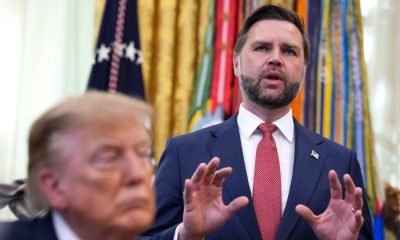

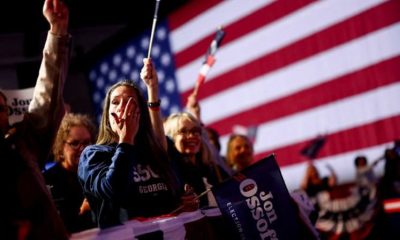

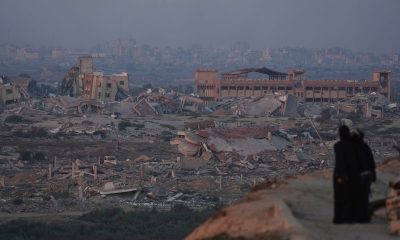

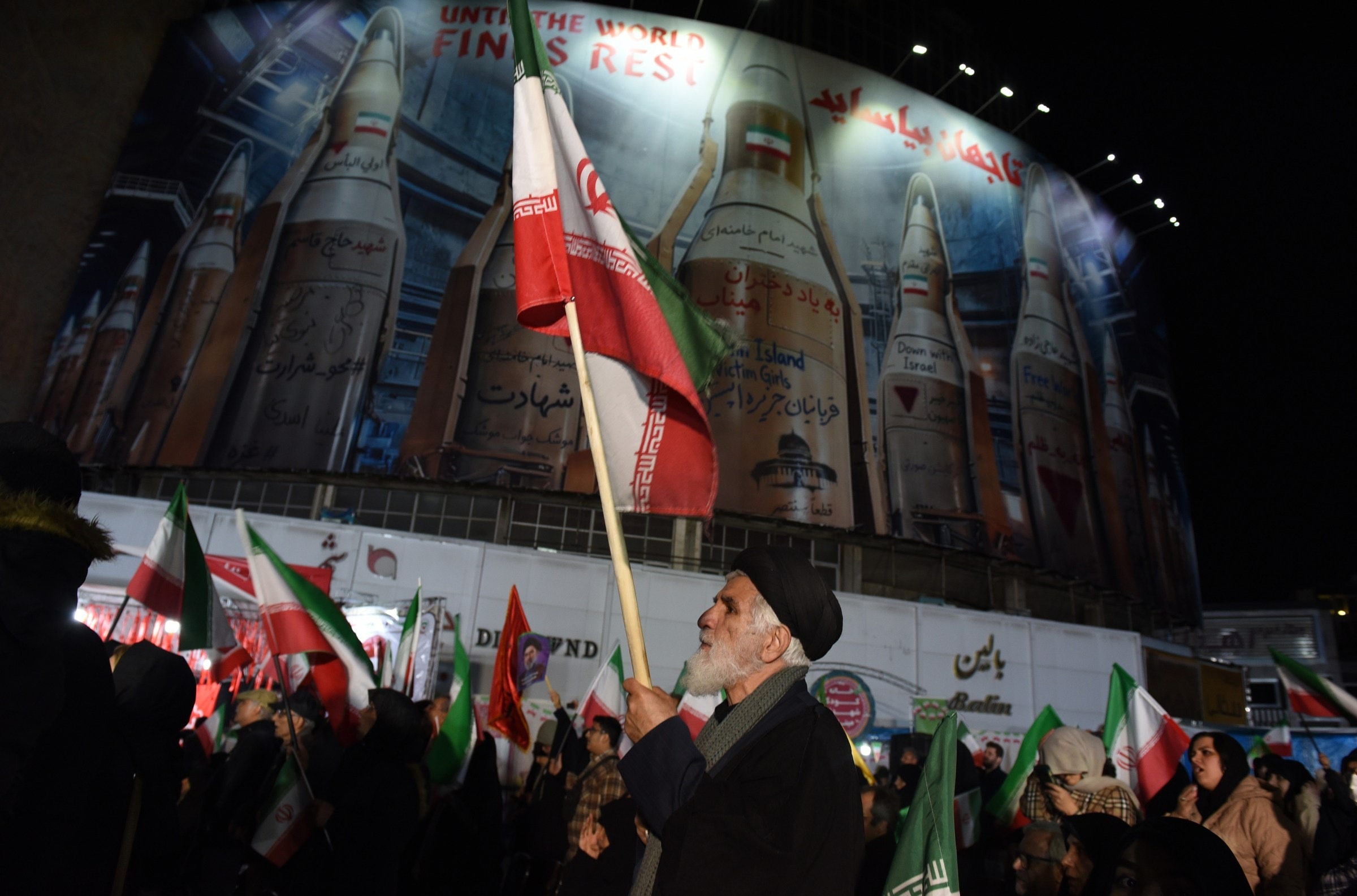
Following the conclusion of elections in both the United States and Israel, the political landscape across the Middle East faces fresh uncertainty as regional actors reassess the balance of power surrounding Iran.
In an in-depth interview broadcast on the Harici YouTube channel, host Mehmet Kıvanç discussed the regional fallout, electoral dynamics, and military contingencies with Oral Toğa, a researcher at the Center for Iranian Studies (IRAM). Toğa provided a comprehensive assessment of how domestic economic pressures and foreign policy entanglements reshaped voting behaviour, the strategic predicaments facing both Washington and Tel Aviv, and the operational calculations unfolding in Tehran amid the threat of renewed conflict.
Kıvanç opened the discussion by observing that the long-anticipated elections in both countries had concluded, leaving the region at an analytical crossroads. Addressing the shifting political currents in the US, Kıvanç highlighted that within the Democratic Party, figures critical of the ongoing genocide in Gaza and those questioning unconditional support for Israel had gained visible momentum, with even figures like Kamala Harris expressing reservations regarding war with Iran. In response, Toğa noted that while microeconomic concerns such as fuel prices and inflation historically drive voting behaviour, they often serve as catalysts prompting the electorate to question broader foreign policy commitments.
“Standing by Israel has now become a political cost”
Reflecting on the domestic drivers behind the US vote, Toğa emphasised that economic friction inevitably pushes voters to scrutinise governance from a structural perspective. “For decades, there have been analyses concerning the impact of kitchen table issues on the ballot box,” Toğa stated, recalling former Turkish President Suleyman Demirel’s famous aphorism regarding economic discontent. “Certainly, we can say that petrol prices and inflation influenced these election results for Americans. But when these micro issues, matters directly affecting the public, begin to bite, the people start questioning macro matters. They ask: Why are we experiencing this?”
Toğa observed that a broad consensus exists among political analysts regarding the electoral repercussions of foreign entanglements. “All experts agree that Middle Eastern developments, alongside the domestic economic situation, exerted a direct influence on the election and extracted a political cost from Trump,” Toğa said. “Standing by Israel has now become a political cost. This debate is even occurring within domestic politics in Greece today, where people ask why they are taking a position alongside a country committing genocide while everyone else is stepping back. Aligning with Israel is becoming a distinct political liability.”
According to Toğa, this dynamic directly clashed with the core promises made to the American electorate. “Trump, who pledged an America First policy, ran a campaign whose service to American interests remained ambiguous for two years, generating direct and indirect consequences for the American public and raising serious questions,” Toğa remarked. “While he promised to be a president who avoids and ends wars, we arrived at a point governed by continuous conflict, war, and fragile ceasefires since last year. All these elements produced the outcome of the US elections.”
Addressing Kıvanç’s question regarding whether traditional pro-Israel lobbies like the American Israel Public Affairs Committee (AIPAC) are suffering an enduring erosion of power, Toğa argued that the information environment has fundamentally transformed. He pointed to the emergence of independent digital platforms and social media channels scrutinising political donations, revisiting historical foreign policy decisions, and questioning narratives that were previously dismissed as conspiracy theories.
“Netanyahu and his contemporaries are only now realising that we no longer live in the world of the 1990s,” Toğa said. “Prior to the rise of social media, holding specific broadcast channels granted you a monopoly. You could make someone famous overnight or destroy someone prominent just as quickly. Controlling the press made it simple to market your own narratives. Today, however, people are watching a genocide in high-definition quality. They could not conceal what occurred in Minab despite significant efforts, and it continually returned as an uncomfortable question before the president. People also question incidents such as strikes hitting weddings.”
Toğa explained that past precedents continue to weigh heavily on public trust. “There is historical baggage,” he said. “Why did the Iraq War begin in 2003? It was claimed there were chemical weapons. Later, numerous books and memoirs by senior bureaucrats revealed this was untrue and argued that it served Israeli interests, openly assigning blame to Israel for these engagements. The accumulation of this baggage, combined with social media’s rapid dissemination of information, has made it impossible to monopolise narratives. If one platform loses credibility, an alternative emerges immediately, and information keeps flowing. This constitutes the greatest challenge for the current Israeli government and represents the primary factor weakening its influence in the US.”
“The security climate after October 7 ties the hands of the Israeli left”
Turning to the Israeli elections, Kıvanç noted that Prime Minister Benjamin Netanyahu’s coalition lost 10 seats rather than suffering an outright collapse, while Arab parties surged from 10 to 19 seats. Meanwhile, the opposition camp led by Gadi Eisenkot viewed its own performance as a failure despite Netanyahu’s vulnerabilities. Kıvanç asked whether the conflict with Iran had consolidated Israeli society behind a more aggressive security posture.
Toğa responded that Israeli political consciousness remains anchored to the trauma of the October 7 attacks. “Israelis cannot move past October 7,” Toğa stated. “Whatever occurs, the ultimate card played in Israel returns to October 7. Consequently, the security climate after October 7 ties the hands of the Israeli left regarding the genocide, the assaults in Lebanon, Iran, and Yemen, and actions concerning West Bank settlers. The political right directly challenges the left by pointing to what the Palestinians they defended did. Netanyahu captured a substantial security tailwind, entered into what he termed a seven-front war, and framed his campaign around the narrative that Netanyahu never surrenders, manipulating this security environment to emerge with the leading bloc despite dropping 10 seats.”
Toğa drew an operational distinction between public sentiment regarding Gaza and attitudes toward Tehran. “Opinion polls show the Israeli public is deeply divided over Gaza because of reserve soldier casualties and the question of why they are dying,” he explained. “Yet that division does not exist regarding Iran. The Israeli public is far more unified in viewing Iran as an existential threat. The narrative of unfinished business with Iran was central to the election campaign, reinforced by Trump’s open endorsements from abroad. Eisenkot was repeatedly accused of being soft on this front, forcing him into a defensive posture where he emphasised his military credentials and the personal loss of his son and nephew.”
When asked about Eisenkot’s prospects of forming a governing coalition through either external Arab party support or a national unity government, and whether Eisenkot would pursue regime change in Tehran, Toğa underscored that Israeli institutional strategy transcends individual leadership.
“Altering and breaking the political will in Iran is an established state policy for Israel, rather than merely changing the regime,” Toğa stated. “They perceive a genuine threat from Iran. One must not forget the evacuation of northern communities following October 7 due to Hezbollah’s posture, the constant threat posed by allied proxy forces prior to October 7, Iran’s rapidly developing ballistic missile capabilities, and its proximity to nuclear status. A nuclear Iran would fundamentally alter the security doctrines of Saudi Arabia, Azerbaijan, Türkiye, and the Gulf states, creating a domino effect that Israel desperately seeks to avoid. Furthermore, Israelis have no way of predicting which capabilities Iran will transfer to which actor, as demonstrated by the advanced missiles and drones supplied to Hezbollah, Yemen, and the Popular Mobilization Forces.”
Toğa warned against misinterpreting Eisenkot’s political standing or doctrine. “People should not view Eisenkot as an inherently peaceful figure,” Toğa observed. “He is a former military commander who formulated the Dahiya doctrine, which explicitly outlined the systematic targeting of civilian and urban infrastructure in Beirut’s Dahiya district. His argument is simply that military operations must be directed where they yield tangible results. Regarding government formation, relying on ultra-Orthodox parties brings severe constraints, while partnering with or relying on Arab parties alienates factions that refuse to appear alongside them. A minority government would be exceedingly fragile. While a 28-day mandate with a potential 14-day extension is underway, if the task eventually falls back to Netanyahu and fails, a return to elections appears the more probable trajectory.”
“The primary objective is turning Iran into a failed state”
Addressing the transition period before the newly elected US Congress convenes in January, Kıvanç pointed to media speculation and remarks by figures such as Tucker Carlson regarding potential nuclear contingencies or strikes targeting Iranian facilities. Asked whether the threshold for a nuclear strike was approaching, Toğa offered a cautious assessment, indicating that while talking about nuclear strikes breaks long-standing taboos, it remains an unlikely primary course of action.
“The nuclear scenario is not something I place in my top five contingencies,” Toğa stated. “If it were ever considered, it would be under conditions of extreme operational desperation or as a punitive demonstration to enforce surrender, perhaps targeting unpopulated desert expanses near Natanz or the Qazvin Mountains rather than launching a strike on Tehran that would kill 15 to 20 million people. However, that is not the primary objective. The primary objective is turning Iran into a failed state by destroying its conventional capabilities, civil infrastructure, and administrative systems, leaving it permanently unstable and incapable of projecting regional power, much like Iraq after 1991 where the state was crippled under sanctions despite Saddam remaining in place.”
Asked to detail the practical operational contingencies currently being considered, Toğa pointed toward targeted amphibious and covert operations designed to enforce diplomatic capitulation.
“Amphibious landings are not a scenario to be excluded, as military preparations point in that direction,” Toğa explained. “This does not mean an American army marching to Tehran. Instead, we could see special forces deployed to specific zones to conduct sabotage against targets inaccessible to air strikes, alongside operations to seize control of the Strait of Hormuz to break Iran’s political will. The objective would be a limited occupation in strategic economic corridors like Hormozgan or Chabahar, essentially telling Tehran that forces will remain until an agreement is signed.”
Toğa noted that Iran’s internal economic vulnerabilities make it susceptible to external strangulation. “Iran’s economy is currently in an exceptionally severe condition,” he said. “Public sector salaries remain unpaid across numerous sectors, with parliament recently debating unpaid wages for healthcare personnel, while retirees staged major protests in mid-October. Reports indicate instances where the Islamic Revolutionary Guard Corps struggled with payrolls, necessitating financial transfers from Iraq via the Popular Mobilization Forces. If an adversary destroys water distribution networks and vital civilian infrastructure, Iran could be left with a structural burden requiring 15 to 20 years to overcome, compounded by continuous secondary sanctions.”
When Kıvanç asked whether a sustained war of attrition was viable or if Washington sought a rapid resolution, Toğa clarified the strategic utility of such operations. “Even a punitive strike-and-withdraw operation generates identical long-term instability,” Toğa said. “To craft a victory narrative, Trump could leverage amphibious control over strategic islands or ports like Bandar Abbas to force Iran into signing an agreement that concedes total transparency on the nuclear file and broader demands. However, such devastation ensures prolonged internal crisis because sanctions would remain intact, precisely as occurred in Iraq. This reality explains the intense diplomatic engagement from regional capitals like Pakistan, Türkiye, and the Gulf, including the discussions surrounding the Mecca alliance and talks in Tehran aimed at preventing a catastrophic regional escalation.”
“Tehran is actively preparing for direct war”
Evaluating Iran’s internal readiness, Kıvanç asked about the military and political stance of the leadership in Tehran given the severe socioeconomic pressures. Toğa confirmed that Iranian military planners have been operating on a war footing for an extended period, particularly following the strike on Iran’s diplomatic mission in Damascus.
“Tehran is actively preparing for direct war,” Toğa said. “The Iranian military expected war throughout 2024. However, Israel’s targeted decapitation campaign against senior commanders has begun to disrupt the decision-making apparatus. The commanders who were killed were the very architects who doctored Iranian defence doctrines, authored the contingency plans, and managed defensive preparations. Iran possesses ready-made plans for the initial days of a conflict, but sustaining operations beyond that point is complicated by emerging political friction within the establishment.”
Toğa highlighted internal disputes over key appointments, pointing to the polarising profile of Mohsen Rezaee. “Mohsen Rezaee was never the natural first choice for such roles,” Toğa noted. “He is a highly controversial and often sensationalist figure in Iranian public life. In times of crisis, domestic political divisions can lead factions to accuse one another of treason over the slightest misstep as groups jockey for influence in the future hierarchy. What Iran needs most right now is the unchallenged authority of an Ali Khamenei who can strike the table and unify the political structure.”
When asked if the current Supreme Leader could still exercise that unifying power or if Mojtaba Khamenei held equivalent influence, Toğa drew a stark contrast between their political profiles. “Mojtaba Khamenei does not currently possess that level of overarching authority,” Toğa explained. “Mojtaba is a remarkably influential figure who exercises substantial control within the IRGC and played a vital role in establishing its intelligence apparatus. But he is not Ali Khamenei. Ali Khamenei experienced the revolution firsthand, survived an assassination attempt, served as president during the Iran-Iraq War, and led the country for over three decades, which explains why he consistently sought to keep Iran out of direct war. Mojtaba, though trained at the office of the Supreme Leader over the last 20 years, has not yet demonstrated that independent political weight publicly. That authority cannot easily be consolidated before the conflict concludes.”
Toğa detailed how the Iranian state is restructuring its internal procedures to withstand systemic pressure. “Parliament has amended its internal regulations to permit online sessions and convene in alternative locations during wartime,” he said. “Iran is banking entirely on strategic endurance and resistance. Through civilian mobilisation initiatives like the Jan Feda campaigns, authorities are training diverse civic groups in urban combat and first aid to ensure ground stability. Institutionally, they have instituted redundancy mechanisms up to four leadership tiers should senior officials be assassinated. Furthermore, they are refining the mosaic defence concept, integrating the Khatam al-Anbiya Central Headquarters with the general staff to eliminate bureaucratic multi-headedness and endure enemy strikes without capitulating.”
“Iran will expand the conflict horizontally”
Regarding the trajectory of a potential new military escalation, Kıvanç asked how far Tehran could push its asymmetric response given that conflict cannot continue indefinitely. Toğa asserted that Iran’s operational doctrine relies on horizontal escalation rather than absorbing blows passively.
“Iran will expand the conflict horizontally,” Toğa stated. “If its civilian infrastructure is targeted, it will target Israeli infrastructure in return. Unlike Iran’s dispersed assets, which were decentralised after studying the 1991 Gulf War, Israel’s infrastructure is far more centralised. US military bases across Saudi Arabia and the Gulf will inevitably become targets. Tehran’s target set could expand to include facilities in Azerbaijan, Crete, and European installations, as hinted by recent statements. It could even extend to activating sleeper cells across Europe and globally, as recently witnessed in the UK.”
When Kıvanç asked whether this implied that Tehran would deploy all available leverage, Toğa emphasised the existential nature of the confrontation for the Iranian leadership. “From the Iranian perspective, this is an existential struggle for national survival,” Toğa said. “They are fighting to prevent the country from collapsing into a fragmented, perpetual war zone like Libya. Regardless of whether an Iranian citizen supports the Islamic Republic, there is a fundamental desire for safe schooling, operational businesses, and stable livelihoods. This civic and patriotic consciousness exists across both reformist and conservative factions, even if political reconciliation between them remains elusive.”
Toğa noted that the administration of President Masoud Pezeshkian was engineered partly to solidify the internal front ahead of potential conflict, citing the appointment of the first Sunni governor to Sistan and Baluchestan and security operations targeting militant camps in Iraq. However, turning to the prospects for mutual diplomatic concessions, Toğa observed that internal rigidity hampers progress.
“A written mutual understanding could provide breathing space, but maximalist demands surrounding the Strait of Hormuz and the domestic drive to inflict a political cost on Trump obstruct a breakthrough,” Toğa stated. “Trump has already paid an electoral cost, meaning he has little left to lose during his remaining window in office to construct a victory narrative. While diplomatic channels facilitated by Türkiye, Pakistan, and Saudi Arabia remain vital, Iran’s maximalist positioning regarding Hormuz complicates matters. Neither Washington nor Tel Aviv is willing to leave the Strait under its current status or allow Iran to emerge from this crisis with its regional deterrence intact for the next 20 years. If Tehran makes concessions on Hormuz and offers nuclear transparency, diplomatic de-escalation remains viable.”
In a concluding query, Kıvanç asked whether an increasingly cornered Iran might conduct a nuclear test in international waters, such as the Indian Ocean, to demonstrate a working deterrent. Toğa assessed that intelligence assessments currently discount an operational weaponised capability, though desperate measures cannot be entirely ruled out.
“Available information suggests Iran has not reached that operational stage,” Toğa said. “If US and Israeli intelligence possessed definitive evidence of a completed nuclear warhead, their operational posture would differ significantly. Reports indicate that while Iran mastered uranium enrichment, it remained bottlenecked at the weaponisation stage, specifically miniaturising a warhead to fit ballistic missile delivery systems before the current war began. Nevertheless, strategic capability remains closely guarded. Iran has operated like a chess player, gradually escalating its demonstrations from rudimentary strikes in True Promise 1 to advanced missiles in True Promise 2. If the country faces absolute existential collapse and possesses such a capability, exercising that ultimate card cannot be dismissed.”
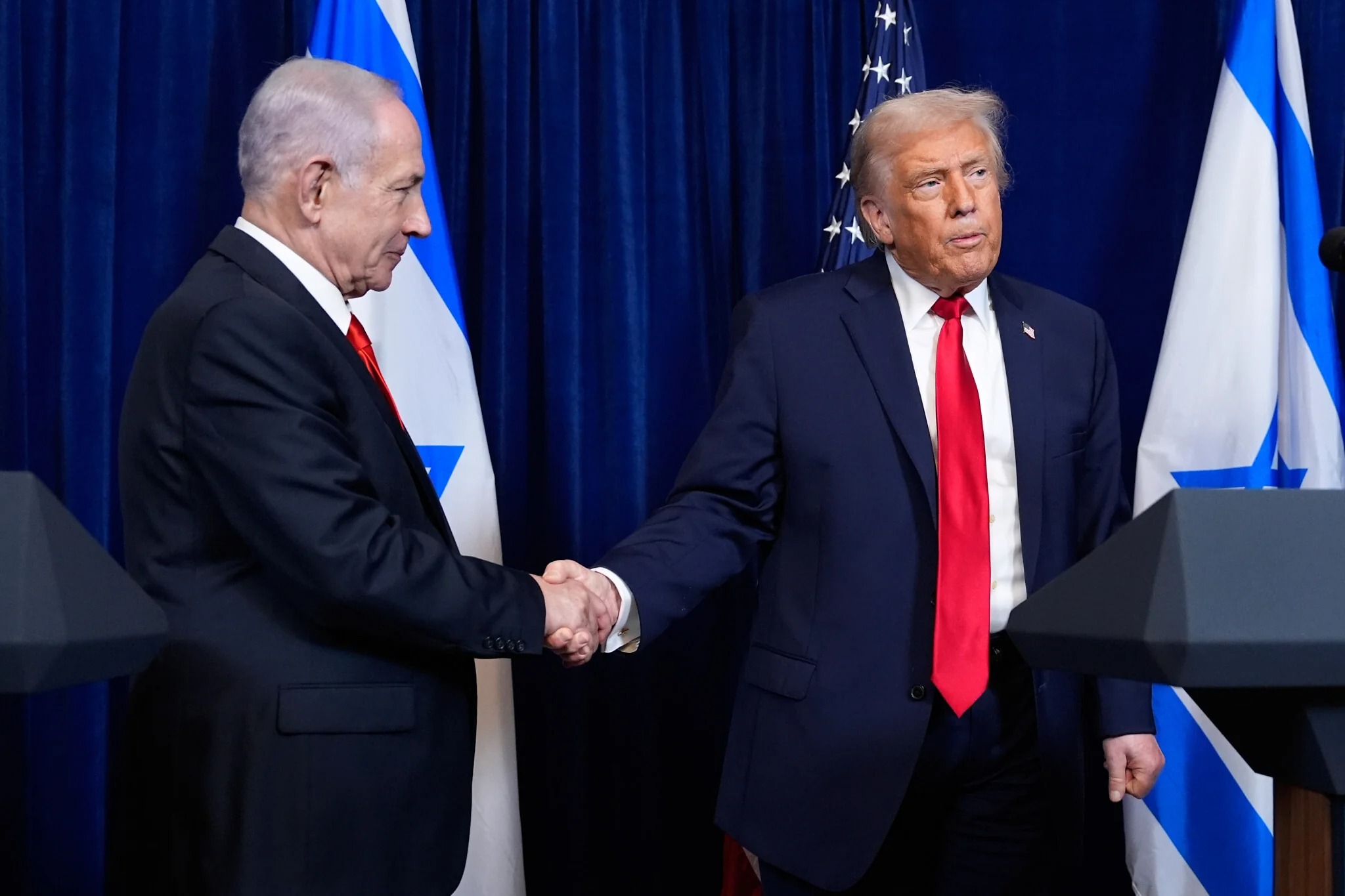
Israeli Prime Minister Benjamin Netanyahu is reportedly telephoning US President Donald Trump every day, urging him to launch a new military operation against Iran.
Citing a person familiar with the discussions, the Financial Times reported: “Netanyahu is calling him every day [to encourage him to restart the war]. Those inside and outside the White House who do not want war are trying to push back.”
The same source added that regional leaders have told Trump not to escalate tensions and to prioritize negotiations instead.
Trump appeared to reference these views held by Gulf allies in a statement issued after meeting with Qatari Prime Minister Mohammed bin Abdulrahman Al Thani today (10 November).
Al Thani has been seeking to mediate a diplomatic solution to the standoff between the US and Iran.
In a post on Truth Social, Trump explained that he prefers maintaining the economic blockade rather than launching a fresh military strike on Iran. “Qatar, Saudi Arabia, the UAE, Bahrain, Kuwait and others would very much prefer that the current situation continue,” he said.
The FT reported that Arab and Muslim leaders are concerned about Netanyahu’s sustained lobbying of Trump to resume combat operations.
Another source described as familiar with the situation in Israel told the British press that while Netanyahu wants military action against Iran to resume, there is currently no pressure being applied to persuade Trump on the matter.
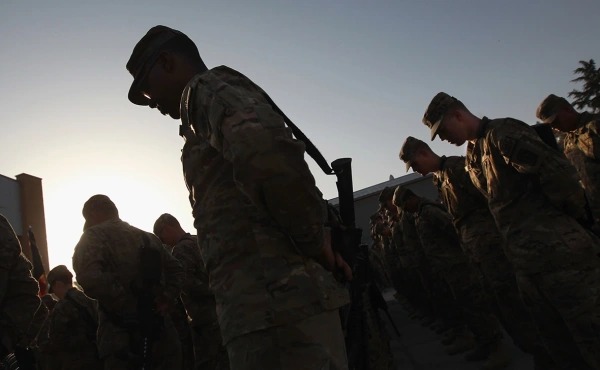
The US administration has notified several Gulf allies that it could launch a short but intensive military campaign against Iran immediately following the congressional midterm elections on 3 November. Washington urged regional states to prepare for this contingency.
According to a Wall Street Journal report citing sources with direct knowledge of the discussions, the warning did not specify which countries were briefed. Meanwhile, military activity on the ground has accelerated alongside these disclosures.
The US military has deployed a Patriot air defence battery from Texas to the Middle East, while beginning to pull its personnel back from exposed bases within range of Iranian ballistic missiles and drones to more secure positions. These moves reinforce indications that the US and Israel are preparing for a direct, wide-scale confrontation with Tehran.
The White House declined to comment on sensitive military plans whose existence has not been officially confirmed. An official statement emphasized, however, that President Donald Trump keeps all options on the table to prevent Iran from acquiring a nuclear weapon.
The New York Times reported last week that US and Israeli armed forces have stepped up joint military drills based on a short but intensive operational scenario. Potential targets identified by the newspaper include Iran’s nuclear facilities, critical energy infrastructure, and production centres for missiles and armed unmanned aerial vehicles.
The same report noted that while seen as an unlikely outcome, Trump could approve the operation before the end of October, though he might also opt against authorizing any military action. In recent months, Trump has repeatedly suspended decisions to re-enter active hostilities at the last moment.
The current active conflict between the two nations was triggered on 28 February by a joint US-Israeli strike on Iranian targets. Trump explained the primary rationale for the operation as ensuring that Tehran can under no circumstances attain a nuclear weapon.
These military actions follow the 12-day war fought in June 2025. During that air campaign, Washington directly targeted and struck Iran’s primary nuclear installations at Fordow, Natanz, and Isfahan.
International Atomic Energy Agency (IAEA) Director General Rafael Grossi outlined the latest situation on the ground during an address to the UN Security Council. Grossi stated that the agency has found no evidence indicating that Tehran is repairing or rebuilding from scratch the nuclear infrastructure damaged in the 2025 and 2026 strikes.
Criticizing the continued exclusion of monitors, Grossi urged Iran to grant international inspectors immediate access to all its nuclear sites, including damaged locations. Since the US bombardment in June 2025, the IAEA has been unable to independently verify the current status of Tehran’s stockpile of highly enriched uranium.
According to official agency records, Iran held 440.9 kilograms of uranium enriched to 60% purity prior to the June 2025 war. In nuclear physics, 60% enrichment is technically regarded as exceptionally close to the roughly 90% threshold required for weapons grade.
Following the bombings, Tehran barred international inspectors from entering the struck facilities. Because of this restriction, the regulatory body cannot ascertain how much of this critical stockpile remains intact or where it is currently stored.
Mounting military costs fuel domestic political pressure
President Trump maintains that the June 2025 air strikes demolished Iran’s nuclear capabilities. Nevertheless, the prolonged military operations have destabilized economic conditions, and soaring domestic fuel prices in particular are placing the governing Republican Party under severe political strain ahead of the midterms.
Trump has pushed back against criticism over rising energy costs, arguing that absorbing higher prices at the pump is necessary to prevent Tehran from acquiring nuclear arms.
Pentagon budget records reviewed by Reuters indicate that total US military spending on the Iran conflict has surpassed $47 billion. This figure stands 25% above official estimates released by defence officials in July.
The largest portion of total expenditures, $29 billion, was allocated to replenishing depleted munitions stocks, while $6 billion went toward replacing worn military hardware. It remains unclear whether repair bills for US bases damaged by retaliatory Iranian missile and kamikaze drone strikes are included in this official $47 billion sum.

IRAM expert Oral Toğa assesses Middle East shifts after US vote

Netanyahu Arab party attack triggers crisis over coalition

Fico accuses Merz of blackmail over threat to veto EU budget

US Senate panel seeks records in Trump-linked crypto investigation

Europe ready for arms and missile control talks with Russia, FT says
-

 Diplomacy1 week ago
Secular dress code dispute exposes deeper Türkiye-Azerbaijan strains
-

 Russia2 weeks ago
US and Russia weigh energy deals and corporate return in peace talks
-

 Europe2 weeks ago
Merz visits Asia to seek new markets for German defence firms
-
 Middle East2 weeks ago
US warns Gulf allies of possible Iran strikes after midterms
-
 Opinion2 weeks ago
Gaza exposes the myth of the “most moral army in the world”
-

 Europe5 days ago
EU urges citizens to prepare 72-hour survival kits for crises
-

 America2 weeks ago
Democrats target Trump-Putin Russian diesel deal with legal push
-

 America2 weeks ago
Bolsonaro reportedly leaves Brazil on jet linked to scandal-hit firm
