
Diplomacy
Prof. Marandi says Tehran is prepared for worst-case scenario with Trump

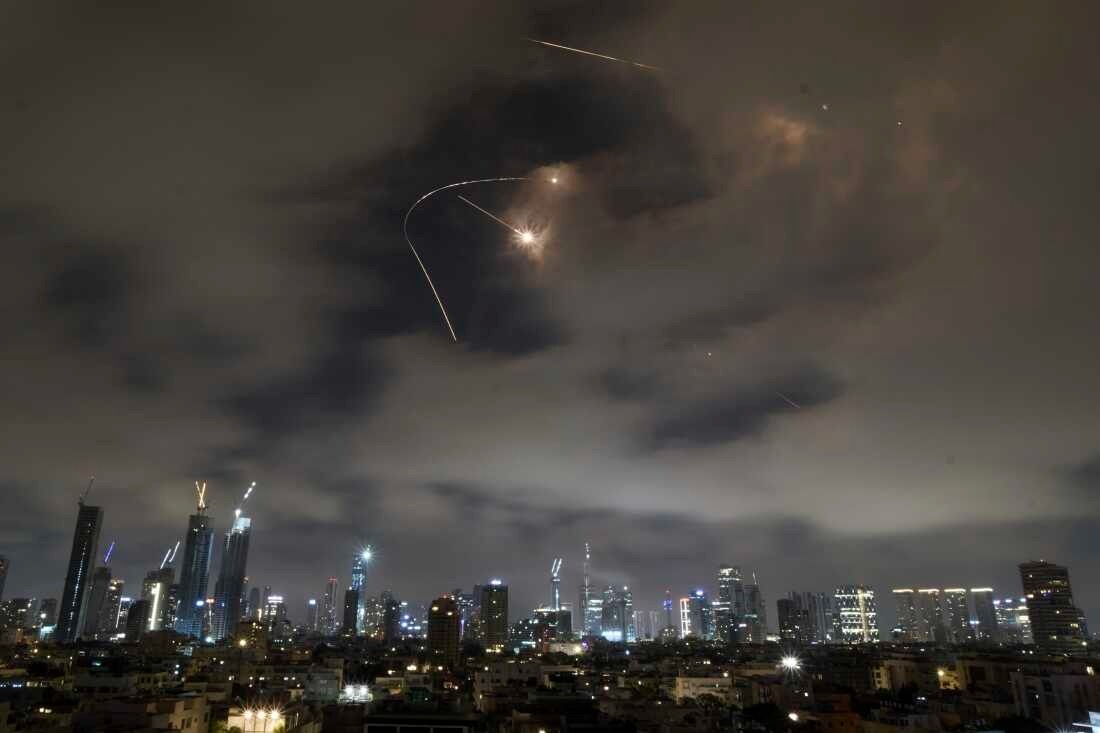
Iranian academic and political analyst Professor Mohammad Marandi, joining the “Judging Freedom” program hosted by Judge Andrew Napolitano from Moscow, has provided a stark assessment of the escalating tensions between Tehran and Washington, outlining potential conflict scenarios.
During the broadcast, Marandi stated that the Tehran administration is preparing for a “worst-case scenario” in the face of threats originating from the US and Israel. Highlighting the unpredictable policies of the Donald Trump administration, Marandi shared detailed insights into the scope of the response the Iranian Armed Forces would provide in the event of an outbreak of hostilities.
Marandi emphasized that Iran’s defense doctrine is rooted in deterrence. “The best way to prevent war is to be prepared for it. That is exactly what the armed forces are doing,” he remarked.
The scope of a potential attack
Responding to questions regarding the nature of a possible US or Israeli intervention on Iranian soil, Marandi noted that they do not anticipate a large-scale ground invasion. He argued that under current military and economic conditions, the US lacks the capacity to occupy Iran, suggesting that the threat is primarily shaped by airstrikes and missile systems.
“For the US to carry out an invasion, it would need at least one million soldiers. Neither their financial resources nor their troop numbers are conducive to this. The expectation is that attacks would be carried out with missiles and bombs,” Marandi explained.
However, Marandi underscored that regardless of the scale of an attack, Tehran’s response would not be limited. Relaying the stance of Iranian officials, he said, “The Iranians have made it clear that even if an attack is symbolic or limited, they will respond with total war.”
Regional US bases and “vassal” states targeted
Marandi clarified that Iran’s definition of “total war” encompasses all American military presence in the Middle East as well as Israel. He specifically emphasized that US bases stationed in Persian Gulf countries would be considered legitimate targets, issuing stern warnings to those nations.
“The small entities in the Persian Gulf hosting US bases are considered fair targets because these bases are currently being used to conspire and conduct operations against Iran,” the academic stated. Marandi noted that while countries like Qatar and the United Arab Emirates cannot provide significant military or demographic support to the US, they would become direct parties to the conflict if they allow their territories to be utilized for strikes.
One of the most striking segments of the interview involved Marandi’s assessment of Iran’s capacity to disrupt global energy security. He stated that in the event of war, oil and gas exports across the Persian Gulf, the Caucasus, and Western Asia would grind to a halt.
When asked about Iran’s ability to close the Strait of Hormuz, Marandi emphasized that Tehran’s options extend far beyond that. “They can close the Strait of Hormuz, but they can do much more. They can destroy oil and gas facilities, ports, and vessels in the Gulf and the Indian Ocean,” he warned. He added that Iran possesses hundreds of thousands of short- and medium-range missiles and drones (UAVs) stationed in underground bases, an inventory capable of neutralizing any target in the Persian Gulf.
“For the US, this would be a war of choice, but for Iran and the Axis of Resistance, it is a war of survival,” Marandi said.
Responding to Trump’s claim of “destroying the nuclear program”
The program also addressed President Donald Trump’s recent claims in a television interview that his administration had “destroyed” Iran’s nuclear facilities. Marandi dismissed these statements as factually incorrect, noting that Iran’s nuclear infrastructure remains under the inspection of the International Atomic Energy Agency (IAEA) and serves peaceful purposes.
“I do not believe any serious damage has been dealt to the core components of the program. The program he claims to have bombed or attempted to destroy has always been open to international inspection,” Marandi said. He further stressed that Iran’s nuclear sites and enrichment capabilities remain intact and that, contrary to Western media and political narratives, Iran will not compromise on its defensive capabilities.
Addressing allegations regarding social unrest and anti-government protests within Iran, Marandi claimed these events were instigated by foreign intelligence services. He alleged that the US Treasury Department intentionally devalued the Iranian currency and that Mossad, MI6, and the CIA had attempted a coup in the country.
Sharing specific figures regarding casualties during the protests, Marandi argued that Western media had exaggerated and distorted the facts. “The reality is that 3,117 people lost their lives. Hundreds of these were police officers, hundreds were innocent civilians, and hundreds were rioters who set fire to ambulances and banks,” he stated. Marandi expressed confidence that the vast majority of the Iranian people oppose foreign-backed violence and that the February 11 Revolution Day celebrations would demonstrate public support for the government.
Deadlock and conditions in the negotiation process
Regarding indirect talks between Washington and Tehran, Marandi confirmed that Iran had rejected proposals presented through the mediation of Türkiye, Qatar, and Egypt. He stated that the US demanded Iran halt nuclear enrichment and limit its defensive capabilities—conditions Tehran views as violations of its sovereign rights.
“Iran conveyed to the US via Oman that negotiations could only be limited to assurances regarding the nuclear program. However, Iran will not return to the terms of the 2015 nuclear deal (JCPOA) because technological progress has been made since then, and a heavy price has been paid due to sanctions,” he said. Marandi added that Iran would not make its defense capabilities or its alliances a bargaining chip, citing the example of Syria as a lesson that weakening defense systems leads to disaster.
Sharp criticism directed at Germany
Evaluating German Chancellor Friedrich Merz’s verbal attacks against the Iranian government, Marandi pointed to Germany’s historical role in the region. He reminded the audience that Germany was a leading supplier of chemical weapons to Saddam Hussein’s regime during the Iran-Iraq War.
“I survived two of those chemical attacks myself. I visited Halabja. The German government has apologized to neither the Iranians nor the Iraqis. For Merz to speak about Iran only serves to remind us of the crimes committed by his own regime,” Marandi said.
Concluding the interview, Marandi warned that any US attack on Iran would have devastating economic consequences far beyond the military theater. He argued that a potential war would collapse the global and US economies, which would ultimately result in the end of Donald Trump’s presidency. Marandi added that while Prime Minister Benjamin Netanyahu and Donald Trump act in their own personal interests, Iran has drawn major lessons from the “12 Day War” in June and is increasing its military readiness daily.




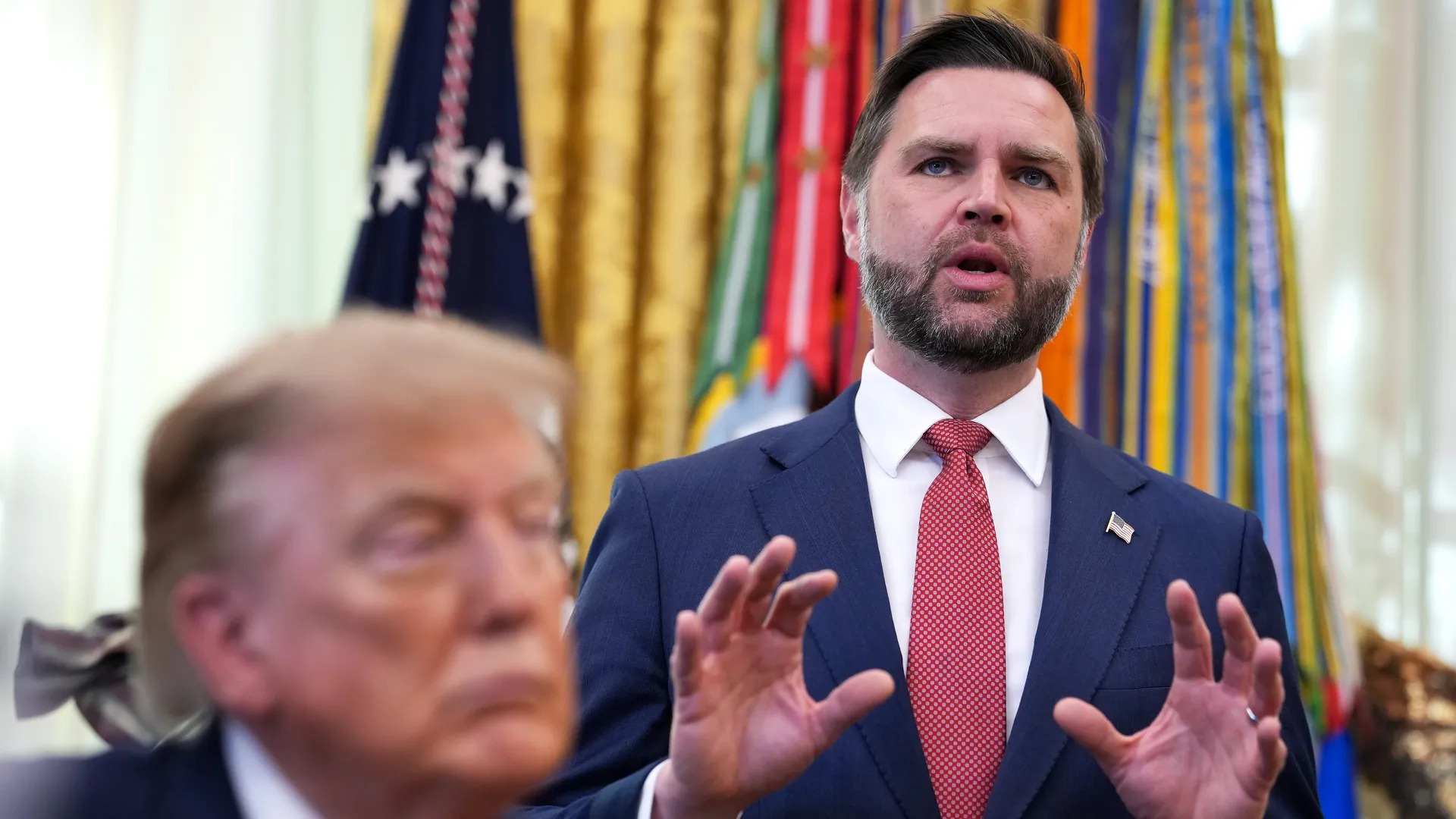
US Vice-President JD Vance has been personally involved over the past two weeks in indirect talks with Iran aimed at securing a fresh ceasefire and restarting nuclear negotiations.
According to Axios, Vance’s intense engagement indicates that he has taken it upon himself to extract the US from the conflict, which he views as responsible for the Republican Party’s shocking losses in this week’s elections.
This elevates the latest round of indirect talks to the highest echelons of the administration.
US officials and regional sources state that Trump is currently willing to let diplomatic efforts run their course to see whether any agreement is achievable.
Asked by reporters on Friday what his message was to Iran, Trump said, “We are talking to them.”
According to sources with direct knowledge of the matter, Vance speaks almost daily with Qatari Prime Minister Sheikh Mohammed bin Abdulrahman Al Thani, Pakistan’s Chief of Army Staff Field Marshal Asim Munir, and other mediators regarding the negotiations with Iran.
White House envoy Steve Witkoff and Jared Kushner, President Trump’s adviser and son-in-law, are also involved in the process.
Sources say Vance and the Qatari and Pakistani mediators have been discussing the possibility of holding a working-level technical meeting between the US and Iran in the coming days, though this has not yet materialized.
Before the war began in late February, Vance was among the most sceptical voices in Trump’s inner circle on the issue, advocating instead for a diplomatic solution.
In April, he led the US negotiating delegation at the Iran summit held in Islamabad and was personally involved in the talks that yielded a memorandum of understanding (MOU) signed between the US and Iran in June.
Vance subsequently headed the US delegation during a series of direct talks with Iran in Switzerland.
Two weeks ago, Vance sent a letter to Mohsen Rezaei, Secretary of Iran’s Supreme National Security Council, proposing that direct negotiations resume.
Rezaei is one of the closest advisers to Iran’s Supreme Leader, Mojtaba Khamenei.
Iranian officials noted that Vance’s letter generated positive momentum toward restarting talks.
On Wednesday, Vance said the war was the primary reason for the Republicans’ repudiation at the polls.
Sources involved in mediation efforts report that while progress is being made, the process is moving very slowly.
On Friday evening, the prime minister of Qatar said, “Over the past few weeks, we worked with our colleagues in the US administration who have a sincere intention to contain the situation and de-escalate. Thanks to them and the voices of reason in Tehran, we prevented the situation from spinning out of control.”
The prime minister added that discussions with the Trump administration continued following the midterm elections, though they were not as active as in previous days “because there are other matters.”
Nevertheless, he noted that the US intention to find a diplomatic resolution “remains ongoing” and emphasized that an agreement is possible.
On Friday morning, Trump and the Emir of Qatar discussed Qatari efforts to bridge differences between the US and Iran as part of an accord.
According to a statement from his office, Sheikh Tamim emphasized the necessity of “pursuing dialogue and diplomatic channels to resolve differences, prevent the region from facing further escalation, and ensure freedom of maritime navigation as well as the security of energy supplies.”
Separately, Trump confirmed on Friday that the US military conducted a strike on an anti-aircraft missile launcher on Qeshm Island in the Strait of Hormuz after it fired a missile at a US fighter jet.

British magazine The Economist reported that mobilization, conflict casualties, and pervasive uncertainty have left Ukraine confronting the threat of demographic collapse.
According to data cited by the magazine, Ukraine’s fertility rate has declined from 1.2 children per woman in 2020 to between 0.8 and 0.9.
This rate marks a lower level than that of any major nation except South Korea.
In the first half of 2026, the number of deaths in Ukraine surpassed the number of newborn babies threefold.
The report noted that ever since independence was gained in 1991, the number of births in the country has lagged behind the number of deaths every year.
The Economist emphasized that the demographic collapse driven by the ongoing fighting constitutes an “existential threat.”
The magazine identified mass refugee migration as the principal driver of the population loss.
More than 5 million Ukrainians reside abroad, predominantly in Europe.
The proportion of those wishing to return among those who left the country is also steadily shrinking.
According to data from the Centre for Economic Strategy (CES), the share of those seeking to return dropped from 74% in 2022 to 43%.
The fact that the majority of refugees consist of Ukrainian children and women under the age of 44 further aggravates the demographic picture.
The Kyiv government decided to exempt men under the age of 25 from mobilization to alleviate the demographic decline.
The magazine reported, however, that many young people have fled the country, while those who remain do not plan to start families.
Projections cited in the report indicate that even if hostilities cease in the coming years, Ukraine can, at best, expect merely a deceleration of depopulation.
Olga Duhnich, an expert at the Ukraine-based think tank Frontier Institute, stated that the generation born in the 1990s and 2000s is the least populous in Ukraine’s modern history, meaning the country cannot expect a post-conflict baby boom.
The United Nations (UN) projects that Ukraine’s population will decline by 0.7% to 0.9% each year over the next two decades.
Under this projection, Ukraine’s population will fall to approximately 25 million by 2040.
If hostilities drag on, people are expected to abandon plans to have children, deepening the crisis even further.
Beyond exempting men under 25 from mobilization, the Kyiv government is rolling out various support packages to boost birth rates.
Under legislation enacted in the country, parents who have children receive a direct payment of 50,000 hryvnias (around $1,100).
Parents are also paid 7,000 hryvnias each month during the first year.
Other state programmes subsidize childcare costs, while Ukrainian soldiers are granted free freezing of egg and sperm cells.
Ukrainian Minister of Social Policy Denis Ulyutin said in May to the Livyi Bereh media outlet that roughly 22 to 25 million people lived in government-controlled territories.
Ulyutin characterized the prevailing picture by saying: “This is a catastrophe.”
Ella Libanova, Director of the Institute for Demography and Quality of Life Research, estimated the population at 29 million during the same period.
Libanova attributed the steep fall from a population of 30 million in 2025 to high death rates and the demographic crisis.
In a statement in October, Libanova announced that Ukraine’s population had slipped to 28.5 million.
Institute Director Libanova said: “The population is already at 28.5 million; we lost half a million people. We lost them, but thankfully this was still caused by migration rather than casualties.”

Narek Karapetyan, a lawmaker and head of the Strong Armenia faction in the Armenian parliament, has urged opposition parties to unite around four core principles set out in a joint declaration.
The key points of the declaration include resisting territorial concessions and blocking the adoption of a new constitution, which the opposition has termed the “Aliyev constitution”.
According to a report by Aysor.am, Narek Karapetyan stated that the opposition meeting was originally planned to be led by his uncle, businessman and Strong Armenia movement leader Samvel Karapetyan.
“We initiated the meeting, but the authorities took preemptive steps to prevent Samvel Karapetyan from launching the national unification process,” Narek Karapetyan said.
Noting that, despite these events, opposition representatives convened and signed a joint declaration based on four agreed articles, Narek Karapetyan invited other opposition forces and members of the public to join the alliance.
“We will not allow them to implement the Aliyev constitution in Armenia. We must unite,” Karapetyan said.
Ahead of these developments, Armenian National Security Service personnel detained Strong Armenia Party leader Samvel Karapetyan following a search of his home.
The party’s press secretary, Agavni Sukiasyan, announced that on the morning of the same day, the Investigative Committee of Armenia searched the homes of both Samvel Karapetyan and Narek Karapetyan.
In a report citing the Investigative Committee, Armenpress stated that Samvel Karapetyan was detained as part of a case involving allegations of causing large-scale financial damage to the Electric Networks of Armenia (ENA) company, embezzling entrusted property, and money laundering.
According to committee figures, the total damage inflicted on the company exceeds $179 million.
Narek Karapetyan’s home was also searched at the end of July as part of a criminal case.
On 22 July, Armenia’s Central Electoral Commission approved the Prosecutor General’s request to strip Narek Karapetyan of his parliamentary immunity, and Karapetyan was charged with large-scale money laundering.
According to information reported by Sputnik Armenia, the investigation is linked to charges brought against Strong Armenia supporter Aleksan Aleksanyan.
Investigative authorities allege that Aleksanyan received approximately $4.4 million and €230,000 from the Karapetyan-owned Tashir Foundation under the guise of gifts and loans.
Several criminal cases had previously been opened against Samvel Karapetyan.
In 2025, Karapetyan was charged with publicly calling for the violent seizure of power after backing the Armenian Apostolic Church, which had been criticized by Armenian Prime Minister Nikol Pashinyan.
In January, legal proceedings were also launched against Karapetyan on charges of large-scale tax evasion and money laundering.
Separately, in early July 2025, the Armenian parliament approved a bill enabling the nationalization of the Electric Networks of Armenia company.
In March, Armenia’s Constitutional Court ruled that the nationalization process in question complied with the law.

IRAM expert Oral Toğa assesses Middle East shifts after US vote

Netanyahu Arab party attack triggers crisis over coalition

Fico accuses Merz of blackmail over threat to veto EU budget

US Senate panel seeks records in Trump-linked crypto investigation

Europe ready for arms and missile control talks with Russia, FT says
-
 Diplomacy1 week ago
Secular dress code dispute exposes deeper Türkiye-Azerbaijan strains
-

 Russia2 weeks ago
US and Russia weigh energy deals and corporate return in peace talks
-

 Europe5 days ago
EU urges citizens to prepare 72-hour survival kits for crises
-
 Middle East2 weeks ago
US warns Gulf allies of possible Iran strikes after midterms
-

 America2 weeks ago
Bolsonaro reportedly leaves Brazil on jet linked to scandal-hit firm
-
 Asia1 week ago
China expands Africa arms sales, displacing France and Western rivals
-

 Diplomacy2 weeks ago
Steinmeier seeks to de-escalate German-Chinese tensions on visit
-

 Europe2 weeks ago
EU prepares Ukraine peace mission to Abu Dhabi led by Björn Seibert
