Interview
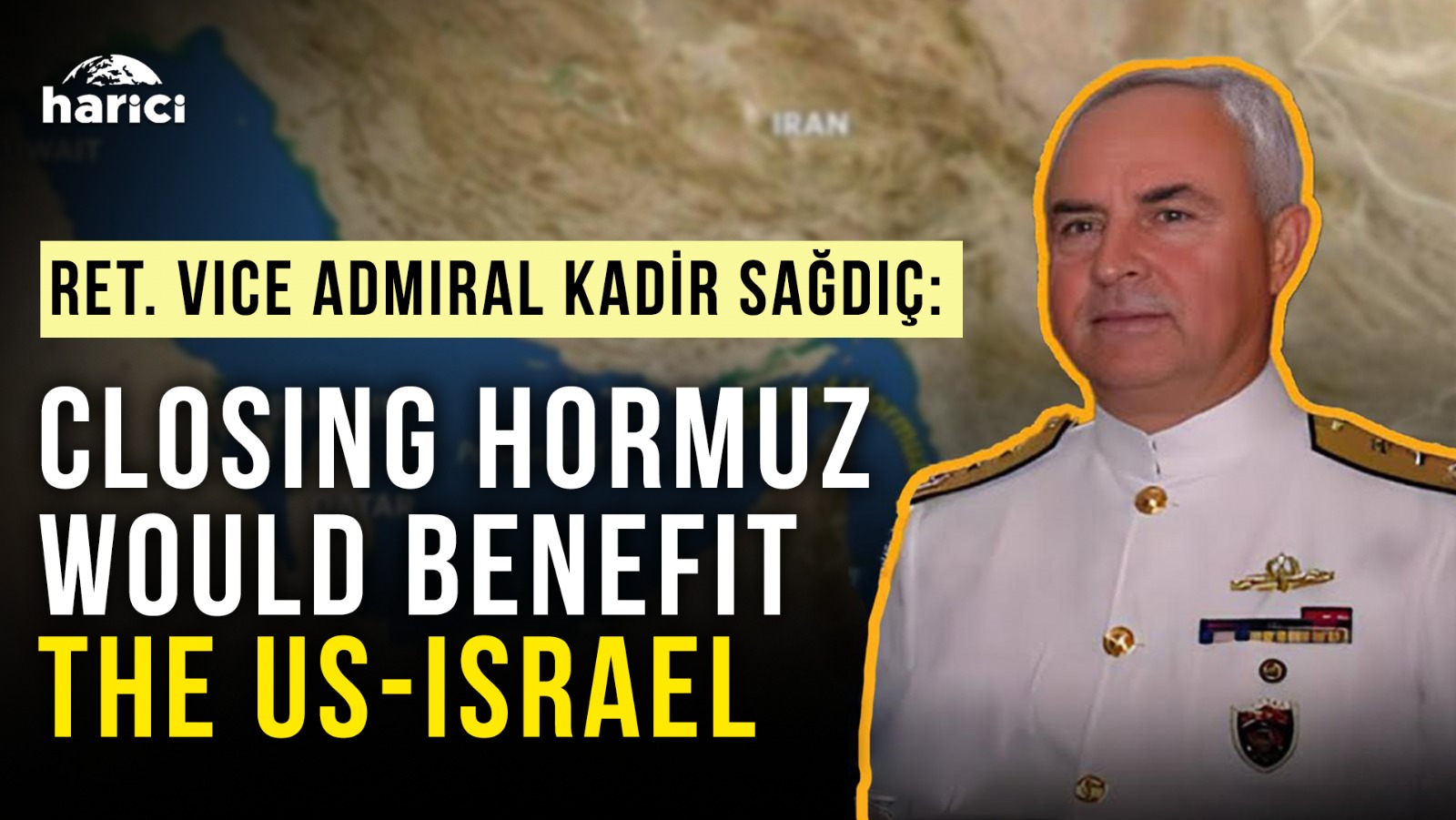
Retired Vice Admiral Kadir Sağdıç: ‘Closing Hormuz would benefit the US-Israel’

Retired Vice Admiral Kadir Sağdıç previously served as the Head of the Planning Group for BLACKSEAFOR (Black Sea Naval Cooperation Task Group), a multinational naval force established to enhance maritime security and cooperation among the Black Sea littoral states. In 2009, as the Southern Sea Area Commander, he was in charge of the naval command that managed Türkiye’s maritime security in the Aegean and Eastern Mediterranean. We asked Kadir Sağdıç about the developments and potential scenarios concerning the Strait of Hormuz: “Closing Hormuz would benefit the US-Israel.”

‘Not possible from the perspective of international law’
At what stage of a crisis could a scenario to close the Strait of Hormuz be activated? What is the legal status of the Strait of Hormuz? What drills and simulations has the Iranian navy conducted based on this scenario to date?
The Strait of Hormuz, like the Strait of Gibraltar or the Baltic passages, is an international waterway and is not very narrow. In fact, its narrowest point is 30 kilometers wide. It is not like our Turkish Straits; for instance, the Bosphorus is 700 meters wide. Hormuz is 40 times wider, and there are different countries on its opposing shores. There is Oman, Iran, and it is littoral to the United Arab Emirates and also to Qatar. In a place where so many countries are littoral parties in the same region, closing the Strait of Hormuz is not possible under international law.
The Turkish Straits have a special status. Both the Dardanelles and the Bosphorus Straits are very narrow, and both of their coasts belong to the Republic of Türkiye. Although the Black Sea is an international body of water with vast areas of 140 and 300 miles, the 12-mile territorial waters of the two countries [on either side of the Black Sea entrance] do not close off the sea. However, in the Turkish Straits, which include the Sea of Marmara, the Bosphorus, and the Dardanelles, all coasts and the internal waters belong to Türkiye. Therefore, the Turkish Straits have a special status under the Montreux Convention. But the Strait of Hormuz has no such special status. In such a situation, yes, during past crises like the Iran-Iraq War, Iran took the initiative to strike tankers to disrupt traffic. But in doing so, it assumes the risk and must bear the consequences itself. It does not do this by taking refuge in international law.
‘Revenue from China would be cut off’
In military literature, we call it a situation assessment. Before making a decision, we run it through a test. This involves three stages: suitability, feasibility, and acceptability. Let’s look at the Strait of Hormuz from this perspective. If Iran attempts to close it, what does Iran gain? Would closing Hormuz serve its purpose? That’s what we need to look at. For example, if it succeeds in closing it, it would draw attention to the economy, because petrol and natural gas costs would rise. At a time when the world economy is going through difficulties, it could draw the world’s attention to Hormuz via oil. This could provide a modest benefit, as if to say, “Pay attention to me, protect me, let the crisis de-escalate, and respect my rights. In return, I won’t close the strait.”
But if oil and natural gas prices increase, speculators will be the ones to benefit. You [Iran] cannot benefit in the long run. Eventually, even if the crisis turns into a war, it will subside at the end of the war. Therefore, for a sustained increase in oil prices, cartels like OPEC and others must make a collective decision. Supply in that region doesn’t just come from Iran. There are many players in oil supply, primarily countries like Saudi Arabia, Qatar, and Kuwait. Therefore, unless OPEC makes a lasting decision, oil prices will not remain high. They will rise during the crisis and then fall. Iran also sends its own supply to the world market through the very strait it would close. It has a major buyer, China, with which it has long-term contracts. It would suffer losses from that as well. This action would not bring gains to Iran, but losses, because it would cut off the revenue coming from China.
‘Closing Hormuz would make Iran a target’
Would an Iranian military action to close the Strait of Hormuz grant the US a “legitimate” right to intervene under international law? Or would the US use this as a pretext to find a “legitimate” justification for an attack on the Iranian navy with an international coalition?
What other harm would closing the Strait of Hormuz cause? Iran would politically broaden its range of adversaries. While its current counterparts are Israel and the United States, if the strait were to be closed, numerous countries affected by this would target Iran, leading to a major political imbalance. In other words, the political pressure on Iran would mount significantly. It would have unnecessarily made more enemies, and its own sales would be disrupted. Iran would have to revise its current agreement with China, saying, “I will close the Strait of Hormuz now, but if I survive the war, I will supply you with this much at this price.” It cannot close the Strait of Hormuz without revising this agreement with China behind the scenes and persuading them.
So, let’s say the decision to close it is made, but is it feasible? Can it be done? Feasibility here means, will your military power—your ships, unmanned aerial vehicles, aircraft, and land batteries—have enough firepower to stop the traffic passing through that strait? When Iran makes a move, the countries whose ships would be hit—and ships from all over the world pass through there—will be affected. It’s not just the littoral oil-producing countries that provide the supply; third-party ships also transit. Therefore, when those ships are damaged, their nations’ forces may also reach the stage of using force as part of self-defense.
The injured parties may not legally target Iranian elements directly. The United Nations Security Council will condemn Iran for the damage caused to third parties and will take measures. This could go as far as the use of force. That is, it won’t just be a condemnation. An international coalition force, under UN resolutions, under Security Council resolutions, would likely intervene against Iran. This would greatly strengthen the hand of the US and Israel. An intervention by just two countries would suddenly become a multinational action under a UN mandate, necessitating the use of force against Iran. In that case, the feasibility of closing the Strait of Hormuz also seems quite low.
Let’s assume you have the feasibility and the power, and you decide to use that military power to close it. You don’t, but let’s say you do. Well, is it worth taking that much risk, losing that many assets, and being on the losing side politically? At a time when Israel and the US are pressuring Iran, is it worth turning a significant part of the world against itself, suffering damage from the coalition forces they would form, and losing additional strength? Can it bear this risk? I think not. Therefore, when we test the logic of Iran closing the Strait of Hormuz, closing it brings no gain. It neither has the operational capability—its forces may not be sufficient to close it against the world—nor is the risk acceptable. Therefore, I assess that if it acts rationally, Iran will not close the Strait of Hormuz.
On the other hand, an attempt by Iran to close the Strait of Hormuz does not, of course, give the US a direct right to intervene. The US would need to evaluate this through United Nations Security Council resolutions. If Iran directly targets a US ship or an American tanker, then of course the US, as the other party, would engage in self-defense and could respond in kind. But we don’t know how Iran would implement this. Furthermore, I have logically assessed that such a decision will not be made.
‘The crisis will remain regional’
In such a scenario, how would the Iranian and Chinese navies react? Would it have an escalating effect on military tensions in other critical waterways around the world, such as the Strait of Malacca? Do you see a risk of a conflict in Hormuz spilling over to the Red Sea via the Houthis and other critical trade routes?
The question of how the Chinese navy would react to tension and escalation in the Strait of Hormuz region is also on the agenda. At this stage, China might react differently in its own vicinity, such as Taiwan and the China Seas. If a crisis develops there, it might launch a military operation. But I see no possibility of the Chinese navy participating in an operation in the Gulf region, in the Strait of Hormuz, or of China taking the initiative to intervene with armed force. There is no such probability. From what we have seen of China at this stage, I assess that it has no such intention in international relations. Increased tension here will have an effect on the Houthis, who have appeared to be aligned with Iran in the last year or two. Perhaps if Iran makes an attempt in the Strait of Hormuz, the Houthis could carry out similar actions in the Red Sea. I assess that a potential escalation in the Strait of Hormuz would increase Houthi activities. As long as the crisis and state of war continue, they might also undertake more advanced actions in the Red Sea.
I do not expect an intervention in other critical waterways, such as the Strait of Malacca, at this stage. However, if events escalate and blocs are formed—pitting the Eurasia “Heartland” [a geopolitical concept for the Eurasian landmass] of China, Russia, Türkiye, and Europe against the Oceania countries—meaning an intervention from the oceans (Pacific, Indian, and Atlantic) by the maritime-focused group led by the United States, the United Kingdom, Australia, and Canada (to which we should also add Korea and Japan)—then tension in the Strait of Malacca via countries like Indonesia and Malaysia could be possible. But this would mean the crisis has escalated to a global scale. This would be a very dangerous situation. I do not assess that it will reach that stage. I assess that this crisis will remain regional.