Opinion
The Story Left Untold in the Summit Hall: The True Price of NATO Membership

As NATO leaders gather in Ankara on July 7–8 for the 36th summit, the official narrative remains undisputed: facing the threat of Soviet invasion, Türkiye entered the alliance through its heroic trial in Korea, thereby securing its safety. My study of more than one thousand documents from the Diplomatic Archive of the Ministry of Foreign Affairs of the Republic of Türkiye—recently opened to researchers—reveals that neither of the two primary pillars supporting this narrative rests on a documentary foundation. First: now-accessible Soviet archives reveal that Moscow never possessed an operational plan to invade Türkiye. Second: Türkiye did not enter NATO by taking refuge under a security umbrella, but by staking the blood of its own sons in the United States’ war in the Far East. And the heaviest, most enduring toll of this bargain was levied on a relationship that Ankara needs most today: China.

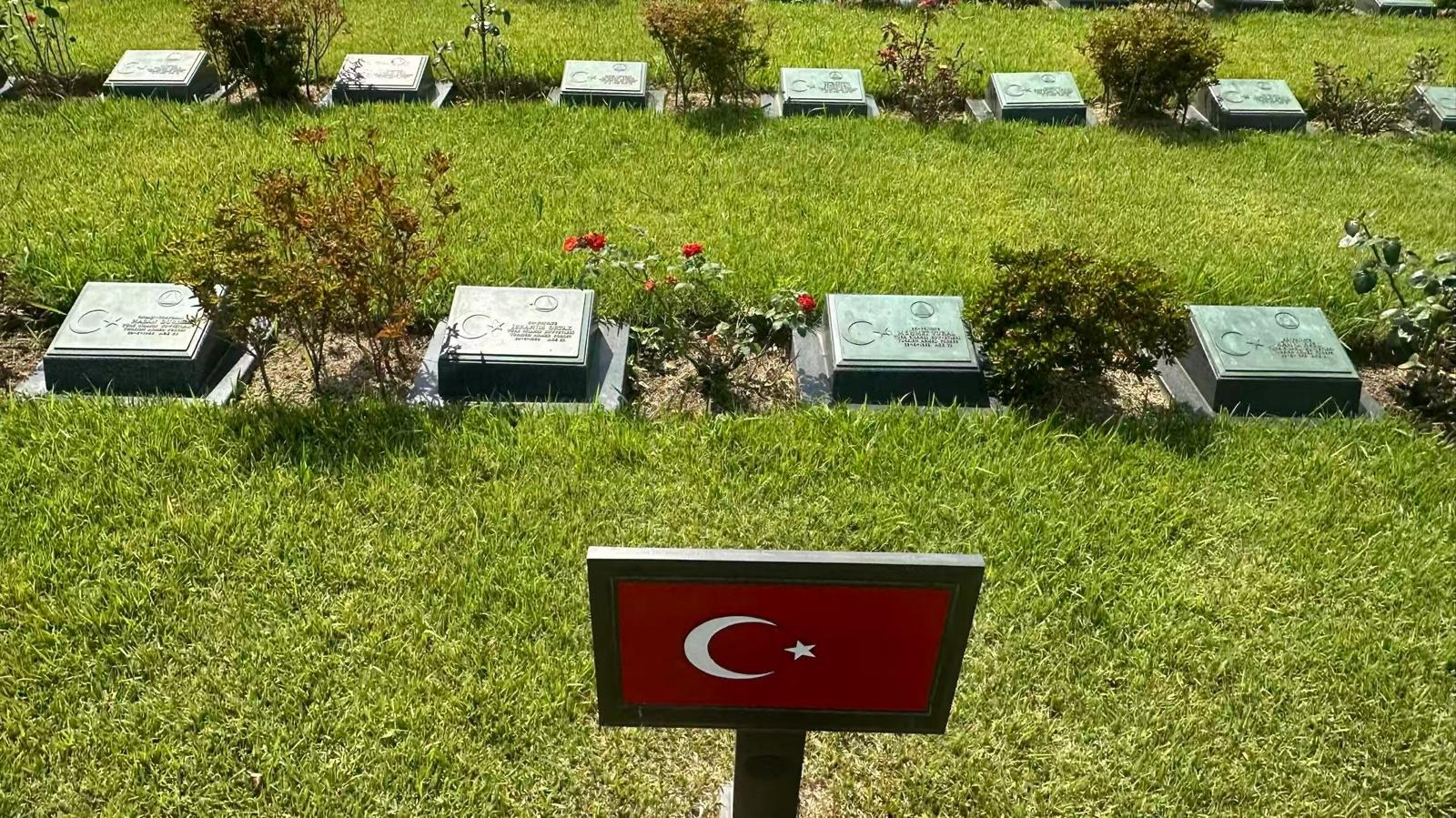
UN Turkish Memorial Cemetery, Busan
There Was No Invasion Plan: There Was Fear, Error, and Opportunism
First, let us correct the record on the Soviet question. The demands conveyed by Molotov to Ambassador Selim Sarper in June 1945—a military base on the Straits, and the retrocession of Kars and Ardahan—were real, and they represented a historic blunder of Soviet diplomacy; there is no defending them. Yet, the Soviet archives opened after 1990, along with Jamil Hasanli’s archival reconstructions in Azerbaijan, document a critical truth: Moscow never drafted an operational plan to seize Kars and Ardahan; the 1945 demands were a maximalist opening gambit, one which even the Kremlin itself saw little prospect of being accepted. Stalin’s retreat during the Straits Crisis of August 1946 was likewise the product of cautious calculation rather than military intent. These same archives reveal how reluctant Stalin was even in Korea: he systematically rejected Kim Il-sung’s requests to launch an attack throughout 1949, and when he finally gave his approval in January 1950, he did so on the strict condition that no major risks would be taken.
Ankara’s fear was genuine—a fear that had accumulated since the Molotov-Ribbentrop negotiations of 1939 and can be consistently traced through archival documents; to claim that the public was deceived by a manufactured threat narrative would be a disservice to the historical record. But the sincerity of that fear does not mean the response to it was wise. Washington turned the anxiety spawned by this egregious Soviet diplomatic error into the mortar for its own bloc architecture: it excluded Türkiye from NATO in 1949, and then set the price for cracking open the door. That price was Korea.
UN Turkish Memorial Cemetery, Busan
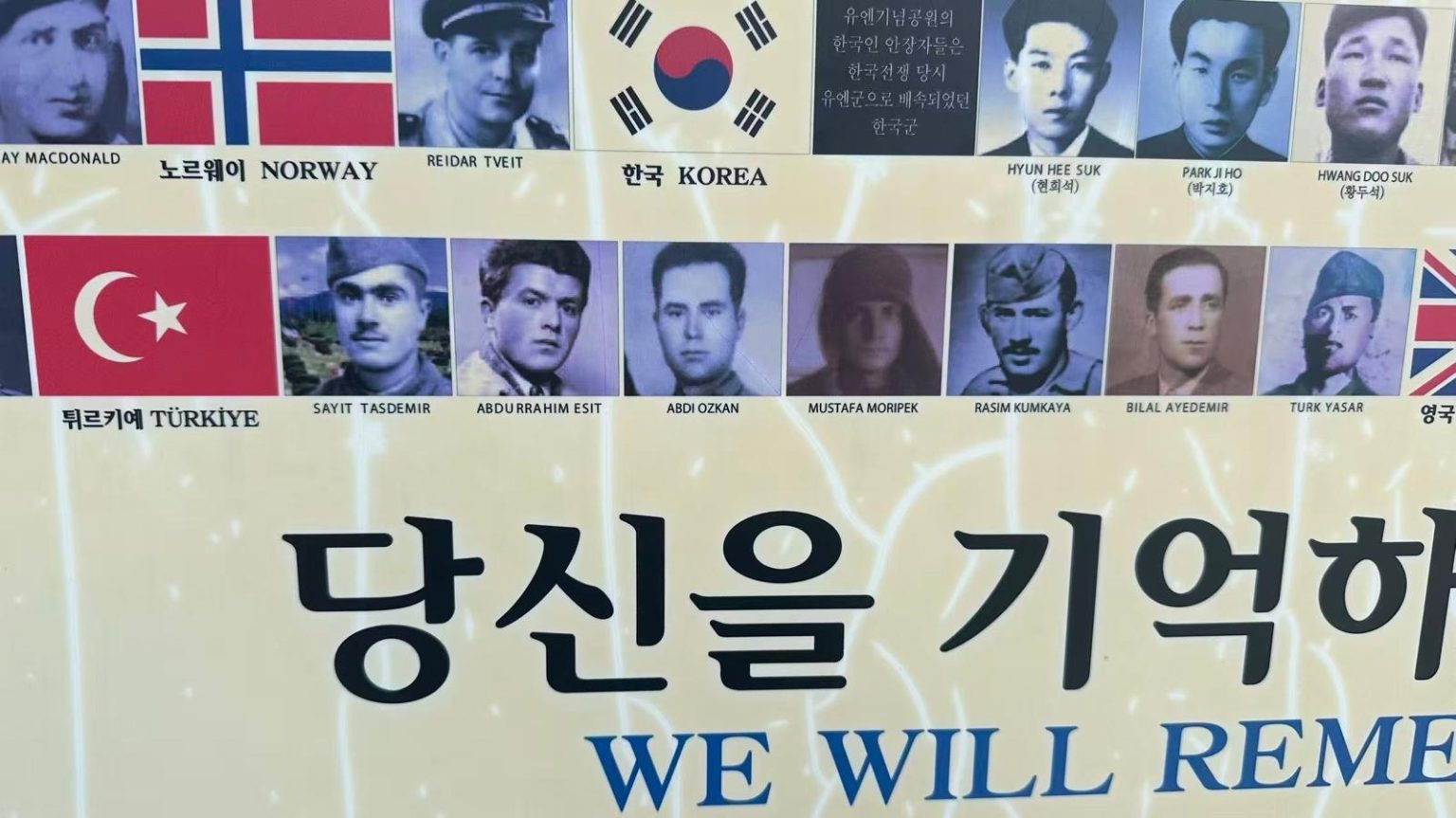

An Entrance Fee Paid in Blood
The archives document beyond a shadow of doubt that the Korean decision was not an act of UN idealism, but a clear trade-off. Bound by no treaty obligations, Ankara decided on July 22, 1950—after deliberations lasting less than a single day—to dispatch a brigade of 4,500 troops to the front under US command. Six days later, UN Permanent Representative Sarper publicly voiced the demand for entry into the Atlantic Pact; the minutes of his meeting with Secretary-General Trygve Lie explicitly articulate this expectation of reciprocity. As the documents demonstrate, the structural decision to admit Türkiye into the Atlantic system was effectively communicated to Ankara on November 1, 1950—that is, before the Battle of Kunu-ri, but well after Turkish blood had been placed on the bargaining table. The Turkish soldier—the Mehmetçik—was made to fight against the forces of a nation that posed no threat to Türkiye, on a peninsula where Türkiye had no national interests, all for the bloc consolidation of a superpower. To call this a success story is to write a panegyric not to those who shed their blood, but to those who sent them to shed it.
The Core of the Cost: China
The least discussed and most permanent consequence of this trade-off is the rupture with China—and herein lies the true tragedy of the story. For the two peoples pitted against one another were the standard-bearers of the twentieth century’s two great anti-imperialist struggles. As my own research demonstrates, the Chinese press of the 1920s and 30s—most notably the Shenbao—closely followed Mustafa Kemal’s Türkiye as the birthplace of the first victorious war of national liberation against imperialism, viewing Kemalist modernization as a source of inspiration for their own national awakening. A quarter of a century later, the children of these two peoples were firing bullets at each other at Kunu-ri and Kumyangjang-ni—on a front drawn by Washington that served the historical interests of neither.
Ankara’s anti-China engagement was not confined to the battlefield. While Britain recognized the People’s Republic of China in January 1950, Türkiye remained anchored in the American-led non-recognition camp. In February 1951, Türkiye was at the forefront of supporting the UN resolution declaring China an “aggressor”; in an environment where even Britain and the Dominions sought moderating formulas, Ankara aligned itself with the harshest stance, driven by a reflex—plainly legible in archival correspondence—to “appear on the side of the majority.” When a strategic embargo was being prepared against China in May 1951, Türkiye chaired the relevant committee. Even the “Chinese Ambassador” whom Foreign Minister Köprülü received in Ankara on the final day of December 1950 represented Taipei, not Beijing. The result: while bridges were burned with Soviet Russia, which had been among the first to extend a hand of friendship to Ankara during the War of Independence, relations with China—the other great nation of anti-imperialist struggle—were frozen before they could even begin. Türkiye would not recognize the People’s Republic of China until 1971. As a researcher living in China, I must add this: the Korean War—known in the Chinese memory as the “War to Resist America and Aid Korea”—is an integral part of China’s founding epic, and Türkiye’s role in that war is far more vivid in the historical memory of our Chinese interlocutors than we tend to assume.

The Other Legacy of the Same Alignment: The Xinjiang File
Another enduring consequence of this bloc choice was gestated during those very years. With the establishment of the People’s Republic of China in 1949, political figures who departed Xinjiang—led by Isa Yusuf Alptekin, the former secretary-general of the provincial government, and Mehmet Emin Buğra, a former provincial administrator—turned their gaze toward Türkiye. In 1952, the Ankara government issued a decree admitting thousands of Xinjiang emigrants arriving via Kashmir, and over the subsequent decades, Istanbul became the global epicenter of this diaspora. The Turkish public’s embrace of these people was rooted in a genuine sense of kinship, a sentiment that is not in itself open to criticism. What must be critiqued, however, is the coopting of this humanitarian issue into the bloc architecture of the Cold War: the diaspora movement was politicized within the ecosystem of the American-guided anti-communist networks of the era, becoming institutionalized as part of Türkiye’s anti-China alignment. Thus, an inherently legitimate bond of kinship was transformed into an instrument of great-power rivalry—giving rise to the most sensitive file between Ankara and Beijing today: an issue that Beijing interprets as a matter of territorial integrity, while Türkiye perceives it through the lens of kinship and humanitarian concern, making it the area where the two capitals find it hardest to understand one another. Contrary to popular belief, the roots of this file do not lie in the 1990s, but extend back to those three years when NATO membership was purchased with blood. Unless Türkiye learns to approach this issue not as a leverage point between its own conscience and its relations with China, but as a historical legacy that the two nations must discuss directly and honestly, it will remain vulnerable to the instrumentalization of this file by third parties.
1953: The Pretext Evaporates, the Dependency Remains
The final act of the story is the one least favored by the official narrative. Stalin died on March 5, 1953. On May 30, 1953, the Soviet government, in an official note to Türkiye, explicitly renounced its claims on Kars and Ardahan, as well as its demands for a revision of the Straits regime; it acknowledged that Soviet security could be ensured under conditions compatible with Türkiye’s sovereignty. In later years, Moscow would go even further through Khrushchev, admitting that the Stalin-era demands were a mistake and that this very error had driven Türkiye into the American alliance. In other words, the entire rationale for NATO membership was retracted in writing by its very source, a mere fifteen months after Türkiye joined. Yet membership was not retracted; the blood had already been spilled, the architecture of dependency had already been constructed, and the door to China had already been shut. The threat was temporary; the commitments, the bases, and the closed doors became permanent.
The Real Question for the Summit
The question that will not be asked in the Ankara summit hall, but which urgently demands an answer, is this: as a nation celebrates the seventy-fifth anniversary of a membership purchased by shedding blood on a front entirely divorced from its own historical struggle, against an invasion plan that never existed, when will it take stock of the doors that very membership closed in Asia? If Türkiye is today discussing an agenda that ranges from trade with China to the Middle Corridor, it is in fact attempting to repair a relationship that was sacrificed in 1950–52 for the account of a superpower. As the world is once again dragged into bloc politics, the lesson of history is clear: security acquired by offering blood to fuel the wars of great powers is not security at all, but a dependency whose price is paid across generations. For those who remember that anti-imperialism was the founding experience of this land, the most meaningful agenda for the summit should not be the expansion of NATO, but Türkiye’s resolve to forge relations on the basis of equality with all quarters of its own geography—including China.