Opinion
The Western bloc’s move to counter China’s hegemony in Africa: The Lobito Corridor

Many of the rising stars among this century’s developing economies will emerge from Africa. Despite centuries of exploitation, the “Dark Continent” remains a potential source of wealth for the global economy, rich in both underground and surface resources. More importantly, demographic trends indicate that Africa is poised for significant advantages. The continent’s population, which stands at 1.304 billion as of January 1, 2025, is projected to reach 2.5 billion by 2050. This is significant not just in terms of population density, but also for the proportion of young people within the total population. In other words, a massive, dynamic population holds vast potential as a labor force. Another key point is Africa’s consumption trends. The fact that this dense population is also hungry for consumption increases Africa’s importance and appeal for global trade. This means Africa is not just a source of resources but also has the potential to become a massive market. We are talking about a market that could revitalize the global economy in the future.
South Africa, Egypt, Morocco, Algeria, Ethiopia, Kenya, Nigeria, Ghana, Gabon, Senegal, Guinea, and the Democratic Republic of Congo (DRC) are prominent countries, both for their populations and their natural resources. It is highly likely that these nations will play a leading role in the continent’s rise. Bordered by the Mediterranean Sea to the north, the Indian Ocean to the east, and the Atlantic Ocean to the west, the continent will also hold strategic importance for future global trade corridors.

CHINA IS FAR AHEAD, BUT…
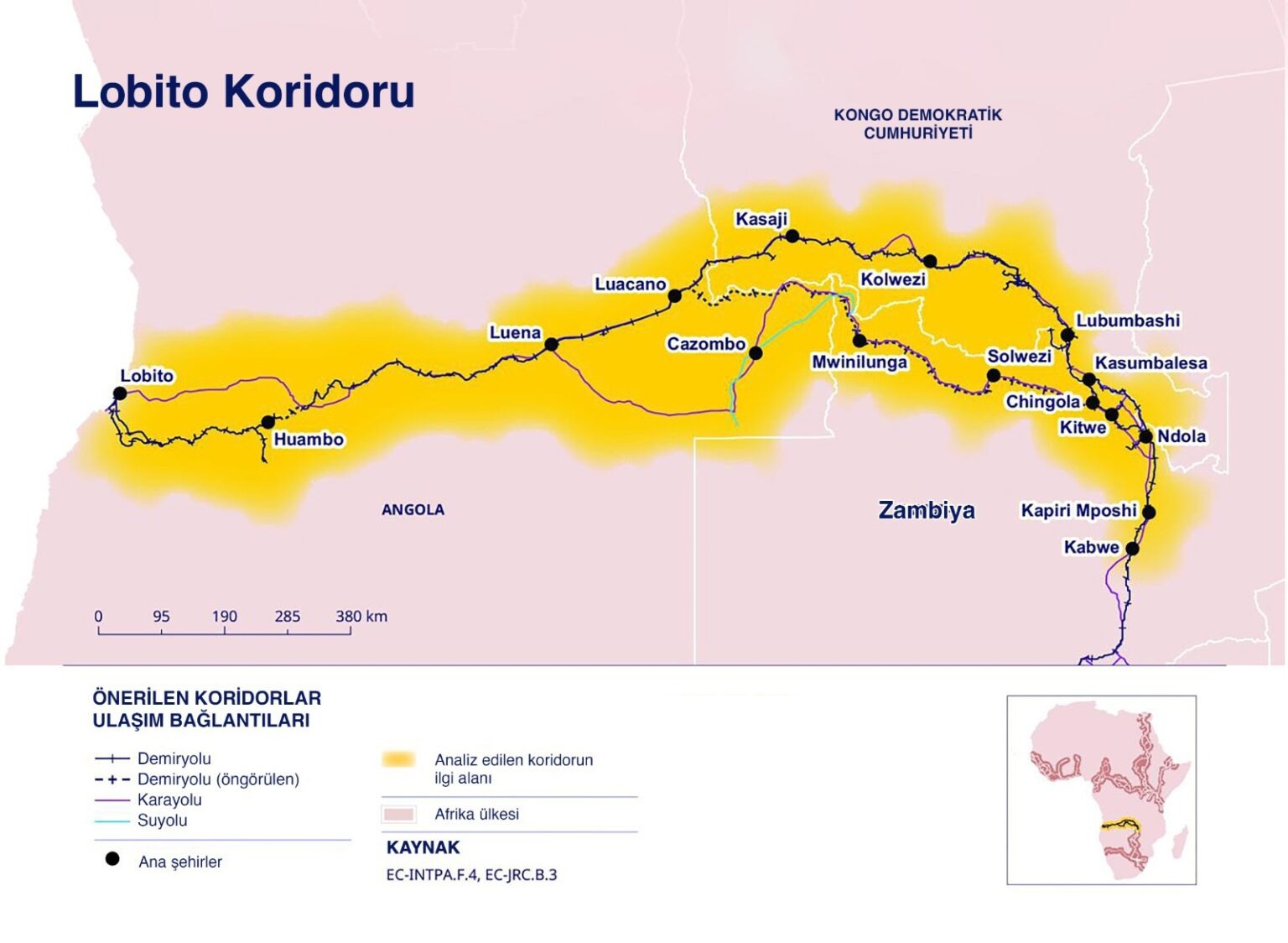
For all these reasons, it appears Africa will become the primary arena of competition for major powers starting from the second quarter of this century. China has already been making significant investments in the continent for a long time. The rise of Beijing’s economic influence in Africa is undeniable. In 2009, China surpassed the United States as the continent’s largest trading partner, and its recent trade volume is four times that of US-Africa trade. This situation has alarmed American policymakers about the decline of US influence on the continent, sparking their interest in development and infrastructure investments to improve and facilitate US-Africa economic ties. One of these initiatives is the Lobito Trade Corridor. First proposed in 2023, the Lobito Corridor is a 1,300-kilometer railway running from east to west through Zambia, the DRC, and Angola.
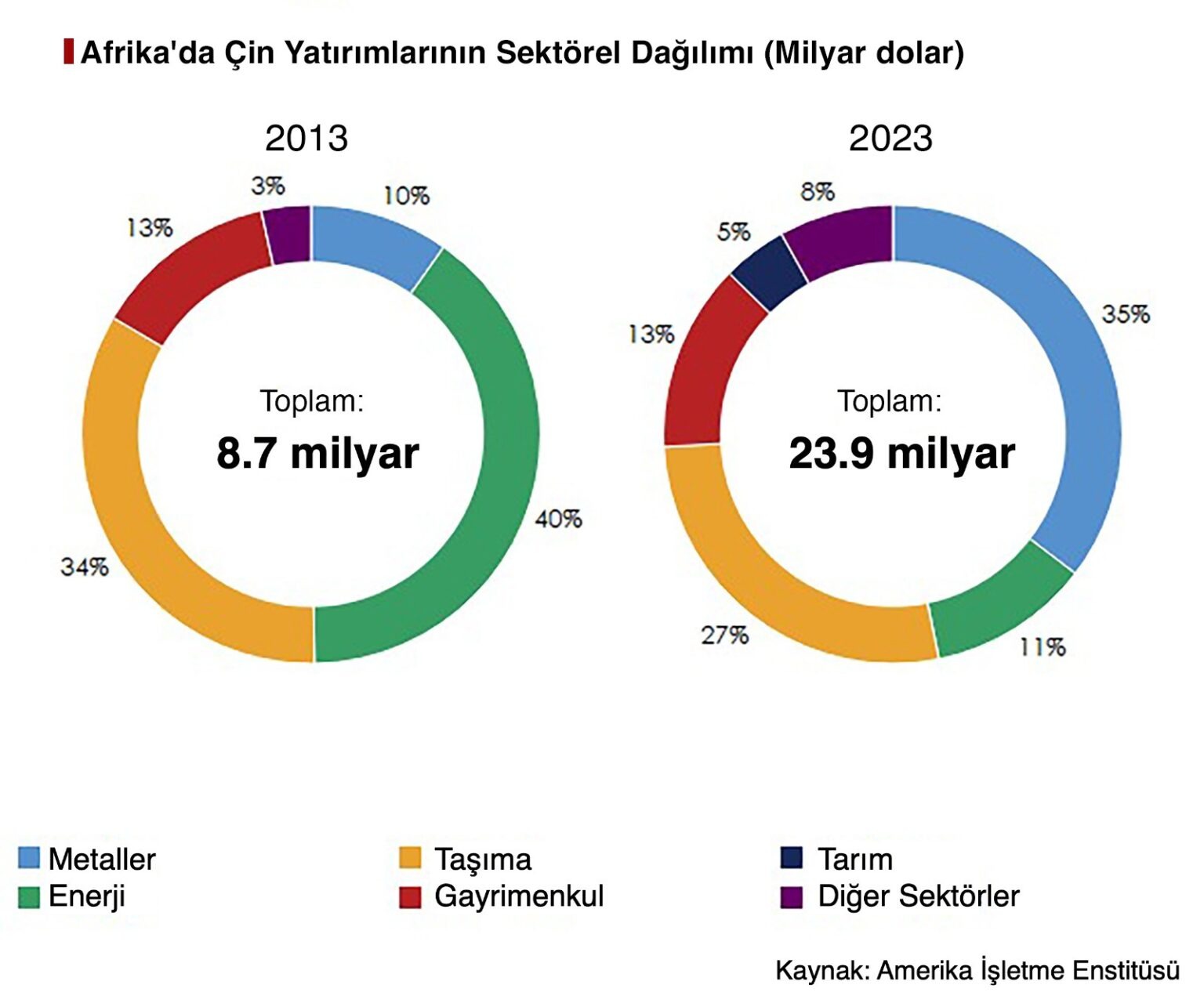
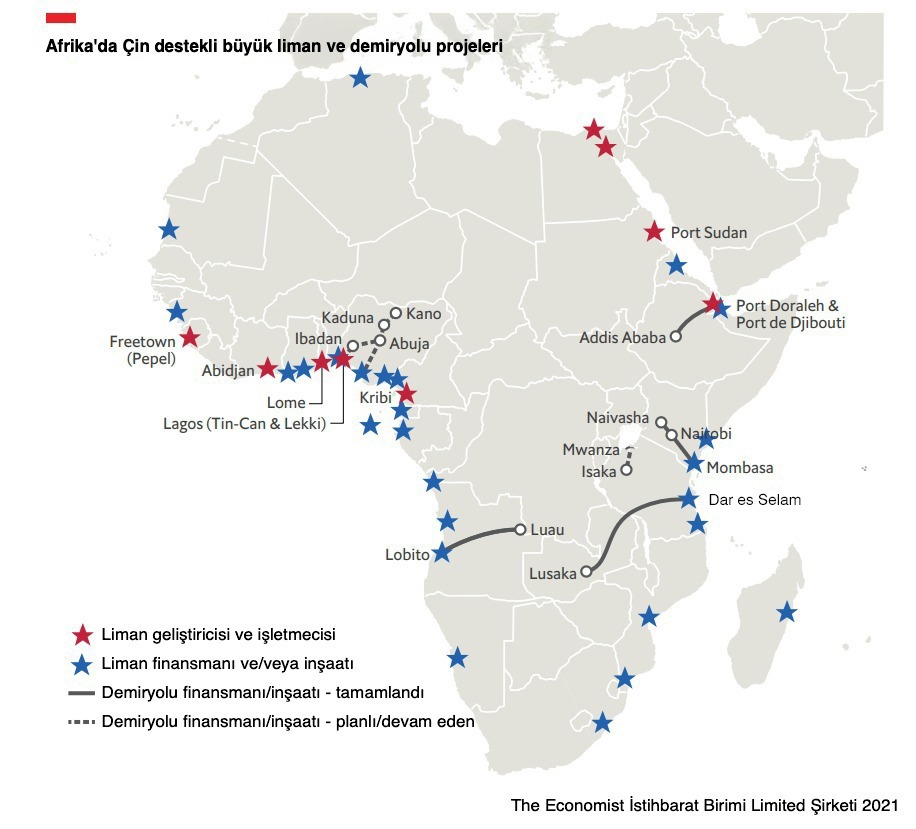
Any US initiative in Africa must catch up to and create the potential to compete with China’s longer-term and more comprehensive engagement strategy. For the past decade, China has been conducting these activities through its Belt and Road Initiative (BRI), a massive infrastructure and economic development project spanning Asia, Europe, and Africa. To date, the governments of many African nations have signed memorandums of understanding related to the BRI, and this initiative has facilitated billions of dollars in investment for the construction of roads, ports, railways, and other critical infrastructure. In 2023 alone, approximately $21.7 billion in loans flowed from the BRI to Africa. Including investments under the BRI and other bilateral agreements, it is estimated that China has invested a total of $2.23 trillion in Africa since 2005.
It is crucial to remember that every financial flow has geopolitical objectives and consequences. Through this financial power, China has been able to secure access to significant amounts of minerals and rare earth elements from Africa. The DRC, where Chinese companies own 72 percent of all cobalt and copper mines, is a case in point. Similarly, in Guinea, which is rich in bauxite deposits, Chinese companies are major stakeholders in the Simandou iron ore mine.

AIMING TO CHIP AWAY AT CHINESE DOMINANCE
The US is aware that it must increase and sustain its influence in Africa to solidify its global hegemony. It has little choice but to do this in coordination with European Union (EU) countries, which established vast colonies in the past and have historical, political, and economic ties to the continent. However, the extent to which it can achieve a coordinated, “win-win” cooperation with the United Kingdom, France, and other EU nations is not so clear. After all, these were the very countries it competed with on the continent until recently. To give a recent example, when France was being pushed out of the Sahel countries a few years ago, there was no shortage of American officials in Washington rubbing their hands with glee. Washington planned to fill the void left by France in the region. However, the national independence-minded governments in the region seem to have thwarted this American dream for now. The sight of Nigeriens demonstrating with Russian flags during the political tensions in Niger can perhaps be seen as a symbol of the anti-Western awakening in Africa. The statements by Burkina Faso’s President Ibrahim Traoré are another example.
With China being the most important trading partner in a large part of the continent, the Western Bloc’s job is harder than ever. In fact, it seems they will have to focus more on getting whatever they can from the region rather than truly defeating China. The Lobito Corridor, a project designed by the US in the south of the continent to rival the BRI, is a key part of this objective—though whether it will achieve its goal remains a question mark for now.

A “MULTILATERAL” IMAGE UNDER US LEADERSHIP
Nearly two years have passed since the project’s inception. Announced at the EU Global Gateway Forum in October 2023, the project brings together the African Development Bank (AfDB), the Africa Finance Corporation (AFC), the United States, and the European Commission to jointly construct a railway connecting Zambia’s northwest to the Port of Lobito on Angola’s Atlantic coast.
The financing structure of the Lobito Corridor resembles that of the BRI, with the US taking on the role of “primary facilitator” as the main financier of the investment. From the project’s start until September 2024, Washington provided over $3 billion in financing across various sectors, including transport and logistics, agriculture, clean energy, health, and digital access. A significant portion of the funding is channeled through the Partnership for Global Infrastructure and Investment (PGI), a joint initiative of G7 countries established in 2022 that aims to play a larger role in global infrastructure.
The Lobito Corridor attempts to present itself as just such an alternative. First, it appears to adopt a more multilateral perspective than a typical BRI project, seeking to partner with regional actors like the AfDB, which has been an active supporter of the corridor from the outset. The AfDB’s involvement serves two critical purposes. On a financial level, it helps distribute the financial burden of raising money for infrastructure projects, which have a long-term perspective on profitability. This is evident from the $1.6 billion the AfDB helped raise in 2023. On a political level, the AfDB helps alleviate concerns about the hegemony of major powers like the US or China. The multilateral approach also brings external actors into the process. For example, the World Bank provided $300 million for a complementary local initiative, marking the first infrastructure project the bank has contributed to in Africa since 2002. The European Commission has also pledged to conduct environmental and social feasibility studies to limit the impact on vulnerable habitats along the Lobito Corridor route. In other words, it comes with a “green” makeover!
CORNERSTONES THAT REVIVE MEMORIES OF COLONIALISM
The purpose of the Lobito Corridor is also familiar in that it aims to build new infrastructure in developing countries that lack capital. This infrastructure is being built not because it is profitable on its own, but because it enables other profitable economic activities. The project envisions the construction of approximately 550 kilometers of new railway line in Zambia, from Jimbe on the border to Chingola in the Zambian copper belt. This new line will connect to a newly constructed line in Angola at the border, which will then link to the existing Benguela railway at Luacano. The result will be a new trade corridor providing Zambia with access to the Atlantic Ocean. The project also includes the construction of about 260 kilometers of feeder roads and the refurbishment of the 120-year-old Benguela railway.
However, one must not forget that Africa has a memory. It is worth noting that for many Africans, the Benguela railway evokes the brutal exploitation of the colonial era—and not just the railway, but the savage, bloody, and relentless exploitation by Europeans! This, perhaps, setting aside other disadvantages, is the Western Bloc’s Achilles’ heel in its competition with China.

TO SECURE THE SHORT-TERM SUPPLY OF STRATEGIC MINERALS
For this reason, European countries and the US seem to be taking a page from the BRI’s book to avoid reviving bad memories. The Lobito Corridor is trying to develop an approach that also satisfies Africans while making infrastructure investments, such as strengthening the infrastructure of the participating countries and increasing their foreign trade volumes. This, of course, is a means to an ultimate end.
The project envisions trade flows moving westward along the Atlantic Ocean route. The goal is to secure the supply of rare earth minerals and industrial metals, which are strategic raw materials for the green energy, electric vehicle, battery technology, IT, and telecommunications sectors. As is well known, China holds global hegemony in the rare earth minerals market, and the US and EU aim to reduce this dominance, even if just by a little. Let’s call this the project’s bonus! The DRC is extremely rich in these minerals. In fact, the country possesses great wealth in many strategic minerals.
The new railway in the Lobito Corridor project has the potential to establish supply lines from both the DRC and Zambia by connecting the Zambian copper belt to an Atlantic port for the first time. Copper, the most important industrial metal, has become an even more critical strategic raw material, especially with the green transition. Previously, Zambia’s metal exports tended to flow eastward from Tanzania’s Port of Dar es Salaam. This time, the first shipment of copper to the US was loaded onto a container ship from Angola’s Port of Lobito. This shipment followed a series of copper shipments to European and Southeast Asian ports since Lobito Atlantic Railway took over the concession in January of this year. This is an indicator that access for mines in the “Congo copper belt” to Western markets, particularly the US, will increase. And such a supply line is vital for American companies to maintain their competitiveness against Chinese firms.
THE GOAL: TO INCLUDE TANZANIA IN THE CORRIDOR
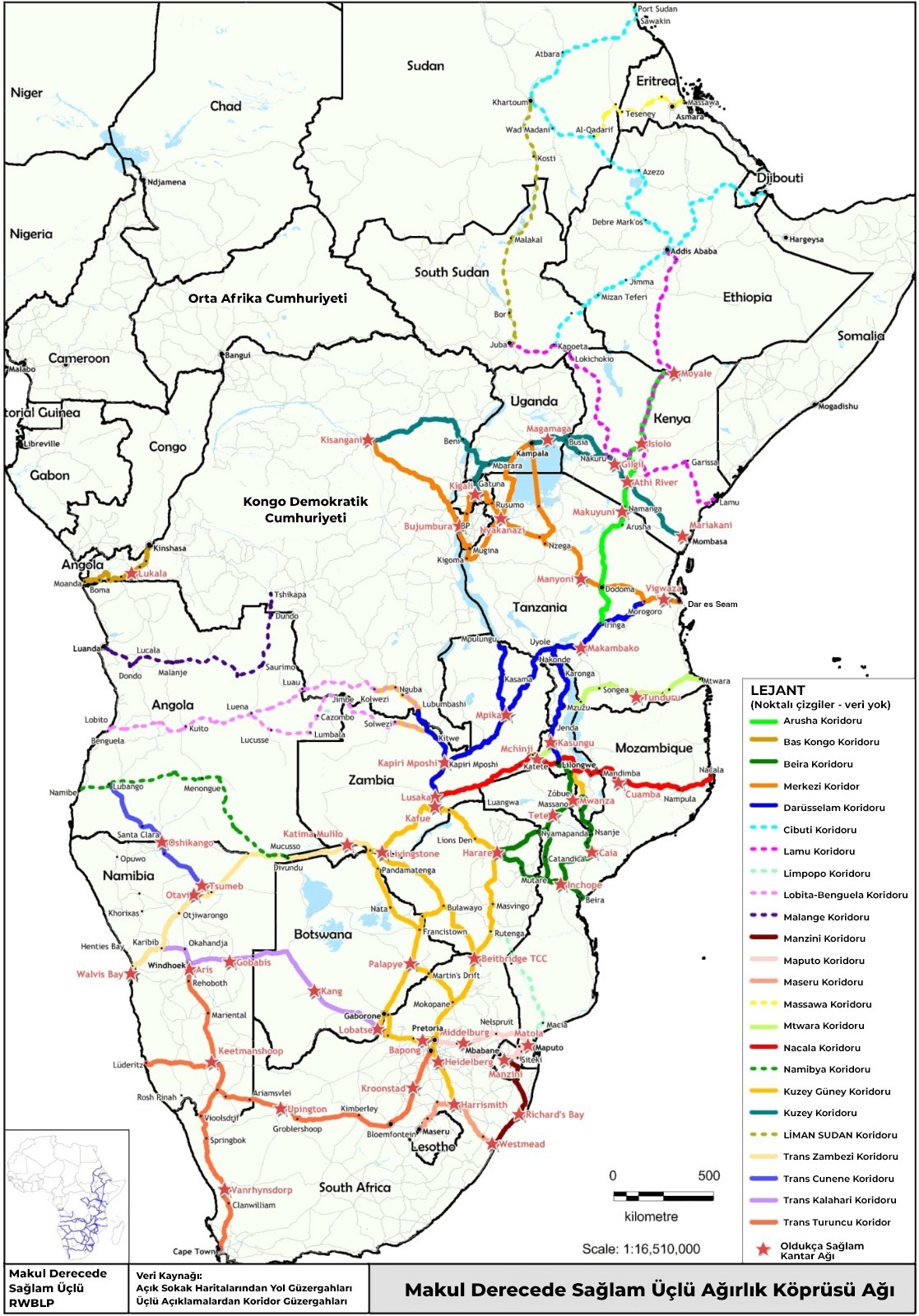
The US also aims to expand the Lobito Corridor. This expansion strategy came to light in August 2024, when Helaina Matza, the Special Coordinator for the PGI at the US Department of State, announced that talks were underway to extend the corridor to Tanzania. With this, Washington revealed its plan to create a more comprehensive “Trans-African Corridor” connecting the Atlantic and Indian oceans. This move should be seen not merely as a commercial objective but as a geo-economic maneuver. Through it, Washington aims to somewhat restrain the rapidly growing Africa-China trade along the Indian Ocean route and become an effective actor on that route. Matza also added that the refurbishment of the Benguela railway, the first phase of the Lobito Corridor, was progressing smoothly and that copper shipments were flowing from the DRC to the US for the first time.
The second and more ambitious phase, the construction of a new railway in Zambia, was awaiting the completion of feasibility studies. The decision to open up all the rare earth minerals in the deposits along the corridor to trade eastward via Dar es Salaam might seem illogical for the Western Bloc at first glance. However, this is likely part of a long-term strategy.
First, the infrastructure largely already exists in the form of the Tazara Line, which connects Dar es Salaam on the Indian Ocean to Kapiri Mposhi in Zambia. Connecting to the Lobito Corridor at Chingola would require approximately 200 kilometers of new construction. Second, implementing the Trans-African Corridor could strengthen the soft power profile of the PGI, which claims to be motivated above all by advancing good governance and regional economic growth.
WHEN THE MONEY DRIES UP…
The Lobito Corridor is a significant move for the Western Bloc, but it may be a project that is a little too late. While China’s foreign direct investment in Africa averaged $4 billion between 2019 and 2021, higher than that of Western countries, the US direct investment amount had declined in some years. However, Beijing’s commanding competitive advantage has weakened recently. The post-pandemic economic slowdown and tightening credit facilities caused BRI-related investments in Africa to fall from $16.5 billion in 2021 to $7.5 billion in 2023—a 55% drop. A sense of fatigue with the BRI emerged as perceptions of it worsened in many regions between 2017 and 2022, partly due to growing debt concerns in BRI countries. After all, massive infrastructure and superstructure investments require huge financing, and every loan has to be repaid.
AFRICA COULD PROFIT FROM THIS RIVALRY
In summary, that is the situation for the parties involved. The path ahead is paved with advantages and disadvantages. So, is it still possible for Washington to position itself in Africa? Or are these investments sufficient? It is not easy to give a clear answer to these questions for now. It is true that the Lobito Corridor and similar projects face real challenges; China’s successes in infrastructure development and the growing interest of Africans in Beijing are undeniable facts. As a result, economic and diplomatic relations between Beijing and African countries are strengthening. The continent is home to 54 states, each with its own development needs and experiences—both positive and negative—of interacting with China. And if there is one thing that can unite Africans amidst this diversity, it is the shared need for capital and infrastructure investment.
It appears that the intensifying competition between China and the US-EU alliance could create a window of opportunity for Africans. The countries that stand to gain the most from this rivalry will be the African nations themselves—if their governments can truly act in the best interests of their people. When it comes to Africa, issues like bribery, corruption, dependency, and internal conflicts come to mind, and unfortunately, there is no guarantee that the right decisions will always be made.