
America
US oil executives challenge White House over Iranian transit fees in Strait of Hormuz


US oil executives are challenging a White House proposal that would permit Iran to levy transit fees on vessels passing through the strategic Strait of Hormuz as a condition for peace negotiations.
A source familiar with the matter told POLITICO that oil companies have contacted the White House, Secretary of State Marco Rubio, and Vice President JD Vance to contest the arrangement.
“We’ve never had to do this before, and I thought we were winning the war,” said the source, who serves as a consultant to the oil industry. “Everywhere you have access to the administration, you ask, ‘What are you thinking?'”
The source added that the response from administration officials to industry representatives was not a “cold shoulder,” but rather a neutral acknowledgment: “It’s more like, ‘Yeah, okay, we’ll take note.'”
A person who attended the proceedings stated that petroleum sector representatives met with senior administrative staff at the State Department on Wednesday morning to voice their concerns.
Central to their grievances is that acceding to Iran’s demands would add a $2.5 million transit fee to every shipment, alongside higher insurance premiums—costs that would ultimately be passed on to consumers.
Industry representatives argued that granting Iran control over the Strait of Hormuz could set a precedent, potentially encouraging countries like Singapore and Türkiye to demand transit fees for key trade routes in the Strait of Malacca and the Turkish Straits. Furthermore, paying such fees could place companies in legal jeopardy for violating sanctions imposed on Iranian officials.
The person, speaking on condition of anonymity because they were not authorized to talk to the media, added that companies have also conveyed their concerns directly to Donald Trump, albeit in a more delicate manner.
“The President is extremely sensitive to the legacy and judgment regarding the success of this war, so pushing the President right now is seen as a risky venture,” the person said. “But the White House is listening to the voices from the sector, even though the conversations are polite.”
A White House spokesperson did not directly answer questions regarding whether the administration has received input from sector representatives or how it intends to address those concerns. Instead, the spokesperson referred to a Wednesday afternoon press briefing where White House Press Secretary Karoline Leavitt stated the administration is working with a “more reasonable” set of Iranian proposals.
Leavitt told reporters that Iran had presented “a more reasonable, completely different, and summarized plan to the President and his team,” though she did not specify what had changed in the proposal.
“The President’s red lines—namely, the end of uranium enrichment in Iran—have not changed,” Leavitt said. “And the idea that President Trump would accept Iran’s wish list as a deal is completely ridiculous.”
Iran is demanding that transit fees for tankers crossing the strait be paid in yuan or cryptocurrency.
Trump announced on Tuesday that the US would use Iran’s 10-point plan, which includes a $2 million transit fee per ship, as the foundation for a permanent ceasefire.
“I expect a serious reaction, not just from the oil industry,” said Jason Bennett, an attorney specializing in energy and international law at Baker Botts. “[Hormuz] is an open international waterway. To date, Iran’s legal right to control the Strait of Hormuz has never been recognized. I don’t think anyone will accept this.”
Foreign diplomats have also been expressing their concerns to the White House to the extent possible, despite complaining that the administration has shown little interest in their views thus far.
“Are Russian transit fees in the Arctic next? Chinese transit fees in the South China Sea?” said one Asian diplomat stationed in Washington. “My guess is there will be some kind of protest from the rest of the world, especially those who use the Strait.”
Other diplomats expressed concern that, if left to its own devices, Iran might charge some vessels while allowing others to pass for free as a “political favor.”
A second diplomat in Washington told POLITICO that “seven or more ships” flying the Malaysian flag were apparently able to pass through the Strait “seemingly for free.”
Most shipping companies are unwilling to pay the transit fees, arguing that such a system is unsustainable in the long term.
“The $2 million per ship transit fee included in Iran’s 10-point plan creates a new opportunity for blackmail,” said Arthur Leichthammer, a researcher at the Berlin-based Jacques Delors Center. “This would be an extremely costly concession, both politically and economically.”









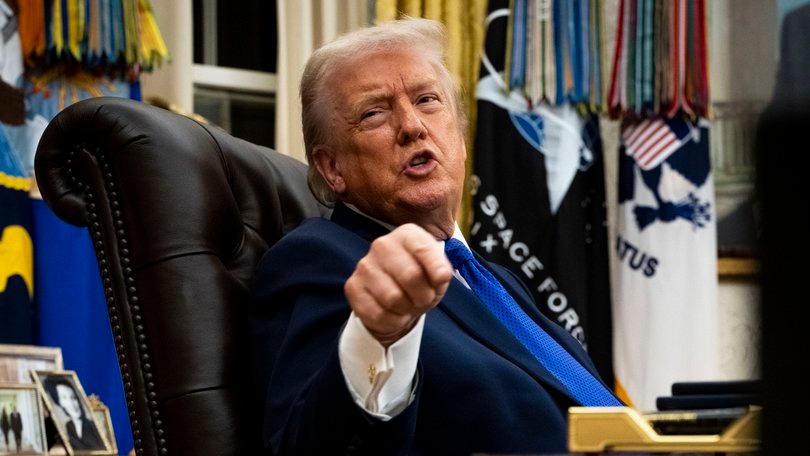
Richard Blumenthal, the ranking Democrat on the US Senate Permanent Subcommittee on Investigations (PSI), has requested documents from cryptocurrency exchange Binance, Tether, and crypto projects linked to President Donald Trump as part of inquiries into potential financial irregularities and conflicts of interest.
The documents were requested to be submitted by 4 January 2027.
Senators warned that they would resort to compulsory measures if the request was refused.
Entities sent document requests include World Liberty Financial and Fight Fight Fight LLC, both linked to President Trump’s family.
Blumenthal began examining the activities of these entities in May 2025 following reports that they may have engaged in transactions with foreigners under federal criminal investigation, attracted investments from foreign governments, and violated public ethics rules.
Notably, in 2026, it emerged that individuals close to the Abu Dhabi royal family had signed an agreement with the Trump family to purchase 49% of the shares in World Liberty Financial for $500 million.
The company, founded in September 2024 by the US President and his sons, launched a token called WLFI.
According to official disclosures, Trump made $800 million from this token alone.
Conversely, crypto analytics firm Nansen calculated, by tracking 1.48 million crypto wallets, that approximately two-thirds of those who invested in the token after its launch in January 2025 incurred losses.
While many retail investors spent several thousand dollars on purchases, the largest investors poured in millions of dollars.
Trump also launched his own memecoin, TRUMP, on 17 January 2025, prior to his inauguration.
Rising 10.6-fold in value within three days, the cryptocurrency’s market capitalisation reached $15 billion at its peak.
However, after those three days, the price entered a downturn, plunging by 97%.
Trump reported in his financial disclosure that he earned $635 million in income from sales of these memecoins.
In July 2026, Blumenthal held public hearings on the family crypto projects from which the President made $1.4 billion.
The losses suffered by TRUMP memecoin investors were also addressed during these hearings.
Cryptocurrency exchange Binance and Tether, which issues the largest stablecoin, USDT, are under scrutiny over their dealings with the Trump administration.
Lawmakers suspected conflicts of interest stemming from the exchange’s collaboration with World Liberty Financial.
Previously, a group of senators had demanded an inquiry into the terms of the presidential pardon granted to Binance founder Changpeng Zhao.
Separately, The New York Times reported that the United Arab Emirates (UAE) gaining access to American artificial intelligence chips coincided with a $2 billion investment by a UAE entity into Binance using USD1, a stablecoin issued by World Liberty Financial.
While this deal rapidly expanded the volume of tokens in circulation, it enabled Trump’s company to generate revenue from interest on government bonds where USD1 reserves were held.
Trump, for his part, described the report as slander.

Americans’ credit card debt reached a record $1.29 trillion in the third quarter, according to a new report published by the New York Fed.
Falling behind on credit card payments can trap struggling households in a cycle of fees, credit score downgrades, and increasingly expensive borrowing.
Although delinquency rates across the country have shown improvement, the latest figures indicate that financial distress is concentrated in lower-income communities.
Consumer credit card balances rose by $22 billion in the third quarter, representing an increase of 1.7%. This figure is $52 billion higher than it was a year earlier.
The figures are not adjusted for inflation, which may mean that part of the increase reflects rising prices rather than more borrowing in real terms.
Total household debt, which includes mortgages, student loans, and auto loans, rose by $334 billion in the third quarter to reach a record $19.1 trillion.
This total represents an increase of $5 trillion compared to 2019, just before the pandemic.
The volume of credit card balances falling into serious delinquency is declining, indicating some improvement in Americans’ ability to make their payments on time.
The rate of credit card debt transitioning into serious delinquency fell to 6.9% in the third quarter. However, this rate remains distinctly higher than the 5.2% recorded prior to the pandemic.
Americans living in lower-income neighbourhoods are facing greater difficulty in keeping up with their credit card payments compared to more affluent groups, according to a separate report published by the New York Fed on Tuesday.
Delinquency rates across all neighbourhood income tiers remain above pre-pandemic levels, while the gap between the wealthiest and poorest areas has widened since 2022.
In the lowest-income neighbourhoods, 10.3% of credit card balances transitioned into serious delinquency over the past year.
This is more than double the 4.4% rate observed in the wealthiest neighbourhoods.
The average credit card balance per borrower now stands at $6,678, according to TransUnion’s third-quarter analysis report.
Among borrowers under the age of 30, the rate of credit card debt falling at least 90 days delinquent reached the highest level, according to the Fed’s report.
Democrats won the midterm elections promising to bring down prices, but delivering relief that voters can genuinely feel in their household budgets will be a difficult target to achieve.
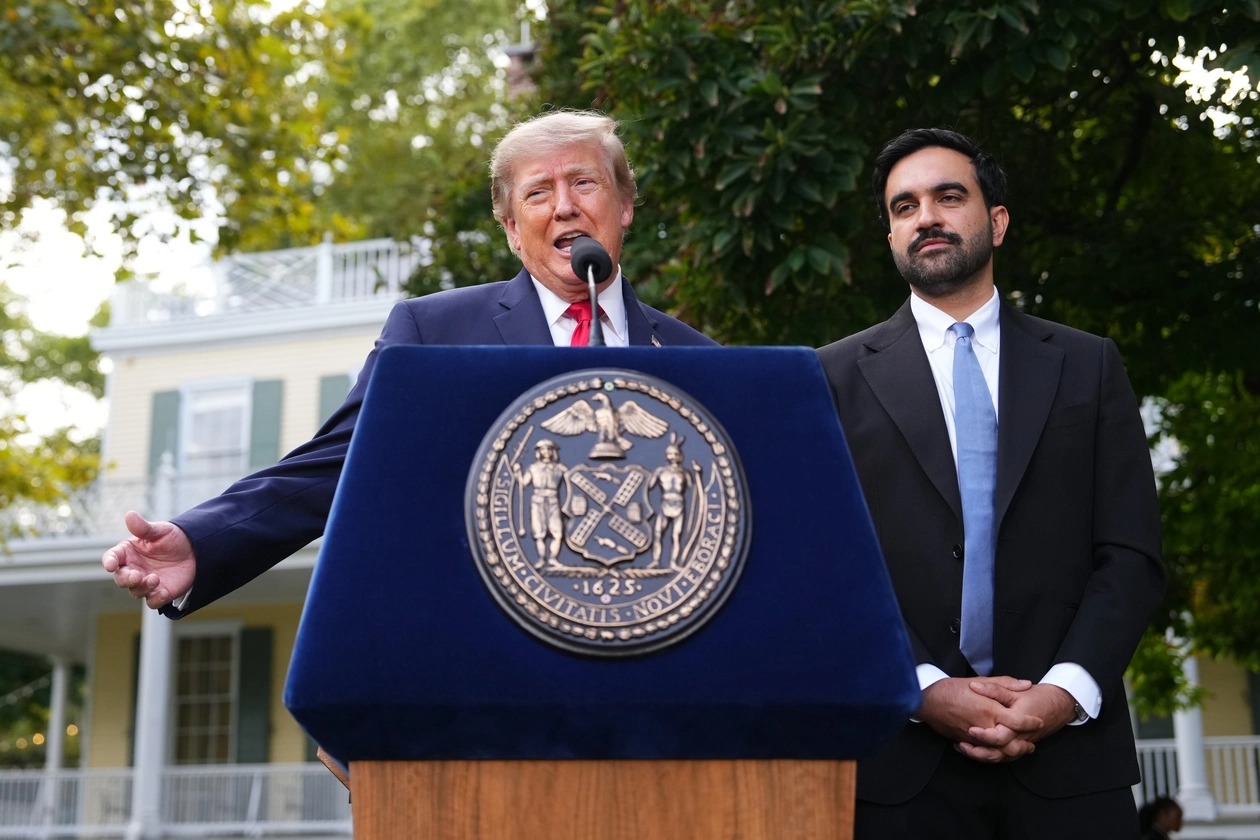
New York City Mayor Zohran Mamdani is using his rapport with US President Donald Trump to secure the release of selected detained immigrants.
According to reporting by Politico, Mamdani persuaded Trump during their second White House meeting in February to free a university student who had been detained that day by ICE.
The outcome served as validation for Mamdani, who pointed to the release of the Columbia University senior as proof that his surprisingly cordial relationship with Trump could produce tangible results for New Yorkers.
Mamdani subsequently continued to seek similar immigration-related interventions from the Republican president.
Since that February meeting, Mamdani and his aides have quietly forwarded the names of approximately two dozen immigrant New Yorkers held in ICE custody to Trump’s team, asking the president to order their release.
Two sources familiar with the matter said Mamdani most recently shared names of detained immigrants during a September meeting with Trump at Gracie Mansion.
The sources said the individuals in question had no serious criminal records, though they declined to disclose their identities, citing safety concerns.
According to Politico, these ongoing efforts regarding detained immigrants indicate Mamdani’s belief that he can leverage his rapport with Trump to advance causes the mercurial president might not ordinarily support.
Mamdani’s decision not to disclose these continued appeals publicly suggests an inclination to keep his interventions private to improve their chances of success.
Yet it remains unclear whether any immigrant besides Columbia University student Elmina Aghayeva has actually been released as a result of these efforts, and concern is mounting within City Hall that the window for securing such releases may be closing.
Mamdani’s aides working on the releases, including his Chief of Staff Elle Bisgaard-Church, communicated primarily with Trump’s White House Chief of Staff Susie Wiles, according to people familiar with the matter.
Last week, Trump replaced Wiles with Stephen Miller, the architect of the administration’s most hardline immigration proposals and one of the loudest internal voices urging the president to pursue a mass deportation agenda in his second term.
A person familiar with the Mamdani administration’s thinking said the mayor’s team views it as unlikely that Miller will continue cooperating in the manner Wiles did, given his stance on immigration.
Mamdani spokesperson Dora Pekec declined to comment on internal concerns regarding Miller and did not provide details about the immigrants whose release the mayor had requested.
Pekec noted, however, that Mamdani has “consistently advocated directly on behalf of New Yorkers in his calls and meetings with the president.”
Murad Awawdeh, a close Mamdani ally and president and CEO of the New York Immigration Coalition, said the mayor’s team should not halt engagement with the Trump administration on immigration matters because of Miller’s promotion:
“Stephen Miller is a cruel individual who has spent his career attacking immigrants, but he is not the president; Donald Trump is, and this is his deportation agenda. New York expects the president to work with the mayor to serve this city and end the terror in our communities. Miller’s promotion changes none of that.”
Mamdani’s warm dynamic with Trump has confounded both allies and critics.
During last year’s New York mayoral election, Trump referred to Mamdani as a “communist lunatic” and threatened to have him arrested.
In turn, the 35-year-old democratic socialist branded the president a “fascist” and pledged to fight him relentlessly if elected mayor.
Yet that animosity fell away late last year during their first White House meeting, where an amicable tone prevailed.
The thaw culminated in September at Gracie Mansion, where Trump said Mamdani had “great potential” to be a “terrific mayor.”
Mamdani returned the compliment by noting that the president had “built quite a bit of housing in our city.”
Despite the polite exchange, questions remain over how much substantive progress Mamdani can genuinely secure through Trump, including on immigration.
To date, Aghayeva’s release stands as one of the few concrete concessions Mamdani has obtained from Trump.
Aides on both sides are also discussing a multi-billion-dollar federally backed housing initiative in Queens, and last month Mamdani used his channel to Trump to help secure a temporary visa for a Ghanaian woman whose son was shot and killed in the Bronx.
Beyond those instances, few tangible results have emerged, though Trump’s decision not to enact punitive measures against New York is viewed by Mamdani’s allies as a win for the city.
Trump’s political standing is widely seen as weakened following the Republican Party’s loss of both houses of Congress in elections last Tuesday.
How this political shift will affect Trump’s willingness to engage with ideological adversaries such as Mamdani remains uncertain.
Miller’s appointment as chief of staff appears to signal little presidential interest in moderation, particularly on immigration policy.
Even so, the mayor said last week that he does not intend to stop seeking Trump’s assistance, despite “fierce” policy disagreements.
“We have found an area of common interest in the well-being of New York City, and as long as that can deliver for our city, I’m going to keep that door open,” Mamdani told Politico on Friday in Puerto Rico.
Mamdani and other elected officials from New York had gathered in Puerto Rico for the annual Somos political conference.
Two days later, in an interview on Fox News, a network Trump is known to watch regularly, Mamdani described a “productive relationship” with the president, saying the two text and speak by phone frequently:
“Through those conversations, we were able to get a New Yorker out of ICE detention. We were able to secure a visa for a grieving mother who would have otherwise had to watch her son’s funeral from thousands of miles away. What that tells me is: My job is to deliver for New Yorkers, and I have to work with whoever has the power to do that, wherever they may be.”

IRAM expert Oral Toğa assesses Middle East shifts after US vote

Netanyahu Arab party attack triggers crisis over coalition

Fico accuses Merz of blackmail over threat to veto EU budget

US Senate panel seeks records in Trump-linked crypto investigation

Europe ready for arms and missile control talks with Russia, FT says
-

 Diplomacy1 week ago
Secular dress code dispute exposes deeper Türkiye-Azerbaijan strains
-

 Russia2 weeks ago
US and Russia weigh energy deals and corporate return in peace talks
-

 Europe5 days ago
EU urges citizens to prepare 72-hour survival kits for crises
-

 Middle East2 weeks ago
US warns Gulf allies of possible Iran strikes after midterms
-

 America2 weeks ago
Bolsonaro reportedly leaves Brazil on jet linked to scandal-hit firm
-

 Asia1 week ago
China expands Africa arms sales, displacing France and Western rivals
-

 Diplomacy2 weeks ago
Steinmeier seeks to de-escalate German-Chinese tensions on visit
-

 Europe2 weeks ago
EU prepares Ukraine peace mission to Abu Dhabi led by Björn Seibert
