
Middle East
Jared Kushner warns Israel risks becoming a “global pariah”

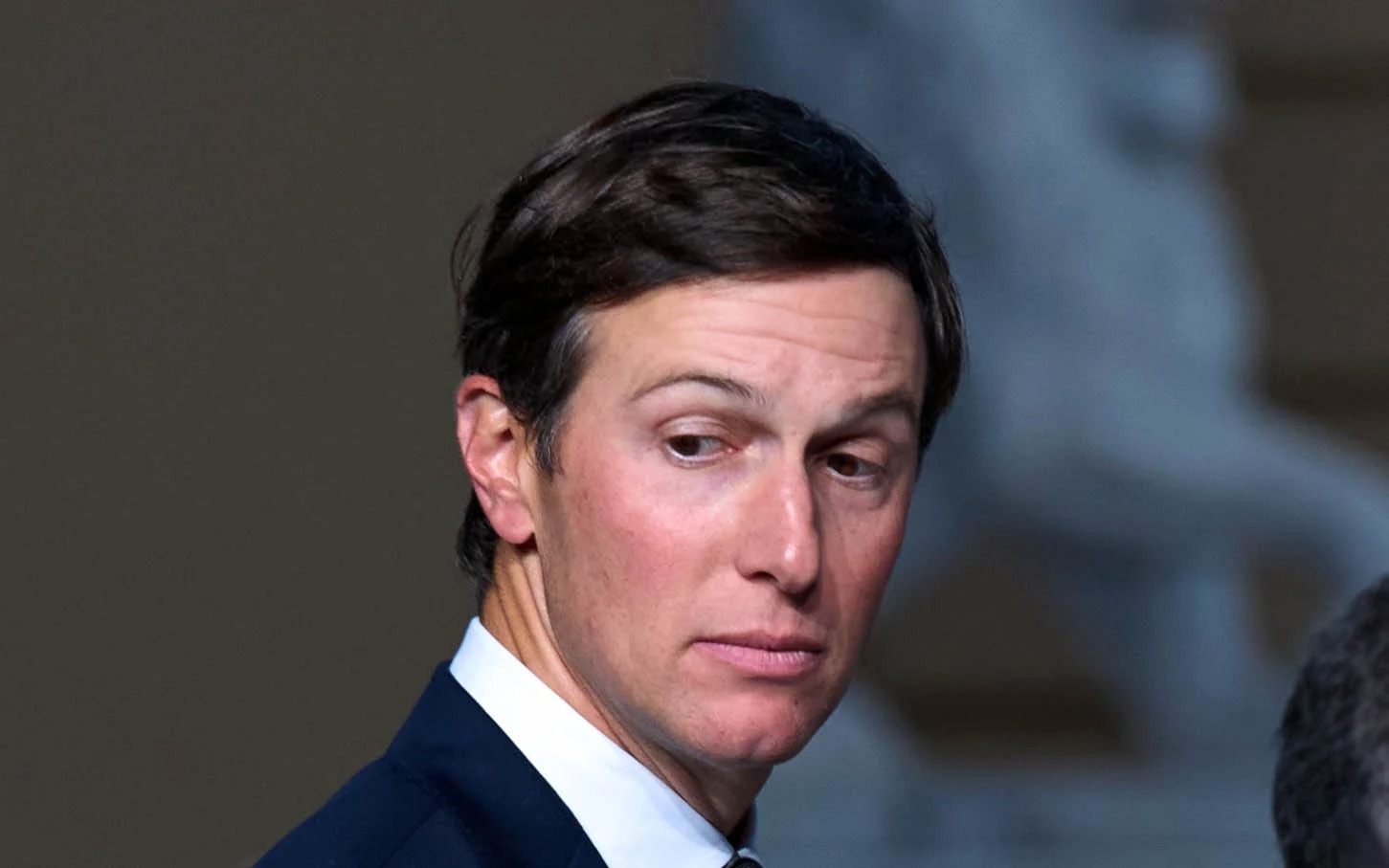
Jared Kushner has warned Israel, which has spent the past three years at war, arguing that the country is heading toward the status of a “global pariah”.
US special envoy and Donald Trump’s son-in-law Jared Kushner, one of the chief negotiators of last year’s Gaza ceasefire and the 2020 Abraham Accords, said according to a profile in New York Magazine:
“I think the fork in the road is this: Israel can rise up from the October 7 tragedy and become a much safer country and much more integrated into the world, or it can continue on its current trajectory toward global pariah status.”
This stark message from Kushner comes amid growing frustration within the Trump administration toward Prime Minister Benjamin Netanyahu, who has blocked the US-controlled “Board of Peace” from advancing its plan to rebuild Gaza.
The article also notes that in the office of Kushner’s investment firm, a map of Trump’s failed 2020 Israeli-Palestinian peace plan hangs on the wall bearing the inscription “JARED, GREAT JOB” written by Trump with a Sharpie pen.
Saying he sleeps well at night, Kushner objects to Democrats calling his blending of diplomacy and business “corruption” and believes he can “make impossible things happen”.
Regarding the Gaza deal, Kushner said: “Not only did we have to stop the war, we had to bring all the hostages and the bodies of the hostages home. It was a crazy operation. Bibi didn’t think we could pull it off.” He is also trying to resolve the conflict between Russia and Ukraine and manage the war the US has entered with Iran.
New York Magazine reporter Andrew Rice wrote that over months of conversations, Kushner explained his theory on “the art of diplomacy”.
According to Rice, this theory values the innate talent of “deal-makers” who can produce solutions that cautious professionals in the diplomatic corps, bound by protocol constraints and obsessed with the past, cannot find.
Although he works closely with Trump’s longtime friend and official peace envoy Steve Witkoff, and both are technically under the supervision of national security adviser and Secretary of State Marco Rubio, Kushner effectively operates as an unpaid freelancer.
The son-in-law relies on backchannels he opened during Trump’s first term as a senior White House adviser and later cemented through his business career.
Asserting that accumulating more wealth is not his primary goal, Kushner argues he could have made more money had he not devoted his time to this work, and says critics will not find any example of him acting against American interests.
He recalls meeting former British Prime Minister Tony Blair when he was once a young businessman. In 2016, Blair was backing a plan that addressed both Palestinian demands for statehood and Israel’s desire to revive political and commercial ties with Arab countries.
Blair told Kushner at the time that he saw a window of opportunity and that it ran through the Persian Gulf.
Connecting with the United Arab Emirates’ ruler, Sheikh Mohamed bin Zayed Al Nahyan, through a friend who was an American asset manager with business ties in the country, Kushner also grew close to MBZ’s brother and national security adviser, Sheikh Tahnoon bin Zayed Al Nahyan, who oversees a sovereign wealth fund with more than $1 trillion in assets.
During the first Trump term, Kushner also met Saudi Crown Prince Mohammed bin Salman (MBS) and formed an important alliance with him.










Gulf governments are spending more to shield households from inflation in food and energy prices.
According to AGBI calculations based on official data, the UAE, Saudi Arabia and Oman have spent at least $6.7 billion extra on subsidies and related support this year.
These figures cover the nine-month period through September 30 for Saudi Arabia and Oman.
The figures for the UAE also include social benefits and cover the six-month period through June 30.
Annual inflation is running between 1.9% and 2.2% in Saudi Arabia, Qatar and Kuwait, while standing at just over 3% in Oman and Bahrain despite supply chain disruptions caused by the Iran war.
In the UAE, where fuel prices are linked to international markets, Dubai’s annual inflation has exceeded 5%.
Jason Tuvey, deputy chief emerging markets economist at Capital Economics in London, noted that weak demand has also helped limit inflation, making it difficult to assess the impact of subsidies and price controls separately.
According to an Oxford Economics report published last month, the Gulf Cooperation Council (GCC) economy is expected to contract by 5.7% this year.
Tuvey said:
“The extra subsidy costs are manageable for most governments. These amounts pale in comparison with the hit to budget positions from weaker oil revenues, and they provide some useful support to their economies.”
Gulf countries regulate the prices of staple food items such as chicken meat, dairy products, rice and wheat.
Farouk Soussa, MENA economist at Goldman Sachs, noted that this limits retailers’ profit margins on these products.
“Prices change when costs rise, but prices are not sensitive to the impact of demand,” Soussa said.
Saudi Arabia spent $11 billion on subsidies in the nine months through September 2026.
This figure represents a 49% increase from the previous year and has already exceeded the country’s $8 billion annual budget.
Nick Stadtmiller, chief economist at Emirates NBD in Dubai, said: “Subsidies and administered prices have shielded Saudi citizens from much of the global surge in energy prices this year.”
According to Goldman Sachs estimates, if Saudi Arabia’s fourth-quarter subsidy spending remains at third-quarter levels, the country’s 2026 subsidy total will equal roughly 0.9% of 2025 GDP.
The bank projects a budget deficit of around 5.5% of GDP this year. “The increase in subsidy spending is significant, but not huge,” Soussa said.
In a separate development, Saudi Aramco recorded $44.7 billion in government compensation in the first nine months of 2026, up from $22.5 billion in the same period a year earlier.
This amount covers the difference between the reference price and regulated domestic prices for certain crude oil and petroleum products.
Stadtmiller expects significant budget deficits in Saudi Arabia in the coming years:
“If spending cuts are needed, authorities may choose to cut other discretionary spending areas to maintain support measures for citizens.”
In the UAE, meanwhile, subsidy spending fell by 19% to $1 billion in the first half, while social benefits rose by 25% to $12.6 billion.
Total spending increased by 20% to $13.6 billion.
Soussa noted that the decline in subsidy spending indicates weakening demand for subsidized goods in the UAE, likely reflecting a drop in foreign tourist numbers.
UAE citizens receive social benefits in cash or goods. “They are very similar to subsidies,” Soussa said.
Oman’s electricity and oil-related subsidy spending rose by 67% year-on-year to $1.9 billion.
The other three GCC members, Kuwait, Qatar and Bahrain, have not yet released full subsidy figures for this year.
According to Times Kuwait, citing the Ministry of Commerce and Industry in August, Kuwait’s food subsidy spending in the first half was $248 million.
According to the latest available government data, Qatar spent $4.7 billion on fuel subsidies in 2024.
The International Monetary Fund estimates that subsidies equalled roughly 2% of Qatar’s GDP that year.
Tuvey said Bahrain faces the greatest pressure to trim subsidies due to its large budget deficit and high debt burden.
“Subsidy cuts appear likely to form part of a significant fiscal consolidation, alongside additional financial support from Gulf countries for Bahrain as it seeks to avoid devaluation and sovereign default.”
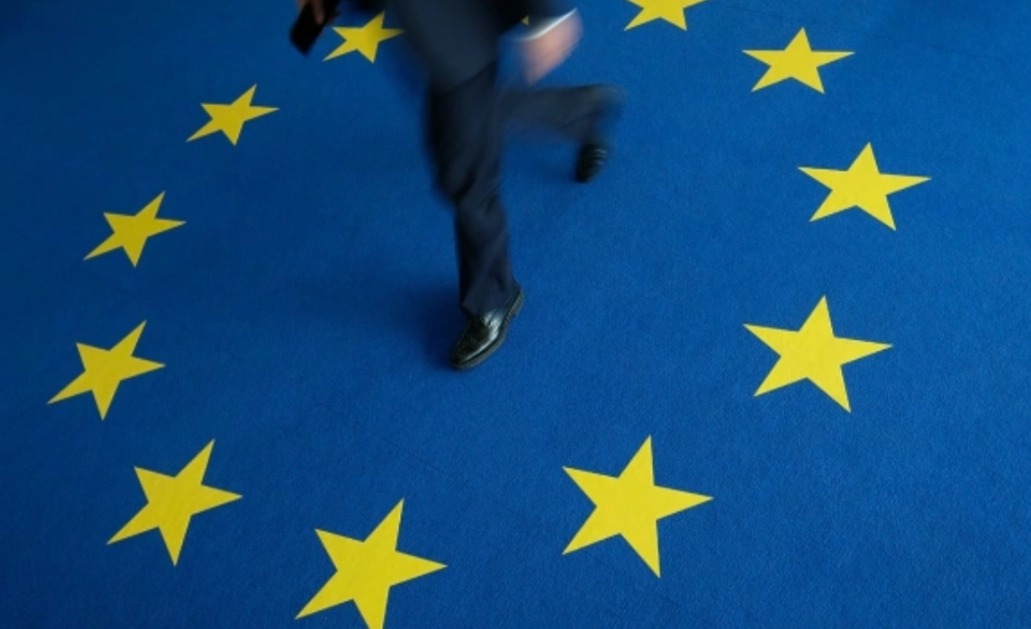
The European Commission, the executive body of the European Union (EU), has rejected holding bilateral talks with Russia on the European security architecture.
European Commission spokesperson Paula Pinho announced Brussels’ decision during a press briefing on November 23.
Russian President Vladimir Putin had stated on November 19 that Moscow had formally invited EU officials to discuss security issues on the continent.
Pinho said they were aware of the invitation, but continued to focus on multilateral talks and were ready to sit at the table only in that format.
The EU administration holds the view that negotiations on European security are premature before the fighting in Ukraine ends.
Brussels insists that any potential security talks must take place with the participation of both the EU and NATO.
Germany stresses dialogue and neutral ground
Representatives of some EU member states had previously made general statements suggesting that Russia’s invitation should not be ignored.
According to German magazine Der Spiegel, German Defence Minister Boris Pistorius argued on November 20 that Moscow’s invitation should not be turned down.
“Rejecting an invitation to visit Moscow would send completely the wrong signal. We must talk. Only those who talk can reach a result,” Pistorius said.
German Chancellor Friedrich Merz stated on November 23 that Europe was ready to negotiate with Russia, including on the situation in the Baltic Sea, but said this must take place on neutral ground.
Kremlin: We must understand the “coalition of the willing’s” intent
Kremlin spokesperson Dmitry Peskov stated on November 23 that Moscow first needed to see how ready the Europeans were for a peaceful settlement.
Peskov explained the purpose of Russia’s outreach to the Europeans by saying: “It is to understand to what extent this ‘coalition of the willing’, composed of Western countries supporting Ukraine, is a coalition of those who want peace, and to what extent it is a coalition of those who want the war to continue.”
“Brussels avoids result-oriented talks”
Yegor Sergeyev, a senior researcher at the Institute for International Studies at the Moscow State Institute of International Relations (MGIMO), told the newspaper Vedomosti that leading EU countries and Britain had no intention from the outset of holding direct talks with Russia, particularly on security.
According to Sergeyev, Brussels and European capitals believe that bilateral negotiations would strengthen Russia’s hand and weaken the EU’s position.
Noting that European representatives had previously muddied the information space by creating the impression that they were ready for talks, Sergeyev said the process always ended up returning to ceasefire demands and attempts by countries in the “coalition of the willing” to deploy European troops to Ukraine.
Sergeyev pointed out that the only difference in the current situation was that the time between issues on which Russia had reached a minimal consensus with the US and attempts by the EU and Britain to disrupt those understandings and render the negotiating process meaningless had grown longer.
Conveying that the lengthening timeframe over which attempts to undermine the negotiating process were spread pointed to changing conditions, Sergeyev stated that EU leaders and Brussels were in principle unwilling to engage in meaningful talks that would yield concrete results.
Sergeyev argued that the multilateral format proposed by Brussels meant endless discussions.
Claiming that the EU wanted a ceasefire at any cost to strip Russia of its leverage, Sergeyev alleged that following a ceasefire, Brussels would obstruct Moscow’s negotiating stance using its usual methods, declaring Russian proposals unacceptable and bringing old demands such as “reparations” and territorial issues back to the table.
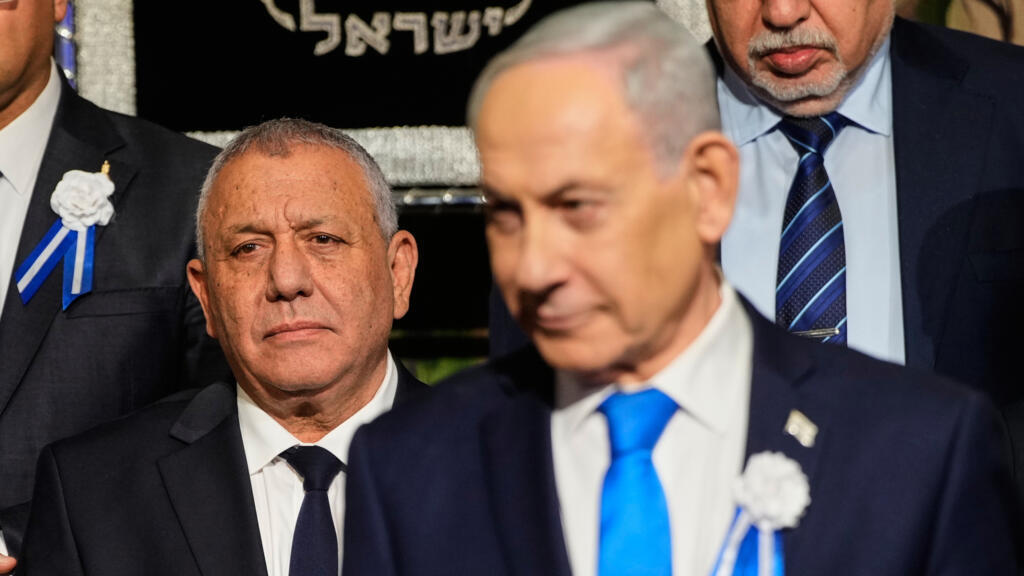
Unity government talks between Gadi Eisenkot’s Yashar party and Israeli Prime Minister Benjamin Netanyahu’s Likud party failed to make progress.
Citing Israeli media, The Times of Israel reported that the meeting held on Sunday lasted about an hour.
Naftali Bennett’s B’Yachad party also attended the meeting.
In a brief joint statement issued after the talks, the parties said the meeting took place in a “businesslike atmosphere” and that contacts would continue.
Even so, the refusal of both Likud and Yashar to cede the premiership to the other side remains the main obstacle to the negotiations.
Conflicting messages conveyed over Ben Gvir
According to Ynet, the Likud delegation stressed that no party from Netanyahu’s bloc should be excluded from a potential unity government.
Saying they were not excluding the left-wing Democrats party, the delegation demanded that Itamar Ben Gvir’s far-right Otzma Yehudit party also not be left out of the cabinet.
Israel Hayom, however, wrote that figures close to Netanyahu had conveyed the opposite message to Eisenkot.
According to the newspaper, those figures told Eisenkot that Likud would not insist on bringing Otzma Yehudit into the government.
Israel Hayom also claimed that the US wanted Ben Gvir excluded from the new government.
In his public statements to date, however, Netanyahu has argued for including all of his ultra-Orthodox and ultranationalist allies in the government.
Liberman: “We do not want to put Netanyahu on life support”
There is opposition within Eisenkot’s bloc to the negotiations being held with Likud.
While the Democrats party has openly objected to the talks, Channel 13 reported that Yisrael Beiteinu leader Avigdor Liberman described the meeting as a trap set by Netanyahu.
According to the report, Liberman told Eisenkot: “The most important goal is to end the Netanyahu era. We have no interest in putting him on life support.”
Calling the meeting “not a unity government, but a trap set for Eisenkot,” Liberman reportedly said his party was open to cooperating with Likud in the post-Netanyahu era.
According to Channel 12, Naftali Bennett is taking a different approach.
Bennett wants the option of a unity government with Netanyahu to be seriously considered, provided Eisenkot serves first under a rotational premiership formula.
Bennett reportedly prefers this formula over a partnership with parties representing Palestinian citizens of Israel or with ultra-Orthodox parties, though he does not plan to break away from his current bloc to join Likud.
Liberman also opposes a government reliant on the support of Ra’am and the Joint List.
By contrast, Liberman backs a partnership with the ultra-Orthodox parties and is reportedly open to compromise on his demand for comprehensive legislation on the military conscription of Haredi men.
Dispute also erupts over vote for Knesset speaker
During the meeting, Likud representatives asked to postpone the move to elect Yashar lawmaker Matan Kahana as Knesset speaker.
Yashar rejected the request, announcing that the vote to replace incumbent Knesset Speaker Amir Ohana would take place on Tuesday.
According to Channel 12, senior Yashar figure Hili Tropper told the Likud delegation: “Eisenkot is determined to form a government under any circumstances. You must accept this.”
A Yashar source also argued that Likud did not yet appear to have grasped that it had “lost” the election.
According to KAN, Likud sources said they gained the impression that Yashar and B’Yachad representatives attended the meeting merely to go through the motions and had no real intention of forming a unity government.
Eisenkot has repeatedly stated in the past that Netanyahu is unfit to serve as prime minister and poses a danger to the country.
For that reason, even Netanyahu taking a ministerial post in a cabinet led by Eisenkot would represent a major departure from Eisenkot’s previous stance.
It is also considered unlikely that Netanyahu would agree to serve under another prime minister.
Claim of progress in contacts with ultra-Orthodox party
As talks with Likud stalled, Eisenkot’s bloc was claimed to have made headway in parallel contacts with the ultra-Orthodox United Torah Judaism party.
Speaking to Channel 12, a senior party official said: “Contacts are taking place behind the scenes every day. There is real progress in the talks, much more than appears from the outside.”
The newspaper Haaretz also reported similar information.
Israeli media reported that party leader Yaakov Asher had met separately with Eisenkot and Liberman.
Asher, however, denied claims that “dramatic progress” had been made and that draft agreements had been exchanged, calling them “completely baseless.”
Stating that meetings with political actors are a natural part of the process, Asher noted that his party would neither confirm nor deny every contact.
A party source also said that until formal negotiations begin, the contacts were aimed only at “testing the waters,” discussing general principles without going into details.
Shas remains determined to maintain alliance with Netanyahu
The other ultra-Orthodox party, Shas, remains committed to preserving its partnership with Netanyahu.
According to Channel 12, Shas’s main concern is that United Torah Judaism could clear the way for an Eisenkot government through its support or abstention, but then fail to guarantee the implementation of an agreement on the military conscription status of religious seminary students.
Shas leader Aryeh Deri reportedly reminded closed-door meetings that a conscription law could not be passed before a government is formed, saying: “Forming a government with Haredi votes and ending up thrown out without the status of yeshiva students resolved would be a dangerous step.”
Citing a decision by his party’s Council of Torah Sages, Deri stated that Shas would not sit at the negotiating table with Eisenkot’s bloc, adding: “We are continuing with Netanyahu, and that is how it will be.”

Politico weighs five scenarios for future Russia-Europe security talks

Jared Kushner warns Israel risks becoming a “global pariah”

Gulf states spend at least $6.7 billion extra on subsidies

Ukraine expands maritime strikes against Russian ships to three seas

Qatar pledges 15 billion euros in investment to Germany
-
 America2 weeks ago
Absent Democrats derail floor vote on Pete Hegseth impeachment
-
 Middle East2 weeks ago
Journalist Dursunoğlu warns Iran removed missile limits as Gulf risks widen
-

 Opinion7 days ago
APEC Summit: How China Uses the Art of “Emotional Value” to Deal with Trump
-
 Europe2 weeks ago
Germany threatens EU budget veto over long-term Ukraine aid
-

 America2 weeks ago
Blue tsunami and Iran conflict expose deep US cracks, Dr. Tuğtan says
-
 Russia2 weeks ago
Europe ready for arms and missile control talks with Russia, FT says
-
 Europe2 weeks ago
Fico accuses Merz of blackmail over threat to veto EU budget
-

 Russia2 weeks ago
US raises NATO-style guarantees for Kyiv ahead of Abu Dhabi talks
