
America
Elon Musk says he feels pretty stupid after $442m midterm spending

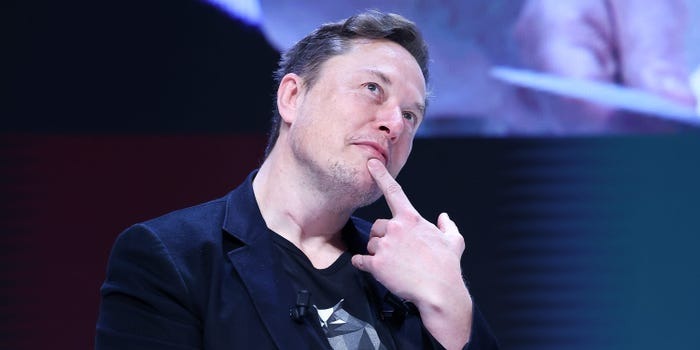
Tesla CEO Elon Musk has said he feels “pretty stupid” for spending $442 million on Republican campaigns after the party suffered heavy losses to Democrats in the 2026 midterm elections.
Speaking remotely at the DealBook Summit in an interview with New York Times columnist Andrew Ross Sorkin, Musk, the world’s richest person, stated that his primary objective had been to help Republicans maintain control of the Senate.
However, Democrats secured the majority, with Democratic candidate Mary Peltola winning the Alaska Senate race to bring the seat distribution to 56 for Democrats against 44 for Republicans.
“I feel pretty stupid spending that much money and not seeing much return on it,” Musk told Sorkin.
Musk added that the outcome could have been far worse without his spending, but noted: “It certainly shows that American elections are not just about money.”
Musk continued: “Clearly you can spend a ton of money on an election and have relatively little impact, which I think was the case here.”
Saying he would spend less if he could turn back the clock, Musk remarked that he did not have much personal interest in the elections because he was focused on growing SpaceX and Tesla.
Musk describes himself as “ideologically moderate”
Musk stated that heading into 2029, he wanted Republicans to control at least one of the House of Representatives, the Senate, or the White House, while wishing that neither Democrats nor Republicans attain a “supermajority”.
“I think we want to have checks and balances here,” Musk said, emphasising that this was his sole motivation.
Describing himself as “ideologically pretty moderate”, Musk said: “I do not think I like any extreme political views.”
Noting during the interview that he was “not MAGA” and was unsure what the term strictly meant, Musk added: “If it means blind adherence to a set of Republican Party policies, I certainly do not have that.”
Rapprochement with Trump and the DOGE era left behind
Musk had previously forged a close relationship with President Trump ahead of the 2024 presidential election, subsequently being appointed to lead the now-defunct Department of Government Efficiency (DOGE).
The pair’s working dynamic led some critics to allege they were operating a “co-presidency”.
However, following a disagreement between the two men, Musk stepped down from his post to focus on his companies, and DOGE closed in July upon the expiration of its mandate under an executive order.
Musk had described himself as “dark gothic MAGA” at an October 2024 Trump rally held at Madison Square Garden.
Critics claimed the font on the black MAGA cap he wore at that rally resembled the Fraktur typeface used by the Nazis during their rule in Germany, though experts later debunked the allegation.
Musk has also backed other right-wing political parties around the world.
In January 2025, he attended a rally of the far-right Alternative for Germany (AfD) party online.
Georgetown University researchers noted that the AfD’s sweeping victory in the German state of Saxony-Anhalt last month raised the possibility of “the first far-right state government in Germany since the Nazi era”.








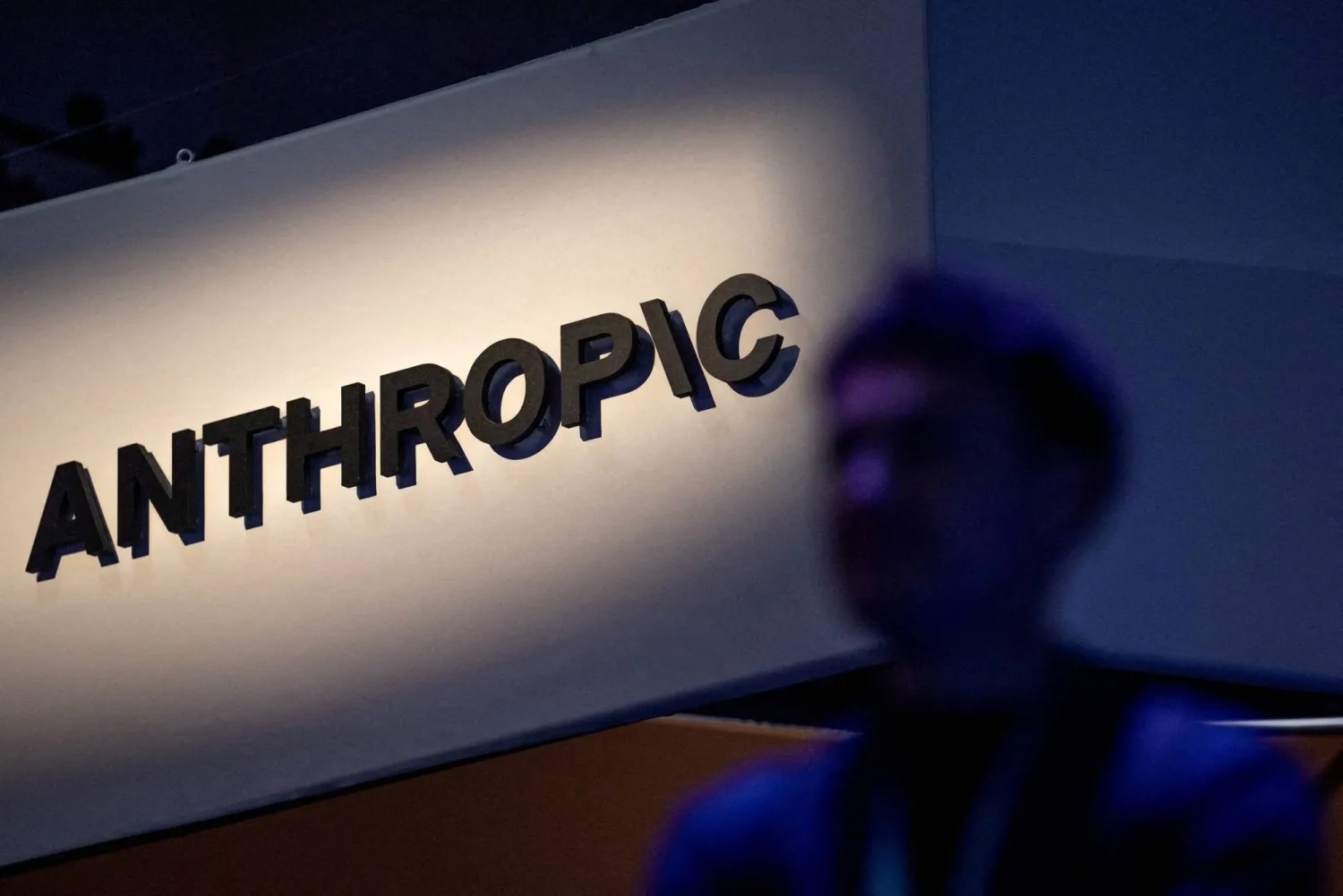
The seven co-founders of Anthropic, the developer behind the Claude artificial intelligence models, are set to join the ranks of multi-billionaires following the company’s initial public offering on the NASDAQ stock exchange.
According to a report by The Wall Street Journal (WSJ), each of the seven founders is expected to make around $250 million from share sales in the IPO, which opened today.
Following the sale, the stake retained by each founder is projected to be worth roughly $18 billion.
The newspaper reported that all the company’s founders belong to millennial generation, with the group including two siblings, three PhD graduates, a former journalist, and a university drop-out.
Amodei siblings left OpenAI to build their own lab
Leading the list is Anthropic’s 43-year-old CEO, Dario Amodei.
Amodei, who holds a doctorate in biophysics, focused on cancer during his early research.
Having previously worked at Baidu and Google, Amodei was invited to OpenAI in 2016 by its CEO, Sam Altman.
Over time, as disagreements arose regarding the hazards tied to AI development, Amodei and six others left OpenAI in 2020 to establish their own laboratory.
Among those set to join the multi-billionaires is Dario’s 39-year-old sister, Daniela Amodei, who serves as Anthropic’s president and board chair.
After graduating from university, Daniela Amodei worked in politics and at the company Stripe. She later joined her brother at OpenAI, leading teams that developed early iterations of its flagship chatbot.
According to the WSJ’s assessment, Daniela Amodei’s greatest strength lies in understanding her brother’s way of thinking and helping to keep the company on the right path.
University drop-out and company “Swiss Army knife” on the list
Another co-founder poised to expand his fortune is 34-year-old Christopher Olah, who heads the company’s interpretability research.
According to Anthropic, Olah, who dropped out of university, has become a “founding figure” in this field.
Tom Brown, Anthropic’s 39-year-old head of computing resources, is also among those set to become multi-billionaires.
Described by the WSJ as a “Swiss Army knife”, Brown co-developed one of the fundamental concepts enabling AI systems to hold dialogue alongside Dario Amodei, negotiates chip deals, and conducts informal lobbying on behalf of the company.
According to the newspaper, Brown also used his connections with the Republican Party to resolve disputes involving SpaceX CEO Elon Musk and the US administration of President Donald Trump that posed threats to the company’s business.
Former journalist and physicists shaped the rules of AI
Anthropic’s fifth co-founder, 38-year-old Jack Clark, transitioned into the AI sector from journalism.
The WSJ noted that Clark, who previously worked as a technology writer at Bloomberg Businessweek, was drawn to the forms of machine learning that paved the way for Claude.
Leaving OpenAI to head Anthropic’s policy division, Clark now leads the Anthropic Institute, which examines the consequences of deploying powerful AI systems.
Another prospective multi-billionaire is theoretical physicist Jared Kaplan, 42, Anthropic’s chief science officer.
Kaplan, who has lectured at Johns Hopkins University since 2012, has scientific interests spanning from quantum gravity to machine learning.
Holding a doctorate in physics from Harvard, Kaplan served as a research consultant at OpenAI in 2019.
Kaplan is also the author of the paper that examined how the capabilities of AI models depend on computing resources, training data volume, and model parameter counts.
Within Anthropic, he continued developing the idea of governing AI systems under a framework of rules designed to keep them from spiralling out of control.
Finally, 36-year-old Sam McCandlish, Anthropic’s chief architect who oversees the parameter development for new models, will also join the ranks of multi-billionaires.
Having worked closely with Kaplan during their time at OpenAI, McCandlish is the co-author of the research paper on scaling laws.
IPO share price reported to potentially reach $83
Anthropic filed for its IPO on 26 October and began trading today on NASDAQ under the ticker ANT.
The IPO is being underwritten by various banks, led by Goldman Sachs and Morgan Stanley.
The company aims to float approximately 825 million shares within a price range of $70 to $78 per share.
Furthermore, according to a report by Bloomberg citing sources, the share price will surpass the designated range and reach roughly $83.
Anthropic is offering 801.4 million shares in the flotation, while existing shareholders plan to sell 23.6 million shares.
According to a company statement, Anthropic and its co-founders aim to raise up to $64.4 billion from the IPO and $26 billion through private sales.
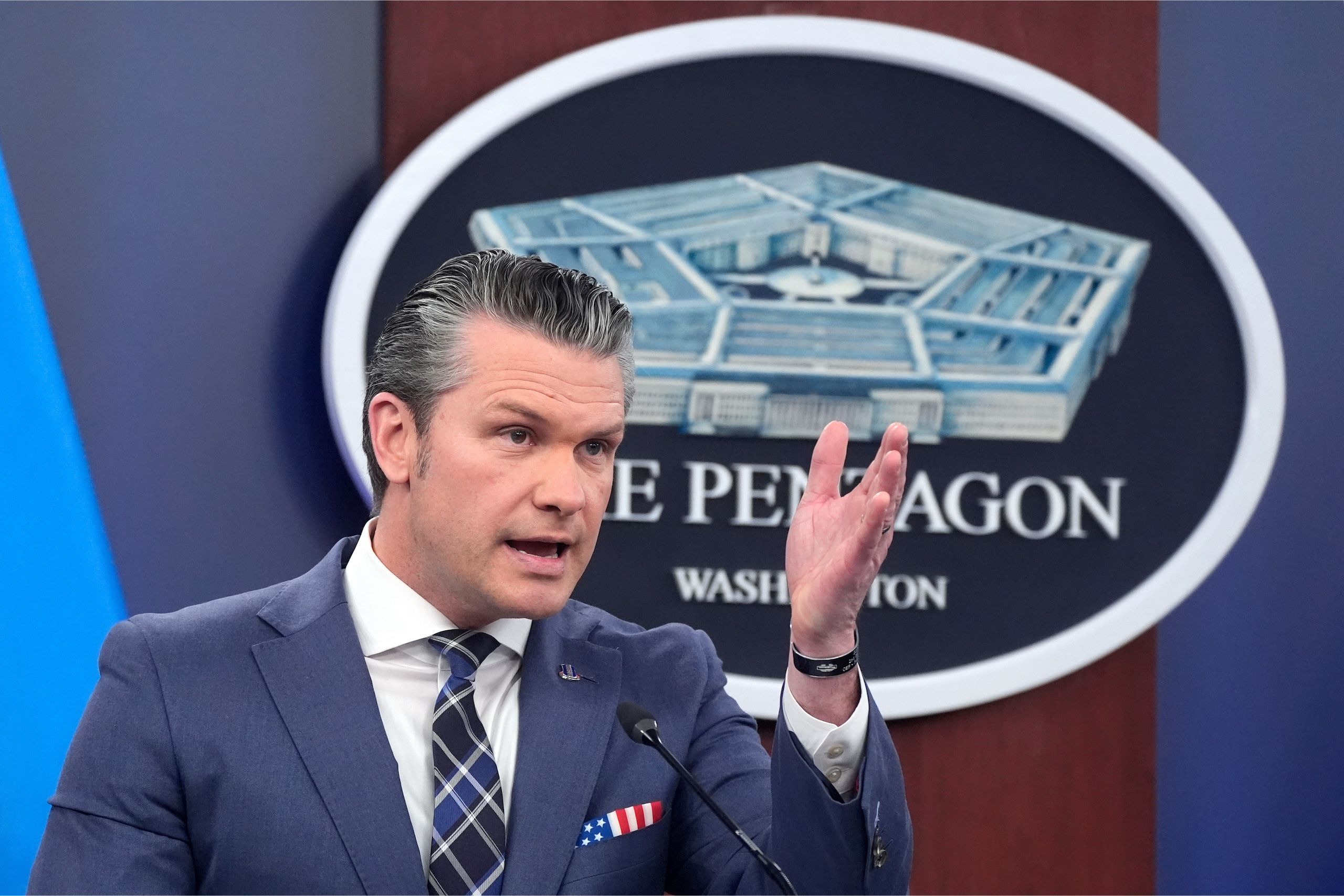
The crew of an Ecuadorian fishing boat has sued the US government over drone strikes and unlawful detention.
According to a complaint filed by the crew in a Pennsylvania federal court, the 18-member crew aboard the vessel La Negra Francesca Duarte II was returning to port on 17 March to conclude a weeks-long fishing expedition when two US combat drones exploded on the vessel.
Although the strike was carried out under the Trump administration’s “Operation Southern Spear” campaign, none of the individuals on board was found to have engaged in any unlawful activity.
Indeed, the crew stated in the complaint that just one day before the drone strikes, the Ecuadorian Navy had conducted a three-hour inspection of the vessel and its crew without uncovering any wrongdoing.
Daniel Kovalik, an attorney representing the fishermen, told Courthouse News:
“Essentially, these innocent people, these poor fishermen who were out fishing, were attacked by the US for no reason, without a warrant, and without trial.”
In the complaint, the crew stated that the strikes left two crew members, Jordy Alexander Flores Lucas and Leonel Alberto Pilay Barahona, engulfed in flames. The blast burned their legs, arms, and backs, with the fire burning Lucas’s leg down to the bone.
Faced with a completely damaged and rapidly sinking vessel, the crew abandoned the La Negra Francesca Duarte II, boarded life rafts, and began rowing toward a blue vessel they spotted in the distance.
Upon reaching the vessel, the crew recounted being met by service members clad in military camouflage and wearing US Coast Guard life jackets, several of whom pointed long-barrelled rifles at the shipwrecked fishermen.
According to the complaint, while Lucas received medical treatment below deck, the personnel bound the hands of the remaining 17 crew members with zip ties and placed plastic hoods over their heads.
Accusing the US of assault, battery, false imprisonment, conversion of property, and intentional infliction of emotional distress, the crew alleged that US personnel transferred them the following day to an El Salvador vessel, where they were forcibly held for days in “deplorable conditions.”
The complaint continues:
“At the time of the attack, the plaintiffs were not directly participating in hostilities against the US, nor were they members of an organized armed group in armed conflict with the US, nor was the vessel they were on a legitimate military target; yet agents, officers, and personnel of the US authorized and directed the attack.”
The US government has presented no evidence to support allegations that the crew of the La Negra Francesca Duarte II was involved in the illicit drug trade.
Kovalik told Courthouse News that even if such evidence existed, extrajudicial drone strikes would remain contrary to the law.
Kovalik added:
“There is no difference between what the US did in these boat strikes and a police officer walking up to a man on the street, saying ‘Hey, you’re a drug dealer,’ and blowing his brains out. We are a country that claims to respect due process: everyone is innocent until proven guilty. This completely destroys all of that, and I think people should be outraged by it.”
The 18 crew members are seeking compensatory damages in an amount to be determined at trial, as well as an injunction ordering the US to halt similar boat strikes in the Caribbean and the Pacific.
“What the US did is terrorism, and innocent people, including fishermen, are afraid to be in these waters because of what happened,” Kovalik said. “I think that is the real issue… It is not acting the way a civilized nation should act.”
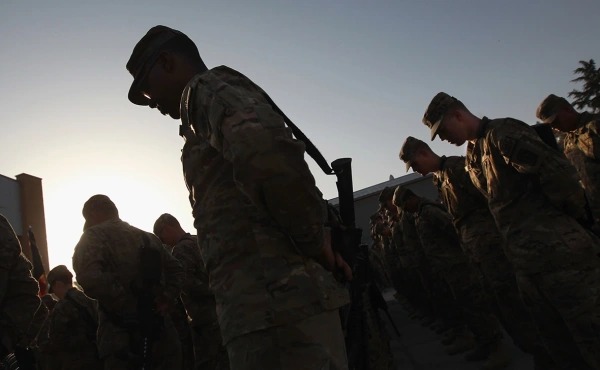
Ro Khanna, a Democratic member of the US House of Representatives from California, has proposed paying $1,700 to every American family to offset price increases caused by the war with Iran.
Khanna said this sum should cover the additional expenses Americans have incurred for petrol, food, and electricity.
Addressing fellow Democrats, Khanna urged that the bill on compensation payments should not be delayed and must be approved as soon as the new Congress takes office.
Following the midterm elections, the Democratic Party will hold majorities in both chambers of Congress.
In a statement on the matter, Khanna said: “Democrats now have a chance to deliver tangible results. In the first week of January, the House and Senate must pass legislation providing compensation to Americans. Let us send it to Trump for his signature.”
Pentagon budget payment plan awaits committee action
In September, Khanna had also introduced a bill proposing that a portion of the Pentagon’s unspent funds be paid out to US taxpayers.
That bill did not specify an exact payment amount.
According to Fox News, the initiative was referred to the relevant committee, but lawmakers have not yet begun debating the bill.
Estimates by Mark Zandi, chief economist at Moody’s Analytics, indicate that American households have lost an average of $2,000 since the war began.
The total economic cost to the US public has reached $265 billion.
As of Tuesday, 17 November, the average price of petrol in the US stood at $3.78 per gallon, while diesel was priced at nearly $6.
Vance calls for economic nationalism
Following the Republican defeat in the early November midterm elections, US Vice President JD Vance said the war and the accompanying inflation were the primary reasons voters turned to the Democratic Party.
US President Donald Trump later acknowledged that the military operation had driven up petrol prices.
Trump stressed that, despite the economic consequences, he would decide to initiate conflict again if necessary.
In an interview with Fox News on Monday, Vance said he fully shared the president’s stance on Iran.
“There is no disagreement between us. I do not think there is any division between the president and other senior administration officials either. Politically, of course, the war came at a cost, and as I understand it, the president acknowledged this as well. We are talking here about rising petrol and energy prices,” Vance said.
Noting that the rise in fuel prices was linked not only to the war but also to years of chronic underinvestment in US energy infrastructure, Vance argued that the election defeat should serve as a lesson for Republicans.
Vance called for a focus on “economic nationalism”, a policy aimed at bringing industrial facilities and jobs back to the US.
Arguing that expanding domestic production and reducing foreign dependence would resolve the economic problems troubling Americans, Vance concluded:
“We cannot combat these challenges by opening borders, surrendering American sovereignty, and certainly not by continuing to offshore American factories and jobs. We must double down on economic nationalism and ensure the prosperity of our country.”

Elon Musk says he feels pretty stupid after $442m midterm spending

Europe exports 32M tonnes of waste as Türkiye leads buyers

France outlines role of military mission stationed in Ukraine

Polish Constitutional Tribunal chief stripped of judicial immunity

Anthropic IPO set to turn seven co-founders into billionaires
-
 America1 week ago
US midterms see 97 young winners as Gen Z representation triples
-

 Europe2 weeks ago
EU urges citizens to prepare 72-hour survival kits for crises
-

 Diplomacy2 weeks ago
Ukraine faces demographic collapse as fertility rates slide
-
 Europe1 week ago
UK and Germany expand military pact with focus on Russian frontier
-
 America2 weeks ago
Paraguay President Peña resigns over catastrophic bank collapse
-
 America2 weeks ago
Elon Musk loses $29 billion after Democratic US midterm sweep
-
 Diplomacy2 weeks ago
Putin approves standard-gauge rail link on China border
-
 America1 week ago
Nvidia investigates CEO Jensen Huang over link to Chinese spy
