
Diplomacy
US and allies sign pact to shield AI supply chains from China


The US and several countries, including Japan, Australia, Israel and the United Kingdom, have agreed to establish a joint list of critical technologies and supply chains supporting artificial intelligence.
US Under Secretary of State for Economic Affairs Jacob Helberg told the Financial Times (FT) that South Korea, India, Qatar and the United Arab Emirates have also signed the “San Francisco Declaration on the Secure Foundations of Lasting Prosperity”.
Germany, Sweden, the Netherlands and the European Commission are also expected to sign the declaration next week.
The declaration forms part of the US-led “Pax Silica” initiative, which aims to strengthen AI-related supply chains, including semiconductors, critical minerals and energy infrastructure, as Washington and its partners seek to reduce vulnerabilities and deepen cooperation amid growing competition with Beijing.
Helberg said the agreement recognizes that the technologies and infrastructure supporting AI development often span multiple countries, making supply chain security a shared responsibility.
The initiative emerged as President Donald Trump prepares to meet Chinese President Xi Jinping at the Asia-Pacific Economic Cooperation summit to be held in Shenzhen, China.
Washington accuses Beijing of failing to fulfil its commitments under a trade truce the leaders reached in late 2025.
Helberg said the agreement would help participating countries identify the sensitive technologies and critical infrastructure needed to develop what Trump calls “superintelligence” and enable information sharing on areas where supply chains need to be diversified.
The declaration states that economic security is fundamental to national security and calls for stronger safeguards against the theft or unauthorized transfer of technologies that could give adversarial actors a military or intelligence advantage.
The agreement also provides for the establishment of working groups to address vulnerabilities in AI supply chains and develop economic hubs to attract investment into related sectors.
The initiative is part of a broader US effort to reduce reliance on China for critical materials, particularly rare earth elements, as Washington seeks to diversify supply sources for itself and its allies.



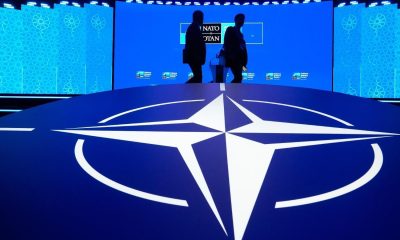




NATO is cancelling its 2027 leaders’ summit planned for Albania due to disagreements over defence spending and the wars in Iran and Ukraine, the Associated Press (AP) reported.
Albanian Prime Minister Edi Rama said alliance countries have not yet agreed on a date for the next summit, but confirmed the meeting will not take place in 2027.
NATO Secretary General Mark Rutte also confirmed that the alliance is not bound to a fixed schedule and that leaders meet “when necessary”.
NATO is also reducing the number of ministerial-level meetings.
No defence ministers’ meeting was held in October this year, and none is planned for October 2027.
Alliance foreign ministers will meet only once next year instead of twice.
NATO explains these changes as “restructuring”.
US policies and Iran war divide the alliance
One reason for the disagreements has been US policies under President Donald Trump.
The US administration is demanding that allies increase defence spending, criticizing them for not sufficiently supporting the war against Iran, and questioning Washington’s previous commitments to European security.
At the summit held in Ankara in July, allies agreed on a 70 billion euro aid package for Ukraine for 2026 and pledged to maintain a similar level in 2027.
However, Italy opposed the second point.
The NATO Secretary General also proposed making military support spending for Kyiv mandatory at 0.25% of gross domestic product, but this initiative failed.
According to The Telegraph’s sources, only seven of the 32 NATO countries backed the proposal, while countries including the UK, France, Spain, Italy, and Canada opposed it.
Divisions grow over Ukraine aid and membership
Furthermore, in November, Bulgaria refused to provide military support to Ukraine and join the European Union’s (EU) new aid package, while Poland suspended financing for purchasing US weapons for the Ukrainian Armed Forces.
Negotiations conducted by Trump’s special envoys with Moscow behind allies’ backs are also causing an additional rift in the alliance.
The US and Europe also hold different views on Ukraine’s prospects of joining NATO.
While the Trump administration and Trump himself oppose this accession, the Ukrainian President stated on 14 November that the Americans had asked him whether he was ready to give up Donbas in exchange for alliance membership.
In contrast to Washington’s shifting line, some European politicians insist on Kyiv’s unconditional integration.
French President Emmanuel Macron said on 15 November: “Ukraine’s place is inside the alliance.”
Some countries, such as Lithuania, Latvia, and Estonia, share the same stance.
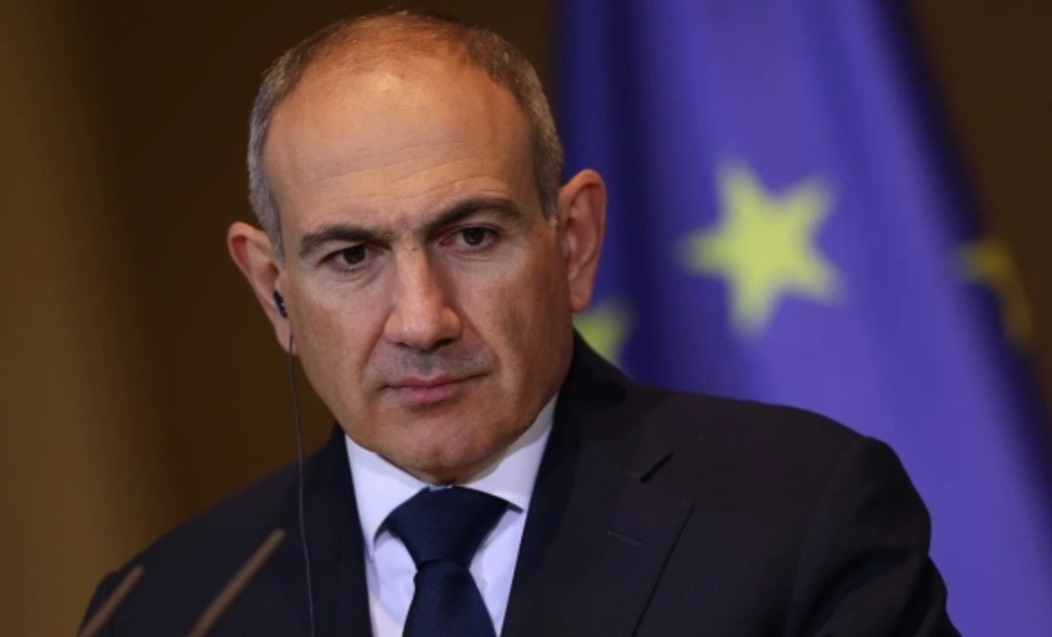
Members of the Collective Security Treaty Organization (CSTO) have stripped Armenia of its voting rights and its ability to appoint representatives to official positions due to a two-year debt to the organization’s budget.
Kremlin Spokesman Dmitry Peskov said, “This decision was taken based on the organization’s charter due to Armenia’s failure to fulfil its obligations for several years.”
Prior to the CSTO leaders’ summit in Moscow, Peskov had stated that member states would “react” to the Caucasus country’s non-participation in the organization’s activities.
Ahead of the Moscow summit, Armenian Prime Minister Nikol Pashinyan said his country’s “interest has run out” regarding the CSTO. Through his press spokesperson, he announced that he would travel to Türkiye on 11 November to attend the United Nations Climate Change Conference (COP31) instead of going to Russia.
The CSTO leaders’ meeting was held with the participation of Russian President Vladimir Putin alongside the leaders of Belarus, Kazakhstan, Kyrgyzstan, and Tajikistan.
The leaders jointly took the decision to revoke Armenia’s voting rights.
At the conclusion of the meeting, the participants also signed a joint declaration.
The declaration stated: “We confirm our unconditional commitment to the goals set out in the CSTO treaty and charter towards creating favourable and stable conditions for the comprehensive development of member states.”
Pashinyan had frozen Yerevan’s de facto participation in the CSTO in February 2024, citing the organization’s failure to aid the Armenian side during the armed clashes in Nagorno-Karabakh in September 2023.
Having referred to the CSTO as a “soap-bubble alliance” since that time, Pashinyan accused the organization’s members of “planning war” together with Baku. He stated that Armenia would not return to active work within the alliance at least “over the next five years”, adding that he would welcome it if the country were expelled from membership.
Relations between Armenia and Russia grew tense once again in the spring of 2026, after Yerevan moved closer to the European Union (EU) and the Kremlin responded with a trade war.
In May, Pashinyan refused to travel to Moscow to attend the Victory Day parade and declared that he did not support Russia on the Ukraine issue.
In response, Putin called on Yerevan to determine its foreign policy course through a referendum, advising Armenian authorities not to forget the fate of Ukraine.
The US administration has reportedly called on Russia to submit proposals for a prospective security treaty with Europe that would include measures to ease tensions between European nations and Moscow.
According to a report by news site Axios citing sources familiar with the matter, the US side conveyed the request during trilateral negotiations held in Abu Dhabi.
During the talks, US Special Envoy Steve Witkoff and Donald Trump’s son-in-law Jared Kushner suggested that the Russian delegation prepare a fresh proposal outlining its security concerns and demands.
The US delegation reportedly asked that this proposal clarify what kind of “symmetrical steps” Moscow is prepared to take to de-escalate tensions and “provide non-aggression guarantees to Europe”.
Another source familiar with the White House’s approach said the Trump administration aims to run the processes for a new European security architecture and a peace agreement between Russia and Ukraine simultaneously.
Under this plan, the actual implementation of the security understandings would take effect only after the signing of an accord ending the conflict in Ukraine.
Assessing the approach to the process, the source said: “[Ukrainian President Volodymyr] Zelenskyy will not agree to any compromise without knowing what will happen next regarding security guarantees. Putin also wants to see the exact same picture clearly. This is precisely why the security portfolio is so decisive.”
The same official noted that the US will not reach a security agreement with Russia without the support of Europe and Ukraine, adding that Washington will not grant Moscow veto power over European security decisions.
Vladimir Medinsky, aide to the Russian president and head of the delegation in the Ukraine negotiations, previously stated that the fundamental objective was building a comprehensive new security system in Europe.
Medinsky noted that the structure in question must take on the character of “a fair, new, modern Yalta and Potsdam that carries the spirit of Helsinki 1975 and responds to contemporary realities”.
The Russian official argued that if such a system were established, peace lasting for decades, or even centuries, could be secured in Europe.
Russian Foreign Minister Sergey Lavrov also announced that Moscow possesses its own position paper on how a new security architecture in Eurasia should take shape.
Lavrov stated that Russia hopes the Washington administration will “maintain its determination to pursue dialogue aimed at achieving an honest balance of interests where nobody’s security is impaired”.
Russian authorities have repeatedly stated that the country has no intention of attacking Europe.
Pointing out that they have no reason to fight NATO countries, Russian President Vladimir Putin previously said: “We have no interest whatsoever, neither geopolitical nor economic, political nor military.”
In a statement in October, Putin said Russia has no plans to attack anyone “in 2029, in 2030, or in the year 2050”.
On the other hand, Putin claimed that “all NATO countries are fighting Russia” and stated that the Russian military is currently the most combat-ready armed force in the world.
Following the contacts in Abu Dhabi, Kushner announced that he and Witkoff would travel to Moscow.
Explaining that they plan to meet Putin during the visit to discuss European participation in negotiations aimed at resolving the conflict, Kushner argued that the parties could make “far greater progress” if the Russian leader consents to such involvement.
Yury Ushakov, aide to the Russian president, stated that the US special envoys will arrive in Moscow on 12 November, with the planned meeting with the Russian president scheduled for the first half of the day.

Israeli unity government talks stall between Eisenkot and Likud

US and allies sign pact to shield AI supply chains from China

US general forced to resign could face trial over leak allegations

EU proposes reviving 2008 association agreement with Syria

Germany grants BND and BfV broad surveillance and covert action powers
-

 America1 week ago
US midterms see 97 young winners as Gen Z representation triples
-

 Diplomacy2 weeks ago
Secular dress code dispute exposes deeper Türkiye-Azerbaijan strains
-

 Europe1 week ago
EU urges citizens to prepare 72-hour survival kits for crises
-
 Asia2 weeks ago
China expands Africa arms sales, displacing France and Western rivals
-
 Diplomacy2 weeks ago
Protesters storm Kyiv site holding soldiers over torture allegations
-
 Europe2 weeks ago
Pro-Ukraine Republicans in US Congress dwindle after departures
-
 Europe2 weeks ago
Low EU gas stocks risk stoking global prices, IEA report warns
-
 America2 weeks ago
ICE contractors steer over $12m to US campaigns ahead of midterms
