
Opinion
Notes from Germany: Lux in Tenebris

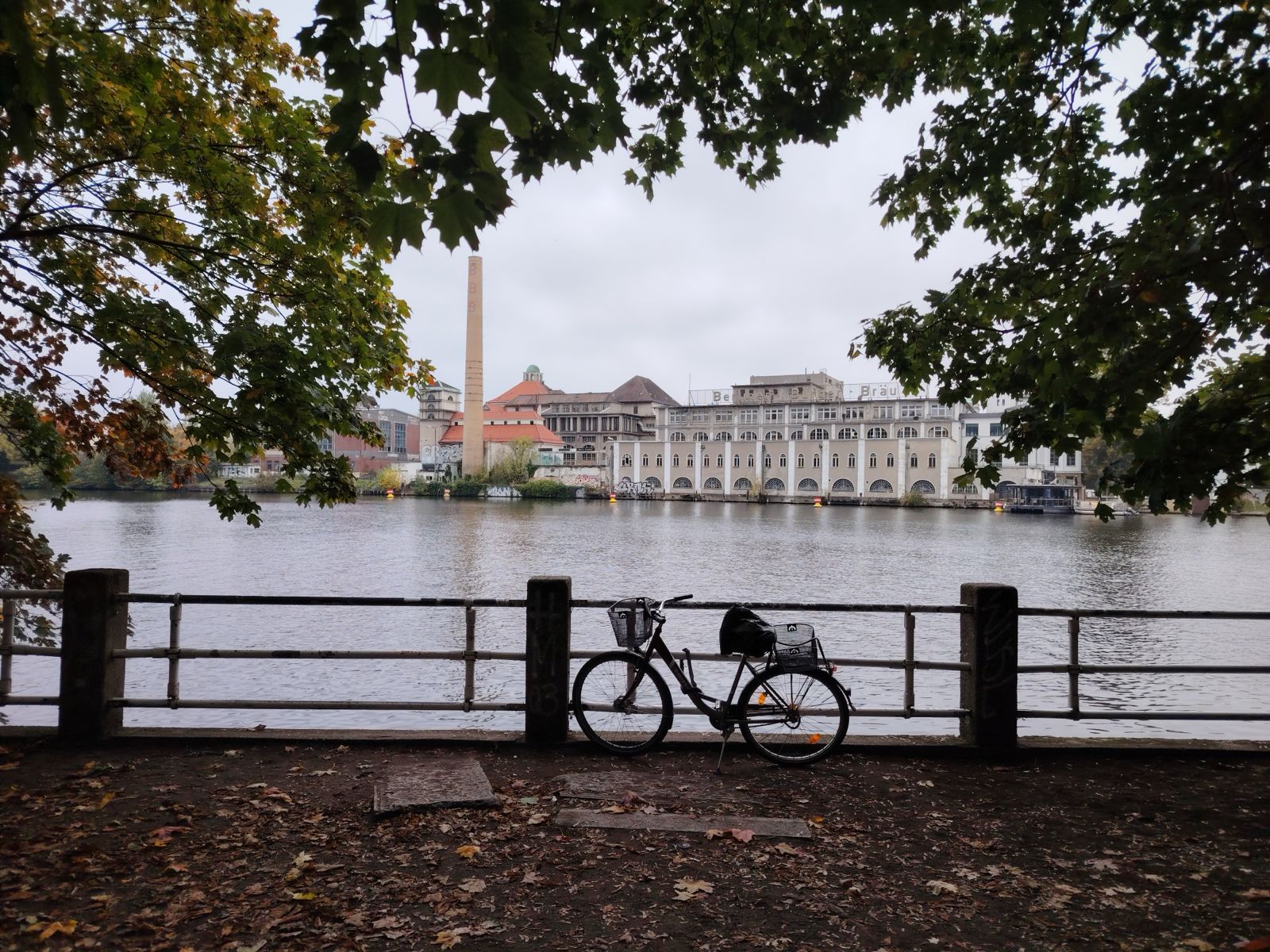
Scene one: In one of Berlin’s polite neighbourhoods, three or four people with Ukrainian flags stand in front of the Russian House, whose lease has been cancelled. Similar figures can also be seen on the street outside the Russian Embassy, which is protected by iron railings. It is hardly a crowd to be taken seriously, yet its impact on German politics must be taken very seriously indeed. Whether you see clouds in the air or not, the sky is murky and the needle is swinging towards cold. Nobody pays any attention to the small group with Ukrainian flags; the German government, however, mistakes that indifference for a green light for war.
Scene two: Looking from cosmopolitan and chaotic Berlin to small but stark Magdeburg, things change. Beyond mere metaphor, there is a real scene before us: there, members of the AfD and the BSW are beaming at one another. Election results in the state of which the city is the capital are forcing “unity”. It is as if this were the address of hope against war, though not every war: the establishment of a weapons factory in the state by an Israeli company causes stomach ache among AfD members, yet they barely bat an eyelid. A few dozen people, whose numbers rarely change, never fail to applaud generously. The German mainstream media is also attentive; AfD members take care not to slip up.
Scene three: We are back in Berlin. The first taxi driver, as we usually encounter, is Turkish. He says he voted for “Elif”. Is there much talk that she will fail? He says he will withdraw his support. The magic word is “integration”; yet he is angry with the Germans, and the sense of being downtrodden persists. The driver changes, but the theme remains the same: a Yemeni migrant, in his broken German and English, immediately objects upon hearing “the Houthis” and starts listing: Umar ibn al-Khattab, Abu Bakr… Stirred-up regional tensions and the personal backgrounds of migrants are reproduced inside Germany. This pool holds not only dangers for the German state, but opportunities as well. Anyone who wishes can look at the “new Syria”, or at the Turk appointed to head domestic intelligence.
What is the AfD’s crime?
Thinking about what we saw and heard in Berlin and Magdeburg, one is forced to pause and wonder why, aside from “one or two minor things”, the AfD is at odds with the “establishment” at all.
Of course, it is no small matter: the Ukraine crisis and the possibility of a general European war keep Germany on edge. Although the migration issue has lost its former urgency, it still occupies a prominent place in all speeches by AfD members. On these two critical headings, the AfD remains, in part, the black sheep.
I say in part, because there are obvious signs of softening. Ask anyone in the AfD, and almost all agree that there is more than one AfD: there is a “West German” AfD that adopts a pro-NATO, pro-armament, and pro-war stance; and there is an East German AfD that submits a joint peace motion with the BSW. Indeed, according to some, there is also Björn Höcke’s ethno-nationalist (völkisch) AfD. Even the issue of “remigration” has become “nuanced” for a party that wants at least to strike a chord with German big capital: no more new migration, yes, but where should the line be drawn for older migrants? Many regard those who arrived after the 2015 crisis as “illegal”; yet some local AfD politicians are actively campaigning to win the votes of Turks, believing that Turks, just like themselves, are socially conservative. One reveals his enthusiasm by saying, “We want nothing to do with Shariaists, but there are even Turks who eat pork!” Another admits that the question of who will wash the dishes once the migrants leave is the elephant in the room.
Whichever way one looks at it, it is clear that the party in the West, at least, is CDU 2.0 (liberal, market-oriented, conservative), while the party in the East is more “social”. On peace with Russia, for instance, the Saxony-Anhalt branch appears to speak unequivocally. A similar attitude holds for the Russian-speaking German-Russian community in Berlin and, more broadly, in the state of Brandenburg. If we count everyone from the Russians who fled to Germany after the October Revolution, to those who arrived with the Red Army, Soviet citizens who settled in East Berlin, and ethnic Germans who came from the USSR after the counter-revolution, we arrive at a population of nearly 35,000. Local AfD politicians do not seem to look unkindly upon this community either.
Indeed, the AfD’s lack of hostility towards Russia and Russians is cited as proof that it is not fascist. After all, in the 20th century, the nemesis of German imperialism, and of Nazism which inherited its worst traits, was Russia. While one reason for the Nazi invasion of the USSR was a holy war against Bolshevism, another was the cleansing of its own east, its “living space”, of inferior Slavs.
Fine, then, but today, as German imperialism once again sets its sights eastward, if one leg of the stool is hostility towards Russia, the others are Germany’s rearmament, NATO, and relations with the US.
The AfD’s stance on Germany’s rearmament can, at best, be described as “kicking the ball around”. For example, AfD members in Magdeburg say “800 billion euros for rearmament is too much” (how much, for instance, would not be too much?), and are then forced to openly admit that there is no consensus within the party on this issue. A local politician in Berlin voices the fantasy, “Let’s have 20 nuclear bombs and no army”, but adds: “I am in a minority in the party!” In fact, Siegmund Ulrich, the lead candidate in Saxony-Anhalt, had already blurted out that alongside rearmament, they could use the army to chase away migrants.
Conscription and the improvement of the Bundeswehr’s domestic logistics and infrastructure are also among the policies the AfD advocates. Whenever armament, the militarization of culture, and the strengthening of the army are on the agenda, AfD members join the bandwagon, saying “we are a right-wing party”. The same softening trend is observed regarding the US and NATO. The term “transatlantic right”, popularized by the BSW’s Sevim Dağdelen in a recent article, appears to have been adopted even by some AfD members. The fact that senior AfD figures like Beatrix von Storch have become regulars in Washington, Elon Musk’s attendance at AfD congresses, and the shadow of JD Vance and his patron Peter Thiel over German-Austrian politics complicate the matter further. The Trump administration’s push to bring Germany forward while reducing its NATO commitments in Europe seems to have sparked a modest excitement among AfD members. Their outlook on the EU and NATO is being recalibrated, adapted to this new situation.
Add to this Israel, the untouchable of the “establishment”. For the most “advanced” AfD member, “Jews” and “Muslims” are equally guilty. Even stranger, however, is what was said immediately after the Saxony-Anhalt elections in the debate over the Elbit Systems factory, sparked once again by Ulrich firing the signal flare: the AfD lead candidate stated that they would not oppose factories built for “ammunition production” and tied the now-familiar “remigration” issue to the debate surrounding this Israeli arms company. Although AfD members in Magdeburg express doubts about the Elbit Systems factory, they have found a baffling side road: let us put whether to build the (Israeli) weapons factory to a referendum and ask the people! If the people say yes, they will not object to the weapons factory being built. The AfD member who is “personally opposed” to Elbit building a factory again admits that there is no unity within the party on this matter. Clearly, for a local AfD politician, the way out of an issue that is unpopular, especially in East Germany, lies through the arguments that “there is no unity in the party on that issue” yet “he himself is personally opposed”.
The Israeli influence is embodied in Maximilian Krah, once one of the party’s most prominent faces: sidelined after an aide working for him in the Bundestag was accused of being a “Chinese spy” and after he remarked that “not everyone who wore an SS uniform was automatically a criminal”, this AfD figure somehow suddenly became enamoured of Israel and rushed off to Tel Aviv. He guaranteed that they would continue to bear Germany’s responsibility for the Holocaust, tried to convince Israelis that antisemitism in Europe today comes not from the right but from the left, and added that he was certain the ice between the AfD and Israel would melt.
Speaking of Israel… The Freedom Party of Austria (FPÖ), which the AfD regards as a sister party and whose Saxony-Anhalt team visited it to benefit from its experience in government, along with its leader Herbert Kickl, are also among those recently dazzled by the Israeli sun. The Likudization of the European right does not sink in Lake Constance; it marches on.¹
Indeed, this issue of “buyability”, in both senses of the word, is throwing the AfD off balance. An AfD politician explaining his views on Berlin’s housing problem opposes the Left Party’s expropriation proposal with CDU-like ferocity, while listing as his solution the deportation of Ukrainian refugees and, nevertheless, the construction of new housing. Who, then, will build the new housing? The city of Berlin is in debt, and the AfD opposes new debt; it also opposes private investors building it. So what will happen? Cooperation with the CDU in Berlin’s neighbourhoods will presumably bear fruit here in the form of more market and deregulation.
BSW: Over, over, not over
The same indecisiveness exists in the BSW. Of course, the BSW’s situation cannot even be compared to that of the AfD: having barely scraped into parliament in Saxony-Anhalt, falling below the threshold in Berlin and Mecklenburg-Western Pomerania, criticized for governing with the old/established parties in Brandenburg and Thuringia, and fracturing from within, the party is fighting a battle for survival.
Precisely for this reason, they see flirting with the AfD in Saxony-Anhalt as a kind of leverage. At least the state branch and certain intermediaries are pushing for this. While their similar stances on the Ukraine issue take concrete form in a joint motion, cooperation in the state could, for some, become a model at the federal level as well. The BSW’s lead candidate in Saxony-Anhalt, Claudia Wittig, plays to this with her constant smiling and nodding at AfD members. So do the anti-Americanism and the emphasis on German culture and what is German.
But which German? At the event in Magdeburg, an artist who appears to be close to the left quotes Brecht. Another prominent figure speaks of the German Hegel, of Aufheben, which we might translate as transcending by preserving, elevating by both retaining and negating its content, and of the unbreakable ties between patriotism and internationalism. He mediates with the AfD on behalf of migrants who speak German, pay their taxes in Germany, and obey German laws, pleading with them not to frighten these people by talking of remigration. The AfD member, meanwhile, says the left-right distinction means nothing; another likens Germany to “North Korea”. For whatever reason, while leftists deem it unnecessary to emphasize the left, right-wingers wink at a kind of right-wing international.
In the BSW, everyone is at odds with everyone else; nobody likes anybody. It is impossible to hear anything positive about co-chairs Amira Mohamed Ali or Fabio De Masi, even from people close to the BSW. Some are angry with Sahra Wagenknecht; others think Wittig is inadequate.
In fact, the experiment in Saxony-Anhalt oscillates on a scale between biting off more than one can chew and pure fantasy. Indeed, the party leadership has launched belated salvos against the possibility of being politically (and perhaps even organizationally) swallowed by the AfD. Leaders, led by Sevim Dağdelen, are trying to clarify their position by pointing to the AfD’s ethno-nationalist and transatlantic-right ties, as well as its stance against the welfare state.
But is it enough? Does viewing the AfD simply as a “political rival” allow one to understand this party’s specific historical role? Moreover, could the connection pulling the AfD towards the “establishment”, namely Israel, also be quietly and deeply reaching into the BSW? A journalist well-informed about the BSW reports, for instance, that certain shady characters hovering around the party are making moves to push steadfast anti-Israel figures like Sevim Dağdelen out of the organization by branding them “pro-Hamas”. Some declare the party finished, some think it will know how to rise just as it sank, and some even think the “left” of the Left Party and the “left” of the BSW could break away from their parties and form a new movement…
The (gloomy) sky over Berlin
To kill time, I step into a bookshop. Again to pass the time, I buy a book that catches my eye and begin reading. Its title is Beyond the Wall, by Katja Hoyer. No English-language book has ever told the history of the German Democratic Republic so vividly, someone says in the blurbs on the first page.
The colour palette is as follows: devout German communists rotting in Stalin’s prisons and Gulags; drunken Red Army soldiers on occupied Prussian soil, emboldened by their daily vodka rations, organizing mass rape sessions; the Ulbricht group, yes-men to Stalin and to the Red Army headquarters, the occupation authority in East Germany… and so it goes on. According to the author, Stalin, who met personally with the German delegation 11 times between 1945 and 1952, could not possibly have held these meetings out of any genuine interest in Germany’s political future; this was merely a sign of his distrust of his German comrades!
A complete waste of time. Yet it says something about the German intelligentsia and political class. This colourful history is, in reality, a bleak and putrid narrative of pessimism. In this history, there are no people rolling up their sleeves to leave the devastation of war behind and build a new country. It is a brand of nihilism incapable of understanding why the national anthem of the German Democratic Republic, beginning with “Auferstanden aus Ruinen” (Risen from Ruins), is still sung with longing today in the eastern German states, even by AfD members. One AfD adviser admits that Alice Weidel might say one thing today and something 180 degrees opposite next week. Indifference to Germany’s future has engulfed everything, even, in this context, the AfD.
On the other hand, the nihilism of the intelligentsia appears destined to lose against the hope pumped out by the AfD. The Germans call it Irrlicht; in folktales, a supernatural, even demonic quality is attributed to the false light that appears in marshes. The political nihilism into which Germany has sunk is elevating the AfD, which also feeds on nostalgia for East Germany.
Looking at the false light spread by the AfD, Brecht comes to mind once again. In one of his early plays, combining a critique of bourgeois morality with the biblical metaphor of “Light in Darkness” (Lux in Tenebris), Brecht left his protagonist, the bigoted Paul, standing outside a “brothel” in his neighbourhood to shelter from a storm. This polite gentleman, who had dedicated his life to fighting decay and darkness, suddenly found himself illuminated by the neon lights of the brothel right next to his own world, which he had thought so solid. And inspired by The Threepenny Opera, one might also think that to see the truth, one must look not at those in the light, but at those in the dark. As dark clouds gather once more in the German sky, thinking that optimism might be connected to our eyes adjusting to the dark could set our minds free.
¹ On this side of the lake, journalist Hüseyin Doğru is subjected to EU sanctions on the grounds of supporting the Palestinian resistance. Do not dismiss it as mere sanctions: Doğru cannot even use a credit card, his bank accounts are closed, he cannot pay his bills, and it is even uncertain whether he could return if he left the country. EU legislation practically buries sanctioned individuals alive.







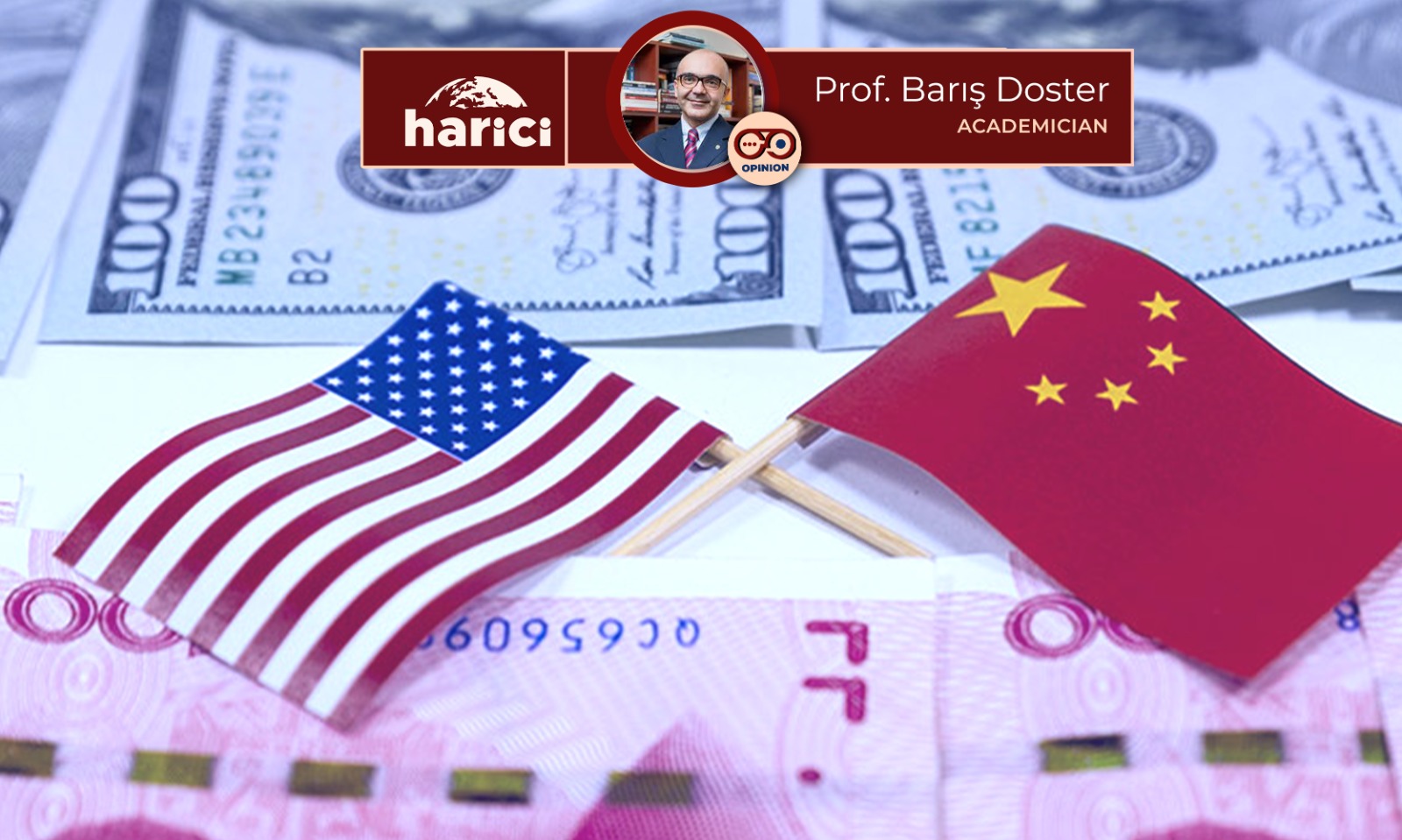
Economic news plays an important role in understanding the direction of politics and foreign policy. The first signs of rising and declining powers, new alliances, and divisions within existing alliances often appear on the business pages. An article published in the Turkish newspaper Sözcü on October 18, 2026, under the headline “By the Time the US Noticed China’s Move, It Was Too Late: China Had Encircled the World with Banks,” contained important information illustrating the changing global balance of power in recent years. According to the article, four Chinese banks occupied the top four positions on the list of the world’s largest banks. The largest US bank could only rank fifth. The combined assets of China’s four leading banks exceeded $26 trillion.
China’s success in the banking sector, when considered alongside the number of Chinese companies among the world’s top 100 and top 500, the number of Chinese universities in the global top 100 and top 500, the number of patents registered in China, the number of Chinese billionaires, the pace of middle-class expansion in China, and the country’s production, investment, export, and trade capacity, reveals a very simple reality: the tremendous economic success China has achieved through a model defined as socialism with Chinese characteristics. China has become the world’s second-largest economy after the United States. In calculations based on purchasing power parity, it has already surpassed the US.
Let us recall that in 1990, the United States produced 5.4 times as much as China. Today, China has overtaken the US in manufacturing output. According to some experts, China will surpass the US and become the world’s largest economy by the mid-2040s. Today, China is the largest trading partner of approximately 150 countries and runs a trade surplus with 106 countries. In 2025, with a bilateral trade volume of $52.9 billion, China also became Türkiye’s largest trading partner.
China’s economic success is widely referred to around the world as the “Chinese miracle.” There is little the United States can do to counter China’s economic and foreign policy initiatives, advances, and breakthroughs.
During the Cold War, Henry Kissinger, the renowned American political scientist and foreign policy expert who served first as national security adviser and later as secretary of state, advocated a US rapprochement with China against the Soviet Union. In 1971, while serving as the president’s national security adviser, he helped initiate this process through what became known as “ping-pong diplomacy,” of which he was a principal architect. These steps paved the way for a thaw in relations and the eventual normalization of bilateral ties.
Later, some in the United States began to argue that Kissinger’s diplomatic strategy could be reversed to contain China’s rise. In other words, they believed that securing Russia’s support against China, just as Washington had once sought China’s support against the Soviet Union, would serve US interests.
But the world is no longer the same world, the United States is no longer the same United States, and China is no longer the same China. Therefore, such a strategy had no chance of succeeding. Its failure became evident across numerous regions, countries, and fronts. It was evident in Syria, in Ukraine, and in Iran.
US aggression further strengthened the already close relationship between Russia and China. Washington began experiencing growing difficulties with its European allies. Its lawlessness in Venezuela and, above all, its unconditional support for Israeli aggression further intensified already widespread anti-American sentiment around the world.
THE MAIN PILLARS OF US HEGEMONY
As we know, US hegemony rests on three fundamental pillars.
The first is the American economy, its industrial and technological capabilities, and the US dollar.
The second is American military power, including approximately 800 military bases of various sizes around the world, and particularly its air force and navy.
The third is the American cultural industry, the widespread use of the English language, American culture, music, cinema, lifestyle, academia, and think tanks—in short, the instruments of soft power and public diplomacy.
In other words, the United States is a highly influential imperialist power, relying on its navy and the dollar as instruments of hard power, and on its language and culture as instruments of soft power.
We also know that the decline of US economic power inevitably undermines its political influence and soft power. This naturally causes panic, anxiety, and concern in Washington.
The reasons behind America’s growing anxiety are not merely political, military, or diplomatic. More importantly, they are economic.
The United States failed to achieve its desired results through the measures it took against China in the form of trade wars and tariffs. China did not back down. It responded with countermeasures. The trade wars ultimately hurt the United States itself, as well as its European allies. Washington’s policies also failed to deliver the expected results in terms of inflation, employment, exports, and trade.
In short, just as its relative economic decline weakens the United States’ position in foreign policy, China’s economic and technological development strengthens its foreign policy position, international visibility, and global reputation.
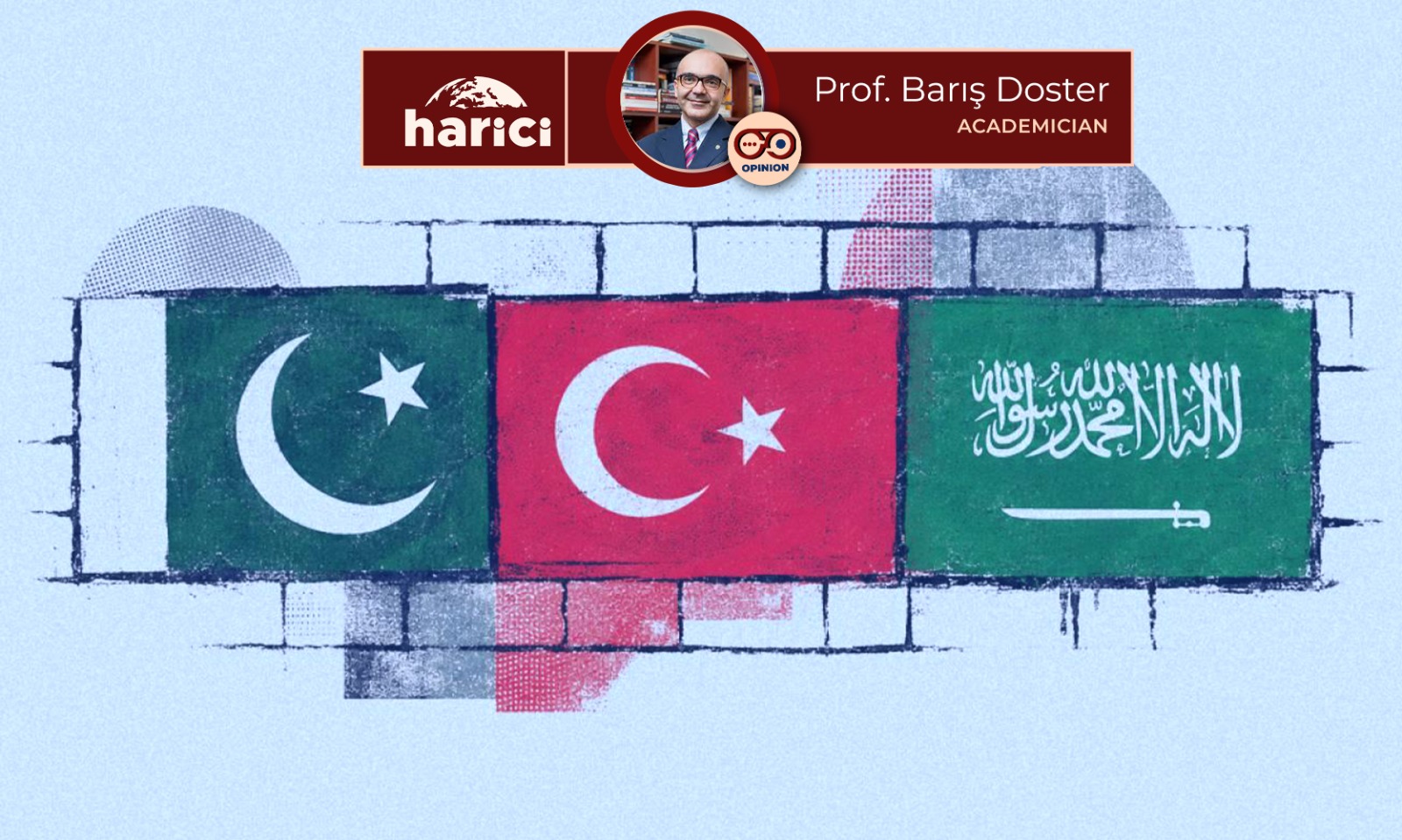
Some who are thoroughly excited by the Mecca Defence Agreement, and certain people who believe Türkiye should take sides in the clashes between the Iranian-backed Houthis and Saudi Arabia, are once again dreaming dreams of conquest with reference to our Ottoman past. Whenever history is discussed, especially Turkish and Ottoman history, they invoke this widely repeated saying: “After the collapse of the Ottoman Empire, the Middle East and the Balkans never knew peace again.”
We know that there are always those who, proceeding from this premise, seek to re-establish the Ottoman Empire. And we do not forget that eminent historians immediately respond to these ignorant figures: “Whoever does not grieve over the collapse of the Ottoman Empire has no heart, and whoever wishes to re-establish it has no mind.”
For the world we live in is neither the world in which the Ottoman Empire rose, nor the world in which it fell. Both times and conditions have changed. More than 40 states now exist across the lands once ruled by the Sublime Porte; when taking into account the countries it temporarily ruled, seized, or held sway over, that number exceeds 50 according to some historians, and 60 or even 70 according to others.
It must be asked dispassionately:
Which of these states, and how many of their citizens, actually want the Ottoman Empire to rise again, or wish for the Turks who would lead this revived, re-established Ottoman Empire to come and govern them as well? For this purpose, how many of these states have come together and said to Türkiye, “Take the lead, revive the Ottoman Empire”?
Is it objectively possible in today’s world to establish such a multilingual, multireligious, multiconfessional, multinational, and multi-identity empire? As the former prime minister Ahmet Davutoğlu once suggested, is it objectively plausible for Türkiye to establish and lead an Ottoman Commonwealth of Nations, just as the British established and led the Commonwealth of Nations? Does Türkiye possess such political and economic power, state capacity, and scale?
Do the states that emerged from the dissolution of the Ottoman Empire have any such goal, desire, or expectation? Are regional and global conditions, or the balance of power, conducive to such an initiative? Long after the age of empires has drawn to a close, is it a realistic objective to bring the countries born of the Ottoman Empire’s collapse together under the umbrella of a federation or confederation?
How do those who claim such a desire exists in the Islamic world, the Arab world, and the Turkic world explain the rapprochement between the Central Asian Turkic states and the Greek Cypriot Administration of Southern Cyprus; the Sunni-Shia and Arab-Persian tensions across the Islamic world; the Abraham Accords; the indifference of Arab states to the Palestinian issue; and the fact that the TRNC is not recognized by a single Muslim country or a single Turkic state other than Türkiye?
Were Türkiye to put forward such an ambition, let alone Greece, Bulgaria, or Serbia, how would Egypt, Saudi Arabia, and Iran react?
These questions could certainly be multiplied.
Yet history books contain ample evidence of how dreams conceived, and commentary made, in ignorance of history, geography, and economics ultimately turn out.
What matters in foreign policy is not indulging in fantasies, but remaining realistic.

Thomas Karat, behavioral analyst
The Mavi Marmara had sailed from Istanbul’s Sarayburnu port on 22 May 2010, bound for Gaza with aid. On 31 May, after Israeli commandos had taken the ship in international waters and nine of the people aboard lay dead, a Turkish reporter named Kürşat Bayhan tried to save his work by hiding his camera’s memory card under his tongue. It was found during a medical examination and taken from him. Around sixty journalists came off the flotilla at Ashdod that week, and all of their recorded media was confiscated, never to be returned. In the days that followed, the Israeli military released short, edited clips drawn in part from the material it had seized, and its account of the raid dominated coverage while the survivors were held without contact. For about forty-eight hours, while survivors were held incommunicado, the clips released by Israel, edited from the ship’s security cameras and from equipment taken off journalists, were most of what the world saw. On 3 June the Committee to Protect Journalists accused Israel of confiscating journalistic material and then manipulating it to serve its own interests. A United Nations fact-finding mission later recorded that a large quantity of video and photographs from the vessels, including much of the assault on the Mavi Marmara itself, had been taken by the Israeli authorities and not returned. The seized material stayed useful to its holders long after the raid. Months later, while the Israeli chief of staff was giving testimony about the operation, army radio released a further short clip from the confiscated videos, a timing one Israeli outlet read as a domestic political move. The Turkish photojournalist Cevdet Kılıçlar was among those killed on the ship, and a Canadian aid worker, Kevin Neish, who hid the memory card from his own camera and later smuggled it out, published photographs of the dead that the official clips had left out. What survived reached the public because individuals beat the search, among them two Turkish journalists, Adem Özköse and Şefik Dinç, who smuggled their work home or recovered it from damaged cards.
Readers in Türkiye know that method from their own history. The state seizes the cameras, holds the witnesses until the story has set and then releases whatever selection supports the official version. It is the maritime equivalent of the colonial bonfires described in the first part of this series, where Britain burned or sank the files that might embarrass it and later locked away the rest. Both methods rest on one condition. The state has to hold the only copies. In Gaza since October 2023 that condition has failed, because a large part of the evidence was recorded by Israeli soldiers on their own phones and published by them, under their own names, before anyone in authority could decide what the public would be allowed to see.
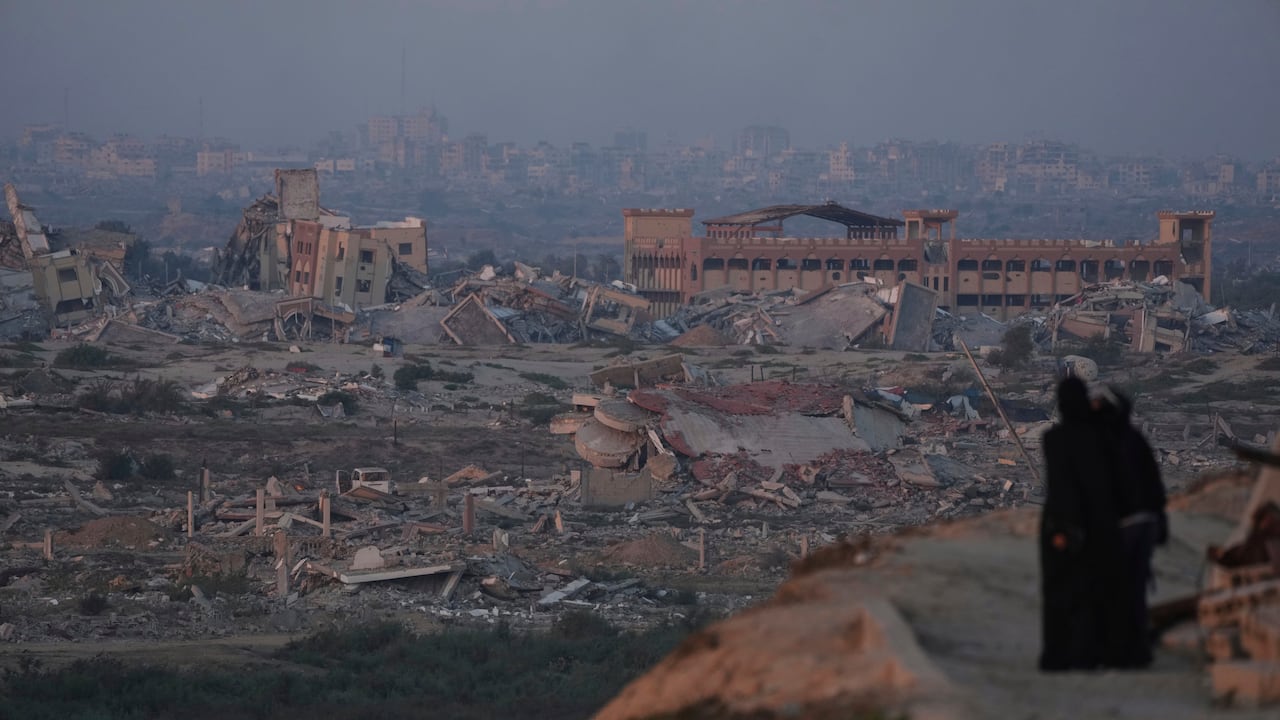
The most common scene in that material is a demolition. Engineers thread explosives through the houses of an entire street, a countdown runs, and a block of homes drops at once into a single rolling cloud, while the men who set the charges cheer and the man holding the phone keeps it steady on the collapse. The same footage recurs across Gaza in thousands of clips filmed by unit after unit, some dedicating a detonation to a fallen comrade or to a holiday at home. One soldier captioned the levelling of houses in Rafah “renovations in Gaza.” The Fourth Geneva Convention bars an occupying power from destroying civilian property unless military operations make it absolutely necessary, and it lists extensive destruction of property, carried out unlawfully and wantonly and without military necessity, among the grave breaches that constitute war crimes. Footage of soldiers celebrating the collapse of a residential block is poor evidence of necessity. Demolition compelled by an operational requirement gives no occasion for a victory song, and the soundtrack records the attitude in which the decision was carried out.
The second recurring scene shows detainees. Across the Strip soldiers filmed men they had rounded up, who had been stripped to their underwear and blindfolded before being made to kneel in long rows, and they filmed themselves standing over them. In December 2023 a soldier named Yossi Gamzoo posted footage of a Palestinian stripped and bound, bleeding, under interrogation at Gaza College and then marched barefoot through the street, along with a second clip from Yarmouk stadium in which hundreds of men kneel in rows, many in their underwear and some blindfolded, with three women on their knees behind a goal. Another soldier, later identified as Ilya Blank, set a montage of blindfolded detainees packed into a pickup truck, with a comrade grinning and raising his thumb beside them, to an Israeli rap track. The Geneva Conventions require that people in custody be treated humanely and protected against insults and public curiosity. Legal scholars who examined this footage for the BBC concluded that it breached those protections. Two named soldiers stand here for a practice that was widespread and openly displayed, posted by men who expected their audience to approve.
The same practice reached the occupied West Bank. In December 2023, during a three-day military operation in the Jenin refugee camp, reservists filmed themselves inside a mosque reciting the Shema Yisrael and singing Hanukkah songs over the loudspeaker normally used for the call to prayer, one of them standing on the minbar. Graffiti left in the building read, among other things, greetings from the Gaza envelope. The army said the conduct contradicted its values and removed the soldiers from operational duty. Israel’s national security minister, Itamar Ben Gvir, meanwhile posted the video on his own Telegram channel, presenting it as a prayer performed by heroic soldiers. Türkiye’s Foreign Ministry condemned the incident as a provocation. The episode compressed the whole problem into a single week. The military moved to discipline the men who had filmed the act, while a cabinet minister circulated the same footage to his followers as something to admire, which left the state disowning and promoting one recording at the same moment.
Some of the gravest material emerged by a different route, through a leak rather than a boast. On 6 August 2024 Israel’s Channel 12 broadcast surveillance footage from Sde Teiman, a military detention camp in southern Israel holding Palestinians taken from Gaza. It showed soldiers leading a detainee aside and surrounding him with riot shields, so that what was done to him took place just outside the camera’s view. The military’s own indictment later described what the shields concealed. Soldiers had attacked the man with severe violence and inserted a sharp object that penetrated near his rectum and tore the rectal wall, leaving him with fractured ribs and a punctured lung. The broadcast characterised the attack as a rape, while the charges filed stopped at aggravated assault. What followed belongs at the centre of this account. Israel arrested a senior military lawyer on suspicion of having leaked the video, and the military advocate general’s office later withdrew the indictments against the reservists. The legal jeopardy moved from the men in the footage to the official accused of letting the public see it.
Once the soldiers’ own posts were public, others began to organise them into evidence. The Palestinian journalist Younis Tirawi spent months identifying soldiers and units from what they had published, including a sniper team he traced after one of its members uploaded a video recounting the unit’s operations in Gaza City that showed unarmed people being shot. He collected post after post of soldiers posing with the lingerie and the mannequins of women whose homes they had occupied, and Al Jazeera’s investigative unit compiled a database of more than two and a half thousand accounts belonging to serving soldiers. A Belgian organisation, the Hind Rajab Foundation, began converting that material into criminal complaints, identifying individual soldiers from their own publications and filing cases in the countries they visited. Within a year it had lodged around fifty complaints and submitted the names of a thousand soldiers to the International Criminal Court, supported by thousands of items of footage and posts. A judge in Brazil issued an arrest warrant against one soldier, who avoided it by crossing into Argentina. A complaint in Portugal relied on a sniper’s own online boast of four bullets fired without a miss. In Belgium the foundation filed a further complaint against a dual national from the same sniper team, built around the siege of a Gaza hospital. The Israeli military responded by warning its personnel to stop publishing details of their service and by advising some of them to leave the countries they were visiting before they could be detained.
The footage reached the highest court available to states. When South Africa brought its case under the Genocide Convention to the International Court of Justice, its counsel played the soldiers’ videos in the courtroom and read out statements soldiers had made on camera as evidence of intent. The court found that the Palestinians’ claimed right to protection from genocide was plausible and issued binding provisional measures, among them an order that Israel prevent the destruction and ensure the preservation of evidence related to the allegations. A later order required Israel to admit United Nations investigators to Gaza. Türkiye, a party to the Genocide Convention, submitted its own declaration of intervention in the case on 7 August 2024 under Article 63 of the Court’s Statute, and the Court invited South Africa and Israel to submit written observations on the request, months after Ankara had suspended trade with Israel over the war. In November 2025 the Istanbul chief prosecutor’s office announced arrest warrants on charges of genocide and crimes against humanity against 37 Israeli officials, among them the prime minister, the defence minister and the chief of the general staff. Israel’s foreign minister rejected the warrants with contempt and called them a PR stunt, arguing that the Turkish judiciary had become a political instrument and citing the arrest of Istanbul’s mayor earlier that year. The warrants have no force outside Türkiye, and their weight lies in the record they help assemble. The International Criminal Court had already issued warrants for the prime minister and his former defence minister a year earlier. Across these proceedings the soldiers’ own recordings form part of the evidentiary base, which means the state now faces courts in The Hague and prosecutors abroad with material its own personnel produced and published.
From that point the work of erasure ran in reverse. A government that in 2010 had held the cameras now had to recover material already copied onto other people’s devices. In February 2024 the chief of the general staff, Herzi Halevi, wrote to commanders instructing soldiers not to loot and not to film revenge videos, and soldiers who had posted demolition footage were told to remove it. The concern, as described by the military’s own people, was that the clips could feed the cases building at the International Criminal Court and the International Court of Justice. By mid-2025 the chief military censor had issued an order restricting what could be posted about strikes altogether, an order Haaretz described as legally invalid. By 2026 the army’s chief of staff had asked military lawyers to examine legal action against the makers of a prize-winning documentary in which soldiers described the deliberate killing of civilians in Gaza. The effort that had begun with deleting a conscript’s post extended, within two years, to pursuing those who assembled such material into a public account.
The removal of evidence also operated on the platforms, and it fell unevenly. In October and November 2023 Human Rights Watch documented more than a thousand takedowns and suppressions of Palestinian content on Instagram and Facebook. Of the 1,050 cases it reviewed, 1,049 involved peaceful content in support of Palestinians, and a single case involved content supporting Israel. The organisation identified six recurring patterns of suppression, ranging from removal and account suspension to shadow-banning and restrictions on live video, affecting posts of evident news value, including footage of Palestinian dead. It attributed the pattern to automated moderation and to government pressure over what the company removed, including referrals from Israel’s state cyber unit. Users responded by misspelling the word Gaza or substituting a watermelon for the Palestinian flag to evade the filters. A human-rights review commissioned by Meta itself had already found, before the war, that its moderation harmed Palestinian rights. The two bodies of material differ in kind. The soldiers’ footage documents alleged crimes, while most of the suppressed Palestinian content documented what was being done to civilians. In both cases the record most damaging to the stronger party proved the harder one to keep in view.
Older forms of erasure continued alongside the new. Early in the war an airstrike destroyed the Central Archives of Gaza City, which held some 150 years of the territory’s history in roughly 110,000 documents and photographs. The library of the Islamic University of Gaza had been levelled in the second week of fighting, and the Gaza City public library, holding about ten thousand volumes, followed. United Nations experts used the term scholasticide for the systematic destruction of the territory’s education system, reporting that more than eighty per cent of Gaza’s schools had been damaged or destroyed. One count put the dead at 5,479 students, 261 teachers and 95 university professors. The last functioning university was demolished in January 2024, after the army had used it for seventy days as a base and detention site. The Committee to Protect Journalists recorded 2024 as the deadliest year for the press since it began keeping records in 1992, with 124 journalists killed worldwide and around sixty per cent of the toll attributed to Israel. The dead included the journalist Hamza Dahdouh, son of the Al Jazeera correspondent Wael Dahdouh, killed in a strike on his car, and Ismail al-Ghoul with his cameraman Rami al-Rifi, killed in a vehicle with press markings while both wore press vests. Many of those killed were freelancers working after their newsrooms had been destroyed, filling a gap left by Israel’s refusal to admit foreign reporters except on escorted military visits, a restriction that more than fifty foreign correspondents protested in an open letter.
The oldest layer of the practice reaches back to the state’s founding. For two decades a security department of the Israeli defence ministry known by its Hebrew acronym, Malmab, has removed documents from Israeli archives, often without legal authority and in some cases resealing papers the military censor had already cleared, including material on the expulsions of 1948 that historians had published and cited. The largest archive in the country, that of the military itself, remains almost entirely sealed. One historian discovered that files he had quoted fifteen years earlier were no longer available to him. Among the documents withdrawn was an internal report on how Palestinian villages were emptied in the first months of the 1948 war, a record that complicates the official account of a population that left of its own accord. That is the British method in its Israeli form, the quiet withdrawal of evidence that had once been open.
The motive is consistent across both parts of this series. A state that claims to conduct its wars within the law draws standing from that claim both at home and in the international forums where it seeks support. Documented abuse, examined by courts it does not control, undermines the claim and attaches it to named individuals. Britain protected that standing with fire, with retention orders and with closed courts, and the effort succeeded for half a century because the state held the only copies of the evidence. Israel controlled the record of the Mavi Marmara in 2010 by the same means, through possession of the cameras. In Gaza it has held neither the cameras nor the copies. The decisive evidence was produced by its own soldiers, distributed before any censor intervened, archived by investigators within hours and entered into proceedings at The Hague before any deletion order took effect. The first part of this series ended at Akrotiri, where Britain still withholds its surveillance footage of Gaza on grounds of national security. The contrast with the footage Israel’s own soldiers chose to publish defines the present moment. A state can seal what it alone possesses. It has far fewer means to recall a confession its personnel have already made to the world, and the scale of the effort it devotes to trying remains the clearest indication of what that confession contains.
Settle, deny, seal: Britain’s formula for colonial torture, from Kenya to Cyprus — 1

Israeli unity government talks stall between Eisenkot and Likud

US and allies sign pact to shield AI supply chains from China

US general forced to resign could face trial over leak allegations

EU proposes reviving 2008 association agreement with Syria

Germany grants BND and BfV broad surveillance and covert action powers
-
 America1 week ago
US midterms see 97 young winners as Gen Z representation triples
-

 Diplomacy2 weeks ago
Secular dress code dispute exposes deeper Türkiye-Azerbaijan strains
-

 Europe1 week ago
EU urges citizens to prepare 72-hour survival kits for crises
-
 Asia2 weeks ago
China expands Africa arms sales, displacing France and Western rivals
-
 Diplomacy2 weeks ago
Protesters storm Kyiv site holding soldiers over torture allegations
-
 Europe2 weeks ago
Low EU gas stocks risk stoking global prices, IEA report warns
-

 Europe2 weeks ago
Pro-Ukraine Republicans in US Congress dwindle after departures
-
 America2 weeks ago
ICE contractors steer over $12m to US campaigns ahead of midterms
