
Diplomacy
Secular dress code dispute exposes deeper Türkiye-Azerbaijan strains

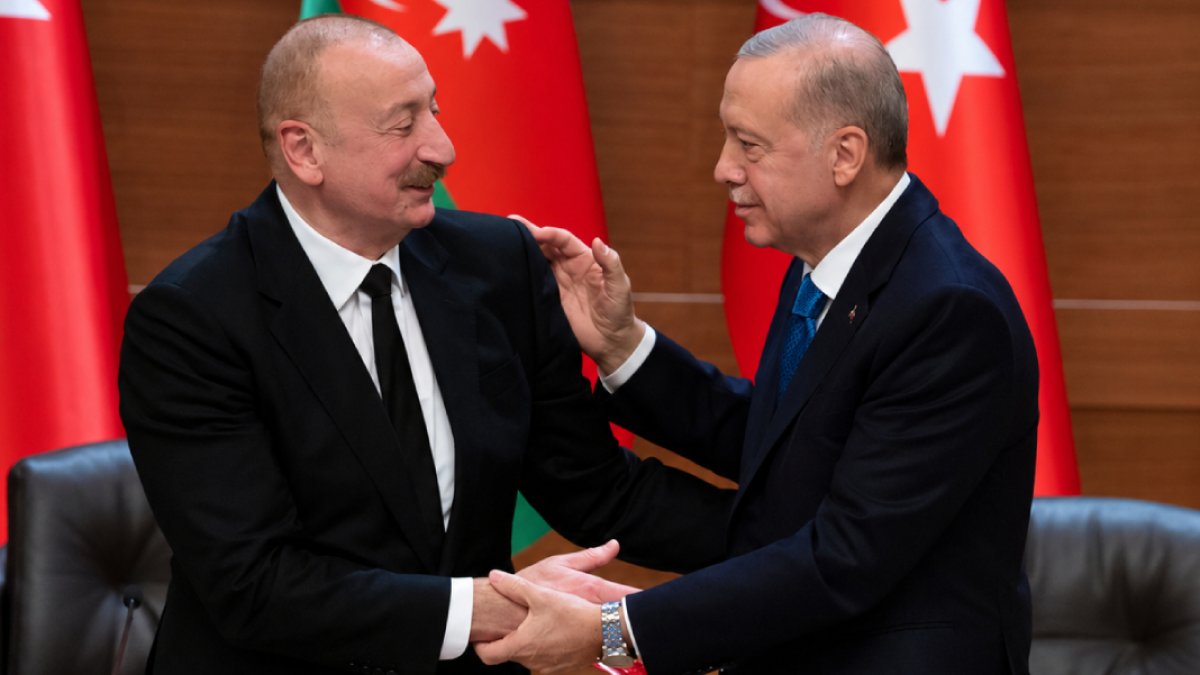
A sudden diplomatic spat between Ankara and Baku has brought latent structural contradictions to the surface, challenging the traditional motto of “two nations, one state” that has long defined relations between Türkiye and Azerbaijan. The friction, which was sparked publicly by domestic disputes over secular school dress codes in Azerbaijan and inflamed by divergent foreign policies towards Israel and Iran, represents an engineered divergence that could carry far-reaching consequences for the South Caucasus.
In an in-depth interview with the digital news channel Harici, foreign policy analyst Oğul Tuna examined the structural, domestic, and geopolitical currents driving this recent friction. Tuna argued that while the flashpoint seemed to erupt spontaneously over religious dress codes, it was rooted in institutional discrepancies, historical misunderstandings, and external geopolitical intrigues, particularly involving Israel, Iran, and the United States.
“The crisis did not actually start with the headscarf issue”
Evaluating the ostensible cause of the dispute, Tuna clarified that the row over religious garments in Azerbaijan merely triggered pre-existing structural friction.
“It is not 15 years, maybe even 40 years. Over 40 years,” Tuna said regarding the resonance of the headscarf debate within Turkish public memory. “It is an issue in Türkiye that goes back to the 1980 coup, or even before that. Of course, the other side, Azerbaijan, probably did not think this would provoke such a reaction in Türkiye, or perhaps the reactions in Türkiye were actually about Azerbaijan being a different state. Even though it is a propaganda campaign of ‘two nations, one state’, even though we speak almost the same language and share the same feelings, we are talking about a different state. Many people in Türkiye forgot this, both in politics and on social media among the public.”
Tuna noted that the current diplomatic strain can be traced directly back to events on the international stage preceding the school circular: “I think the crisis did not actually start with the headscarf issue. It is a crisis between Türkiye and Azerbaijan. It is possible to take this to the United Nations Summit in the near future, in the short term. If we recall, at the end of September, when Benjamin Netanyahu took the stage to speak at the United Nations General Assembly, many countries, including Türkiye, left the podium. The Azerbaijani delegate did not leave, and in Türkiye, especially among the Islamist community, many anonymous accounts started reacting on social media, targeting Azerbaijan-Israel relations with comments like, ‘How can this be brotherhood?'”
“And then this headscarf issue came on top of that,” Tuna stated. “A circular was issued banning girls wearing headscarves from attending certain schools, and this sparked a reaction from many religious figures, politicians, and especially ordinary Turkish citizens, both anonymously and publicly. Firstly, there is the collective memory of the headscarf issue in Türkiye, a debate that has been going on for 40 to 50 years. Secondly, Azerbaijan, a secular state, even a state that completely ignores religion, is acting as a Soviet legacy, not tolerating it, but eliminating it. And thirdly, the relationship between Azerbaijan and Israel fueled a huge fire among the public. As a result, many messages were shared regarding the Aliyev regime, the relationship between religion and politics in Azerbaijan, and of course, the war in our region.”
Tuna underlined that the backlash astonished officials in Baku. “Well, regarding the strong reactions from top political figures, well, the Azerbaijani side did not expect this either, and we ended up with a crisis that we will discuss as something that should not have happened for no reason,” he said.
“Türkiye has two Ministries of Foreign Affairs; one in Ankara and one in Baku”
The conversation turned to historical precedents of bilateral tension, particularly the 2009 “football diplomacy” era under former Turkish President Abdullah Gul, during which Ankara pursued normalization protocols with Armenia while Nagorno-Karabakh remained under Armenian military control. Tuna explained that whereas the estrangement in 2009 possessed legitimate structural foundations, the modern diplomatic discord occurs under fundamentally transformed geopolitical realities.
“Well, of course, in 2009, during Abdullah Gul’s presidency, there was a match diplomacy, where the then Armenian Prime Minister watched a match together,” Tuna recounted. “Azerbaijani flags were not allowed into the stadium. The reactions of Turkish citizens, especially Turkish nationalists, were decisive here. But of course, during this process, the gap between Ankara and Azerbaijan widened considerably. Actually, such a gap at that time is quite understandable, even legitimate. Because the Karabakh territories belong to Azerbaijan, and according to United Nations resolutions, the Karabakh territories, which are registered as belonging to Azerbaijan, were still under occupation. For this reason, Türkiye had already closed its border crossing with Armenia since the 1990s, and later, as far as we have read and learned, Armenia entered into such a process without Baku’s consent or consultation.”
“Today, however, we are going through a very different process,” Tuna pointed out. “That is, today Azerbaijan has liberated its occupied territories. Armenia has initiated and is supporting the peace process itself. And Türkiye, as we have discussed in our previous broadcasts, is conducting a normalization process with Armenia in a cooperative manner. In fact, in one of the previous episodes, I mentioned Ilber Ortayli. I quoted a saying of his that I really liked: Türkiye has two Ministries of Foreign Affairs; one in Ankara and one in Baku.”
Despite this historic institutional alignment, private grievances have surfaced regarding Ankara’s ongoing diplomacy with Yerevan. “However, in this recent period, after the headscarf crisis and the subsequent discussions in Azerbaijan and the crisis with Türkiye, we learned from various sources, journalists, and behind-the-scenes reports that Türkiye’s recent rapprochement with Armenia, the rumors of the border crossing being opened, the participation of Turkish Foreign Ministry representatives in Armenia’s founding anniversary reception, and the fact that it was held in Istanbul, has greatly disturbed Baku,” Tuna explained. “This is understandable from another perspective, because there is no peace agreement yet. The issue has not been resolved amicably.”
“The process is ongoing,” Tuna observed, adding that Baku’s discontent overlooks parallel developments. “On the other hand, let us not forget that Azerbaijan’s president, Nikol Pashinyan, posed for very nice photos at the White House last year. So, the process is actually continuing there as well. Therefore, there are things here that do not quite add up, diplomatically or logically. Because we are not in 2009 anymore. The winning side has changed this time. And there is a peace and normalization process going on in coordination with the winning side. So, it seems we need more information here. The Armenian aspect of the current crisis, because, as I said, it is a bit based on gossip.”
“Nobody in Türkiye knows Azerbaijan”
Tuna analyzed the persistent cultural and psychological barriers that hinder deeper diplomatic understanding between the two nations. In particular, he criticized the paternalistic attitudes long held by certain sectors of the Turkish political establishment and public.
“I think I discussed this in our previous Central Asia broadcast,” Tuna said. “Unfortunately, in Türkiye, for many years, what slowed down the development of relations with other Turkic states and Central Asian states was the perception, both in our political arena and among the public, that we are the big brother. We are first among equals. Yes. We are all Turks, brothers, etc., but we, the Republic of Türkiye, were independent before, etc. We are a much larger state with greater capacity. This understanding seems to have continued in certain areas after the Karabakh War. That is, a view that you could not have taken Karabakh without us.”
Tuna noted that this posture did not originate from the highest level of state governance: “Well, we have never actually heard anything like this from the President of Türkiye. The President of Türkiye, Recep Tayyip Erdogan, has always been on the moderate side regarding Azerbaijan. But it seems that, both at the state level and especially among the Turkish people, one of our biggest shortcomings, and I have observed this for many years as someone who has worked in the South Caucasus, is that nobody in Türkiye knows Azerbaijan. Unfortunately, very few people visit, and interestingly, nobody knows Azerbaijani history or language. Furthermore, the Azerbaijani language is unfortunately seen as a culture that is often ridiculed, used in comedies and jokes. But we have also seen that in this recent period, Azerbaijan does not know Türkiye very well either.”
Moving beyond social perceptions to hard commercial realities, Tuna examined the contradictory positions taken regarding Israel, pointing out the quiet cooperation that persists alongside public grandstanding.
“Secondly, it must be said openly that Azerbaijan, especially in the last few years, seems to have advanced its relations with Israel excessively,” Tuna remarked. “Well, of course, with the outbreak of this crisis, Azerbaijan’s state media directly reported that they were saying things like, ‘You are saying we are advancing relations with Israel, but actually everything is going well with Türkiye.’ This is absolutely true. After all, despite all the rhetoric, Türkiye also has a tremendous energy traffic with Israel that continues behind the scenes. This is also due to Azerbaijan transferring its natural resources to Iran and Israel. Ships are constantly operating. Most recently, the Israeli President was allowed to use Turkish airspace. Of course, this was made possible by Azerbaijan establishing its own aircraft. So, someone needs to come out and say, ‘You are brothers.’ Both Türkiye and Azerbaijan are already conducting very good relations with Israel. One side is doing it secretly. The other side is doing it openly, without any hesitation.”
“Both at the state level and especially this time in the eyes of the Turkish people, this has started to become disturbing, and reactions against Azerbaijan have increased significantly, especially after the Iran-Iraq conflict,” he added.
“I see Israeli propaganda in both”
Addressing broader regional volatility, Tuna highlighted intelligence circulating in journalistic and diplomatic circles suggesting an imminent conflict involving Iran, potentially positioning Ankara and Baku on opposing diplomatic fronts.
“And thirdly, from our sources, from different journalists, I heard this from Erdem Atay, and from various experts, it seems we are all following the situation regarding Iran,” Tuna stated. “A renewed war with Iran is expected, especially with the completion of the midterm elections in Israel and the US, within a week or two. According to rumors, Türkiye has been neutral since the beginning of the conflict, and while it is actually leaning somewhat towards Iran, there are reports that Azerbaijan will become more involved in favor of Israel this time. The Turkish Foreign Ministry is reportedly very concerned about this.”
Reflecting on whether these developments represent tactical information operations or strategic realignments, Tuna asserted: “At least, let me say this. We have not actually discussed this yet, even in the headscarf issue. I think the biggest reason for this tension between Türkiye and Azerbaijan, for this latest crisis, is the names that Israel has assigned to both sides. I think the propaganda on both sides is anti-Turkish in Azerbaijan. Here, it is anti-Azerbaijan propaganda. No matter how much it is done with an Islamic identity on one side, and a Turkish identity on the other, with the propaganda that ‘we are the real Turks in Azerbaijan, we are the secular ones, we are the ones protecting Turkish culture’, I see Israeli propaganda in both.”
“This latest issue, the idea that Azerbaijan will diverge, could of course be a kind of propaganda,” Tuna cautioned. “Ultimately, the friendship between Türkiye and Azerbaijan is an extremely important factor for both Turkish and Azerbaijani foreign policy, and for peace and tranquility in the region. This, beyond sentimentality and rhetoric, must always continue. Ultimately, these two countries are extremely important for regional cooperation and integration from the Aegean to the Caspian Sea. But, as I said, there is propaganda going on here.”
Nevertheless, concrete diplomatic alignments point to genuine shifts in regional blocs. “On the other hand, we should not forget this: in the coming weeks, delegates from Israel, the United Arab Emirates, and India will meet in Azerbaijan to form a kind of bloc that they are actually trying to build and establish,” Tuna reported. “And let us note that what brings these countries together is anti-Iran: India, the United Arab Emirates, and Israel. It is also said that Afghanistan, or the Taliban, will support this, but of course, these are rumors or, as you said, propaganda. To cut a long story short, Azerbaijan seems to be slowly moving towards such an axis. So, of course, there is propaganda, but there is also realpolitik involved.”
Tuna highlighted the friction sparked by military strikes near Azerbaijani territories, such as Nakhchivan, noting that while Iranian rhetoric subsequently softened, fundamental geopolitical risks remain. “It seems that, if the war with Iran breaks out again, this time, Türkiye and Azerbaijan might find themselves on opposing sides, and I think they are considering that possibility, and that could really be a sad and painful scenario. Of course, we are not directly referring to war here, but ultimately, even a diplomatic divergence will force us to reconsider, perhaps for the first time in history, the issue of the two Foreign Ministries, as Ilber Ortayli put it.”
“This weather forecast also has a geopolitical aspect”
Turning to Tehran’s calculations, Tuna evaluated Iran’s strategic anxiety regarding border changes and the planned Zangezur corridor, an initiative that Iranian officials have warned could sever their direct terrestrial link to Armenia.
“And Zangezur, as you said, is actually the biggest geopolitical concern for Iran, even before this war,” Tuna analyzed. “Because, traditionally, in the last 30 years, Armenia has been Iran’s only ally in the region, and the severing of this connection with Armenia, and by ‘severing this connection’, I mean, this time, in a way that strengthens Türkiye, a regional rival of Iran, is of course a very big concern. And what does the connection with Armenia mean? It means the southern, northern corridor, the connection with Russia. Of course, there is the Caspian Sea nearby, but that is the point. Even the centuries-old balance between the three regional powers, Russia, Iran, and Türkiye, has been completely disrupted in Türkiye’s favor, which, of course, has disturbed Iran in terms of its own interests.”
Beyond infrastructure and transit corridors, demographic and cultural factors deepen the competition between Tehran and Baku. “Secondly, there is actually a growing rivalry between Iran and Azerbaijan in recent years,” Tuna said. “This is especially true in terms of cultural ties and cultural identities. We all know that millions of Azerbaijani Turks live in Iran. Millions of Turks, some even say 30 million. Of course, there is no ethnic census conducted by Iran, but we see that Aliyev and the Azerbaijani side have strengthened and increased their propaganda apparatus targeting Iranian Turks in recent years.”
Illustrating how soft power manifests in daily state media, Tuna observed: “For example, while the Aliyevs, neither Aliyev’s father nor Heydar Aliyev ever dealt with such an issue before, especially after the Karabakh War, for instance, in meteorological programs, only Yerevan, the cities in Armenia, and the northern Azerbaijani territories, not officially, are mentioned. At the same time, we started to see that cities like Tabriz and Urmia, which belong to Iran but where Turks predominantly live, were also included in this meteorological data, very simple examples from daily life.”
“This weather forecast also has a geopolitical aspect,” he added, noting similar cartographic projections seen across the region. “Why, during the long years of Baba Aliyev’s and then Ilham Aliyev’s rule, was there no focus on the south, on Southern Azerbaijan, on the northern Iranian territories? Because, let us not forget, the identity of the Iranian Turks is predominantly Shiite. Since the founding of Azerbaijan, since its independence, what has it been fighting against? It has been fighting against religious identities and the dominance of religious identity in the political arena. That is why the secular state concept is very strong. That is why we are talking about the headscarf issue. So, naturally, these identities always come up in the struggle or competition between Azerbaijan and Iran.”
Tuna noted that Tehran handled the recent dress-code crisis far more circumspectly than groups in Ankara did. “For example, the headscarf issue did not provoke a huge reaction from the Iranian side. Türkiye actually gave a much stronger reaction. The reaction came from Türkiye. Iran, on the other hand, made a very diplomatic statement, saying it was an Azerbaijani affair.”
“Iran will certainly profit from this,” Tuna concluded regarding the diplomatic wedge. “In the long term, in the short term, but in this atmosphere of war, the party that will probably benefit the most is Israel. It is possible that Israel, or Israeli intelligence, was a factor in raising this headscarf issue within Azerbaijan, or in its spread, in the decisions made, and in the subsequent increase in actions. Why? Because in such a war atmosphere, they would bring out, in quotation marks, radical Islamists, Muslims within Azerbaijan. First, they would create a reaction, and then they would take note of it. Who reacted to this?”
“But of course, the Turkish side also got involved in this in a very disproportionate way,” Tuna stressed. “And I would like to call on our own institutions here. Who in our country reacted so excessively to Azerbaijan, and who caused these harsh statements between Azerbaijan and Türkiye? Perhaps these could also be looked into by foreign intelligence agencies. Because we are really talking about something very artificial, especially in the media and public opinion.”
“Returning to the foreign policy and diplomacy aspect, I think this is a completely artificial headscarf issue, an artificial crisis between Türkiye and Azerbaijan. Secondly, I think this is probably instigated by Israel, and as I said, it is a way to divide the two sides. Thirdly, of course, there is the Armenia issue, which you also raised in your question. The cup might have already reached its breaking point, but this move might have served as a good excuse.”
“There is no alternative to Ilham Aliyev”
Addressing speculation that internal political or religious factions within Azerbaijan might be organizing against the government, Tuna dismissed the notion of an organized alternative to President Ilham Aliyev.
“As far as we know, there isn’t. There is no alternative to Ilham Aliyev or his successor in Azerbaijani politics,” Tuna stated categorically. “However, this certainly does not mean there are not alternative ideas and movements within the Azerbaijani population. Well, this issue of political Islam is actually one of the active problems there, that is, one of the problems at the state level, and since the 90s, since independence, for example, in 1995, during the Heydar Aliyev era, the Azerbaijan Islamic Party… Of course, when we say Islam here, we are talking about Shia Islam, especially Iran, the Twelve Imam Shia in Iran, a kind of interpretation of Islam that goes hand in hand with that. We know that this party was shut down because of this.”
Tuna reviewed historical episodes of domestic unrest, including the 2002 demonstrations in Nardaran, roughly 25 to 30 kilometres outside Baku, which were influenced by economic dislocation following the Soviet collapse, as well as the 2015 state crackdown on the Muslim Unity Movement.
“So, there is something like this, especially within the Islamic sphere,” Tuna observed. “When we talk about Shiism, geographically it is incredibly close to Iran, and historically, the scholars here have ties to Iran. In Azerbaijan, when you talk about political Islam in general, the first thing that comes to mind is Iran. Just like in our case, political Islam, the Muslim Brotherhood movement, or at one time during Ugur Mumcu’s era, Saudi Arabia, then various sources, Qatar, etc., came to mind. So, of course, Iran is the first actor in its political system.”
Regarding rumors of institutional instability, Tuna noted: “Beyond that, of course, there is currently no open source information we can use to comment on anything. I mean, a coup attempt, something within the army, right? Of course, these things have been talked about a lot, but as far as we can see, as I said, there is nothing like that in open intelligence sources.”
“What I mean is, these things have happened in the South Caucasus, and they can happen again,” Tuna cautioned. “Especially now, Azerbaijan, due to its proximity to Iran, its geographical location, its ties with Türkiye, its fluctuating relations with Russia, its ties with Israel, and its recent close relationship with the US; it is a very intense and volatile region, so such things might be to be expected. But it is important to remember that Aliyev has truly established a system that controls everything in the country. If this exists, even if it escapes his notice, then perhaps the analysts are missing nothing.”
Tuna reflected on the institutional durability of the Azerbaijani leadership: “We have produced many great politicians in the Republic of Türkiye, shrewd, good at analyzing the people, foreign powers, and foreign states. But Heydar Aliyev and Ilham Aliyev are from very different political schools. One is Heydar Aliyev, and Ilham Aliyev comes from a similar background to Mikhail Gorbachev, who took over the leadership of the Soviet Union. Again, Azerbaijan may be a small country; its land area and population may not be large, but as we have discussed, it is a tremendous hotspot. It is directly targeted and monitored by the three major regional powers, as well as the US, and it is certainly important in terms of energy resources. So, staying afloat here is truly difficult, and if they manage to do so, a coup attempt, etc., it is quite possible. At least for now, it does not seem to be stopping.”
“Three flags on every street: Pakistan, Israel, and Türkiye”
Tuna evaluated public sentiment within Azerbaijan concerning external powers, noting the complex juxtaposition of international alignments visible on the streets of Baku since the 2020 Karabakh War.
“Since 2020, since the end of the Karabakh War, in Baku and other major cities in Azerbaijan, you could see three flags on every street and every main avenue: Pakistan, Israel, and Türkiye,” Tuna said. “These are three flags that do not usually come together, but in Azerbaijan you see them side by side. While there is a certain visibility of Israel at the state level and in the media, a significant portion of the population does not have much sympathy for Israel, especially after the 2023 genocide in Gaza. Even though relations might be close, Israel is not really well-regarded by the Azerbaijani people. Of course, there might be a group there, like in our country, that says, ‘What good have the Arabs done for us? Israel is more secular,’ and so on. We have that too.”
Concurrently, Tehran’s military posture has impacted local perceptions. “Iran has shown tremendous resistance, and considering its own capacity, at least for now, it is the leading side in the war,” Tuna stated. “This, of course, combined with Israel’s crimes in the region, may have created some sympathy among some Azerbaijanis. However, as we discussed, historically, Shiism exists there, even if not as a strong political alternative. And of course, Shiism is a kind of protest sect, religion, and we see the same thing in Bahrain, Iraq, and Lebanon. This has not happened in Azerbaijan during the Soviet era or the Alawite period, but perhaps it could happen in the future, perhaps many years from now.”
Tuna suggested that administrative measures around the headscarf ban might have served an internal vetting purpose: “At this stage, perhaps the state, as you said, wanted to take the lead. Let us see who will react to this. Let us take note. In a way, in the diaspora abroad, Azerbaijanis working abroad wrote open letters starting with ‘His Excellency the President’, saying things like, ‘Let us not suppress this; Azerbaijan is a place where religious tolerance should exist.’ Now, let us see how these people’s careers will go. We will understand based on their careers. Was this a test or not?”
“To mobilize the Turks in Iran”
Examining Israeli strategic objectives in the South Caucasus, Tuna discounted the probability that Israel could orchestrate an ethnic uprising among Iran’s Turkic population, though he warned of increased operational reliance on Azerbaijani infrastructure.
“I think their biggest intention is to influence public opinion, especially in Azerbaijan and other Caucasus countries, and create a positive image in public opinion,” Tuna said of Israel’s communication strategy. “But what Israel still has not seen is this: let alone the Caucasus, their image in the whole world is perhaps in such a bad state that it may never recover.”
“Their second goal, which they tried before the war, and which we discussed in another program, is to incite the Turks in Iran, along with other minorities in Iran, to revolt,” Tuna stated. “But this, I think, is not something that is possible in the near or distant future. Because the Turks in Iran are even more significant than other minorities, and Turks are not a minority, after all, they constitute a significant part of the country. We are talking about a people who have fully embraced their Iranian identity. When we say ‘Iranianness’, we can perhaps call it a kind of nationalism tied to the land, similar to the concept of ‘Turkishness’ that is being attempted to be established in Türkiye. We are talking about something different from being Persian. Because in the eyes of the Iranian Turks there, they are already the owners of the state; the religious leader, the president, the generals, the ulema come from them. The dynasties that ruled Iran for 1000 years also came from among these Iranian Turks. Therefore, they do not have the concern of, ‘I want to secede and establish my own independent state.’ Because the state is already us, it is already ours.”
Tuna highlighted operational access as Israel’s primary strategic asset in the area. “Thirdly, rather than mobilizing the Azerbaijani people and army, it is probably to use Azerbaijani territory openly and easily for intelligence activities and for launching, landing, and bombing aircraft,” Tuna noted. “So, of course, what was the biggest shortcoming of Israel and the US? It was about sending troops to Iran via the Kurds or Balochs, initiating armed operations. This was not possible. As I said, the Aliyevs, after all, received Soviet training; we are talking about people who are quite capable of these things. They are not the kind of people who would send their own people to the front. But Israel’s likely aim here is to further increase its intelligence and military activities in Azerbaijani territory, targeting Iran. What are these three points we mentioned? 1. To improve their public image. 2. To mobilize the Turks in Iran. 3. To be able to use Azerbaijani territory more freely or more openly.”
“This crisis has passed us by for now”
Concluding his assessment, Tuna maintained that while the acute phase of the friction has abated, the potential for future escalation remains tied to regional conflicts.
“This crisis has passed us by for now,” Tuna observed. “As I said, President Erdogan acted very moderately. The Turkic states… I guess Aliyev will attend the summit now that Erdogan has directly invited him. But Aliyev probably has some demands there. He wants some heads to roll. Names like Oktay Saral, etc., directly. Of course, he wants the Vice President, who is in the government, to be removed from his post. Will these demands be met or not? Will Aliyev come or not? Probably the Turkish side will make moves to de-escalate this crisis. But as you said, it is a close call for now. If the war with Iran flares up again, what will happen this time? Honestly, we hope we do not see such bad and artificial crises. And we hope we see that the regional states are actually on Iran’s side.”










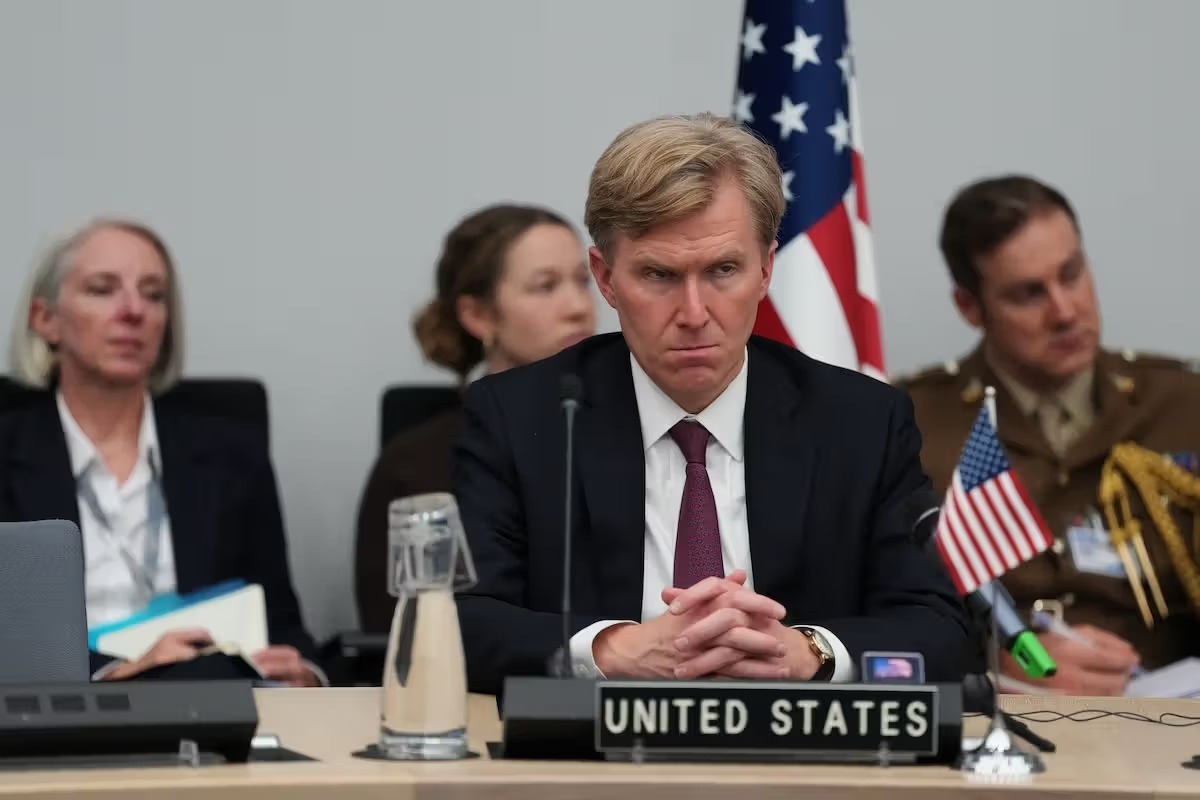
Elbridge Colby, the US deputy undersecretary of defence for policy, left the Ukraine Defence Contact Group (Ramstein format) talks held in Brussels on Tuesday, 17 November, before Ukrainian Defence Minister Yevhen Hmara began his address.
According to a report by the British newspaper The Telegraph, Colby, who authored the current US National Defence Strategy, opposed the tactic of launching strikes deep inside Russia during the talks.
Colby exited the room ahead of the speech by Ukrainian Defence Minister Hmara, who was presenting a report to his counterparts in a closed session. The US side officially explained his departure by citing the need to catch a flight.
Matthew Whitaker, the US permanent representative to NATO, remained at the meeting to represent the country.
German government sources speaking to The Telegraph said they were “concerned” by the statements of the US official, who criticized Ukraine’s deep strikes into Russian territory.
According to the German sources, Colby described the tactic as having “low military value” and as a method that did not “bring the conflict closer” to an end.
Interlocutors speaking to the newspaper expressed concern over the possibility that, following this development, the Donald Trump administration could “take Russia’s side”.
A source who briefed the British newspaper said:
“During the public portion of the Ramstein meeting, Colby said that the US opposed strikes deep into Russian territory and saw no military benefit in them. Most attendees were shocked by these comments.”
Who is Elbridge Colby?
Colby, a Republican politician, has served as deputy undersecretary of defence for policy at the Pentagon since April 2025 and held a similar role during Trump’s first presidential term.
Colby worked at the US Department of State and the Office of the Director of National Intelligence early in his career, and is the grandson of William Colby, who directed the Central Intelligence Agency (CIA) in the 1970s.
The National Defence Strategy released by the Pentagon in January this year, with the 46-year-old Colby as lead author, defined Russia as a “manageable threat”, while projecting that the country maintained “large reserves of military and industrial power” and demonstrated “national resolve”.
The authors of this US strategy placed the responsibility for defending Ukraine and Europe on European partners.
Colby, who identifies the containment of China among the Pentagon’s primary priorities, has long been known to prioritize US competition with that country over the Ukraine and Middle East theatres.
Speaking in March at congressional hearings on the new strategy, Colby argued that the document responded to the principles of “flexible realism”.
The US official said during that hearing:
“This is an attempt to advance and protect the concrete interests of ordinary Americans in a practical and realistic way. At the heart of this strategy, as the document clearly states, lies ‘evaluation, screening and prioritization’.”

The US government has approved requests by Nvidia and AMD to ship advanced artificial intelligence chips to certain Chinese companies.
According to the Financial Times (FT), these companies include entities that the Pentagon believes are linked to China’s People’s Liberation Army.
Previously classified records published on Thursday by the Republican-majority House Foreign Affairs Committee show that American companies sought permission to ship more than 3.4 million chips to Chinese firms such as Alibaba, Tencent, Baidu, and BYD over a six-month period beginning in December.
The Bureau of Industry and Security (BIS) approved the “export, re-export, or transfer” of 879,868 chips.
During a hearing held to approve the release of the documents, the Republican committee chairman, Brian Mast, said that in Nvidia’s licence applications, “two of the companies listed as being able to install chips in data centres in China are, as far as we know, shell companies.” He added, “Both are fake companies [and] BIS approved the sale of these chips to these firms.”
The disclosure of the documents came as members of Congress pushed for tighter export controls following Jensen Huang’s resignation as Nvidia CEO.
Huang had been in a relationship with Alice Huang, a Singapore-based executive whom American officials determined to be a Chinese spy.
US officials also believe that Alice Huang may have been involved in export control violations by transferring Nvidia’s processors to China.
The Department of Commerce, which houses the BIS, has faced criticism from both Republicans and Democrats over its stance on Nvidia’s sales of advanced AI chips to China.
Commerce Secretary Howard Lutnick has agreed to testify before the Senate Banking Committee, while Huang is expected to be questioned behind closed doors in Congress next month.
Nvidia did not respond to requests for comment. AMD stated that it “complies with applicable US export control laws and regulations and implements rigorous processes to ensure that compliance across its global operations.”
AMD, which dominates the AI chip market alongside Nvidia, has also come under pressure over its ties to China.
On Thursday, its shares fell %7.7 after two reports linked to short seller Hunterbrook warned of risks stemming from the company’s connections to Beijing and “round-tripping”.
In Washington, Gregory Meeks, the ranking Democrat on the House Foreign Affairs Committee, stated that he voted in favour of releasing the files that revealed the approvals granted to Nvidia and AMD, saying that “over the past month, the administration’s handling of chip export controls has put our national security and technological edge at risk.”
Meeks added, “The public has a right to know how these decisions were made, and releasing this information ensures everyone is reviewing the same set of facts.”
In a separate development on Thursday, the California attorney general sent a subpoena to Nvidia seeking information on “whether its advanced chips or confidential information went to China and whether Nvidia misled investors and the public.”a
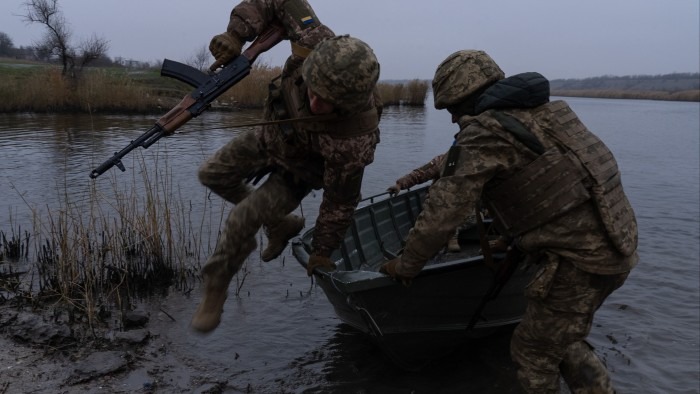
US President Donald Trump’s son-in-law and envoy Jared Kushner has discussed granting Ukraine NATO membership in exchange for territorial concessions during closed-door talks over the past several months, The Wall Street Journal (WSJ) reported, citing sources.
Once considered unworkable, the idea has come up in recent months during various discussions between European officials and Kushner alongside fellow special envoy Steve Witkoff.
Sources said Kushner discussed the possibility with Ukrainian President Volodymyr Zelenskyy and European officials at an airport in Dublin last week.
The issue was also raised last week during at least one meeting in the United Arab Emirates (UAE), where Kushner and Witkoff held talks with Ukrainian, European and Russian representatives.
An unnamed European leader noted that the idea had also been discussed during a telephone call in August.
US put forward two possible scenarios in talks
According to sources, the US presented two possible scenarios in recent discussions.
The first scenario envisages Ukraine giving up Donbas in return for NATO membership.
The second option involves freezing the conflict along the front line and providing Kyiv with security guarantees.
The WSJ reported that it remains unclear how seriously US negotiators are taking the idea or whether President Donald Trump has changed his stance on Ukraine’s NATO membership.
Last year, Trump agreed with US Defence Secretary Pete Hegseth that Ukraine’s membership in the alliance and a return to its pre-2014 borders were “unrealistic”.
European capitals reacted differently
Following talks in Berlin, French President Emmanuel Macron said the time had come to discuss Ukraine’s NATO membership.
According to the newspaper’s sources, although the issue came up during the talks, the German side was reluctant to take it forward.
German Chancellor Friedrich Merz told aides that Ukraine would not join the alliance in his lifetime.
Bloomberg also reported this week that Washington had asked Kyiv whether it was prepared to recognize Donbas as Russian territory in exchange for NATO membership.
Ukrainian leader Zelenskyy, however, insists on a return to the 1991 borders as a condition for negotiations.
Zelenskyy previously said the US had for the first time asked Kyiv about the possibility of NATO membership in exchange for withdrawing from Donbas.
Kremlin rejects freezing the front line
Commenting on Zelenskyy’s remarks, Kremlin spokesman Dmitry Peskov said: “In the interests of the peace process, we maintain our position that disclosing the details of discussions between us and the Americans is inappropriate.”
The Kremlin has repeatedly rejected freezing the conflict along the line of contact.
Russian Foreign Minister Sergey Lavrov said the option did not satisfy Moscow because Europe would still refuse to recognize Russian-controlled territories as part of Russia.
“The West is now proposing the following: stopping where the line of contact is, establishing a ceasefire rather than a long-term peace; moreover, it is being loudly declared that after such a halt or cessation of hostilities, neither Ukraine nor Europe will recognize the territories under Russian control as territory of the Russian Federation in accordance with the Constitution,” Lavrov said.
Russia demands that Ukraine abandon its NATO bid and withdraw its forces from the Donbas, Zaporizhzhia and Kherson regions as conditions for a ceasefire.
Late last year, Russian President Vladimir Putin said that given the pace of Russian advances in Donbas, Moscow’s interest in a Ukrainian military withdrawal from those territories had “dropped to zero”.
In 2024, Putin stated that Moscow and Kyiv had agreed on Ukraine’s independence with NATO membership ruled out, but added that Kyiv had abandoned the neutrality principles in its declaration of independence and enshrined the goal of joining the alliance in its Constitution.

What Did the Trilateral Summit in China Reveal?

The Chinese Approach Behind the Trilateral Summit: It May Pay to Get Familiar with It Sooner Rather Than Later

Colby exits Brussels Ukraine talks before defence minister speaks

US approved exports of 800,000 Nvidia and AMD chips to China

UK looks to Nordic allies to bolster crisis resilience plans
-

 America2 weeks ago
US midterms see 97 young winners as Gen Z representation triples
-
 Europe2 weeks ago
UK and Germany expand military pact with focus on Russian frontier
-
 America2 weeks ago
Nvidia investigates CEO Jensen Huang over link to Chinese spy
-
 America2 weeks ago
US secures 35% stake in Venezuelan firm NABEP under 50-year deal
-

 Europe2 weeks ago
George Szamuely dissects European decline and strategic rifts with US
-
 Opinion2 weeks ago
The Mecca Defence Agreement, the Ottoman Empire, and the facts
-
 Opinion2 weeks ago
Settle, deny, seal: Britain’s formula for colonial torture, from Kenya to Cyprus — 1
-
 America1 week ago
Absent Democrats derail floor vote on Pete Hegseth impeachment
