
America
Paraguay President Peña resigns over catastrophic bank collapse

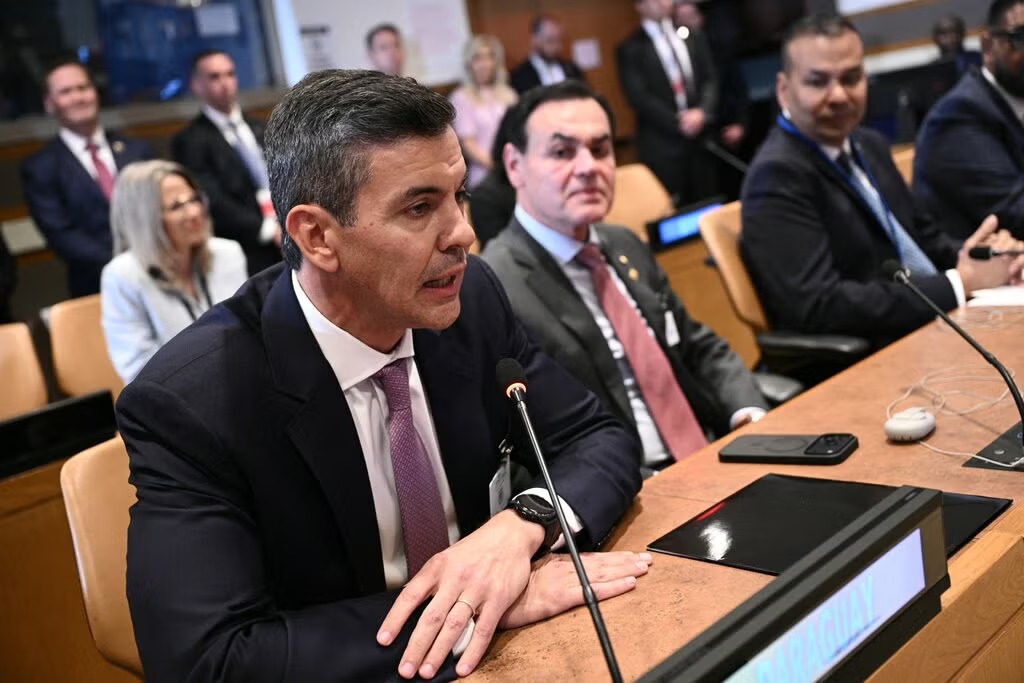
Paraguay President Santiago Peña has announced his resignation after the collapse of a major bank with close links to his administration.
The banking scandal had left half of the country’s population of six million unable to access their money.
In a video statement released online yesterday, Peña, a conservative economist, stated that he was stepping down from his post to ensure stability.
Calling the decision “one of the most difficult moments of his life”, Peña said: “I apologise to the public if I have disappointed you. It was never my intention to betray the trust you placed in me.”
Peña was facing an impeachment vote in the lower house of Congress in connection with the bank’s collapse, which lawmakers characterised as “systematic dereliction of duty”.
Minutes after his announcement, lawmakers voted unanimously to proceed with the impeachment process.
Earlier on Thursday, the prosecutor general’s office announced that it was evaluating a formal criminal complaint filed against the president by lawmakers.
Elected in 2023, the 47-year-old Peña was a staunch South American ally of the Trump administration.
Ueno Bank, which sits at the centre of the scandal, was taken over by the Central Bank of Paraguay early on Tuesday after regulators determined that the lender was no longer solvent.
Millions of Paraguayans soon realized that they could no longer withdraw cash, make digital payments, or use their debit cards for grocery shopping.
“When I woke up on Tuesday, I was completely helpless, without a single peso in my pocket,” said Benicia Sosa, 56, who joined a protest outside the Congress building on Wednesday night.
A day labourer from Luque, on the outskirts of the capital Asunción, Sosa said that her husband and eight children were all locked out of their Ueno accounts.
Sosa said she had been drawn by Ueno’s promotional offer, which provided cardholders with up to 40% cashback at supermarkets.
Sosa also noted that she regretted voting for Peña, who had pledged to revive the economy and create half a million jobs.
“I was foolish. The economy is going to hell,” the worker said during the demonstration at the presidential palace.
Over a few decades, Ueno evolved from a loan-sharking business operating out of a dilapidated market in Asunción into a youth-oriented banking app and a major financial player at times compared to Revolut or Nubank.
However, sceptics have long argued that this rags-to-riches rise was achieved through public resources and high-level connections.
When Peña assumed office in August 2023, he appointed Ueno’s former chairman, Carlos Carvallo, as head of the Central Bank.
Months later, the Central Bank officially granted Ueno a licence to operate as a brick-and-mortar bank. Carvallo also stepped down on Tuesday.
As of the end of October, Ueno, which is not capitalised in company filings and roughly translates to “good”, announced that it had approximately 2.9 million customers.
It also held more than $800 million in public funds, which included around 10% of the state pension fund.
Ueno sponsored the Paraguay national football team, alongside dozens of other businesses and brands.
Its sister company, Itti, expanded by securing dozens of public procurement contracts involving citizens’ data.
Last year, Peña announced that he had officially divested from another affiliated entity, Ueno Holding, following criticism that his shares gave rise to a conflict of interest. Peña maintained that nothing illegal had occurred.
Even so, analysts pointed out that the bank’s proximity to power aroused regulatory suspicions and attracted hostility from rivals.
Concerns surfaced in September when lawmakers loyal to Horacio Cartes, a powerful former president, demanded that the Central Bank answer questions regarding Ueno.
Cartes also leads the Colorado Party, which has governed Paraguay for almost all of the past 80 years.
Peña previously served as finance minister under Cartes, a tobacco magnate sanctioned by the Biden administration over corruption allegations.
According to Paraguayan-American political scientist Miguel Carter, however, the two men fell out over who would lead the party into the 2028 elections.
Reports emerging in October indicated that Ueno had extended roughly $150 million in loans to small firms connected to its own executives and employees.
This situation risked breaching banking regulations and endangering its balance sheet.
Worried about solvency, foreign investors began offloading Ueno’s bonds.
This month, Ueno offered additional perks to savers holding cash in their accounts.
Last week, the company announced that it had raised $100 million from investors and its Luxembourg-registered holding company, denying reports of an imminent intervention.
The speed of Ueno’s collapse surprised even its critics, evoking memories of the 1995 crisis that wiped out half of Paraguay’s banks.
Speaking at a press conference, Central Bank Governor Carvallo, who resigned on Tuesday, stated that the broader financial system was secure and that Ueno customers would be able to recover their funds “as soon as possible”, up to a limit of approximately $38,000.
Analysts observed that this threshold also applies to businesses, meaning that companies holding substantial cash deposits in the bank could also face bankruptcy.
Next in line to succeed Peña is Vice-President Pedro Alliana, who is likewise a member of the Colorado Party.
Yet some lawmakers argued that Peña should not be permitted to leave the presidency so easily.
Under the constitution, should his resignation be accepted, Peña would become an honorary senator entitled to parliamentary immunity. That status would shield him from investigations.
Local media reports suggested that Peña might be considering fleeing the country with US assistance, emulating the escape of Flávio Bolsonaro, the candidate who lost Brazil’s presidential election last month.
Last night, the presidential office dismissed the circulating “rumours” without going into detail. The US Embassy in Asunción referred inquiries to the State Department.












Microsoft declared a “code red” following the most widespread outage in the history of its Exchange Online email service, according to a Reuters report citing internal company documents.
The disruption that prompted the decision occurred on 12-13 November, lasting approximately 24 hours and disrupting email, Teams, Copilot, and other Microsoft 365 services.
Under the code red initiative, preventing outages and responding to technical failures are given priority.
In a message to staff, Jason Henderson, head of the M365 Core unit, said that never before had so many Exchange Online customers been left without email for such an extended period.
“Unfortunately, all the work we did over the years was not enough to protect us on Thursday,” Henderson wrote. “Code red means this work has the highest priority for our team.”
Microsoft said the outage was triggered by a hidden Windows flaw introduced in July, which was activated under increased system load.
The company stated that the incident was unrelated to a cyberattack or the actions of artificial intelligence agents.
Microsoft chief executive Satya Nadella publicly apologised for the disruptions.
In a separate message, Amanda Silver, corporate vice-president responsible for M365 Core and the Work IQ platform, compared the engineers’ working conditions to the “fog of war”.
According to Reuters, specialists exchanged more than 11,000 messages across 11 different Teams chats.
Diagnostic data being scattered across different internal systems complicated the tracking of potential causes and decisions taken during the response.
Silver noted that Microsoft Vice-President Charles Lamanna remarked during a post-incident review that the affected component experienced an outage volume equivalent to roughly a decade of acceptable downtime.
Microsoft set a goal to resolve similar incidents worldwide within one hour.
The plan includes capping system loads, partitioning traffic flows by geographic region, and accelerating recovery processes.
The company plans to use AI agents to analyse system health.
In another internal communication, Henderson recounted that in a recent incident, distributing an emergency Microsoft update globally took five to six days.
“For our most urgent security issues, we need to get from detection to safe worldwide rollout of an update within one hour,” Henderson wrote. “Needless to say, we are not there yet.”
A Microsoft spokesperson told Reuters that work on the fallout from the outage did not end once services returned to normal, adding that teams were applying the lessons learned around the clock and that leadership considered this a top priority.
During the November outage, complaints arrived from 74 countries and regions.
According to Downdetector data, reports of Outlook issues exceeded 131,000 at their peak.
At the time, Microsoft explained that several servers going offline increased the load on the remaining infrastructure, causing recovered servers to become unresponsive again once traffic returned.
The outage hit businesses, schools, and public bodies.
In the UK, operations ground to a halt across parliament, courts, police forces, and hospitals.
Members of parliament were unable to reply to constituents, and police units could not receive submissions made through online forms.
Healthcare organisations shifted to backup systems and paper records.
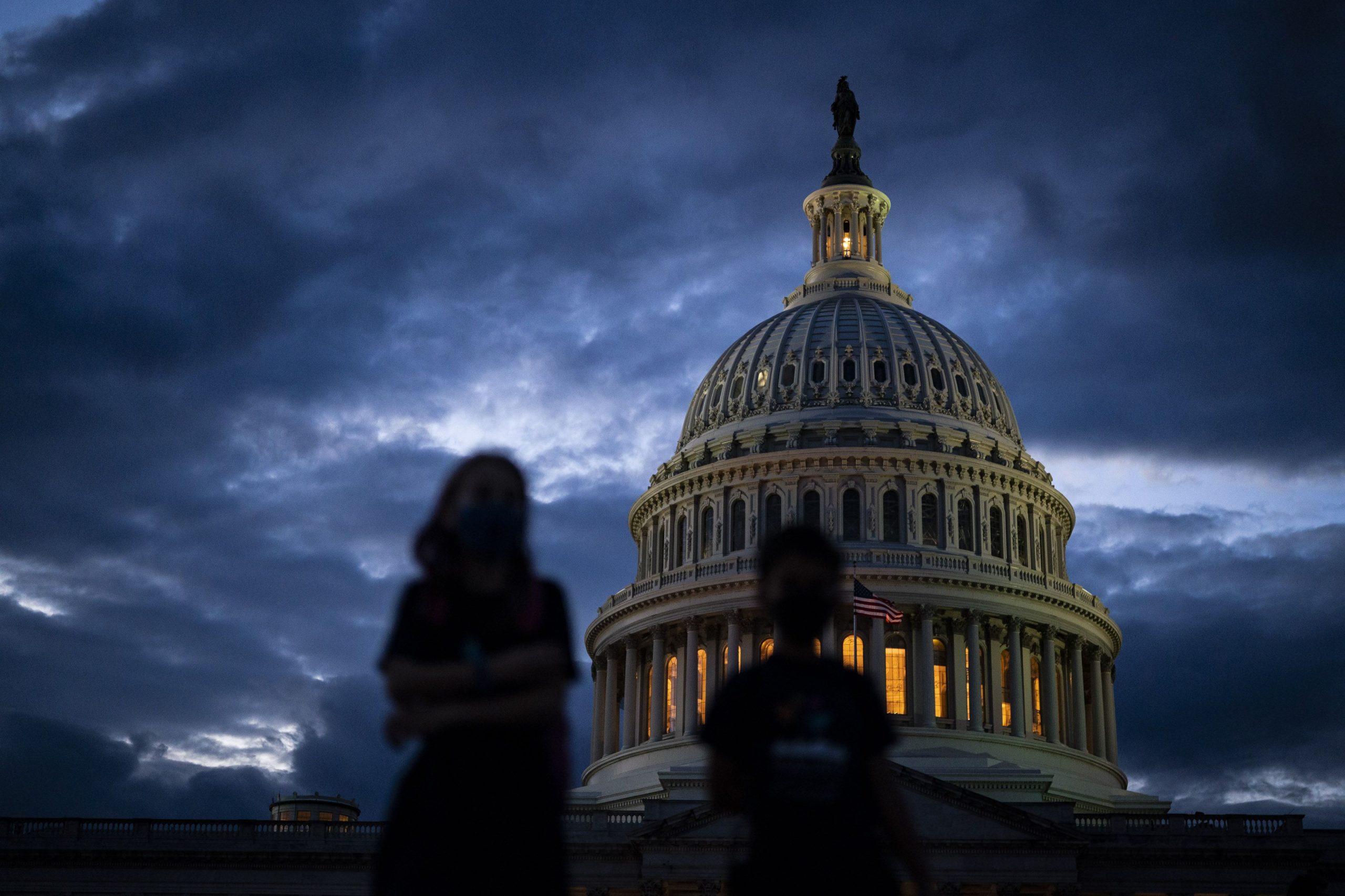
Democrats in the US have secured at least 258 seats in the 435-member House of Representatives, reaching their largest majority since 1992.
According to a report by the Associated Press (AP), Democrats have gained 44 seats so far, surpassing the 40-seat advance they achieved during the 2018 midterm elections in President Donald Trump’s first term.
Democrats reached the 258-seat threshold on Sunday after Democratic challenger Chuck Hubbard defeated Republican Representative Virginia Foxx in North Carolina.
Races remain uncalled in Minnesota and Tennessee, with one seat outstanding in each state, while two contests in Louisiana will head to a December runoff.
Republicans will hold a minority of at least 173 seats.
When Democrats take control of both the House of Representatives and the 100-member Senate in January, a divided government will emerge alongside a Republican president in the White House.
Senate Democrats secured 56 seats, achieving their widest margin in more than a decade.
This House majority matches or exceeds the 258 seats won when Bill Clinton was first elected president in 1992 and the 257 seats secured in Barack Obama’s 2008 victory, though it remains below the record of more than 300 seats held during Franklin D. Roosevelt’s presidency.
As AP reported, voter dissatisfaction with Trump, driven by high prices, anger over the war in Iran, and concerns about corruption, carried Democrats to victory across a broad geography ranging from Republican strongholds to the Midwest and the East Coast.
Democrats prepare 100-day agenda
Under a 100-day agenda drawn up to address the cost of living, Democrats plan rapid votes to reverse Republican cuts to Medicaid and restore expired tax credits under the Affordable Care Act.
Seeking to check presidential authority over the remainder of Trump’s second term, Democrats pledged to open numerous investigations using congressional subpoena power.
These initiatives include examining how Trump and his family acquired wealth following his return to office, while New York Democratic leader Hakeem Jeffries, the leading contender for House speaker, did not rule out an attempt to impeach Trump for a third time.
The White House warned Democrats over the planned oversight of the administration, asserting that these congressional inquiries, though a standard supervisory function, could “clearly constitute a crime”.
“Of course we should feel pressure,” said Representative Jason Crow, a Colorado Democrat and former US Army Ranger.
Speaking at the Capitol earlier this month, Crow said, referring to US Immigration and Customs Enforcement (ICE): “People in this country are dying, losing their health insurance, losing their livelihoods, losing their farms, and being terrorized by ICE.”
Crow continued: “If you do not feel a sense of urgency and pressure in this job, a commitment to deliver results for people, you do not belong under this Capitol dome.”
Representative Alexandria Ocasio-Cortez, a New York Democrat and prominent progressive voice, said at the Capitol: “This is a historic moment for our country. It is one of the largest classes we have seen.”
Ocasio-Cortez characterized the decisive seat total as a “mandate for change”.
Representative Tom Suozzi, a centrist New York Democrat and accountant by profession, said Democrats must dedicate 75% of their time to the cost of living and 25% to accountability.
“Everything has to come back to the people and how it affects them,” Suozzi said.
Emphasizing that inquiries into Trump’s financial dealings must make the same connection, Suozzi asked: “How does this affect people’s pocketbooks?”
New leadership prepares to take office with wide maneuvering room
Unlike Republican House Speaker Mike Johnson of Louisiana, who struggled to govern over the past two years with a single-digit margin that allowed small groups of Republican lawmakers to stall the legislative agenda, the incoming Democratic leadership will enjoy substantial maneuvering room.
If elected by his colleagues on 3 January 2027 as the first Black speaker of the House in US history, Jeffries could still reach the 218 votes required to pass legislation even if dozens of Democrats break ranks on any given roll call amid unified Republican opposition.
Representative Troy Carter, a Louisiana Democrat expected to lead the Congressional Black Caucus, said: “We are not a monolith. People come to the table with different ideas, and that’s okay.”
The Republican House seat total fell to one of its lowest levels in decades.
The party remains far below the 247 seats it won in the 2014 midterms late in the Obama administration, the 230 seats taken during Newt Gingrich’s 1994 wave, and its historical high of 301 seats in 1920.
Representative Jim Jordan of Ohio, elected by his peers as Republican minority leader, vowed to fight to regain power.
“For the next two years, House Republicans will fight for American families,” Jordan said.

The US Congress is closing in on a deal that would ban Chinese-origin cars from entering the US.
Sources speaking to Bloomberg said that Republicans and Democrats from car-making states behind the initiative aim to deliver a bill to President Donald Trump’s desk by the end of the year.
If the law takes effect, the lucrative US car market will be closed to car makers such as BYD and Geely, which have been rapidly gaining market share across Europe and South America with their low-cost, tech-packed electric vehicles.
Chinese cars are already effectively excluded from the US market due to high tariffs imposed by the Department of Commerce and restrictions on Chinese vehicle technology.
Enacting a statutory ban would take these measures a step further to address mounting concerns that the Chinese automotive industry poses “national and economic security threats”.
Details of the measure are still being worked out. According to the sources, Republican Senator Bernie Moreno briefed automotive manufacturer representatives on amendments under consideration to earlier legislation aimed at barring Chinese-origin connected vehicles from entering the US.
These amendments include provisions that would shield Mercedes from a complete ban.
According to the sources, car company representatives generally supported the initiative Moreno outlined, but a Mercedes official expressed reservations, and negotiations remain ongoing.
Sources noted that the bill’s backers are working to pass the measure before the new congressional term begins in January.
In a statement, Mercedes said: “We continue to talk with all stakeholders who share a common interest in seeing this important legislation become law during this session of Congress.”
A bill introduced by a Senate committee earlier this year would have prohibited manufacturers more than 15% owned by Chinese entities from selling vehicles equipped with technology capable of transmitting data.
Mercedes, which has lobbied for changes to this bill, is roughly 10% owned by Chinese state-owned car maker BAIC.
Li Shu Fu, the billionaire founder of Chinese car manufacturer Geely, also owns about 10% of Mercedes shares.
This puts the company above the 15% threshold set in the previous bill.
A source familiar with the talks, speaking on condition of anonymity, said members of Congress were in discussions with multiple parties, including Mercedes, and were optimistic that a deal could be reached this week.
Provisions under discussion include more flexible rules for firms with non-voting, passive shareholdings, as well as how such an approach would be structured and verified.
Republican Senator Katie Britt of Alabama, a key manufacturing hub for Mercedes sport utility vehicles (SUVs), said she was working on the bill with Moreno and expressed confidence that both Mercedes and Alabama would be protected:
“We understand that some adjustments need to be made, but we are confident that Mercedes can continue to thrive in our state and across the nation.”
Banning Chinese-origin cars would also contrast with the more flexible approach adopted by Europe and Canada.
Chinese car manufacturers have gained market share rapidly, particularly in Europe, triggering intense competition with domestic brands.
After Chinese car makers accelerated their market share gains in Europe, the EU began to push back, signing an agreement with China last month to limit imports of hybrid vehicles into the bloc.

Microsoft issues code red after historic Exchange Online outage

Poland urges NATO to weigh downing Russian missiles over Ukraine

Spain heads to snap election as housing crisis tests Sánchez

EU budget talks stall over Merz demand for Ukraine funds and cuts

Russia seaborne oil exports fuel rising global supply surplus
-

 Opinion1 week ago
APEC Summit: How China Uses the Art of “Emotional Value” to Deal with Trump
-

 Middle East2 weeks ago
Journalist Dursunoğlu warns Iran removed missile limits as Gulf risks widen
-

 America2 weeks ago
Absent Democrats derail floor vote on Pete Hegseth impeachment
-

 Middle East3 days ago
European Commission rejects Russia’s invite for bilateral security talks
-

 America2 weeks ago
Nvidia board prepares to remove CEO Jensen Huang amid scandal
-

 Europe2 weeks ago
Romania offers to pay US to keep troops stationed in the country
-

 Diplomacy2 weeks ago
CSTO strips Armenia of voting rights over two-year budget debt
-

 Europe1 week ago
Polish Constitutional Tribunal chief stripped of judicial immunity
