
Diplomacy
European policy on Russia ignores hard reality, Prof. Doster warns

In an extensive interview broadcast on the Harici YouTube channel, Professor Dr. Barış Doster, a distinguished academic, international relations scholar, author, and faculty member at Marmara University’s Faculty of Communication, delivered a wide-ranging geopolitical assessment of the escalating conflict between Russia and Ukraine, the shifting maritime front lines, and the structural decline of Western hegemony. Speaking with programme host Elif İlhamoğlu, Professor Doster argued that Europe’s security architecture is suffering from acute historical and strategic blindness, while warning that any perceived Turkish entanglement in Ukrainian operations against Russian assets could carry severe economic and diplomatic costs for Ankara.
The discussion opened on Ukraine’s recent expansion of naval operations beyond the Black Sea and the Baltic, including reported drone strikes against Russian naval vessels docked in Libya, where one frigate was reportedly sunk, alongside renewed attacks on the Crimean Bridge. Professor Doster observed that these actions reflect a deliberate strategy by Kyiv and its European backers to draw out the timeline of the confrontation, regardless of the domestic human cost.
“It is clear that the Ukrainian side, especially with the support it receives from the European Union, wants to prolong this conflict, to wear down and exhaust Russia as much as possible, even at the cost of decimating Ukraine on the front lines,” Doster said. “As you said, they have expanded the front. How much have they expanded it? From the Black Sea, from the Baltics, and to the Eastern Mediterranean and Libya. So what will this do? Of course, it will do this: First, it will prolong the war. Second, it will further intensify Russia’s attacks, its aggression. Undoubtedly, on the one hand, from a humanitarian, conscientious, moral, and purely ethical standpoint, people want the war to stop as soon as possible. People do not want to see people die. But on the other hand, looking at it from a political perspective, the Biden era in the US, unlike Trump’s, does not provide as much support, but especially Europe’s involvement in pushing Ukraine into the conflict, constantly supporting it with money, intelligence, technology sharing, vehicles, equipment, and ammunition, clearly shows that Ukraine has a place on Europe’s agenda for some time.”
Addressing open-source reports suggesting that areas in Ukraine or operational maritime environments in Libya may fall under Turkish influence or operational observation, Professor Doster expressed severe concern over the geopolitical implications for Ankara’s fragile balance-of-power posture.
“Montreux, the revolutionary genius of that great saviour, is working”
Evaluating Türkiye’s legal and maritime obligations, Professor Doster praised the historic implementation of the 1936 Montreux Convention, contrasting its success in keeping Black Sea tensions under control with the dangerous exposure Türkiye faces in the Mediterranean.
“You have already very nicely conveyed what is reflected in open sources,” Doster said. “If these claims, these allegations written and drawn in open sources, are true, which they seem to be, then what will happen? This will cause tension between Türkiye and Russia over Ukraine, and in the Eastern Mediterranean. So, when it comes to the Black Sea, Türkiye used the Montreux Convention correctly, effectively, a reflection of the genius of our great saviour leader, Gazi Mustafa Kemal Pasha. In fact, if you remember, initially, due to the sensitivity surrounding the Montreux Convention, the government responded vehemently to the statements of retired foreign affairs officials. There were quite harsh reactions to the statements of retired high-ranking commanders, airmen, naval officers, and army officers. Some even interpreted it as a coup declaration, and, as you may recall, some admirals were even detained for a few days after that sensitivity regarding Montreux. Now, when the Black Sea is at stake, yes, Montreux, the revolutionary genius of that great saviour, is working. Even those who dislike it are being saved by Montreux.”
However, Doster cautioned that this protective legal mechanism does not extend to broader maritime theatres where Turkish and Russian geopolitical interests intersect. “But now, when the Eastern Mediterranean is at stake, when Libya is at stake, what happens if this attack occurs in a region where Türkiye has influence? Well, it appears as a tension between Russia and Türkiye,” Doster noted. “Russia is a power that influences Türkiye’s economy, its energy supply, and its nuclear power plant, from the S-400s to the Mersin Akkuyu nuclear power plant. Isn’t that right? As our natural gas supplier, our oil supplier, our grain supplier, and once a country that sent a lot of tourists to Türkiye, and so on and so forth. Now, these economic relations between Russia and Türkiye inevitably strengthen Russia’s hand in Turkish foreign policy through Türkiye’s energy supply and its role as an economic partner. Now, experiencing tension with such a Russia over Ukraine probably would not yield very good results for Türkiye.”
Turning to Russian President Vladimir Putin’s firm statements excluding any ceasefire agreement that compromises Moscow’s territorial claims, Professor Doster dismissed the notion that Russia would absorb logistical strikes without escalating its operational posture.
“Especially after that bridge attack and also after the attack on Russian ships anchored in Libya, I predict that Russia’s responses will become even harsher,” Doster said. “Russia was proceeding according to its own timeline and within the limits of its capabilities. While some might say that Russia should have finished this in a few weeks, and that the fact that it has dragged on for five years indicates that Russia does not possess the military power it claims to have, even if Russia has not fully achieved all its objectives within its planned timeframe, yes, Russia is on one side, and Ukraine is on the other. So, who will ultimately win this war? Russia will win, but as I said, for these two reasons, I think Russia’s military actions against Ukraine will become even harsher in the coming days. It will not continue in its current routine; it will become more aggressive.”
“European politicians know neither history, nor geography, nor economics”
The conversation then shifted to civil defence measures across continental Europe, including shelter refurbishment, stockpiling recommendations, and Brussels’ rejection of Russian diplomatic outreach concerning European security architecture. Professor Doster offered a scathing critique of current European leadership.
“Now, it is clear that European politicians know neither history, nor geography, nor economics. This is, of course, a dire situation for Europe,” Doster stated. “Now you see, Europe is a continent or a union whose opinion is never sought in solving problems within the European region, regional issues, or global issues. Last week, three leaders met in Xinjiang, China, as part of the APEC summit. Europe was not at the table. Or, when Israel is mentioned, when Israeli barbarity and aggression are discussed, Europe is not invited to the table. Or, when Ukraine is mentioned, the US and Russia are directly discussing it, but no one asks for Europe’s opinion. In other words, European leaders constantly promote security-oriented policies and fear-mongering policies to keep European public opinion on edge and increase their own support base and voter support.”
Doster invoked historical precedents to illustrate the futility of seeking an absolute strategic defeat of Russia on European soil. “Any sensible person who knows history knows that Russia would not want to fight Europe, and that Europe does not have the capacity to fight Russia. How do we know this? Let me give two examples. Let us not go too far, shall we? One is the example of Napoleon. He went all the way from France. And Russia did not find what it hoped for in Tsarist Russia. A more recent example is Hitler. He went all the way from Europe to confront the Soviet Union. He also returned with a great defeat. So, if Europeans want to build a European security and defence architecture by excluding Russia, firstly, Russia is a European country, with its Eurasian and Asian identities. Secondly, Russia has very important territories in the European geography. So, not only geographically, but also historically, culturally, and diplomatically, you cannot say that Russia is not European. It is certainly not African, nor Australian.”
Analyzing the external influence dictating this stance, Professor Doster pointed directly to Washington’s global strategic apparatus.
“The US, both in its own defence and strategy documents and in the documents of NATO, the instrument of US imperialism’s aggression and occupation, defines China and Russia as hostile states, enemy states, and great powers challenging US hegemony,” Doster explained. “This is understandable from the US perspective, through the US lens. But it does not make sense to me that Europe, while in such a dire state, militarily, economically, and politically, and while no one on the world stage is asking for its opinion or advice, stubbornly insists on coding, defining, and characterising Russia as an enemy. Of course, this is clearly an attempt by Europe’s centre-right and centre-left liberal, democratic, and social democratic leaders to consolidate their bases by portraying Russia as a bogeyman, an enemy, a devil, but this is not working.”
“I have always objected to defining Europe as a monolithic bloc”
Host Elif İlhamoğlu noted that despite trilateral engagements between major powers and ongoing discussions among Washington, Beijing, and Moscow regarding strategic stability, European leaders, notably French President Emmanuel Macron, have maintained an aggressive tone, stepped up sanctions, and targeted the so-called Russian shadow fleet in the Baltic and Mediterranean. Doster rejected the assertion that Europe possesses the geopolitical weight to execute such measures independently, emphasizing the deep internal fissures within the European Union.
“First of all, Europe does not have that kind of power,” Doster remarked. “In fact, it was revealed in open sources yesterday that when we look at the newer and smaller countries in Eastern Europe, countries like the Czech Republic and Slovakia are saying, ‘We do not need to go to such lengths for Ukraine. You should allocate a separate budget for Ukraine. We will take what we get from the European Union’s common budget, but we no longer have the strength to dig deeper into our pockets for Ukraine.’ Those who follow my valuable foreign policy know this. I have always objected to defining Europe as a monolithic bloc. How many rings does Europe have? How many different facets does Europe have? Are the large, founding, old, capitalist, industrialized, imperialist countries of Europe the same as the smaller countries in Eastern Europe that came later, were members of the Warsaw Pact for many years, and rose to prominence after the collapse of the Soviet Union? Do they envision the same Europe? Is what Germany and France understand by Europe the same as what Czechia and Slovakia understand by Europe? It cannot be. Why? Because their scales are different. Their sizes and capacities are different. Their expectations, interests, and benefits are different. Their priorities are different. Their definitions and perceptions of threats are different.”
He continued: “Can you equate Southern Cyprus (which Türkiye does not recognize as a state) with Portugal and Germany? Can you equate Greece with France? Since the British were the smartest among them, they withdrew from Brexit in 2016. Why? They say the EU no longer has its former appeal. The British know these things much better than the Germans, for example. Because their imperial experience, their historical accumulation in that sense, is stronger. If the British have withdrawn from this, if they have distanced themselves from it, then the Europeans need to take a look at themselves. How many gears, how many links does this Europe have? Can it still have its old appeal, its old prestige, its old reputation? Is the Europe that Germany understands the same as the Europe that Spain understands? When Britain was in the EU, France, as a state sitting on one side of the seesaw, tried to balance things out for Germany by including the British. Now the British are gone. What can France do against Germany? And Germany, using its card as the boss of the EU, how many more doors does it want to open for itself, how many more countries does it want to economically bind to itself, make subordinates, or swallow, as in the case of Croatia? Now, to claim that the EU has retained its former appeal without discussing these issues on an economic, political, military, and diplomatic scale is a disease, a habit, unique to this liberal ignoramus group in our country. But what is seen in the world right now? The European Union is a unique, sui generis example, a supranational structure, because all the others are international. Because there is a transfer of sovereignty there, as in the case of the EU. It does not have its former appeal, its former attractiveness.”
“Even if the EU came together today, they could not field an army of 100,000”
Regarding the electoral rise of right-wing and Euroskeptic factions across the continent, such as Marine Le Pen’s National Rally in France, the Alternative for Germany (AfD), and Viktor Orbán’s government in Hungary, Professor Doster acknowledged the growing momentum of political movements seeking improved ties with Moscow, while dismissing assumptions that the union would instantly disintegrate.
“They call it European skepticism. European skepticism has gained significant ground and mass support in Europe,” Doster said. “The recent example of Germany is important. Right? The AfD is a very strong and influential political party, continuing its steady rise. Secondly, France is important, of course. In fact, inspired by Brexit, they are saying that it is time for Frexit. That is, for France to leave. Even the Swedes are saying it should be Svexit, from the initials of Sweden. So, inspired by that. Now, it means that within Europe, and looking at Europe from a European perspective, among the former members of Europe, among the founding members of the EU, as in the example of France and Germany, at the very least, why does the EU exist? France and Germany should not clash again, they should not gouge each other’s eyes out, they should not start two more major wars. This exists, at the very least, to prevent a third.”
“Now, this Euroscepticism will undoubtedly spread in waves,” Doster continued. “This trend, this tendency, may eventually affect smaller, medium-sized countries, even those that later joined the EU. But now, the EU, a Cold War organization, established and institutionalized with the encouragement, instigation, support, and protection of the US, will it collapse just because there is a change of government in France, Italy, Germany, or Poland? No, it will not collapse. The world in which the EU was founded and institutionalized was a different world. Today, of course, it is a different world. The US of that time was different, the US of today is different. Germany and France of that time were completely different, Germany and France of today are completely different. The founding members of that era were thinking differently in the context of the Cold War. A significant number of the communist countries that were members of the Warsaw Pact and close to the Soviet Union became members of both NATO and the EU one after another after the collapse of the Soviet Union in December 1991. Therefore, looking at today through old readings, old assumptions, and old clichés, we cannot say that the EU will collapse if Le Pen wins the election.”
Professor Doster noted, however, that the internal character of the bloc would transform significantly. “Even if it does not collapse tomorrow, we can say today that it no longer has its former attractiveness, its former prestige, its former reputation. However, if political parties in France and Germany that promote and champion Euroskepticism become influential, their views on Russia might differ from the current centre-right and centre-left, and Ukraine, for example, might not find the current EU support. Putin might feel more comfortable communicating with European leaders, and this trend could spread from the larger countries to the medium and smaller ones.”
Turning to transatlantic dynamics, Doster reviewed Donald Trump’s legacy, his interactions with European capitals, and the prospects of future administrations in Washington.
“Looking at Trump’s previous four years and his current two, we see that he does not care much about Europe,” Doster observed. “He, his staff, even his advisors like Bannon, have even belittled Europeans. They called them the old continent, the tired continent, the aging continent. They said their Enlightenment values no longer hold much meaning, and openly, disregarding diplomatic courtesy and all the conventions of international relations, as you well know, dear Elif, they interfered in European internal politics. They openly supported right-wing parties. They actively participated in their campaigns. They took photos with their leaders. They shared posts on social media. Right? They interfered in European internal politics and party competition, even including Elon Musk. Right? He openly congratulated the winners of the elections, that is. So, it seems there is a Trump administration, a Trump-friendly team. And after Trump leaves, and it is clear he will leave because he has lost both sides of the US Congress, to use that term from US terminology, he has become a lame duck. We shared this with you on our broadcast.”
Doster stressed that a shift in US political control would do little to reverse systemic decline. “Now, if the Democrats come to power in 2028, they can undoubtedly send more moderate, more affectionate, more sympathetic messages to Europe. Like Biden did. What did he say? He said ‘America is back,’ remember? The US has returned. We will win back the hearts of our allies whose hearts Trump broke. Biden said these things after defeating Trump in the elections. So, what did he accomplish in four years? Okay, he said these things. He said ‘America is back.’ He said ‘We are ancient allies, do not pay attention to Trump, he is crazy,’ etc., but what did Biden accomplish in four years? Not much. Why? This is because, regardless of whether it is Biden or Trump, regardless of whether they are Republican or Democrat, it is about the power, capacity, and scale of the US, and we know that the US no longer has the same strength in its hegemonic capabilities or imperialist dominance; these are eroding. So, is the European side of the Atlantic any different? Well, they are in a terrible state already. Do France or Germany have the same strength they used to have? No. Britain already went off in 2016. And you took France and Germany too? You take Germany and France, and I am specifically saying Germany and France, okay? What is left is Spain, Italy, Portugal, Greece, Bulgaria, Poland, Romania, there are not really any states left that are significant, prominent in world politics, with economic, political, military power, or even nuclear capacity as a deterrent.”
Doster concluded with a stark evaluation of European military weakness and warned against attempts to deploy Turkish forces on behalf of Western interests. “This is because on both sides of the Atlantic, on the US side and the European side, the old hegemony, the old imperialist capability, the old political influence, the old economic power no longer exist. I mean, even if the EU came together today, they could not field an army of 100,000. The entire EU comes together, old and new, Western and Eastern, big and small, all 27 states, right? We are talking about 27 states. They cannot field a military force of 100,000. Therefore, they have this deceptive, fraudulent project of trying to drag Türkiye into the front lines, without including Türkiye, but using NATO’s capabilities and resources. I do not think Türkiye will agree to this. In fact, I am one of those who argues that Türkiye should not agree, should not be convinced.”
When asked definitively whether he anticipates a direct military clash between Russia and European powers in the near or medium term, Doster dismissed the prospect entirely: “I never expected it, and I never will. Never. Neither would the Russians do such a crazy thing, nor does the EU have the strength, courage, will, ability, or power to wage war with Russia. I never expect it.”
On the eventual resolution of the conflict in Ukraine, Doster maintained that Russian victory remains inevitable despite the timeline. “We cannot give a timeline for that,” Doster concluded. “But sooner or later, even if the cost is very heavy, even if they get tired, worn out, and battered, sooner or later, I cannot give a timeline, this war will be inevitable and will involve Russia.”





Ukraine is expanding its attacks on Russian vessels from the Black Sea toward the Mediterranean and Baltic Seas, drawing both regions further into the war.
Over the weekend, Ukrainian drones struck two Russian vessels in the Libyan city of Benghazi, sinking a frigate.
In March, a fully laden Russian liquefied natural gas (LNG) tanker in the Mediterranean was severely damaged by Ukrainian maritime drones, narrowly averting an environmental disaster.
Since Kyiv began attacking civilian Russian vessels in the Baltic Sea with drones, state agencies in Finland have also been warning of an environmental disaster.
Uncertainty is also growing in the Baltic Sea for civilian vessels belonging to EU member states. Ukraine’s wartime actions are accompanied by measures taken by the EU and individual EU member states against Russian merchant ships.
These vessels, subject to EU sanctions, are described as a “shadow fleet” and are increasingly being boarded by EU military personnel.
This is now happening not only in the Baltic Sea, but also in the Mediterranean and the Indian Ocean.
The EU and “shadow fleet” battles in the Baltic Sea
Non-combat operations against Russian merchant vessels in the Baltic Sea have been conducted for some time by various EU member states.
In every case, the target is vessels belonging to the “shadow fleet”. These are Russian tankers or cargo ships placed under EU sanctions and therefore barred from calling at EU ports or using services from EU countries.
This includes insurance services in particular, as the United Kingdom has complied with the sanctions in principle, affecting British insurance companies that hold a particularly large share of the market.
Contrary to how European politicians and the media frequently portray it, trading with “shadow fleet” vessels is not illegal, because EU sanctions apply only to EU countries and not to the rest of the world.
Some EU member states, such as Germany, Finland, Sweden and Denmark, persistently look for pretexts to detain “shadow fleet” vessels.
However, this is permissible at most within the zone extending 12 miles off their own coasts, where national laws apply.
Because attempts to board and even seize Russian ships continue, soldiers are increasingly travelling aboard these vessels; some Russian merchant ships are escorted by warships.
EU expands maritime policing role toward the Indian Ocean
Meanwhile, some EU member states and the EU as a whole are also taking action against Russian vessels in the Mediterranean and the Indian Ocean.
In the Mediterranean, troops operating under the EU’s Operation EUNAVFOR MED IRINI have repeatedly boarded Russian merchant vessels on allegations that they were sailing under false flags.
On August 2, for instance, Italian military personnel boarded the tanker Toa Payoh by helicopter while it was en route from Cotonou in Benin to Istanbul. Authorities claimed this was a legal inspection.
Similar actions took place on August 31 and most recently on November 13.
The EU has now included measures against the Russian “shadow fleet” in Operation IRINI’s official mandate. In doing so, the EU is increasingly assuming the role of the world’s policeman.
France has now gone so far as to tow Russian ships in the middle of the Indian Ocean. On October 12, French troops boarded the tanker DF Peak roughly 830 kilometres south of the French colony of La Réunion and began towing the vessel toward the island.
Russia’s Embassy in Paris described the action as a “blatant violation of international law”, which fundamentally guarantees freedom of navigation for all, and termed it “outright piracy”.
Ukraine takes the war to the Mediterranean
Ukraine, meanwhile, has for some time been going a step further: using military force at sea against civilian Russian merchant vessels, and no longer only in the Black Sea, where it is a littoral state.
Since December 2024, Russian vessels in the Mediterranean have repeatedly been attacked and severely damaged by sea mines or maritime drones; since December 2025, they have also been targeted by aerial drones.
On March 3, 2026, Ukraine attacked the Russian LNG tanker Arctic Metagaz, which was bound for Egypt, using maritime drones likely launched from Libya.
The Security Service of Ukraine (SBU) is believed to be behind the attack. The tanker was carrying 62,000 metric tonnes of LNG.
The vessel drifted in the Mediterranean for more than two months; an environmental disaster was narrowly averted.
Over the weekend, two more attacks took place in the port of Benghazi off the Libyan coast using maritime drones.
A Russian cargo ship was severely damaged, and a Russian Navy frigate was sunk.
Libya is effectively divided in two. While Russia cooperates with the eastern part of the country around Benghazi, Ukraine is reported to have signed an agreement with the Tripoli government on a military presence in western Libya, enabling the launch of drone attacks.
Drone strikes threaten civilian shipping in the Baltic Sea
In its latest move, Ukraine is expanding drone strikes against Russian ships, including civilian merchant vessels, into the Baltic Sea.
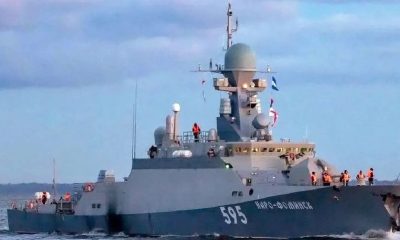
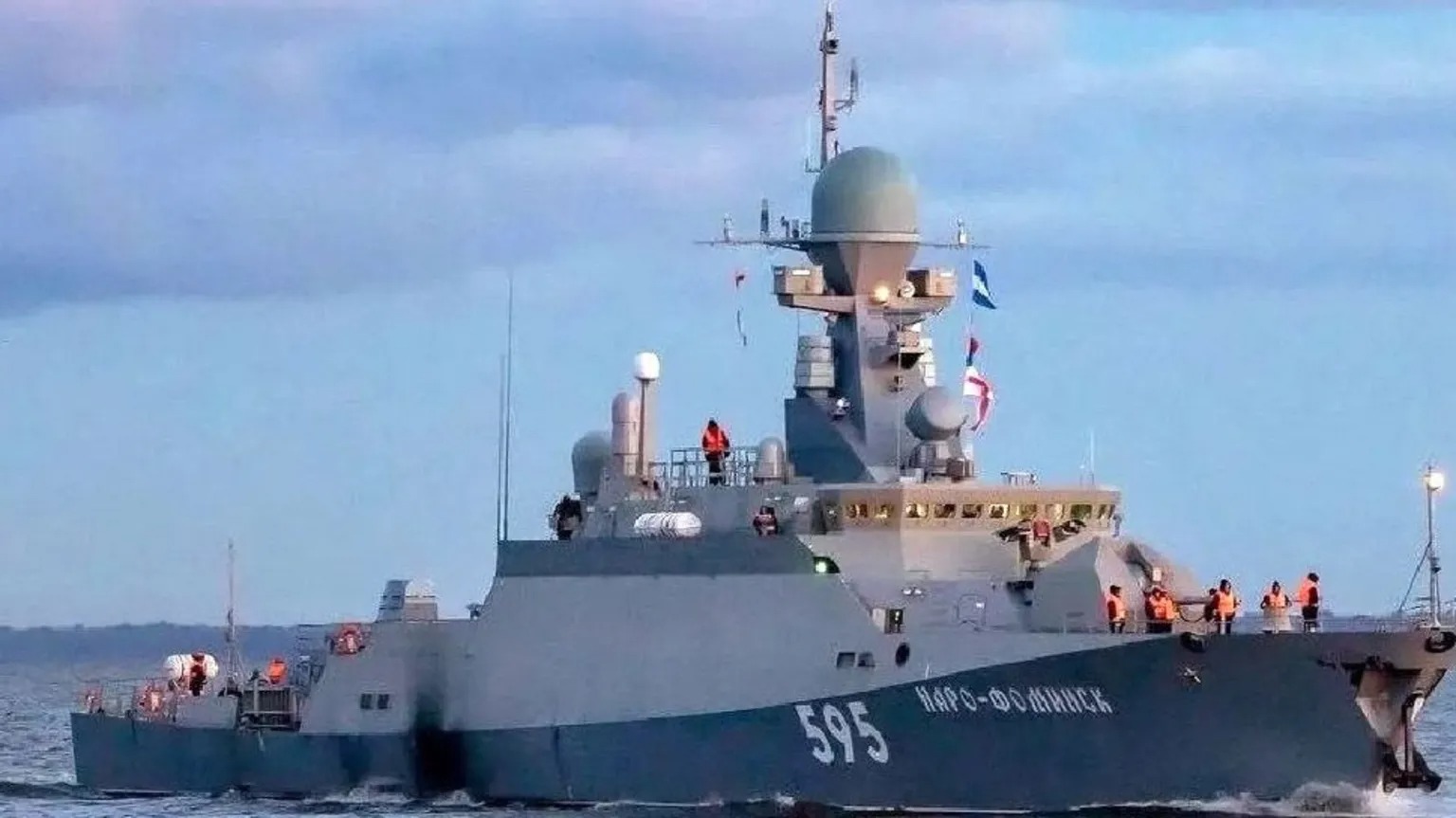
On November 11, near Russia’s Gogland Island in the maritime triangle between Russia, Finland and Estonia, Ukrainian drones attacked the Russian Navy’s Buyan-M class missile corvette Naro-Fominsk.
The incident marked the first known drone strike on a Russian warship in this part of the Baltic Sea.
The Naro-Fominsk had previously escorted vessels belonging to the “shadow fleet” to protect them from attacks by EU member states.
Ukraine’s attack can therefore also be interpreted as a step that paves the way for such strikes. Ukraine’s security service, the SBU, announced that it targeted the Naro-Fominsk as part of a broader drone operation against Russia’s Ust-Luga oil export terminal on the Baltic coast.
The SBU described the Russian vessel as a small Buyan-M type corvette carrying Kalibr and Oniks cruise missiles. There were also unconfirmed reports that Russian combat helicopters had been destroyed.
On Saturday, an attack was carried out on the cargo ship Sparta II; the vessel was severely damaged west of Gogland and is currently being towed to Russia. An environmental disaster was narrowly averted in this incident as well.
At the same time, civilian maritime shipping, including that of Western European countries, faces a growing danger of collateral damage caused by misdirected or downed drones.
If Ukraine destroys a Russian tanker in the Baltic Sea off the coast of Finland, where the Sparta II was hit, an oil spill off Finland will be virtually inevitable.
The same applies to Estonia and other countries bordering the Baltic Sea. In this way, Kyiv is dragging further parts of Europe into the war.
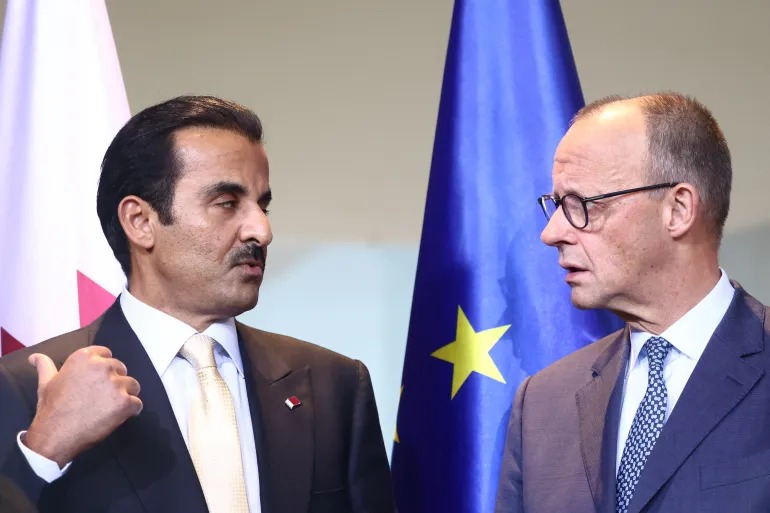
Qatar’s Emir Sheikh Tamim bin Hamad Al Thani held talks with German leaders in Berlin on expanding defence and diplomatic cooperation.
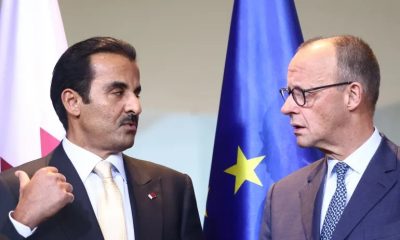
At a joint press conference with the emir on Friday, German Chancellor Friedrich Merz stated that Qatar had committed to an additional 15 billion euros ($16.5 billion) in investment, while the two governments planned closer cooperation in the fields of security and technology.
Merz noted that the investment would strengthen cooperation in artificial intelligence (AI), computer chips and aviation. He also expressed Germany’s interest in establishing partnerships with Qatar in the defence industry, while the two countries agreed to work together to improve protection against cyberattacks.
Sheikh Tamim also held talks with German President Frank-Walter Steinmeier, who proposed a regional security conference for the Middle East.
According to a joint statement from both countries, Friday’s talks addressed efforts to end the war against Iran and restore maritime traffic in the Strait of Hormuz.
Steinmeier proposed bringing regional governments together to build trust and resolve security disputes.
The emir invited Steinmeier to the Doha Forum, an international policy conference to be held in Qatar on December 5-6, to discuss the proposal in greater detail with other countries.
During the emir’s press conference with Merz, the German leader commended Qatar’s role in mediating between the US and Iran and called for the permanent reopening of the Strait of Hormuz. He also urged Tehran to halt its military nuclear programme.
Sheikh Tamim stressed that “peace and sustainable peace and security can only be achieved through a political settlement”, adding that dialogue was the only way forward. He also described Germany as an important partner.
Sheikha Alanoud bint Hamad Al Thani, a fellow at the Middle East Council on Global Affairs, a regional research institute, told Al Jazeera in Berlin that relations had previously been based primarily on trade.
“Now, however, we are seeing a strategic dialogue,” Sheikha Alanoud said, pointing to increasingly similar security concerns, including drone attacks targeting Qatar and hybrid warfare threats facing European countries.
This shift builds on a 2023 agreement to launch formal strategic talks between the two countries.
According to the Qatar News Agency (QNA), Sheikh Tamim told Steinmeier on Friday that Qatar wanted the first round of talks to take place.
Al Thani also met with Dr Hans Dieter Potsch, chairman of the supervisory board of the Volkswagen Group, and his accompanying delegation at his residence in Berlin on Friday.
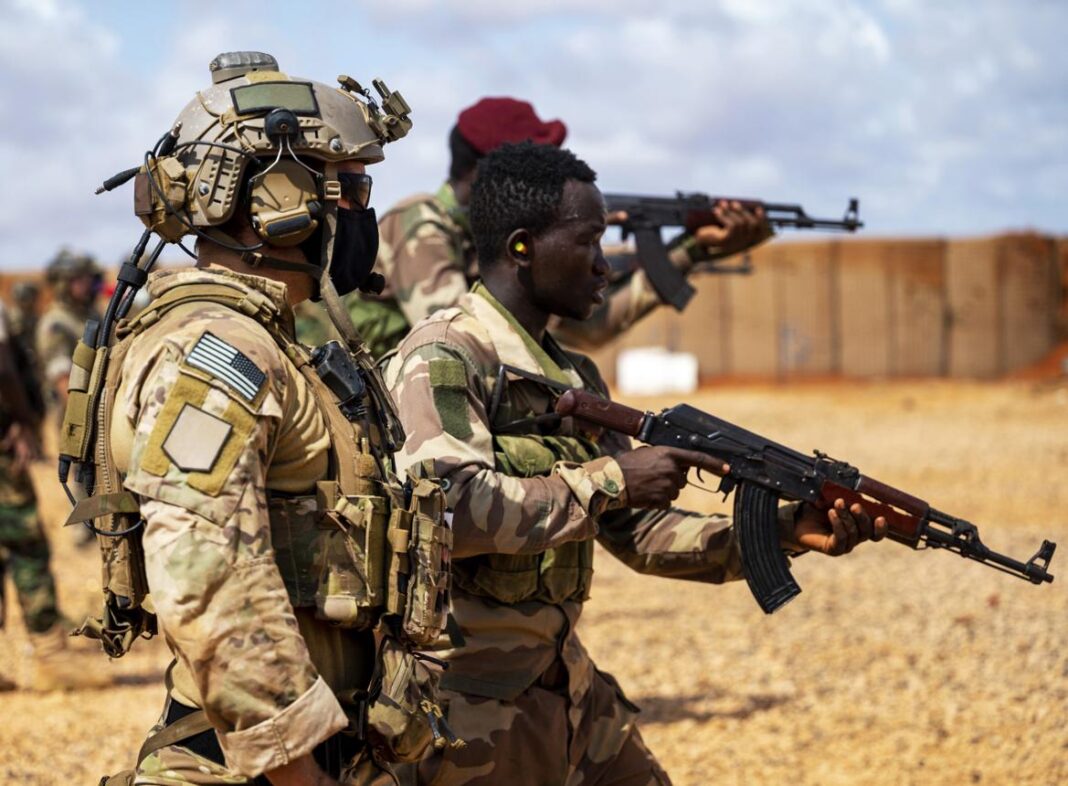
US military officials are reportedly preparing to return to base after an American security contractor operating in Somalia signed a new agreement covering the training and support of Somali security forces.
Having recently departed Baledogle Airfield in Somalia’s Lower Shabelle region, US officials plan to resume operations at the facility this week.
Meanwhile, recruitment has reportedly begun for new groups of Danab special forces personnel who will receive training and support from the US.
Bancroft Global Development, a contractor that has operated in Somalia for years providing military training, security assistance, and capacity-building, reportedly signed the new contract, paving the way for operations at the base to resume.
For an extended period, Bancroft Global Development has been involved in supporting and training Somali security forces, particularly the Danab forces, who play a critical role in the fight against Al-Shabaab.
Reports of activities resuming at Baledogle may be linked to efforts aimed at further strengthening the capabilities of the Danab forces, who are frequently deployed in combat missions and special operations targeting armed groups.
The formation of new Danab units may also indicate ongoing plans to train and develop Somali security forces in order to enhance their operational capabilities, combat skills, special operations capacity, and coordination with other security forces.
Located in Somalia’s Lower Shabelle region, Baledogle Airfield is one of the key installations supporting the training and development of Somali security forces, particularly the Danab special forces.
The base has long been associated with US military support. If confirmed, the return of US officials could signal continued military cooperation between the two countries, despite recent reports that US personnel and employees had withdrawn from the facility.
This development also comes at a time when Somalia is pursuing reforms to restructure its security forces.
The Federal Government continues to rely on support from international partners to bolster its military capacity and intensify operations against Al-Shabaab.
As one of Somalia’s most significant security partners over many years, the US provides assistance to Somali forces, particularly the Danab brigade, while simultaneously conducting operations targeting Al-Shabaab.
Furthermore, it has been reported that the US has extended its support for the AUSSOM and UNSOS missions to sustain security operations in Somalia and assist African Union forces operating in the country.

US sidelines commercial incentives for Russia in Ukraine peace talks

Huang’s Nvidia return brings Gulf states temporary relief on AI chips

Left Party expels Berlin lawmaker Vanessa Emde from caucus

Costa proposes major cut to EU budget below current spending share

UK briefs Ukraine defence suppliers on potential attack risks
-

 Opinion1 week ago
APEC Summit: How China Uses the Art of “Emotional Value” to Deal with Trump
-
 Middle East2 weeks ago
Journalist Dursunoğlu warns Iran removed missile limits as Gulf risks widen
-
 America2 weeks ago
Absent Democrats derail floor vote on Pete Hegseth impeachment
-
 Europe2 weeks ago
Germany threatens EU budget veto over long-term Ukraine aid
-
 Russia2 weeks ago
Europe ready for arms and missile control talks with Russia, FT says
-
 Russia2 weeks ago
US raises NATO-style guarantees for Kyiv ahead of Abu Dhabi talks
-
 Europe2 weeks ago
Fico accuses Merz of blackmail over threat to veto EU budget
-

 America2 weeks ago
Nvidia board prepares to remove CEO Jensen Huang amid scandal
