
America
At least 47 major US data centre projects halted or cancelled


At least 47 large data centre projects have been halted or cancelled across the US, as a massive $10 trillion investment wave in artificial intelligence infrastructure begins to stumble amid construction delays, rising borrowing costs, and local public pushback.
According to a report by the Financial Times, this emerging picture threatens the future of hundreds of projects while deepening investor doubts over returns on the colossal sums being spent.
Data from research firm RegLayer shows that at least 47 major data centre projects across the US have been delayed, cancelled, or brought to a complete standstill.
In an assessment published in October, analysts at financial firm Bernstein pointed out that only about 35% of the projects planned across the country can be considered realistic.
Local authorities and the bond market apply the brakes
The obstacles facing investments are not limited to technical plans. More than 1,000 localities across the US have sought to impose moratoriums or other restrictions on AI infrastructure construction this year.
The sector’s growth depends directly on whether next-generation cloud providers, often referred to as “neoclouds”, can secure financing for these giant buildouts.
However, high interest rates, inflation, and disruptions across the bond market have shaken investor confidence in the ability of companies such as OpenAI and Anthropic to generate revenues that cover their expenses.
This loss of market confidence prompted investors to rapidly exit debt securities tied to AI infrastructure companies. Shares in cloud provider CoreWeave plunged by around 25% in a single week.
Similarly, SoftBank unit SB Energy and Nvidia-backed Firmus delayed or suspended their plans to go public. OpenAI also indicated that it deferred its own initial public offering, citing safety and security reasons.
Delays hit giant Stargate project
Difficulties on the ground are directly affecting construction sites. Delays have hit several Oracle sites tied to the $500 billion Stargate project, which OpenAI is pursuing to build data centres.
These schedule slippages could grant customers the right to walk away from contracts if facilities are not completed on time, while contractors could demand additional financing.
Investments could exceed $10 trillion
Despite the mounting challenges, the volume of capital flowing into the sector remains at record levels.
Columbia Business School economist Stijn Van Nieuwerburgh calculates that US AI infrastructure spending between 2025 and 2032 could exceed $10 trillion, equivalent to roughly 3.6% of the country’s gross domestic product each year.
As investors weigh risks far more strictly, obtaining building permits for data centres and connecting facilities to the power grid have grown increasingly difficult.
In a report published in late July, the Financial Times noted that Google, Amazon, Microsoft, and Meta had collectively invested $1.1 trillion since the AI boom began in 2023.
Big tech companies plan to allocate $745 billion this year toward data centre construction, advanced chip purchases, and building computing capacity.
Returns on these investments hinge on whether OpenAI and Anthropic can generate the resources needed to cover their computing costs.
Although spending has boosted corporate revenues, particularly in the cloud sector, supply chain strain has triggered memory chip shortages, adversely affecting even players that have fallen behind in the AI race, such as Apple.







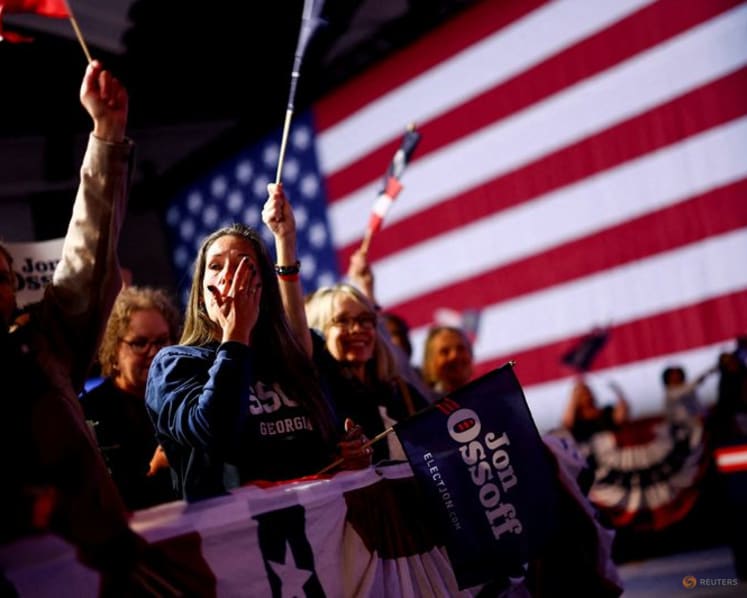
Assessing the seismic fallout of the latest US midterm elections, Dr Mehmet Ali Tuğtan, associate professor of international relations at Istanbul Bilgi University, delivered an exhaustive analysis of the shifting dynamics in American governance during an interview on the Harici YouTube channel.
Speaking with the program’s host, Tuğtan explained that while public opinion polling had pointed toward legislative setbacks for the Republican Party, the actual margins delivered a shock to the political establishment. Pre-election surveys had indicated that the Republicans were on track to yield the Senate by a margin of 53 to 47 and drop the House of Representatives by approximately 230 to 200 seats. However, the sheer scale of the defeat redefined expectations across the political spectrum.
“It wasn’t just losing; losing by such a wide margin was something no one expected,” Tuğtan said, recalling the nationwide anticipation leading up to the vote. “People were wondering, will it be a blue wave? Or will it be a blue tsunami? It turned out to be a blue tsunami.”
The conversation addressed the root drivers behind this historic electoral repudiation of Donald Trump and the broader Make America Great Again movement heading into the second term of his presidency. Tuğtan asserted that the electorate’s verdict represented both a direct reaction to Trump’s policy execution and a systemic transformation within the opposition party.
On the domestic and economic fronts, Tuğtan argued that the administration’s flagship initiatives produced severe unintended consequences that alienated ordinary voters. Trump had campaigned on terminating open-ended overseas conflicts, yet his administration found itself entangled in a widening military confrontation. “He said he would withdraw from the endless wars. He doesn’t even know how to get out of the war he started in Iran,” Tuğtan noted. The outbreak of hostilities in the Persian Gulf led directly to the closure of the Strait of Hormuz, an arterial transit corridor for global energy supplies, precipitating severe inflationary pressures across the domestic market. “Because of the Iran war, the Strait of Hormuz closed, and the cost of living skyrocketed,” Tuğtan pointed out. Concurrently, Trump implemented his pledge to dismantle conventional free-trade frameworks and erect protectionist trade barriers to shield domestic manufacturing, but the policy backfired. “As many economists warned, the reflection of this on the economy was negative,” Tuğtan said, adding that voter discontent was further compounded by public scrutiny surrounding his family’s business entanglements and ties to elite technology billionaires. “On one hand, there were the rumors of corruption involving his family and the dirty relationships with those ‘tech-bros,’ the tech billionaires around him. All of this was reflected back to the public.”
Simultaneously, the Democratic Party executed a generational and ideological pivot that resonated with an evolving electorate. Tuğtan pointed out that the party leadership decisively moved past its entrenched vanguard, discarding political figures who had maintained unconditional support for Israel, adhered rigidly to market-driven economic orthodoxies, and offered stale solutions to widening income disparity. In their stead, a demographic cohort emerged that reflected the country’s diverse social fabric. “The Democrats finally got rid of the old faces, those from the older generation who constantly said the same things, who unconditionally supported Israel in the Israeli-Palestinian issue, and who claimed more neoliberalism could solve problems like the society’s growing income inequality, and replaced them with a new generation of more communal, more left-leaning candidates,” Tuğtan observed. “With candidates representing all the colors of this mosaic, when the Democrats stepped up, success followed.”
“A new generation of leadership has taken over”
This structural realignment marked a clean break from the generational cohort that had steered the Democratic Party for decades. Tuğtan highlighted that the party skipped an entire intermediary generation in its succession process. Rather than passing power from octogenarians such as Joe Biden and Hillary Clinton to officials in their late sixties or seventies, authority transferred directly to figures in their thirties, forties, and early fifties. “A new generation of leadership has taken over in the Democratic camp,” Tuğtan said. “Some Turkish broadcasters call them the ‘boomers,’ the generation of Hillary Clinton and Joe Biden, who have finally retired. And in their place came not just the next generation, but the one after that. So those in their 80s retired. They weren’t replaced by those in their late 60s or early 70s. They were replaced by people in their late 40s, early 50s, or even some in their 30s. This generational change has brought a huge fresh wave of energy to the Democratic Party.”
When asked by the host how this emerging leadership engages with the traditional establishment, Tuğtan explained that the internal gravity of the party has shifted markedly. Even figures traditionally viewed as moderates or institutionally aligned, such as California Governor Gavin Newsom or Georgia Senator Jon Ossoff, operate substantially further to the left than their predecessors. “Even the establishment figures have shifted to the left within the Democratic Party,” Tuğtan emphasized, demonstrating that the center of political gravity has moved.
Defining the core tenets of this modern American leftism, Tuğtan outlined three structural elements: a revival of statism, the formal abandonment of trickle-down supply-side theory, and a fundamental critique of the neoliberal consensus that has governed economic policy since the 1980s. He contrasted the incoming cohort with the “Atari Democrats” of the 1990s, who rallied behind Bill Clinton’s “Third Way” philosophy. While Clinton accommodated global market flows, offshore manufacturing, and service-sector flexibilities to produce 17 million precarious jobs, that compromise eventually exhausted its utility. Subsequent administrations under Barack Obama and Biden failed to deliver equitable prosperity following the 2008 global financial crisis, eroding institutional credibility.
“Now, the new generation says openly, ‘We are public-minded.’ There are those among them who say, ‘We are socialists,'” Tuğtan remarked, summarizing their economic thesis. “In other words, ‘Brother, we no longer believe in the neoliberal order or the neoliberal prescription.’ Those who say, ‘We believe the state should ensure income justice through taxation, taking from the rich and transferring to the poor,’ are now in the majority in the new generation.”
“They meet at the horseshoe”
This ideological realignment extends far beyond fiscal policy into foreign affairs, where the incoming cohort has abandoned the uncritical interventionism that characterized previous administrations. While earlier Democratic centrists embraced global hegemony and accepted unilateral overseas expeditions, current lawmakers place primary emphasis on domestic civic welfare and heavily scrutinize long-standing strategic alliances.
“The new generation is much more inquisitive about this. Their priorities are America, the welfare of the American citizen, and most importantly, they are questioning the special relationships that this American hegemony has created with certain third parties abroad,” Tuğtan noted. “The most significant of these, in terms of American domestic politics, is the relationship with Israel. Of course, previous members of the Democratic Party who were close to the establishment never made the United States government’s special relationship with Israel a subject of debate. However, after Gaza, after the Gaza genocide, the new generation of Democrats in the world is much more inquisitive and much more critical of Israel.” Pointing to the Georgia senator as a clear manifestation of this shift, Tuğtan added: “Jon Ossoff is a profile that breaks all molds in this context. He is a leftist, Jewish senator who is currently critical of Israel. This is not a profile we were very used to seeing in the previous generation.”
Responding to the host’s observation that earlier progressive figures like Obama ultimately accommodated traditional foreign policy and Wall Street imperatives, Tuğtan detailed how structural constraints previously dictated executive appointments. “Back then, when Obama was coming to the White House, the Democratic Party establishment handed him Timothy Geithner like a briefcase. ‘Here, take this as your Treasury Secretary from Goldman Sachs,’ they said. Can you say no? You couldn’t say it in 2008. Now you can. That’s the biggest difference.”
According to Tuğtan, the traditional power structure suffered catastrophic institutional damage under Trump’s successive presidential terms, eroding its ability to control party machines. “The establishment, through Trump’s 2016 and subsequent 2024 presidencies, has largely lost its influence, having been bulldozed and trampled like a bull in a china shop,” he said. The recent midterm results laid bare this collapse: “In these last midterms, almost all billionaire-backed candidates lost. Elon Musk probably made the most inefficient purchase in his commercial history. He spent 475 million dollars and got absolutely nothing in return. Secondly, AIPAC-backed candidates. Almost all candidates of the American Israel Public Affairs Committee lost. If the establishment’s old power and influence were still in place, these things we’re saying wouldn’t be possible.”
This erosion has enabled populist figures to challenge establishment orthodoxy without fear of political marginalization. Tuğtan cited Michigan progressive Abdul El-Sayed as an example of a candidate who eschewed corporate political action committees, confronted AIPAC, and maintained explicit solidarity with marginalized populations without derailing his political trajectory. “You’re going to campaign without support from super PACs. You’re going to clash with AIPAC. You’re going to openly accuse Israel of genocide and get elected as a senator,” Tuğtan remarked, contrasting the current political climate with the rigid operational boundaries of 2008.
Analyzing the structural cleavages governing the contemporary political environment, Tuğtan posited that a dual axis now defines the landscape: the conventional left-right spectrum alongside a deep rift between globalists and anti-globalists. On matters of international trade and multilateral engagement, the progressive left and the populist right converge against party centers. “They meet at the horseshoe. Exactly that,” Tuğtan concurred with the host. Yet on domestic state functionality, the two factions diverge completely: while the populist right seeks the total privatization of public services, the democratic left insists on broadening bureaucratic capacity, strengthening social safety nets, and redistributing capital through progressive taxation. “Trump drove a bulldozer into the establishment and, in a sense, while tragic for him personally, he created this highway-like void that the left wing of the Democrats utilized,” Tuğtan noted.
“The issue of class has returned to America”
A critical breakthrough for the Democratic resurgence in these midterms was a conscious pivot away from hyper-individualized identity politics toward working-class material issues. Tuğtan argued that during the 1990s and 2010s, liberal elites substituted cultural and identity issues for structural class concerns, operating under the flawed premise that foundational economic problems had already been resolved.
“One of the most important characteristics of this new left, which we mentioned emerged in the 90s, was substituting identity issues for class issues. Meaning, the new left had an attitude like, ‘Class-related problems are now solved. We are the ones embracing identity-related problems,'” Tuğtan analyzed. “The Democratic Party candidates showed us that embracing identity issues does not eliminate the primacy of class issues; on the contrary, without talking about class issues, a significant portion of identity issues cannot be solved. This is one of the most significant innovations of this election for the left wing of the Democratic Party. The issue of class has returned to America.”
By neglecting the material hardships of the impoverished majority, earlier Democratic platforms inadvertently surrendered broad segments of the working class to the MAGA coalition. “The moment you do that, who are you leaving out? You are leaving out the white, Christian, heterosexual poor,” Tuğtan argued. “What are they worried about? They are worried about poverty. But they don’t hear this from the left. The Democratic Party worries about them being white, Christian, or American, but it doesn’t worry about their poverty. How will that work? How are they going to go and vote for the Democratic Party?”
In contrast, candidates such as El-Sayed neutralized polarizing culture-war attacks by grounding their campaigns strictly in collective material well-being. “They insisted on saying to Abdul El-Sayed, ‘You are a Muslim.’ ‘Do you have ties to the Muslim Brotherhood?’ ‘This or that?’ Almost the entire Republican campaign was based on this. He insisted on not answering any of them. ‘My concern is the food, the jobs, and the healthcare of the people of Michigan. It is having proper schools. Come to me with these,’ he said,” Tuğtan explained. By rejecting identity-based politics, the party successfully reclaimed core socioeconomic terrain: “Now, this new generation has taken class as a central issue again, and with discourse emphasizing its importance, that mass has shifted back to where it belongs.”
Looking ahead to the 2028 presidential cycle, Tuğtan suggested that while it remains premature to identify a definitive Democratic standard-bearer, leaders capable of bridging the wing-to-center divide will command a substantial advantage. He highlighted Ossoff, Newsom, and Texas Congressman James Talarico as figures to monitor once formal primary contests commence in late 2027. “I think Ossoff would be a suitable candidate. Precisely because of his status as a disruptor of the status quo,” Tuğtan assessed. “You can’t call the guy an antisemite. He is Jewish himself. You can’t say he has a marginal profile, that he hates the rich or is hostile to wealth. He isn’t. But if you say he isn’t a leftist, well, one must be honest; the man is a leftist in his rhetoric and actions.” The party demonstrated broad cohesion across the country, with only isolated defections, such as Michigan Representative Haley Stevens crossing party lines to endorse Republican Senate candidate Mike Rogers shortly before balloting.
“Donald Trump actually abused American state power”
Turning to international security, the discussion examined why Trump, despite running on an anti-interventionist platform, embroiled the country in an escalating war with Iran. Tuğtan rejected the notion that institutional deep-state pressures forced the administration’s hand, arguing instead that personal financial motives, family alliances, and sectarian electoral commitments dictated the decision.
“The thing that dragged Trump into the war was his own base rather than the establishment. Trump didn’t enter that war for the sake of the establishment,” Tuğtan stated. He explained that Trump’s primary political constituency includes an evangelical community that unconditionally endorses Israeli expansionism, while the administration maintained intricate personal and commercial ties with Israeli leadership. “On a personal level, he has extremely complicated relationships with leading figures of the Israeli government and business world, starting with his son-in-law Jared Kushner, including Netanyahu himself. The role Kushner played wasn’t just, ‘I’m going there in the name of America for diplomacy and peace’; we are talking about billions of dollars in wealth changing hands and trillions of dollars in fund flows. Therefore, Trump didn’t enter this war because he was interventionist in principle. He entered it directly for himself. In other words, Donald Trump actually abused American state power because his personal political and economic interests demanded it.”
Tuğtan added that external leverage, including public sensitivity surrounding the Jeffrey Epstein files, further constrained the president, who was ultimately misled by promises of a rapid military campaign. “He believed the ‘quick victory’ scenario that was sold to him,” Tuğtan explained. “Because there was no one around him to question it, criticize it, or stop him, he got himself into a situation he didn’t know how to get out of. And that, as a matter of fact, became his political end. Right now, he has a war on his hands that he doesn’t know how to end, and he has already paid the price for it politically.”
This dynamic makes the final two months of 2026, leading up to the January 2027 congressional swearing-in, extraordinarily hazardous. “Ironically, this is also Trump’s most dangerous time right now. Because he has nothing left to lose. There is no price left for him to pay politically. I mean, if oil hits $200 instead of $100 from now on, what harm will that do to Trump?” Tuğtan warned, pointing out that an outgoing Secretary of Defense faces no future electoral test. “Therefore, the upcoming two months, November and December, are very critical. People are saying they might attack this weekend. We shall see. I hope he doesn’t do anything that crazy, but you know, when Trump and craziness are mentioned together, the verb at the end usually isn’t ‘doesn’t.’ Rather, it usually is ‘does.’ So, we are all waiting anxiously.”
“He has run out of moves domestically”
In the Middle East, the political landscape in Israel mirrors this acute volatility following legislative elections where Prime Minister Benjamin Netanyahu lost power, prompting heightened regional tension. Facing domestic exhaustion, Netanyahu confronts an unprecedented challenge: Israeli Arab political parties have extended external backing to former Chief of General Staff Gadi Eisenkot, opening a path to form a government.
“Netanyahu also needs a game-changing move within these 2-3 months. He has run out of moves domestically,” Tuğtan observed. “Because Netanyahu was always playing on the lines between Israel’s Arab and Jewish citizens, which he believed were impassable. For the first time, we see that these lines can be crossed. After the Arab parties’ statements of support for Eisenkot, if these lines can indeed be crossed, it means the end of Netanyahu’s domestic policy built on marginalization, hatred, and polarization.”
Tuğtan characterized Eisenkot’s maneuvering as politically astute: “Eisenkot, very smartly, did not directly say, ‘I will not cooperate with the Arabs.’ He listed the fundamental principles that ensure Israel remains a Zionist state and said, ‘I will accept the support of anyone who doesn’t have an issue with these principles.'” This development represents an immense psychological breakthrough, particularly given Eisenkot’s personal tragedy: “The reason Eisenkot entered the race for prime minister is that his son died while fighting in the Gaza clashes on December 7, 2023. The man lost a son and two nephews in the Gaza clashes. This man is a former Chief of General Staff. Now, for a profile like this, accepting Arab support to form a government is truly a very difficult threshold to cross. If he succeeds in this, Netanyahu really has no moves left to make internally.”
Blocked at home, Netanyahu faces intense pressure to alter the regional equation through direct strikes against Iranian sovereign facilities. Tuğtan noted that commentator Tucker Carlson had repeatedly disclosed warnings regarding potential strikes on the Natanz nuclear site. “Tucker Carlson has been saying this since April. Since April, about once every month, he’s been saying nuclear weapons could be used at any moment. In this context, he has somewhat taken on the role of an unappointed Medvedev. But, of course, this doesn’t mean it won’t be used right now. The fact that this is constantly being repeated is a serious enough situation, and conditions in these next two months are quite favorable for this for both sides, that is, for both the Israeli and American sides. Therefore, this is, of course, the most disturbing situation for the international system and the region.”
“The Democrats might just reopen that page”
Looking toward the longer-term horizon when the newly elected Democratic majorities take office in 2027, Tuğtan predicted a comprehensive attempt to institutionalize human rights, civic welfare, and international law as core principles of US statecraft. While Washington’s capacity to unilaterally dictate terms to the broader international system has receded, Democratic leadership will likely demand that formal allies align with fundamental governance benchmarks.
“American leadership has come to an end in the context of the world. I mean, America lost the ability to impose this on the rest of the world a long time ago,” Tuğtan observed. However, regarding strategic partners such as Türkiye or India, expectations will shift away from transactional arrangements toward defined political standards: “The Democrats might just reopen that page. It might do this to its allies. It could present it as a prerequisite. Like, if you are an ally of America, you will be governed by democracy. You will have, for better or worse, a capitalist economy. You will abide by the rules-based international system established after the World War.” Rebuilding ties with traditional European partners, strengthening Pacific alliances involving Australia, South Korea, New Zealand, and the Philippines, and engaging New Delhi will form the foundation of this foreign policy architecture. “If the Democrats come with a claim of a new America, a restored American leadership, one, they will want their allies to resemble them. Two, they will bring the emphasis on a rules-based international system back to the agenda much more strongly. And that will be the most important difference between them and Trump,” he said.
Concluding the interview, Tuğtan addressed the self-critical remarks recently delivered by US Vice President JD Vance regarding the administration’s military adventures. Tuğtan characterized Vance as the primary voice of the Republican Party’s isolationist, secular-nationalist wing, which opposed the conflict with Iran from its inception and remains deeply critical of US interventionism. However, Vance faces an uphill battle in unifying a party fractured by profound internal contradictions.
“In the Republican Party, besides the wing-center integration, there are serious conflicts within the wings between the evangelical theopolitical wing and the more secular fascist wing,” Tuğtan pointed out. While Vance represents an isolationist faction seeking to dismantle bureaucratic regulations while opposing corporate bailouts, he remains constrained by the 80 million-strong evangelical voting bloc whose theological convictions mandate unwavering involvement in the Middle East. “You have to get the votes of 80 million people somehow,” Tuğtan explained, drawing parallels to the 100 million evangelicals in Brazil who formed the political backbone for Jair Bolsonaro.
“The wing Vance represents is currently extremely troubled by Trump’s foreign policy. Because they think the domestic consequences of that foreign policy are costing the Republican Party, they are criticizing Trump through Vance’s voice,” Tuğtan concluded. “If you look at it now, Vance is the strongest presidential candidate for the Republican Party for the 2028 elections. Therefore, there is nothing surprising about Vance having already started the campaign. However, he has a very big disadvantage. What is that? It is very difficult for a vice president not to pay his share of the bill for the actions of a Trump administration.”
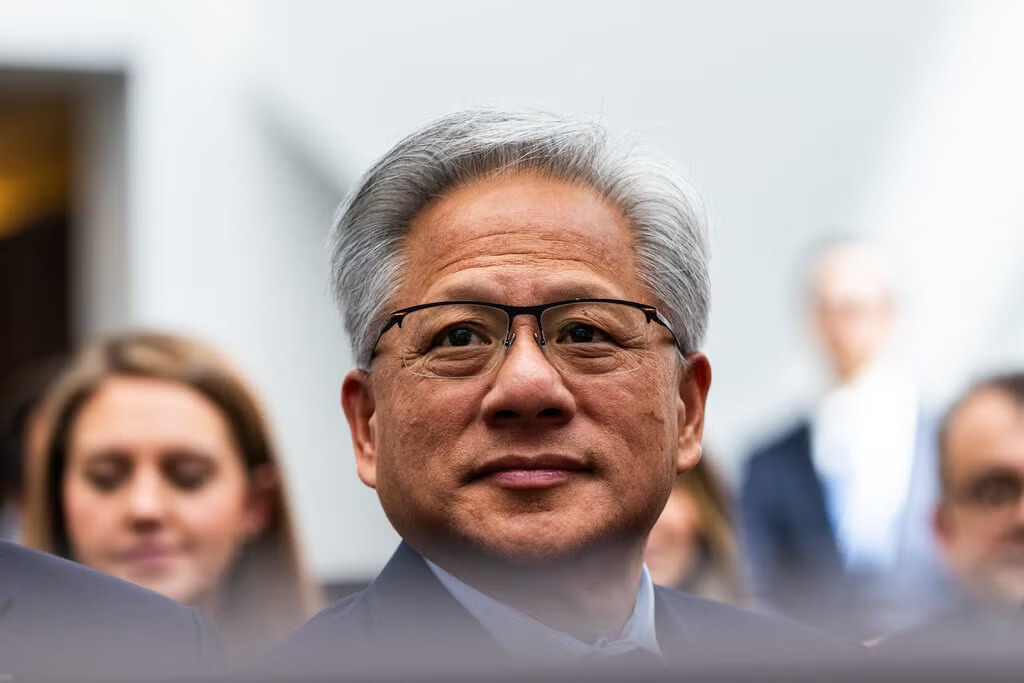
Nvidia CEO Jensen Huang has admitted to having a relationship with a woman whom US intelligence concluded was passing information to China.
Nvidia announced on Sunday that its board of directors had launched an investigation into its CEO and co-founder, who confessed to having a close relationship with a businesswoman identified by US intelligence as a Chinese spy.
Huang’s involvement with the woman, known as Alice Huang, emerged as a matter of concern for the US government after surveillance operations revealed that she was funnelling information directly to Beijing.
Apologising in a message sent to the company, Huang said: “I was unfaithful to my wife. My actions hurt her and our children. There is no excuse for what I did. I am deeply sorry.”
Nvidia’s board of directors stated that there was “no reason to believe national security or Nvidia confidential information was compromised,” but noted that “the board’s inquiry will review all available information.”
The statement added that Huang “fully supports and is cooperating with the inquiry.”
Independent board members will select outside legal counsel to conduct the investigation. Company spokesperson John Rizzo stated that Huang will not take part in the selection process.
The board announced that the 63-year-old Huang will remain at the helm of the company throughout the investigation.
As a co-founder of the company, Huang created a unique operating structure at Nvidia in which he directs all facets of the business while supervising approximately 60 people who report directly to him.
“Today’s news will not slow Nvidia down,” Rizzo said. “Jensen remains committed to leading Nvidia as CEO without interruption.”
Speaking briefly to reporters on Sunday evening as he prepared to depart Florida, Trump defended Huang.
The president said he would “certainly take him along” on his upcoming trip to China.
“I haven’t heard that he did anything wrong,” Trump said. “He did business with somebody, but you know, everybody does.”
Trump said he had not spoken with Huang regarding the matter, adding: “I know he’s a good person, but you never know what’s going on.”
Trump also added that he did not regret failing to take action roughly a year ago, when he was informed that US intelligence agencies were electronically monitoring Huang:
“I think he’s an honourable guy. He probably has an excuse for it. You have to hear it out. No, you cannot treat people like that. He has done a magnificent job for our country.”
Asked whether Huang should continue in his role as Nvidia’s CEO, Trump replied: “I think so. Yes, of course.”
Public scrutiny surrounding Huang’s relationship began last month after The New York Times first reported that American intelligence agencies had discovered the Nvidia chief had established a close relationship with a Chinese citizen and chip buyer whom US officials concluded was gathering intelligence on behalf of Beijing.
The chip buyer was Huang Le. Her biography noted that she worked as a television reporter in China before becoming a senior executive at a Singapore-based data centre firm that grew into one of Nvidia’s largest customers in Southeast Asia.
That company had purchased chips worth more than $4.8 billion since June 2024.
Nvidia continued to do business with Ms Huang’s company, Megaspeed, even after the NYT reported last year that the Department of Commerce was investigating whether the firm was helping smuggle restricted artificial intelligence chips into China.
Nvidia and its CEO initially maintained that there was nothing problematic or out of the ordinary regarding his relationship with Huang Le.
In an interview with Bloomberg last month, Jensen Huang said his interactions with Huang Le were “related to Megaspeed, and all of it was completely normal and nothing out of the ordinary.”
According to the NYT, as business expanded rapidly, Jensen Huang placed his family at the core of the enterprise. His son, Spencer, is a product management director playing a leading role in the company’s robotics initiatives.
His daughter, Madison, serves as a senior director of product marketing, working both in robotics and across the company’s communications and marketing operations.
His son-in-law, Nico Caprez, works on the company’s business development team.
Huang had noted that his wife, Lori, whom he married in 1985, was the person who made founding the company possible. The pair met while Huang was a teenager studying engineering at Oregon State University.
Lori was one of three women in an engineering laboratory of 250 students. Having graduated high school two years early, Huang managed to join Lori’s laboratory group and sought to impress her with his intellect.
Conducting an investigation on suspicions that Megaspeed might be diverting advanced Nvidia AI chips to China, the US government placed Le under surveillance more than a year ago.
During the surveillance operation, it was revealed that Ms Huang was in contact with a US citizen identified as Mr Huang.
Officials reviewing the intelligence said they became certain the relationship between the two was romantic.
This development undermined misleading statements Nvidia had given to the NYT and other outlets over the past year regarding the nature of the relationship between Mr Huang and Ms Huang.
Last spring, Secretary of State Marco Rubio oversaw the drafting of a top-secret memo detailing intelligence that showed Alice Huang had been recruited by China’s Ministry of State Security to target Jensen Huang.
The memo was circulated earlier this year, shortly before the president’s trip to China.
Once reports emerged that Le Huang was being monitored by the US, Jensen’s room for manoeuvre vanished almost completely.
Congress was likely seeking his testimony under oath, and the monitoring reports raised the probability that US intelligence was aware of the nature of his relationship with Le.
Pressure was mounting on Nvidia’s board as well. In a social media post last month, Massachusetts Democratic Senator Elizabeth Warren, a senior member of the Senate Banking Committee that oversees overseas chip sales, said Mr Huang and the company’s board of directors had “an obligation to answer to Congress” regarding the relationship with the spy.
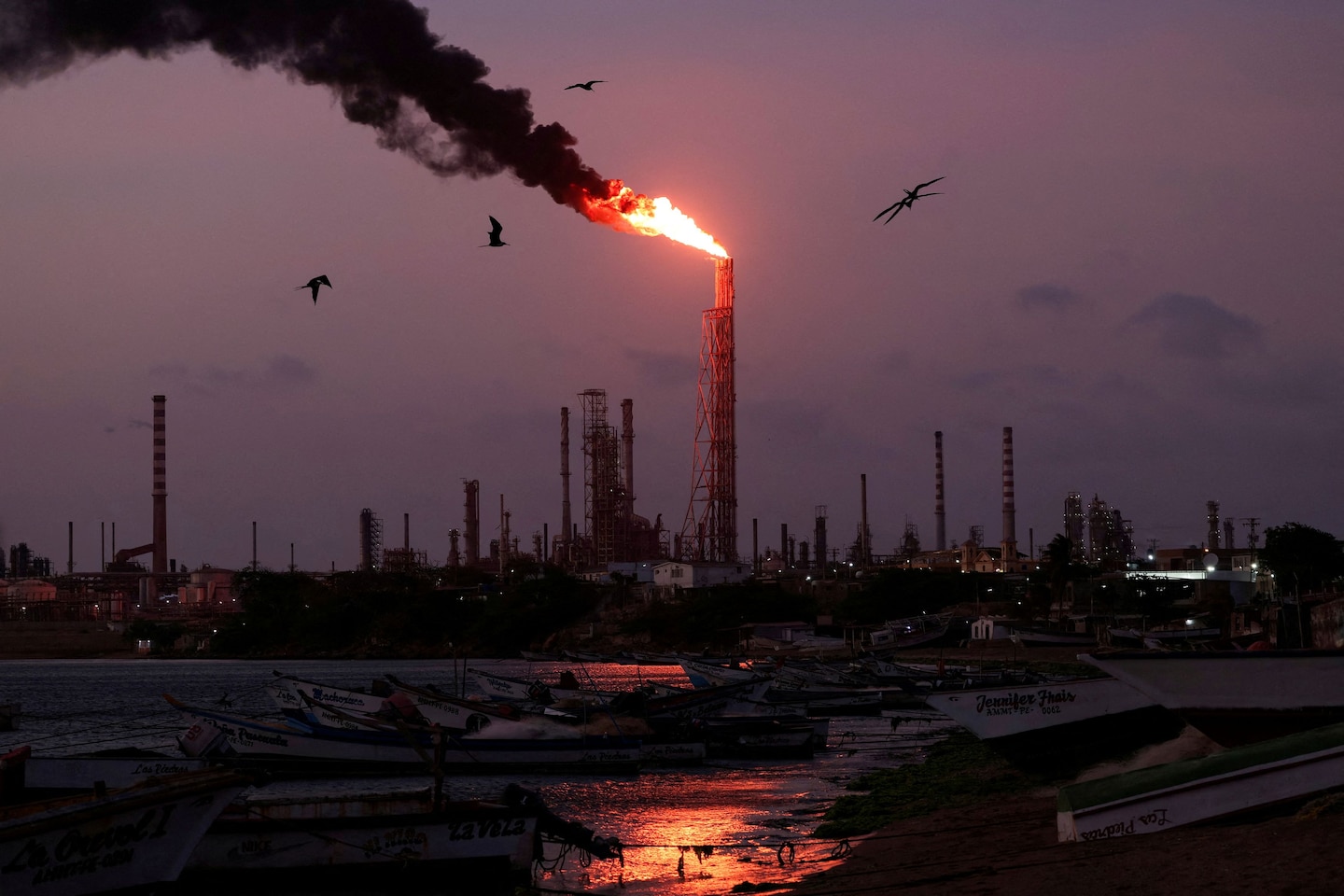
Venezuelan billionaire Alejandro Betancourt has become the Donald Trump administration’s key partner in the country’s oil sector.
According to a report by The Washington Post, Betancourt is building an energy empire by securing rights to oilfields holding 63.7 billion barrels in reserves with Washington’s backing.
In return for the cooperation, the US is expected to acquire a stake in the billionaire’s company and obtain a portion of the extracted crude at a discounted price.
Under the terms of the 50-year agreement reviewed by the newspaper, the US administration will take over a 35% stake in Betancourt’s company, North American Blue Energy Partners (NABEP), virtually free of charge.
The businessman has also pledged to sell 20% of the extracted oil to Washington at $30 per barrel, a price lower than one-third of its current market value.
The Venezuelan state, meanwhile, will receive royalty revenues ranging from 16% to 40% of production, depending on the location and type of the field.
Described as a controversial figure in the Venezuelan business world, Betancourt worked in the past with the government of Hugo Chavez supporters and was among the suspects in a lawsuit involving alleged embezzlement of public funds.
While Swiss and Spanish authorities continue to investigate the billionaire over suspected money laundering, Betancourt denies the wrongdoing allegations against him.
Mauricio Claver-Carone, a former Trump administration official responsible for contacts with Venezuela’s new leadership, justified the choice of Betancourt by citing the businessman’s efficiency and his track record of successfully implementing oil projects.
Having raised daily oil production from 18,000 barrels to roughly 223,000 barrels since his return to Venezuela at the end of 2023, Betancourt aims to bring this figure to 275,000 barrels by the end of the year and to 350,000 barrels next year.
Seeking to expand his business volume, the billionaire plans to channel nearly all of his cash flow, which is expected to exceed $5 billion in 2026, into new fields.
Experts, on the other hand, view the agreement’s future with scepticism, pointing out that operating new fields in the Orinoco oil belt will require massive investments and years of work.
Venezuelan opposition leader Maria Corina Machado criticised the deal over a lack of transparency, announcing that the terms could be reviewed if she comes to power.
Interim President Delcy Rodriguez supported the agreement, describing the process as one of the pillars of her interim government.
In addition, Bloomberg reported in early September that a $100 billion plan between the US and Venezuela to boost oil production was jeopardised by financing uncertainties.
The report noted that Washington had not clarified who would provide these funds to repair the country’s devastated oil infrastructure or under what terms.
US President Donald Trump announced on 29 August that Washington had reached an agreement to secure control over more than 65 billion barrels of Venezuelan oil through a private sector partnership.
Trump stated that the agreement would more than double US oil reserves, increase global oil supply, and lower petrol prices in the long run.
Identifying NABEP as the project’s primary private operator, Bloomberg noted that the company lacked sufficient resources to finance an operation of this scale on its own.
The agency also pointed out that a portion of the declared oil reserves lacked credible confirmation, that repairing the infrastructure would require high costs and many years, and that completing the project before Trump’s presidential term ends in January 2029 appeared difficult.
The Financial Times also reported that despite plans by the Trump administration and Caracas, Venezuela faced a shortage of the qualified labour needed to revive the oil sector and boost production.

Blue tsunami and Iran conflict expose deep US cracks, Dr. Tuğtan says

The Mecca Defence Agreement, the Ottoman Empire, and the facts

George Szamuely dissects European decline and strategic rifts with US

Nvidia investigates CEO Jensen Huang over link to Chinese spy

US secures 35% stake in Venezuelan firm NABEP under 50-year deal
-

 Diplomacy1 week ago
Secular dress code dispute exposes deeper Türkiye-Azerbaijan strains
-

 Russia2 weeks ago
US and Russia weigh energy deals and corporate return in peace talks
-

 Europe2 weeks ago
Merz visits Asia to seek new markets for German defence firms
-

 Europe2 weeks ago
Serbia opposition wins snap vote as Vucic concedes defeat
-

 America2 weeks ago
Pentagon prepares US bases for 90-day siege in global war plan
-

 Europe2 weeks ago
AfD drops Dexit to back single market in new Europe strategy
-

 America2 weeks ago
Lula defeats Flavio Bolsonaro to seal historic Brazilian comeback
-

 Middle East2 weeks ago
US warns Gulf allies of possible Iran strikes after midterms
