
Europe
Bundeswehr troop figures mask severe structural imbalances

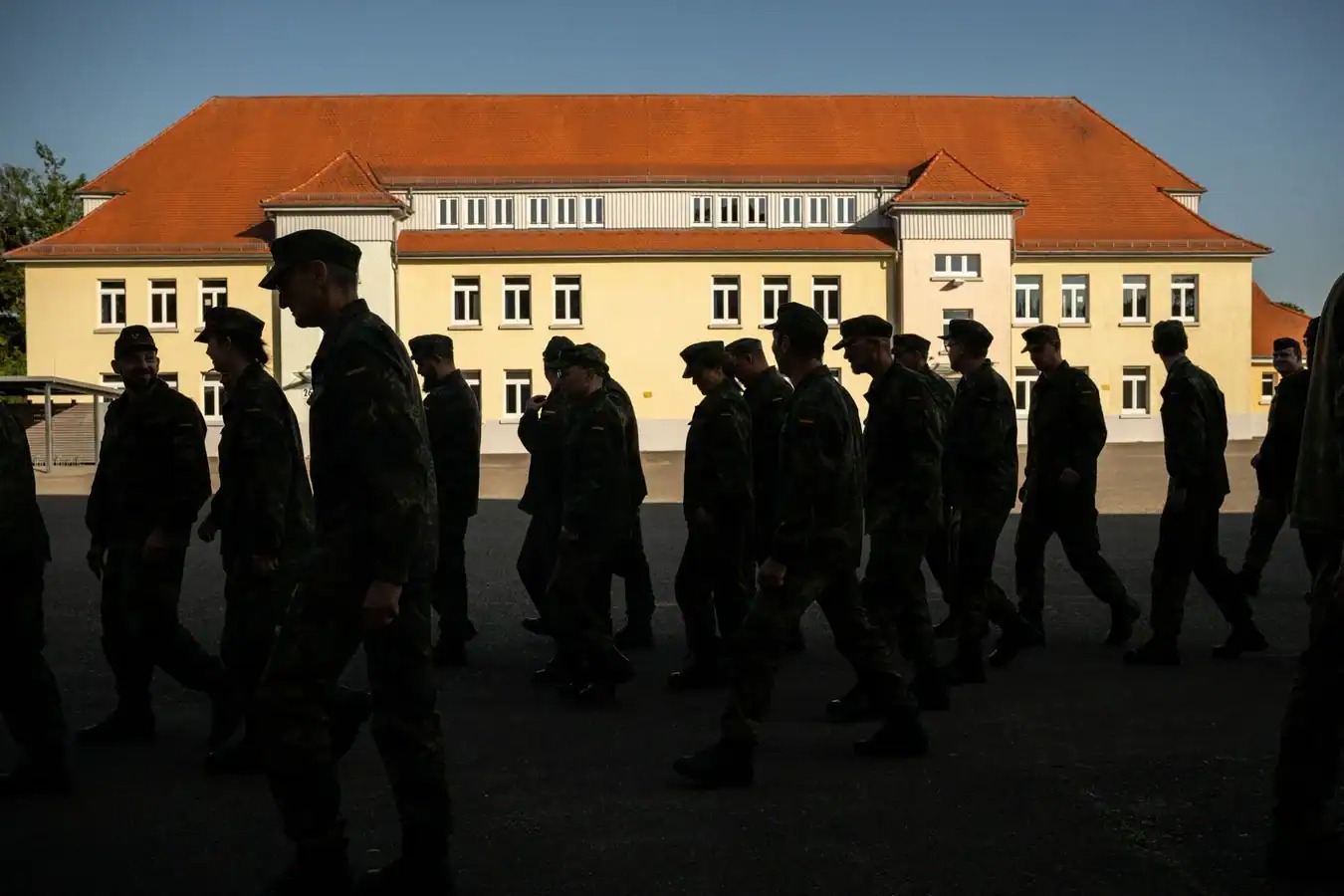
The German Ministry of Defence has set a series of priority targets for the second half of the year. Led by Boris Pistorius (SPD), the ministerial leadership is satisfied with the government’s draft federal budget, which is scheduled for adoption by the Bundestag at the end of November.
According to a report by the newspaper Welt, the fundamental issue that officials do not openly voice in public is the necessity of converting resources allocated from tax revenues and loans into military capabilities as efficiently as possible, given that disruptions continue to occur in this area.
Regarding new infrastructure construction, the process is generally assessed to be proceeding as planned.
The objective this year is to add approximately 9,000 new bed spaces to barracks, with the initial allocations to these beds having begun in recent days.
Over the next four years, plans envisage incorporating roughly 54,000 additional beds into the system alongside new buildings.
Despite all these areas, personnel continues to be the single largest problem area in the armed forces.
In a statement issued at the beginning of the week, the ministry reported that the number of active-duty soldiers reached 186,700 as of 31 July, marking the highest level in approximately 13 years.
Although this figure falls considerably short of the ultimate target of 260,000 troops to be reached by 2035 at the latest, the ministry argues that the current figure lies “within the projected target corridor for personnel growth”.
This stems from an agreement initially reached with the Bundestag on a relatively slow trajectory of expansion. The planning in question projects an active strength of between 186,000 and 190,000 personnel by the end of the year.
The ministry projects that, “in line with general positive developments in the recruitment process, the Bundeswehr’s personnel growth will maintain its positive trajectory until the end of the year, despite the impact of seasonal fluctuations”.
However, not all observers share this assessment. In a post published on LinkedIn, the former Chief of the German Army, Lieutenant General Alfons Mais, made the following evaluations:
“Looking at these announcements, one could easily get the impression that the constitutional mission of the Bundeswehr is to employ as many people as possible. The key question is: Where does this additional strength, including personnel whose service has been extended, contribute to the defence mission? In administrative posts? In territorial defence? In the reserve elements of operational units? In closing existing personnel gaps in active units? In augmenting new capabilities aimed at NATO planning targets? In Lithuania?”
Pointing out that the issue is not merely one of quantity but of quality—namely deploying the right personnel in the right places—Mais indicates that personnel must not be stationed solely in headquarters, but in artillery battalions, naval surface units, fighter aircraft squadrons, or the electronic warfare domain.
Indeed, the ministry is also aware of the structural problems highlighted by the retired lieutenant general.
Even as politically desired record figures are made public, officials in the Bendlerblock acknowledge that the Bundeswehr’s personnel structure must be returned to a pyramid form to adopt a defence posture suitable for potential crises and wartime situations.
In ministry corridors, there is talk that the military in its current structure has “accumulated too much fat” and that its administrative middle has grown cumbersome.
In the pyramid model considered ideal for the armed forces, generals and staff officers form the apex, while junior enlisted personnel and privates constitute the broad base; officers and non-commissioned officers occupy the space between these two tiers.
A large base combined with a small number of command positions guarantees both a young and physically resilient force and the steady advancement of the most capable personnel to higher ranks through continuous selection.
This model also provides cost efficiency and delivers high mobilisation capacity through personnel who transition into the reserves upon completing their service.
Today, however, the Bundeswehr possesses not only a bloated upper echelon but also a disproportionately broad middle tier, resulting in a cumbersome institutional torso.
The ranks of young enlisted personnel remain insufficient, while older officers are present in surplus. A major who lacks sufficient troops to command produces no military added value; moreover, the prolonged retention of senior personnel prevents the promotion of younger soldiers.
Consequently, defence expenditures are absorbed by high salaries for mid- and senior-level staff rather than being channelled into combat strength, equipment, or the next generation of personnel.
Despite the ministry’s recognition of this dynamic, no concrete transformative steps have yet been taken in practice.
An ageing force with no gain in deterrence
To sustain positive personnel statistics alongside new recruitment, the Pistorius leadership is resorting to “retention measures” aimed at keeping contract and regular personnel in the armed forces beyond the conclusion of their service terms.
Since April, the minister has been sending personalised letters to non-commissioned officers and officers.
Opening with an expression of gratitude for their service, the letters state:
“Your final days in active service coincide with a period of profound upheaval. Our country and our continent face immense challenges. In this process, the Bundeswehr’s mission is becoming even more critical. Personnel growth is therefore our primary focus. This growth can only be achieved with qualified, high-performing, and above all dedicated soldiers—experienced comrades like you. Let us look at your professional future together. Your contribution matters every single day.”
The ministry defends these and similar retention measures solely on the basis of quantitative targets. According to its statement, “targeted individual advisory measures” conducted in 2025 alone prompted thousands of service members across all statuses and branches to extend their terms of service.
Yet this method resonates primarily among older regular personnel. As of the end of July 2026, the strength of regular and contract soldiers rose by approximately 3,000 compared to the previous year, reaching 174,700.
The primary driver of this increase was the rise in regular soldiers, whereas contract personnel numbers recorded a slight decline.
Although 56-year-old regular soldiers whose physical performance may be limited remain necessary due to specialised expertise, this sweeping policy slows the effort to reshape the personnel structure into a pyramid.
As the armed forces age in practice, debate continues over whether this approach converts the military into a more effective and hard-hitting force.
The ministry is also hesitant to publicly disclose the true scale of the personnel shortfall. The gap is not merely the 73,300 soldiers separating the current strength of 186,700 from the 260,000 target.
Regular personnel briefings omit the number of departures from the armed forces—namely the actual requirement for replenishment and replacement.
Over the past three years, an average of 14,000 regular and contract soldiers departed the Bundeswehr annually. According to the ministry’s response to an information request, this figure stood at roughly 14,600 in 2025, with similar numbers expected this year. Conscripts completing their term of service add to these totals.
A ministry spokesperson stated that they could not provide a five-year projection because the data fluctuates continuously and remains highly volatile. However, such an estimate is not difficult to deduce.
Following the suspension of compulsory military service in 2011, then-Defence Minister Thomas de Maiziere (CDU) began tying contract soldiers to extended service terms of 20 to 25 years under the “Personnel Structure Model 185”.
As the service terms of these personnel expire in the coming years, replacement requirements will rise substantially.
Experienced personnel planners agree that approximately 30,000 new recruits must enter the armed forces annually in the future to achieve the targeted growth.
Current figures fall far short of this requirement. The annual net personnel gain stands at only around 3,700 compared to the previous year; furthermore, this expansion risks being eroded by regular attrition rates exceeding 20%. The implementation of the new military service model is also failing to progress at the intended pace.
By the end of July, a total of 378,000 letters were dispatched under the military service questionnaire initiative, including roughly 194,000 to young men and approximately 184,000 to young women.
Roughly 96% of the men, for whom completing the questionnaire was mandatory, fulfilled their obligation. Among women, for whom participation was voluntary, the response rate remained at 4%.
Approximately 2,630 individuals who expressed interest underwent evaluation; following this process, 865 individuals were scheduled for deployment within the Bundeswehr.
This situation underpins retired Lieutenant General Mais’s scepticism toward the defence leadership’s personnel bulletins.
Mais underscored the gravity of the situation: “One cannot conceal qualitative deficits simply by cheering marginal numerical gains!”


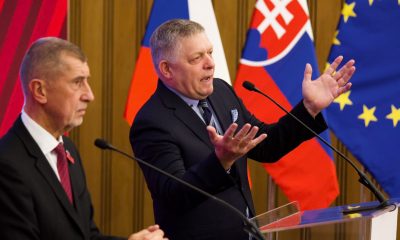

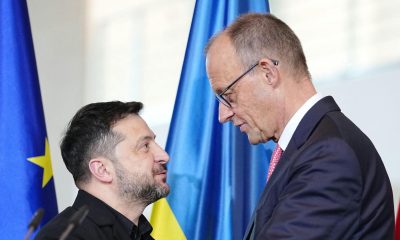



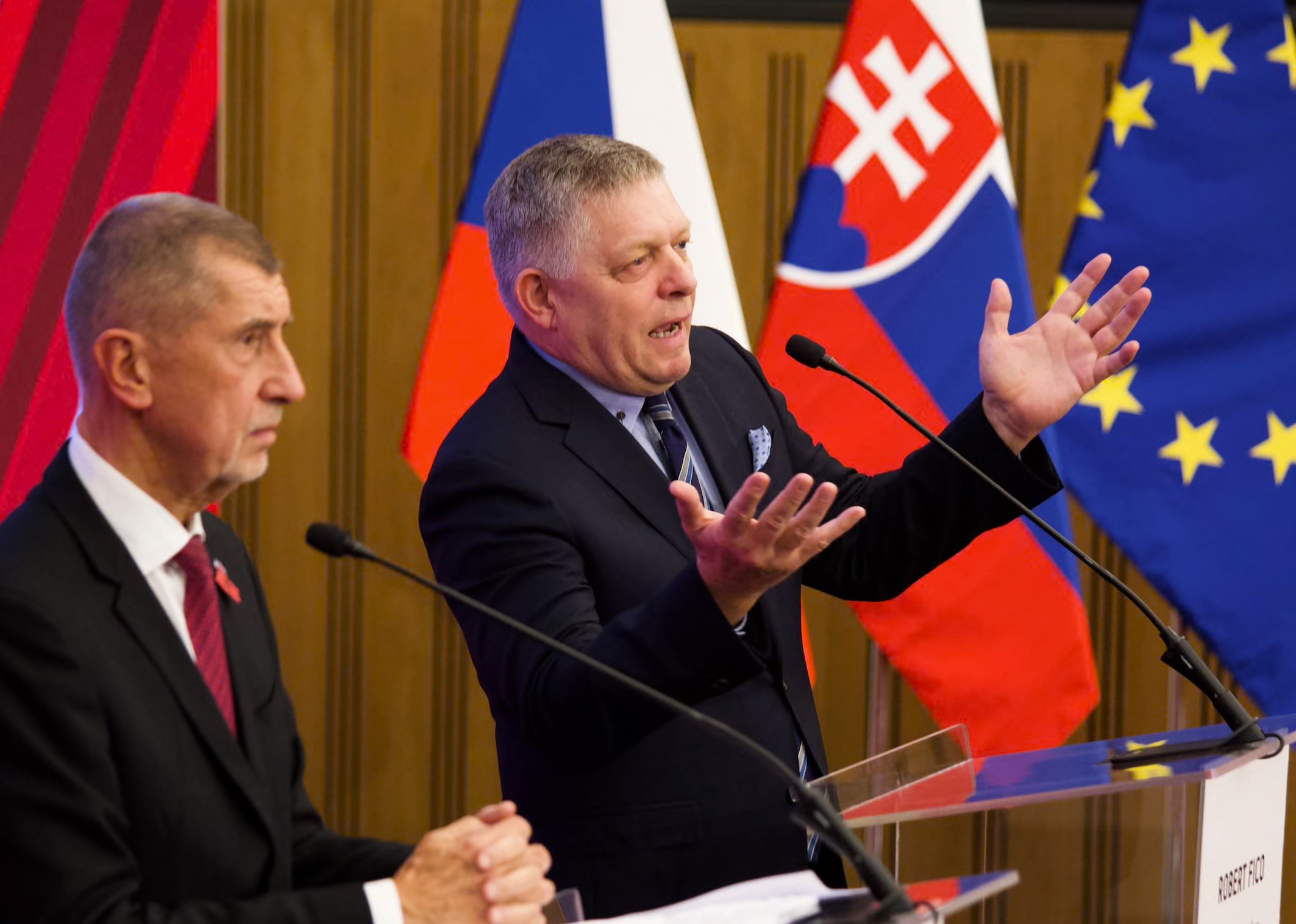
Slovak Prime Minister Robert Fico has hit back after German Chancellor Friedrich Merz threatened to veto the EU budget unless funding for Ukraine is secured.
Merz said he would block the EU’s seven-year budget if no agreement is reached on financial assistance for Ukraine.
The chancellor’s intervention has angered Central European leaders who are net beneficiaries of EU funds but do not want to take part in the next round of funding to support Ukraine’s war effort.
“What the chancellor is doing is typical blackmail, and I will not bow to it,” Fico told reporters in Bratislava.
Fico spoke alongside his Czech counterpart, Andrej Babiš, whose government has refused to participate in a future loan to Ukraine.
“I do not know why he said this,” Babiš said, referring to Merz’s stance.
Merz wants EU leaders to discuss Ukraine’s financing needs at a summit in Dublin on Friday.
In a letter to European Council President António Costa, who will chair the meeting, obtained by The Guardian, Merz wrote:
“We must maintain our support for Ukraine in its struggle to defend itself. This is our shared vital interest. Yet bilateral aid provided to Ukraine is distributed unevenly, with the burden shouldered mostly by only a few member states.”
The EU agreed last year to provide a €90 billion loan to Ukraine, intended to cover two-thirds of its military and civilian spending for 2026 and 2027.
Since then, however, Russia’s relentless bombardment has placed a heavier financial burden on Kyiv, prompting President Volodymyr Zelenskyy to ask for €70 billion to plug the budget deficit.
The EU has endorsed Zelenskyy’s figures and pledged to find €45 billion. Ukraine’s other allies, such as Britain and Canada, are expected to cover the rest.
Last year, Merz launched an initiative to tap €210 billion in frozen Russian state assets held in the EU, but the plan fell through due to opposition led by Belgium, which holds most of the funds in Brussels.
The €90 billion loan was the backup plan. Having opted out of that loan, Hungary, Slovakia, and Czechia indicated that they would not take part in the next round either.
Bulgaria joined these three member states following the election of Prime Minister Rumen Radev last April.
The question of funding for Ukraine is now spilling over into the fraught negotiations on the 2028-34 EU budget.
Germany, the largest net contributor, wants substantial cuts to the proposed budget and opposes the EU providing generous funding to member states that refuse to contribute to Ukraine’s financial needs.
Merz states in his letter that a “collective commitment without exceptions” is a “fundamental prerequisite” for closing Ukraine’s financing gap and for “discussing other matters, particularly those with financial implications.”
He also notes that, in the context of the EU’s next seven-year budget, known as the Multiannual Financial Framework, all member states must contribute to a “robust” financial perspective for Ukraine from 2028 onwards.
A German government official said:
“For the Multiannual Financial Framework (MFF) to be successfully concluded, it is vital that all EU member states provide financial support to Ukraine.”
Berlin is also aiming to shift decision-making on funding for Ukraine from unanimity to qualified majority voting, in an effort to prevent a single government from blocking EU decisions.
The letter reflects mounting frustration among the EU’s northern member states, Ukraine’s most generous backers, over lower contributions from other EU countries in Central and Southern Europe.
The task of brokering an agreement on the budget falls to Costa, the former Portuguese prime minister.
Costa wants a deal by the end of the year, ahead of elections in France, Poland, and Italy in 2027 that could complicate the process.
A spokesperson for Costa confirmed receipt of the letter without elaborating on details. “President Costa will dedicate time to the Ukraine issue at the informal European Council meeting in Dublin this week,” the spokesperson said, adding that funding for Ukraine would be addressed at a dedicated summit on the EU budget scheduled for 26-27 November.
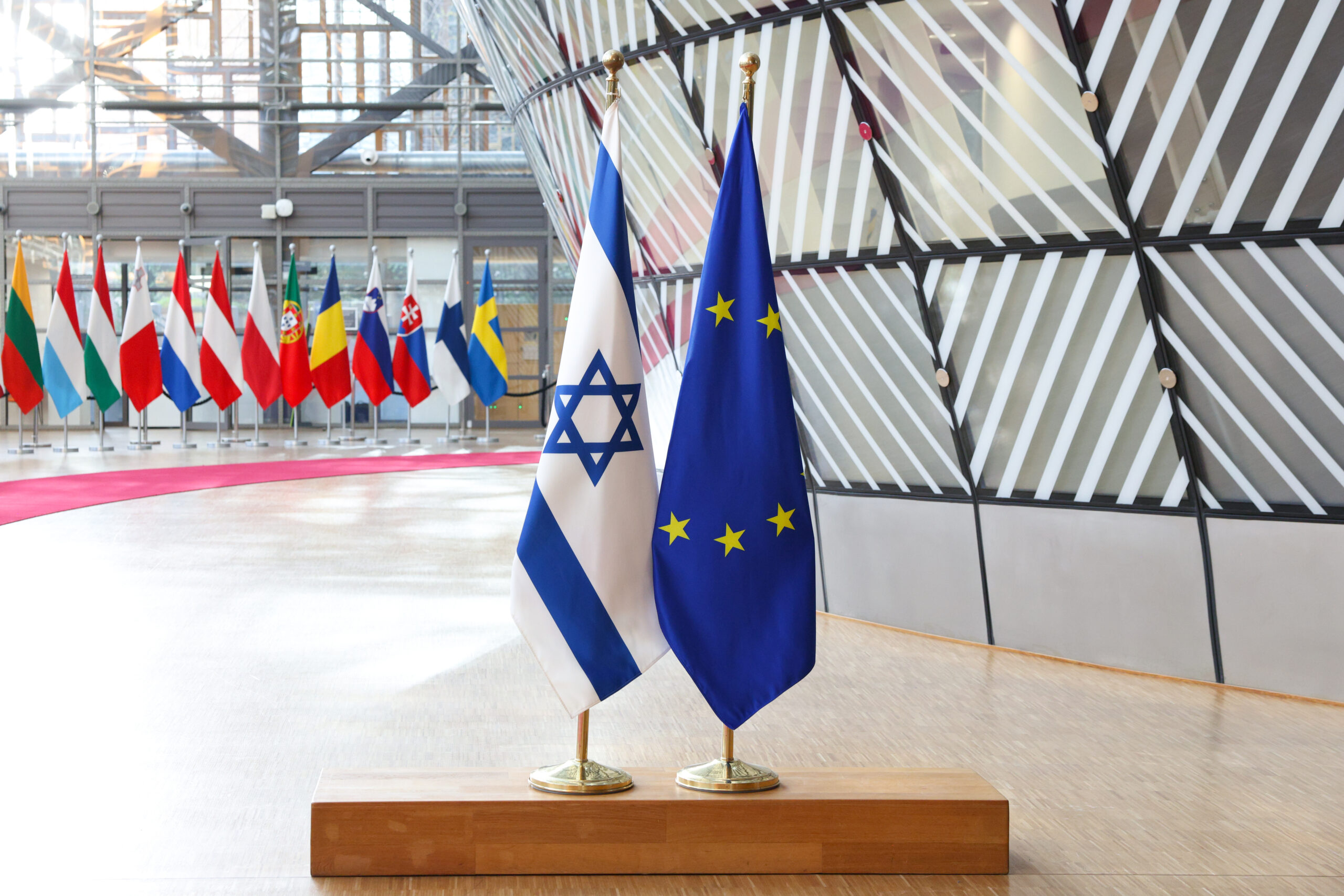
The EU expects the next Israeli government to mend its “difficult relationship” with Brussels and adopt a more constructive approach toward Gaza and illegal settlements.
Israeli President Isaac Herzog tasked Gadi Eisenkot, the leader of the anti-Netanyahu bloc, on Sunday with forming a government.
Eisenkot stated that the country faces a “catastrophic diplomatic crisis” as traditional allies begin to reassess their relations with Israel.
Speaking to Rapporteur, several European diplomats stationed in Tel Aviv said they expect ties to get back on track.
“Whatever government comes in, we can try to revitalize relations because Israel is clearly a very important partner,” one European diplomat said, adding that Brussels expects the next administration to be “less aggressive”.
The diplomat noted that relations with Europe are currently “not very good”.
Israel cut off communication with Kaja Kallas, the EU high representative for foreign affairs and security policy, after Rapporteur revealed in June that she had compared Israel to apartheid-era South Africa during a visit to Mexico.
The diplomat stated that this decision, taken ahead of elections, was political in nature. A second European diplomat based in Brussels explained that the announcement came only a few days before an official visit by Dubravka Šuica, the European commissioner for the Mediterranean.
“This could have been interpreted as a tactic to divide Europe, but Israel had asked Kallas to deny the report; she did not do so,” the second diplomat said.
Brussels has repeatedly voiced its frustration with Israel over the humanitarian crisis in Gaza and the expansion of West Bank settlements.
However, EU governments blocked almost all sanctions proposed by the European Commission.
A third diplomat said opposition parties would “almost certainly take the issue more seriously” when it comes to tackling violence by West Bank settlers:
“We see Palestinians being expelled from their homes and new illegal settlements being built in the West Bank. There is a reluctance on the part of the current government to address this issue, which causes problems in our relations.”
The new government is expected to ease pressure on Palestinians and halt construction of the E1 settlement project, a controversial plan to build settler housing in the West Bank east of Jerusalem.
“They will probably try to deal with the problem of extremist settlers in the West Bank,” the diplomat added.
On Gaza, the diplomat described the situation as “a complete nightmare”, with two million Palestinians crowded into an area that accounts for roughly 35% of the territory.
“There are not enough tents for the winter, and not enough vaccines are reaching the area despite an increase in diseases,” the diplomat said.
The European official argued that Donald Trump’s peace plan met all the conditions for Europe. Although the EU had much to offer, neither the US nor Israel appeared interested in EU involvement in the process.
“We are currently training Palestinian police in the West Bank, and if permitted, we could do the same in Gaza,” the diplomat said.
The diplomat disclosed that Israel had agreed with Šuica that Europe would finance two projects aimed at improving sewage and water infrastructure in Gaza, continuing:
“However, none of these projects has started yet because there is a serious problem with dual-use goods. Getting materials into Gaza is very difficult because the Israelis say they could be misused if they fall into the wrong hands of Hamas.”
Israel insists that Hamas must be disarmed before subsequent phases of Trump’s plan can proceed.
With disarmament unlikely to happen in the near term, the EU argues that certain measures can be carried out in parallel.
“We can begin rebuilding sanitation systems in Gaza. We can start building desalination plants. We can begin providing energy and water to Gaza,” one diplomat said.
While Brussels hopes for progress on Gaza and the West Bank, it maintains that expectations regarding the establishment of a Palestinian state need to be “managed”.
The EU continues to advocate a two-state solution, yet most leading Jewish parties oppose the creation of a Palestinian state.
The diplomat noted that the next Israeli government will likely have “a very slim majority and not much room for manoeuvre”.
There is also a “major misunderstanding” between the EU and Israel that must be addressed. According to the diplomat, Europeans fail to recognize the “psychological impact” of 7 October on Israelis.
“This event changed the country and made the two-state solution even more distant than before,” the diplomat said.
In return, some Israeli politicians believe Europe has betrayed Israel despite what they view as a fight against “Islamist terrorism”.
“Their argument is that European politicians are somewhat afraid of the Muslim population in Europe,” the European diplomat said.
Europe strongly opposes Iran and the possibility of Tehran acquiring nuclear weapons, imposing sanctions in response.
However, the diplomat argued that the EU would not participate in a war because it lacks a common army:
“We are a diplomatic and economic power, which is why we resort to sanctions and diplomacy. The expectation that we would take part in a military operation is unrealistic.”
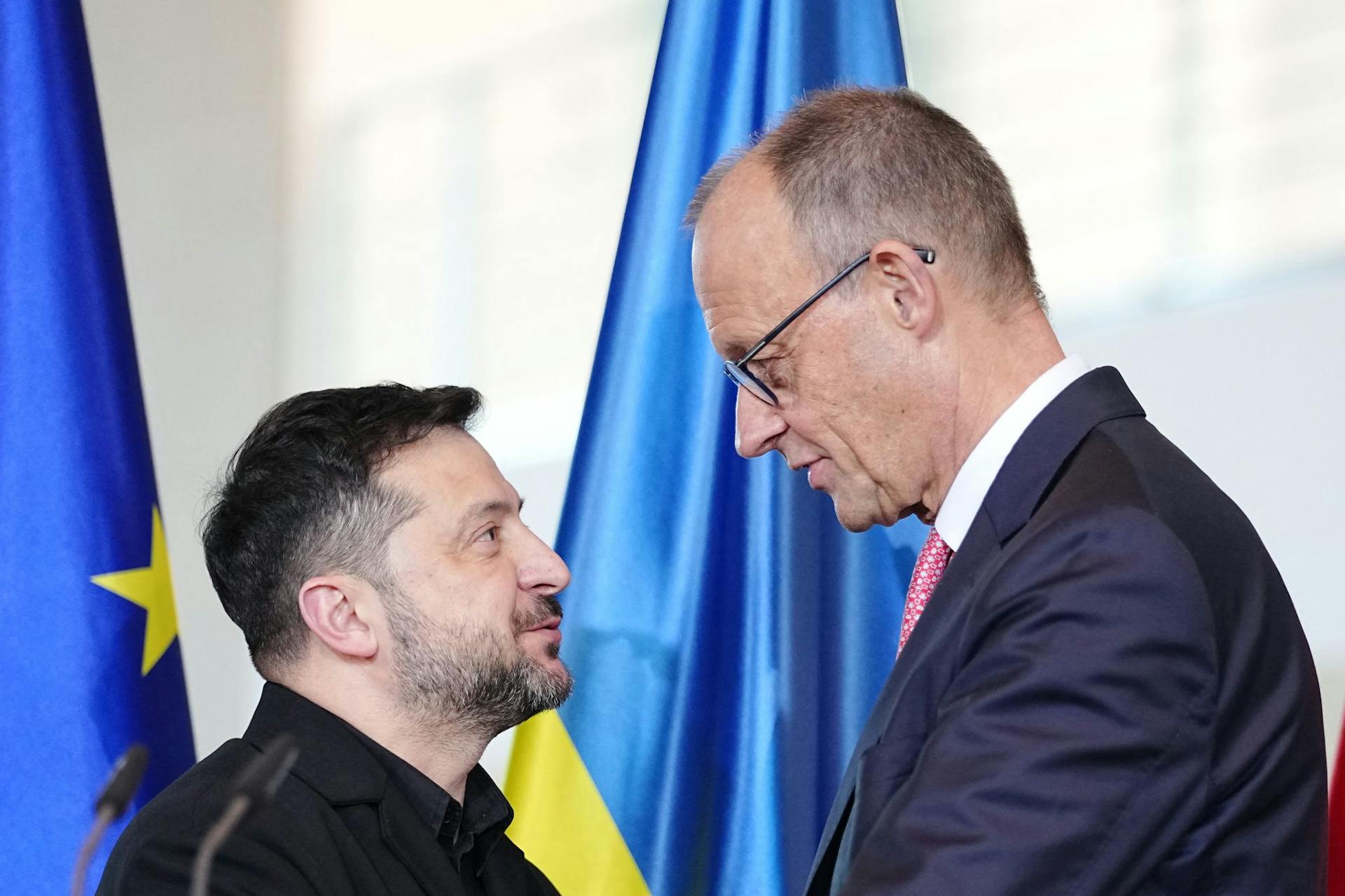
Germany has threatened to veto the European Union’s joint budget for the 2028-2034 period, which is currently under negotiation, unless every member state commits to providing financial support to Ukraine in 2027 and subsequent years, German Chancellor Friedrich Merz warned.
According to a report by the Financial Times (FT), Chancellor Merz set out Berlin’s condition for the budget talks in a letter addressed to European Council President António Costa.
In his letter, Merz wrote: “A collective commitment that every single one of us, without exception, will make a fair contribution to closing Ukraine’s budget deficit is an indispensable prerequisite for resolving this budget issue and, in particular, for addressing subsequent matters that carry financial implications.”
The German Chancellor stressed that a formula backed by all member states must be established to provide Ukraine with a reliable, multi-year financial perspective starting from 2028.
Merz also insisted that any agreed solution must cover the interest payments on debts incurred to finance the assistance provided to Kyiv.
Conversely, several countries within the bloc have cut financial aid to Ukraine, and the number of capitals adopting this stance is projected to rise next year.
In December 2025, Hungary, Slovakia, and the Czech Republic approved the EU’s 90 billion euro loan package for Kyiv only on the condition that they would not contribute to its costs themselves.
Alongside these three countries, Bulgaria has also stated that it does not plan to participate in subsequent financial assistance packages for Ukraine.
In France, far-right leader Marine Le Pen, who could potentially win the presidential election scheduled for spring 2027, recently told the FT that Paris has run out of funds.
Le Pen assessed: “The honest approach is to tell Mr Zelensky clearly, and even warn him: ‘Look, we cannot do more. We have already allocated the 90 billion euro EU loan, in which France’s share amounts to 18 billion euros. 18 billion euros is genuinely a huge amount of money.'”
The EU’s 90 billion euro loan, covering the 2026-2027 period, aims to meet two-thirds of Ukraine’s financing requirements.
Brussels expects the remaining 45 billion euros to be covered by other partners, including Canada, the UK, Norway, Japan, South Korea, and Australia.
Germany remains the largest net contributor to the EU budget.
In contrast, the four Eastern European countries seeking to avoid financing Ukraine rank among the largest net beneficiaries of the bloc’s budget.
Leveraging this balance, Chancellor Merz aims to use his influence in the EU budget negotiations to secure uninterrupted support for Kyiv in 2027 and the years beyond.
According to the FT, Berlin is also demanding that future aid packages be decided by qualified majority voting rather than unanimity, which is required under the current system.
A German government spokesperson told the newspaper:
“The issue of Ukraine’s financial needs must be resolved within the framework of the next EU budget. Financial support for Ukraine from all EU members is decisive for the successful conclusion of the budget talks.”

IRAM expert Oral Toğa assesses Middle East shifts after US vote

Netanyahu Arab party attack triggers crisis over coalition

Fico accuses Merz of blackmail over threat to veto EU budget

US Senate panel seeks records in Trump-linked crypto investigation

Europe ready for arms and missile control talks with Russia, FT says
-
 Diplomacy1 week ago
Secular dress code dispute exposes deeper Türkiye-Azerbaijan strains
-
 Russia2 weeks ago
US and Russia weigh energy deals and corporate return in peace talks
-
 Middle East2 weeks ago
US warns Gulf allies of possible Iran strikes after midterms
-
 Opinion2 weeks ago
Gaza exposes the myth of the “most moral army in the world”
-

 Europe5 days ago
EU urges citizens to prepare 72-hour survival kits for crises
-

 America2 weeks ago
Bolsonaro reportedly leaves Brazil on jet linked to scandal-hit firm
-
 Asia1 week ago
China expands Africa arms sales, displacing France and Western rivals
-
 Diplomacy2 weeks ago
Steinmeier seeks to de-escalate German-Chinese tensions on visit
