Diplomacy
Cuba slams US fuel restrictions as ‘genocidal’ escalation exceeding war conditions

The Cuban Consul General in Istanbul, Raúl Ernesto Madrigal Cárdenas, has issued a sharp rebuke of the US administration’s latest tightening of the decades-long embargo, characterizing recent fuel restrictions as an escalation that exceeds even the recognized norms of active warfare.
Speaking at an event organized by the José Martí Cuba Friendship Association and the Consulate General of the Republic of Cuba at the Nazım Hikmet Cultural Center in Kadıköy, Cárdenas asserted that a Jan 29 presidential decree has pushed the blockade into a precarious new dimension.
Addressing the humanitarian implications of Washington’s latest maneuvers, Cárdenas stated, “The step taken on Jan 29 is an intensified iteration of the blockade in place since 1961. The fundamental objective of that original policy was to orchestrate scarcity within the Cuban economy to trigger the collapse of the Cuban Revolution.”
The Consul General emphasized that sanctions targeting companies and sovereign nations engaging in trade with Cuba constitute a violation of the United Nations Charter, arguing that such measures represent a direct interference in the sovereign rights of third parties. Cárdenas further defined the systematic embargo policy maintained since 1960 as “genocidal.”
Noting that this process directly targets the development of the Cuban people and has resulted in significant loss of life and the spread of epidemic diseases, the Consul General added: “The latest move is the radicalization of this genocidal policy. Its defiance of international norms is self-evident. Existing international frameworks stipulate that such sanctions should not be applied even under conditions of war.”
Fuel supply becomes a strategic target
Cárdenas reported that efforts to obstruct the nation’s fuel procurement have effectively paralyzed healthcare, education, electricity, and daily life across the island. He dismissed US attempts to frame Cuba as a security threat as “baseless.”
Reiterating that Cuba will not succumb to external pressure, the Consul General affirmed Havana’s resolve to maintain economic and diplomatic relations with other nations based on mutual respect and shared interests.
Cárdenas concluded his remarks by calling upon the international community to reject these unilateral measures and to champion multilateralism in global affairs. Expressing gratitude to solidarity movements in Istanbul, he delivered a firm message: “Cuba will continue to exercise its sovereignty, its dignity, and its right to develop in peace.”
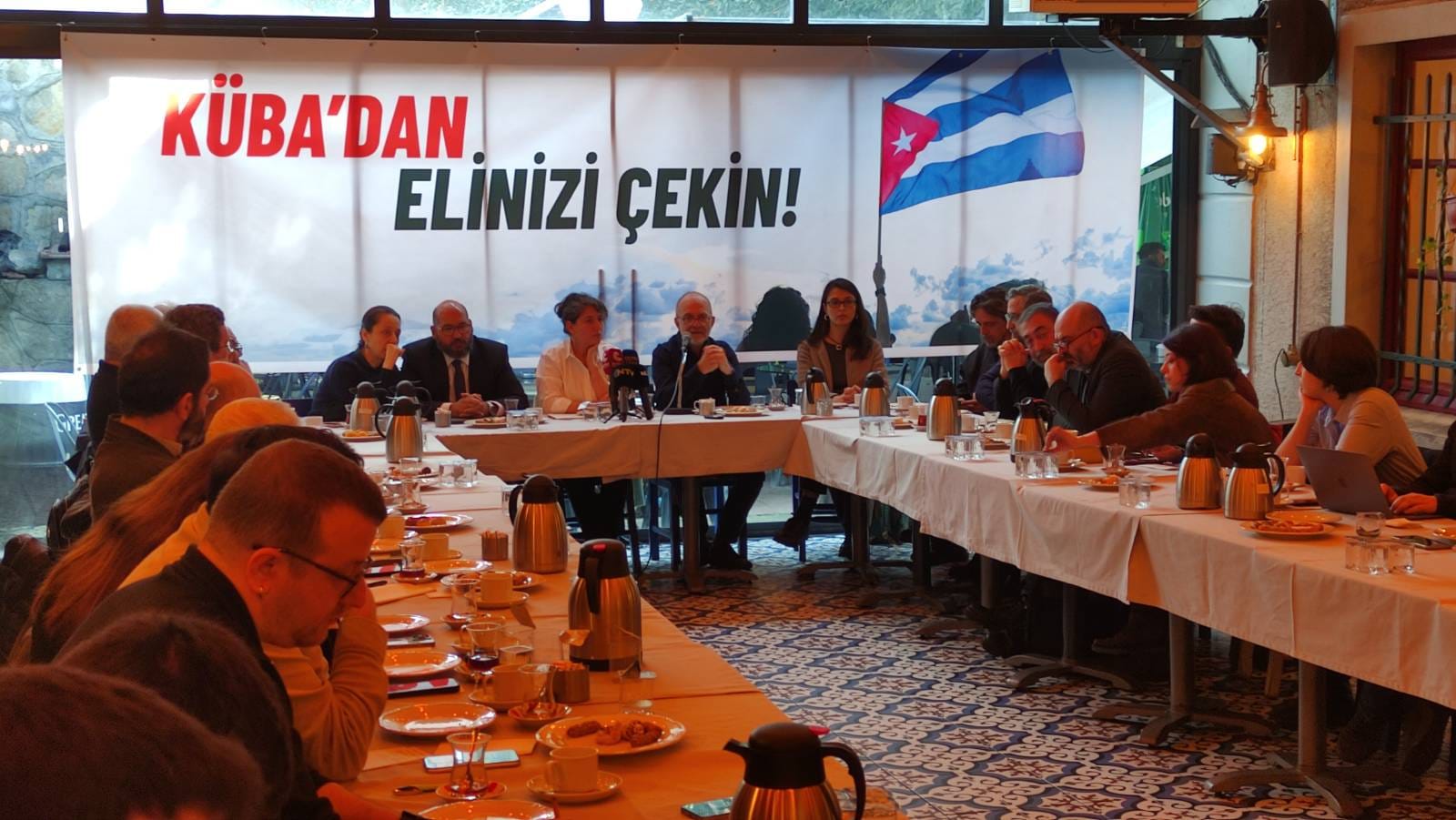

Russian support for oil shipments to Cuba
Responding to inquiries from the press, Cárdenas detailed the diplomatic efforts underway to bypass energy supply bottlenecks.
Providing insight into the Cuban Foreign Minister’s recent visit to Moscow, the Consul General noted: “During the meeting, the Russian side officially announced that it would dispatch oil to Cuba. This declaration represents the first formal announcement of a petroleum shipment following the Jan 29 decree. We hope that Russia’s overt declaration clears a path for other nations to take concrete steps.”
Aviation fuel cooperation with Mexico continues
When asked whether Mexico would supply oil despite the blockade, Cárdenas pointed to the historical depth of the relationship between the two nations.
Reminding the audience that Mexico was one of Cuba’s primary oil suppliers prior to the escalations against Venezuela, Cárdenas summarized the current status:
“While Mexico has recently dispatched vessels carrying food and essential supplies, there has not yet been a direct entry of petroleum. However, aviation fuel for aircraft flying to Cuba is being secured via Mexico. This ensures the continuity of international flights to the island. We maintain full confidence that Mexico is doing, and will continue to do, everything within its power.”
“Failed state” rhetoric does not reflect reality
Consul General Cárdenas also pushed back against reports in the Turkish media suggesting that “Cuba has gone bankrupt,” labeling such narratives as disinformation.
“No ‘failed state’ could remain standing under the weight of a blockade as severe as the one Cuba faces,” Cárdenas argued. “If the state were truly bankrupt, the landscape following the developments of the last few months would look very different. Today, schools and hospitals in Cuba remain open, and people continue to go to work.”
Asserting that state institutions remain functional, the Consul General added a rhetorical challenge: “If the Cuban state and economy were truly non-functional, they would have let it collapse on its own. The reason the blockade is being tightened so aggressively is precisely because the system continues to function despite all hardships.”
Restrictions begin in health and education sectors
Nahide Özkan, President of the José Martí Cuba Friendship Association, provided technical data on current living conditions on the island during her opening remarks.
Özkan stated that the latest US decree has transformed the blockade into a total siege, reporting that commercial vessels have been unable to deliver oil to the island since Jan 29. With Cuba’s domestic resources covering only 25% of its requirements, Özkan noted that multiple sectors have reached a standstill.
Highlighting the critical situation in the healthcare sector, Özkan said: “Restrictions and new regulations have been imposed for high-priority patients. Public institutions are only able to provide services on specific days of the week. Severe limitations are being applied to transportation, natural gas, and electricity consumption. Pregnant women, cancer patients, and those dependent on life-support systems are at serious risk due to the power outages.”
Despite these grueling conditions, Özkan noted that the Cuban government is operating according to a structured plan with public participation. She announced that the José Martí Cuba Friendship Association has launched a petition campaign aimed at generating international public pressure against US aggression, with a comprehensive solidarity package—including financial aid—to be unveiled in the coming days.
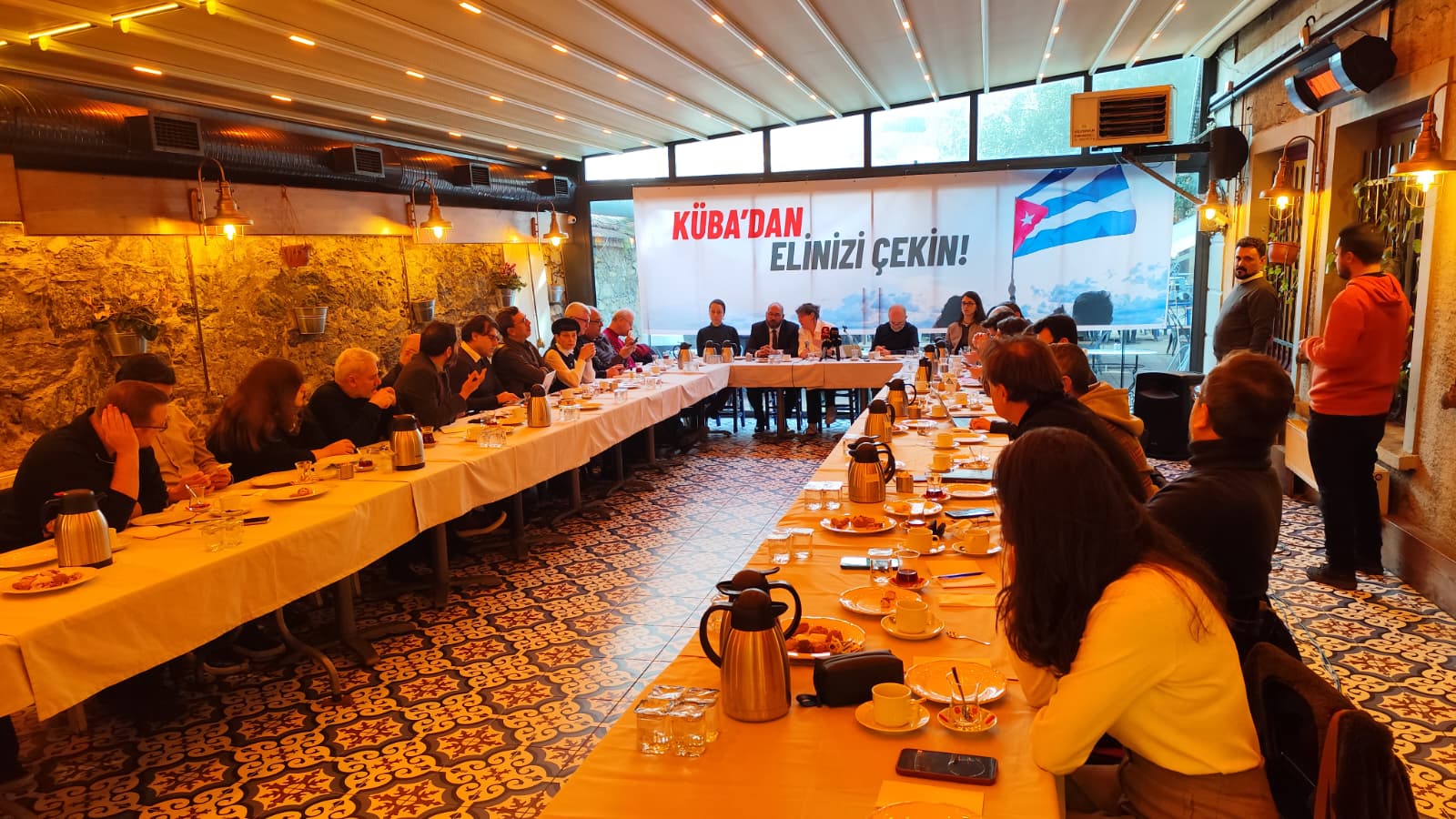

Okuyan: Information attack on Cuba is a crime against humanity
Kemal Okuyan, General Secretary of the Communist Party of Türkiye (TKP), closed the meeting by emphasizing the specific significance of solidarity with Cuba for his party.
Describing Cuba as a nation defending advanced human values and exhibiting unique resilience following the dissolution of the Soviet Union, Okuyan stated: “Cuba is a small island nation, but it is one of the few entities capable of defying US imperialism’s attempts to dictate global terms. The most critical pillar of this defiance is international solidarity.”
Okuyan argued that US attacks on Cuba are being waged not only economically but also through “information warfare,” stressing the need to amplify Cuba’s voice against CIA-led propaganda.
“A staggering number of lies are being told about Cuba,” Okuyan said. “Assisting the US in this disinformation process against a country with limited media resources is a crime against humanity.”
He noted a global effort to alleviate Cuba’s energy crisis and confirmed that the TKP would play an active role. Pointing to Cuba’s rapid moves toward solar energy, Okuyan added: “We will support this process through the work we initiate with our association. We have taken steps to bolster Cuba’s resilience and will continue to do so. We are looking beyond mere political support to see what can be done on concrete issues like the energy crisis.”
Response to Mustafa Destici’s “Cubanization” remark
Kemal Okuyan also reacted to comments by Mustafa Destici, Chairman of the Great Unity Party (BBP), who stated, “We will not allow the ‘Cubanization’ of Türkiye.”
Okuyan argued that such remarks from a party acting as an unofficial partner to the government are diplomatically risky. “They need to explain what they understand by ‘Cubanization.’ If they are referring to the human values that Cuba upholds becoming dominant in Türkiye, then that is exactly what we are working to achieve,” he said.
“Anti-imperialist struggle must unite on the axis of labor”
Evaluating broader developments in global politics, Okuyan suggested that US maneuvers are fundamentally rooted in a strategy to contain the rise of China.
The TKP General Secretary argued that the “borderless” approach of the Trump administration necessitates new methods of struggle. “It is premature to conclude that NATO is finished. Trump is attempting to establish a new type of global hegemony. However, the real issue is what these shifts mean for millions of impoverished people. The international anti-imperialist struggle cannot succeed, nor can this dangerous global trajectory be halted, without establishing a direct link to the labor struggle.”