
America
Democrats take Congress as Trump concedes midterm defeat


Anti-Trump anger came to the surface in the US midterm elections held yesterday (3 November), with Democrats capturing majorities in both chambers of Congress.
While Democrats were considered certain to win a majority in the House of Representatives, the situation was not the same in the Senate. Even so, the Senate majority also passed to the Democrats. Democrats currently appear to hold 51 seats.
With historic victories secured in Texas, Iowa, Kansas, and South Carolina, the party has now won the upper chamber.
In the House of Representatives, Democrats currently hold 189 seats, while Republicans hold 117. A total of 218 seats is needed for a majority, and Democrats are considered certain to reach that threshold.
The current composition of the House stands at 218 Republicans, one independent who caucuses with the Republicans, and 214 Democrats, with two seats vacant.
In American midterm elections, the entire House of Representatives is renewed, while one-third of the Senate seats are contested every two years.
In a telephone interview with CBS News, US President Donald Trump conceded defeat and congratulated Democrats on their victory in the midterms.
“My message is this: I congratulate the Democrats and look forward to working with you for the good of our country,” Trump said.
Stating that he plans to cooperate with the opposition party, the president said:
“I know a lot of Democrats, I have full veto power, and I am confident that we will be able to solve problems. I think they will want to work with me. Otherwise, I will veto everything, and they would not want that.”
The president insisted that the reason so many Republicans lost was that his own name was not on the ballot.
“I feel that I wasn’t on the ballot, and there was nothing that could be done about that. If I had been, we would have won,” Trump said.
Explaining the Republican losses, the president added:
“In some cases, they didn’t like the candidates; in other cases, those candidates weren’t friends of mine, and the base knows that better than anyone. And they didn’t give their support. In their hands… I mean, if I had been on the ballot, we would have won easily, so it’s sad in that respect. But I wasn’t on the list.”
Asked whether he felt upset, he said he had “done his best” and “left everything on the field”:
“I tried to help people get elected, but they couldn’t get elected, they couldn’t get elected. The public didn’t turn out to the polls the way they should have. If I had been a candidate, they would have turned out. But they didn’t. It’s just one of those things, you know? This is a temporary situation. It has happened many times before.”
The president also said the war in Iran would “basically be over when I say it’s over.”
Thirty-five Senate seats were contested in Tuesday’s midterms. According to CBS News projections, Democrats succeeded in picking up the four seats required to take control of the Senate, aided by three major upset victories in Texas, South Carolina, and Kansas, alongside seats won in Ohio and North Carolina. The party also held its seats in Georgia and New Hampshire.
“All the money in the world cannot stand against the people of Texas,” James Talarico told supporters at an election watch party in Austin.
“We have sent a message to every billionaire megadonor, every trillionaire megadonor in this state and across this country, and to every corrupt defender of this broken political system: power belongs to the people. To the richest man in the world, the most powerful man in the world, and the entire Washington establishment. The people of Texas were my slingshot, and tonight we defeated Goliath.”
Victory in the Senate will grant Democrats additional oversight powers, giving them a far greater say over administration and judicial appointments.
They will also set the Senate’s legislative agenda and possess new authority to summon administration officials to hearings.
The Democrats’ string of victories paves the way for Senator Chuck Schumer to return as majority leader in 2027 and sets up tough negotiations with Trump across a range of issues, including federal spending levels.
This significantly curtails Trump’s legislative authority and his ability to reshape the federal court system.
However, Democrats will still need to negotiate with the White House to secure their own legislative achievements.
Democrats needed to gain at least four seats to win a Senate majority. Yet this had appeared to be a difficult goal, given that most of the contested Republican-held seats were in states Trump had carried comfortably.
Nevertheless, high petrol prices driven by the war in Iran and broader economic concerns provided Democrats with ammunition to attack Trump and the Republicans.
Senate Democrats picked up the first seat of the night in North Carolina, where former Democratic Governor Roy Cooper defeated former Republican National Committee Chairman Michael Whatley.
Democrats secured their next major victory of election night when paediatrician Annie Andrews was projected to defeat Senator Darline Graham, who had been appointed to the seat in July following the sudden death of her brother, longtime incumbent Senator Lindsey Graham.
Another critical early result for Democrats came from Texas. There, Democratic State Representative James Talarico comfortably defeated State Attorney General Ken Paxton, whom Trump had controversially endorsed over Senator John Cornyn in the Republican Senate primary.
Trump also initiated a trade war that drove up prices, including against Canada, one of America’s oldest allies. This became an issue across numerous states, including those along the extensive Canadian border.
Democrats prevailed in border states such as Maine and Iowa, while Kansas elected a Democratic senator for the first time since the Great Depression.
At the same time, Kansas overwhelmingly passed a referendum measure requiring citizenship in order to vote.
Despite the Republican collapse, conservative ballot measures passed across the country in both blue (Democratic) and red (Republican) states. Consequently, while “Trumpist” tendencies endure, the overall results appear to be a decisive rejection of Trump.



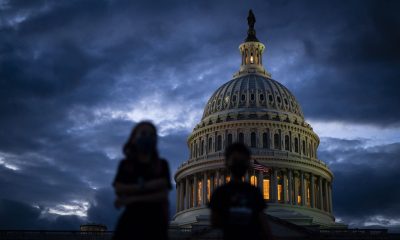






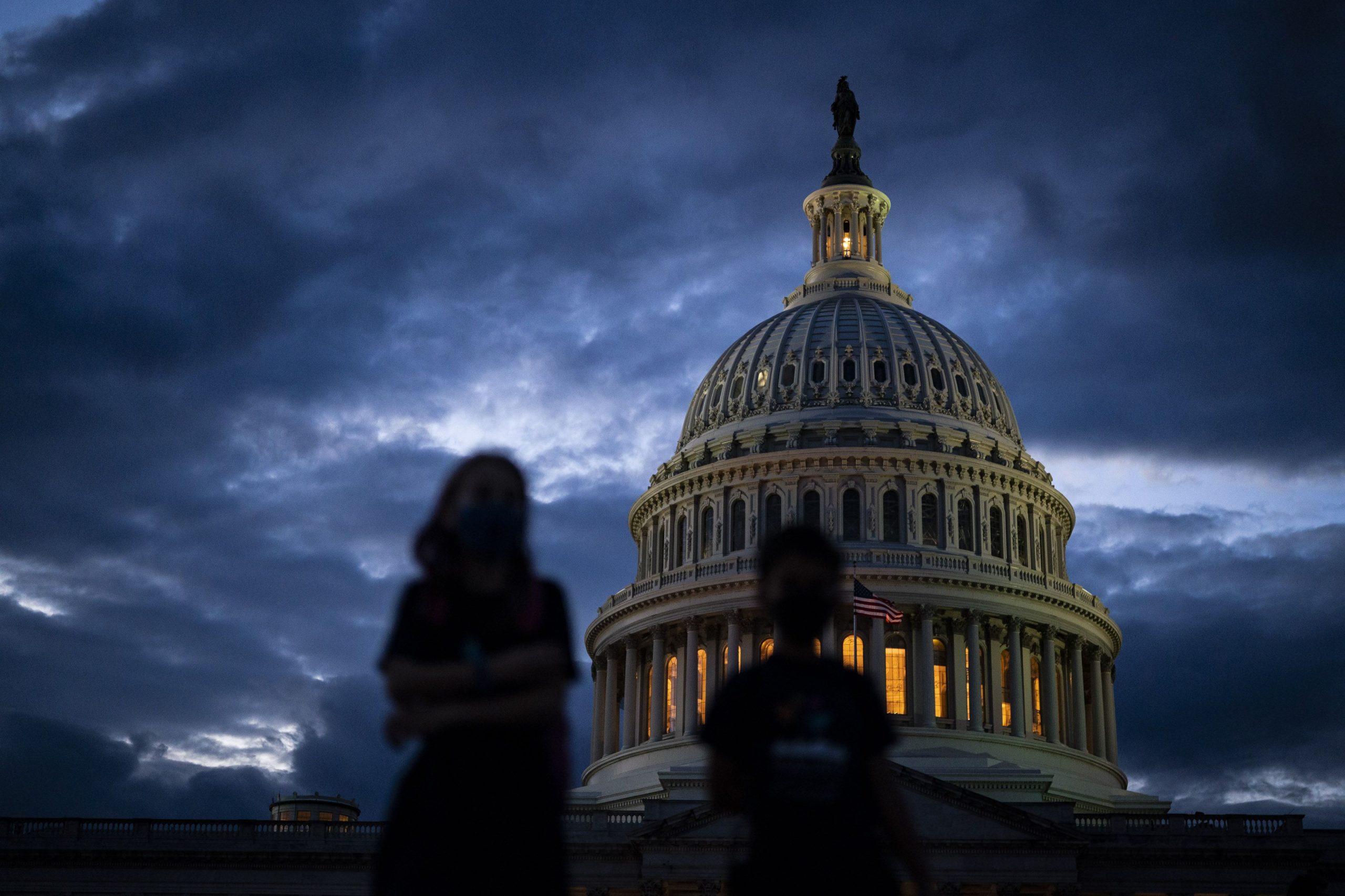
Democrats in the US have secured at least 258 seats in the 435-member House of Representatives, reaching their largest majority since 1992.
According to a report by the Associated Press (AP), Democrats have gained 44 seats so far, surpassing the 40-seat advance they achieved during the 2018 midterm elections in President Donald Trump’s first term.
Democrats reached the 258-seat threshold on Sunday after Democratic challenger Chuck Hubbard defeated Republican Representative Virginia Foxx in North Carolina.
Races remain uncalled in Minnesota and Tennessee, with one seat outstanding in each state, while two contests in Louisiana will head to a December runoff.
Republicans will hold a minority of at least 173 seats.
When Democrats take control of both the House of Representatives and the 100-member Senate in January, a divided government will emerge alongside a Republican president in the White House.
Senate Democrats secured 56 seats, achieving their widest margin in more than a decade.
This House majority matches or exceeds the 258 seats won when Bill Clinton was first elected president in 1992 and the 257 seats secured in Barack Obama’s 2008 victory, though it remains below the record of more than 300 seats held during Franklin D. Roosevelt’s presidency.
As AP reported, voter dissatisfaction with Trump, driven by high prices, anger over the war in Iran, and concerns about corruption, carried Democrats to victory across a broad geography ranging from Republican strongholds to the Midwest and the East Coast.
Democrats prepare 100-day agenda
Under a 100-day agenda drawn up to address the cost of living, Democrats plan rapid votes to reverse Republican cuts to Medicaid and restore expired tax credits under the Affordable Care Act.
Seeking to check presidential authority over the remainder of Trump’s second term, Democrats pledged to open numerous investigations using congressional subpoena power.
These initiatives include examining how Trump and his family acquired wealth following his return to office, while New York Democratic leader Hakeem Jeffries, the leading contender for House speaker, did not rule out an attempt to impeach Trump for a third time.
The White House warned Democrats over the planned oversight of the administration, asserting that these congressional inquiries, though a standard supervisory function, could “clearly constitute a crime”.
“Of course we should feel pressure,” said Representative Jason Crow, a Colorado Democrat and former US Army Ranger.
Speaking at the Capitol earlier this month, Crow said, referring to US Immigration and Customs Enforcement (ICE): “People in this country are dying, losing their health insurance, losing their livelihoods, losing their farms, and being terrorized by ICE.”
Crow continued: “If you do not feel a sense of urgency and pressure in this job, a commitment to deliver results for people, you do not belong under this Capitol dome.”
Representative Alexandria Ocasio-Cortez, a New York Democrat and prominent progressive voice, said at the Capitol: “This is a historic moment for our country. It is one of the largest classes we have seen.”
Ocasio-Cortez characterized the decisive seat total as a “mandate for change”.
Representative Tom Suozzi, a centrist New York Democrat and accountant by profession, said Democrats must dedicate 75% of their time to the cost of living and 25% to accountability.
“Everything has to come back to the people and how it affects them,” Suozzi said.
Emphasizing that inquiries into Trump’s financial dealings must make the same connection, Suozzi asked: “How does this affect people’s pocketbooks?”
New leadership prepares to take office with wide maneuvering room
Unlike Republican House Speaker Mike Johnson of Louisiana, who struggled to govern over the past two years with a single-digit margin that allowed small groups of Republican lawmakers to stall the legislative agenda, the incoming Democratic leadership will enjoy substantial maneuvering room.
If elected by his colleagues on 3 January 2027 as the first Black speaker of the House in US history, Jeffries could still reach the 218 votes required to pass legislation even if dozens of Democrats break ranks on any given roll call amid unified Republican opposition.
Representative Troy Carter, a Louisiana Democrat expected to lead the Congressional Black Caucus, said: “We are not a monolith. People come to the table with different ideas, and that’s okay.”
The Republican House seat total fell to one of its lowest levels in decades.
The party remains far below the 247 seats it won in the 2014 midterms late in the Obama administration, the 230 seats taken during Newt Gingrich’s 1994 wave, and its historical high of 301 seats in 1920.
Representative Jim Jordan of Ohio, elected by his peers as Republican minority leader, vowed to fight to regain power.
“For the next two years, House Republicans will fight for American families,” Jordan said.

The US Congress is closing in on a deal that would ban Chinese-origin cars from entering the US.
Sources speaking to Bloomberg said that Republicans and Democrats from car-making states behind the initiative aim to deliver a bill to President Donald Trump’s desk by the end of the year.
If the law takes effect, the lucrative US car market will be closed to car makers such as BYD and Geely, which have been rapidly gaining market share across Europe and South America with their low-cost, tech-packed electric vehicles.
Chinese cars are already effectively excluded from the US market due to high tariffs imposed by the Department of Commerce and restrictions on Chinese vehicle technology.
Enacting a statutory ban would take these measures a step further to address mounting concerns that the Chinese automotive industry poses “national and economic security threats”.
Details of the measure are still being worked out. According to the sources, Republican Senator Bernie Moreno briefed automotive manufacturer representatives on amendments under consideration to earlier legislation aimed at barring Chinese-origin connected vehicles from entering the US.
These amendments include provisions that would shield Mercedes from a complete ban.
According to the sources, car company representatives generally supported the initiative Moreno outlined, but a Mercedes official expressed reservations, and negotiations remain ongoing.
Sources noted that the bill’s backers are working to pass the measure before the new congressional term begins in January.
In a statement, Mercedes said: “We continue to talk with all stakeholders who share a common interest in seeing this important legislation become law during this session of Congress.”
A bill introduced by a Senate committee earlier this year would have prohibited manufacturers more than 15% owned by Chinese entities from selling vehicles equipped with technology capable of transmitting data.
Mercedes, which has lobbied for changes to this bill, is roughly 10% owned by Chinese state-owned car maker BAIC.
Li Shu Fu, the billionaire founder of Chinese car manufacturer Geely, also owns about 10% of Mercedes shares.
This puts the company above the 15% threshold set in the previous bill.
A source familiar with the talks, speaking on condition of anonymity, said members of Congress were in discussions with multiple parties, including Mercedes, and were optimistic that a deal could be reached this week.
Provisions under discussion include more flexible rules for firms with non-voting, passive shareholdings, as well as how such an approach would be structured and verified.
Republican Senator Katie Britt of Alabama, a key manufacturing hub for Mercedes sport utility vehicles (SUVs), said she was working on the bill with Moreno and expressed confidence that both Mercedes and Alabama would be protected:
“We understand that some adjustments need to be made, but we are confident that Mercedes can continue to thrive in our state and across the nation.”
Banning Chinese-origin cars would also contrast with the more flexible approach adopted by Europe and Canada.
Chinese car manufacturers have gained market share rapidly, particularly in Europe, triggering intense competition with domestic brands.
After Chinese car makers accelerated their market share gains in Europe, the EU began to push back, signing an agreement with China last month to limit imports of hybrid vehicles into the bloc.
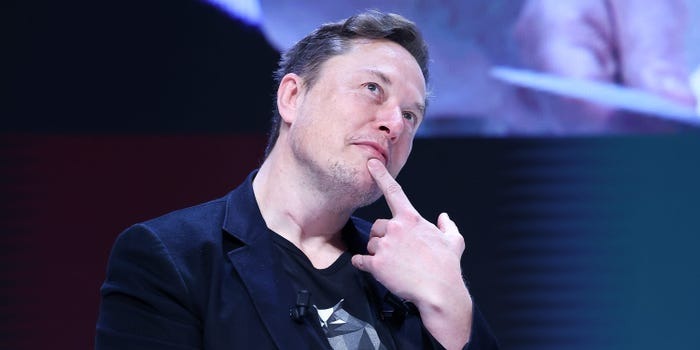
Tesla CEO Elon Musk has said he feels “pretty stupid” for spending $442 million on Republican campaigns after the party suffered heavy losses to Democrats in the 2026 midterm elections.
Speaking remotely at the DealBook Summit in an interview with New York Times columnist Andrew Ross Sorkin, Musk, the world’s richest person, stated that his primary objective had been to help Republicans maintain control of the Senate.
However, Democrats secured the majority, with Democratic candidate Mary Peltola winning the Alaska Senate race to bring the seat distribution to 56 for Democrats against 44 for Republicans.
“I feel pretty stupid spending that much money and not seeing much return on it,” Musk told Sorkin.
Musk added that the outcome could have been far worse without his spending, but noted: “It certainly shows that American elections are not just about money.”
Musk continued: “Clearly you can spend a ton of money on an election and have relatively little impact, which I think was the case here.”
Saying he would spend less if he could turn back the clock, Musk remarked that he did not have much personal interest in the elections because he was focused on growing SpaceX and Tesla.
Musk describes himself as “ideologically moderate”
Musk stated that heading into 2029, he wanted Republicans to control at least one of the House of Representatives, the Senate, or the White House, while wishing that neither Democrats nor Republicans attain a “supermajority”.
“I think we want to have checks and balances here,” Musk said, emphasising that this was his sole motivation.
Describing himself as “ideologically pretty moderate”, Musk said: “I do not think I like any extreme political views.”
Noting during the interview that he was “not MAGA” and was unsure what the term strictly meant, Musk added: “If it means blind adherence to a set of Republican Party policies, I certainly do not have that.”
Rapprochement with Trump and the DOGE era left behind
Musk had previously forged a close relationship with President Trump ahead of the 2024 presidential election, subsequently being appointed to lead the now-defunct Department of Government Efficiency (DOGE).
The pair’s working dynamic led some critics to allege they were operating a “co-presidency”.
However, following a disagreement between the two men, Musk stepped down from his post to focus on his companies, and DOGE closed in July upon the expiration of its mandate under an executive order.
Musk had described himself as “dark gothic MAGA” at an October 2024 Trump rally held at Madison Square Garden.
Critics claimed the font on the black MAGA cap he wore at that rally resembled the Fraktur typeface used by the Nazis during their rule in Germany, though experts later debunked the allegation.
Musk has also backed other right-wing political parties around the world.
In January 2025, he attended a rally of the far-right Alternative for Germany (AfD) party online.
Georgetown University researchers noted that the AfD’s sweeping victory in the German state of Saxony-Anhalt last month raised the possibility of “the first far-right state government in Germany since the Nazi era”.

Politico weighs five scenarios for future Russia-Europe security talks

Jared Kushner warns Israel risks becoming a “global pariah”

Gulf states spend at least $6.7 billion extra on subsidies

Ukraine expands maritime strikes against Russian ships to three seas

Qatar pledges 15 billion euros in investment to Germany
-

 Opinion7 days ago
APEC Summit: How China Uses the Art of “Emotional Value” to Deal with Trump
-

 America2 weeks ago
Absent Democrats derail floor vote on Pete Hegseth impeachment
-

 Europe2 weeks ago
Germany threatens EU budget veto over long-term Ukraine aid
-

 Middle East2 weeks ago
Journalist Dursunoğlu warns Iran removed missile limits as Gulf risks widen
-
 America2 weeks ago
Blue tsunami and Iran conflict expose deep US cracks, Dr. Tuğtan says
-

 Russia2 weeks ago
Europe ready for arms and missile control talks with Russia, FT says
-

 Europe2 weeks ago
Fico accuses Merz of blackmail over threat to veto EU budget
-

 Russia2 weeks ago
US raises NATO-style guarantees for Kyiv ahead of Abu Dhabi talks
