
Europe
EU launches OceanEye alliance to challenge US dominance in ocean data

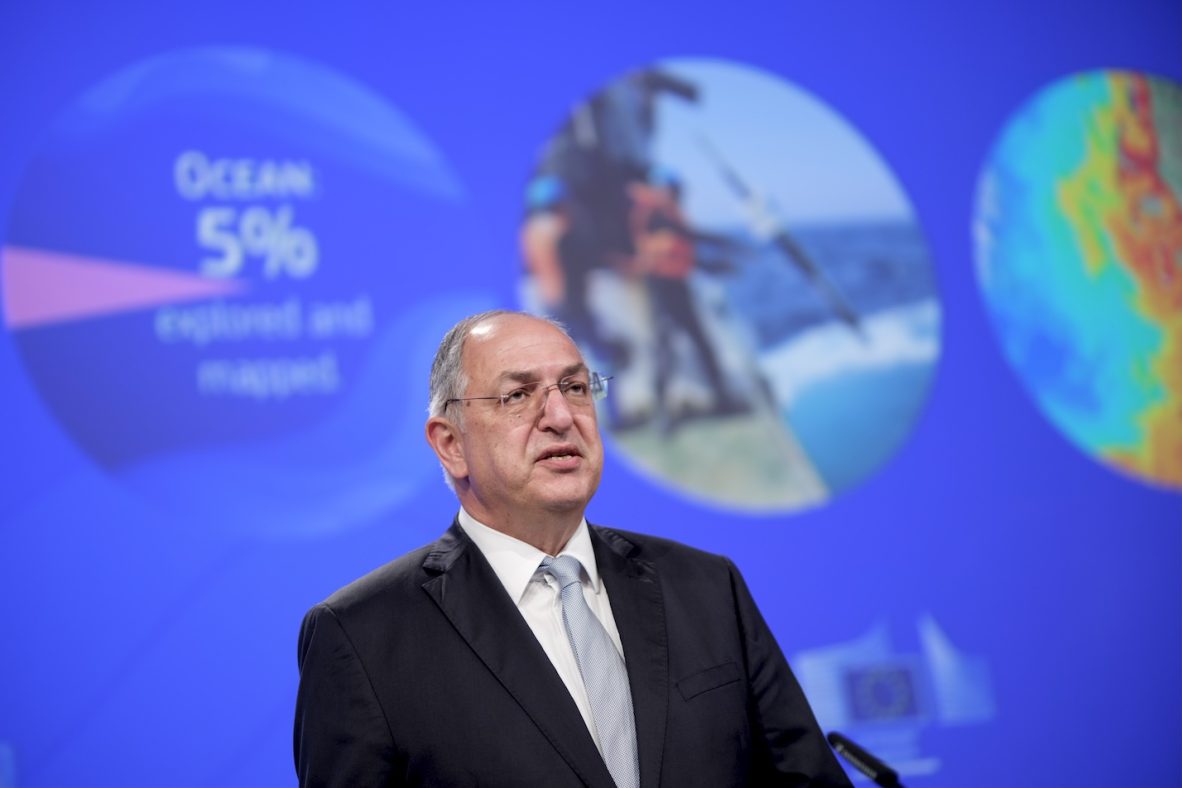
The European Commission aims to step into the role of the world’s leading ocean monitoring body by bringing together international partners.
Shaken in June by the US administration’s announcement of a $368 million (€322 million) cut to ocean monitoring funds, Brussels has been working intensively to raise funds and recruit allies to fill the void.
At the UN General Assembly in New York, EU Commissioner for Fisheries and Oceans Costas Kadis said, “Today, more than 30 countries from across the world joined the global OceanEye Alliance.”
European Commission President Ursula von der Leyen urged the bloc to “expand our network of supporters even further.”
Willem de Moore, deputy director of the marine research network JPI Oceans, explained: “For decades, global ocean observation has relied largely on US funding and infrastructure.”
What NATO represents for defence, the US ocean data tracking effort represents for research.
With Washington pulling back, researchers fear that crucial data series could be lost.
“Long-term records, such as ocean temperature and ocean carbon absorption, are invaluable for understanding how our climate is changing,” De Moore said.
Von der Leyen said the bloc’s new “moonshot” OceanEye plan, devised in response to the US withdrawal, could “make us the leading ocean data provider within a few years.”
The president added that Brussels would provide an additional €100 million. Alongside other contributors, with Canada providing the largest share at €51 million over five years, the first formal funding round raised approximately €211 million.
Combined with the initial €92 million in funding provided by Europe, this sum comes very close to closing the gap left by the US.
Canadian Prime Minister Mark Carney said, “The ocean we share cannot be understood or protected by one country alone.”
These funds will be used to finance the Global Ocean Observing System (GOOS), an ongoing programme that coordinates the long-term monitoring of the state of the world’s oceans. Brussels aims to supply 35% of the UN’s ocean monitoring systems by 2035.
The initiative is also supported by practical considerations, as Europe, the world’s fastest-warming continent, needs pristine oceans more than others do.
“The ocean is so important; it is the main regulator of the climate,” Kadis said.
While Von der Leyen pointed to the ability of ocean monitoring buoys to forecast hurricanes and storms hitting European coastlines, researchers say networks like the Argo array, comprising thousands of buoys, can achieve far more.
“El Nino develops as a result of interactions between the tropical Pacific Ocean and the atmosphere. Ocean observations are vital to track the development of this phenomenon and to help predict its effects on weather patterns worldwide,” De Moore said.
This climate phenomenon appears poised to strike Europe with an intensity unseen in a thousand years.
Specifically, as Canada ratified the UN high seas treaty, Carney pledged that the country would double its contribution to the Argo programme.







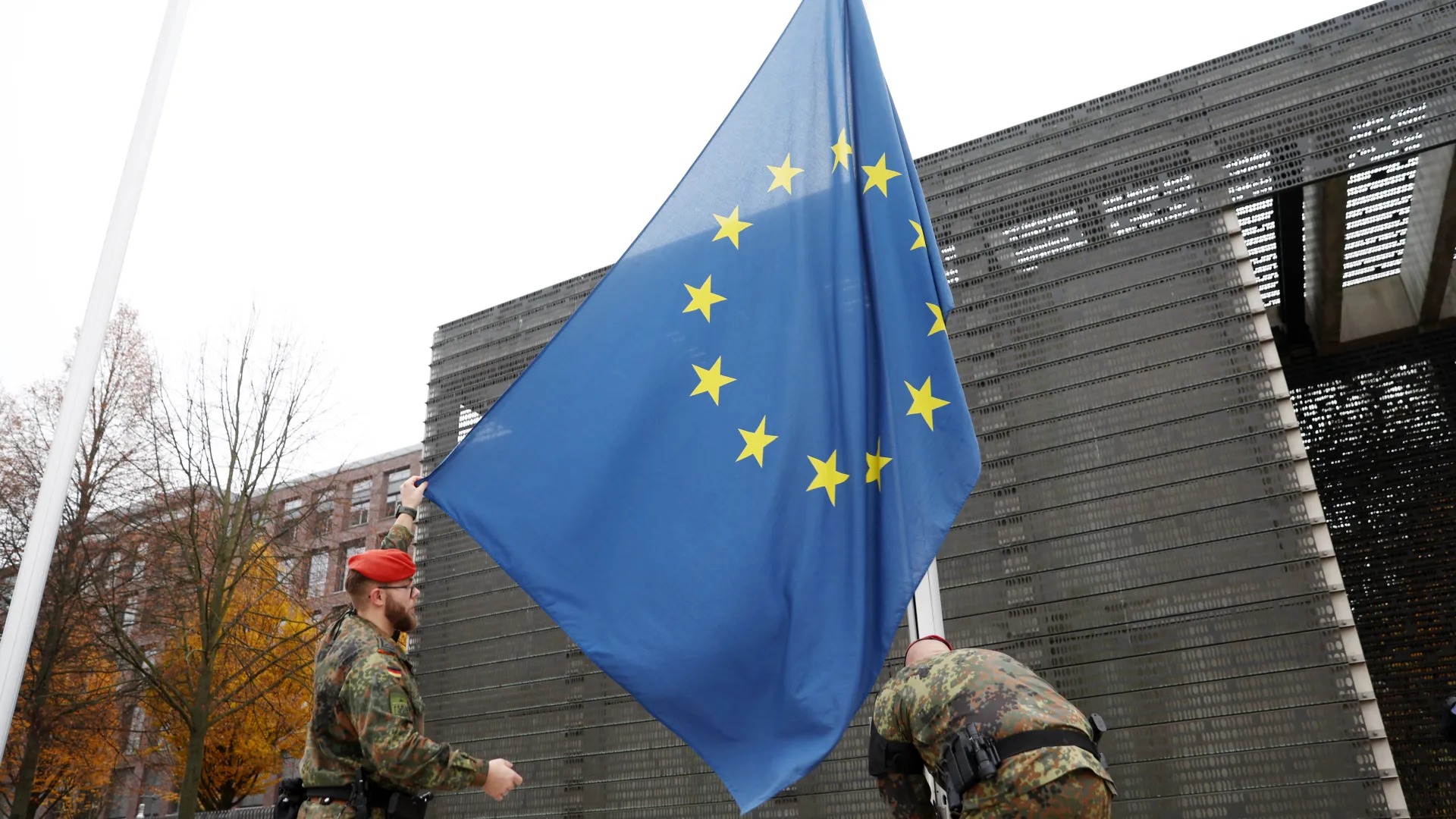
Politico has assessed five potential scenarios for reshaping Europe’s security architecture, alongside the feasibility of each option.
While the US and Russia are encouraging European states to review the continent’s security framework, European officials have set out their red lines for negotiations.
Citing former and current European officials, experts and NATO diplomats, the report states that Europe opposes holding talks without European participation, making unilateral decisions on Ukraine’s NATO membership, or concluding new agreements before the conflict in Ukraine ends.
The five scenarios outlined by Politico are expanding the role of the Organization for Security and Co-operation in Europe (OSCE), reviving the NATO-Russia Council, signing a new security treaty, establishing a new format for relations between the European Union (EU) and Russia, and leaving the existing structure unchanged.
Sources quoted in the report view maintaining the status quo as the most likely of the five options.
Expanding the OSCE’s role
The first scenario envisages expanding the functions of the OSCE, one of the few European security bodies of which Russia remains a member.
Speaking to Politico, OSCE Secretary General Feridun Sinirlioğlu said full use should be made of the platform to sustain dialogue, restore transparency, reduce risks and manage tensions.
Sinirlioğlu noted that the OSCE remains the core forum for rebuilding a more stable and predictable security architecture in Europe.
However, Sven Biscop, director of the Europe in the World Programme at the Egmont Institute, pointed to weaknesses in this option, citing the 57-member body’s unwieldy size and its consensus-based decision-making requirement.
Under the provisions of the Vienna Document, OSCE participating states are required to notify other members at least 42 days in advance of military activities involving 9,000 or more troops.
Debate over the NATO-Russia Council
The second scenario, reviving the NATO-Russia Council, is backed by US presidential son-in-law and negotiator Jared Kushner.
Speaking at a press conference following a meeting of the “coalition of the willing”, Kushner said: “We already have an infrastructure in Europe like the NATO-Russia Council that we could activate. I think it will be important in terms of generating decisions.”
NATO Secretary General Mark Rutte previously declared the format “dead”, referring to a council that last met a month before military action began in Ukraine.
A NATO diplomat and an alliance official said a channel of communication with Russia’s military leadership remains open, though the line is rarely used.
Two NATO diplomats believe reactivating the council after a peace agreement is signed could help prevent an escalation of tensions.
Established in 2002 as a mechanism for consultation and cooperation, the NATO-Russia Council aimed to forge common positions on core issues and, over the long term, elevate relations to a higher level with the potential for full membership.
The council has not convened since February 2022. Russian Foreign Minister Sergey Lavrov previously attributed the effective halt in dialogue in 2019 to NATO prioritizing the “Ukraine issue” and Russia’s refusal to discuss the subject within that format.
Deputy Chairman of Russia’s Security Council Dmitry Medvedev argued late last year that NATO had made the right decision in dismantling the council, saying, “NATO is our enemy. What council can we even talk about?” and quoting writer Maxim Gorky’s line: “If the enemy does not surrender, he is destroyed.”
Proposals for a new security treaty and bilateral pacts
The third scenario, a comprehensive European security treaty, is expected to face the fiercest resistance from Ukraine’s allies.
Biscop said a new treaty would allow current dynamics to be taken into account, including Finland and Sweden’s NATO membership, Ukraine’s goal of joining the EU, and emerging military risks linked to artificial intelligence.
“The geopolitical environment has changed. Therefore, you cannot simply pick up where you left off; you have to renegotiate,” Biscop said.
Amid prevailing concern in Europe that such an agreement would grant Russia excessive sway over the continent’s security architecture, German Foreign Minister Johann Wadephul said last week: “There is no reason to question existing alliances. We will not discuss such issues.”
Russia’s proposal to conclude separate agreements with individual NATO countries is viewed in Europe as even more unacceptable.
Speaking at the International Forum on Ensuring Collective Security in November, Alexey Drobinin, director of the Russian Foreign Ministry’s Foreign Policy Planning Department, suggested that NATO members could agree on bilateral security guarantees with Russia.
Drobinin said such arrangements could take the form of mutual non-aggression pacts, evolve into de facto defence alliances modelled on the Collective Security Treaty Organization or Russia’s treaties with Belarus and North Korea, or consist of political understandings in which neither side supports the other’s rivals in the event of an attack.
A NATO diplomat described the proposal as “completely unacceptable”, saying the option would give Moscow an opportunity to sow division among allies.
Conversely, Moscow rejects a US proposal to offer Ukraine NATO-style security guarantees.
Russian Deputy Foreign Minister Sergey Ryabkov said: “Finding a formula akin to semi-membership in NATO for Kyiv and seeking a creative solution in this area is an unacceptable option for us.”
A new EU format and preserving the status quo
Regarding the fourth scenario, creating a new format for EU-Russia relations, an EU diplomat noted that the bloc’s powers over trade, sanctions, visas and borders provide leverage and flexibility against Moscow in the postwar period, though its authority in security matters remains limited.
“As long as this format is perceived as replacing Europe’s existing security architecture, it cannot hold. It must be presented as a complement to the existing architecture,” the diplomat said.
Brussels insists that substantive discussions on the European security system can begin only after a ceasefire is achieved in Ukraine.
The fifth option, identified as the most likely scenario, is making no changes to the existing structure.
Noting that there is only one EU and one NATO, neither of which Russia can join, Biscop said: “Geopolitically, this means Russia is now Europe’s neighbour. We will never build a security architecture that allows us to make joint decisions.”
“This is not the best scenario, and the situation will be highly unstable,” Biscop added. “However, given Russia’s unrealistic demands, things are likely to end up precisely at this point.”
Authorities in Sweden and Italy have found that individuals “linked to Russia” and members of the Italian mafia used the financial application Revolut to conceal proceeds of crime.
According to a Financial Times report citing a source and data obtained by the newspaper, Swedish financial intelligence examined 2.9 billion Swedish kronor (259 million euros) in suspicious transactions.
Intelligence data recorded that these transactions were conducted by “individuals linked to Russia” for the purpose of “money laundering, particularly converting criminal proceeds into cryptocurrency and transferring them abroad.”
The newspaper reported that Revolut had become one of the most common channels for moving money out of Sweden, primarily to Lithuania and Ireland.
Manuel Ferrer, head of the Swedish police’s financial intelligence unit, told the FT: “It is likely that neobanks like Revolut are being used systematically as vehicles to move proceeds of crime.”
Ferrer said that rapid remote onboarding, international payments, and the ability to convert money into cryptocurrency heightened money laundering risks, therefore requiring appropriate oversight.
Milan court places Revolut under judicial administration
In Italy, the Court of Milan placed Revolut’s operations in the country under judicial administration for one year, citing “serious deficiencies” in anti-money laundering controls.
According to the court decision reviewed by Reuters, inadequate supervision allowed 24 individuals, who were under investigation or convicted of various crimes, to conceal 41.9 million euros in financial flows between 2021 and 2026.
Reuters reported that while other banks filed 265 suspicious transaction reports regarding these individuals during the same period, Revolut Bank UAB did not submit a single report.
Revolut announced that it accepted the court ruling and expressed readiness to cooperate with Italian authorities.
The company emphasised that it continually invests in strengthening controls against financial crime.
A source familiar with the matter told the FT that the European Anti-Money Laundering Authority (AMLA) began monitoring the situation at Revolut following notification from Italian authorities.
Revolut ranks first in UK complaints
In the UK, where it is headquartered, Revolut ranked first for the third consecutive time in the number of fraud complaints submitted to the financial ombudsman.
Data obtained by the newspaper showed that customers submitted 5,076 fraud complaints in 2025, a figure that surpassed all other financial institutions.
The FT noted that Revolut could also top the list of banks by complaint numbers at the end of 2026.
The UK Financial Conduct Authority called on Revolut and other firms receiving high numbers of complaints to increase controls.
Bank of Lithuania imposes 3.5 million euro fine
Objections to Revolut’s procedures had previously emerged in Lithuania, where the group’s European structure is based.
The Bank of Lithuania fined Revolut Bank 3.5 million euros in April 2025 due to anti-money laundering deficiencies.
According to earlier FT reporting, the Bank of England had also delayed granting a banking licence to Revolut over concerns that risk management had not kept pace with growth in international operations.
Revolut CEO Nikolay Storonsky stated in April that an initial public offering for the company could occur in 2028 at the earliest.
Storonsky explained that trust is particularly important for a bank, and that publicly traded companies enjoy greater trust than private firms.
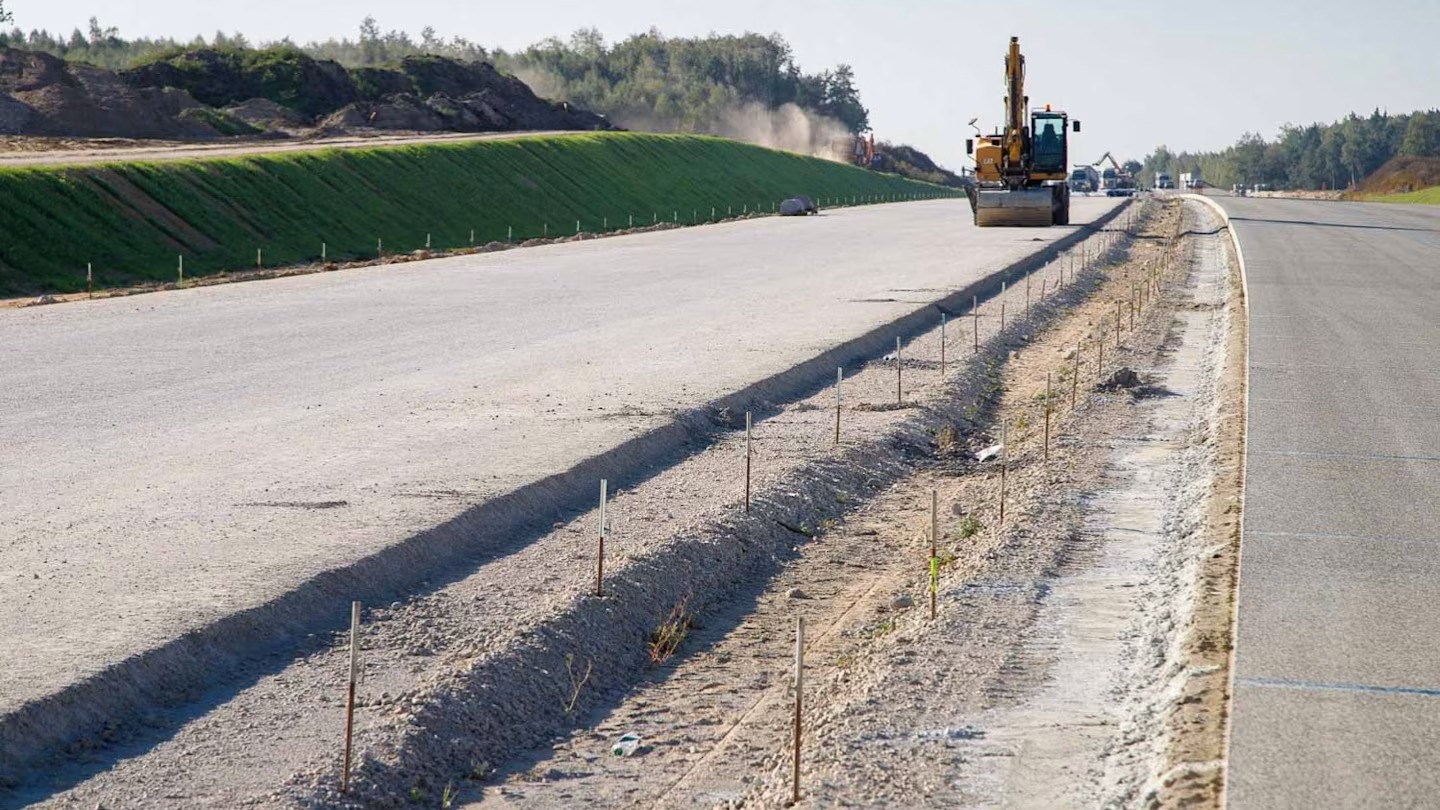
European construction and building materials companies are targeting a potential 620 billion euro surge in defence infrastructure spending over the coming decade.
Major construction groups including Spain’s ACS, Austria’s Strabag, and France’s Vinci all anticipate a rise in defence and dual-use projects in the coming years.
Leading suppliers such as Heidelberg Materials, Holcim, and CRH also point to mounting demand.
According to a report in the Financial Times, construction firms are establishing dedicated defence teams, developing new products, and ensuring personnel obtain security clearances for sensitive projects to capitalise on the opportunity.
Peter Buckley, head of the international division at CRH, said: “There is an acceptance that Europe has to stand on its own two feet, and defence is a massive part of that. It is a new growth vector.”
The building materials group, which operates across Dublin and New York, is developing low-carbon concrete that can better withstand heavy military vehicles and freezing winter conditions unlike asphalt.
CRH has also added construction specialists with expertise in military infrastructure to its workforce.
Rising spending on defence-related projects could provide a much-needed boost for European construction companies.
High energy prices, mounting financing costs, and economic uncertainty have dampened demand for residential and commercial construction, weighing on share prices across the sector.
According to consulting firm BCG, Europe could spend an estimated 320 billion euro on direct military infrastructure between 2026 and 2035.
These figures include the UK and Türkiye, whilst excluding Ukraine.
The funding could be directed across a range of facilities, from barracks and ammunition depots to military airfields, naval bases, training grounds, and command-and-control centres.
Over the same period, BCG estimates that an additional 300 billion euro will be spent across Germany, France, and Poland alone on broader defence and security investments.
This includes reinforcing civilian infrastructure, such as bridges, ports, and power grids, to make it more resilient and suitable for military tasks such as transporting heavy tanks and artillery units.
Russia’s full-scale invasion of Ukraine alongside pressure from US President Donald Trump prompted NATO members last year to commit to allocating 5% of annual GDP to defence by 2035.
Under this target, 3.5% would be allocated to core military needs, with 1.5% directed towards security, infrastructure, and civilian preparedness.
However, actual spending will depend on each country’s fiscal position, political will, and bureaucracy.
Anthony Codling, head of building materials research at RBC Capital Markets, said:
“There is often a Grand Canyon between political commitment and spades in the ground. Defence pledges in Europe have historically had the shelf-life of a political news cycle: long on rhetoric, short on delivery. And fiscal constraints are real.”
Even so, European governments remain on high alert following hybrid attacks in Germany, Poland, and the Baltic states.
Danish intelligence recently warned that Russia could launch a limited military attack against a NATO country in the coming months.
Spanish company ACS projected this month that global defence infrastructure spending would almost double, rising from 68 billion euro this year to 120 billion euro annually by 2030.
This forecast includes a surge in European spending from 19 billion euro in 2026 to 30 billion euro.
Retired US Army Lieutenant General Michael Fenzel, hired this year by ACS to run its defence business, said:
“Two wars have changed what governments expect from their infrastructure. They need partners who can protect their populations, preserve peace, and strengthen deterrence for decades.”
To secure a larger share of defence spending, ACS also plans to offer services to military clients, including managing military vehicle fleets, supplying fuel, and building repair depots.
The company will also evaluate acquisitions to broaden this service range.
“A client that trusts us with their runway will trust us with their fuel,” Fenzel said.
ACS has completed 154 security and defence projects across Europe. It is currently modernising a military airfield in the Czech Republic and an armed forces university campus in Germany.
Strabag noted strong demand for infrastructure throughout Europe. For instance, the Austrian company is helping build one of the largest military hospitals outside the US, located near Ramstein air base in Germany.
The project represents a general contracting agreement valued at 859 million euro.
Many construction companies and building materials suppliers previously avoided military projects because of ethical concerns and an absence of consistent pipelines. That stance has shifted considerably.
William Wallace, co-head of national security, defence, and aerospace at consulting firm DGA Group, said: “Historically, defence infrastructure work was unsexy and underfunded compared to faster-growing transport and energy sectors. The push to rearm has changed that paradigm.”
The war in Ukraine has also created ripple effects beyond defence. For instance, European countries are investing more in energy infrastructure, particularly wind power, to curb reliance on Russian gas.
Christophe Ferrer, business development director at French construction firm Vinci, said: “From a defence perspective, all infrastructure is critical, as shown by the fact that it is often targeted in the opening days of a conflict.”
Still, spending will need to accelerate substantially to meet BCG’s projections. According to the European Defence Agency, declared EU infrastructure expenditure is forecast to reach 11.6 billion euro this year.
Although this figure has grown by roughly 20% each year since 2023, it remains far below the pace required to attain 320 billion euro in military infrastructure spending by 2035.
Annika Zawadzki, head of BCG’s highways and airports practice, said: “The lag time between allocating the budget, creating a programme, running the procurement [and] signing the contract takes a long time. So how quickly the money… is going to flow really depends on that process.”

Politico weighs five scenarios for future Russia-Europe security talks

Jared Kushner warns Israel risks becoming a “global pariah”

Gulf states spend at least $6.7 billion extra on subsidies

Ukraine expands maritime strikes against Russian ships to three seas

Qatar pledges 15 billion euros in investment to Germany
-

 Opinion1 week ago
APEC Summit: How China Uses the Art of “Emotional Value” to Deal with Trump
-
 Middle East2 weeks ago
Journalist Dursunoğlu warns Iran removed missile limits as Gulf risks widen
-
 America2 weeks ago
Absent Democrats derail floor vote on Pete Hegseth impeachment
-
 Europe2 weeks ago
Germany threatens EU budget veto over long-term Ukraine aid
-
 Russia2 weeks ago
Europe ready for arms and missile control talks with Russia, FT says
-
 Russia2 weeks ago
US raises NATO-style guarantees for Kyiv ahead of Abu Dhabi talks
-
 Europe2 weeks ago
Fico accuses Merz of blackmail over threat to veto EU budget
-
 America2 weeks ago
Nvidia board prepares to remove CEO Jensen Huang amid scandal
