
Europe
EU rejects US proposal to resume Russian gas flows through Ukraine

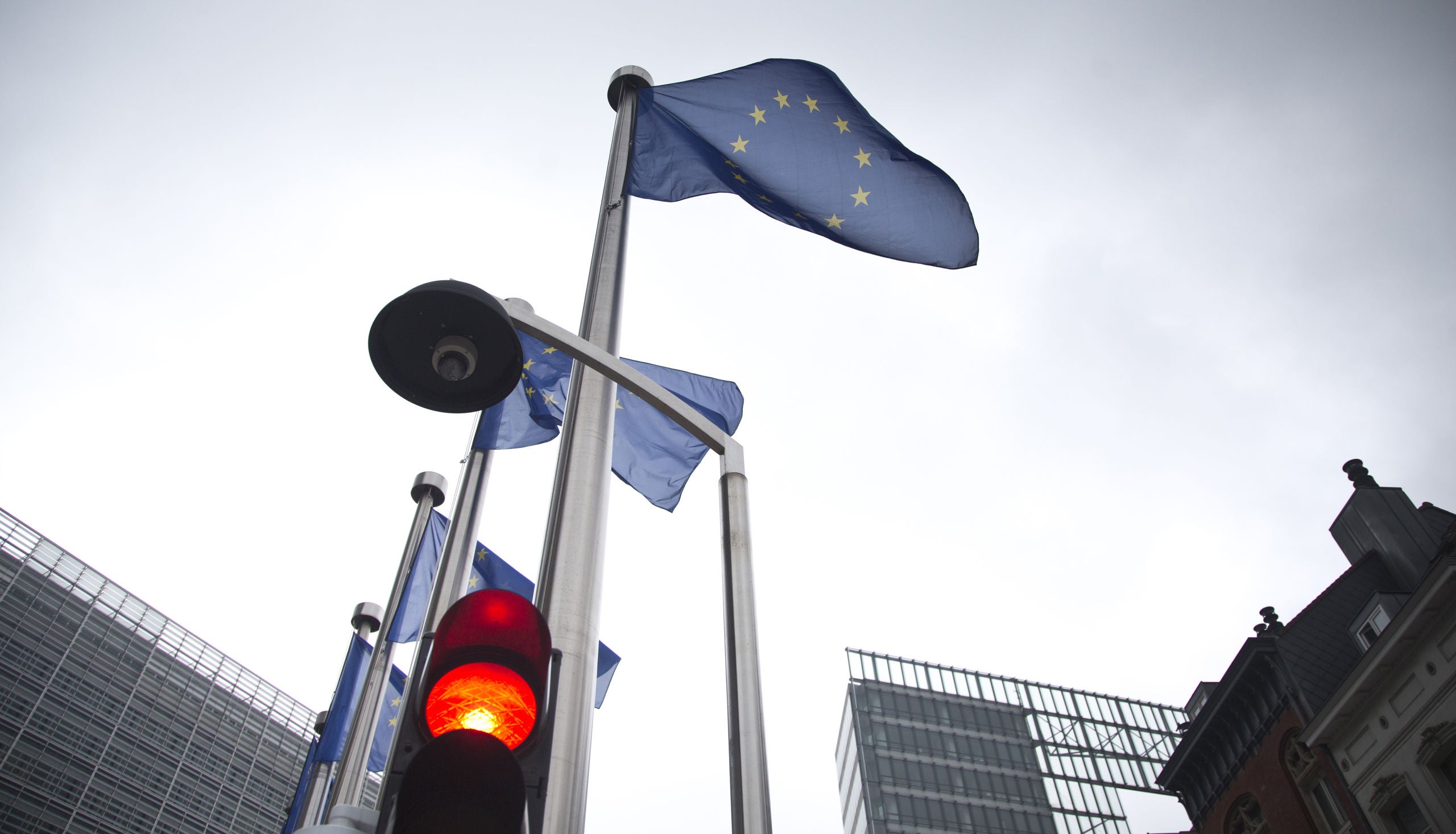
The European Commission has rejected a peace plan proposal from the US administration that entails resuming Russian natural gas purchases via Ukraine.
Commission spokesperson Paula Pinho stressed that Brussels has not changed its stance.
Pinho recalled that European Commission President Ursula von der Leyen had previously stated clearly that no restrictions on Russia would be lifted until the conflict comes to an absolute end.
The New York Times reported that the US president’s new peace proposal includes Europe returning to large-scale Russian gas purchases through Ukraine.
According to the report, Special Envoy Steve Witkoff and Jared Kushner raised the matter during talks in Kyiv last month with Ukrainian and European officials, including Ukrainian President Volodymyr Zelenskyy.
Sources contacted by the newspaper noted that some European and Ukrainian officials believe Washington would seek to secure a share of Russian gas exports.
Under this plan, the objective is to channel a share of the profits to American companies or the US government.
Russian President Vladimir Putin had said Moscow was ready to work on supplying fuel to European nations, but noted that a signal must come from the other side.
Putin stated that Moscow must evaluate the feasibility and necessity of fuel flows to the Western market, adding that they would not wait for Europe to shut the door ostentatiously on energy supplies.
Kremlin spokesperson Dmitry Peskov remarked that European nations rejecting Russian gas would make them dependent on the US and deprive them of the ability to diversify their supply sources.
Peskov noted that the US sells gas at very high prices and that if European nations pay more for energy, their industries will suffer.
The EU plans to halt liquefied natural gas imports from Russia entirely by 1 January 2027 and pipeline gas by 30 September 2027.
Von der Leyen had previously announced that the bloc would reduce Russian gas imports to zero by the end of 2027.
Russia halted gas flows to Europe via Ukraine as of 1 January 2025, when the five-year contract between Gazprom and Naftogaz of Ukraine expired.
Putin had stated that Kyiv refused to extend the transit agreement. Following the closure of the Ukrainian route, the TurkStream pipeline remained the only operational corridor carrying Russian pipeline gas to Europe.






The European continent is confronting acute structural crises, accelerating economic deindustrialization, and mounting geopolitical fractures across major regional capitals, according to Dr George Szamuely, a senior fellow at the Global Policy Institute, author, and international political analyst.
Speaking in an in-depth interview hosted by journalist Tunç Akkoç on the Harici YouTube channel, Szamuely dissected the cascading political shifts in Serbia and Hungary, the broader socio-economic paralysis affecting Western European capitals, the deep strategic frictions between Washington and Brussels, and the structural feasibility of European strategic autonomy. Akkoç opened the discussion by pointing to the seismic political shifts reshaping Europe, focusing first on Belgrade, where Serbian President Alexander Vucic and his ruling progressive coalition suffered a historic electoral defeat following nearly fourteen years in power.
Addressing whether this outcome marks a fundamental geopolitical turning point for Belgrade, Szamuely maintained a decidedly cautious assessment, highlighting the opaque composition and ambiguous platform of the victorious opposition forces. “Well, it is a very interesting development because it could be a turning point, but of course we do not as yet know,” Szamuely said, underscoring that the coalition that swept to power had deliberately sidestepped specific policy pronouncements throughout its campaign. “Why we do not know is that the opposition that won the election quite decisively really never spelled out its program. We never really knew what it stood for. We did not know its leaders. It was really united by one thing and one thing only, which is opposition to Vucic. So they wanted to get Vucic out. No Vucic, no Vucic. But in terms of what is going to do? Well, that is up in the air.” Szamuely emphasized that assessing the long-term impact remains impossible until key administrative roles are allocated: “Before one can say, well, this is a turning point, we have to have some idea what this the new government that has not yet been formed. Indeed, we do not even know who is going to be the prime minister, who is going to hold all these important positions. We do not know what their agenda is.”
Szamuely drew attention to the broader regional architecture in the Western Balkans, pointing directly to unresolved geopolitical frictions stemming from the conflicts of the 1990s across Serbia and neighbouring Bosnia and Herzegovina, where governance remains partitioned between the Serb-dominated Republika Srpska and the Federation of Bosnia and Herzegovina. “There is unfinished business from the 1990s, which is that NATO and the European Union want Serbia to join NATO,” Szamuely pointed out. “The EU, that is a different question, but they want Serbia to be a part of NATO. And so they will definitely want to push the new government in a pro-NATO direction.” Such pressure, Szamuely noted, inevitably reopens the diplomatic question of Kosovo, requiring the formal recognition of its declared independence. “That would mean that they will want some kind of a decision on Kosovo, and that means decision to recognize the independent state of Kosovo, which is very very difficult for Serbs,” Szamuely said. “It was very difficult for Vucic. It was very difficult for the predecessor government to Vucic to get the Serbs to accept the independence of Kosovo. And so the new government will find it equally difficult to persuade Serbs to let go of Kosovo.”
Beyond Kosovo, Szamuely argued that Western institutions will relentlessly pressure Belgrade to abandon its traditional non-alignment and join Brussels in its confrontation with Moscow. “The other thing they would want is a change in policy towards Russia. They would want Serbia to orient itself much more towards the EU NATO line on Russia, adopt sanctions against Russia, which again is going to be very very difficult for the new government because there is a very substantial proportion of the Serbian public, almost certainly more than 50% that feels very attached to Russia,” Szamuely explained. “So it is going to be very hard to get the new government to adopt policies radically different from those of Vucic. That is no doubt that is what the NATO and EU would like this new government to do and they will undoubtedly press them to change their policies, they will blackmail them, they will try to force a change, but it is going to be difficult. They are going to have as many difficulties as Vucic had and the predecessor government had had.”
“They will elicit a violent reaction”
When questioned by Akkoç regarding the prospective trajectory of Serbian foreign policy toward the United States, Russia, China, and the European Union, Szamuely characterized Serbia as a fundamentally polarized society that has historically resisted top-down ideological alignment. “The problem in Serbia is that it is a very divided country and has been divided for many many years, even preceding the wars of the 1990s,” he explained. While an institutional faction exists that favors rapid integration into Euro-Atlantic structures, Szamuely noted that this constituency faces massive domestic resistance: “There is definitely a kind of a pro-Western faction that would like to integrate within the Western institutions, become a part of the Western dominated organization. Above all, they would love to be a member of the EU. Some of them would really love to be a part of NATO and they are ready to make whatever concessions they would have to make in order to get them and the concessions are as I said accept the independence of Kosovo and change the foreign policy stance towards Russia, but there is an equally and if not greater part Serbian public that absolutely rejects that policy.”
Szamuely issued a sharp warning against Western attempts to force Belgrade into a geopolitical mold, citing historical precedents where clumsy external meddling provoked severe domestic backlashes. “If they try to push in that kind of very pro-Western direction, and they may try to do that. They did that following the overthrow of Slobodan Milošević in 2000 that the new government tried to do that, they will elicit a reaction from the Serbian public who just do not accept that,” Szamuely observed. Drawing parallels with other post-socialist states, he criticized Western strategic short-sightedness: “The Western countries have a very poor record in interfering in other countries’ internal affairs. They often see a country that is divided and then they kind of push in one direction, not realizing that if you push in this one direction, you will elicit a violent reaction from the half of the country that does not accept it. And we saw that in the case of Ukraine starting from the Orange Revolution in 2004 and then Maidan in 2014 where the Western powers pushed Ukraine into one direction which of course then provoked a reaction from the other part of Ukraine that simply would not accept it. So, the Serbian case is very similar.”
Regarding the current transition, Szamuely expressed skepticism about the cohesion of the anti-Vucic opposition bloc, referring specifically to the student-led electoral list. “Given how little this student list group has said about what they intend to do, it sounds like they are very divided among themselves which direction they want to go,” Szamuely said, noting that even well after the balloting, public commitments remained conspicuously absent. “Even now it has already been more than a week since the election even now they are very reluctant to spell out what their policies are other than to persecute and prosecute members of the Vucic government.”
Turning the conversation to Central Europe, Akkoç drew a direct parallel between the Serbian political disruption and Hungary, where Prime Minister Viktor Orbán’s sixteen-year tenure came to an end following an election victory by Peter Magyar. Szamuely recognized the monumental domestic shift, remarking, “Obviously it ends an era because it brought to an end sixteen-year rule of Viktor Orbán. Sixteen years is an awful long time for anyone to be prime minister. In Europe today you have Emmanuel Macron who has been there less than ten years and he has popularity ratings in the single digits. So to survive sixteen years, that is quite an accomplishment.”
However, Szamuely identified unmistakable structural similarities between the political campaigns in Belgrade and Budapest, emphasizing that Magyar’s political movement secured power without providing an explicit legislative alternative to Fidesz. “It is very similar to what happened in Serbia because the opposition to Orbán that swept the power never really spelled out what they intended to do,” Szamuely argued. “In this case, there was a leader, Peter Magyar, which is unlike the case of the student list when there was no leader. But other than opposition to Orbán, other than to decry Orbán’s alleged corruption and Fidesz’s underhand dealings, they really did not have any clear message, any clear agenda, any clear set of policies that would be different from those of Viktor Orbán other than, well, we are going to be in cahoots and in close to the EU.” Szamuely added that both the Hungarian opposition and Serbian movements shared this vacuous posturing: “Again, you do not really have too many ideas other than, well, we are going to be friendly with the EU and we are going to do whatever the EU would like us to do.”
“What the EU would like from Peter Magyar is unacceptable to many Hungarians”
Szamuely cautioned that Magyar’s subservience to Brussels will quickly collide with domestic realities, particularly surrounding migration and social policy. “The problem that this Hungarian government has and similar to what the Serbian government will face, which is that what the EU would like from Peter Magyar is unacceptable to many Hungarians,” Szamuely said. “When it comes to immigration, immigration is a very very sore point among Hungarians. That is a real live wire in Hungarian politics. But the EU, without question, would like Hungary to move much more closely towards the EU line and to join the EU immigration pact. That is very unpopular in Hungary. So if Peter Magyar hopes to survive through to the next election and to win the next election, he cannot compromise on the issue of immigration.”
Magyar has nonetheless moved rapidly to satisfy core demands from Brussels, primarily by initiating targeted legal actions against the former ruling elite and joining European legal bodies. “Now, he has gone some way towards pleasing the EU. The most important is to promise the EU that he intends to prosecute members of the former government,” Szamuely noted. “Hungary joined the European Public Prosecutor’s Office. It has arrested a number of former Fidesz ministers. It has not yet brought criminal charges, but it has arrested them. Some of them are in prison again without having been put on trial. So that obviously pleases Brussels, even though Brussels has only released a certain amount of the money that it should have released.”
Szamuely revealed how institutional financial pressure had been deliberately weaponized to undermine Orbán’s domestic political standing: “That was one of the ways in which the EU was able to apply pressure against Viktor Orbán that the money, something like 30 billion euros, was simply not released to Hungary. This money due to Hungary. They did not release it, and that, of course, weakened Orbán’s position in Hungary because Hungary is not a particularly prosperous country, and 30 billion euros is 30 billion euros. That is a lot of money. So not releasing it to Hungary obviously hurt Orbán and helped Magyar. But that does not mean that the EU intends to release all of this money to Magyar unless Magyar plays ball with them.”
Beyond legal actions, Szamuely detailed Magyar’s concession to Brussels regarding social legislation, specifically undoing Orbán’s statutory bans on LGBTQ educational content. “On the issue of LGBTQ rights, which was also a point of friction between Viktor Orbán and the EU, Magyar has made moves in the EU direction,” Szamuely pointed out. “He has amended the law that had been adopted by the Orbán government about LGBTQ material being available in public schools in Hungary, LGBTQ material on public television. So that they have amended that and gone some way towards pleasing Brussels. The question then is how long Hungarian public will tolerate these kinds of things? Brussels is very happy with it, but the Hungarian public is quite conservative. So it is a real question whether they will accept this without argument.”
Examining foreign policy transformations under Magyar, Akkoç cited notable shifts, including Hungary’s absence from recent high-level meetings of the Organization of Turkic States, an initiative Orbán consistently engaged with in Türkiye. Szamuely affirmed that this diplomatic retreat was calculated rather than coincidental: “You are right. That was an important part of the Orbán agenda. He had very good relations with Türkiye and he did indeed attend the Organization of Turkic States on a regular basis. So Orbán has not done that. He that that is a deliberate move. That is not just an oversight. That is a deliberate step on his part.”
“Hungary really is neutral”
Contrasting this with Orbán’s previous doctrine, Szamuely explained how Hungary had previously managed to preserve an independent foreign policy despite its dual membership in NATO and the European Union. “Viktor Orbán had pursued a kind of independent foreign policy to the extent that you can be independent while you are a member of NATO and the EU, but nonetheless, he broke ranks on the subject of Ukraine and said that when it comes to the war in Ukraine, Hungary really is neutral,” Szamuely noted. “Really it is not Hungary’s war. Hungary has no interest, has no dog in this fight, and therefore the only interest Hungary has is to bring this war to an end because this war is catastrophic for Europe, catastrophic for Hungary, and therefore Hungary’s interest is not Russia win or Ukraine win, but that a war should end. That is not the NATO EU line, which is that we want Ukraine to win.” Orbán backed this diplomatic doctrine with direct shuttle diplomacy across global capitals: “Viktor Orbán traveled to Beijing, he traveled to Kiev, he traveled to Moscow, he traveled to see Trump in Mar-a-Lago in order to see if he can somehow bring this war to an end. He did not succeed, but the EU was very angry about this diplomacy and they attacked him repeatedly for this.”
Under Magyar’s administration, however, Budapest has fully abandoned this sovereign posture to align itself with Euro-Atlantic dictates. “Since April, Hungary has absolutely aligned itself with the EU and NATO on the war in Ukraine,” Szamuely stated. “It now says unashamedly NATO EU does we want Ukraine to win. Russia is a threat, threat to Europe and we need to mobilize forces against Russia and then Hungary expelled 10 Russian diplomats and never really gave any explanation of why they expelled 10 Russian diplomats. And so Hungary now regularly condemns Russia. That is a major change.”
This sharp realpolitik turn toward Brussels has significantly deteriorated relations with Washington under the administration of US President Donald Trump. Szamuely highlighted Budapest’s reversal on the International Criminal Court as a primary grievance. “Viktor Orbán had begun steps to withdraw for Hungary to withdraw from the ICC. That is a process that takes about a year to do. The process had not come to an end by the time of the election, but after the election, Peter Magyar said Hungary is rescinding the withdrawal from the ICC. So Hungary is now back in the EU NATO fold. We are members of the ICC in good standing. So that obviously does not endear Hungary very much to the United States.”
Szamuely pointed to the diplomatic treatment received by Hungarian Foreign Minister Anita Orbán during her official visit to Washington as concrete evidence of this bilateral rupture. “When Anita Orbán, the Hungarian foreign minister, visited Washington last week, she was treated in a very curt, very discourteous manner,” Szamuely recounted. “First of all, a meeting that was scheduled was postponed and then finally when the meeting with Marco Rubio took place 48 hours late, she signed a couple of completely meaningless declarations, but she did not get anything out of the Trump administration.” Budapest’s central objective had been securing economic relief from US sanctions targeting Russian energy imports. “What she was seeking was an extension of the waiver that the Trump administration had given to Viktor Orbán, a waiver on sanctions because of Hungary’s continued importation of Russian oil and gas. So she wanted an extension of the waiver. The United States did not give Hungary, the new Hungarian government, an extension of the waiver. So it was really a very much a failed mission in Washington.”
“The recipe for economic decline, deindustrialization, and a largely discontented population”
Broadening the scope of the inquiry, Akkoç reflected on his personal experiences living in Germany during the 1990s, asking why the security, widespread prosperity, and political stability that characterized late twentieth-century Europe have systematically vanished, giving way to pervasive unrest across Britain, France, Germany, and Poland. Szamuely laid the blame squarely on a succession of self-destructive policy decisions executed by European policymakers, beginning with the ideological dismantling of domestic energy infrastructure. “I think Europe has not pursued policies that made very much sense for European interests,” Szamuely declared. “Europe has pursued energy policy that was obviously contrary to Europe’s interests. It was driven by an ideological hostility towards fossil fuels, coal, oil and gas. That was really there was no reason for that other than the kind of ideological commitment. Europe, which does not really have very much energy of its own, was really going to hurt itself by putting its faith in something that really cannot possibly cater to our energy needs which is the renewables, sun and wind. So that was a foolish step.”
Compounding this structural energy vulnerability, Szamuely argued, was the European Union’s unmanaged demographic and immigration policies, which placed acute stress on declining national tax bases. “Then of course it had the policy of migration and uncontrolled migration therefore the growth of our population that was going to impose huge burdens on taxpayers, on European taxpayers, and particularly when you have a taxpayer base that is declining due to the aging of the population,” Szamuely observed. The third fatal pillar was Europe’s active geopolitical confrontation with Moscow: “And then you add onto that the foreign policy that it pursued which was to get involved in a very very big way in Ukraine and to cut itself off from cheap Russian energy.”
According to Szamuely, the convergence of these strategic miscalculations has crippled the European economic model: “When you combine all that together you have got the recipe for economic decline, deindustrialization, and a largely discontented population. So you have discontent among migrants, discontent towards the migrants, and then a public sector that is very much bloated, but without the productive economy underlying it that could actually support such a public sector. So Europe is in a lot of trouble.”
To exacerbate this systemic malaise, geopolitical instability in the Middle East has dealt a direct blow to European supply lines and industrial operations. “When you add to that the Gulf War and all of the strains that that has imposed on energy, the fact that suddenly the refineries have been hit, there is the blockade of the Persian Gulf, and where is Europe going to get its energy from?” Szamuely asked. “Now that has really caused a great deal of problems with the prices of diesel, gasoline, aviation fuel. All of that combined have hit a European economy that was already stagnating. And that is why where is the stability? There is a great deal of discontent. And it is unlikely that the political stability of the ’90s not to mention the ’80s, ’70s, ’60s, all of that that we had known, particularly in Germany, all of that has gone.”
When Akkoç suggested that the European Union faces institutional unraveling or fragmentation as fundamental conventions such as internal border-free travel within the Schengen zone come under strain, Szamuely cautioned against predicting an outright collapse of the bloc. “I would hesitate to predict the disintegration of the EU,” Szamuely said. “Many people do that, and it is understandable why they make that prediction. But I have heard that many, many times before that the EU will disintegrate. But the UK left the EU now as of 2019, so nobody else is joining. Even Hungary, which had all of these conflicts with Brussels, even Hungary never advocated withdrawal from the EU.” Akkoç interjected, observing that even nationalist factions such as the Alternative for Germany (AfD) have abandoned calls for an outright exit in favor of institutional restructuring, while Marine Le Pen’s National Rally in France has adopted an identical reformist line.
“Europe cannot really continue pursuing the policies it is pursuing”
Concurring with this assessment, Szamuely stressed that while dissolution is improbable, Brussels cannot maintain its current geopolitical posture without inflicting catastrophic internal damage. “Europe cannot really continue pursuing the policies it is pursuing. There would have to be some kind of changes,” he stated. “One of the most obvious changes will be to bring this war in Ukraine to an end because if you bring that to an end, then you can begin to get your energy from Russia again. Russia has said that it is ready at any time to start the oil and gas flows to Europe. The only reason it does not do so is that Europe says we do not want it.”
Szamuely outlined the acute energy trap tightening around European capitals, caught between geopolitical disruption in the Middle East and structural export limitations across the Atlantic: “Given the energy situation in Europe, given Europe’s now dependence on the United States for its liquefied natural gas and given that the United States may now decide particularly after this election to cut back on its exports of LNG, then Europe is in a lot of trouble. It cannot get its energy from the Persian Gulf. It cannot get it from Russia and then if the United States starts cutting back on its export, it cannot get it from the United States. So therefore you would think European leaders will move towards a diplomatic resolution of this war in Ukraine.”
Szamuely suggested that direct economic distress may already be compelling European leaders to reconsider their commitments quietly: “It may already be happening in the background that they are moving when they have realized that this policy in Ukraine just has not really worked out. It has been an absolute disaster for Europe and without energy particularly export driven economies in Europe simply cannot survive. So if I was going to make a prediction as to where we are heading, I think one way that Europe can address its immediate problems will be by trying to bring this war in Ukraine to an end.”
Addressing the broader transatlantic rift under the Trump administration, Szamuely noted that historical tensions over burden-sharing and military coordination have defined US-European ties for decades. “There has always been tensions between the United States and Europe,” Szamuely explained. “The United States has traditionally not been happy about Europe not paying sufficiently into the NATO common fund. And the United States has not been happy traditionally that Europe has been reluctant to support the United States in various adventures abroad. The United States complained already a long time ago that Europe was not supporting the United States in Vietnam. It was not supporting the United States in Central America. Now the American complaint is that Europe is not supporting the United States in the Persian Gulf. There is a long tradition of that because the truth is Europe does not really care that much about the Persian Gulf. It is not Europe’s war.”
Szamuely highlighted a profound strategic divergence currently paralyzing transatlantic relations: while Europe remains consumed by the conflict in Ukraine, the White House holds completely opposing priorities. “Europe now does care a great deal about Ukraine,” Szamuely said. “While the Biden administration also cared very greatly about Ukraine and was very much in sync with Europe in all of their policies delivering arms to Ukraine and the sanctions and cutting back on energy imports from Russia, the Trump administration really does not care very much about it. So we have the situation whereby the Europeans would like to see the war in the Persian Gulf brought to an end, and so far we do not see any move in Washington bringing it to an end. While at the same time the United States would like to bring the Ukraine war to an end, but the Europeans are not very happy with it. They still want to continue and in fact escalate the war in Ukraine.”
The rational exit from this impasse, Szamuely argued, involves simultaneously winding down both theaters to allow a comprehensive global pivot: “The obvious way to resolve this rift is to bring both wars to an end because then you keep the Europeans happy, you keep energy consumers happy, and then you also keep the United States happy because ultimately the Trump administration would like to focus on China and does not want to get endlessly bogged down in this pointless, hopeless war in Ukraine.”
Szamuely detailed Washington’s strategic concept under what the Trump team terms “NATO 3.0”, an operational framework designed to disengage US ground commitments from Europe. “The idea behind it is that the United States will begin to focus, this pivot to Asia will focus on China,” Szamuely said. “The Europeans will take care of business in Europe under American supervision, under the American nuclear umbrella, but basically the Europeans will take care of the European continent and the war with Russia comes to an end. So therefore there might be a kind of rapprochement between Russia and the United States and then that would break up the Russian China alliance. So that is the American policy. The Europeans have not really accepted this, but it may happen given the situation in the United States, given the situation in Europe that they may decide that neither of these wars is worth continuing to fight and drag the world economy down in the next two years.”
“If you want independence from the United States, then you need to make peace with Russia”
In the final phase of the interview, Akkoç raised the question of European strategic autonomy, pointing to growing calls from across the European political spectrum, ranging from figures like Jean-Luc Mélenchon in France and Spanish Prime Minister Pedro Sánchez to diverse factions within the AfD, advocating for institutional independence from Washington. Akkoç asked whether Europe truly possesses the capacity to chart an autonomous global course or whether structural reliance on the US remains insurmountable.
Szamuely dismissed the European ambition for strategic autonomy as an unviable geopolitical illusion, citing glaring military and logistical deficits across the continent. “I do not take too seriously the European complaints and it is a hardy perennial,” Szamuely stated candidly. “It is something we have heard for many many many years that we want to be independent of the United States, we have our own interests, we are going to pursue our own foreign policy, we do not want to do what Washington tells us to do. But the problem that they have is that fundamentally they just do not have the military capability of the United States.”
Detailing Europe’s severe military shortcomings, Szamuely noted the absence of decisive nuclear, conventional, and logistics power. “They do not have the nuclear weapons, the multiple myriad nuclear weapons that the United States have,” he explained. “Britain and France have a very limited nuclear capability. Britain does not even have an independent deterrent, it is dependent on the United States, and France’s nuclear deterrent is only applicable for France. If France comes under attack, it cannot be used as a means of guaranteeing the security of any other country.” Beyond nuclear assets, Szamuely emphasized the conventional imbalance: “They do not have anything like the air power, the airlift power, the missile capability of the United States. They do not have the manpower that the United States is capable of.”
Ultimately, Szamuely pointed out a profound strategic contradiction at the heart of European defense posturing. True independence from the United States, he argued, requires a non-adversarial security architecture with Russia, modeled on past diplomatic precedents rather than open confrontation. “The Europeans say, yeah, we are going to be independent, but at the same time that policy would make sense only in the context of if they pursue a détente with Russia as they did in the 1960s and ’70s,” Szamuely asserted. “In 1967 they pursued a détente with Russia, then you do not really need the American capability behind you. But if you are pursuing a very radically aggressive anti-Russian policy, provoking Russia in extraordinary ways, and your only real means of fighting Russia, should Russia get fed up with it and say enough already, is the United States, well then you cannot at the same time then demand, well we want independence of the United States.”
Szamuely concluded with a stark geopolitical formula exposing the inherent inconsistency of current European policy: “If you want independence from the United States, then you need to make peace with Russia. If you want a conflict with Russia, then you are going to need the United States. So that is why I do not really take very seriously these complaints, oh we want to be independent, we have our own agenda and so on. That just does not make any sense now.”
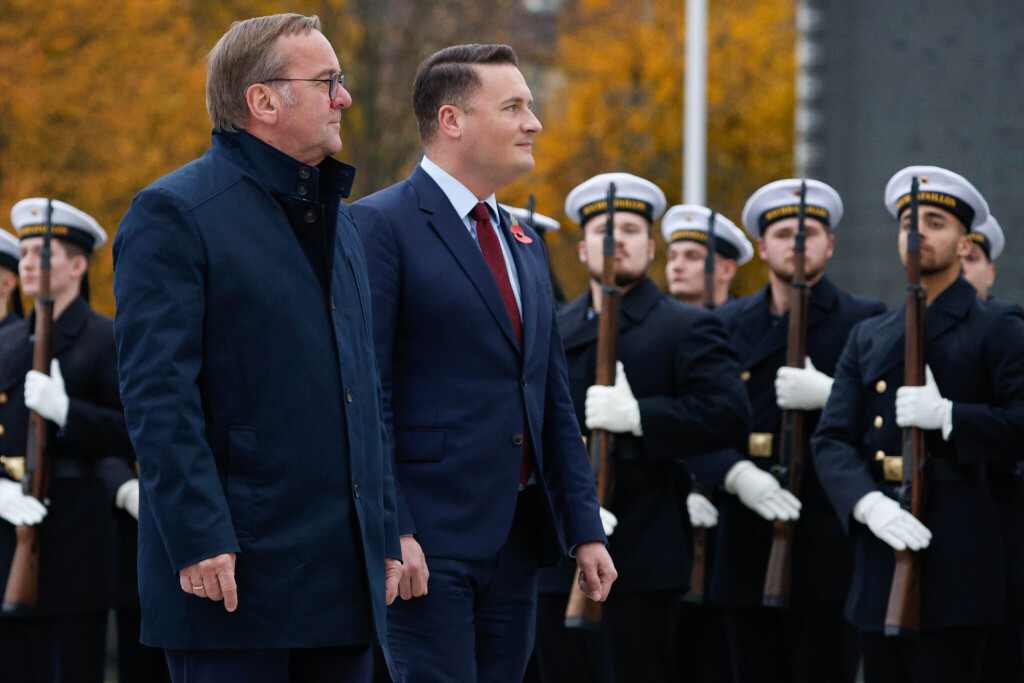
Germany and the United Kingdom are further expanding their military and defence cooperation, increasingly orienting this partnership toward a potential conflict with Russia.
According to German Foreign Policy, this trajectory is clearly reflected in the agreements signed in Berlin last Monday by the two countries’ defence ministers, Boris Pistorius and Wes Streeting.
Under these pacts, the two nations will not only jointly develop intermediate-range strike systems with a range exceeding 2,000 kilometres capable of reaching Moscow.
Both countries, which maintain troops deployed in the Baltic states, will also jointly procure pontoon bridge systems and wheeled howitzers to facilitate combined operations during conflicts in the east.
German and UK naval forces are already conducting joint military exercises aimed at Russia with mounting frequency in both the North Sea and the Baltic Sea.
German defence startups are likewise opening UK offices, supplying the British armed forces with German-manufactured uncrewed aerial systems directly from these sites.
This bilateral collaboration carries a strategic orientation and extends to the Group of Five (E5), a new initiative designed to ensure Europe acts decisively across foreign and defence policy.
Preparations for operations against Russia in the North Sea
Cooperation between the German and British navies is undergoing a significant intensification. This specifically entails preparations for prospective operations directed against Russia.
In May, as part of NATO’s “Dynamic Mongoose” exercise, German and British P-8A Poseidon maritime patrol aircraft flew combined sorties for the first time from RAF Lossiemouth in northern Scotland.
The exercise concentrated on detecting and engaging hostile submarines and other submerged objects, particularly uncrewed underwater systems, off the coasts of Norway and Iceland.
In October, anti-submarine operations and surface warfare scenarios were rehearsed during the “Strike Warrior” exercise, which also included German P-8A Poseidon aircraft based at Lossiemouth.
The rationale behind these drills rests on the premise that, in the event of war, Russian submarines emerging from the Arctic Ocean would likely attempt to penetrate the Atlantic through the waters separating Greenland, Iceland, and Scotland.
Preventing this breakthrough and closing the “GIUK Gap” (Greenland, Iceland, United Kingdom) represents the central task to which the German and British navies have jointly dedicated themselves.
In an operational contingency, they would execute this mission primarily in close cooperation with Norway and Canada.
Control of the Baltic Sea gains importance
Additionally, Germany and the UK are initiating combined naval operations in the Baltic Sea.
This approach applies, for instance, to NATO’s “Baltic Sentry” mission, launched in January 2025 and expanded in the autumn of 2025.
Officially, the mission is designed to protect underwater infrastructure, including all varieties of pipelines and subsea communication cables, across the Baltic Sea.
In practice, the mission enables the steady expansion of NATO’s maritime presence in these waters.
Following Finland and Sweden’s accession to NATO, the Baltic Sea has become virtually an inland sea of the Western military alliance.
This year, German Navy personnel boarded British P-8A Poseidon maritime patrol aircraft carrying out surveillance flights over the Baltic Sea under the “Baltic Sentry” framework for the first time.
The drive to establish full NATO control over the Baltic Sea is likewise aimed at Russia, serving as an extension of the allied military presence in the Baltic states. In the region, the Bundeswehr maintains a permanent brigade in Lithuania, while the UK has forces stationed in Estonia.
Germany, the UK, and Canada, which maintains a military presence in Latvia, coordinate closely with Baltic host nations via the 3+3 format.
Cooperation expands on land as well as at sea
German-UK defence cooperation is progressively expanding into land warfare capabilities, with the primary operational focus remaining on potential military engagements against Russia.
According to the Ministry of Defence, Germany and the UK intend, among other joint initiatives, to procure a standardized pontoon bridge system.
The ministry described the acquisition as an “important contribution to interoperability and the strengthening of NATO’s eastern flank.”
The current objective is to ensure that rivers across the Baltic region, where both nations maintain deployed contingents, remain passable even if permanent bridges are destroyed.
Furthermore, both the Bundeswehr and the British Army have committed to fielding the RCH 155 wheeled howitzer.
The UK plans to acquire 72 units from Artec GmbH, a joint venture between Rheinmetall and KNDS Deutschland (formerly KMW), in an agreement valued at approximately £1 billion.
To ensure industrial benefits for the UK, chassis modules will be manufactured at KNDS UK in Stockport near Manchester, while gun barrels will be produced at Rheinmetall UK in Telford near Birmingham.
The RCH 155 wheeled howitzer is designed to provide “support to armoured forces during agile, mechanized operations,” including prospective high-intensity land operations directed against Russian forces.
Uncrewed systems and long-range missiles enter inventories
Finally, German-British defence collaboration covers weapons that have proven decisive in modern warfare during the conflict in Ukraine: uncrewed vehicles across all operational domains and advanced strike missiles.
Several German startups are producing uncrewed weapon systems at manufacturing facilities inside the UK.
Stark Defence, for instance, builds conventional uncrewed aerial vehicles in Swindon in south-west England.
Helsing, Europe’s most valuable defence startup, established one of its “Resilience Factories” a year ago in Plymouth, situated further to the south-west.
The Plymouth facility produces uncrewed underwater systems optimized for anti-submarine warfare.
Elsewhere in south-west Britain, Arx Robotics operates a production facility manufacturing autonomous ground platforms and robotics for the British Army.
Most crucially, German and British defence contractors are developing long-range Deep Precision Strike (DPS) weapons with ranges exceeding 2,000 kilometres, designed to strike targets deep inside Russian territory.
Such weapons would be capable of reaching Moscow directly from launch sites situated within Germany. Reports indicate that development plans encompass several missile types, including hypersonic systems.
These missile systems are projected to achieve full operational capability by the mid-2030s at the latest.
Growing importance of E5 in European leadership
German-British defence and military integration maintains an overarching strategic foundation rooted in the Trinity House Agreement signed on 23 October 2024.
This bilateral framework was reinforced during the meeting held in Berlin last Monday between Defence Minister Boris Pistorius and his British counterpart, Wes Streeting.
Among the specific outcomes of the summit, both governments formally resolved to pursue significantly intensified cooperation across the space domain.
Germany and the UK jointly lead the Ukraine Defense Contact Group, which organizes and coordinates the provision of Western weapons systems to Kyiv.
Berlin and London also work in close alignment within the Group of Five (E5), which brings together Germany, France, Italy, Poland, and the UK.
The E5 conducted its inaugural meeting on 25 November 2024, when the defence ministers of the five constituent nations gathered in Berlin.
The group held its eighth ministerial session in Berlin on 24 June 2026, marking the first time the forum convened at the level of heads of state and government.
While initially formed to prioritize military assistance for Ukraine, the long-term objective of the Group of Five, according to the German Federal Ministry of Defence, is to “enable Europe to take decisive political and military action.”
Under this framework, the group seeks consensus on contentious foreign and security policy files where the European Union as a whole often struggles to reach unanimous agreement due to individual member states’ veto rights. In addition, the E5 incorporates the UK, outside the EU structure.
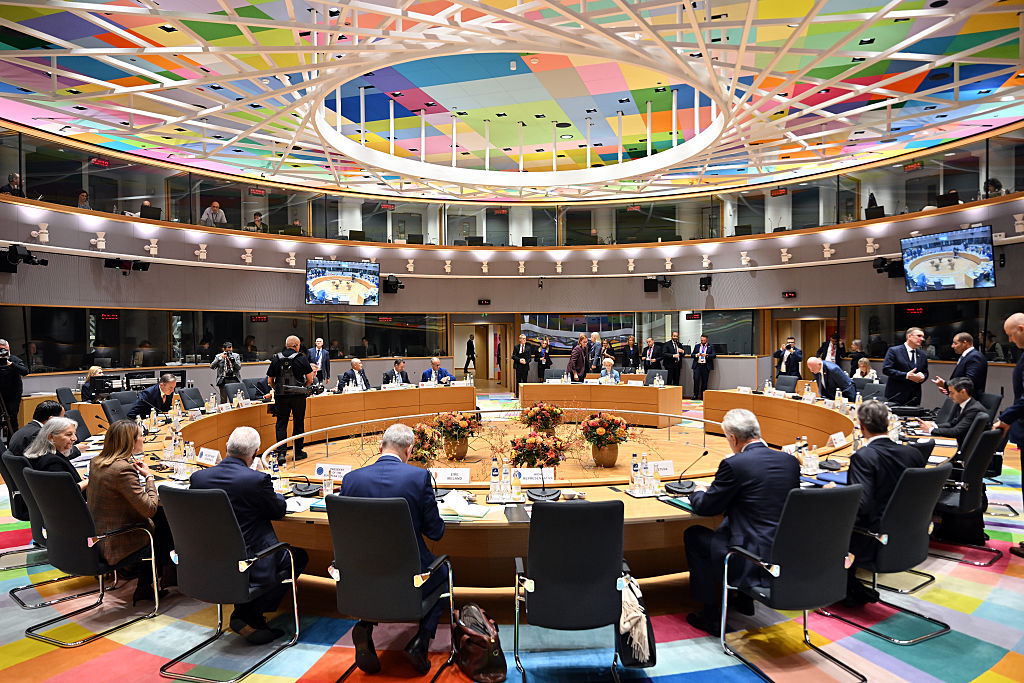
As the US continues to mediate talks between Ukraine and Russia, the debate within the EU over who will sit at the table is intensifying.
Negotiations between Russia and Ukraine scheduled for next week in Abu Dhabi, mediated by the US, will take place without European participation.
There are currently no expectations of a breakthrough, but this has not prevented infighting within the EU over representation.
Italian Prime Minister Giorgia Meloni added fresh friction to the debate yesterday, 5 November, stating that the EU gives “the impression of a Europe moving in different directions.”
In a letter to European Council President António Costa, she argued that the 27 EU leaders must unite behind a single representative before the end of the year.
According to Rapporteur, an “alphabet soup” of diplomatic formats, such as the E2, E3, E5, or the CoW (Coalition of the Willing), is competing to take centre stage in discussions concerning the future of Ukraine.
Facing elections next year, Meloni has long pushed back against the assertive stance adopted by the E3 format, which brings together the UK, France, and Germany, in their efforts to represent European interests in ending the war and shaping the continent’s future security architecture.
Last month, the Italian leader said:
“If France, Germany, and Great Britain believe that within that renowned E3 format they can achieve more alone than we can all achieve together, then they should at least do so in the name of everyone, with an official mandate from all parties.”
An EU diplomat remarked: “When we speak of the E3, we are talking about geopolitical influence, military strength, and financial power. This does not mean Italy is excluded, but Rome clearly believes it must have a seat at the table.”
Meloni has the backing of Poland, another major military power and the only other large EU country sharing a border with Ukraine.
However, her counterpart Donald Tusk has been less explicit about seeking a direct role in top-level talks.
“As you know, we have many different formats,” Tusk told reporters in Warsaw on Thursday. “We have a clear position as the EU and as the Coalition of the Willing. I am fully engaged in these processes.”
Foreign Minister Radosław Sikorski, however, proved considerably more outspoken. “The last thing we want is Western Europe dealing with Russia while bypassing Eastern Europeans,” Sikorski said, drawing parallels to the 1930s and the 1945 Yalta Conference:
“You cannot exclude Eastern Europe and Scandinavia from these talks. We are roughly 120 million people. Finland borders Russia, Norway borders Russia, the Baltic states border Russia, and Poland borders both Russia and Ukraine.”
Berlin argues that the E3 remains the natural representative group, given that Germany, France, and the UK are the three strongest military powers capable of underwriting future security guarantees for Ukraine.
Like Italy, Poland favours the E5 configuration, which would allow Warsaw and Rome to take part.
Yet Sikorski also floated another leadership lineup to meet Putin: António Costa, EU foreign policy chief Kaja Kallas, and UK Prime Minister Andy Burnham.
Sikorski argued that under EU treaties, the Costa-Kallas pairing holds the legal authority to represent the bloc.
Speaking to journalists in Lisbon on Thursday, the EU’s top diplomat, Kaja Kallas, said: “I agree with Prime Minister Meloni; we must not speak with different voices. We must remain united in stating that these matters sought by Russia require Europe’s decision as well.”
Meloni is not alone in pointing out cracks in the EU’s posture. Last week, Danish Prime Minister Mette Frederiksen, a close ally of Meloni on the European Council, questioned a phone call made to Putin by the leaders of Finland and Norway, asking what they truly hoped to achieve.
Finnish President Alexander Stubb and Norwegian Prime Minister Jonas Gahr Støre defended the conversation as a useful step taken in full coordination with Kyiv.
According to an EU official, the pair would be “more than happy” to discuss appointing a special envoy for Ukraine.
The official stressed, however, that the call was not “a bid” to position Stubb and Støre for the role.
Regardless, the war is unlikely to end this winter, even as Europeans explore fresh mechanisms to finance Ukraine.
“We must be realistic about peace talks and extremely cautious regarding Russia’s true intentions,” Donald Tusk said. “During the winter months, Putin may have less motivation to reach an agreement.”

Blue tsunami and Iran conflict expose deep US cracks, Dr. Tuğtan says

The Mecca Defence Agreement, the Ottoman Empire, and the facts

George Szamuely dissects European decline and strategic rifts with US

Nvidia investigates CEO Jensen Huang over link to Chinese spy

US secures 35% stake in Venezuelan firm NABEP under 50-year deal
-

 Diplomacy1 week ago
Secular dress code dispute exposes deeper Türkiye-Azerbaijan strains
-
 Russia2 weeks ago
US and Russia weigh energy deals and corporate return in peace talks
-
 Europe2 weeks ago
Merz visits Asia to seek new markets for German defence firms
-
 Europe2 weeks ago
Serbia opposition wins snap vote as Vucic concedes defeat
-
 America2 weeks ago
Pentagon prepares US bases for 90-day siege in global war plan
-
 Europe2 weeks ago
AfD drops Dexit to back single market in new Europe strategy
-
 America2 weeks ago
Lula defeats Flavio Bolsonaro to seal historic Brazilian comeback
-
 Middle East2 weeks ago
US warns Gulf allies of possible Iran strikes after midterms
