
Europe
EU wrestles with domestic content rules for ‘Made in Europe’ push

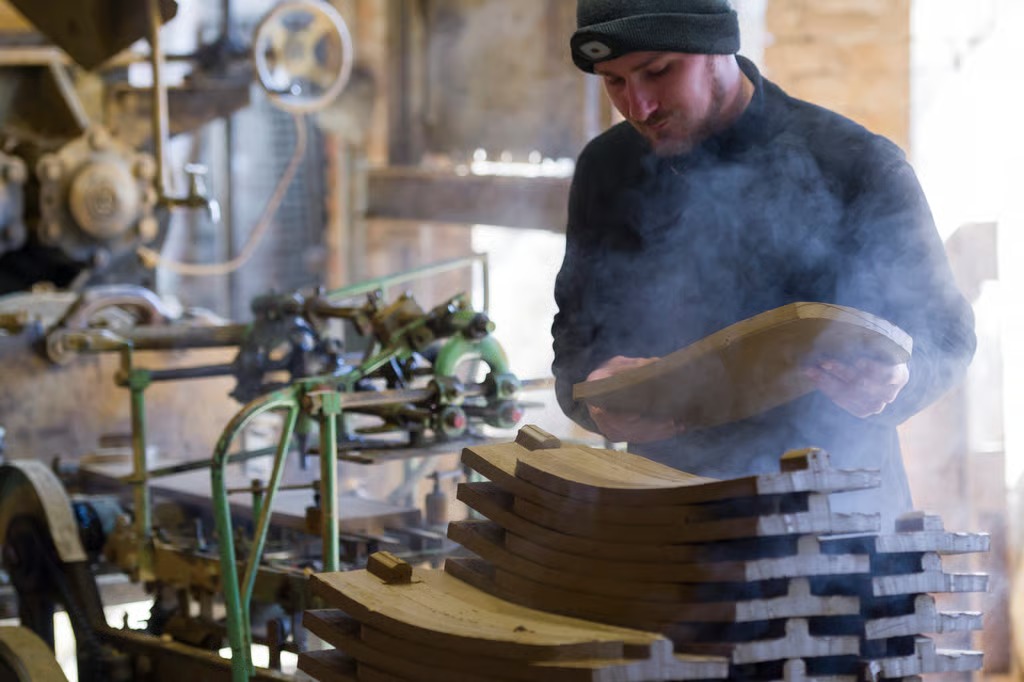
The EU wants to leverage its immense public spending power to bolster European industry through a “Made in Europe” initiative.
Deep divisions remain, however, over what should genuinely count as European-made.
According to a report by Politico, the European Parliament and member state governments are trying to establish their positions on the Industrial Accelerator Act (IAA), which forms part of Brussels’ effort to turn the “Made in Europe” slogan into an industrial strategy.
The initiative aims to use tenders and subsidies to create a guaranteed market for products of European origin.
Yet doing so requires answering politically contentious questions, such as how “European” a product must be to qualify, and how much more governments and consumers should be prepared to pay to buy domestic goods.
Disagreements are playing out not only between Parliament and the Council, but also among national governments and even between political allies from different countries.
Unveiled by the European Commission in March, the IAA seeks to channel public expenditure on green technology, energy-intensive industries, and motor vehicles towards European firms, helping them compete with dominant Chinese exporters.
Six months on, it is becoming increasingly clear how difficult it is to turn that objective into workable legislation.
Opposing sides broadly agree on the need to strengthen Europe’s industrial base, accelerate permitting procedures, and reduce strategic dependencies.
However, sharp divisions persist over how extensively the EU should support European manufacturing and how much flexibility national governments should retain.
Politico has identified five issues that will dominate negotiations through 2027.
The first issue is the debate over what qualifies as “Made in Europe”.
Defining EU origin is the most politically sensitive topic in the talks. With public procurement accounting for 15% of the bloc’s GDP—equivalent to roughly 3 trillion euros a year—the sums at stake are enormous.
If the threshold defining how European a product must be is drawn too narrowly, Brussels risks alienating close trading partners and disrupting supply chains.
Conversely, if drawn too broadly, the “Made in Europe” preference risks becoming meaningless.
Parliament is pressing for stricter anti-circumvention rules and demanding that at least 50% of a product’s value be created within the EU.
This condition would also make it harder for goods or components from third countries to be treated as equivalent to EU-origin items.
Lawmakers also aim to impose tighter conditions, including reciprocity, economic security measures, climate commitments, labour standards, and human rights safeguards.
The Council is more open to treating content from countries covered by the WTO Agreement on Government Procurement or relevant free trade agreements as equivalent to EU-origin content under specified conditions, including certain reciprocity principles.
Yet EU member states are still debating their positions and putting forward various conflicting proposals.
Ireland, which holds the Council presidency, plans to submit a fresh compromise proposal featuring the “Made in Europe” designation by mid-October.
Another issue is Foreign Direct Investment (FDI) screening.
Parliament wants a more comprehensive and stringent system to screen foreign investment in strategic sectors.
Underpinning this demand is the concern that, despite the EU spending billions to develop strategic industries, subsidized or otherwise state-backed foreign investors could acquire the very companies and assets the EU helped build.
Lawmakers want to lower the review threshold from the proposed 100 million euro investment figure to 50 million euros, bring affiliates of foreign investors under the rules, and lower the control threshold that triggers mandatory notification.
They also want to give the Commission a stronger role, granting it the power to block investments in critical raw materials when EU funds are involved.
The Council’s position is narrower: it broadly retains the 100 million euro FDI threshold and the 30% control threshold set out in the Commission’s original proposal, while granting national authorities greater flexibility in managing the approval process.
The two institutions are at odds not only over the scope of screening, but also over the institutional balance of power between Brussels and national capitals.
The third issue centres on the scope of tenders and subsidies.
Both sides want public tenders and state support to drive demand for European-made, low-carbon goods.
However, opinions diverge on how broadly the rules should apply.
This is where political goals collide directly with public purse strings. Requiring governments to purchase European-made goods could spur demand for domestic manufacturers, but it could also force taxpayers to pay more when cheaper imported alternatives are available.
Parliament wants various requirements—such as green, social, or “Made in EU” criteria—to cover up to 90% of state aid or subsidy programmes, compared with 45% in the Council text.
It also proposes tighter social and labour conditions, relocation curbs, and stricter verification and enforcement mechanisms.
The Council favours broader exemptions where suitable products are unavailable, excessively costly, or technically unviable.
This posture reflects governmental concerns over higher public spending or project delays linked to reliance on imported components.
The fourth issue is the divergence over sectoral targets.
Parliament generally seeks higher and more granular European-origin content requirements for batteries, solar panels, wind turbines, electrolysers, nuclear technologies, and electric vehicles.
Electric cars illustrate how complex the “Made in Europe” concept can become in practice.
A vehicle assembled within the EU may contain a battery and raw materials sourced through supply chains spanning the globe.
Parliament plans to raise the required EU-origin share for non-battery vehicle components from the 70% proposed by the Commission to 75%.
Requirements governing battery materials, binders, and strategic raw materials would also be introduced.
The Council’s stance, by contrast, is less prescriptive and allows for a more phased implementation.
The dispute is not over whether strategic sectors should receive support, but whether the IAA should impose binding content targets that could push up costs for manufacturers and consumers.
The fifth and final debate concerns the sectors covered by the Industrial Accelerator Act.
The argument centres on whether the IAA should remain a targeted response to strategic dependencies or become a broader vehicle for EU industrial policy.
Parliament wants to expand the legislation to cover areas such as maritime manufacturing, materials recovery, and certain plastic products used in construction.
It also wants sectors such as fertilizers, rolling stock, robotics, and aerospace considered in future reviews.
The Council text focuses more tightly on sectors already identified, including energy-intensive industries, automotive, net-zero technologies, and critical raw materials.
The debate reflects wider friction over how far the EU should extend “Made in Europe” preferences.
When public procurement and subsidies are deployed in certain strategic sectors to shield domestic manufacturing, other industries gain a strong incentive to argue that they too should benefit.
According to a separate report by Politico, Brussels is prepared to grant candidate countries access to its single market, provided they agree to align with the bloc against “hostile states” and industrial competitors.
Under the draft plan, candidate countries would receive unprecedented “gradual integration” into the single market while their accession bids are assessed, including frictionless trade and access to research programmes.
An assessment of “pre-enlargement” benefits to be offered to candidate nations states: “The single market is the primary driver of economic convergence.”
The draft states:
“Earlier integration will create opportunities for businesses across the Union, strengthen European value chains, and reduce strategic dependencies. The Commission will identify sectors where verified regulatory alignment and enforcement capacity allow for deeper participation in research, innovation, and industrial cooperation, as well as broader market access. Priority should be given to opportunities that advance accession preparations and address shared economic and strategic needs.”
Overseen by Alexandre Adam, top adviser to Ursula von der Leyen and former aide to French President Emmanuel Macron, the review would fundamentally transform the EU’s approach to neighbouring countries.
At present, almost all the economic advantages of closer cooperation remain reserved for member states.
No new country has joined the EU since Croatia’s accession in 2013.
As part of Adam’s package of measures, Ukraine, Moldova, Albania, and Montenegro are set to receive “roadmaps” designed to accelerate their accession process in the coming years.
For other nations, including North Macedonia, Kosovo, Bosnia and Herzegovina, Serbia, and Türkiye, the process continues to drag on amid mounting fears that they could drift away from the EU or draw closer to Russia or China.
Under the Commission’s blueprint, economic benefits extended to candidate countries would depend on their backing of EU foreign policy goals.
Single market access would hinge on candidate states not sharing key technologies with hostile governments and commercial rivals.
The review document notes:
“As industrial and market integration deepens, participation in sensitive sectors must go hand in hand with cooperation on investment screening, export controls, sanctions enforcement, and the protection of sensitive technologies. Access assessments must consider strategic alignment, critical dependencies, and the capacity to manage risks to infrastructure and supply chains. Where these conditions are not met, the scope of participation should be recalibrated under the relevant regulatory framework.”
Areas being considered for closer cooperation include semiconductors, quantum technologies, biotechnology, artificial intelligence, and space.
According to the review, full EU membership must remain the ultimate goal for candidate countries.
“Yet accession takes time: candidate countries must complete a rigorous, merit-based process and deliver comprehensive, enduring reforms,” the report notes. “This period must be fully exploited strategically, both to prepare the Union for a wider membership and to deepen gradual integration in areas of mutual interest.”
The benefits gained, however, will be contingent on countries fulfilling their obligations:
“Where these commitments are not honoured, integration must be reversible. The accession process should be suspended or rolled back where deemed necessary.”








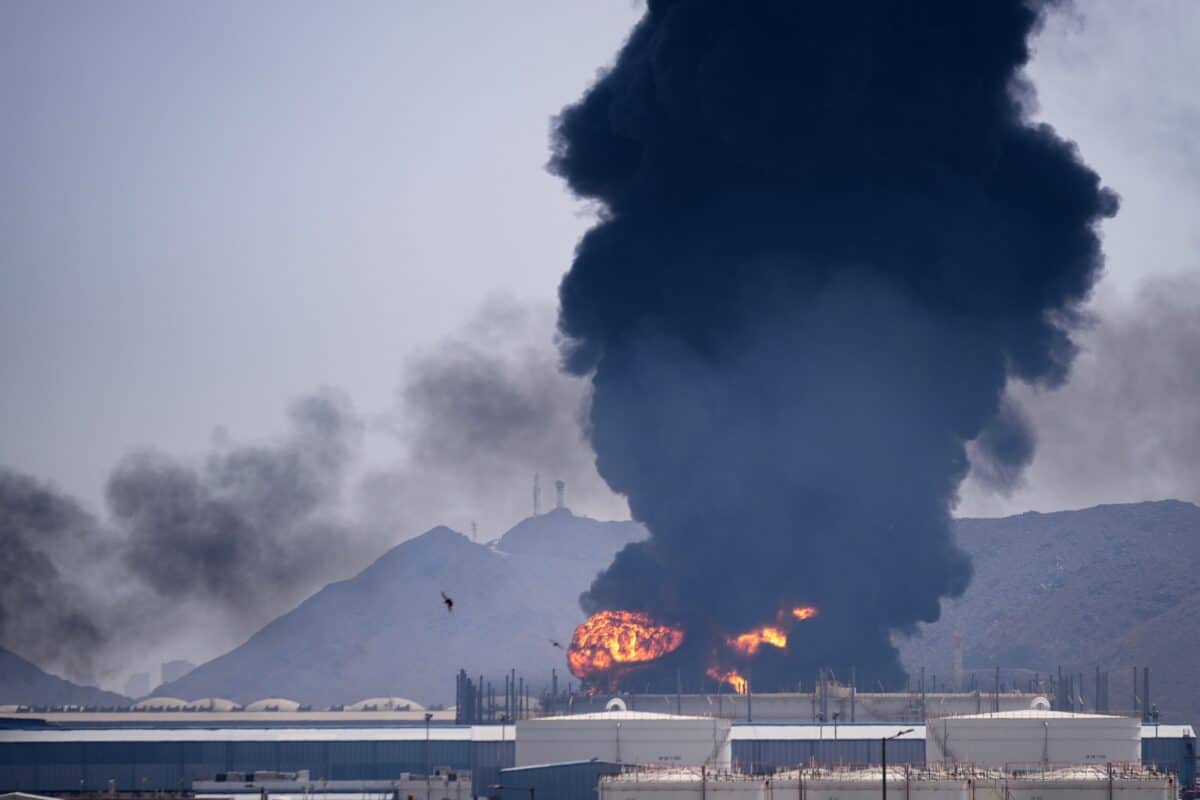
A comprehensive military operation planned by the Israeli military for 10 October did not take place because US President Donald Trump chose to avoid a broad conflict before the 3 November congressional midterm elections.
Preparations had been made on the orders of Prime Minister Benjamin Netanyahu for an aerial bombardment meant to last several days, according to a report by the Financial Times citing sources familiar with the matter.
The list of targets included nuclear facilities and locations associated with the Iranian leadership, along with power stations and other civilian infrastructure sites.
The planned strikes were projected to exceed the joint operation launched by the US and Israel in February in terms of intensity.
White House Deputy Press Secretary Anna Kelly told the newspaper: “The United States is not going to strike Iran at any point before the midterms.”
Kelly argued that the administration in Tehran was in distress both economically and militarily, adding that the blockade imposed on Iranian ports and US efforts to secure oil shipments through the Strait of Hormuz were producing results.
Speaking to the newspaper, one source addressed the possibility of strikes resuming in the coming weeks, saying: “There’s either going to be a deal or a strike.”
The same source reported that Washington aims for a comprehensive settlement that resolves the conflict over both the Strait of Hormuz and the nuclear programme, although it remained unclear whether the US would have participated directly in the cancelled operation.
Another source said the preparations for the operation might have served as leverage to pressure Tehran in negotiations, adding that the final decision on any new military step rests with the US president.
Hegseth reviews updated target list in Israel
An Israeli official said US Secretary of War Pete Hegseth visited Israel on 19 October to meet with Netanyahu and senior representatives.
Another source stated that the Israeli side presented an updated target list to its American counterparts, compiled with fresh intelligence and incorporating civilian infrastructure sites that had not been struck earlier this year.
The Pentagon did not respond to questions regarding the meetings, while Netanyahu’s office and the Israeli military declined to comment.
Despite the postponement of the operation, Trump and Netanyahu continued to issue military warnings to Iran in public.
In a video released on 19 October, Netanyahu addressed Trump, saying: “Donald, you said we need to finish this, and we will finish it together.” Speaking on speakerphone, Trump responded: “You’re a great warrior, and we’re going to prove it very soon.”
These engagements between the leaders coincide with critical election cycles in both countries.
Parliamentary elections in Israel are scheduled for 27 October, one week before the vote in the US.
Most public opinion polls in the country show the opposition bloc holding a narrow lead over Netanyahu’s coalition, though neither side commands a clear majority.
Axios, a US-based news outlet, previously reported that the Pentagon instructed military planners to finalize strike plans against Iran, though the directive specified no date and Trump had not reached a final decision.
On 15 October, CNN reported on plans to use the GBU-43/B munition, known as the “mother of all bombs”, against Iranian nuclear facilities, with US officials who spoke to the broadcaster expressing scepticism about the weapon’s ability to destroy deep bunkers.
While Tehran announced that it remains open to a diplomatic solution, it declared that any potential operation would draw a fierce response.
Iranian Foreign Minister Abbas Araghchi stressed that if its adversaries chose military conflict, the response would be “much harsher than before”.
Following the joint operation launched by the US and Israel on 28 February, Iran retaliated by striking targets across the region and restricting maritime passage through the Strait of Hormuz.
Although the parties reached an agreement in June covering a ceasefire and negotiations to lift the blockade in the strait, reciprocal strikes between the US and Iran have not ceased.
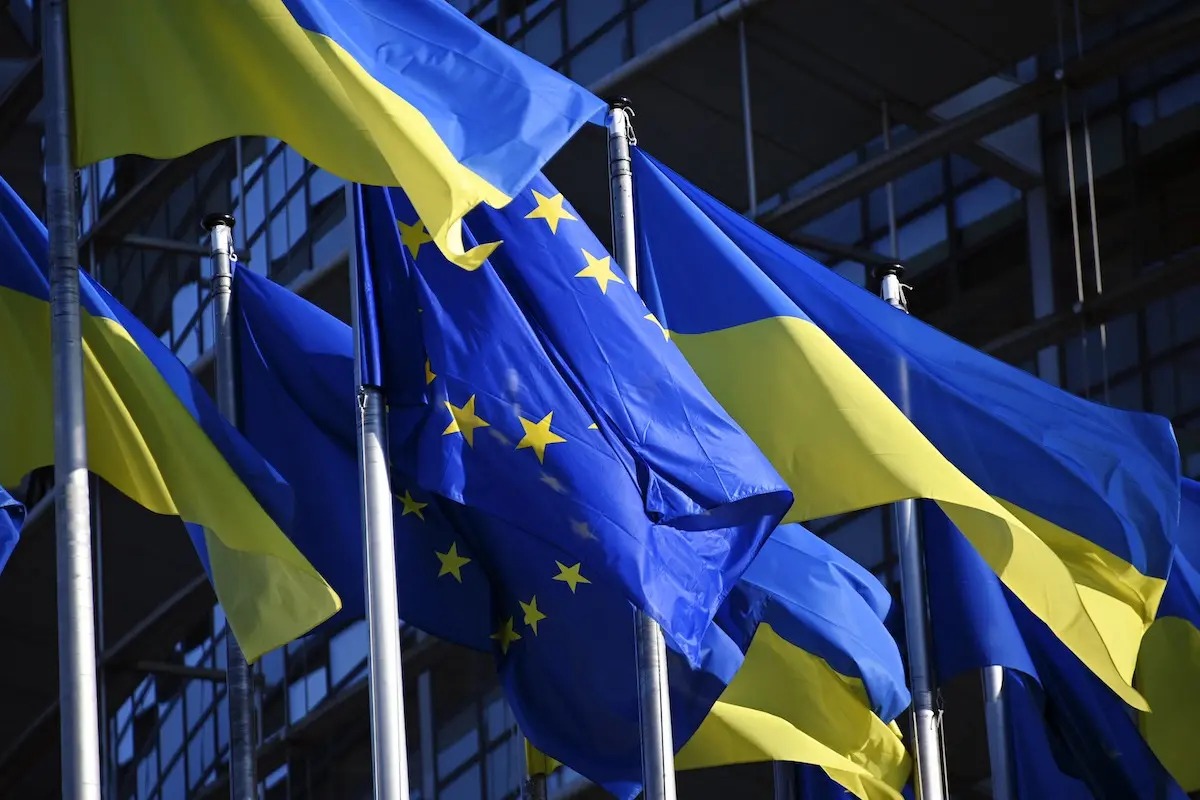
The European Union plans to persuade Britain and Canada to step up their assistance to close Ukraine’s projected 70 billion euro funding deficit in 2027.
Brussels aims to raise the issue during summits with Canada on 29-30 October and with Britain on 20 November, according to a Politico report citing European officials and diplomats.
Ukrainian President Volodymyr Zelenskyy, speaking at a summit in Brussels earlier this month, said the country’s military expenditure would reach 155 billion euros in 2027, requesting an additional 70 billion euros from European leaders.
The administration in Brussels wants to bring other allies into play, noting that a previously approved 90 billion euro loan is insufficient to meet all the costs.
European Commission President Ursula von der Leyen recalled that the EU and its member states have shouldered 80% of external aid provided to Ukraine, saying: “We urgently need our other partners to step up their efforts.”
According to bloc data, the EU and member states have transferred more than 231 billion euros in resources to Ukraine so far.
Brussels will not tie aid plea to trade conditions
European officials emphasise that the call to increase aid does not constitute a criticism directed at Britain or Canada.
Speaking to the publication, a European diplomat said Brussels would not directly link support for Ukraine to conditions on trade or defence cooperation, adding: “The EU is not going to pull a Trump and openly make its goodwill toward partners contingent on what they give to Ukraine.”
The EU had previously taken part in a commitment to provide 90 billion euros in loans to meet roughly two thirds of Ukraine’s requirements in the 2026-2027 period.
The Brussels administration also expected to raise 45 billion euros from partners such as Canada, Japan, South Korea, Australia, and Norway, though a portion of these funds has not yet been allocated.
The government in London states that it has committed 25 billion pounds to Ukraine, while Canada has pledged military aid valued at 5.4 billion euros alongside 8.2 billion euros in direct financial support.
Emphasising that her country is an unwavering supporter of Ukraine, Privy Council of Canada spokesperson Catherine Séguin stated that they have committed roughly 26 billion Canadian dollars for military, financial, humanitarian, and development assistance.
Brussels is also urging Japan to increase its aid volume.
A source familiar with Tokyo’s position stated that Japan has provided around 20 billion dollars to Kyiv and could allocate additional funds in line with Ukraine’s request.
National Bank of Ukraine Governor Andriy Pyshnyy announced in a statement during the summer that about 200 billion dollars in direct budget financing had been provided by the West since the start of the conflict.
At the end of June, the Ministry of Finance of Ukraine calculated the country’s external financing requirements for the 2026-2029 period at 145.9 billion dollars.
Finance Minister Serhiy Marchenko stated that, despite the assistance coming from the West, the country’s financing needs continue to remain elevated.
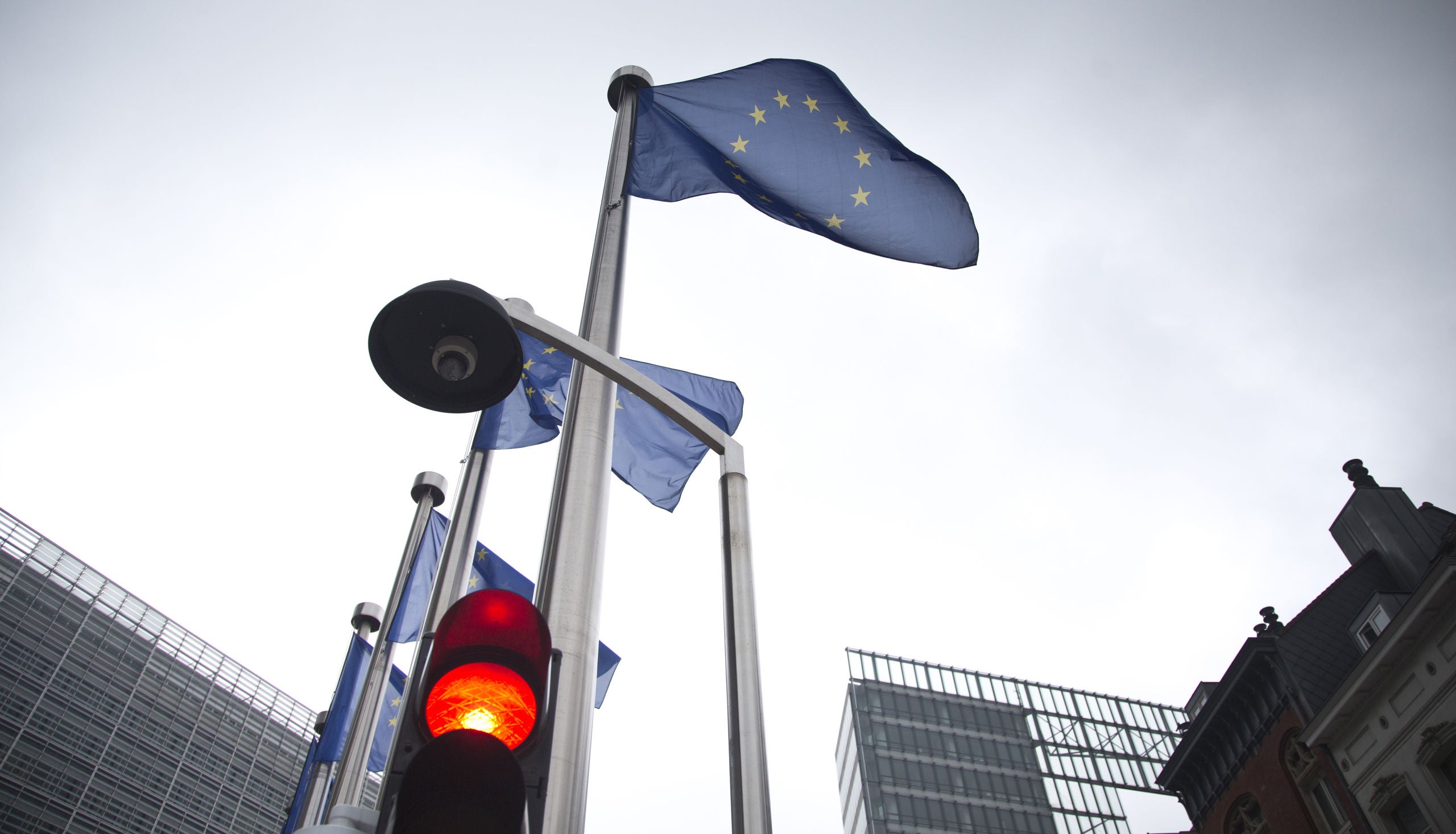
The European Commission has rejected a peace plan proposal from the US administration that entails resuming Russian natural gas purchases via Ukraine.
Commission spokesperson Paula Pinho stressed that Brussels has not changed its stance.
Pinho recalled that European Commission President Ursula von der Leyen had previously stated clearly that no restrictions on Russia would be lifted until the conflict comes to an absolute end.
The New York Times reported that the US president’s new peace proposal includes Europe returning to large-scale Russian gas purchases through Ukraine.
According to the report, Special Envoy Steve Witkoff and Jared Kushner raised the matter during talks in Kyiv last month with Ukrainian and European officials, including Ukrainian President Volodymyr Zelenskyy.
Sources contacted by the newspaper noted that some European and Ukrainian officials believe Washington would seek to secure a share of Russian gas exports.
Under this plan, the objective is to channel a share of the profits to American companies or the US government.
Russian President Vladimir Putin had said Moscow was ready to work on supplying fuel to European nations, but noted that a signal must come from the other side.
Putin stated that Moscow must evaluate the feasibility and necessity of fuel flows to the Western market, adding that they would not wait for Europe to shut the door ostentatiously on energy supplies.
Kremlin spokesperson Dmitry Peskov remarked that European nations rejecting Russian gas would make them dependent on the US and deprive them of the ability to diversify their supply sources.
Peskov noted that the US sells gas at very high prices and that if European nations pay more for energy, their industries will suffer.
The EU plans to halt liquefied natural gas imports from Russia entirely by 1 January 2027 and pipeline gas by 30 September 2027.
Von der Leyen had previously announced that the bloc would reduce Russian gas imports to zero by the end of 2027.
Russia halted gas flows to Europe via Ukraine as of 1 January 2025, when the five-year contract between Gazprom and Naftogaz of Ukraine expired.
Putin had stated that Kyiv refused to extend the transit agreement. Following the closure of the Ukrainian route, the TurkStream pipeline remained the only operational corridor carrying Russian pipeline gas to Europe.

Japan plans curbs on short-term home sales to cool urban prices

Trump midterms calculus halts Israeli strike plan against Iran

EU urges Britain and Canada to help close Ukraine’s €70bn budget gap

Anthropic posts $80.7bn loss ahead of IPO as computing costs soar

Netanyahu trails Eisenkot in Israeli polls despite Trump backing
-
 Europe2 weeks ago
Bill to drop NATO membership goal submitted to Ukrainian parliament
-
 America2 weeks ago
How will Brazil’s presidential runoff work?
-
 Europe2 weeks ago
Marine Le Pen unveils fiscal programme pledging French budget cuts
-

 Europe2 weeks ago
Berlin Left Party backs Israel’s right to exist for coalition pact
-
 Diplomacy2 weeks ago
The West is preparing for war not with Russia, but with its own people, French analyst Georges Kuzmanovic insists
-
 Europe2 weeks ago
EU seeks Chinese trade signal in Beijing as surplus widens
-
 Middle East2 weeks ago
Eisenkot ties Syria pact to withdrawal of Russian and Turkish forces
-
 Diplomacy2 weeks ago
Europe has been under US occupation since World War II, Italian journalist and author Thomas Fazi says
