Interview
Hezbollah official speaks to Harici: Türkiye could be the driving force against the US-Israel axis

Ghaleb Abu Zeinab, Member of Hezbollah’s Political Bureau, spoke to Harici from his office in the Dahiyeh district of Beirut: “The Israeli-American agenda targets the entire region: Lebanon, Syria, Arab nations, Iran, and Türkiye.”
We have entered the year 2026 amidst a veritable storm in foreign policy and global politics. The resurgence of the ISIS terrorist organization in Syria and Türkiye, the conflict between the YPG and Damascus, the United States’ brazen abduction of the Venezuelan president, and the outbreaks of unrest in Iran…
In Lebanon, the region’s flashpoint, political and military tensions are also on an upward trajectory. One could say the waters are heating up once again—or, more accurately, that they never truly cooled. Post-October 7 Israeli aggression continues unabated. Although the Hezbollah side abides by the ceasefire, Israel relentlessly strikes southern Lebanon. This situation continues to strain the relationship between Hezbollah and the Lebanese government.
The heavy pressure exerted on the Lebanese government to disarm Hezbollah ahead of the elections scheduled for May also jeopardizes the country’s delicate equilibrium. The United States and Israel demand Hezbollah’s unconditional surrender. Israel threatens to launch a new military operation should this demand go unmet. Indeed, the disarmament of Hezbollah was the primary agenda item during the Iranian Foreign Minister’s visit to Lebanon on January 9.
Ghaleb Abu Zeinab, Member of Hezbollah’s Political Bureau, asserts, “Hezbollah’s armed strength is not solely related to the Palestinian cause, but also to the defense of Lebanon.” Arguing that Israel poses a threat not only to Palestine and Lebanon but also to an arc extending from Syria to Iran and on to Türkiye, Abu Zeinab positions Hezbollah at the vanguard of the regional resistance against Israel.
Ghaleb Abu Zeinab insists that Israel regards Türkiye as an “enemy.” The Hezbollah official posits that Tel Aviv views Türkiye as “a major, enduring power most capable of leading the Islamic world.”
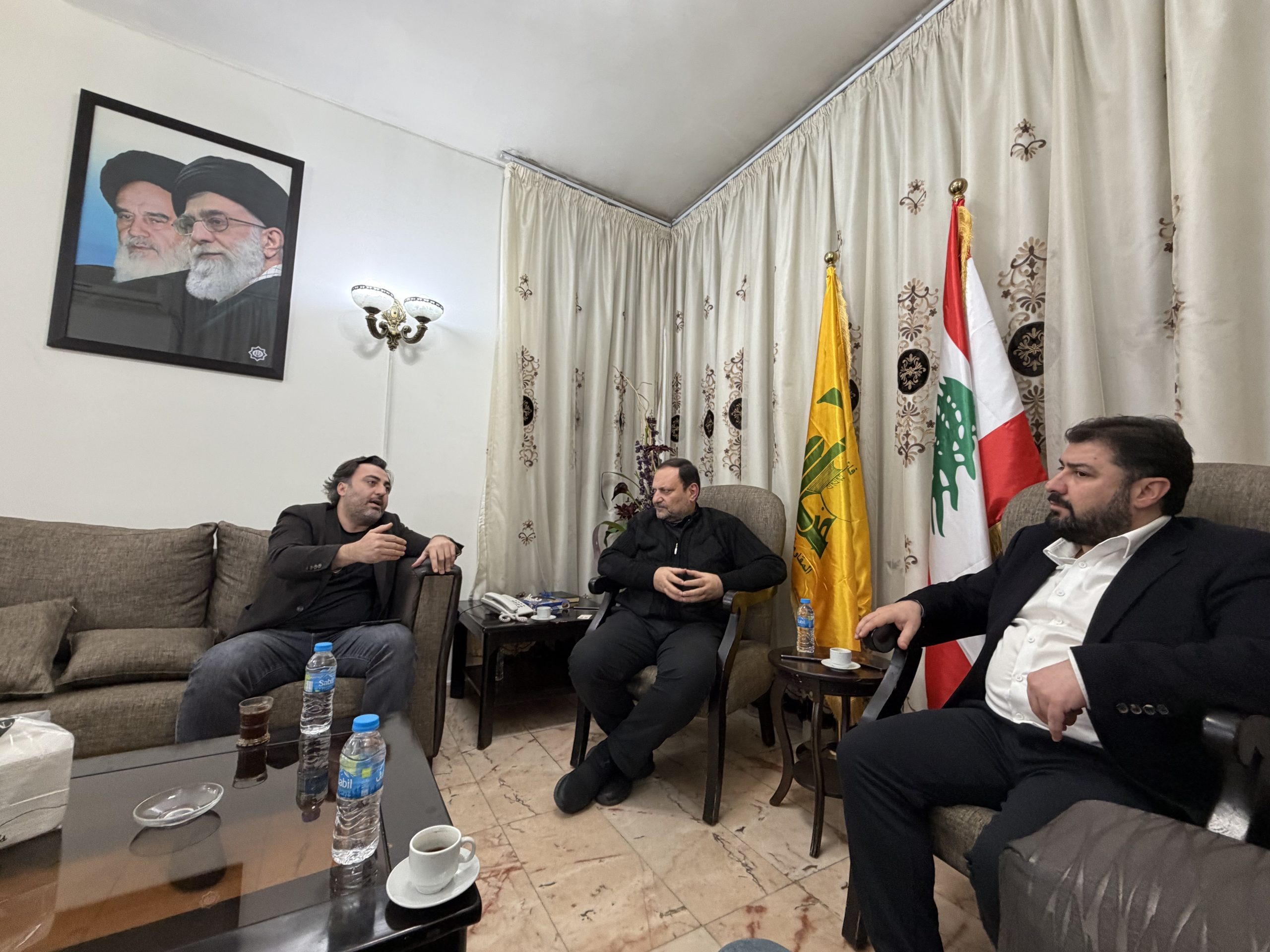
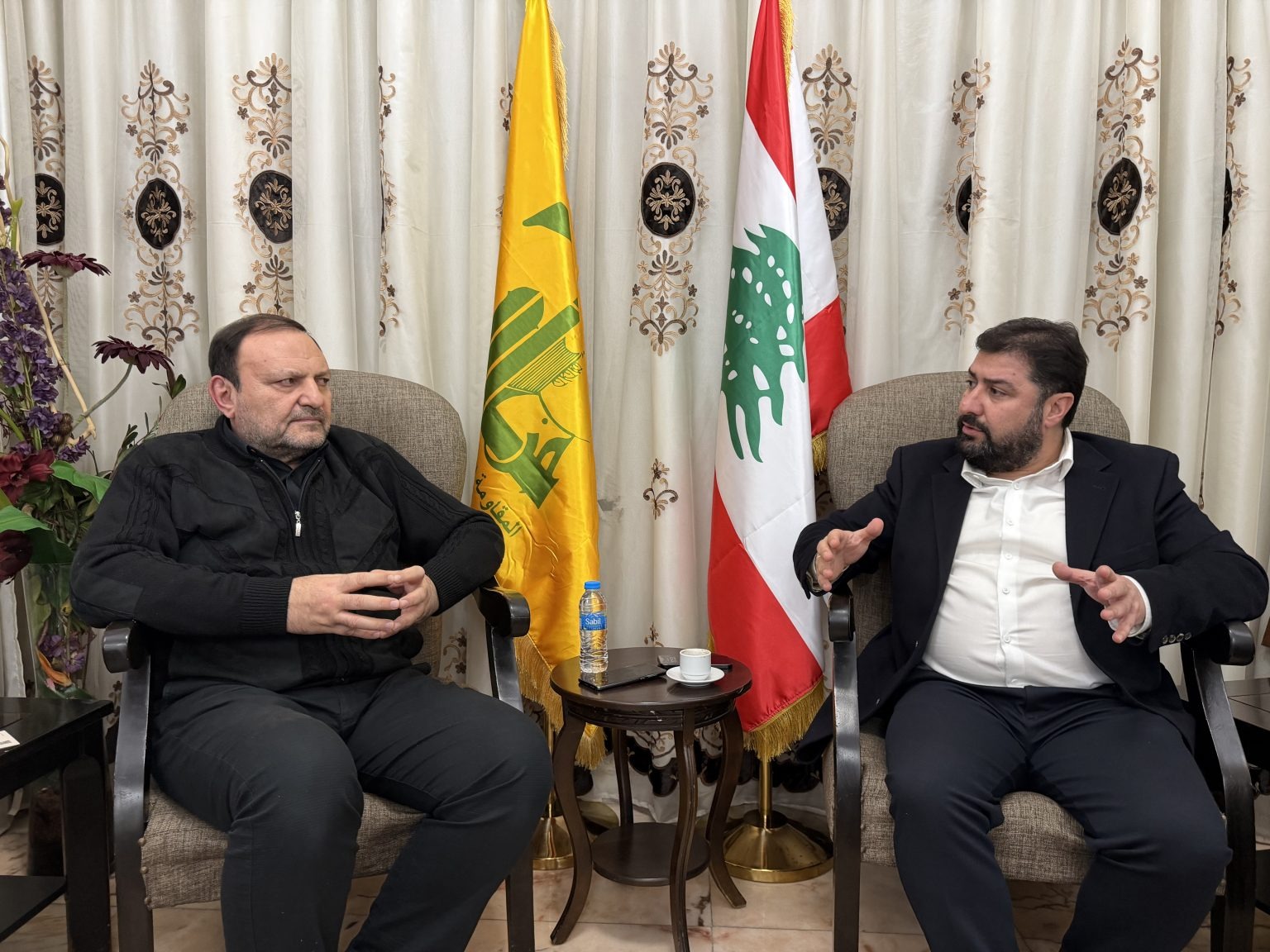
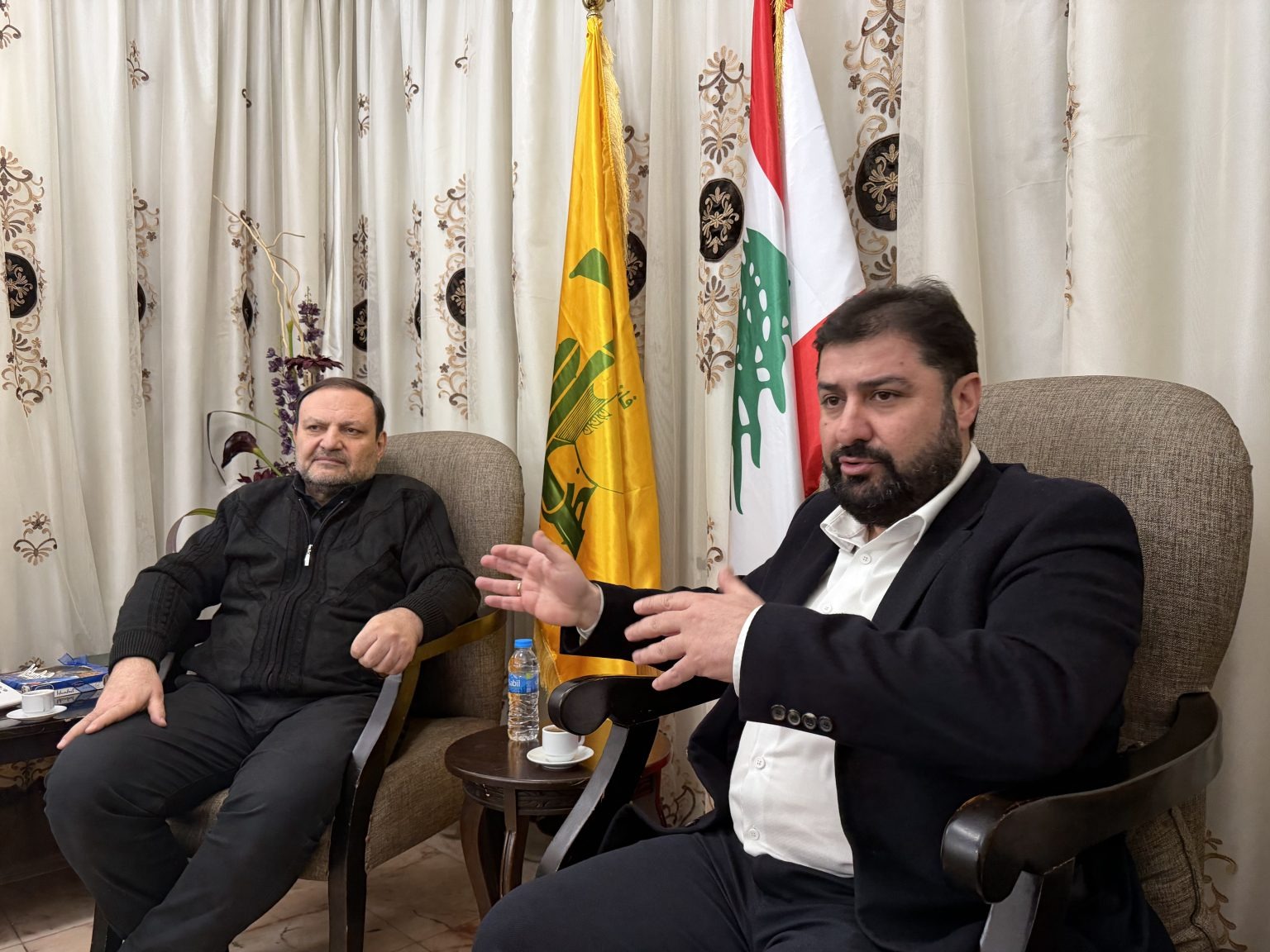
At his office in the Dahiyeh district of Beirut, Hezbollah Political Bureau Member Ghaleb Abu Zeinab answered questions from Harici Editor-in-Chief Tunç Akkoç and Harici Editor Mehmet Kıvanç.

Harici: What are the Israeli moves that you believe are being planned for Lebanon in the future? And are you, meaning Hezbollah, prepared to respond militarily?
Abu Zeinab: I believe the Israeli plan is not limited to Lebanon alone, but rather is an Israeli–American plan, since the United States cannot be separated from Israel. The Israeli–American plan targets the entire region: Lebanon, Syria, the Arab states, Iran, and Türkiye. There is a plan to create a new Middle East or a new region dominated by the United States, in which Israel is given priority in terms of power. As a result, the region would be dismantled extensively—fragmented into small statelets. Thus, when Israel insists, for example, on war in Lebanon, or on occupying three areas in Syria up to this moment, or on heavily threatening Iran, it seeks to reach a stage where all sources of strength in the region are stripped away, turning these countries into states that possess no means of power to defend themselves against any Israeli move. In practical terms, Israel would then become a great power possessing all forms of power, while others possess nothing.
The second objective Israel seeks is to turn these areas into rival, hostile states. For example, it wants to divide Syria into four or more states—for the Kurds, Druze, Alawites, and Sunnis, with the Sunnis themselves divided into more than one area. This is not limited to Syria alone; rather, starting from Syria, Iraq would be divided, and from Iraq this would extend toward Iran, in another direction toward Türkiye, and in other directions toward the Gulf, especially Saudi Arabia. This is the picture Israel is pursuing through these actions.
At present, what is required of us from the American side—given that Israel is not an absolute power—is to recognize that Israel, without continuous American support, cannot be a central or decisive actor in the region. It cannot be an absolute military power without sustained American backing. The region, with its states and even resistance movements, is capable of standing up to Israel. However, we are not confronting Israel alone; we are confronting the United States, because there is continuous American support. This is similar to what happened in Palestine and in Gaza: the issue was not a fight between Palestinian resistance factions and the Israeli enemy, but rather a confrontation between the entire NATO alliance and the Palestinian resistance. The United States was in the command room. In Lebanon as well, the war in all its details was led by the Americans, in addition to Western and global intelligence services that were mobilized to serve Israel—providing coordinates, satellites, Starlink, and everything else—fully prepared in Lebanon against the resistance in service of Israel.

In the end, Israel in this context becomes a great power due to the American support it possesses. Here lies the fundamental problem: the United States wants Israel to remain a great power and wants to keep the region under American control using the Israeli tool.
As for us in Lebanon, Israel currently considers us an imminent danger for more than one reason. First, about a year ago, after the war stopped, Israel claimed it had eliminated the majority of the resistance’s weapons and struck its military and organizational structures, rendering the resistance in Lebanon and Hezbollah extremely weak. This is not true. In reality, that was not the case. It is true that the resistance suffered a severe and painful blow with the martyrdom of His Eminence the Secretary-General. Incidentally, those who participated in the strike on Sayyid were Americans, British, and others from the West—all of them participated in the planning and execution. Nevertheless, we emerged from this battle and reorganized our situation.
The problem for Israel now is that as long as there is a resistance in Lebanon that possesses weapons and constitutes a threat, Israel will remain concerned. The equation Israel wants to establish is not only about the level of danger posed by these weapons, but about eliminating the very idea of resistance from Arab and Islamic peoples. The issue of resistance and Hezbollah in Lebanon is not only a military threat; after what happened in Gaza in terms of comprehensive destruction, Israel wants to uproot the concept of resistance from the Arab and Islamic dimension. To uproot this idea, it seeks to destroy the place that became a beacon for the Arab and Islamic nation and achieved victory more than once. It wants to strip Lebanon of this role, sending a message to Arab and Islamic peoples—and to the peoples of the region—that no one can stand up to Israel, that Arabs and Muslims must accept the end of the Palestinian cause, and must submit completely to Israel, which cannot be defeated. I believe that today’s demand that Syria grant Israel air sovereignty is part of this agreement—it seeks to translate this meaning in one way or another.
From this perspective, Israel is anxious about Lebanon. As for us, we have prepared ourselves. If Israel wants to launch a large-scale aggression against Lebanon, we are ready to fight fiercely in defense of Lebanon. However, at the current stage, we are committed to the ceasefire. We endure the shelling, pressure, and the martyrdom inflicted by Israel. We are also committed to the area south of the Litani River, from which we have completely withdrawn, and we are trying to reorganize the situation in cooperation with the Lebanese state in an attempt to achieve Israeli withdrawal from Lebanon. We present an approach completely different from that desired by Israel, the United States, some Arabs, and the West—they want the resistance to be neutralized or disarmed without any return.
Harici: Some analysts expect that Israel might occupy the Bekaa Valley. Do you agree with this analysis?
Abu Zeinab: I believe Israel is capable of doing anything, but I think it fears direct occupation. For example, occupying the Bekaa Valley or the south and reaching Sidon. There is a difference between occupation in Syria and occupation in Lebanese areas. In Syria, the existing structure is not primarily a popular or logistical resistance structure. In the Bekaa, however, Israel must think carefully, because there is a hostile popular base capable of resistance, and the resistance possesses many weapons. It can turn any occupation into a hell for Israel. Therefore, Israel thinks very carefully before undertaking such an occupation. It cannot occupy the Bekaa as a whole. It might consider cutting off certain areas, for example separating western Bekaa from northern Bekaa, and northern Bekaa from Zahle. But to occupy the entire Bekaa would be catastrophic for Israel, unless it intends to implement a scorched-earth policy first and then enter. This is not clear at the present stage.
Harici: There are strong pressures on the party regarding its weapons. Are you consulting the Lebanese government on this matter?
Abu Zeinab: There are consultations and ongoing communication with the Lebanese government and the President on this issue. There is continuous contact on these matters. We are trying, as much as possible, to shield Lebanon from these issues and to cooperate with the state, and to prevent American and Israeli pressures—exerted on the Lebanese government and state, together with the President, Speaker Nabih Berri, and the Prime Minister—from leading to the Lebanese army being used as an Israeli tool against the resistance. There is a high level of awareness within the Lebanese army and its commander, who fully understands the sensitivity of the situation, and realizes that any internal clash or attempt to seize weapons could lead to internal instability and even the disintegration of the Lebanese army. The situation does not allow for this, and we understand this, as do the President, the army leadership, and the Prime Minister. We all deal with this matter based on Lebanon’s fundamental interest, and therefore we seek compromises in internal affairs.
Harici: What if the Lebanese government insists on disarming the resistance?
Abu Zeinab: We believe this assumption is unrealistic and cannot happen. The Lebanese government cannot take such a decision because it would cause massive harm to Lebanon’s situation. No rational person in Lebanon would take the issue in this direction. There is a decision within Hezbollah that any attempt to forcibly disarm the resistance will be dealt with in an appropriate manner. As long as there is Israeli occupation and a threat to Lebanon, we cannot accept, under any circumstances, that the internal agenda becomes the disarmament of the resistance.
In this context:
First, we withdrew from south of the river (the Litani River).
Second, we committed to the ceasefire agreement (called the agreement to stop hostile actions).
This agreement stipulates our withdrawal from south of the river, and in return stipulates Israel’s withdrawal from the area, yet Israel still occupies certain points. It stipulates the cessation of hostile actions against Lebanon, yet Israel continues to conduct raids and kill Lebanese citizens. Thus, Israel has not implemented any clause of the agreement.
As for the second part, related to north of the river, this is not an Israeli matter but an internal Lebanese one. It means that we Lebanese must agree among ourselves. The President stated in his oath speech upon assuming office that there should be national security strategies—strategies that include how to benefit from the sources of strength possessed by the resistance to serve Lebanon and defend it. The resistance wants itself, its weapons, and its fighters to be positioned in defense of Lebanon in case of Israeli aggression. Meanwhile, the Americans and Israelis want Hezbollah to surrender its weapons and have them destroyed—literally blown up. Currently in the south, at some points or depots, the Lebanese army confiscates weapons (of all kinds, including missiles) and destroys them at American instruction, because Lebanon is forbidden from benefiting from these weapons to defend itself.
The Americans and Israelis want the army to possess only light weapons for internal fighting, not for defending Lebanon.
Harici: The balance of power in the region has changed, especially with developments in Syria. In light of these changes, how do you assess Türkiye’s role in the region at this stage?
Abu Zeinab: Türkiye, first of all, is a major regional power. I believe that Türkiye’s approach to the political reality in the region after the fall of the Syrian regime did not align with the new political realities. In other words, Türkiye thought for a moment that with the regime of Mr. Ahmad al-Sharaa it could be a primary ally extending across all Syrian geography. However, I believe that once again, the Israeli enemy—despite everything—still considers Türkiye an enemy and does not want Türkiye to be directly on its borders.
That is why the radar strikes or the bombing of airports (which were planned to become Turkish bases) occurred. These actions constituted red lines set by Israel. What does this mean? It means Israel considers Türkiye an enemy and wants to prevent any real Turkish influence in Damascus—specifically military influence or presence on the ground.
In the long term, Israel sees that a unified Syria (which is the American desire—a unified Syria under American control—while Israel desires fragmentation) could affect Israel’s geographical situation. It believes Turkish influence could expand significantly. Therefore, it is in Israel’s interest that Damascus not be strong—that Mr. Ahmad al-Sharaa and the regime remain weak.
This is a prelude to saying that Türkiye is not in a position of expanding influence in Syria; rather, Türkiye is currently in a position of defending itself against Israeli ambitions to fragment Türkiye. The Kurdish issue is not simple. For Israel, the Kurdish issue is the ignition fuse through which it seeks later to initiate fragmentation processes in Türkiye and even in Iran.
Therefore, I say Türkiye is in a position of self-defense and must cooperate with the components of the region, because it can act as a locomotive. If Türkiye now stands against these Israeli projects—whether in Syria, Lebanon, or even alongside the Iranians—I believe it can preserve itself and others, and form a cooperative bloc capable of standing against the Israeli project now and the American project later.
We are truly in a sensitive phase, where dual policies can no longer be practiced. Allow me to say that the policy adopted toward Gaza was a dual policy. Here, such a policy cannot be practiced. It is not possible for Türkiye to raise its voice against Israel while tolerating Israeli occupation of parts of Syria or the division of Syria under any pretext. If Türkiye accepts that, it would be committing a strategic and historical mistake.
Israel’s borders would then reach Türkiye’s borders, and Israel would work to divide Türkiye. This is exactly the Israeli project. Israel believes Türkiye is a real danger in every sense of the word. It considers Iran’s threat to have become distant in one way or another, but it views Türkiye as the most qualified to lead the Islamic world and as a major, still-existing power.
Even if Türkiye thinks positively, the issue is not Türkiye’s position or how it behaves—the issue is the Israeli enemy’s position toward Türkiye. Therefore, Türkiye is required to wage this diplomatic and political battle and to be active on this front in order to preserve Türkiye itself.