
Diplomacy
Middle East faces insecurity, massacres, and genocide; Iranian diplomat Soltanieh declares

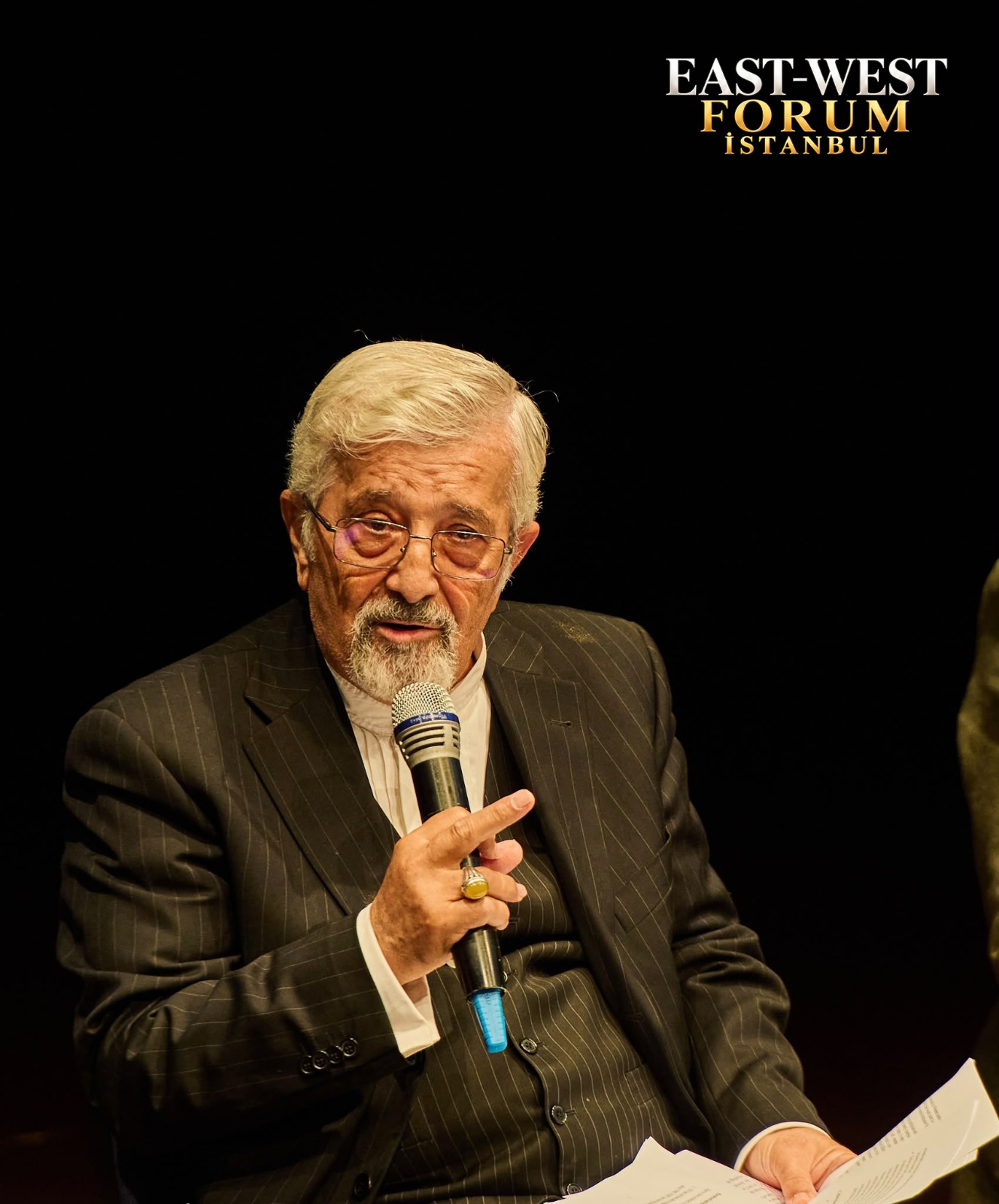
Editor’s note: In his address at the East-West Forum held in Istanbul on September 26, Ambassador Ali Asghar Soltanieh, Iran’s former representative to the IAEA, nuclear scientist, and diplomat, examined the unraveling of Western hegemony and the dynamics driving the transition toward a multipolar new world order. Drawing on more than four decades of international diplomatic experience, he shared firsthand accounts of how global bodies such as the UN, the IAEA, the CWC, and the BWC have been weaponized, particularly by the US and its Western allies. He stressed that the Middle East has been forced to pay the price for historical European crimes and antisemitism through the expulsion of Palestinians and the ongoing genocide in Palestine. Furthermore, he presented concrete instances showing how the NPT regime and international nuclear inspection mechanisms are applied with double standards favoring the West and Israel, with Israel’s acts of aggression being actively covered up by these very institutions.
In the name of God, the most gracious and the most merciful distinguished colleagues,
At the outset allow me to express my sincere appreciation to organizers, Harici and European Transcontinental Initiative, for invitation to this important conference, at this crucial historical time juncture in the fragmented world, and to wish a successful conference.
Some scholars are of the view that we are at the verge of the End of the Western Century and beginning of a Post-Hegemonic World Order.
The simple question is: How has the historical relationship between East and West evolved from Western imperial and liberal dominance toward a contested multipolar order, and how can the transition be managed without reproducing the cultural homogenization, geopolitical confrontation and technological domination associated with hegemony?
In order to make a careful analysis of the “Transition of the East–West Relations, From Western Hegemony to a Multipolar World Order”, one has to identify the main characteristics in Western domination structure that caused it to undermine itself, which in turn would point to some key features in the building block of a new Eastern-oriented Multipolar System.
The emerging multipolar order should not be understood simply as the replacement of western (mainly American) hegemony by Chinese, Russian or another national hegemony. Rather, it represents a deeper contest over the political meaning of modernity itself: whether the future international system will continue to be organized around a universalizing liberal model historically associated with the West, or whether different civilizations and political traditions will coexist within a pluralistic system of states. A peaceful transition will depend not on the restoration of unipolarity or on a new “clash of civilizations,” but on reconstructing international institutions around political equality, cultural pluralism, strategic restraint, technological governance and social solidarity.
In this paper the new world order is analyzed from the prism of West Asia, nowadays known as Middle East.
It has to be recalled that bitter fact that European Jewish communities experienced centuries of discrimination, persecution and antisemitic violence.
European antisemitism created conditions in which the search for a secure Jewish homeland became increasingly urgent. In fact, western powers decided to expel almost all Jews from Europe to the Middle East, to establish a western entity in the heart of East, West Asia, Middle East, by expelling millions of Palestinian from their homeland. Since then, Middle East is facing continuous insecurity, carnage and lastly genocide, in a nutshell Middle East is paying the Price for crimes in Europe.
Given the over 40 years of experience in multilateral diplomacy, working closely with UN and other international organizations, I was asked to focus my analysis on performance of such international institutions during so called “World Order or the Post World War-II era”. The following are part of my own memoir with well documented evidences on instrumental uses of western countries, mostly United State of international organizations. They are neither the position of Iran nor that of VIIMES:
Having in mind the inherited shortcomings of the UN Charter, statutes of such organizations, provisions of relevant treaties and conventions, one could easily notice very disappointing record of negative performance of UN and other international organizations, due to western countries manipulations and imposed obstacles.
I just try to inform distinguished participants some real events which I have personally been involved and witnessed:
Based on text of NPT, it is the most discriminatory security treaty, dividing its parties into “Haves “ , P5, and “ Have Nots”. NWSs are exempted from any inspections by the IAEA. Its article 6, calling for nuclear disarmament has no deadline, no accountability.
Countries of NAM (Non-aligned Movement) proposed a paragraph on Banning nuclear tests for the final document. US, UK, USSR, the 3 Nuclear possessors and party to NPT opposed.
Note: France and China had not joined NPT then.
After 8 hours negotiation until 4 am, at the sideline of the plenary, at the Mission of Sweden, between 3 representatives of NAM, including myself, with representatives of three NWSs, no agreement was made, due to objection of US delegation even to Chair proposal which all agreed to go along with. Therefore, the Conference could not have final document and failed.
NAM, specifically countries in the Middle East emphasized on Establishment of Nuclear Weapons Free Zone in ME. I recall Iran and then Egypt originally had proposed in 1974. Western countries, specially US agreed with condition of indefinite extension of NPT, which would have expired after 25 years. As today, US has not only not complied with the 1995 obligation, but has prevented any other attempt in this regard, to fulfilling Israeli demands, not giving up nuclear weapons and not joining NPT.
US opposed the adoption of the agenda of conference which included the tradition f item of review the implementation of decision of last Review Conference in 2000, since the conference had adopted 13 unequivocal undertakings for nuclear disarmaments. The Conference collapsed.
The first time, after intensive negotiations, the conference accepted by consensus to convene a conference on “Nuclear Weapon Free Zone in the Middle East “ in 2012. After 2 years preparation, shortly before the conference planned to be held in Helsinki, the US (Obama Administration, who has adopted the decision in 2010) unilaterally indefinitely postpend the conference, with disregards of all state parties, in order to satisfy Israel.
The Conference collapsed due to objections of US , UK and Canada to the text of Nuclear Weapon Free Zone in the Middle East.
IAEA was established after the Moto of “Atom for Peaces” by President of US, the only country used nuclear weapons in history. Since then, quantity and quality of US nuclear arsenal have been drastically increased. More countries have joined nuclear club!
IAEA Members States are 3 groups: NNWS parties to NPT subjected to IAEA Safeguards, NWSs parties to NPT (P5), and Non- party to NPT (India, Pakistan, Israel, North Korea), exempted from any inspections. Absolute discrimination
IAEA safeguards, inspections which has to be “Nuclear material-oriented Safeguards” is changed into “Intelligence information-oriented Safeguards” which in in full contravention with the spirit and letter of the IAEA Statutes.
Number of seats are 35 as was the case over 40 years ago, 10 seats called “designated seats” are permanent, and their distribution is in favor of the West. Impartial analyses shall show the murky records of its decisions/resolutions, which have politicized and polarized this so-called international technical organization. The organization expected to promote peaceful uses of nuclear energy has turned into self-styled UN Watchdog with discrimination among member states, P5 and 4 others are exempted from any inspections while others are under comprehensive safeguards, and even a couple of them such as Iran are under the most intrusive inspections much beyond the routine safeguards. The IAEA has shamefully been blocked from conducting preventive or remedial actions in cases of military attacks against peaceful nuclear facilities under its full scope safeguards. Provisions of the IAEA Statutes on structure, mandate, and authority of the Board of Governors has to be reformed by Amendment Conference.
Attacks against nuclear facilities under the IAEA safeguards:
The taboo was broken for the first time ion history by Israel, attacking Iraqi research reactor under construction by France, in 1981.
During the IAEA General Conference in 1982, the US threatened that f a resolution condemning Israel violation is passed, US shall; withdraw from Agency’s membership thus almost 25% of budget will disappear! Iran, myself as representative was sure it was a bluff since US shall not leave IAEA, it need it to put pressure on developing countries, proposed that if US leave, it will compensate financial gap, thus encouraged like minded countries, in the ME and NAM at large to support the draft resolution, even if was proposed by Iraq, Sadam regime, having war imposed on Iran. The resolution passed, US and French delegations left conference room as a protest to decision by General Conference, but continued membership!
Sadam Regime several times attacked Bushehr Nuclear Power Plant in Iran from 1984 to 1988, but neither the IAEA Board of Governors, nor the General Conference condemned, since the whole west were supporting Sadam Regime.
During General Conference in 1990, I propose a resolution which was adopted. According to the resolution 533, any attack and threat of attack against nuclear installations under IAEA Safeguards, constitute violation of UN Charter, IAEA Statute, and international law, and UNSC has to immediately act. All member states are called upon to assist the attacked country.
Israel attacked Syrian site under the pretext of constructing a research reactor, not nuclear weapons. Despite all inspections made and IAEA was not able to definitely prove the allegation, the western countries, US and EU proposed a resolution to the Board of Governors, which was marginally, with only 17 votes, approved. Rather than the aggressor, Israel, the attacked country was sent to UNSC.
Israel and US attacked all nuclear facilities under full scope safeguards in June 2025 and again after February 2026. The IAEA Board of Governors and the Director General did not passed resolution or condemned the aggressions which were in full contravention with IAEA resolution 533.
Note: In a clear double standard and hypocrisy, US and EU summitted a resolution against Rusia on Ukraine Nuclear Power Plant, based on resolution of 533 of 1990, which I proposed, and S and some EU members voted against it then.
Paradoxically, Board of Governor in its recent session decided to remove Syrian issue from agenda after almost 2 decades, under the unfounded technical allegations, since western countries has good relation with new Government. Double Standard and proof of politization of the IAEA
After Chernobyl Nuclear Accident in 1986, negotiation on drafting two conventions, “Early Notification of Nuclear Accident”, and “Emergency Assistance in Case of Nuclear Accident” was intensive held in Vienna, where I was representing on behalf of Islamic Republic of Iran.
The first week, US and Russia announce that both should be exempted from reporting any accident in their nuclear facilities. I rejected any discrimination, specifically by exemption of countries having very active nuclear activities and facilities with more probability of nuclear accidents which shall have transboundary release of radioactive material to other countries in world.
I am proud that after 3 weeks of political challenges, finally they were forced to compromise, and we sat together and prepared the text of article -1 , on scope of the convention accepted by all member states.
Sadam used chemical weapons. About 100 thousand Iranian were killed and injured. Undeniable published documents are available that western countries gave Chemical weapons to Iraq.
Islamic Republic of Iran actively participated in negotiation on Chemical Weapon Convention (CWC) in Geneva, signed and approve it. US and Russia did not destroy their huge chemical weapons, within 10 years dead line envisaged by the convention, thus asked General Conference to exceptionally extend time, bad precedent. Russia did so, but used even went beyond the dead line.
Syrian join CWC, with encouragement of Russi and Iran. It compromised its national security, since Israel has not joined the CWC, for the sake of international security. While parts of Syria were under the control of foreign forces and terrorist, it obviously could not give complete declaration. Western countries created political tension and agenda at the OPCW, to put political pressure on Assad Government. Now the agenda on Syria which involved the OPCW, under technical pretext, obviously with political motivation for over a decade, will be removed since wester countries have good relation with new government.
Almost 10 years of negation on Protocol for Biological Weapons Convention (BWC) in Geneva, aiming at establishment of an international organization, similar to the IAEA and OPCW, collapsed, by US official objection in 2002. The rolling text is now in archive. Absolute disregards for all countries genially opted for disarmament of WMD. Had the such organization been established, it could have helped the world public, facing panic with thousands of dead as the result of Covid outbreak. Being involved in that negotiation, I proposed our EU counterparts to let establish the said organization based on Rolling text, though US is absent, but they privately said that bioindustry in EU will not permit governments to do so, as long as their competitors in US are not covered by the protocol of the BWC. This is another indication that such humanitarian safety and security concerns have no place in western policy.
Due to time constraint, it suffices just to remind some factual cases:
UN has not been able to implement its resolution, on Palestine Statehood since 1948. UNSC has been blocked by US veto, and General Assembly resolutions are not legally binding! Insecurity and bloodshed in the Middle East continue.
UNSC was paralyzed during 2-year genocide in Gaza by Israel, was not even able to force a ceasefire, since US vetoed the resolutions in this regard.
US was humiliated by Israeli Ambassador, who put the Charter of United Nation in shredder machine, in the General Assembly.
ICJ and ICC ruling on Genocide in Gaza has not been implemented, as the results of defiance by most of western countries.
At the General Assembly, this week, US President officially declared the intention of his country for total annihilation of a UN member state, Iran, which is flagrant violation of UN Charter, specifically article 2. EU and other western countries kept silence.
Exceptional developments such as emergence of new multilateral institutions, the Shanghai Cooperation Organization and BRICS shall have serious impact on the process of such transition, with colorful contributions of new eastern emerging powers.
The transition from Western hegemony to multipolarity will have little historical meaning if it merely replaces one form of external domination with another. Its deeper promise lies in creating an international system in which East and West can participate as historically distinct, but coexisting in equal footing with mutual respect.
UN and other international organizations, institutes of Post World War -II so call “World Order”, have continuously instrumentally used mostly by western counties, therefore lack utility and stalemate. There is an immediate need for a fundamental reform, and establishment of a new Multipolar order is a must.
Memories of centuries of peaceful coexistence of followers of three Devine religions, Judaism, Christianity, and Islam shall be revitalized in the Middle East.
Scholars enlighten the public to stand vis-à-vis the status quo and make a new world order based on justice and equality in order to create sustainable Peace and Prosperity in the Middle East and World at large.
Thank you for your kind attention.










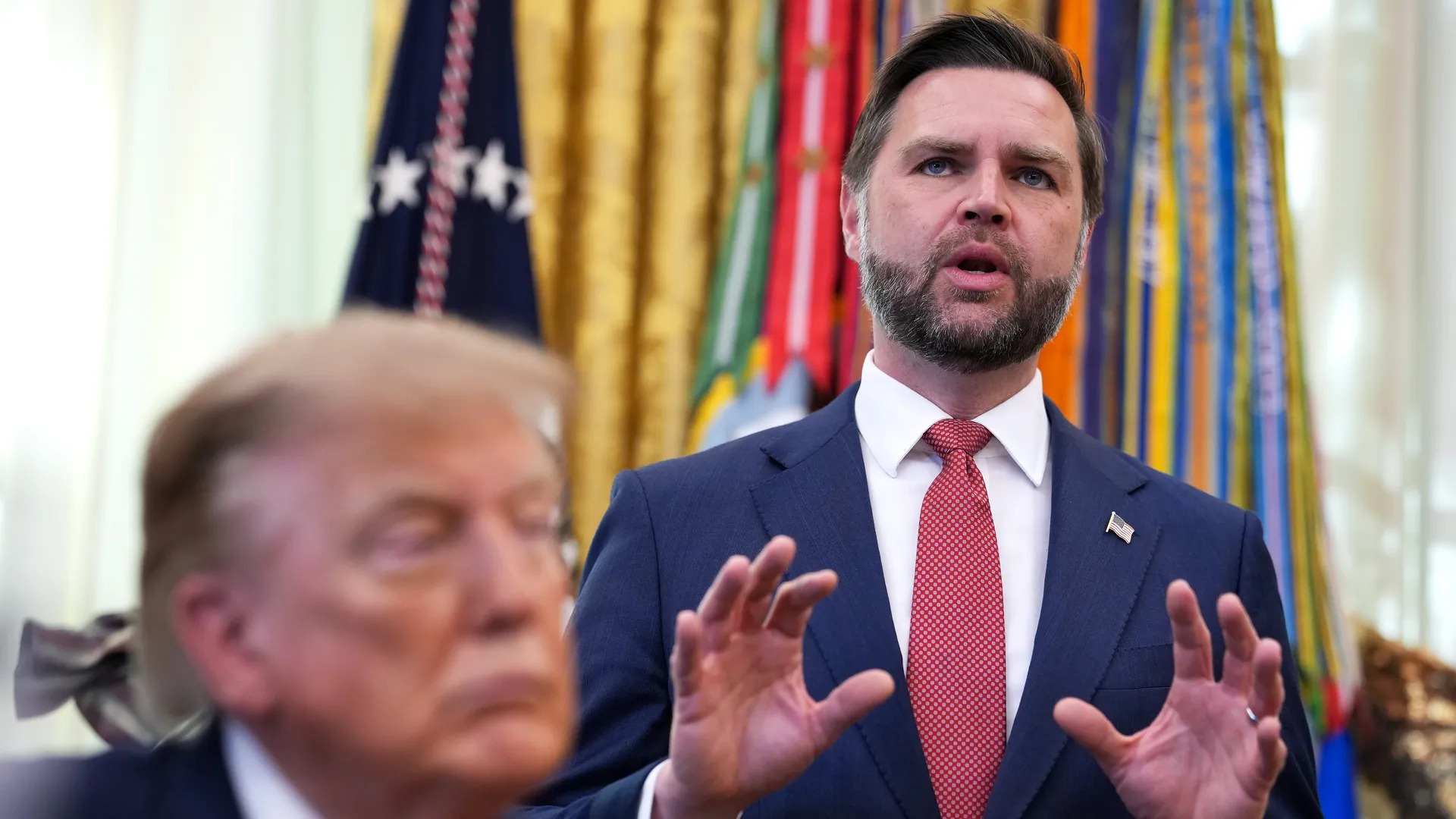
US Vice-President JD Vance has been personally involved over the past two weeks in indirect talks with Iran aimed at securing a fresh ceasefire and restarting nuclear negotiations.
According to Axios, Vance’s intense engagement indicates that he has taken it upon himself to extract the US from the conflict, which he views as responsible for the Republican Party’s shocking losses in this week’s elections.
This elevates the latest round of indirect talks to the highest echelons of the administration.
US officials and regional sources state that Trump is currently willing to let diplomatic efforts run their course to see whether any agreement is achievable.
Asked by reporters on Friday what his message was to Iran, Trump said, “We are talking to them.”
According to sources with direct knowledge of the matter, Vance speaks almost daily with Qatari Prime Minister Sheikh Mohammed bin Abdulrahman Al Thani, Pakistan’s Chief of Army Staff Field Marshal Asim Munir, and other mediators regarding the negotiations with Iran.
White House envoy Steve Witkoff and Jared Kushner, President Trump’s adviser and son-in-law, are also involved in the process.
Sources say Vance and the Qatari and Pakistani mediators have been discussing the possibility of holding a working-level technical meeting between the US and Iran in the coming days, though this has not yet materialized.
Before the war began in late February, Vance was among the most sceptical voices in Trump’s inner circle on the issue, advocating instead for a diplomatic solution.
In April, he led the US negotiating delegation at the Iran summit held in Islamabad and was personally involved in the talks that yielded a memorandum of understanding (MOU) signed between the US and Iran in June.
Vance subsequently headed the US delegation during a series of direct talks with Iran in Switzerland.
Two weeks ago, Vance sent a letter to Mohsen Rezaei, Secretary of Iran’s Supreme National Security Council, proposing that direct negotiations resume.
Rezaei is one of the closest advisers to Iran’s Supreme Leader, Mojtaba Khamenei.
Iranian officials noted that Vance’s letter generated positive momentum toward restarting talks.
On Wednesday, Vance said the war was the primary reason for the Republicans’ repudiation at the polls.
Sources involved in mediation efforts report that while progress is being made, the process is moving very slowly.
On Friday evening, the prime minister of Qatar said, “Over the past few weeks, we worked with our colleagues in the US administration who have a sincere intention to contain the situation and de-escalate. Thanks to them and the voices of reason in Tehran, we prevented the situation from spinning out of control.”
The prime minister added that discussions with the Trump administration continued following the midterm elections, though they were not as active as in previous days “because there are other matters.”
Nevertheless, he noted that the US intention to find a diplomatic resolution “remains ongoing” and emphasized that an agreement is possible.
On Friday morning, Trump and the Emir of Qatar discussed Qatari efforts to bridge differences between the US and Iran as part of an accord.
According to a statement from his office, Sheikh Tamim emphasized the necessity of “pursuing dialogue and diplomatic channels to resolve differences, prevent the region from facing further escalation, and ensure freedom of maritime navigation as well as the security of energy supplies.”
Separately, Trump confirmed on Friday that the US military conducted a strike on an anti-aircraft missile launcher on Qeshm Island in the Strait of Hormuz after it fired a missile at a US fighter jet.

British magazine The Economist reported that mobilization, conflict casualties, and pervasive uncertainty have left Ukraine confronting the threat of demographic collapse.
According to data cited by the magazine, Ukraine’s fertility rate has declined from 1.2 children per woman in 2020 to between 0.8 and 0.9.
This rate marks a lower level than that of any major nation except South Korea.
In the first half of 2026, the number of deaths in Ukraine surpassed the number of newborn babies threefold.
The report noted that ever since independence was gained in 1991, the number of births in the country has lagged behind the number of deaths every year.
The Economist emphasized that the demographic collapse driven by the ongoing fighting constitutes an “existential threat.”
The magazine identified mass refugee migration as the principal driver of the population loss.
More than 5 million Ukrainians reside abroad, predominantly in Europe.
The proportion of those wishing to return among those who left the country is also steadily shrinking.
According to data from the Centre for Economic Strategy (CES), the share of those seeking to return dropped from 74% in 2022 to 43%.
The fact that the majority of refugees consist of Ukrainian children and women under the age of 44 further aggravates the demographic picture.
The Kyiv government decided to exempt men under the age of 25 from mobilization to alleviate the demographic decline.
The magazine reported, however, that many young people have fled the country, while those who remain do not plan to start families.
Projections cited in the report indicate that even if hostilities cease in the coming years, Ukraine can, at best, expect merely a deceleration of depopulation.
Olga Duhnich, an expert at the Ukraine-based think tank Frontier Institute, stated that the generation born in the 1990s and 2000s is the least populous in Ukraine’s modern history, meaning the country cannot expect a post-conflict baby boom.
The United Nations (UN) projects that Ukraine’s population will decline by 0.7% to 0.9% each year over the next two decades.
Under this projection, Ukraine’s population will fall to approximately 25 million by 2040.
If hostilities drag on, people are expected to abandon plans to have children, deepening the crisis even further.
Beyond exempting men under 25 from mobilization, the Kyiv government is rolling out various support packages to boost birth rates.
Under legislation enacted in the country, parents who have children receive a direct payment of 50,000 hryvnias (around $1,100).
Parents are also paid 7,000 hryvnias each month during the first year.
Other state programmes subsidize childcare costs, while Ukrainian soldiers are granted free freezing of egg and sperm cells.
Ukrainian Minister of Social Policy Denis Ulyutin said in May to the Livyi Bereh media outlet that roughly 22 to 25 million people lived in government-controlled territories.
Ulyutin characterized the prevailing picture by saying: “This is a catastrophe.”
Ella Libanova, Director of the Institute for Demography and Quality of Life Research, estimated the population at 29 million during the same period.
Libanova attributed the steep fall from a population of 30 million in 2025 to high death rates and the demographic crisis.
In a statement in October, Libanova announced that Ukraine’s population had slipped to 28.5 million.
Institute Director Libanova said: “The population is already at 28.5 million; we lost half a million people. We lost them, but thankfully this was still caused by migration rather than casualties.”
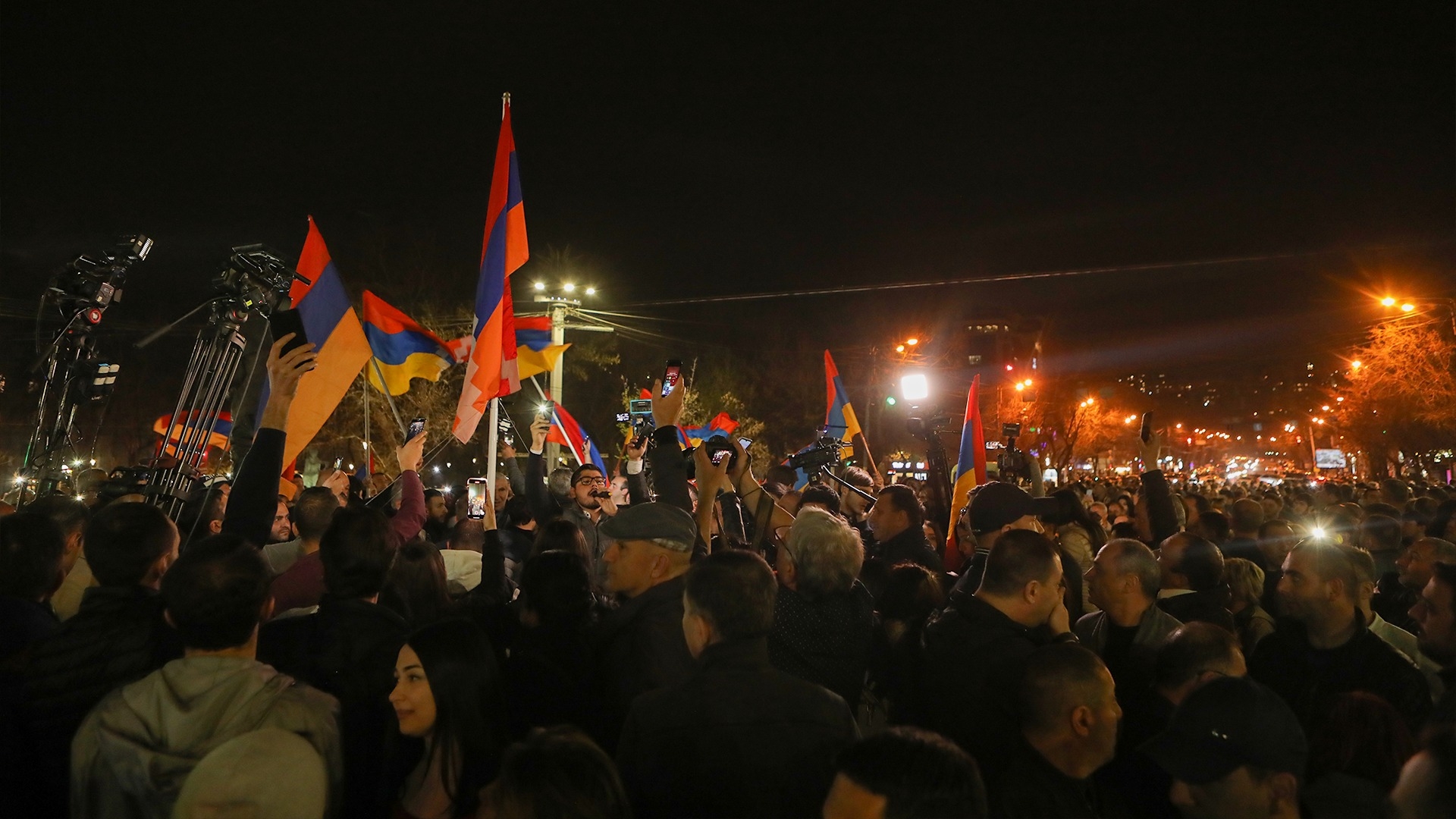
Narek Karapetyan, a lawmaker and head of the Strong Armenia faction in the Armenian parliament, has urged opposition parties to unite around four core principles set out in a joint declaration.
The key points of the declaration include resisting territorial concessions and blocking the adoption of a new constitution, which the opposition has termed the “Aliyev constitution”.
According to a report by Aysor.am, Narek Karapetyan stated that the opposition meeting was originally planned to be led by his uncle, businessman and Strong Armenia movement leader Samvel Karapetyan.
“We initiated the meeting, but the authorities took preemptive steps to prevent Samvel Karapetyan from launching the national unification process,” Narek Karapetyan said.
Noting that, despite these events, opposition representatives convened and signed a joint declaration based on four agreed articles, Narek Karapetyan invited other opposition forces and members of the public to join the alliance.
“We will not allow them to implement the Aliyev constitution in Armenia. We must unite,” Karapetyan said.
Ahead of these developments, Armenian National Security Service personnel detained Strong Armenia Party leader Samvel Karapetyan following a search of his home.
The party’s press secretary, Agavni Sukiasyan, announced that on the morning of the same day, the Investigative Committee of Armenia searched the homes of both Samvel Karapetyan and Narek Karapetyan.
In a report citing the Investigative Committee, Armenpress stated that Samvel Karapetyan was detained as part of a case involving allegations of causing large-scale financial damage to the Electric Networks of Armenia (ENA) company, embezzling entrusted property, and money laundering.
According to committee figures, the total damage inflicted on the company exceeds $179 million.
Narek Karapetyan’s home was also searched at the end of July as part of a criminal case.
On 22 July, Armenia’s Central Electoral Commission approved the Prosecutor General’s request to strip Narek Karapetyan of his parliamentary immunity, and Karapetyan was charged with large-scale money laundering.
According to information reported by Sputnik Armenia, the investigation is linked to charges brought against Strong Armenia supporter Aleksan Aleksanyan.
Investigative authorities allege that Aleksanyan received approximately $4.4 million and €230,000 from the Karapetyan-owned Tashir Foundation under the guise of gifts and loans.
Several criminal cases had previously been opened against Samvel Karapetyan.
In 2025, Karapetyan was charged with publicly calling for the violent seizure of power after backing the Armenian Apostolic Church, which had been criticized by Armenian Prime Minister Nikol Pashinyan.
In January, legal proceedings were also launched against Karapetyan on charges of large-scale tax evasion and money laundering.
Separately, in early July 2025, the Armenian parliament approved a bill enabling the nationalization of the Electric Networks of Armenia company.
In March, Armenia’s Constitutional Court ruled that the nationalization process in question complied with the law.

IRAM expert Oral Toğa assesses Middle East shifts after US vote

Netanyahu Arab party attack triggers crisis over coalition

Fico accuses Merz of blackmail over threat to veto EU budget

US Senate panel seeks records in Trump-linked crypto investigation

Europe ready for arms and missile control talks with Russia, FT says
-

 Diplomacy1 week ago
Secular dress code dispute exposes deeper Türkiye-Azerbaijan strains
-
 Russia2 weeks ago
US and Russia weigh energy deals and corporate return in peace talks
-

 Europe2 weeks ago
Merz visits Asia to seek new markets for German defence firms
-
 Opinion2 weeks ago
Gaza exposes the myth of the “most moral army in the world”
-
 Middle East2 weeks ago
US warns Gulf allies of possible Iran strikes after midterms
-

 Europe5 days ago
EU urges citizens to prepare 72-hour survival kits for crises
-

 America2 weeks ago
Democrats target Trump-Putin Russian diesel deal with legal push
-

 America2 weeks ago
Bolsonaro reportedly leaves Brazil on jet linked to scandal-hit firm
