
Diplomacy
We are no longer in 1992, the US has lost its military superiority, Ret. Lt. Col. Davis says

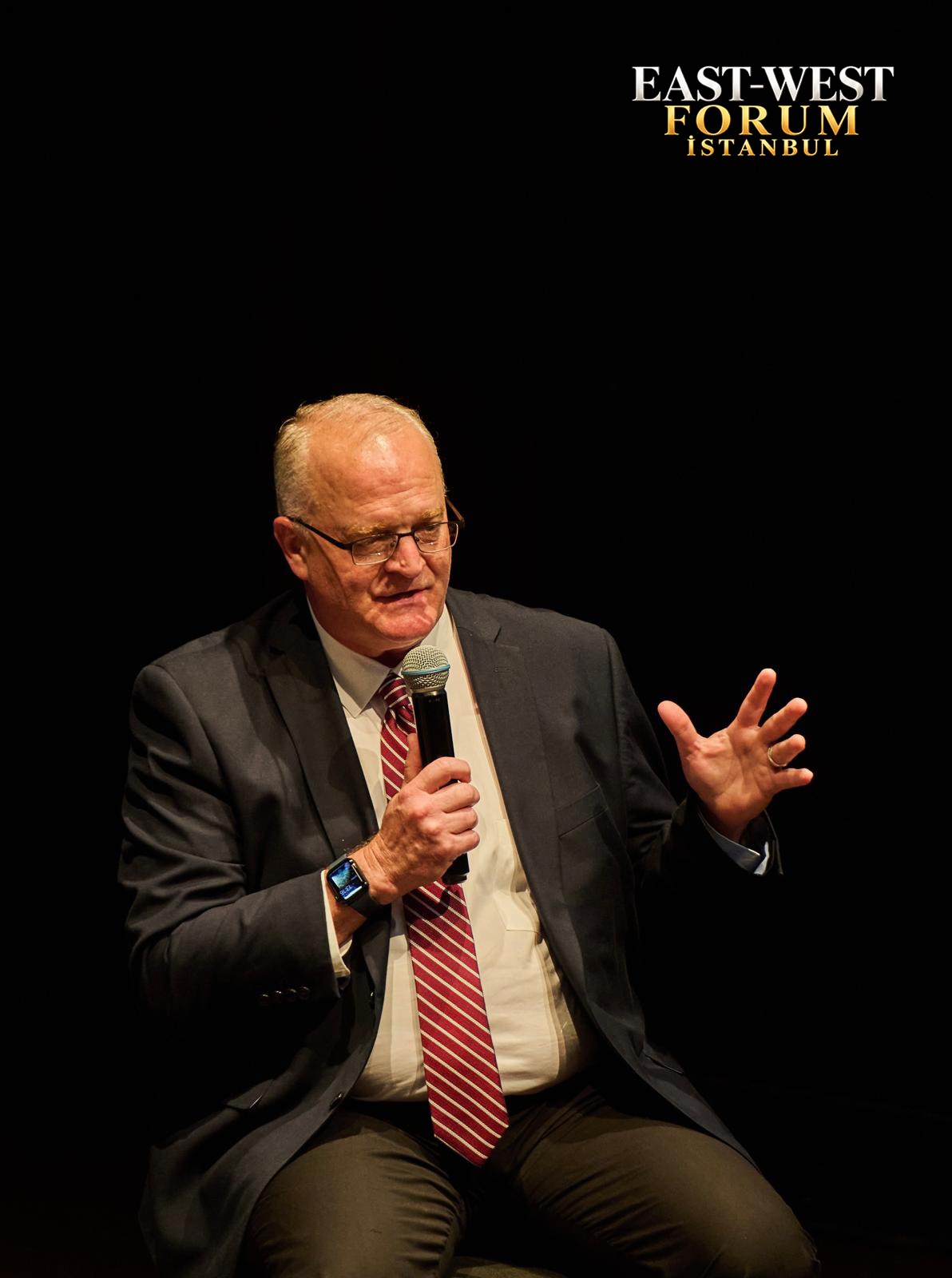
Editor’s note: In a presentation delivered at the East-West Forum in Istanbul on September 26, retired US Army Lieutenant Colonel Daniel Davis argued that Washington has lost its post-1992 unipolar military superiority. Stating that the American administration and its European allies fail to read new military realities, Davis noted that China, Russia, and Iran are fully aware of shifting balances. He stressed that UAV systems such as the Bayraktar TB2 rendered conventional armored warfare doctrines obsolete in the Karabakh War and on the Ukrainian front, while the US has fallen far behind its adversaries in the unmanned systems race. Pointing out that Iran has built a formidable line of defense with underground mountain facilities and ballistic missile capabilities, the senior officer noted the necessity of returning to realistic diplomacy rather than military impositions.
So I have some breaking news to report. It is no longer 1992. Apparently I have to break that news because there are Those in Washington D.C. and in Europe that don’t seem to know that in 1992 the United States had just finished Operation Desert Storm where it completely took down the military of Iraq in just record time with its coalition.
The Soviet Union had just disbanded, the Warsaw Pact had disbanded. The surviving Russian military was. Its navy was rusting in ports and it couldn’t do anything on any conventional level. It had its nuclear weapons, of course, but on a conventional level it was nothing. China was still basically an infantry based army.
And so up until that point, the United States was definitely the supreme military power all on the on the global stage, we could deploy power better than anybody else. We could use it conventionally. And of course, we had our nuclear weapons.
It’s not 1992 anymore. The United States acts like today. It’s still 1992, and we are still this unipower military power dominant. But China’s not confused on this point. Russia’s not confused on this point. Now Iran is not confused on this point. They know that we are no longer the most powerful military force on the planet.
And you’ve had President Trump, you’ve had Secretary of War Pete Hexth, the Speaker of our House, Johnson. They commonly and routinely say we are the most powerful military force on the planet in history. Nobody else is even close. Well, there’s a lot of people that are close, but they’re close. Like on the other side of us right now.
We’re still trying to operate in the 21st century militarily, like it’s still the 20th century. We’re behind the scales here, and that has enormous implications.
You can’t be a unit power force, and you can’t tell people what they’re going to do, and you can’t try to dominate over people unless you have a military to do it. We no longer have that military. And it’s now becoming evident to everybody except us.
And, and that is so dangerous because if our leaders believe what they’re saying, that we’re the most powerful military, we can do whatever we want.
And unfortunately, one of the worst examples of that appearing to be true was Venezuela. So President Trump had what a colleague of mine called catastrophic success. He thinks that he was told by many people there could be a lot of problems with it, and there would have been if Venezuelans had actually fought.
But, but because we had some insider information and some people cooperating on the inside, it was basically a bloodless, near bloodless coup. There was still about 80 people that got killed. So definitely wasn’t bloodless for them, but it was a big success for Trump.
And so he came to the conclusion that all the people who said, all these naysayers said it would be a problem, it would be difficult, it would turn into a new Vietnam, something like that. They’re not. They’re nuts. So now then, he thinks everything will work.
And so he’s operating on this belief that we could go into Iran, that we could maybe go into Cuba, maybe go at least up until recently, maybe Greenland. Basically, he sees there’s. There’s nothing that we can’t do.
But we have now proven graphically that that is not true. And you know, and you and I were talking about this a couple of days ago.
To me, as a, as a former tank officer, I fought in a Desert Storm. Just so you know, I fought in the biggest tank battles Since World War II up until that point, the Battle of 70 Easting, I was the second in command of an armored cavalry squadron for the U.S. 1st Armored Division in the, in the 2000s in Germany. And so I was responsible for training and getting ready for combat. And then was the modern war.
So that was after the 2003 Iraq war that we fought, which was also conventional. It’s also not 2003, by the way, because in those fights we didn’t have to worry about an enemy that had air force, drone force, ballistic missile force. We didn’t have to worry about any of that kind of stuff.
The war that I fought in in 2000, my first one in 1991 in Desert Storm, we couldn’t do that today because of the presence of missiles, as Iran has absolutely graphically shown.
But in 2020, the Armenia, Azerbaijan War and the Baktiyar 2 drone, et cetera, showed that conventional warfare had radically changed forever. I thought there’s going to be a radical transformation in the U.S. army, especially our ground forces. And I thought ground forces all over the world, I thought everybody is so.
But you can never again fight on the ground the way we did even as recently as 2003 in Baghdad. You just can’t do it anymore because now you mass formations on the ground and armor, it doesn’t matter how good your tanks are, they’re going to blow up. And same with armor, so you can’t move in mass anymore. So you’re going to have to come up with some new ways to fight.
Russia, to my surprise, didn’t get that memo because when they had their initial operations into Ukraine 2022, they were still behind the curve. Ukraine was actually ahead of them at that point. They had, in fact, they used the Bakyar 2 drones in the early phases to significant effect.
Russia came around though. They definitely figured it out. And now then they are, in my view, the global leaders. Now Ukraine is very close and they’re really good at this sort of thing. But I think Russia has overtaken them, certainly in mass and scale.
We’re way behind. We’re still in the, in the 20th century. We haven’t even caught up. We’re just to show you we’re thinking now we would like to have at the end of 2027, about 300,000 drones of various types.
Russia’s making that many in what, two weeks? Something like maybe less than that. And Ukraine as well, even with their limitations and far cheaper, way cheaper. That’s just as important. So our mentality is still like a snail’s pace. And so we don’t understand it.
Well, we can’t do this, tell everybody what they’re going to do anymore, but we’re still trying. So President Trump won’t use the leverage he has to end the Russia, Ukraine war.
And he keeps having this fiction that we can keep helping them strike deeper into Russia and to make it more difficult than with some fantasy that that’s going to cause Russia to say, all right, I tell you what. Sure, go ahead. We’ll do whatever Ukraine wants to do. We’ll end it on their terms here. It’s absurd to even say, but that’s what we’re acting like.
Even more absurd in a certain sense is our war against Iran right now. I was screaming this from the rooftops before the war started, that militarily it can’t be won.
If you look at what the Uranian defensive systems are and in their attack systems with their ballistic missiles and their drones and a lot of the technology they got from Russia, which Russia improved upon and then probably returned some of that technological capability.
So Iran has this ability, they Learned from our 2003 war, that don’t put all your factories on the ground that can be easily hit by American missiles, put them under the mountains that we can’t reach. And they did all that.
And so now they have shown that whatever they shoot, they’re going to hit whatever our defensive capabilities are with PAC 3 interceptors or THAAD interceptors. It’s not sufficient. And Iran can hit whatever they shoot.
It is. It is remarkable how much restraint Iran has shown up to this point, because they could already have burned the Middle east down, which would have catastrophically impacted all of our national security and economic security for the world. They haven’t done that yet.
But you see President Trump in his nice speech that he gave the other day at the United Nations General assembly, which you may have seen some of you, that something I published on that right afterwards.
I was humiliated as an American and angry because I think of some of the great Americans like John Kennedy and Eisenhower, who had made some great speeches about, let’s find a way to get together with people. It’s work, peace and all this.
And now that here he’s setting himself up like a godlike thing that I can either grant peace and security for Iran or annihilate their country. And of course, that almost certainly means nuclear weapons, because you can’t do it conventionally.
He didn’t say it out loud, but whatever he was thinking, he’s thinking that we can and we can’t. We can kill a lot of Iranian people, no doubt about that. But you can’t take out their military capacity or prevent them from having a catastrophic impact on everywhere else.
The United States has got. I pray to God can come to sober recognition. It’s not 1992 anymore. And we can’t just tell people what to do.
There’s still an out. There’s an out in the Russia, Ukraine war, there’s an out in the Iranian war if we’ll sober up and take it. And we don’t even have to surrender. We just have to acknowledge reality.
But if we don’t, if we keep going down and thinking that we are this, this unipower, it’s still 1992 and we can, then everybody else has to do what we tell them, then it’s going to be catastrophic for everybody.
And I’m almost surprised more at the Europeans than the Americans. I’m disgusted about what a lot of the American leaders are doing, but I’m puzzled about the Europeans because this stuff is self evident. It’s not hard to see.
They, you see what we’ve tried to do, what we failed to do. And I’m talking like through nearly five years in Russia, Russia, Ukraine, war, and then all these years in Iran and none of it is militarily working. And yet we keep claiming the next time it’s going to work.
And you know, Trump, if they don’t do this, then I will not. You can’t. And it would. You see, Saudi Arabia, they recognized that that wasn’t going to work and they begged Trump not to attack the last time because they knew they were in the crosshairs and they could be devastated. And who knows if they’re going to survive if they lose their oil capabilities.
It is time for us. And that’s why I’m so excited about this opportunity here. That’s why I didn’t hesitate to come to this, because we’ve got to get recognition that we are not this military dominant power that can do anything at once.
And that’s good, because if you think you can, too many people die because you just say, if you don’t do what I tell you, I’m going to kill you. That’s not diplomacy.
A lot of the stuff we’re doing with Iran is not diplomacy. We’re saying, if you’ll agree to our terms, we won’t kill you. That’s not diplomacy.
And now then they have the ability to resist and they’re going to. And Russia is not going to just give in to that and say, okay, yeah, sure, if you say you’re going to hit us, then yeah, we’ll just do whatever you say. They’re never going to do that. It’s an existential threat for them too.
All of these things are self evident. And I just pray to God that we can find some way to come back to sanity before it’s too late.
Because there’s too much chance for a nuclear threshold to be crossed in both the Middle east and in Europe. And that would be catastrophic for all of mankind, no matter where it comes from.






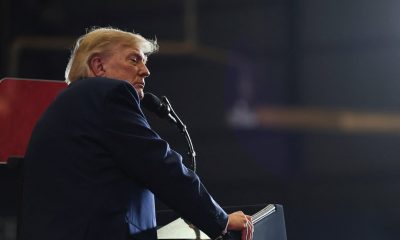







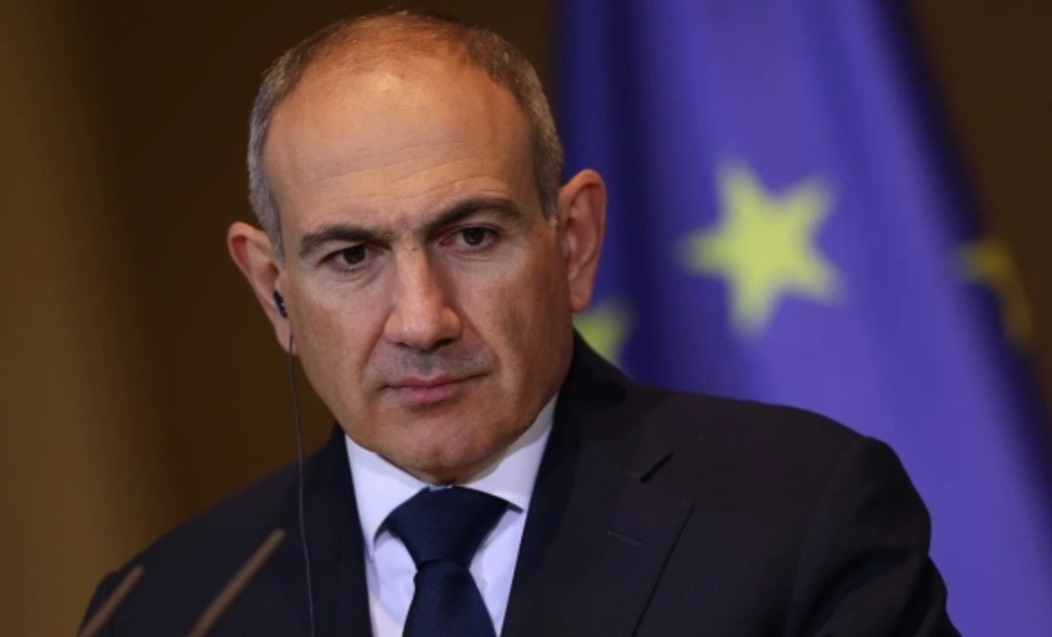
Members of the Collective Security Treaty Organization (CSTO) have stripped Armenia of its voting rights and its ability to appoint representatives to official positions due to a two-year debt to the organization’s budget.
Kremlin Spokesman Dmitry Peskov said, “This decision was taken based on the organization’s charter due to Armenia’s failure to fulfil its obligations for several years.”
Prior to the CSTO leaders’ summit in Moscow, Peskov had stated that member states would “react” to the Caucasus country’s non-participation in the organization’s activities.
Ahead of the Moscow summit, Armenian Prime Minister Nikol Pashinyan said his country’s “interest has run out” regarding the CSTO. Through his press spokesperson, he announced that he would travel to Türkiye on 11 November to attend the United Nations Climate Change Conference (COP31) instead of going to Russia.
The CSTO leaders’ meeting was held with the participation of Russian President Vladimir Putin alongside the leaders of Belarus, Kazakhstan, Kyrgyzstan, and Tajikistan.
The leaders jointly took the decision to revoke Armenia’s voting rights.
At the conclusion of the meeting, the participants also signed a joint declaration.
The declaration stated: “We confirm our unconditional commitment to the goals set out in the CSTO treaty and charter towards creating favourable and stable conditions for the comprehensive development of member states.”
Pashinyan had frozen Yerevan’s de facto participation in the CSTO in February 2024, citing the organization’s failure to aid the Armenian side during the armed clashes in Nagorno-Karabakh in September 2023.
Having referred to the CSTO as a “soap-bubble alliance” since that time, Pashinyan accused the organization’s members of “planning war” together with Baku. He stated that Armenia would not return to active work within the alliance at least “over the next five years”, adding that he would welcome it if the country were expelled from membership.
Relations between Armenia and Russia grew tense once again in the spring of 2026, after Yerevan moved closer to the European Union (EU) and the Kremlin responded with a trade war.
In May, Pashinyan refused to travel to Moscow to attend the Victory Day parade and declared that he did not support Russia on the Ukraine issue.
In response, Putin called on Yerevan to determine its foreign policy course through a referendum, advising Armenian authorities not to forget the fate of Ukraine.
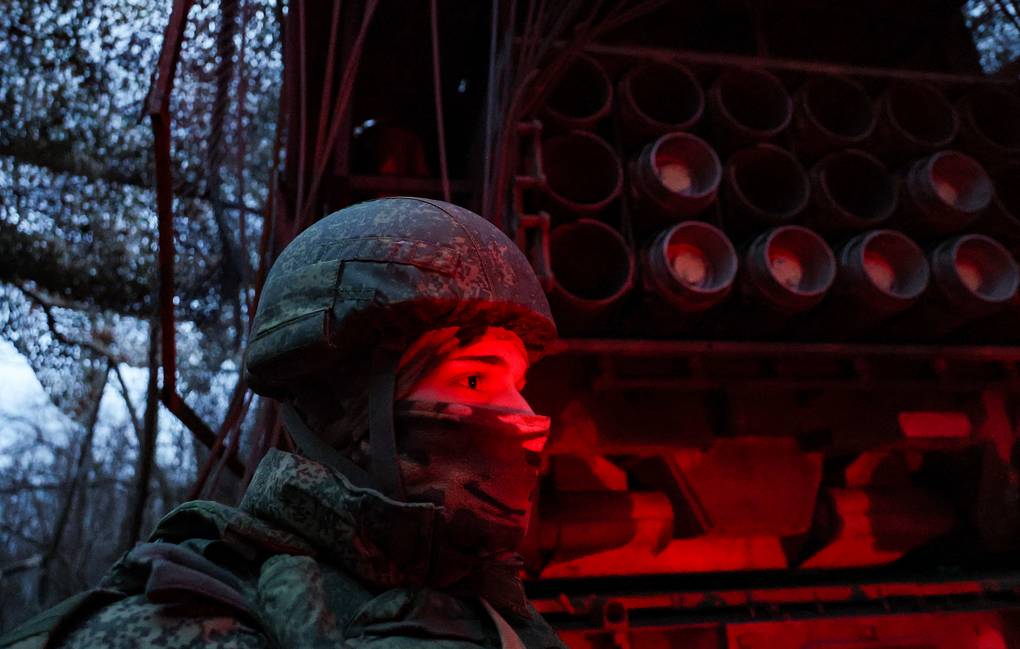
The US administration has reportedly called on Russia to submit proposals for a prospective security treaty with Europe that would include measures to ease tensions between European nations and Moscow.
According to a report by news site Axios citing sources familiar with the matter, the US side conveyed the request during trilateral negotiations held in Abu Dhabi.
During the talks, US Special Envoy Steve Witkoff and Donald Trump’s son-in-law Jared Kushner suggested that the Russian delegation prepare a fresh proposal outlining its security concerns and demands.
The US delegation reportedly asked that this proposal clarify what kind of “symmetrical steps” Moscow is prepared to take to de-escalate tensions and “provide non-aggression guarantees to Europe”.
Another source familiar with the White House’s approach said the Trump administration aims to run the processes for a new European security architecture and a peace agreement between Russia and Ukraine simultaneously.
Under this plan, the actual implementation of the security understandings would take effect only after the signing of an accord ending the conflict in Ukraine.
Assessing the approach to the process, the source said: “[Ukrainian President Volodymyr] Zelenskyy will not agree to any compromise without knowing what will happen next regarding security guarantees. Putin also wants to see the exact same picture clearly. This is precisely why the security portfolio is so decisive.”
The same official noted that the US will not reach a security agreement with Russia without the support of Europe and Ukraine, adding that Washington will not grant Moscow veto power over European security decisions.
Vladimir Medinsky, aide to the Russian president and head of the delegation in the Ukraine negotiations, previously stated that the fundamental objective was building a comprehensive new security system in Europe.
Medinsky noted that the structure in question must take on the character of “a fair, new, modern Yalta and Potsdam that carries the spirit of Helsinki 1975 and responds to contemporary realities”.
The Russian official argued that if such a system were established, peace lasting for decades, or even centuries, could be secured in Europe.
Russian Foreign Minister Sergey Lavrov also announced that Moscow possesses its own position paper on how a new security architecture in Eurasia should take shape.
Lavrov stated that Russia hopes the Washington administration will “maintain its determination to pursue dialogue aimed at achieving an honest balance of interests where nobody’s security is impaired”.
Russian authorities have repeatedly stated that the country has no intention of attacking Europe.
Pointing out that they have no reason to fight NATO countries, Russian President Vladimir Putin previously said: “We have no interest whatsoever, neither geopolitical nor economic, political nor military.”
In a statement in October, Putin said Russia has no plans to attack anyone “in 2029, in 2030, or in the year 2050”.
On the other hand, Putin claimed that “all NATO countries are fighting Russia” and stated that the Russian military is currently the most combat-ready armed force in the world.
Following the contacts in Abu Dhabi, Kushner announced that he and Witkoff would travel to Moscow.
Explaining that they plan to meet Putin during the visit to discuss European participation in negotiations aimed at resolving the conflict, Kushner argued that the parties could make “far greater progress” if the Russian leader consents to such involvement.
Yury Ushakov, aide to the Russian president, stated that the US special envoys will arrive in Moscow on 12 November, with the planned meeting with the Russian president scheduled for the first half of the day.
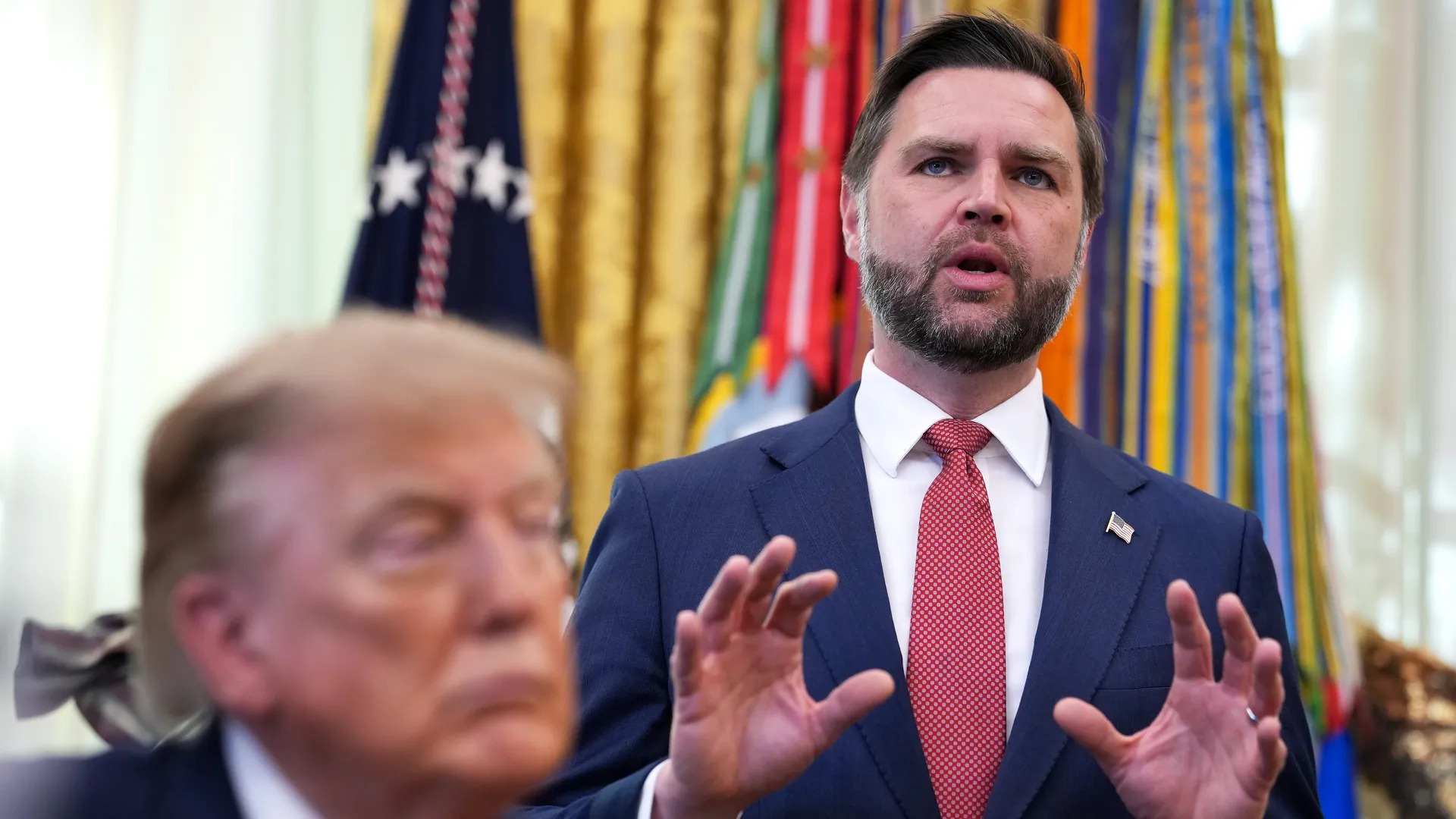
US Vice-President JD Vance has been personally involved over the past two weeks in indirect talks with Iran aimed at securing a fresh ceasefire and restarting nuclear negotiations.
According to Axios, Vance’s intense engagement indicates that he has taken it upon himself to extract the US from the conflict, which he views as responsible for the Republican Party’s shocking losses in this week’s elections.
This elevates the latest round of indirect talks to the highest echelons of the administration.
US officials and regional sources state that Trump is currently willing to let diplomatic efforts run their course to see whether any agreement is achievable.
Asked by reporters on Friday what his message was to Iran, Trump said, “We are talking to them.”
According to sources with direct knowledge of the matter, Vance speaks almost daily with Qatari Prime Minister Sheikh Mohammed bin Abdulrahman Al Thani, Pakistan’s Chief of Army Staff Field Marshal Asim Munir, and other mediators regarding the negotiations with Iran.
White House envoy Steve Witkoff and Jared Kushner, President Trump’s adviser and son-in-law, are also involved in the process.
Sources say Vance and the Qatari and Pakistani mediators have been discussing the possibility of holding a working-level technical meeting between the US and Iran in the coming days, though this has not yet materialized.
Before the war began in late February, Vance was among the most sceptical voices in Trump’s inner circle on the issue, advocating instead for a diplomatic solution.
In April, he led the US negotiating delegation at the Iran summit held in Islamabad and was personally involved in the talks that yielded a memorandum of understanding (MOU) signed between the US and Iran in June.
Vance subsequently headed the US delegation during a series of direct talks with Iran in Switzerland.
Two weeks ago, Vance sent a letter to Mohsen Rezaei, Secretary of Iran’s Supreme National Security Council, proposing that direct negotiations resume.
Rezaei is one of the closest advisers to Iran’s Supreme Leader, Mojtaba Khamenei.
Iranian officials noted that Vance’s letter generated positive momentum toward restarting talks.
On Wednesday, Vance said the war was the primary reason for the Republicans’ repudiation at the polls.
Sources involved in mediation efforts report that while progress is being made, the process is moving very slowly.
On Friday evening, the prime minister of Qatar said, “Over the past few weeks, we worked with our colleagues in the US administration who have a sincere intention to contain the situation and de-escalate. Thanks to them and the voices of reason in Tehran, we prevented the situation from spinning out of control.”
The prime minister added that discussions with the Trump administration continued following the midterm elections, though they were not as active as in previous days “because there are other matters.”
Nevertheless, he noted that the US intention to find a diplomatic resolution “remains ongoing” and emphasized that an agreement is possible.
On Friday morning, Trump and the Emir of Qatar discussed Qatari efforts to bridge differences between the US and Iran as part of an accord.
According to a statement from his office, Sheikh Tamim emphasized the necessity of “pursuing dialogue and diplomatic channels to resolve differences, prevent the region from facing further escalation, and ensure freedom of maritime navigation as well as the security of energy supplies.”
Separately, Trump confirmed on Friday that the US military conducted a strike on an anti-aircraft missile launcher on Qeshm Island in the Strait of Hormuz after it fired a missile at a US fighter jet.

Journalist Dursunoğlu warns Iran removed missile limits as Gulf risks widen

Nvidia board prepares to remove CEO Jensen Huang amid scandal

CSTO strips Armenia of voting rights over two-year budget debt

US voters approve bans on transgender athletes across four states

US urges Russia to draft proposals for new European security pact
-

 Diplomacy2 weeks ago
Secular dress code dispute exposes deeper Türkiye-Azerbaijan strains
-

 Europe6 days ago
EU urges citizens to prepare 72-hour survival kits for crises
-
 Asia2 weeks ago
China expands Africa arms sales, displacing France and Western rivals
-

 America2 weeks ago
Bolsonaro reportedly leaves Brazil on jet linked to scandal-hit firm
-
 Diplomacy1 week ago
Protesters storm Kyiv site holding soldiers over torture allegations
-
 Russia2 weeks ago
Putin proposes Arctic energy cooperation to US to ease gas sanctions
-

 Europe1 week ago
Pro-Ukraine Republicans in US Congress dwindle after departures
-

 America2 weeks ago
Rubio outlines Venezuela election plan, says US will not wait two years
