
America
Bolsonaro reportedly leaves Brazil on jet linked to scandal-hit firm

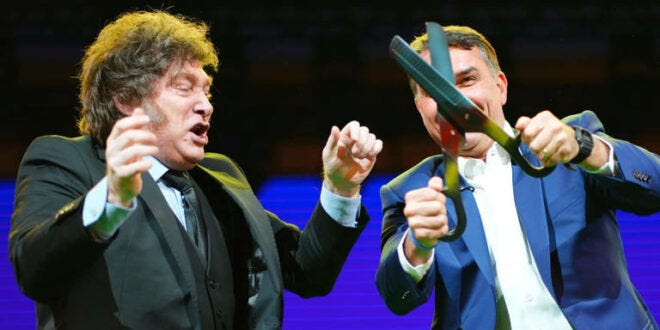
Flávio Bolsonaro fled Brazil on a plane belonging to the fleet of Argentine company Baires Fly, a firm linked to a businessman associated with a convicted drug trafficking conspirator, according to allegations.
The company, tied to an entrepreneur with business links to Federico “Fred” Machado, who faced drug trafficking charges in the US, is also named in a corruption investigation involving disability agency funds under the administration of Javier Milei.
Fórum Investiga, the investigative unit of Revista Fórum, uncovered these connections through court documents and public records in Argentina and the United States.
Sergio Daniel Mastropietro, a commercial broker for Baires Fly, was a business partner of Machado and currently faces money laundering and illicit association charges in connection with the scandal at Argentina’s National Disability Agency (ANDIS).
The company’s role drew scrutiny after the Argentine government confirmed early Wednesday that Bolsonaro entered the country with his wife and two daughters and boarded a private Baires Fly aircraft bound for Guayaquil, Ecuador.
According to Argentina’s National Directorate of Migration, the family crossed the border via the Tancredo Neves International Bridge between Foz do Iguaçu and Puerto Iguazú on Tuesday at 22:50.
The family boarded the plane at 23:30, and the Gulfstream G400, registered as LV-JQW, took off at 00:22 on Wednesday.
The journey followed an order by Federal Supreme Court Justice Alexandre de Moraes seizing Bolsonaro’s passports and barring him from leaving Brazil.
The drug trafficking link traces back to Argentine aviation businessman Federico Andrés Machado, known as Fred Machado, who was accused in the US of participating in an international ring tied to cocaine trafficking and money laundering.
Machado was a partner with Sergio Mastropietro in SO VAIN S.A., a company formed in 2010 for aviation-related ventures. Argentine investigations also documented shared travels, commercial ties, and common Buenos Aires addresses between the two men.
In February 2021, the US Department of Justice unsealed indictments against eight individuals for their roles in an international conspiracy involving narcotics trafficking, money laundering, and financial fraud.
Machado was among those indicted and was identified as an operator engaged in the purchase and sale of aircraft through his firm, South Aviation.
The investigation encompassed a network utilizing US-registered aircraft, several of which were seized in other nations while carrying large shipments of cocaine.
Machado was extradited from Argentina in November 2025 and subsequently reached a plea agreement with US prosecutors.
In August 2026, a federal court in Texas convicted him of conspiracy to commit money laundering and wire fraud.
The initial drug trafficking charge was dismissed as part of that plea agreement.
Machado’s commercial connection is with Mastropietro rather than directly with Baires Fly. The official owner of the company is Luis Grande, who has operated in Argentina’s private aviation sector for decades.
The other scandal involving Baires Fly centres on ANDIS, the agency responsible for providing assistance to people with disabilities in Argentina.
That inquiry examines allegations of contract steering, overbilling, kickbacks, and money laundering in questionable tenders during the Milei administration.
According to documents from the investigation led by federal prosecutor Franco Picardi, two ANDIS providers, Prolite Orthopedics and Probock, transferred 95.06 million Argentine pesos into a Baires Fly bank account on 10 September 2025. That sum represents approximately $62,000 based on exchange rates from 28 October 2026.
The payments occurred after Mastropietro sent the firm’s banking details to Miguel Ángel Calvete, who was identified as one of the figures behind the fraudulent scheme under investigation.
Following those transfers, invoices were issued for the advance purchase of flight hours on company aircraft.
Investigators suspect these commercial transactions were used to lend an appearance of legality to funds derived from irregular public contracts.
Financial tracking uncovered even larger sums. Documents reviewed by Argentine courts show Baires Fly billed five companies tied to the investigated contracts approximately 1.097 billion pesos, or around $720,000, between 2023 and 2025.
This figure reflects registered commercial transactions; it represents a fully confirmed amount of embezzled funds.
On 16 October, federal judge Ariel Lijo ordered formal charges against Mastropietro on suspicion of aggravated money laundering and illicit association.
The ruling also expanded charges against former ANDIS director and former Milei ally Diego Spagnuolo, alongside others allegedly involved in the conspiracy.
Argentina’s Federal Prosecutor’s Office stated that the probe revealed suspected fraud in contracts for medication, prosthetics, and equipment intended for assistance programme beneficiaries.
The airline maintains business relationships with figures across Argentine politics. In November 2023, days after winning the presidential election, Javier Milei used a Baires Fly plane to travel to the US. Luis Grande, the company’s owner, piloted the flight.
In the ANDIS investigation, Mastropietro denied managing Baires Fly or being formally part of the company, saying he acted only as an intermediary arranging aviation services.
The company maintains that it has no connection to the money laundering allegations.
The documents do not show that Bolsonaro was involved in the ANDIS scheme or in any drug trafficking activity.
There is also no evidence that Fred Machado played any role in arranging the flight.


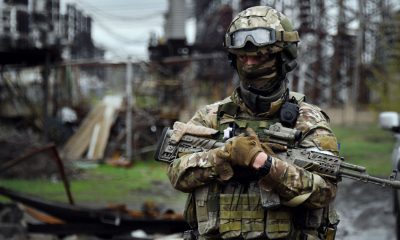




The crew of an Ecuadorian fishing boat has sued the US government over drone strikes and unlawful detention.
According to a complaint filed by the crew in a Pennsylvania federal court, the 18-member crew aboard the vessel La Negra Francesca Duarte II was returning to port on 17 March to conclude a weeks-long fishing expedition when two US combat drones exploded on the vessel.
Although the strike was carried out under the Trump administration’s “Operation Southern Spear” campaign, none of the individuals on board was found to have engaged in any unlawful activity.
Indeed, the crew stated in the complaint that just one day before the drone strikes, the Ecuadorian Navy had conducted a three-hour inspection of the vessel and its crew without uncovering any wrongdoing.
Daniel Kovalik, an attorney representing the fishermen, told Courthouse News:
“Essentially, these innocent people, these poor fishermen who were out fishing, were attacked by the US for no reason, without a warrant, and without trial.”
In the complaint, the crew stated that the strikes left two crew members, Jordy Alexander Flores Lucas and Leonel Alberto Pilay Barahona, engulfed in flames. The blast burned their legs, arms, and backs, with the fire burning Lucas’s leg down to the bone.
Faced with a completely damaged and rapidly sinking vessel, the crew abandoned the La Negra Francesca Duarte II, boarded life rafts, and began rowing toward a blue vessel they spotted in the distance.
Upon reaching the vessel, the crew recounted being met by service members clad in military camouflage and wearing US Coast Guard life jackets, several of whom pointed long-barrelled rifles at the shipwrecked fishermen.
According to the complaint, while Lucas received medical treatment below deck, the personnel bound the hands of the remaining 17 crew members with zip ties and placed plastic hoods over their heads.
Accusing the US of assault, battery, false imprisonment, conversion of property, and intentional infliction of emotional distress, the crew alleged that US personnel transferred them the following day to an El Salvador vessel, where they were forcibly held for days in “deplorable conditions.”
The complaint continues:
“At the time of the attack, the plaintiffs were not directly participating in hostilities against the US, nor were they members of an organized armed group in armed conflict with the US, nor was the vessel they were on a legitimate military target; yet agents, officers, and personnel of the US authorized and directed the attack.”
The US government has presented no evidence to support allegations that the crew of the La Negra Francesca Duarte II was involved in the illicit drug trade.
Kovalik told Courthouse News that even if such evidence existed, extrajudicial drone strikes would remain contrary to the law.
Kovalik added:
“There is no difference between what the US did in these boat strikes and a police officer walking up to a man on the street, saying ‘Hey, you’re a drug dealer,’ and blowing his brains out. We are a country that claims to respect due process: everyone is innocent until proven guilty. This completely destroys all of that, and I think people should be outraged by it.”
The 18 crew members are seeking compensatory damages in an amount to be determined at trial, as well as an injunction ordering the US to halt similar boat strikes in the Caribbean and the Pacific.
“What the US did is terrorism, and innocent people, including fishermen, are afraid to be in these waters because of what happened,” Kovalik said. “I think that is the real issue… It is not acting the way a civilized nation should act.”
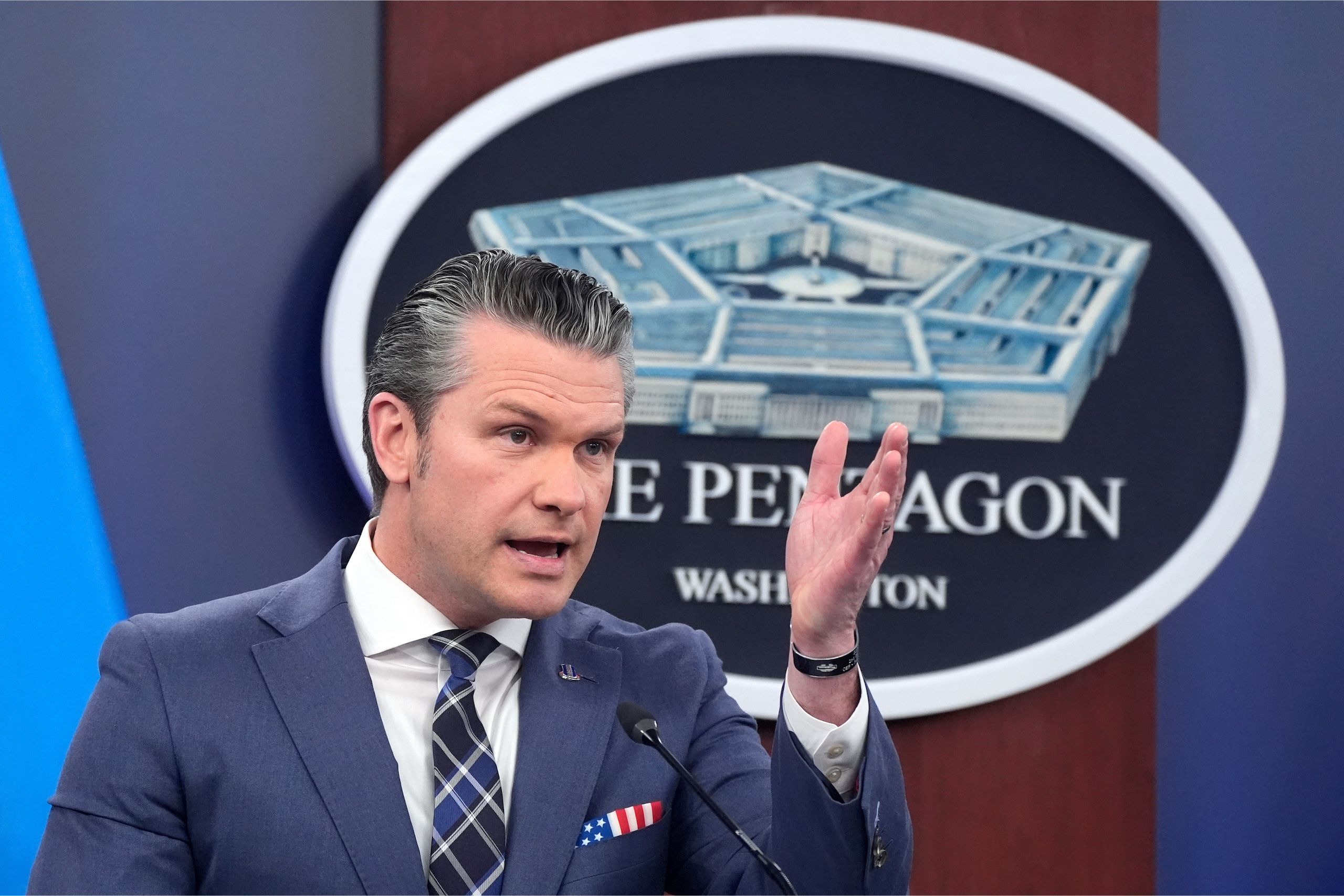
Ro Khanna, a Democratic member of the US House of Representatives from California, has proposed paying $1,700 to every American family to offset price increases caused by the war with Iran.
Khanna said this sum should cover the additional expenses Americans have incurred for petrol, food, and electricity.
Addressing fellow Democrats, Khanna urged that the bill on compensation payments should not be delayed and must be approved as soon as the new Congress takes office.
Following the midterm elections, the Democratic Party will hold majorities in both chambers of Congress.
In a statement on the matter, Khanna said: “Democrats now have a chance to deliver tangible results. In the first week of January, the House and Senate must pass legislation providing compensation to Americans. Let us send it to Trump for his signature.”
Pentagon budget payment plan awaits committee action
In September, Khanna had also introduced a bill proposing that a portion of the Pentagon’s unspent funds be paid out to US taxpayers.
That bill did not specify an exact payment amount.
According to Fox News, the initiative was referred to the relevant committee, but lawmakers have not yet begun debating the bill.
Estimates by Mark Zandi, chief economist at Moody’s Analytics, indicate that American households have lost an average of $2,000 since the war began.
The total economic cost to the US public has reached $265 billion.
As of Tuesday, 17 November, the average price of petrol in the US stood at $3.78 per gallon, while diesel was priced at nearly $6.
Vance calls for economic nationalism
Following the Republican defeat in the early November midterm elections, US Vice President JD Vance said the war and the accompanying inflation were the primary reasons voters turned to the Democratic Party.
US President Donald Trump later acknowledged that the military operation had driven up petrol prices.
Trump stressed that, despite the economic consequences, he would decide to initiate conflict again if necessary.
In an interview with Fox News on Monday, Vance said he fully shared the president’s stance on Iran.
“There is no disagreement between us. I do not think there is any division between the president and other senior administration officials either. Politically, of course, the war came at a cost, and as I understand it, the president acknowledged this as well. We are talking here about rising petrol and energy prices,” Vance said.
Noting that the rise in fuel prices was linked not only to the war but also to years of chronic underinvestment in US energy infrastructure, Vance argued that the election defeat should serve as a lesson for Republicans.
Vance called for a focus on “economic nationalism”, a policy aimed at bringing industrial facilities and jobs back to the US.
Arguing that expanding domestic production and reducing foreign dependence would resolve the economic problems troubling Americans, Vance concluded:
“We cannot combat these challenges by opening borders, surrendering American sovereignty, and certainly not by continuing to offshore American factories and jobs. We must double down on economic nationalism and ensure the prosperity of our country.”
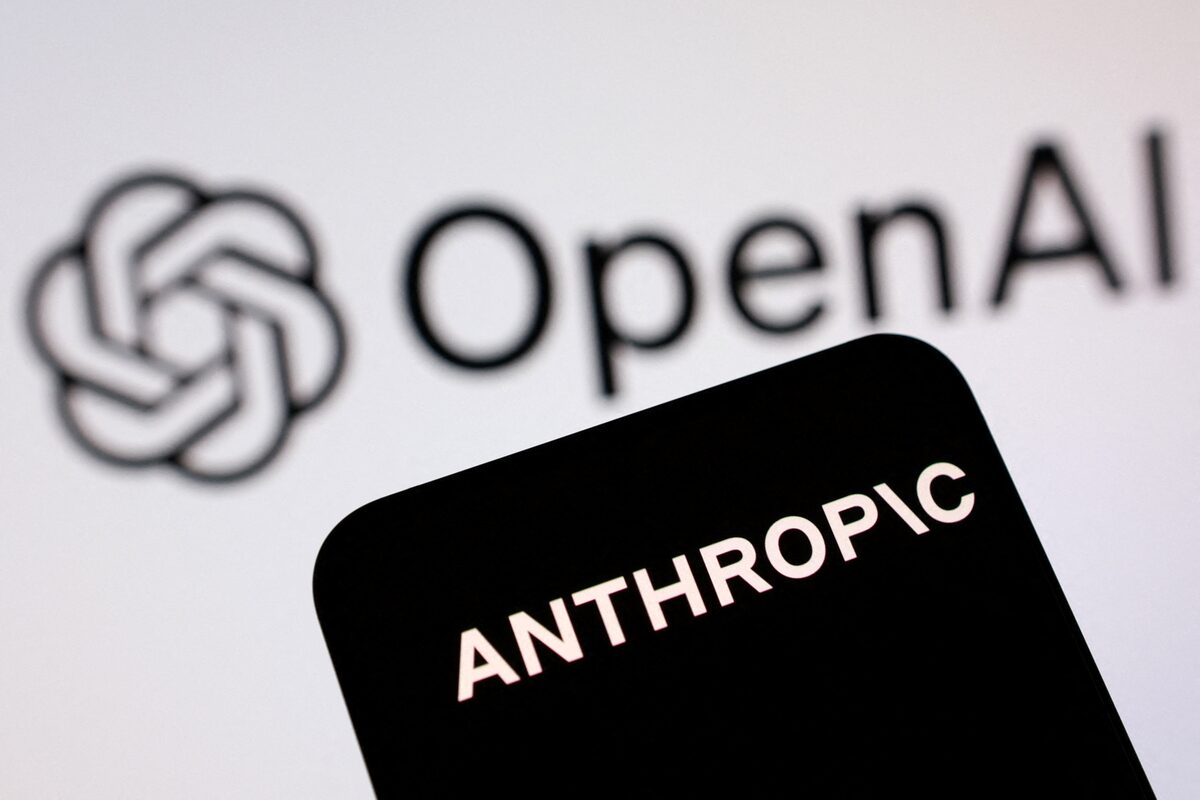
Jensen Huang’s resignation from Nvidia has cast a shadow over companies developing “open” artificial intelligence models and shifted the balance of power toward “closed” frontier laboratories such as Anthropic and OpenAI.
According to a report in the Financial Times, the former chief executive of the US chipmaker had directed Nvidia’s resources toward building a broad AI ecosystem.
As part of this effort, he invested in and acquired startups involved in developing open-source and open-weight models that users can customise and run on their own hardware.
Huang was a fierce advocate for the spread of these models. While supporting the development of alternatives in the US, he lobbied against moves by Washington to restrict the use of Chinese-made open models.
This summer, in his first post on the X platform, Huang wrote: “Our AI leadership will not be measured by a single frontier AI model, but by whether the US builds a robust and open ecosystem that spans every industry.”
His ignominious departure from Nvidia has stripped the open-model sector of its most vocal and influential backer in the US.
A venture capitalist who had invested in AI startups alongside Nvidia said:
“I think Jensen was the biggest economic beneficiary and personally committed to diversity at the model layer. Without him, and with a more stingy Nvidia on investment, we could end up in a world where model providers are far more concentrated.”
It is unclear whether Nvidia will sustain its rapid pace of dealmaking under new leadership.
The company was expected to participate in or lead four startup transactions currently under negotiation: investments in Thinking Machines Lab and Groq, a potential partnership with Reflection AI, and a $12.9 billion acquisition of open-model repository Hugging Face.
In a post on X on Saturday, Elon Musk said: “Jensen masterfully managed the supply chain at Nvidia, but many of these deals were a handshake with Jensen, not a written contract. Without Jensen, at least some of these critical deals will be lost.”
Huang framed these investments as a way to cement US dominance in the technology.
Others point to more direct commercial motives: these deals helped broaden Nvidia’s customer roster and served as a buffer against OpenAI and Anthropic.
A senior figure at a leading Silicon Valley AI company said: “In a way, [Huang’s departure from Nvidia] is bad for the industry, but in another way, Jensen is the enemy of frontier labs because he wants models to be commoditised so he can retain the commanding heights of the value chain.”
A decade ago, Huang delivered Nvidia’s first “AI supercomputer” to OpenAI, setting the then-fledgling startup on a trajectory that ultimately led to ChatGPT.
At the time, the laboratory’s leaders included Musk, Sam Altman, and Dario Amodei.
Huang’s relationships with this trio laid the groundwork for the AI boom and contributed to the rise of OpenAI, as well as SpaceX and Anthropic, the companies founded by Musk and Amodei.
Earlier this year, Nvidia invested $30 billion in OpenAI and committed more than $100 billion in resources to support the laboratory’s flagship data centre.
Yet friction also emerged: frontier lab founders grew uneasy over their reliance on Nvidia and have sought to reduce that dependency by forging alternative partnerships and investing in their own chips.
A senior official at an AI laboratory said:
“That is why you see every lab and frontier company investing in their own chip programmes: it is because of Nvidia’s profit margins. It makes sense to expect Jensen’s removal to further concentrate computing power in the hands of frontier labs and hyperscalers. This is good for the labs.”
OpenAI collaborated with Broadcom to develop its custom chip, Jalapeño. OpenAI chief financial officer Sarah Friar has frequently remarked that the company should not be “single-threaded” or dependent on a single chip supplier.
Anthropic diversified its AI infrastructure suppliers earlier than its rival, having secured early support from Google and Amazon in the form of access to their chips.
Even so, while announcing plans to secure a $10 billion investment from Nvidia alongside its initial public offering, Anthropic executives highlighted during their roadshow an ability to switch within days to rival AMD chips, a process that typically takes months.
At an event last month, Huang praised OpenShell, an open-source security platform developed by Nvidia for AI agents, while delivering a sharp critique of the two frontier labs’ secrecy:
“How can you have an opaque agent system, locked inside an opaque company, inside an opaque box? It is clearly unsustainable.”
In the near term, these laboratories could also draw practical benefits from the turmoil at Nvidia.
Next week, Anthropic will conduct one of the largest IPOs of all time, aiming to raise a total of around $100 billion, while OpenAI is in the final stages of a $20 billion fundraising round.
According to industry sources, investors pulling back from the chipmaker may redirect their capital toward these laboratories.
One source said: “I don’t think open-source models will disappear… but losing Jensen, their biggest financial backer and champion, will slow their progress, and I don’t think that hurts Anthropic’s IPO.”
Huang also clashed with the frontier laboratories over his defence of lower-cost competitors, including those from China.
Amodei of Anthropic has been one of Silicon Valley’s staunchest advocates for tighter curbs on China’s access to Nvidia chips, even as Huang lobbied the Trump administration for broader access to the Chinese market.
Earlier this year, Amodei remarked that exporting chips to China was “a bit like selling nuclear weapons to North Korea.”
Nvidia lost billions of dollars in sales to China as the Biden and Trump administrations imposed export controls on its most powerful processors.
Nevertheless, analysts note that the company collaborated with Chinese AI firms as part of its wider strategy to champion open AI systems.
Some figures in and around Nvidia insist that support for open systems will endure despite Huang’s departure.
Thomas Wolf, co-founder of Hugging Face, the open-source AI platform Nvidia agreed to acquire in September, said: “If open models had only one champion, it would all be over this week. These models have millions of developers, including those inside Nvidia.”

Ecuadorian fishermen sue US over drone strikes on vessel

Japan proposes Asian version of IEA to manage regional oil reserves

Poland bids for NATO nuclear programme to train F-35 fighter pilots

US households face $2,000 war hit as Khanna urges $1,700 relief

Xi urges free trade against protectionism at APEC CEO Summit
-
 America1 week ago
US midterms see 97 young winners as Gen Z representation triples
-

 Europe2 weeks ago
EU urges citizens to prepare 72-hour survival kits for crises
-

 Diplomacy2 weeks ago
Ukraine faces demographic collapse as fertility rates slide
-
 Europe1 week ago
UK and Germany expand military pact with focus on Russian frontier
-
 America2 weeks ago
Paraguay President Peña resigns over catastrophic bank collapse
-
 America2 weeks ago
Elon Musk loses $29 billion after Democratic US midterm sweep
-
 America2 weeks ago
Moderate Republicans urge break from Trump and MAGA after midterms
-
 Diplomacy2 weeks ago
Putin approves standard-gauge rail link on China border
