
Europe
AfD drops Dexit to back single market in new Europe strategy

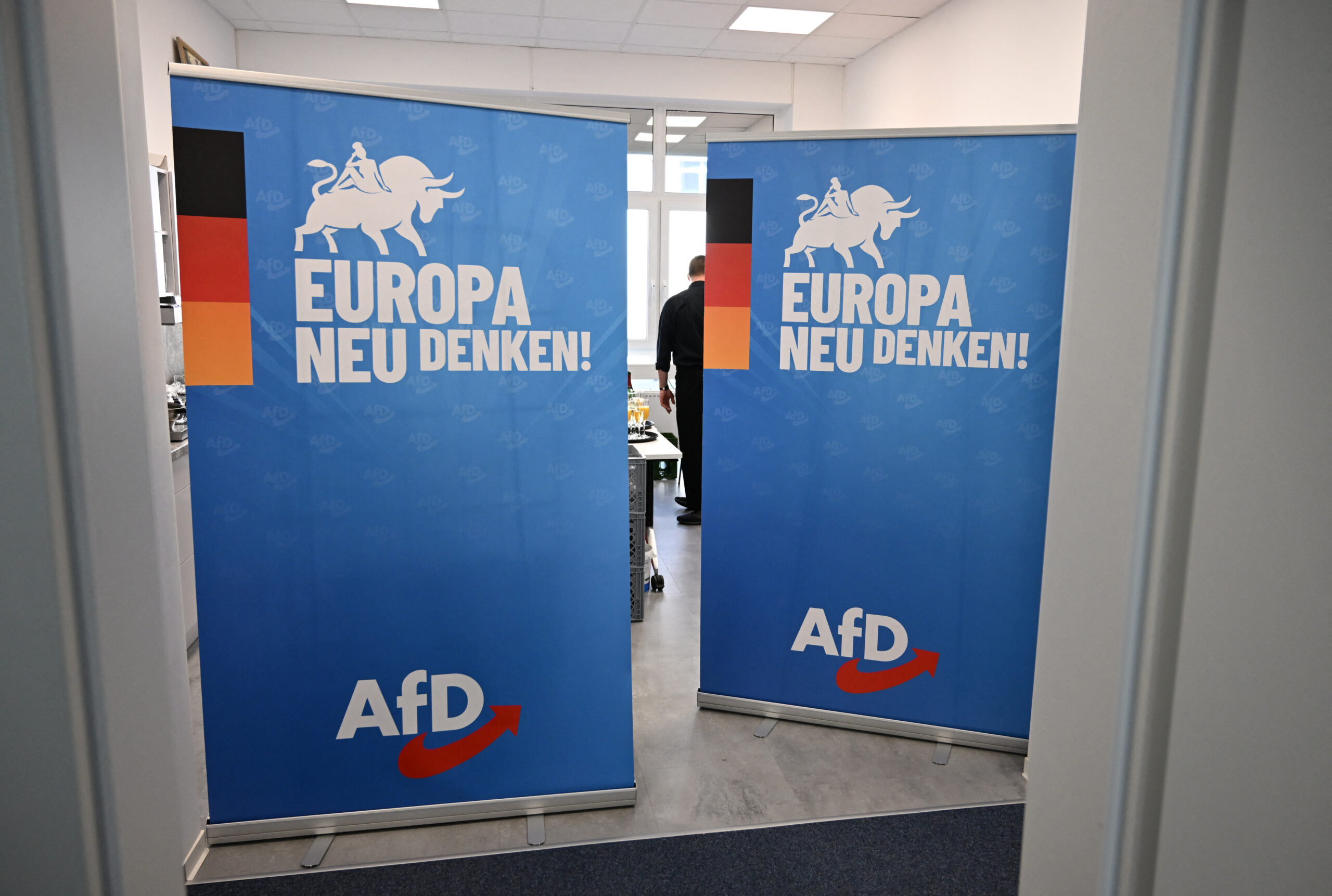
Alternative for Germany (AfD) has published a new strategy paper on Europe, updating its stance on both a possible German exit from the European Union (“Dexit”) and the single market.
In the document, the AfD embraces core demands of German business, advocates for a German-dominated EU attaining global power status, and urges the bloc to focus on measures that reinforce its position amid ongoing international power struggles.
Among the document’s central points are the party’s shift away from the idea of leaving the EU and its explicit commitment to the EU single market, which accounts for the vast majority of German corporate exports.
The AfD also appears to intend to preserve the euro, while insisting on the strict enforcement of the Maastricht criteria to prevent crises without any fiscal transfers to other eurozone countries.
The party relies on a unified EU approach in the development of advanced technologies, such as artificial intelligence, and particularly in the defence sector. In both areas, the EU, essentially led by Germany, must become independent of both China and the US in order to act as a global power.
In other policy domains, the party advocates a large-scale devolution of powers from Brussels back to national capitals.
An identitarian appeal to right-wing conservative and, in some respects, ethno-nationalist ideals is intended to serve as the ideological bond.
AfD echoes German capital: The imperative of the single market
The AfD’s shelving of a potential EU exit and its recognition of the European single market, even from its own perspective, as a central component of European-level cooperation carry major significance.
The single market is viewed as indispensable to the German economy. Although its share of exports no longer matches the record highs reached during the 1990s and 2000s, when it occasionally constituted nearly two thirds of total exports, the single market’s share is rising once again because of slowing exports to the US and China.
This share grew from 54% in 2024 to 56% in 2025, figures that exclude the United Kingdom, which was still factored into data during the 1990s and 2000s.
Brexit indirectly illustrates the benefits the German economy draws from the EU single market: following the UK’s departure from the EU, German exports to Britain declined from 89 billion euros in 2015, the year preceding the Brexit referendum, to approximately 73.5 billion euros.
In periods of global crisis like today, the single market is proving to be a lifeline for Germany’s export sector. It represents something that virtually no entrepreneur would genuinely want to abandon.
Preserving the single market is also among the consistent demands of small and medium-sized enterprises (SMEs), some of which sympathise with the AfD.
The euro’s place in German exports
The situation surrounding the euro is less clear-cut. As reported by German Foreign Policy, citing a 2019 study by the Centre for European Policy (CEP), Germany benefited more from the introduction of the single currency than any other eurozone member. Between 1999 and 2017, the euro yielded Germany a cumulative net benefit of roughly 1.9 trillion euros.
According to the CEP, France sustained a loss of 3.6 trillion euros over the same period due to currency effects, while Italy suffered a shortfall of 4.3 trillion euros.
Even so, the German economy is not existentially reliant on the common currency. This is demonstrated by Poland, Hungary, and the Czech Republic, which consistently rank among Germany’s most important business locations and primary trading partners despite having retained their national currencies.
The fact that the German economy as a whole has relied on the euro so far is also tied to the euro being weaker than a standalone German mark, which has consequently boosted exports.
Against that, particularly during periods of crisis, an economic collapse in even a single country, as seen in Greece from 2009 onwards, can destabilise the entire currency.
Such a scenario could readily recur; for instance, warnings are periodically voiced at present regarding a potentially looming severe financial crisis in heavily indebted France.
The party seeks clear German hegemony in the EU
The AfD states that it currently intends in principle to adhere to the euro.
However, the party demands strict adherence to the Maastricht criteria, specifically the requirements that public debt must not exceed 60% of gross domestic product (GDP) and the budget deficit must remain below 3% of GDP, with those rules to be enforced by compulsion if necessary.
This would entail an austerity drive harsher than the rollback of the welfare state already taking place across Europe.
The AfD wants the European Central Bank (ECB) to concentrate strictly on price stability and abandon all forms of compensatory state financing.
That step would eliminate the EU’s ability to assist crisis-hit countries to underpin the single currency.
The AfD also demands a revision of voting rights within the ECB Governing Council.
These rights are currently distributed unevenly, with smaller states in particular having lost significant influence.
The AfD seeks the allocation to Germany of “voting rights corresponding to its economic weight” in the future, “taking into account its economic and financial standing”.
This would establish clear German dominance inside the Frankfurt am Main-based central bank, particularly in the event of a financial crisis erupting in a eurozone state such as France.
The strategy paper rejects the EU’s current trajectory towards collective borrowing and automatic redistribution, arguing that individual responsibility and liability must be reunited.
The strategy also opposes jointly guaranteed EU bonds and the mutualisation of liabilities under the banking union.
The party’s demands additionally include a requirement to reduce and settle TARGET2 balances within the Eurosystem annually, using safe assets and high-value collateral such as gold or Bitcoin.
No to debt, yes to capital market deregulation
The document opposes the creation of debt-financed funds by Brussels to direct industrial policy, contending that such mechanisms mask the underlying causes of capital flight from Europe.
Rather than channelling funds into “unproductive green financial products”, the document advocates liberalising capital markets so that investment can be steered toward industry and technology.
The paper asserts that Europe’s weakness in global technological and industrial competition stems from a severe deficit in private equity and venture capital.
Instead of centralised spending, the AfD proposes that the EU act merely as an administrative coordinator for intergovernmental investment consortia financed directly and sovereignly by member states.
“Decentralised cryptocurrencies” such as Bitcoin are endorsed as instruments of financial sovereignty, alongside calls to avoid restrictive regulatory frameworks such as MiCA.
MiCA (Markets in Crypto-Assets) is the EU’s comprehensive regulatory framework established to oversee crypto-asset markets.
“Strategic autonomy” for Europe; a leadership role for Germany
In key economic sectors where European countries are threatened by, or already experiencing, dependency on the US and China, the AfD actively advocates a unified EU approach to achieve “strategic autonomy”.
To this end, the party seeks to pool Europe’s technological assets, ranging from space exploration to artificial intelligence models: “Europe must be a centre of excellence that secures its freedom through technological breakthroughs.”
At the same time, the party resolutely urges closer cooperation within the European defence industry.
In critical areas such as unmanned aerial vehicles or military applications of artificial intelligence, it calls for launching the “joint development” of military hardware.
Regarding procurement, the party argues that Europe should primarily rely on defence equipment manufactured within the EU to assemble a “common arsenal of nations”.
Only cooperation, in this view, can secure technological autonomy and the necessary industrial economies of scale.
The AfD expressly rejects only the creation of an EU army. Deciding matters of war and peace must, in its view, remain permanently in the hands of European nation-states.
Call for a return to national sovereignty
In most other policy fields, the AfD demands a sharp curtailment of EU activities and a focus strictly on measures that strengthen the bloc against global power rivalries.
For example, external borders should be closed even more tightly than before against “unwanted migrants” who could tie down resources.
The party states that all redistribution within the EU must be reduced to a minimum and welfare-state measures at the EU level brought to an end.
The AfD’s strategy paper calls for a significant transfer of powers from Brussels back to national capitals.
To that end, it proposes:
Dissolving superfluous EU institutions and Directorates-General, while confining the European Commission to core administrative tasks.
Imposing an expenditure ceiling on the Multiannual Financial Framework.
Introducing a national right of veto whenever EU actions violate the principle of subsidiarity.
Under this framework, the European Commission’s authority would be largely restricted to administrative functions, and Members of the European Parliament would no longer be directly elected, being appointed instead by national parliaments.
Whenever the EU refuses to devolve powers, Berlin should pursue an “opt-out” and work to strengthen nation-states.
Through amendments to Articles 4 and 5 of the Treaty on European Union (TEU), the supremacy of national constitutions should be guaranteed outside core European tasks, while uniform EU law would be preserved in foundational areas such as the single market.
The Court of Justice of the European Union (CJEU) would be replaced by an intergovernmental European Arbitration Court, with authority restricted to adjudicating treaty disputes within its explicitly assigned remit.
The party also calls for permanently incorporating a debt brake and a spending brake into EU treaties, as well as establishing irrevocable opt-out protocols modelled on the Danish and Irish precedents that the Commission could not unilaterally suspend or revoke.
Referring here to a “federation of European nations”, the AfD also favours an ideological alignment rooted in right-wing conservatism and, in part, ethno-nationalism.
According to the party, the continent’s “Christian and Western heritage” must be reinforced and the heterosexual-patriarchal family structure reaffirmed.
The “ultimate goal”, the party states, is “the preservation of the cultural identity of European peoples”.
The AfD designates 2029 as the starting point for implementing its European programme.
Elections for both the German Bundestag and the European Parliament will take place that year, with the AfD hoping to secure a right-wing majority in both assemblies.









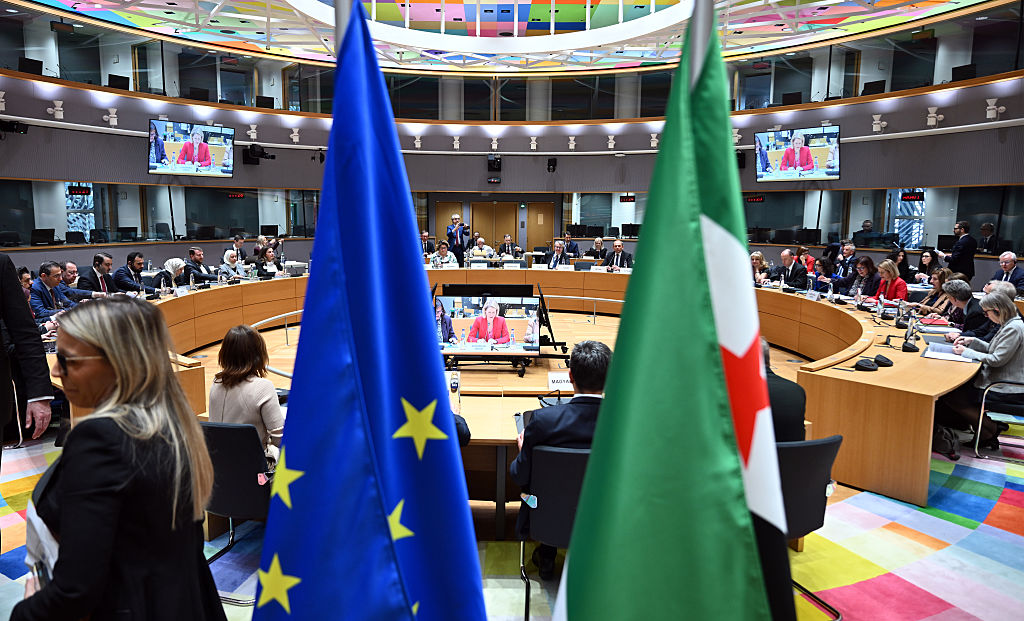
The EU is proposing to sign an agreement with Syria that was initialled in 2008 but never concluded.
The proposal was outlined in a discussion paper prepared by the European External Action Service (EEAS) ahead of a meeting of EU foreign ministers today (16 November).
At the meeting, ministers will discuss Syria’s political transition and economic recovery.
Rather than negotiating a new agreement from scratch, Brussels is proposing to sign the existing text of the 2008 association agreement while simultaneously requesting a new mandate from EU capitals to negotiate its revision.
“This approach would allow a rapid outcome, contribute to the stability of the country and bring Syria on a par with other southern neighbourhood countries, while safeguarding EU interests,” the document seen by Rapporteur states.
The 2008 text was never signed because the EU had held back over concerns regarding the Bashar al-Assad administration’s “human rights” record.
An EU diplomat said it remains unclear whether Syrian authorities would prefer to revive the 2008 agreement or negotiate an entirely new one, as Damascus has not communicated its preference to Brussels.
The diplomat noted that several delegations raised concerns about the process, the situation on the ground in Syria and the EU’s ability to maintain leverage over the transitional authorities, adding that further work is needed before moving forward.
Another EU diplomat sought to play down expectations that a decision would be taken today.
Until now, relations between the EU and Syria have been governed by a cooperation agreement signed in 1977 and partially suspended in 2011.
In May this year, EU member states agreed to reinstate that agreement in full.
The discussion note also warned that while Russia’s influence in Syria has diminished since Assad’s fall, Moscow’s continued military presence and economic influence remain a source of concern for the bloc.
“The EU is also stepping up its efforts to reduce the malign influence of Russia and other foreign actors over Syria,” the document said.
Beyond the agreement, the EU aims to encourage European investment in the reconstruction process, support Syria’s reintegration into regional trade and connectivity networks, and deepen security cooperation, including police training with Jordan.
The EU is seeking to integrate Syria into Euro-Mediterranean cooperation frameworks, with a focus on transport, energy and digital connectivity.
The bloc is encouraging the European Investment Bank (EIB) to resume relations with Syria and is backing Damascus’s efforts to become a shareholder in the European Bank for Reconstruction and Development, a key step towards accessing reconstruction financing.
An EU-led coordination forum scheduled to take place in Damascus on 17 November will focus on investment and private-sector participation and lay the groundwork for a potential EU-Syria investment conference in 2027, the document said.
Earlier this year, the EU pledged 620 million euros in support for Syria covering humanitarian aid and socio-economic recovery in 2026 and 2027.
As part of the rebuilding of German militarism, the Bundestag on Friday approved a comprehensive reform of legislation governing intelligence agencies in the form of an “Enabling Act”.
In the vote, 309 lawmakers voted in favour, 190 voted against and 71 abstained. The abstentions came from the Greens parliamentary group.
The law grants the Federal Intelligence Service (BND) and the Federal Office for the Protection of the Constitution (BfV) powers euphemistically termed “active measures”, which lawyer Rolf Gössner has described as “theft and sabotage”.
According to junge Welt (jW), fundamental rights and the Basic Law are being left at the mercy of the arbitrary power of the intelligence agencies.
The alleged “hybrid” warfare threat facing the Federal Republic is cited as justification for the measure.
Federal Interior Minister Alexander Dobrindt (CSU) spoke of a “reform of the century” and welcomed the fact that Germany now has “real intelligence agencies”.
According to the governing parties, these agencies had until now done nothing more than gather intelligence.
In any event, the BfV will in future be able to enter homes and access computers without a court order, use minors as informants and establish a comprehensive artificial intelligence-based surveillance system.
In other words, it will be able to continue doing legally what it has hitherto done without a legal basis.
Similarly, the BND will be permitted to disable servers abroad, reroute data traffic, delete data and spread disinformation.
Even before agreement was reached on the reform plan, the Bundeswehr was conducting electronic warfare exercises against Russia and Belarus in Lithuania at the end of October.
Page 544 of the draft bill, which exceeds 600 pages, also contains a provision that could be interpreted as a “licence to kill”.
This provision states that the BND may carry out “direct action” “using kinetic means”.
At the last minute on Wednesday, the CDU/CSU and SPD added a clause to the bill allowing the BfV to restrict cooperation with state administrations.
This step was taken following election victories by the AfD in Saxony-Anhalt and the Left Party in Berlin.
The newly coined term “special state of determination”, which appears repeatedly in the bill, is being described as a “legal oddity”. The concept is added alongside the existing “state of defence” and “state of tension”, but with a key difference: while kept secret even from the Bundestag, it significantly expands the powers of the entire security apparatus without any time limit.
In practice, decisions on this matter rest with the agency heads. Put more plainly, the intelligence services are assuming the authority to suspend the constitution and the laws themselves.
During the plenary debate, Left Party lawmaker Clara Bünger rightly stated that this would create an “uncontrollable apparatus that tramples on fundamental rights” and a “new German secret police”.
According to Bünger, Dobrindt is handing these powers over to the AfD “ready for use”.
The Left Party and the AfD voted against the bill.
During the debate, AfD lawmaker Gottfried Curio accused the coalition of creating a “snooping state” (Spitzelstaat) and abolishing the separation between the police and intelligence services.
The party argued that expanding the powers of the domestic intelligence agency (BfV), such as covertly entering homes, infiltrating devices and recruiting informants from parliamentary staff, violates fundamental rights and directly threatens the political opposition.
While voting against the government’s reform, the AfD submitted its own separate motion aimed specifically at strengthening the operational capacity of the foreign intelligence service (BND), though that motion was rejected by all other parliamentary groups.
On Thursday, 28 civil rights organizations, including the Humanist Union, the Committee for Fundamental Rights and Democracy, the Republican Lawyers’ Association (RAV) and Rote Hilfe, had written an open letter to Bundestag members urging them to vote against the bill.
The signatories assessed the draft legislation as “a threat to democracy, largely unconstitutional and irresponsible” and a “shift toward a surveillance state”, arguing that such a state is needed by “those preparing for war”.
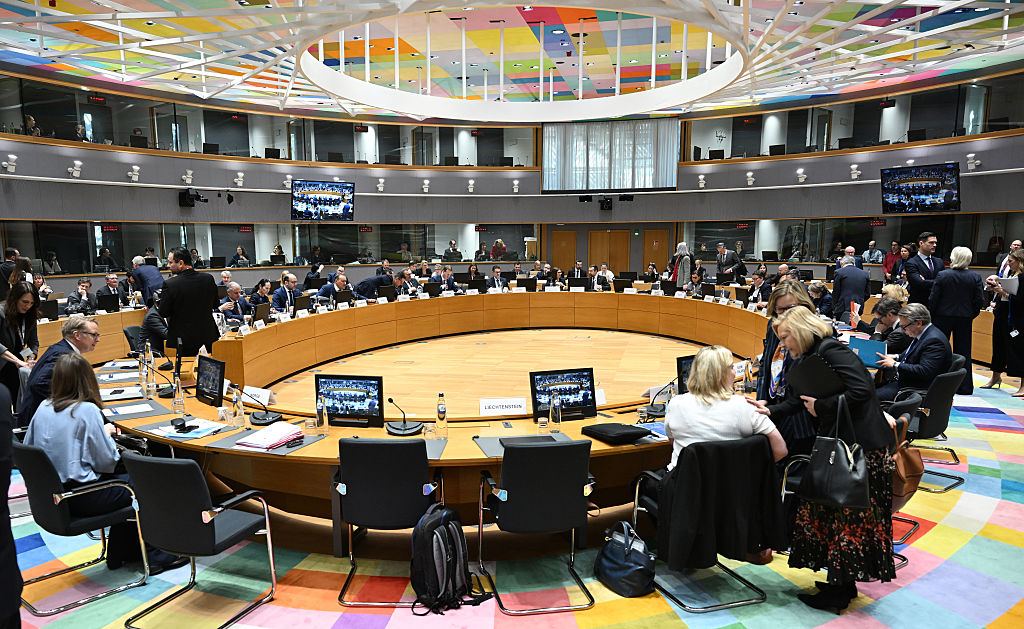
European governments are being asked to formally consider a “comprehensive review” of the EU’s migration and asylum rules next year.
This could pave the way for changes just six months after the new system took effect.
According to an internal diplomatic note obtained by Rapporteur, Ireland, which currently holds the rotating presidency of the EU Council and chairs the negotiations, is testing whether capitals would support reviewing all legal instruments of the EU Migration Pact, including those not formally due for their first evaluation until 2028.
The migration pact was adopted in May 2024 after years of long and difficult negotiations and entered into force last June.
The reassessment could come as elections in France, Greece, Italy and Poland next year are expected to push migration high up the political agenda.
The review could lead to changes to some of the agreement’s most politically contentious elements, including the solidarity mechanism, the system for sharing migration responsibility among EU countries, and the rules determining which country is responsible for examining an asylum application.
In September, ministers from a broad group of EU countries met in Munich for informal talks on possible changes to the Pact on Migration and Asylum.
Top of the agenda were efforts to call on the European Commission to prepare a “simplification” legislative package by mid-2027.
“The aims of the review should be simplification and improvements in the implementation of the Pact, as well as clarification of legal texts where necessary,” the note said.
However, a senior official told Rapporteur: “Everyone knows this is a window of opportunity.”
Representatives of the capitals will also be asked whether they agree that the review should preserve the Pact’s “delicate balance between solidarity and responsibility” and avoid changes that would affect its basic structure and principles.
EU capitals have already backed a tougher migration agenda during the current Commission’s term, including a new deportation framework that allows for the establishment of return hubs in non-EU countries.
Several governments are currently considering this option and are expected to announce an agreement next week with a third country to host such facilities.
The Commission has also proposed new rules for Frontex, the EU’s border agency, aiming to make it the bloc’s “main operational arm” for returns.
Under the proposals, the agency would deploy officers during border crises, monitor online threats and take on a greater role in organizing and carrying out deportations.

Israeli unity government talks stall between Eisenkot and Likud

US and allies sign pact to shield AI supply chains from China

US general forced to resign could face trial over leak allegations

EU proposes reviving 2008 association agreement with Syria

Germany grants BND and BfV broad surveillance and covert action powers
-

 America1 week ago
US midterms see 97 young winners as Gen Z representation triples
-
 Diplomacy2 weeks ago
Secular dress code dispute exposes deeper Türkiye-Azerbaijan strains
-

 Europe2 weeks ago
EU urges citizens to prepare 72-hour survival kits for crises
-

 Asia2 weeks ago
China expands Africa arms sales, displacing France and Western rivals
-

 Diplomacy2 weeks ago
Protesters storm Kyiv site holding soldiers over torture allegations
-
 Europe2 weeks ago
Pro-Ukraine Republicans in US Congress dwindle after departures
-

 Europe2 weeks ago
Low EU gas stocks risk stoking global prices, IEA report warns
-
 America2 weeks ago
ICE contractors steer over $12m to US campaigns ahead of midterms
