
Diplomacy
The Gulf must rethink its own security, Prof. Abdullah Baabood insists

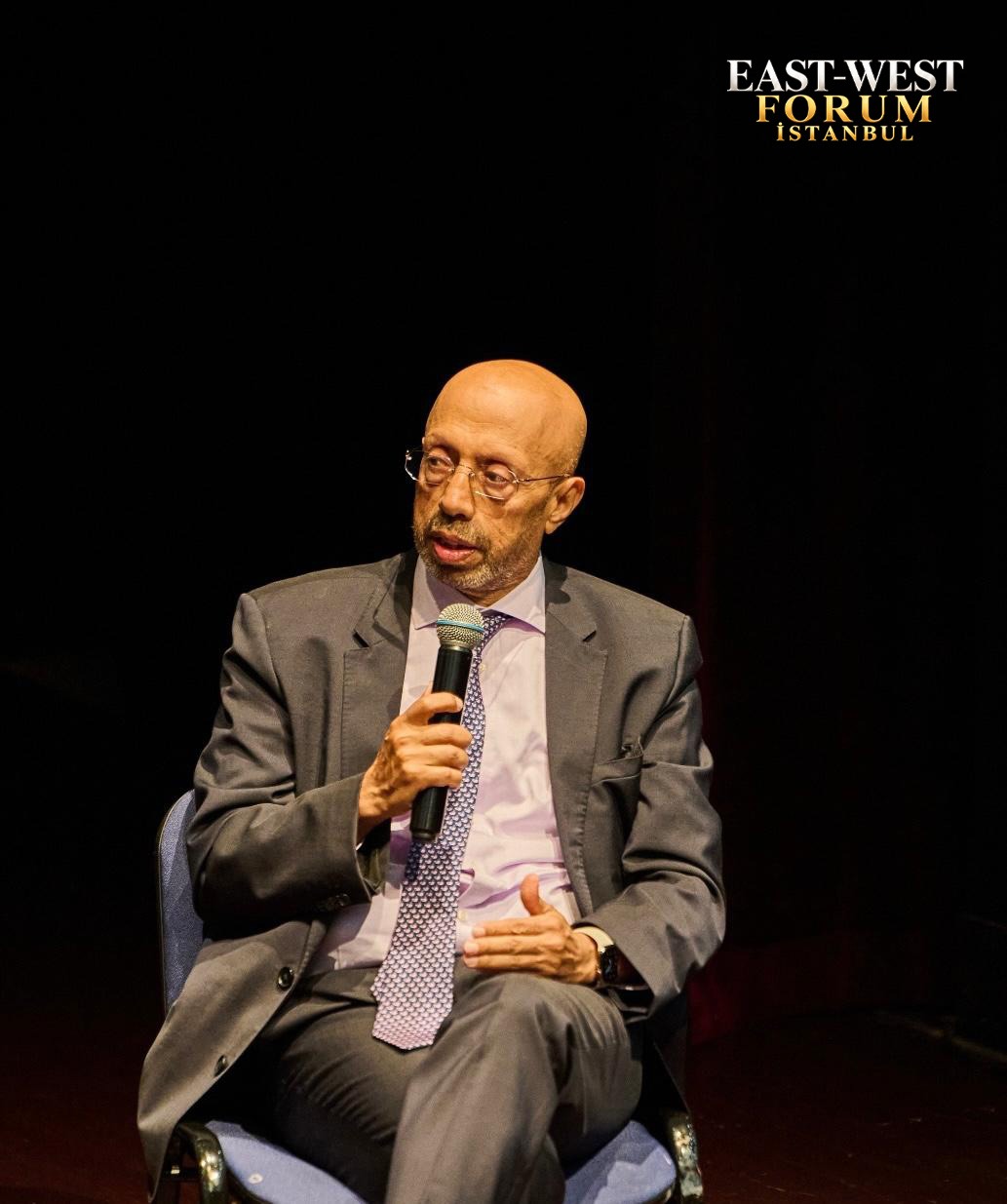
Editor’s note: Speaking at the East-West Forum held in Istanbul on September 26, Prof. Abdullah Baabood addressed the heavy toll that wars and destruction in the Middle East have inflicted on the peoples of the region. Noting that the attack on Iran has also imperiled the Gulf states under the American security umbrella, Baabood stated that the closure of the Strait of Hormuz has adversely affected oil and natural gas trade, imports, and regional economies. Stating that relations with the US and the future of the American military presence in the region are now being questioned more than ever, Baabood stressed that regional states must shape their own security through a shared understanding rather than leaving it to the decisions of foreign capitals.
First of all, good afternoon, everyone. I hope you are still awake.
Thank you, Pascal. I also thank Tunç and Harici for their kind invitation.
Being the last speaker is always a great thing because you can recycle all the good ideas you have heard throughout the different panels. But I will spare you that and offer something quite different.
I had thought I would be talking about something else, but I have changed my mind because some of the topics I wanted to address have already been covered.
Let me offer some reflections from someone who comes from the region. Although it says I come from Waseda University, which is in Japan, and we both worked at the same university, where I still work, I am originally from Oman. That is why it says Muscat there.
When you look at the Middle East today, since the British withdrawal, or even before, what do you see? Conflict, destruction, and wars lasting for decades.
We ask ourselves how much longer this will continue. When we look around us, we see devastated states and people being killed almost every day.
Not only in Palestine, which is a separate issue and has already been discussed. Look at Lebanon, Syria, Libya, Sudan, Somalia, Yemen, and Iraq.
I was once speaking to a diplomat and said: “All of this is happening. Could this be a conspiracy theory? I don’t believe in conspiracies.”
He said: “If it is not a conspiracy, what is it? How can you explain all of this?”
I still cannot figure it out. Perhaps you can.
The few remaining countries in the region that were stable, secure under the American umbrella, as it were, and prosperous because of oil and gas were the Gulf states.
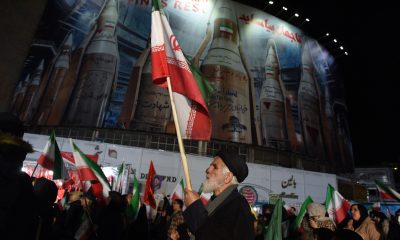
What happened? President Trump decided to attack a neighbouring country unlawfully, knowing full well that Iran would retaliate against the American presence in the region.
What does that mean? It means our countries in the region would be attacked by Iran, as would some of our infrastructure.
Not only that, but the Strait of Hormuz is now closed. It was open; now it is closed. All the Gulf states, with the possible exception of Oman, rely on the Strait of Hormuz for their oil and gas exports and their imports.
Their economies are now suffering. It has been six or seven months, and we do not know how much longer this will continue. The region is paying a very high price for someone else’s decision.
Someone in Tel Aviv and someone in Washington decided that they wanted to do this. We do not even understand the reason.
If it was the nuclear issue, that had already been settled a long time ago through the JCPOA. Iran has also always said that it would never enrich uranium to produce nuclear weapons or a bomb.
Even before the war, the Omani foreign minister was negotiating with the Iranians and the Americans, and the Iranians had agreed to almost everything President Trump wanted.
That prompted the Omani foreign minister to appear on television and say that he was surprised the decision to go to war had already been taken while negotiations were still underway.
From the region’s perspective, we look at this and think: You have devastated everything. The entire region around us is devastated, and now we are too. Yet we are your allies. We are under the United States’ umbrella.
We have given you all the support you needed. We ensured that you received oil and gas. We ensured that the global economy functioned well and received the energy it needed.
We invested the revenues from oil and gas in your economy, your technology, your know-how, and your weapons. This is how we are repaid.
I think many questions have now been raised about the future of the relationship with the United States, including the future of American bases and the American presence in the region.
I believe America has shot itself in the foot in this case, perhaps even more than that.
At the public level, there is considerable resentment. It is not only because of the unconditional support for Israel in Gaza, the massacres, and the genocide that people have witnessed, but also because of what is happening now.
Many questions will therefore be raised. I think this conflict will further accelerate the changes taking place globally.
Let me conclude with one point. I think the region must begin thinking outside the box and beyond reliance on American or other foreign security umbrellas.
It is time for the region to start thinking about its own security. Its security does not have to be decided in Washington, London, or anywhere else. It must be decided within the region, through collaboration among regional countries.
Many countries in the region can help support its security and stability. This does not mean saying goodbye to the Americans. They will remain allies. But we also need to diversify our relationships with China, Russia, India, and other powers.
Türkiye is, of course, playing a very important role here. So is Pakistan.
I think we need a regional mechanism that ensures security, stability, and economic development, while making us less dependent on foreign powers to secure our region.
Thank you very much.










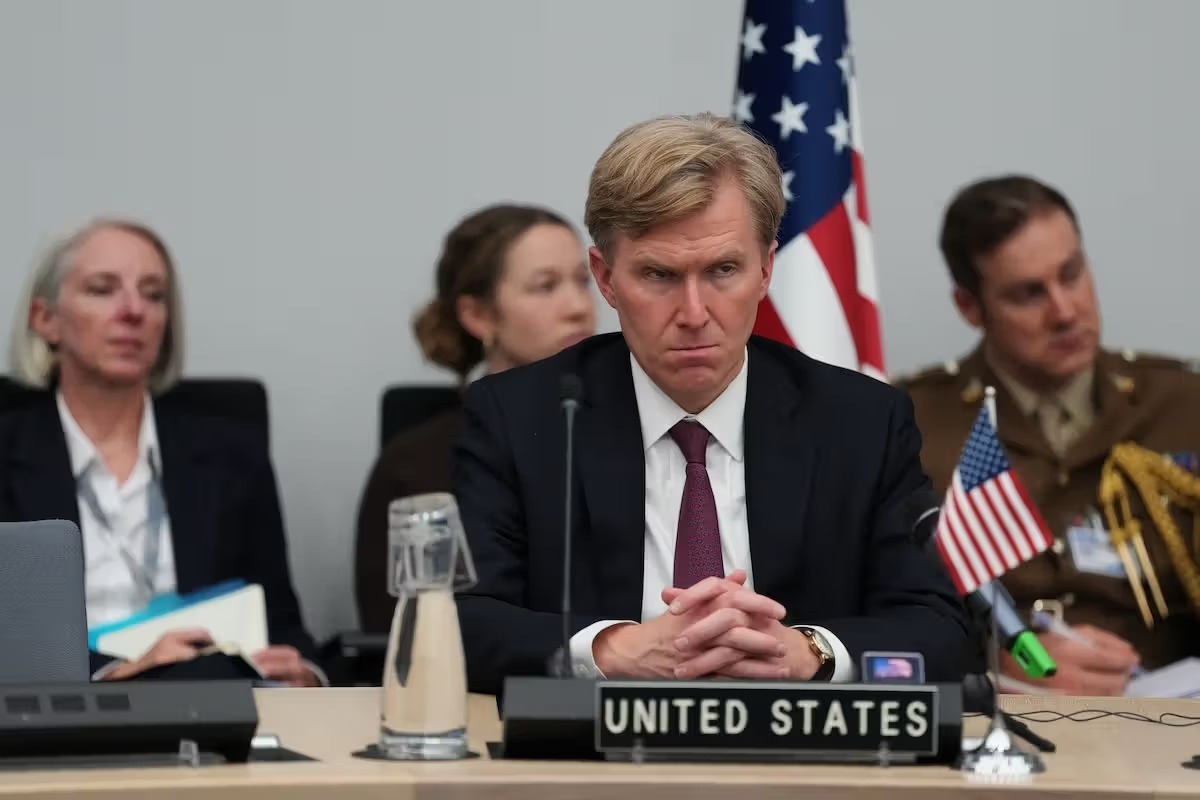
Elbridge Colby, the US deputy undersecretary of defence for policy, left the Ukraine Defence Contact Group (Ramstein format) talks held in Brussels on Tuesday, 17 November, before Ukrainian Defence Minister Yevhen Hmara began his address.
According to a report by the British newspaper The Telegraph, Colby, who authored the current US National Defence Strategy, opposed the tactic of launching strikes deep inside Russia during the talks.
Colby exited the room ahead of the speech by Ukrainian Defence Minister Hmara, who was presenting a report to his counterparts in a closed session. The US side officially explained his departure by citing the need to catch a flight.
Matthew Whitaker, the US permanent representative to NATO, remained at the meeting to represent the country.
German government sources speaking to The Telegraph said they were “concerned” by the statements of the US official, who criticized Ukraine’s deep strikes into Russian territory.
According to the German sources, Colby described the tactic as having “low military value” and as a method that did not “bring the conflict closer” to an end.
Interlocutors speaking to the newspaper expressed concern over the possibility that, following this development, the Donald Trump administration could “take Russia’s side”.
A source who briefed the British newspaper said:
“During the public portion of the Ramstein meeting, Colby said that the US opposed strikes deep into Russian territory and saw no military benefit in them. Most attendees were shocked by these comments.”
Who is Elbridge Colby?
Colby, a Republican politician, has served as deputy undersecretary of defence for policy at the Pentagon since April 2025 and held a similar role during Trump’s first presidential term.
Colby worked at the US Department of State and the Office of the Director of National Intelligence early in his career, and is the grandson of William Colby, who directed the Central Intelligence Agency (CIA) in the 1970s.
The National Defence Strategy released by the Pentagon in January this year, with the 46-year-old Colby as lead author, defined Russia as a “manageable threat”, while projecting that the country maintained “large reserves of military and industrial power” and demonstrated “national resolve”.
The authors of this US strategy placed the responsibility for defending Ukraine and Europe on European partners.
Colby, who identifies the containment of China among the Pentagon’s primary priorities, has long been known to prioritize US competition with that country over the Ukraine and Middle East theatres.
Speaking in March at congressional hearings on the new strategy, Colby argued that the document responded to the principles of “flexible realism”.
The US official said during that hearing:
“This is an attempt to advance and protect the concrete interests of ordinary Americans in a practical and realistic way. At the heart of this strategy, as the document clearly states, lies ‘evaluation, screening and prioritization’.”
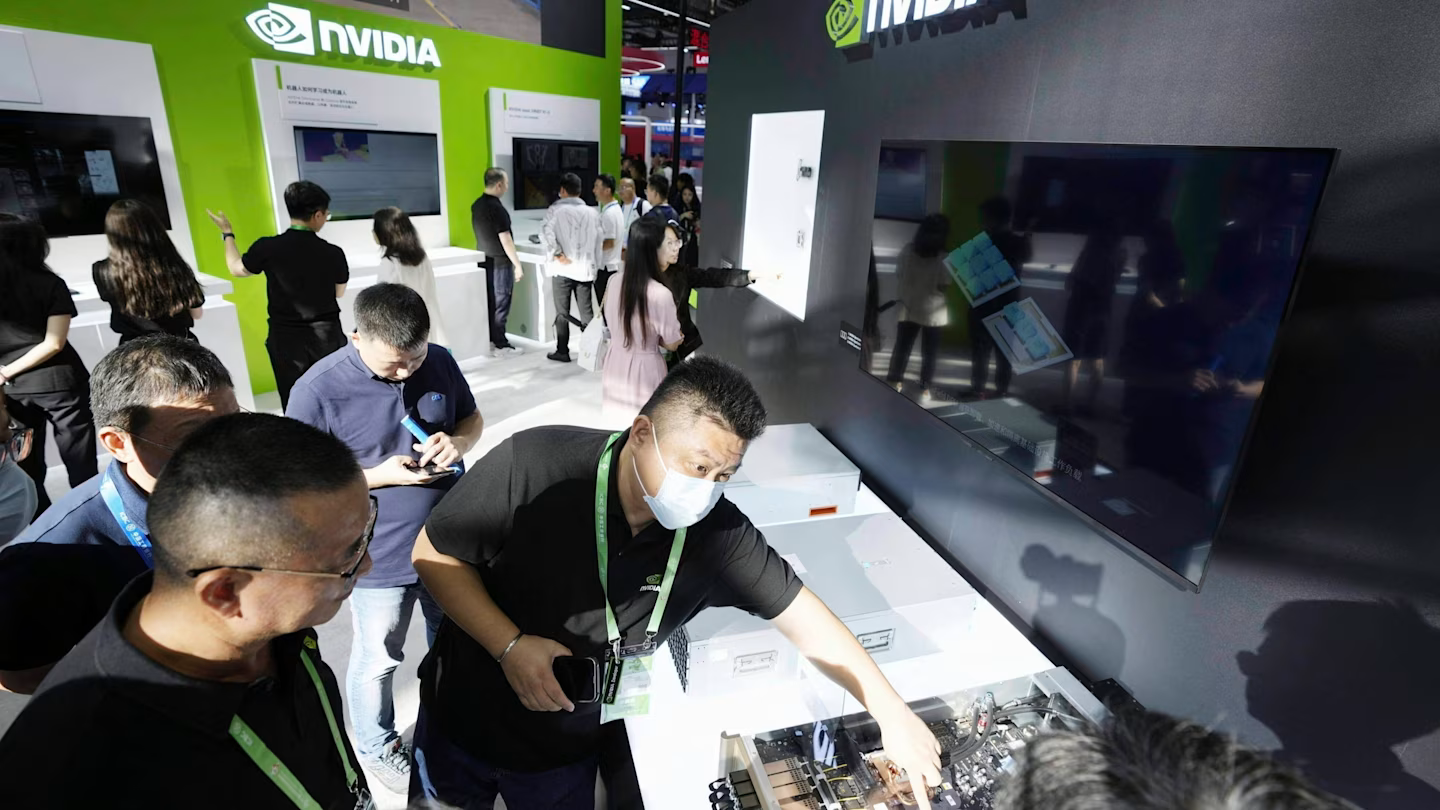
The US government has approved requests by Nvidia and AMD to ship advanced artificial intelligence chips to certain Chinese companies.
According to the Financial Times (FT), these companies include entities that the Pentagon believes are linked to China’s People’s Liberation Army.
Previously classified records published on Thursday by the Republican-majority House Foreign Affairs Committee show that American companies sought permission to ship more than 3.4 million chips to Chinese firms such as Alibaba, Tencent, Baidu, and BYD over a six-month period beginning in December.
The Bureau of Industry and Security (BIS) approved the “export, re-export, or transfer” of 879,868 chips.
During a hearing held to approve the release of the documents, the Republican committee chairman, Brian Mast, said that in Nvidia’s licence applications, “two of the companies listed as being able to install chips in data centres in China are, as far as we know, shell companies.” He added, “Both are fake companies [and] BIS approved the sale of these chips to these firms.”
The disclosure of the documents came as members of Congress pushed for tighter export controls following Jensen Huang’s resignation as Nvidia CEO.
Huang had been in a relationship with Alice Huang, a Singapore-based executive whom American officials determined to be a Chinese spy.
US officials also believe that Alice Huang may have been involved in export control violations by transferring Nvidia’s processors to China.
The Department of Commerce, which houses the BIS, has faced criticism from both Republicans and Democrats over its stance on Nvidia’s sales of advanced AI chips to China.
Commerce Secretary Howard Lutnick has agreed to testify before the Senate Banking Committee, while Huang is expected to be questioned behind closed doors in Congress next month.
Nvidia did not respond to requests for comment. AMD stated that it “complies with applicable US export control laws and regulations and implements rigorous processes to ensure that compliance across its global operations.”
AMD, which dominates the AI chip market alongside Nvidia, has also come under pressure over its ties to China.
On Thursday, its shares fell %7.7 after two reports linked to short seller Hunterbrook warned of risks stemming from the company’s connections to Beijing and “round-tripping”.
In Washington, Gregory Meeks, the ranking Democrat on the House Foreign Affairs Committee, stated that he voted in favour of releasing the files that revealed the approvals granted to Nvidia and AMD, saying that “over the past month, the administration’s handling of chip export controls has put our national security and technological edge at risk.”
Meeks added, “The public has a right to know how these decisions were made, and releasing this information ensures everyone is reviewing the same set of facts.”
In a separate development on Thursday, the California attorney general sent a subpoena to Nvidia seeking information on “whether its advanced chips or confidential information went to China and whether Nvidia misled investors and the public.”a
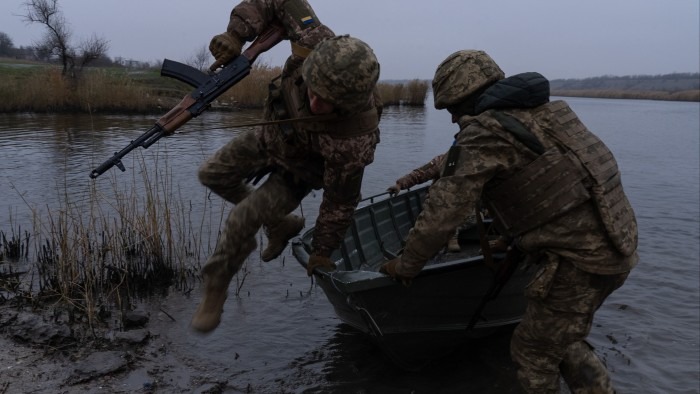
US President Donald Trump’s son-in-law and envoy Jared Kushner has discussed granting Ukraine NATO membership in exchange for territorial concessions during closed-door talks over the past several months, The Wall Street Journal (WSJ) reported, citing sources.
Once considered unworkable, the idea has come up in recent months during various discussions between European officials and Kushner alongside fellow special envoy Steve Witkoff.
Sources said Kushner discussed the possibility with Ukrainian President Volodymyr Zelenskyy and European officials at an airport in Dublin last week.
The issue was also raised last week during at least one meeting in the United Arab Emirates (UAE), where Kushner and Witkoff held talks with Ukrainian, European and Russian representatives.
An unnamed European leader noted that the idea had also been discussed during a telephone call in August.
US put forward two possible scenarios in talks
According to sources, the US presented two possible scenarios in recent discussions.
The first scenario envisages Ukraine giving up Donbas in return for NATO membership.
The second option involves freezing the conflict along the front line and providing Kyiv with security guarantees.
The WSJ reported that it remains unclear how seriously US negotiators are taking the idea or whether President Donald Trump has changed his stance on Ukraine’s NATO membership.
Last year, Trump agreed with US Defence Secretary Pete Hegseth that Ukraine’s membership in the alliance and a return to its pre-2014 borders were “unrealistic”.
European capitals reacted differently
Following talks in Berlin, French President Emmanuel Macron said the time had come to discuss Ukraine’s NATO membership.
According to the newspaper’s sources, although the issue came up during the talks, the German side was reluctant to take it forward.
German Chancellor Friedrich Merz told aides that Ukraine would not join the alliance in his lifetime.
Bloomberg also reported this week that Washington had asked Kyiv whether it was prepared to recognize Donbas as Russian territory in exchange for NATO membership.
Ukrainian leader Zelenskyy, however, insists on a return to the 1991 borders as a condition for negotiations.
Zelenskyy previously said the US had for the first time asked Kyiv about the possibility of NATO membership in exchange for withdrawing from Donbas.
Kremlin rejects freezing the front line
Commenting on Zelenskyy’s remarks, Kremlin spokesman Dmitry Peskov said: “In the interests of the peace process, we maintain our position that disclosing the details of discussions between us and the Americans is inappropriate.”
The Kremlin has repeatedly rejected freezing the conflict along the line of contact.
Russian Foreign Minister Sergey Lavrov said the option did not satisfy Moscow because Europe would still refuse to recognize Russian-controlled territories as part of Russia.
“The West is now proposing the following: stopping where the line of contact is, establishing a ceasefire rather than a long-term peace; moreover, it is being loudly declared that after such a halt or cessation of hostilities, neither Ukraine nor Europe will recognize the territories under Russian control as territory of the Russian Federation in accordance with the Constitution,” Lavrov said.
Russia demands that Ukraine abandon its NATO bid and withdraw its forces from the Donbas, Zaporizhzhia and Kherson regions as conditions for a ceasefire.
Late last year, Russian President Vladimir Putin said that given the pace of Russian advances in Donbas, Moscow’s interest in a Ukrainian military withdrawal from those territories had “dropped to zero”.
In 2024, Putin stated that Moscow and Kyiv had agreed on Ukraine’s independence with NATO membership ruled out, but added that Kyiv had abandoned the neutrality principles in its declaration of independence and enshrined the goal of joining the alliance in its Constitution.

What Did the Trilateral Summit in China Reveal?

The Chinese Approach Behind the Trilateral Summit: It May Pay to Get Familiar with It Sooner Rather Than Later

Colby exits Brussels Ukraine talks before defence minister speaks

US approved exports of 800,000 Nvidia and AMD chips to China

UK looks to Nordic allies to bolster crisis resilience plans
-
 America2 weeks ago
US midterms see 97 young winners as Gen Z representation triples
-
 Europe2 weeks ago
UK and Germany expand military pact with focus on Russian frontier
-
 America2 weeks ago
Nvidia investigates CEO Jensen Huang over link to Chinese spy
-
 America2 weeks ago
US secures 35% stake in Venezuelan firm NABEP under 50-year deal
-
 Europe2 weeks ago
George Szamuely dissects European decline and strategic rifts with US
-

 Opinion2 weeks ago
The Mecca Defence Agreement, the Ottoman Empire, and the facts
-
 Opinion2 weeks ago
Settle, deny, seal: Britain’s formula for colonial torture, from Kenya to Cyprus — 1
-
 America1 week ago
Absent Democrats derail floor vote on Pete Hegseth impeachment
