
Middle East
Middle East war costs tourism sector $600mn a day, FT reports


The conflict engulfing the Middle East is costing the region’s tourism industry an estimated $600 million a day in lost visitor spending, according to projections from a global travel industry body.
Flight cancellations, airspace closures and mounting anxiety among prospective travellers are battering the region’s tourism economy after Tehran launched retaliatory strikes against several Gulf states following US and Israeli attacks on Iran.
“Even short-term disruptions can quickly translate into significant economic losses for destinations, businesses and workers across the region,” Gloria Guevara, president of the World Travel and Tourism Council, which produced the estimate, told the Financial Times.
Travellers moved swiftly to cancel regional holidays. According to reservation data compiled by analytics group AirDNA from platforms including Airbnb and Vrbo, more than 80,000 short-term rental bookings in Dubai alone were cancelled in the week ending March 6.
Before the conflict erupted, the World Travel and Tourism Council had projected that international visitors would spend approximately $207 billion across the Middle East this year.
Cities such as Dubai had flourished by marketing themselves as synonymous with luxury, year-round sunshine and security. Some of the world’s most opulent hotels now find themselves caught in the crossfire. Debris from missile-interception systems rained down on Dubai’s Burj Al Arab, while Accor’s Fairmont The Palm on Palm Jumeirah sustained a direct hit.
Major regional hubs — Abu Dhabi, Dubai, Doha and Bahrain — typically handle more than half a million air passengers each day. Yet five days of flight cancellations across the region stranded an estimated four million passengers last week, according to aviation data provider Cirium.
Hundreds of evacuation flights subsequently departed from Middle Eastern airports to repatriate the tens of thousands of visitors who remained stranded.
Dubai resumed flights last week, restoring roughly a quarter of its services by Thursday. Qatar reopened its airspace over the weekend, only to close it again on Sunday; a handful of flights operated on special permits by Tuesday.
Holiday destinations across the Middle East have previously demonstrated resilience following periods of conflict. Revenue per available room — a key performance metric in the hospitality industry — plunged sharply in Qatar within a week of Israel striking Doha last September, but returned to growth in under a month, according to data from hospitality analytics firm CoStar.
Some analysts expect business travel to rebound, given the region’s strategic position as a transit corridor between Europe and Asia, while leisure travellers may look elsewhere. “If you’re personally searching for somewhere to take your family on holiday, you can easily pivot to another destination that ticks all the boxes,” said Matthew Pohlman, a partner at Goodwin, a law firm specialising in hospitality and leisure.
Others are more sanguine. Richard Clarke, an analyst at Bernstein, offered a measured assessment: “There’s a reason this region is popular. Demand won’t be strong while explosions are continuing… but I think people will come back as soon as this is over. Travellers have shorter memories than investors.”


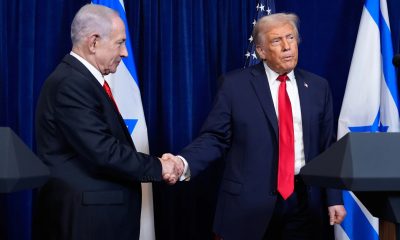






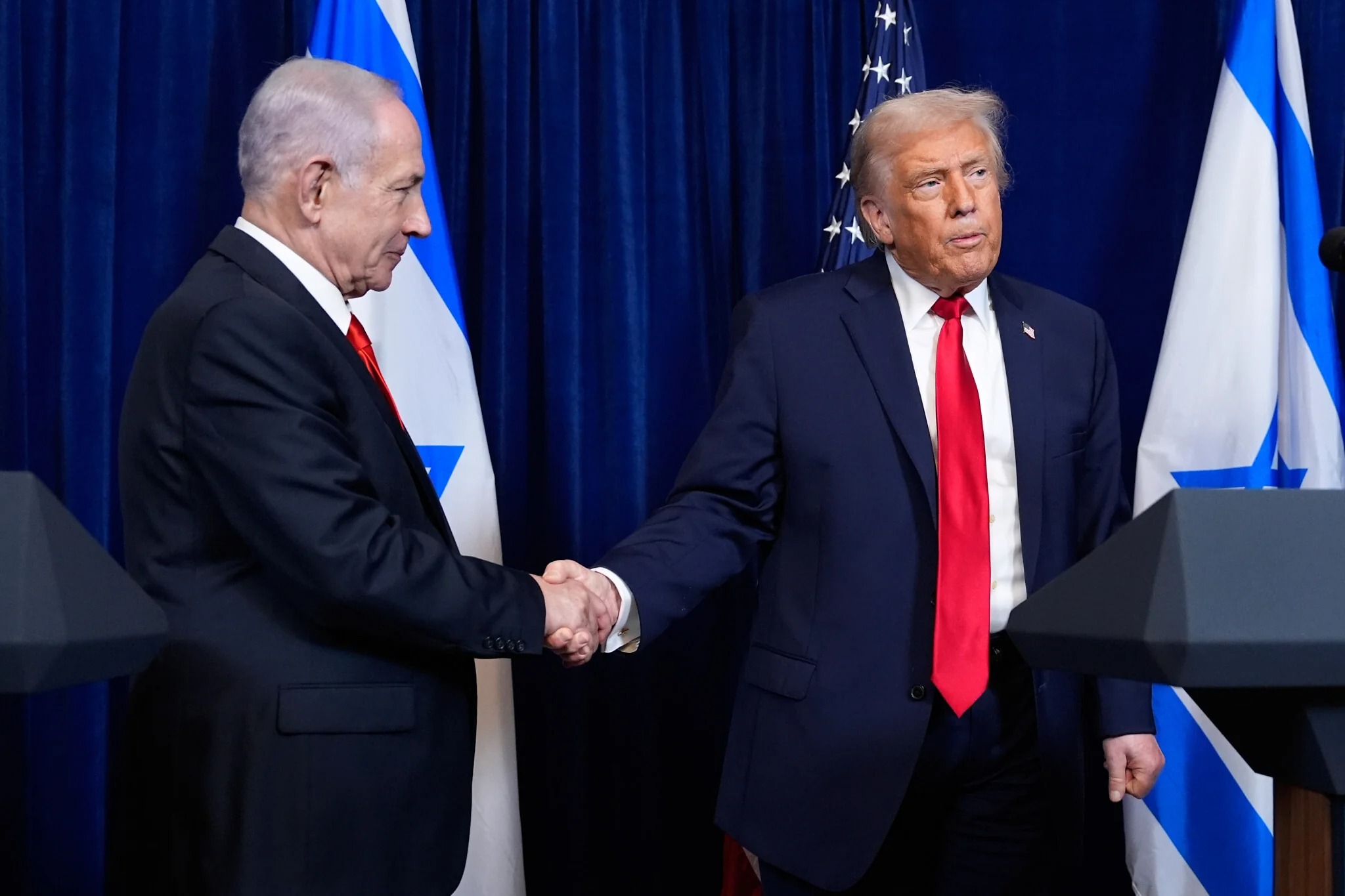
Israeli Prime Minister Benjamin Netanyahu is reportedly telephoning US President Donald Trump every day, urging him to launch a new military operation against Iran.
Citing a person familiar with the discussions, the Financial Times reported: “Netanyahu is calling him every day [to encourage him to restart the war]. Those inside and outside the White House who do not want war are trying to push back.”
The same source added that regional leaders have told Trump not to escalate tensions and to prioritize negotiations instead.
Trump appeared to reference these views held by Gulf allies in a statement issued after meeting with Qatari Prime Minister Mohammed bin Abdulrahman Al Thani today (10 November).
Al Thani has been seeking to mediate a diplomatic solution to the standoff between the US and Iran.
In a post on Truth Social, Trump explained that he prefers maintaining the economic blockade rather than launching a fresh military strike on Iran. “Qatar, Saudi Arabia, the UAE, Bahrain, Kuwait and others would very much prefer that the current situation continue,” he said.
The FT reported that Arab and Muslim leaders are concerned about Netanyahu’s sustained lobbying of Trump to resume combat operations.
Another source described as familiar with the situation in Israel told the British press that while Netanyahu wants military action against Iran to resume, there is currently no pressure being applied to persuade Trump on the matter.
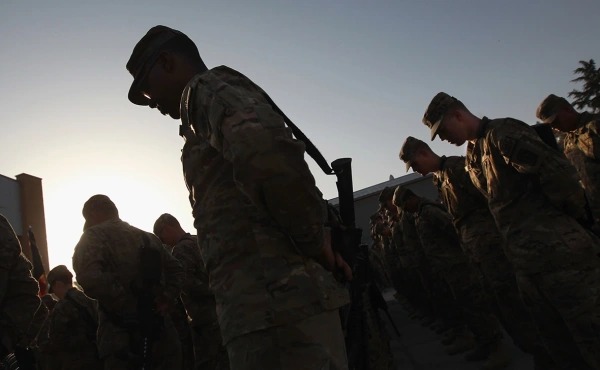
The US administration has notified several Gulf allies that it could launch a short but intensive military campaign against Iran immediately following the congressional midterm elections on 3 November. Washington urged regional states to prepare for this contingency.
According to a Wall Street Journal report citing sources with direct knowledge of the discussions, the warning did not specify which countries were briefed. Meanwhile, military activity on the ground has accelerated alongside these disclosures.
The US military has deployed a Patriot air defence battery from Texas to the Middle East, while beginning to pull its personnel back from exposed bases within range of Iranian ballistic missiles and drones to more secure positions. These moves reinforce indications that the US and Israel are preparing for a direct, wide-scale confrontation with Tehran.
The White House declined to comment on sensitive military plans whose existence has not been officially confirmed. An official statement emphasized, however, that President Donald Trump keeps all options on the table to prevent Iran from acquiring a nuclear weapon.
The New York Times reported last week that US and Israeli armed forces have stepped up joint military drills based on a short but intensive operational scenario. Potential targets identified by the newspaper include Iran’s nuclear facilities, critical energy infrastructure, and production centres for missiles and armed unmanned aerial vehicles.
The same report noted that while seen as an unlikely outcome, Trump could approve the operation before the end of October, though he might also opt against authorizing any military action. In recent months, Trump has repeatedly suspended decisions to re-enter active hostilities at the last moment.
The current active conflict between the two nations was triggered on 28 February by a joint US-Israeli strike on Iranian targets. Trump explained the primary rationale for the operation as ensuring that Tehran can under no circumstances attain a nuclear weapon.
These military actions follow the 12-day war fought in June 2025. During that air campaign, Washington directly targeted and struck Iran’s primary nuclear installations at Fordow, Natanz, and Isfahan.
International Atomic Energy Agency (IAEA) Director General Rafael Grossi outlined the latest situation on the ground during an address to the UN Security Council. Grossi stated that the agency has found no evidence indicating that Tehran is repairing or rebuilding from scratch the nuclear infrastructure damaged in the 2025 and 2026 strikes.
Criticizing the continued exclusion of monitors, Grossi urged Iran to grant international inspectors immediate access to all its nuclear sites, including damaged locations. Since the US bombardment in June 2025, the IAEA has been unable to independently verify the current status of Tehran’s stockpile of highly enriched uranium.
According to official agency records, Iran held 440.9 kilograms of uranium enriched to 60% purity prior to the June 2025 war. In nuclear physics, 60% enrichment is technically regarded as exceptionally close to the roughly 90% threshold required for weapons grade.
Following the bombings, Tehran barred international inspectors from entering the struck facilities. Because of this restriction, the regulatory body cannot ascertain how much of this critical stockpile remains intact or where it is currently stored.
Mounting military costs fuel domestic political pressure
President Trump maintains that the June 2025 air strikes demolished Iran’s nuclear capabilities. Nevertheless, the prolonged military operations have destabilized economic conditions, and soaring domestic fuel prices in particular are placing the governing Republican Party under severe political strain ahead of the midterms.
Trump has pushed back against criticism over rising energy costs, arguing that absorbing higher prices at the pump is necessary to prevent Tehran from acquiring nuclear arms.
Pentagon budget records reviewed by Reuters indicate that total US military spending on the Iran conflict has surpassed $47 billion. This figure stands 25% above official estimates released by defence officials in July.
The largest portion of total expenditures, $29 billion, was allocated to replenishing depleted munitions stocks, while $6 billion went toward replacing worn military hardware. It remains unclear whether repair bills for US bases damaged by retaliatory Iranian missile and kamikaze drone strikes are included in this official $47 billion sum.
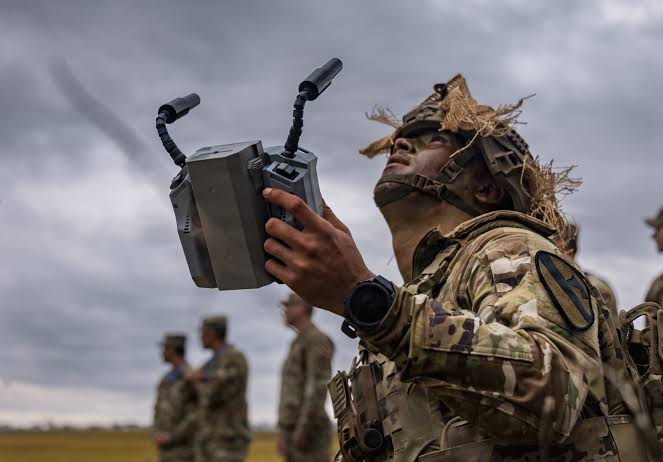
The total cost of US military operations against Iran has reached $47 billion.
According to a report by the American newspaper The Hill, citing an assessment by US Central Command (CENTCOM), the operation’s budget grew by more than $3 billion in the past month alone.
A detailed breakdown of the spending appears in a document prepared by the command. The largest share of the budget is accounted for by munitions shipments, totalling $29 billion.
Additional expenses arising directly from conducting the military operation stand at approximately $12 billion, whilst replacing lost military equipment and gear requires $6.1 billion.
Funding allocated to support military personnel deployed to the region, air transport, communications, and transport operations within the operational theatre is calculated at $7.6 billion.
Moreover, this overall total does not include the expenditure required to repair and rebuild US military bases in the Middle East.
According to information reported by The Hill, US President Donald Trump is weighing the possibility of launching fresh strikes against Iran following the country’s midterm elections.
Trump had previously described the military operation against Iran as one of the best decisions of his presidency.
Congress steps in as budget deficit deepens
The bill for the operation climbed swiftly in a short period. In a statement on 22 July, US Secretary of War Pete Hegseth announced that the cost of the Iran campaign had reached $37.5 billion.
Hegseth noted that the figure covered both expenses already incurred and projected spending through the end of the fiscal year on 30 September.
A day before Hegseth’s statement, The Washington Post reported that the Pentagon was facing a severe cash crunch due to the war with Iran.
The newspaper reported that the White House had requested an emergency supplemental appropriation of $67 billion from Congress to cover military expenses, warning that the military would be forced to cut other spending items if the request were rejected.
Following these developments, the House of Representatives approved a $1.15 trillion defence budget.
The relevant resolution includes allocating $73 billion in additional funding to the Pentagon and intelligence agencies, primarily to cover the costs of the war being waged with Iran.

Mamdani quietly asks Trump to release detained immigrants

Netanyahu urges Trump daily to renew military strikes on Iran, report says

ExxonMobil formalises talks with Venezuela on oilfield operations

US raises NATO-style guarantees for Kyiv ahead of Abu Dhabi talks

Vance leads indirect push for US-Iran ceasefire and nuclear talks
-
 Diplomacy1 week ago
Secular dress code dispute exposes deeper Türkiye-Azerbaijan strains
-

 Russia2 weeks ago
US and Russia weigh energy deals and corporate return in peace talks
-

 Europe2 weeks ago
Merz visits Asia to seek new markets for German defence firms
-
 Middle East2 weeks ago
US warns Gulf allies of possible Iran strikes after midterms
-
 Opinion2 weeks ago
Gaza exposes the myth of the “most moral army in the world”
-

 America2 weeks ago
Democrats target Trump-Putin Russian diesel deal with legal push
-

 Europe4 days ago
EU urges citizens to prepare 72-hour survival kits for crises
-

 America2 weeks ago
Bolsonaro reportedly leaves Brazil on jet linked to scandal-hit firm
