
Middle East
Saudi Arabia carried out covert strikes on Iran in late March, Reuters reports

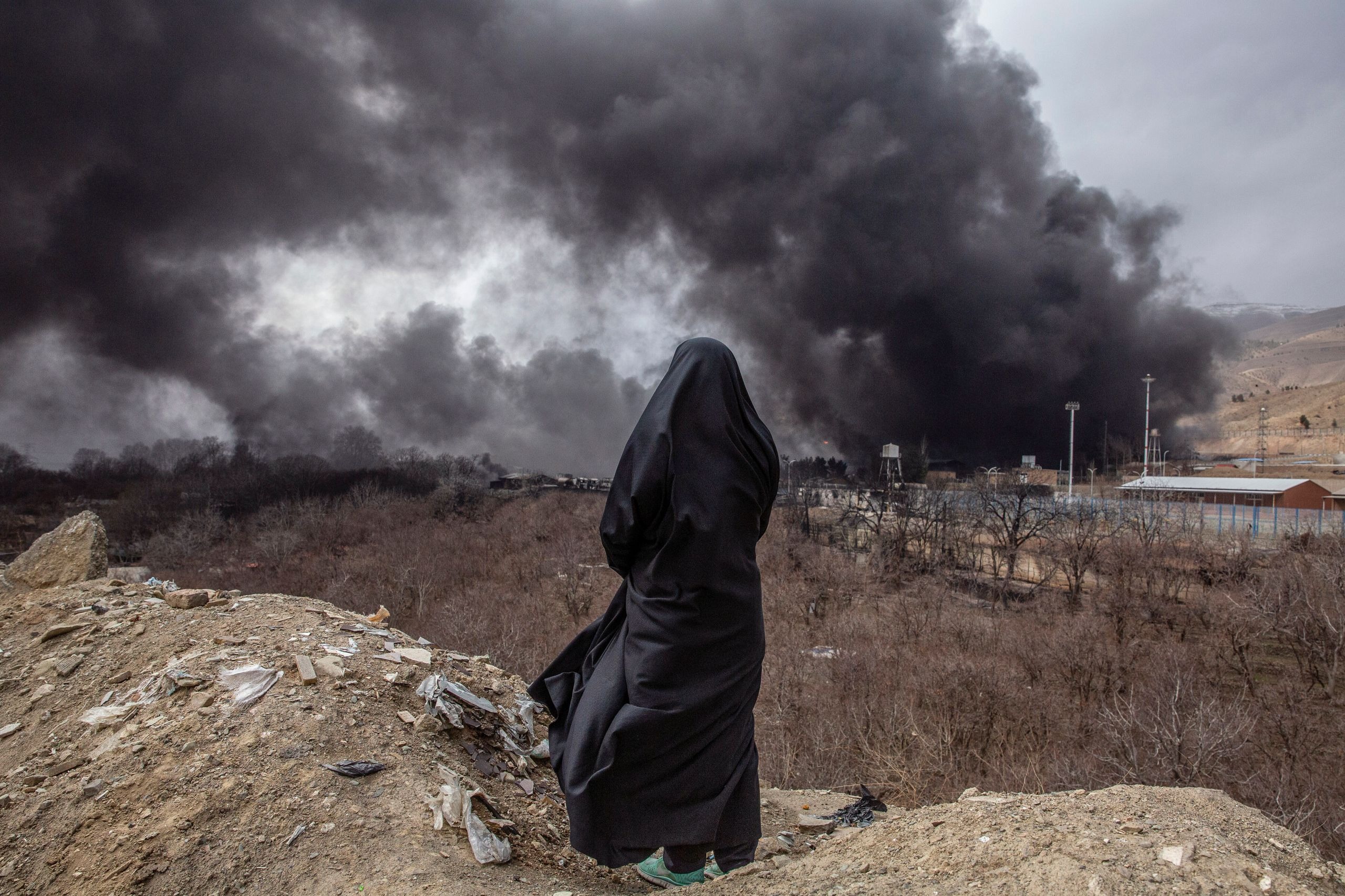
Reuters reported that Saudi Arabia carried out a series of strikes on Iranian territory in late March, according to Western and Iranian officials cited by the news agency.
The officials said the attacks were launched in retaliation for strikes targeting Saudi Arabia during the war in the Middle East.
According to the report, the operations carried out by the Saudi air force consisted of “multiple” attacks that were “not publicly disclosed.” One Western official described the incidents as “mirror attacks” in response to strikes on Saudi Arabia.
Reuters said it had been unable to identify the locations targeted in the attacks.
According to the agency, intensive diplomatic contacts between Riyadh and Tehran followed the Saudi strikes.
Sources said Saudi Arabia warned that it was prepared for further retaliatory measures, after which the two sides agreed to de-escalate tensions.
The Wall Street Journal had previously reported that the United Arab Emirates also carried out covert strikes against Iran. According to sources cited by the newspaper, an attack on Iran’s oil refinery on Lavan Island was conducted in early April, around the same period that US President Donald Trump announced a two-week ceasefire.
According to the report, the UAE did not claim responsibility for the attack. However, a major fire broke out at the facility afterward, and part of the refinery’s capacity was taken offline for several months.
Bloomberg also reported that the UAE coordinated its attacks against Iran with Israel. Sources cited by the agency said the strikes were carried out not only once, but multiple times before and after the ceasefire that took effect on April 8 between the US, Israel and Tehran.
The sources said one of the operations was a joint retaliatory action prepared with Israel in response to an Iranian attack on a petrochemical facility owned by Borouge in the UAE.
According to Bloomberg, the UAE and Israel deepened their security cooperation as the conflict in the Middle East continued.
Sources cited by the agency said the two sides shared intelligence, coordinated efforts to prevent Iranian attacks, and jointly participated in identifying targets inside Iranian territory.
Sources speaking to Bloomberg also said Israel and the UAE jointly coordinated an attack on a petrochemical facility in Iran’s Assaluyeh on May 6.
The same sources said the UAE also carried out an attack on Iranian oil refinery facilities located on Lavan Island in the Persian Gulf.
Bloomberg noted that the UAE government had previously said the country’s international relations and defense partnerships were “entirely a matter of sovereignty.”













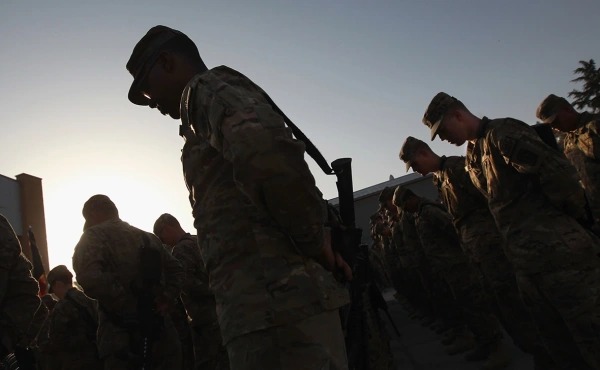
The US administration has notified several Gulf allies that it could launch a short but intensive military campaign against Iran immediately following the congressional midterm elections on 3 November. Washington urged regional states to prepare for this contingency.
According to a Wall Street Journal report citing sources with direct knowledge of the discussions, the warning did not specify which countries were briefed. Meanwhile, military activity on the ground has accelerated alongside these disclosures.
The US military has deployed a Patriot air defence battery from Texas to the Middle East, while beginning to pull its personnel back from exposed bases within range of Iranian ballistic missiles and drones to more secure positions. These moves reinforce indications that the US and Israel are preparing for a direct, wide-scale confrontation with Tehran.
The White House declined to comment on sensitive military plans whose existence has not been officially confirmed. An official statement emphasized, however, that President Donald Trump keeps all options on the table to prevent Iran from acquiring a nuclear weapon.
The New York Times reported last week that US and Israeli armed forces have stepped up joint military drills based on a short but intensive operational scenario. Potential targets identified by the newspaper include Iran’s nuclear facilities, critical energy infrastructure, and production centres for missiles and armed unmanned aerial vehicles.
The same report noted that while seen as an unlikely outcome, Trump could approve the operation before the end of October, though he might also opt against authorizing any military action. In recent months, Trump has repeatedly suspended decisions to re-enter active hostilities at the last moment.
The current active conflict between the two nations was triggered on 28 February by a joint US-Israeli strike on Iranian targets. Trump explained the primary rationale for the operation as ensuring that Tehran can under no circumstances attain a nuclear weapon.
These military actions follow the 12-day war fought in June 2025. During that air campaign, Washington directly targeted and struck Iran’s primary nuclear installations at Fordow, Natanz, and Isfahan.
International Atomic Energy Agency (IAEA) Director General Rafael Grossi outlined the latest situation on the ground during an address to the UN Security Council. Grossi stated that the agency has found no evidence indicating that Tehran is repairing or rebuilding from scratch the nuclear infrastructure damaged in the 2025 and 2026 strikes.
Criticizing the continued exclusion of monitors, Grossi urged Iran to grant international inspectors immediate access to all its nuclear sites, including damaged locations. Since the US bombardment in June 2025, the IAEA has been unable to independently verify the current status of Tehran’s stockpile of highly enriched uranium.
According to official agency records, Iran held 440.9 kilograms of uranium enriched to 60% purity prior to the June 2025 war. In nuclear physics, 60% enrichment is technically regarded as exceptionally close to the roughly 90% threshold required for weapons grade.
Following the bombings, Tehran barred international inspectors from entering the struck facilities. Because of this restriction, the regulatory body cannot ascertain how much of this critical stockpile remains intact or where it is currently stored.
Mounting military costs fuel domestic political pressure
President Trump maintains that the June 2025 air strikes demolished Iran’s nuclear capabilities. Nevertheless, the prolonged military operations have destabilized economic conditions, and soaring domestic fuel prices in particular are placing the governing Republican Party under severe political strain ahead of the midterms.
Trump has pushed back against criticism over rising energy costs, arguing that absorbing higher prices at the pump is necessary to prevent Tehran from acquiring nuclear arms.
Pentagon budget records reviewed by Reuters indicate that total US military spending on the Iran conflict has surpassed $47 billion. This figure stands 25% above official estimates released by defence officials in July.
The largest portion of total expenditures, $29 billion, was allocated to replenishing depleted munitions stocks, while $6 billion went toward replacing worn military hardware. It remains unclear whether repair bills for US bases damaged by retaliatory Iranian missile and kamikaze drone strikes are included in this official $47 billion sum.
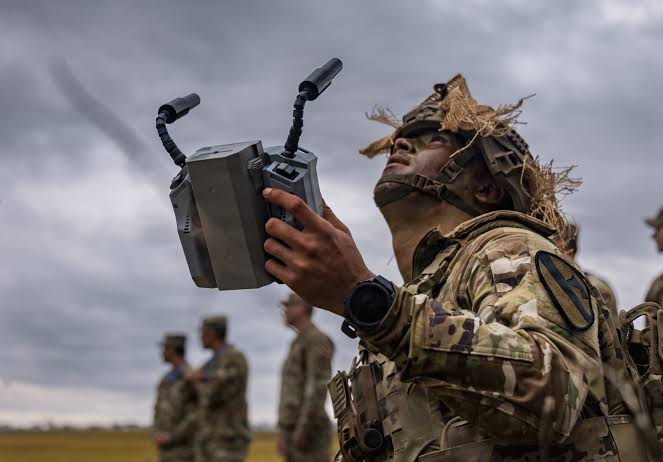
The total cost of US military operations against Iran has reached $47 billion.
According to a report by the American newspaper The Hill, citing an assessment by US Central Command (CENTCOM), the operation’s budget grew by more than $3 billion in the past month alone.
A detailed breakdown of the spending appears in a document prepared by the command. The largest share of the budget is accounted for by munitions shipments, totalling $29 billion.
Additional expenses arising directly from conducting the military operation stand at approximately $12 billion, whilst replacing lost military equipment and gear requires $6.1 billion.
Funding allocated to support military personnel deployed to the region, air transport, communications, and transport operations within the operational theatre is calculated at $7.6 billion.
Moreover, this overall total does not include the expenditure required to repair and rebuild US military bases in the Middle East.
According to information reported by The Hill, US President Donald Trump is weighing the possibility of launching fresh strikes against Iran following the country’s midterm elections.
Trump had previously described the military operation against Iran as one of the best decisions of his presidency.
Congress steps in as budget deficit deepens
The bill for the operation climbed swiftly in a short period. In a statement on 22 July, US Secretary of War Pete Hegseth announced that the cost of the Iran campaign had reached $37.5 billion.
Hegseth noted that the figure covered both expenses already incurred and projected spending through the end of the fiscal year on 30 September.
A day before Hegseth’s statement, The Washington Post reported that the Pentagon was facing a severe cash crunch due to the war with Iran.
The newspaper reported that the White House had requested an emergency supplemental appropriation of $67 billion from Congress to cover military expenses, warning that the military would be forced to cut other spending items if the request were rejected.
Following these developments, the House of Representatives approved a $1.15 trillion defence budget.
The relevant resolution includes allocating $73 billion in additional funding to the Pentagon and intelligence agencies, primarily to cover the costs of the war being waged with Iran.

The Israeli army’s siege of the city of Hebron in the occupied West Bank has entered its fifth day. More than 3,000 Palestinians have been forced to flee their homes as raids, house demolitions, and forced evictions continue across the city.
According to data shared by Hebron Municipality on 26 October, the number of displaced people has reached 3,189. More than 200 of them are infants.
Municipal authorities announced that roughly half of the total displaced population consists of children and youths under the age of 18.
Palestinian officials in the besieged city declared a state of emergency and established an urgent crisis desk.
Rami Khamis, a member of the crisis desk, highlighted civic solidarity in remarks to Al Jazeera, saying local residents and benefactors who refused to let their fellow citizens stay in temporary shelters opened their homes to displaced families.
A Palestinian forced to abandon his home in haste recounted his ordeal to Al Jazeera on 26 October.
Explaining that they fled with only the clothes on their backs, the resident said their savings, household goods, and official documents were left behind. After placing his family in a relatively safe place, he attempted to return to salvage their belongings, but could not reach the house because the area was no longer safe.
The siege began immediately after an attack on 23 October in which two Israeli soldiers were killed. The two Palestinians who carried out the assault were killed at the scene by Israeli forces.
Citing this incident, the Israeli army blockaded the city and launched wide-ranging operations. The British newspaper The Guardian described the measures carried out in Hebron as “collective punishment”.
Hamas official Mahmoud Mardawi also condemned both the siege in Hebron and the military incursions spreading across the occupied West Bank in a statement on 26 October.
Emphasising that these steps constitute collective punishment, Mardawi warned that escalating tensions on the ground could lead to grave consequences.
Mardawi further argued that Prime Minister Benjamin Netanyahu and his government are using these attacks for propaganda and electoral calculations, stating that military pressure will not break Palestinian resilience and that calculations regarding annexation and mass expulsion will fail to achieve their goal.
Operation rift in Israeli leadership
As the blockade entered its fifth day, a divergence of opinion emerged between Israel’s military brass and the government.
According to a report in the Yedioth Ahronoth newspaper, Chief of Staff Eyal Zamir and Prime Minister Benjamin Netanyahu clashed over the future of the operation.
Zamir argued that the military campaign on the ground had delivered whatever benefit it could provide and that it was now time to bring it to an end.
Military officials said tangible gains achieved throughout the operation remained limited, indicating that whether to sustain the current push required reassessment.
Indeed, the newspaper reported that Israeli forces managed to seize only a limited number of weapons in the city, failing to uncover any unusual arsenals or major arms caches.
However, Chief of Staff Zamir’s proposal to end the operation was rejected. Prime Minister Netanyahu and the Defence Minister dismissed the recommendation and decided to continue the offensive.
At least 70 Palestinians have been detained in Hebron since the siege and operations began. The Israeli army is also continuing extensive demolition activities targeting civilian homes across the city.

Ukraine faces demographic collapse as fertility rates slide

EU divisions deepen over who should negotiate with Vladimir Putin

EU urges citizens to prepare 72-hour survival kits for crises

Paraguay President Peña resigns over catastrophic bank collapse

Republican push raises prospect of House vote to impeach Hegseth
-
 Diplomacy4 days ago
Secular dress code dispute exposes deeper Türkiye-Azerbaijan strains
-

 Russia1 week ago
US and Russia weigh energy deals and corporate return in peace talks
-

 Europe1 week ago
Merz visits Asia to seek new markets for German defence firms
-

 Europe2 weeks ago
AfD drops Dexit to back single market in new Europe strategy
-
 America2 weeks ago
Pentagon prepares US bases for 90-day siege in global war plan
-

 Interview2 weeks ago
“The AfD is an expression of internal contradictions within German big capital”
-

 Europe2 weeks ago
Serbia opposition wins snap vote as Vucic concedes defeat
-
 Middle East2 weeks ago
US envoy says Syria interim leader Sharaa seeks Israel normalization
