
Diplomacy
The two terrorists: Britain jails tweets while the West crowns al-Qaeda’s man in Damascus


Thomas Karat, behavioral analyst
Two men, one word. Next Monday, at Kingston Crown Court in London, a 72-year-old grandfather goes on trial for terrorism; the evidence is a tweet of seven words, and the maximum sentence is 14 years. Nine months ago, a man who founded al-Qaeda’s Syrian branch and carried a $10 million American bounty on his head became the first Syrian head of state ever received at the White House. Tony Greenstein and Ahmed al-Sharaa have never met. Between them they define what the word “terrorist” now means — and for American readers there is a further twist: the seven words that may cost the pensioner his freedom are fully protected speech in the United States, which is why Washington has developed other methods for its own dissidents.
Take the pensioner first, and take his record in full, because the prosecution will. Greenstein was expelled from the Labour Party in 2018; he lost a libel action against the Campaign Against Antisemitism, which had called him a “notorious antisemite,” the court finding the phrase protected as honest opinion; he accepted a suspended sentence over a Palestine Action attack on an Elbit arms factory. He is abrasive, litigious and unrepentant — a Jewish socialist from Brighton, a carer, the son of an Orthodox rabbi who marched against Mosley’s Blackshirts. None of that is the charge. The charge is that in November 2023, goaded by an anonymous account demanding he declare himself, he posted: “I support Hamas against the Israeli army.” Five weeks later, at 6:30 in the morning, counter-terrorism officers took his computers and phones, held him for nine hours, and released him under conditions that banned him from posting about the war at all. “This is Orwellian,” he told the arresting officers. He undersold it.
Now the other man, whose record requires no libel lawyer to establish, because the United States government wrote it down. Ahmed al-Sharaa — then Abu Mohammad al-Jolani — joined al-Qaeda in Iraq in 2003, was captured by American forces and imprisoned for five years, then crossed into Syria to found al-Nusra Front, al-Qaeda’s Syrian branch, pledging allegiance on video to Ayman al-Zawahiri. The State Department’s own wanted notice recorded that under his leadership the group “carried out multiple terrorist attacks throughout Syria, often targeting civilians” — and itemized them: roughly 300 Kurdish civilians abducted from a checkpoint; 20 residents of the Druze village of Qalb Lawzeh massacred in Idlib; suicide bombings claimed in Damascus, Homs and Quneitra. In 2014 he called for retaliatory attacks on the American-led coalition itself. For this the UN froze his assets and banned his travel, and the $10 million bounty placed him among the five most wanted jihadist leaders on earth, on the same short list as Baghdadi and Zawahiri. That is the conduct the word “terrorist” was coined for: emptied villages, detonated city centers, a decade of American soldiers and Syrian civilians in the ground.
While the state prepared its case against the tweeter, it laid siege to the man. Eleven months to charge him; a trial date pushed back the better part of a year; thirty-two months, in the end, between the dawn raid and the jury. And one by one, his banks left him. In a statement published two weeks before trial, Greenstein described being cut off by five institutions since his arrest: Nationwide after a quarter-century, HSBC and First Direct — closing, among others, the account kept for the care of his autistic son — then Santander, which froze his personal accounts and those of a registered charity he serves as treasurer, then a savings bank that shut out his family entirely. None gave a reason; none has to, since banks warned about a customer are forbidden by law to tip him off. Nor is his suspicion of state involvement far-fetched: the government’s own Independent Reviewer of Terrorism Legislation warned in 2023 that proscription enforcement would push banks toward jettisoning clients — “de-risking,” the trade calls it. When Coutts closed one account belonging to Nigel Farage, the affair drew condemnation from the prime minister and toppled a chief executive. A pensioner debanked six times en route to a terror trial has drawn silence. A defendant is presumed innocent; his accounts are not.
And while the pensioner’s accounts froze, the warlord’s thawed. Damascus fell on December 8, 2024; twelve days later an American delegation sat with al-Sharaa and announced the $10 million bounty was being dropped — the file unchanged, the graves at Qalb Lawzeh exactly where they had been. Britain’s prime minister said deproscription was “far too early” to consider; his government then spent 2025 considering it at speed. In March 2025, as government-aligned militias swept the Alawite coast, Amnesty documented the deliberate sectarian killing of civilians and demanded a war-crimes investigation; al-Sharaa’s own fact-finding committee would eventually confirm 1,426 dead, most of them civilians. Two months after those massacres, Trump received him in Riyadh and reviewed him for the cameras: “Young, attractive guy, tough guy, strong past.” In June came an executive order lifting sanctions to “give Syrians a chance at greatness”; in July, Washington revoked the terrorist designation of the organization he built. Britain’s Foreign Secretary flew to Damascus that same July to shake his hand — while HTS was still proscribed under the Terrorism Act as an alias of al-Qaeda, the identical legal status Hamas holds in Greenstein’s indictment. Only in October did Parliament tidy up, erasing the proscription on the stated ground that it “serves the national interest.” By November al-Sharaa was in the Oval Office, enrolling Syria in the anti-ISIS coalition while the Treasury halted most remaining sanctions. No jury weighed the graves. No dawn raid preceded the handshakes. The men who wrote the wanted poster simply took it down — and wrote into Hansard, in their own words, what proscription is: an instrument of the national interest, adjustable by ministerial order.
Hold the two files side by side and the statute confesses. Under Section 12 of the Terrorism Act, as amended in 2019, a person commits an offense by expressing an opinion supportive of a proscribed organization, reckless as to whether anyone is encouraged — an offense Parliament created precisely because the courts had ruled the old law could not touch opinions. By its literal terms, a Foreign Secretary renewing relations with the commander of a then-proscribed organization sits closer to the offense than anything Greenstein typed; nobody suggests prosecuting him, and that is the point. In the United States such a statute could not exist at all: even Holder v. Humanitarian Law Project, the Supreme Court’s furthest reach into “material support,” held that “any independent advocacy in which plaintiffs wish to engage is not prohibited.”
Britain criminalized exactly what America’s highest court fenced off, and then demonstrated, through Damascus, that the criminal category is edited by hand. The Terrorism Act carries a clause no draftsman wrote: it binds the powerless and dissolves on contact with the useful.
The state’s own ledgers show which of the two uses is the real one. Across fourteen years to mid-2025, the Ministry of Justice records 55 people prosecuted under the Act’s membership and support sections — four a year, through the entire era of ISIS. Then the subject changed from bombs to opinions. In the twelve months to September 2025 the Home Office counted 1,886 terrorism arrests — up 660 percent — and 86 percent of them were for supporting Palestine Action, a group proscribed for spray-painting warplanes weeks after HTS’s rehabilitation began. The share of arrests producing a charge collapsed from 47 percent to 17: five of six people seized under terror law are never meant to face trial, because the arrest is the product. The UN human rights chief called the ban “disproportionate and unnecessary”; more than 2,700 arrests followed anyway, 522 in a single day, pensioners and priests led off over cardboard signs. When the High Court ruled the ban unlawful in February, police paused, then resumed — “We must enforce the law as it is at the time,” a commissioner explained, arresting 18 more on the steps of Scotland Yard — and the Supreme Court will rule in November on whether any of it was ever legal. The government’s own reviewer confirms that terror prosecutions now run at record levels, “dominated by documentary offences and proscription related charges.” An apparatus built against the authors of Qalb Lawzeh is processing placards — while the author of Qalb Lawzeh signs coalition documents in the Oval Office.
The American half of the mirror completes itself. The administration that lifted the bounty cannot, thanks to the First Amendment, prosecute its own citizens’ words — so it deports the speakers instead. Mahmoud Khalil, a green-card holder, was seized by plainclothes ICE agents over his campus advocacy, held 104 days in Louisiana, made to miss the birth of his first child, never charged with a crime — detained on the Secretary of State’s certification that his presence compromised American foreign policy. Rümeysa Öztürk was taken off a street by masked agents and jailed 45 days over an op-ed; a judge found the whole policy unconstitutional, her case was thrown out, and she left for Türkiye anyway, while Khalil’s protections were stripped on appeal and his fate rides on the Supreme Court.
Hold that against Damascus: the same State Department that certified a student op-ed a threat to American foreign policy spent the year unwinding the terrorist status of a man it once ranked beside Baghdadi. The department’s terror lists and its visa lists are, it turns out, the same list, kept for the same purpose — sorting the useful from the inconvenient.
The inconvenient include the press. Richard Medhurst, an independent journalist covering Gaza, became the first reporter arrested under the statute now aimed at Greenstein — 14 months under investigation, no charge, his files handed to Austria so the ordeal could continue abroad. Ten officers raided the home of Asa Winstanley of The Electronic Intifada over his posts; a court found the warrants improperly obtained and ordered his devices returned. No conviction anywhere; months of seized equipment and fear everywhere — a fair description of the function. Even in Kingston, the instinct holds: by Greenstein’s account, prosecutors have fought to keep his published writings out of the jury bundle, the judge citing an old rule that “courts are not sounding boards for anybody’s political views” — in a trial where the defendant’s political views are the offense.
So the ledger closes where it opened, with two men and one word. One commanded an organization that committed atrocities at scale, and the two governments that hunted him have concluded, in Hansard’s own language, that his rehabilitation serves the national interest. The other posted seven words, and those same two governments — one with its Terrorism Act, one with its immigration code — have spent three years demonstrating what happens to the powerless who say the wrong thing about the wrong war. Greenstein has argued that his verdict will set the price for everyone arrested behind him: acquittal imperils the campaign, conviction licenses it. Perhaps. But the deeper verdict is already in, delivered in Riyadh and sealed in the Oval Office: terrorism, as governed practice, is a description of usefulness. Al-Sharaa became useful, and the word released him. Greenstein and 2,700 placard-carriers remain inconvenient, and the word descends on them with dawn raids and frozen accounts. The trial at Kingston is listed for five days. The word on trial has already been acquitted of meaning anything at all.











British magazine The Economist reported that mobilization, conflict casualties, and pervasive uncertainty have left Ukraine confronting the threat of demographic collapse.
According to data cited by the magazine, Ukraine’s fertility rate has declined from 1.2 children per woman in 2020 to between 0.8 and 0.9.
This rate marks a lower level than that of any major nation except South Korea.
In the first half of 2026, the number of deaths in Ukraine surpassed the number of newborn babies threefold.
The report noted that ever since independence was gained in 1991, the number of births in the country has lagged behind the number of deaths every year.
The Economist emphasized that the demographic collapse driven by the ongoing fighting constitutes an “existential threat.”
The magazine identified mass refugee migration as the principal driver of the population loss.
More than 5 million Ukrainians reside abroad, predominantly in Europe.
The proportion of those wishing to return among those who left the country is also steadily shrinking.
According to data from the Centre for Economic Strategy (CES), the share of those seeking to return dropped from 74% in 2022 to 43%.
The fact that the majority of refugees consist of Ukrainian children and women under the age of 44 further aggravates the demographic picture.
The Kyiv government decided to exempt men under the age of 25 from mobilization to alleviate the demographic decline.
The magazine reported, however, that many young people have fled the country, while those who remain do not plan to start families.
Projections cited in the report indicate that even if hostilities cease in the coming years, Ukraine can, at best, expect merely a deceleration of depopulation.
Olga Duhnich, an expert at the Ukraine-based think tank Frontier Institute, stated that the generation born in the 1990s and 2000s is the least populous in Ukraine’s modern history, meaning the country cannot expect a post-conflict baby boom.
The United Nations (UN) projects that Ukraine’s population will decline by 0.7% to 0.9% each year over the next two decades.
Under this projection, Ukraine’s population will fall to approximately 25 million by 2040.
If hostilities drag on, people are expected to abandon plans to have children, deepening the crisis even further.
Beyond exempting men under 25 from mobilization, the Kyiv government is rolling out various support packages to boost birth rates.
Under legislation enacted in the country, parents who have children receive a direct payment of 50,000 hryvnias (around $1,100).
Parents are also paid 7,000 hryvnias each month during the first year.
Other state programmes subsidize childcare costs, while Ukrainian soldiers are granted free freezing of egg and sperm cells.
Ukrainian Minister of Social Policy Denis Ulyutin said in May to the Livyi Bereh media outlet that roughly 22 to 25 million people lived in government-controlled territories.
Ulyutin characterized the prevailing picture by saying: “This is a catastrophe.”
Ella Libanova, Director of the Institute for Demography and Quality of Life Research, estimated the population at 29 million during the same period.
Libanova attributed the steep fall from a population of 30 million in 2025 to high death rates and the demographic crisis.
In a statement in October, Libanova announced that Ukraine’s population had slipped to 28.5 million.
Institute Director Libanova said: “The population is already at 28.5 million; we lost half a million people. We lost them, but thankfully this was still caused by migration rather than casualties.”
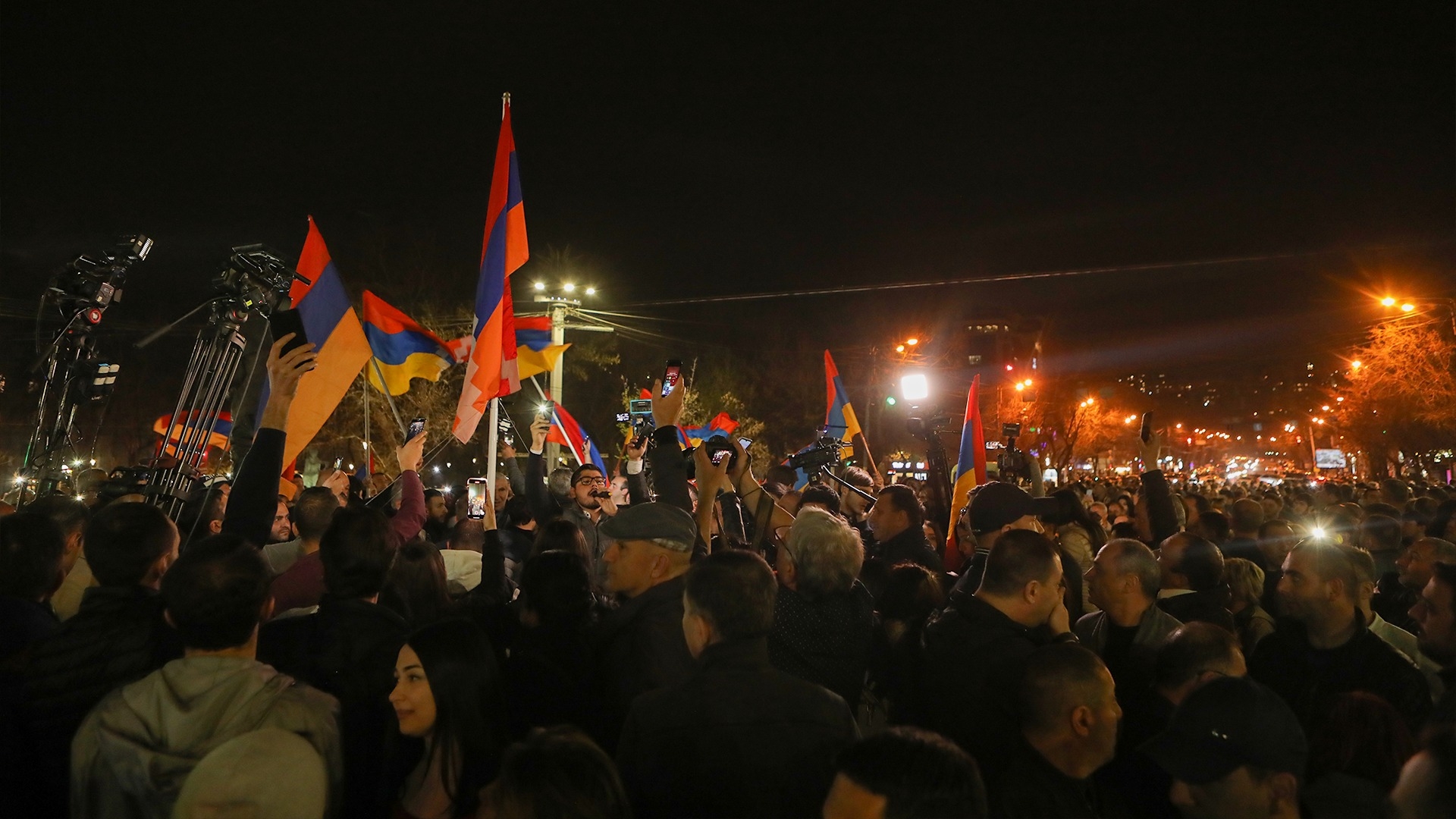
Narek Karapetyan, a lawmaker and head of the Strong Armenia faction in the Armenian parliament, has urged opposition parties to unite around four core principles set out in a joint declaration.
The key points of the declaration include resisting territorial concessions and blocking the adoption of a new constitution, which the opposition has termed the “Aliyev constitution”.
According to a report by Aysor.am, Narek Karapetyan stated that the opposition meeting was originally planned to be led by his uncle, businessman and Strong Armenia movement leader Samvel Karapetyan.
“We initiated the meeting, but the authorities took preemptive steps to prevent Samvel Karapetyan from launching the national unification process,” Narek Karapetyan said.
Noting that, despite these events, opposition representatives convened and signed a joint declaration based on four agreed articles, Narek Karapetyan invited other opposition forces and members of the public to join the alliance.
“We will not allow them to implement the Aliyev constitution in Armenia. We must unite,” Karapetyan said.
Ahead of these developments, Armenian National Security Service personnel detained Strong Armenia Party leader Samvel Karapetyan following a search of his home.
The party’s press secretary, Agavni Sukiasyan, announced that on the morning of the same day, the Investigative Committee of Armenia searched the homes of both Samvel Karapetyan and Narek Karapetyan.
In a report citing the Investigative Committee, Armenpress stated that Samvel Karapetyan was detained as part of a case involving allegations of causing large-scale financial damage to the Electric Networks of Armenia (ENA) company, embezzling entrusted property, and money laundering.
According to committee figures, the total damage inflicted on the company exceeds $179 million.
Narek Karapetyan’s home was also searched at the end of July as part of a criminal case.
On 22 July, Armenia’s Central Electoral Commission approved the Prosecutor General’s request to strip Narek Karapetyan of his parliamentary immunity, and Karapetyan was charged with large-scale money laundering.
According to information reported by Sputnik Armenia, the investigation is linked to charges brought against Strong Armenia supporter Aleksan Aleksanyan.
Investigative authorities allege that Aleksanyan received approximately $4.4 million and €230,000 from the Karapetyan-owned Tashir Foundation under the guise of gifts and loans.
Several criminal cases had previously been opened against Samvel Karapetyan.
In 2025, Karapetyan was charged with publicly calling for the violent seizure of power after backing the Armenian Apostolic Church, which had been criticized by Armenian Prime Minister Nikol Pashinyan.
In January, legal proceedings were also launched against Karapetyan on charges of large-scale tax evasion and money laundering.
Separately, in early July 2025, the Armenian parliament approved a bill enabling the nationalization of the Electric Networks of Armenia company.
In March, Armenia’s Constitutional Court ruled that the nationalization process in question complied with the law.
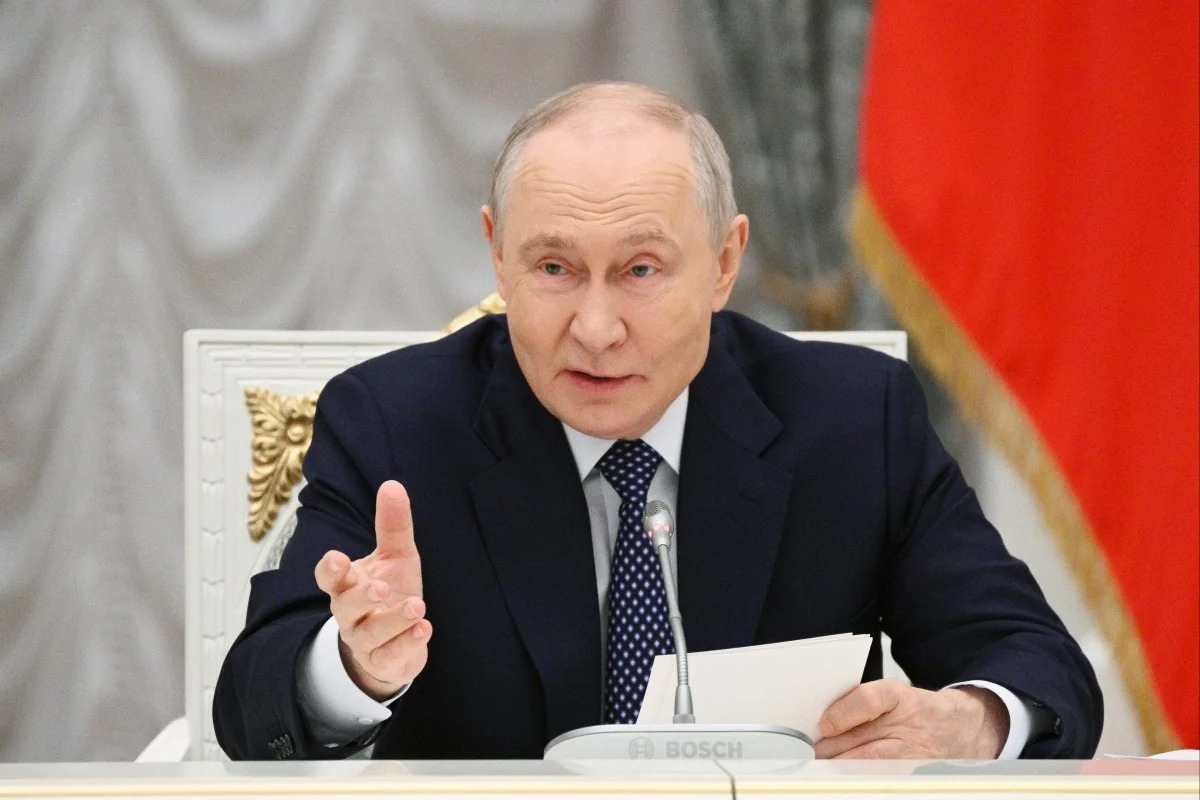
According to analysts, the use of the same standard track gauge as China on the new railway line demonstrates Moscow’s ‘pragmatic’ approach toward strengthening ties with Beijing.
Russian President Vladimir Putin has signed into law an agreement providing for the construction of a second standard-gauge railway line at a key border crossing with China. Moscow aims with this move to accelerate its eastward pivot and bolster relations with Beijing ahead of the Asia-Pacific Economic Cooperation (APEC) Summit.
According to a document published on Monday on Russia’s official legal information portal, Putin signed the law ratifying the railway agreement reached with Beijing during his visit to China in May.
The two sides agreed to jointly construct a new line along the cross-border railway connecting Zabaykalsk in southeastern Russia with the city of Manzhouli in northern China.
The defining feature of the new line is that it will use the 1,435-millimetre standard gauge, the most widely used track gauge globally and the one adopted by China, rather than the 1,520-millimetre broad gauge predominantly employed across Russia’s national rail network.
Speaking to the South China Morning Post, Li Lifan, a specialist in Russian and Central Asian affairs at the Shanghai Academy of Social Sciences, said the second standard-gauge line will help ease freight transit capacity constraints at the border crossing. This will reduce waiting times for cargo trains and enhance the speed and reliability of transport services along the eastern corridor.
Freight trains running from China to Russia currently rely on a single 1,435-millimetre gauge track at the Manzhouli-Zabaykalsk border crossing. This transit point handles more than 60% of rail freight trade between China and Russia, as well as a significant share of Europe-bound cargo traffic.
Because trains travelling in opposite directions must take turns using the same track to cross the border, bottlenecks occur periodically.
Zoey Wang, a director covering corporate, infrastructure, and project finance ratings at international credit rating agency Fitch Ratings, said the project is expected to provide more stable transport conditions for two-way shipments of commodities, machinery and electrical goods, consumer products, and cross-border e-commerce cargo.
According to Wang, the project will make corporate shipping schedules more predictable and help reduce costs arising from delays, cargo detention, and supply chain disruptions.
According to Russian media reports, Moscow expects the second line to increase annual transport capacity at the Zabaykalsk border crossing to 39 million tonnes by 2030, an increase of 11 million tonnes over current levels.
With Western sanctions curtailing its access to European markets, Russia has increasingly redirected its trade toward Asia in recent years.
However, experts caution that putting the new line into operation does not necessarily ensure a substantial increase in trade volume. In the view of analysts, the true significance of the decision lies in the strategic calculations underpinning it.
According to Li, despite Russia’s stated target, inadequacies in the country’s domestic railway infrastructure will constrain actual growth. This is because cargo will still need to be transhipped onto 1,520-millimetre gauge rolling stock to move further into Russia.
“This decision does not indicate a shift in the country’s railway gauge system. Rather, it represents a pragmatic choice made at a time when Russia’s pivot to the East is entering its implementation phase,” Li said.
In Li’s assessment, Moscow concluded that the benefits of easing bottlenecks along the trade corridor with China outweighed the costs of preserving existing procedural barriers at the border.
Li also noted that the timing of Putin’s signing was a deliberate choice. The decision came ahead of the Asia-Pacific Economic Cooperation Summit to be held later this month in Shenzhen.
According to Li, Moscow wants to “demonstrate that it can deliver on its commitments to Beijing and set an example that could be replicated elsewhere.”
Zhao Long, director of the Institute of International Strategic and Security Studies at the Shanghai Institutes for International Studies, offered the following assessment:
“Although Russia has long adhered to the broad-gauge standard, the depth that strategic trust and coordination between China and Russia have reached today leaves no real reason to resist laying standard-gauge railways on specific connecting sections, particularly across critical border segments.”
Zhao continued:
“This situation also reflects the growing influence and gravitational pull of China’s economic, trade, and transport connectivity networks, not only over Russia, but across the entire Eurasian continent.”
Wang also said the project demonstrates that China’s railway technical standards and associated services are finding increasingly broad application internationally.
However, Wang cautioned that increasing border crossing capacity does not automatically guarantee a corresponding rise in trade volume.
According to Wang, the actual impact of the project will depend on a range of factors, including freight rates, inter-customs coordination, European demand, regulatory policies, and operating conditions along the corridor.
According to Russian media reports, construction on the Russian section of the second line is already under way and is expected to be completed by the end of 2026. The section on the Chinese side is scheduled for completion in early 2027.

Blue wave, Democratic Socialism, or shades of navy blue

Ukraine faces demographic collapse as fertility rates slide

EU divisions deepen over who should negotiate with Vladimir Putin

EU urges citizens to prepare 72-hour survival kits for crises

Paraguay President Peña resigns over catastrophic bank collapse
-
 Diplomacy5 days ago
Secular dress code dispute exposes deeper Türkiye-Azerbaijan strains
-
 Russia1 week ago
US and Russia weigh energy deals and corporate return in peace talks
-

 Europe2 weeks ago
Merz visits Asia to seek new markets for German defence firms
-

 Europe2 weeks ago
AfD drops Dexit to back single market in new Europe strategy
-
 America2 weeks ago
Pentagon prepares US bases for 90-day siege in global war plan
-
 Europe2 weeks ago
Serbia opposition wins snap vote as Vucic concedes defeat
-
 Middle East2 weeks ago
US envoy says Syria interim leader Sharaa seeks Israel normalization
-

 Interview2 weeks ago
“The AfD is an expression of internal contradictions within German big capital”
