
Middle East
UK sends 700 more troops to Cyprus, says ‘evacuation from Lebanon may be necessary’


The UK has sent 700 troops to Cyprus to prepare for an emergency evacuation of its citizens in Lebanon, with Prime Minister Keir Starmer urging those still in the country to leave immediately.
The government has announced that military teams are being mobilised to provide further support to British citizens in Lebanon as Israel bombs the south of the country.
The Royal Air Force is also keeping planes and helicopters on standby to provide support if needed.
The new British troops add to the significant military presence of British forces based at RAF Akrotiri (Agrotur) in Cyprus and the Royal Navy ships RFA Mounts Bay and HMS Duncan.
Defence Secretary John Healey left the Labour Party conference early and held a meeting with ministers, intelligence chiefs and diplomats on Tuesday afternoon to test the government’s planning.
This is seen as the first phase of contingency plans for Lebanon, as the government tries to avoid the chaos of evacuating British citizens from Afghanistan in 2021.
The military teams will be supported by Border Force and Foreign Office officials.
Keir Starmer urged Israel and Lebanon to ‘step back from the brink’ and said the government was ‘accelerating contingency plans’ to rescue British citizens.
Starmer, in New York for the United Nations General Assembly, said he would discuss Lebanon with world leaders.
‘The main message I will be giving tonight will be to British citizens in Lebanon to leave the country immediately and I want to reiterate that,” the Guardian quoted Starmer as saying on the plane.
The British leader said he was ‘concerned’ about the situation and argued that there was a need for de-escalation, a ceasefire and a step back from the brink.








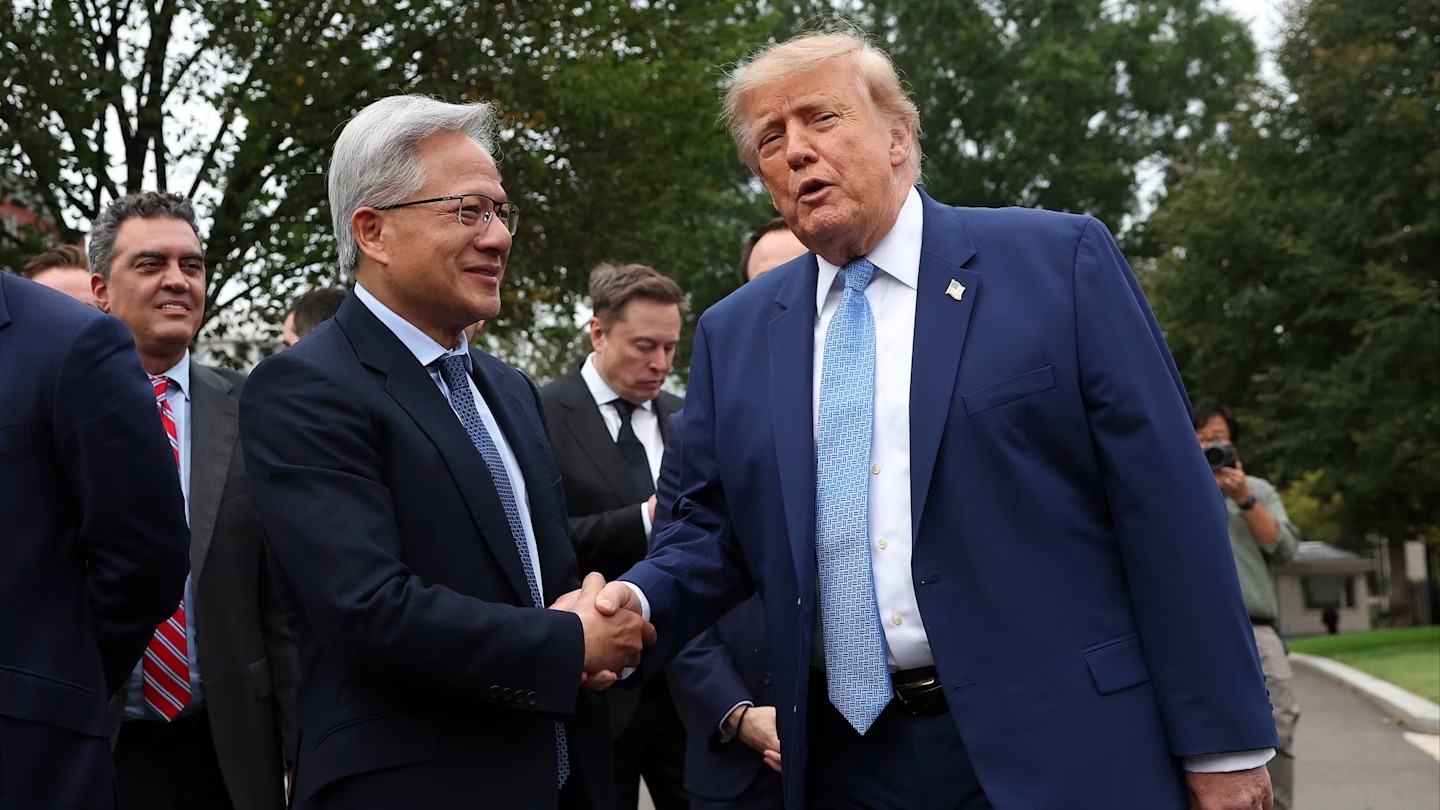
Jensen Huang’s return to Nvidia has brought temporary relief to Gulf countries competing to build the world’s most advanced artificial intelligence hubs.
According to a report by AGBI, Gulf states believe they can continue purchasing Nvidia microchips and partnering with US data centre developers and cloud providers, at least until the end of President Donald Trump’s term.
Analysts noted that Huang’s return as Nvidia chief executive officer with White House backing signals continued support from the Trump administration for US technology firms seeking to expand global sales of their artificial intelligence products.
However, this support conflicts with the view of national security circles in Washington advocating tighter restrictions to prevent China from accessing advanced US technology.
The controversy surrounding Huang stems from concerns in Washington that easing limits on international sales of American AI chips could ultimately help China catch up with cutting-edge US technology.
Tech sector executives, led by Huang and backed by administration figures such as Commerce Secretary Howard Lutnick and to some degree Trump himself, argue that selling their products widely and deploying the American AI stack globally benefits both themselves and the country.
Mohammed Soliman, director of computing infrastructure at McLarty Associates and senior fellow at the Middle East Institute, said: “Gulf states do not have a major stake in Washington’s fight with China. What Riyadh, Abu Dhabi, and Doha care about is whether the flow of American AI hardware continues so they can build substantial computing infrastructure at home.”
Following Huang’s resignation, national security hawks led by Secretary of State Marco Rubio appeared to gain ground, as the Commerce Department imposed new restrictions on sales of US AI chips to third-country data centres that lease large amounts of computing power to Chinese firms.
According to Soliman, Huang’s return could ease Gulf countries’ access to Nvidia chips.
Yet Soliman warned against assuming “hawks have lost the fight on China”:
“They have already closed the loophole on remote access in compute. They will constantly track whether chips are reaching places they should not, including third-country data centres.”
The process is also likely to remain bumpy due to continuing bipartisan disputes in Washington.
Andrew Leber, a visiting fellow at the Carnegie Endowment for International Peace in Washington, noted that the new Democratic majority in Congress following this month’s US midterm elections will examine AI-related deals involving Gulf states and other nations, with China hardliners worried these arrangements could grant Beijing back-door access to computing power.
Reactions from both Democrats and Republicans to Huang’s reinstatement, which took place under pressure from Trump and amid an ongoing investigation into his relationship with an alleged Chinese intelligence operative, highlight the intense scrutiny Nvidia will probably face.
Huang is scheduled to testify before Congress next week.
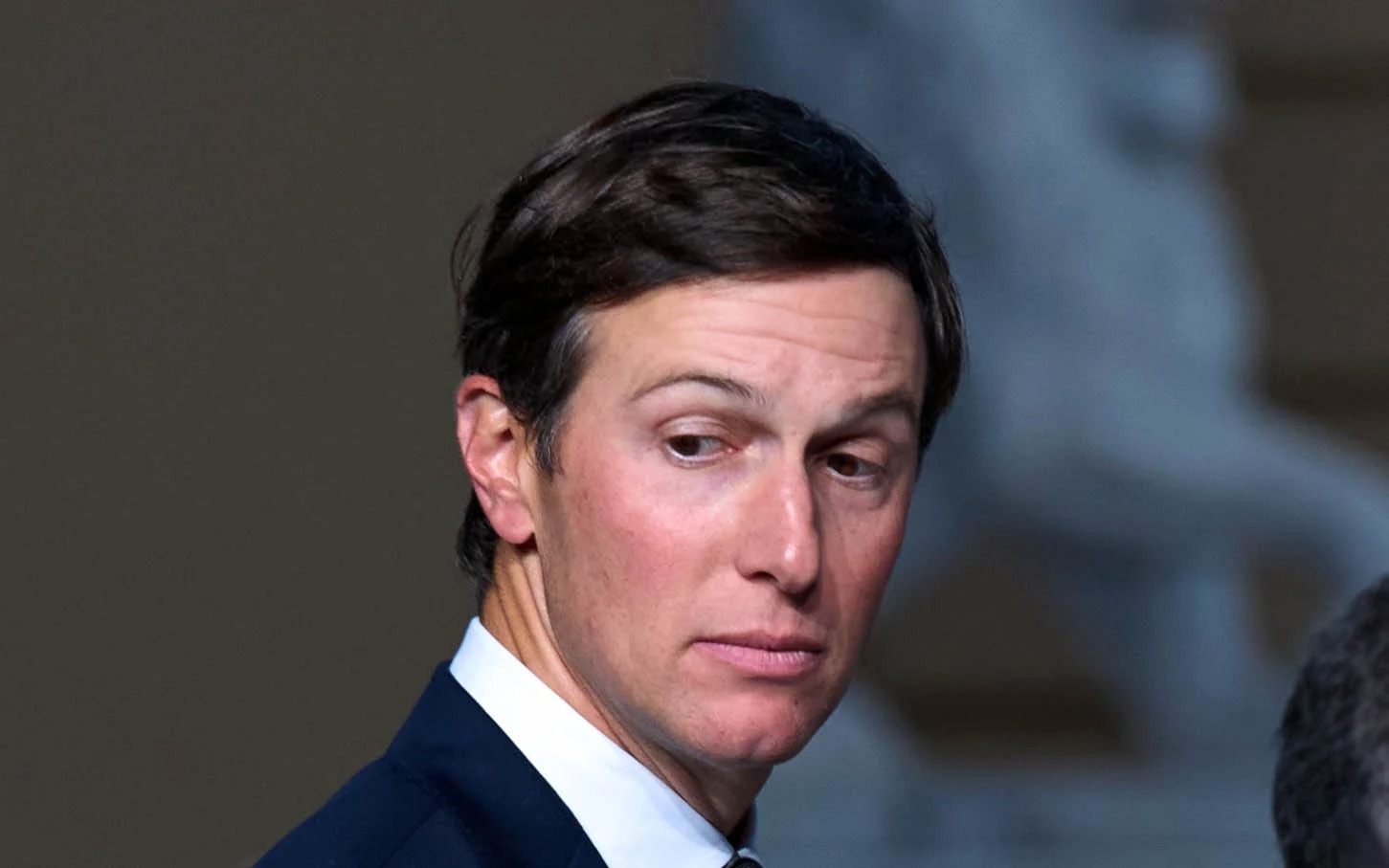
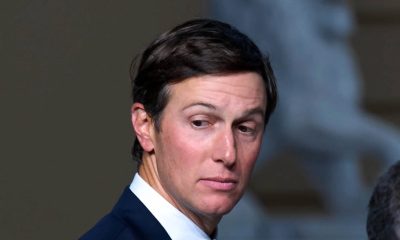
Jared Kushner has warned Israel, which has spent the past three years at war, arguing that the country is heading toward the status of a “global pariah”.
US special envoy and Donald Trump’s son-in-law Jared Kushner, one of the chief negotiators of last year’s Gaza ceasefire and the 2020 Abraham Accords, said according to a profile in New York Magazine:
“I think the fork in the road is this: Israel can rise up from the October 7 tragedy and become a much safer country and much more integrated into the world, or it can continue on its current trajectory toward global pariah status.”
This stark message from Kushner comes amid growing frustration within the Trump administration toward Prime Minister Benjamin Netanyahu, who has blocked the US-controlled “Board of Peace” from advancing its plan to rebuild Gaza.
The article also notes that in the office of Kushner’s investment firm, a map of Trump’s failed 2020 Israeli-Palestinian peace plan hangs on the wall bearing the inscription “JARED, GREAT JOB” written by Trump with a Sharpie pen.
Saying he sleeps well at night, Kushner objects to Democrats calling his blending of diplomacy and business “corruption” and believes he can “make impossible things happen”.
Regarding the Gaza deal, Kushner said: “Not only did we have to stop the war, we had to bring all the hostages and the bodies of the hostages home. It was a crazy operation. Bibi didn’t think we could pull it off.” He is also trying to resolve the conflict between Russia and Ukraine and manage the war the US has entered with Iran.
New York Magazine reporter Andrew Rice wrote that over months of conversations, Kushner explained his theory on “the art of diplomacy”.
According to Rice, this theory values the innate talent of “deal-makers” who can produce solutions that cautious professionals in the diplomatic corps, bound by protocol constraints and obsessed with the past, cannot find.
Although he works closely with Trump’s longtime friend and official peace envoy Steve Witkoff, and both are technically under the supervision of national security adviser and Secretary of State Marco Rubio, Kushner effectively operates as an unpaid freelancer.
The son-in-law relies on backchannels he opened during Trump’s first term as a senior White House adviser and later cemented through his business career.
Asserting that accumulating more wealth is not his primary goal, Kushner argues he could have made more money had he not devoted his time to this work, and says critics will not find any example of him acting against American interests.
He recalls meeting former British Prime Minister Tony Blair when he was once a young businessman. In 2016, Blair was backing a plan that addressed both Palestinian demands for statehood and Israel’s desire to revive political and commercial ties with Arab countries.
Blair told Kushner at the time that he saw a window of opportunity and that it ran through the Persian Gulf.
Connecting with the United Arab Emirates’ ruler, Sheikh Mohamed bin Zayed Al Nahyan, through a friend who was an American asset manager with business ties in the country, Kushner also grew close to MBZ’s brother and national security adviser, Sheikh Tahnoon bin Zayed Al Nahyan, who oversees a sovereign wealth fund with more than $1 trillion in assets.
During the first Trump term, Kushner also met Saudi Crown Prince Mohammed bin Salman (MBS) and formed an important alliance with him.
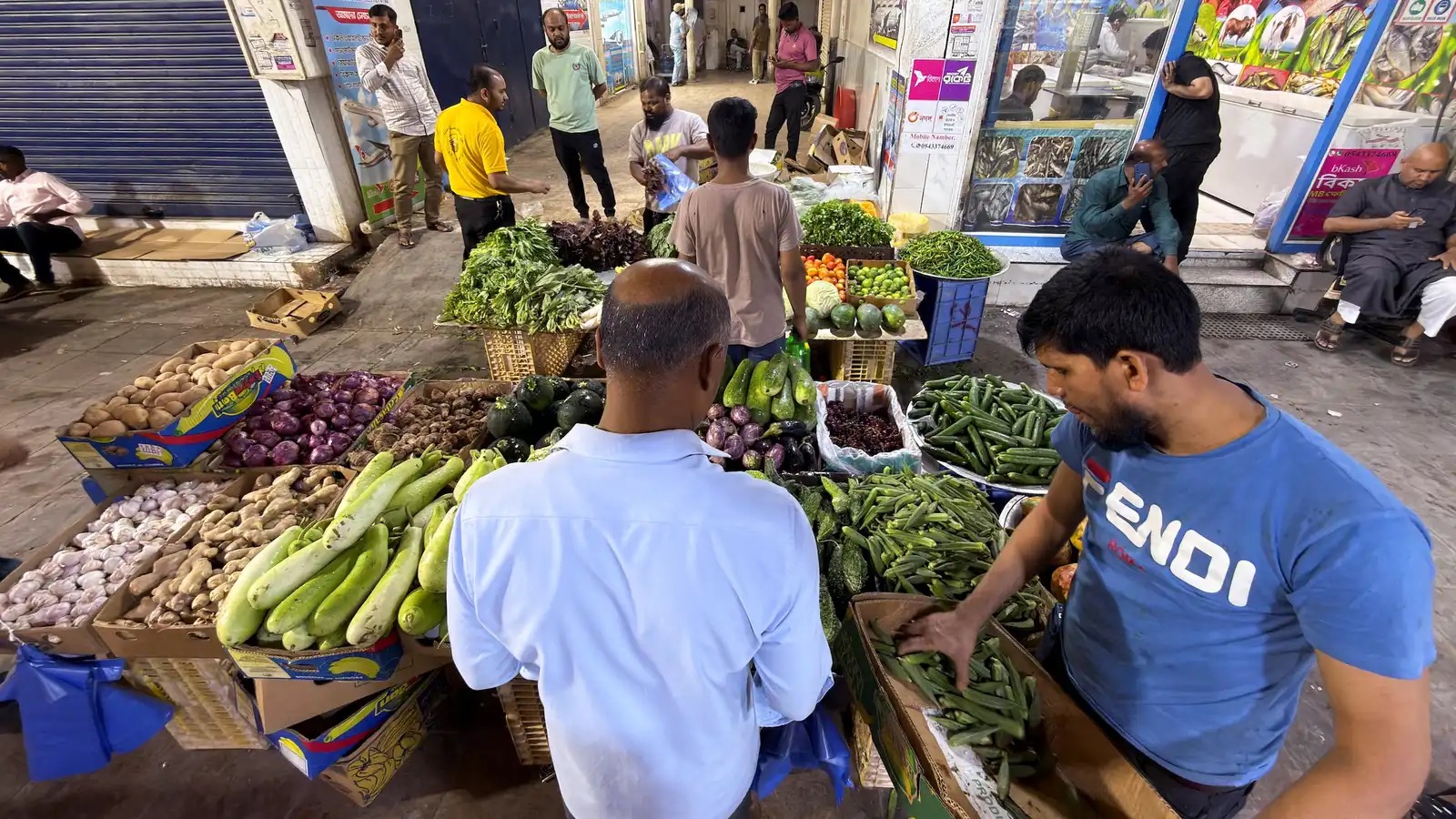
Gulf governments are spending more to shield households from inflation in food and energy prices.
According to AGBI calculations based on official data, the UAE, Saudi Arabia and Oman have spent at least $6.7 billion extra on subsidies and related support this year.
These figures cover the nine-month period through September 30 for Saudi Arabia and Oman.
The figures for the UAE also include social benefits and cover the six-month period through June 30.
Annual inflation is running between 1.9% and 2.2% in Saudi Arabia, Qatar and Kuwait, while standing at just over 3% in Oman and Bahrain despite supply chain disruptions caused by the Iran war.
In the UAE, where fuel prices are linked to international markets, Dubai’s annual inflation has exceeded 5%.
Jason Tuvey, deputy chief emerging markets economist at Capital Economics in London, noted that weak demand has also helped limit inflation, making it difficult to assess the impact of subsidies and price controls separately.
According to an Oxford Economics report published last month, the Gulf Cooperation Council (GCC) economy is expected to contract by 5.7% this year.
Tuvey said:
“The extra subsidy costs are manageable for most governments. These amounts pale in comparison with the hit to budget positions from weaker oil revenues, and they provide some useful support to their economies.”
Gulf countries regulate the prices of staple food items such as chicken meat, dairy products, rice and wheat.
Farouk Soussa, MENA economist at Goldman Sachs, noted that this limits retailers’ profit margins on these products.
“Prices change when costs rise, but prices are not sensitive to the impact of demand,” Soussa said.
Saudi Arabia spent $11 billion on subsidies in the nine months through September 2026.
This figure represents a 49% increase from the previous year and has already exceeded the country’s $8 billion annual budget.
Nick Stadtmiller, chief economist at Emirates NBD in Dubai, said: “Subsidies and administered prices have shielded Saudi citizens from much of the global surge in energy prices this year.”
According to Goldman Sachs estimates, if Saudi Arabia’s fourth-quarter subsidy spending remains at third-quarter levels, the country’s 2026 subsidy total will equal roughly 0.9% of 2025 GDP.
The bank projects a budget deficit of around 5.5% of GDP this year. “The increase in subsidy spending is significant, but not huge,” Soussa said.
In a separate development, Saudi Aramco recorded $44.7 billion in government compensation in the first nine months of 2026, up from $22.5 billion in the same period a year earlier.
This amount covers the difference between the reference price and regulated domestic prices for certain crude oil and petroleum products.
Stadtmiller expects significant budget deficits in Saudi Arabia in the coming years:
“If spending cuts are needed, authorities may choose to cut other discretionary spending areas to maintain support measures for citizens.”
In the UAE, meanwhile, subsidy spending fell by 19% to $1 billion in the first half, while social benefits rose by 25% to $12.6 billion.
Total spending increased by 20% to $13.6 billion.
Soussa noted that the decline in subsidy spending indicates weakening demand for subsidized goods in the UAE, likely reflecting a drop in foreign tourist numbers.
UAE citizens receive social benefits in cash or goods. “They are very similar to subsidies,” Soussa said.
Oman’s electricity and oil-related subsidy spending rose by 67% year-on-year to $1.9 billion.
The other three GCC members, Kuwait, Qatar and Bahrain, have not yet released full subsidy figures for this year.
According to Times Kuwait, citing the Ministry of Commerce and Industry in August, Kuwait’s food subsidy spending in the first half was $248 million.
According to the latest available government data, Qatar spent $4.7 billion on fuel subsidies in 2024.
The International Monetary Fund estimates that subsidies equalled roughly 2% of Qatar’s GDP that year.
Tuvey said Bahrain faces the greatest pressure to trim subsidies due to its large budget deficit and high debt burden.
“Subsidy cuts appear likely to form part of a significant fiscal consolidation, alongside additional financial support from Gulf countries for Bahrain as it seeks to avoid devaluation and sovereign default.”

Microsoft issues code red after historic Exchange Online outage

Poland urges NATO to weigh downing Russian missiles over Ukraine

Spain heads to snap election as housing crisis tests Sánchez

EU budget talks stall over Merz demand for Ukraine funds and cuts

Russia seaborne oil exports fuel rising global supply surplus
-

 Opinion1 week ago
APEC Summit: How China Uses the Art of “Emotional Value” to Deal with Trump
-
 Middle East2 weeks ago
Journalist Dursunoğlu warns Iran removed missile limits as Gulf risks widen
-
 America2 weeks ago
Absent Democrats derail floor vote on Pete Hegseth impeachment
-
 Middle East3 days ago
European Commission rejects Russia’s invite for bilateral security talks
-
 America2 weeks ago
Nvidia board prepares to remove CEO Jensen Huang amid scandal
-
 Europe2 weeks ago
Romania offers to pay US to keep troops stationed in the country
-
 Diplomacy2 weeks ago
CSTO strips Armenia of voting rights over two-year budget debt
-

 Europe1 week ago
Polish Constitutional Tribunal chief stripped of judicial immunity
