
Diplomacy
Ukraine expands maritime strikes against Russian ships to three seas

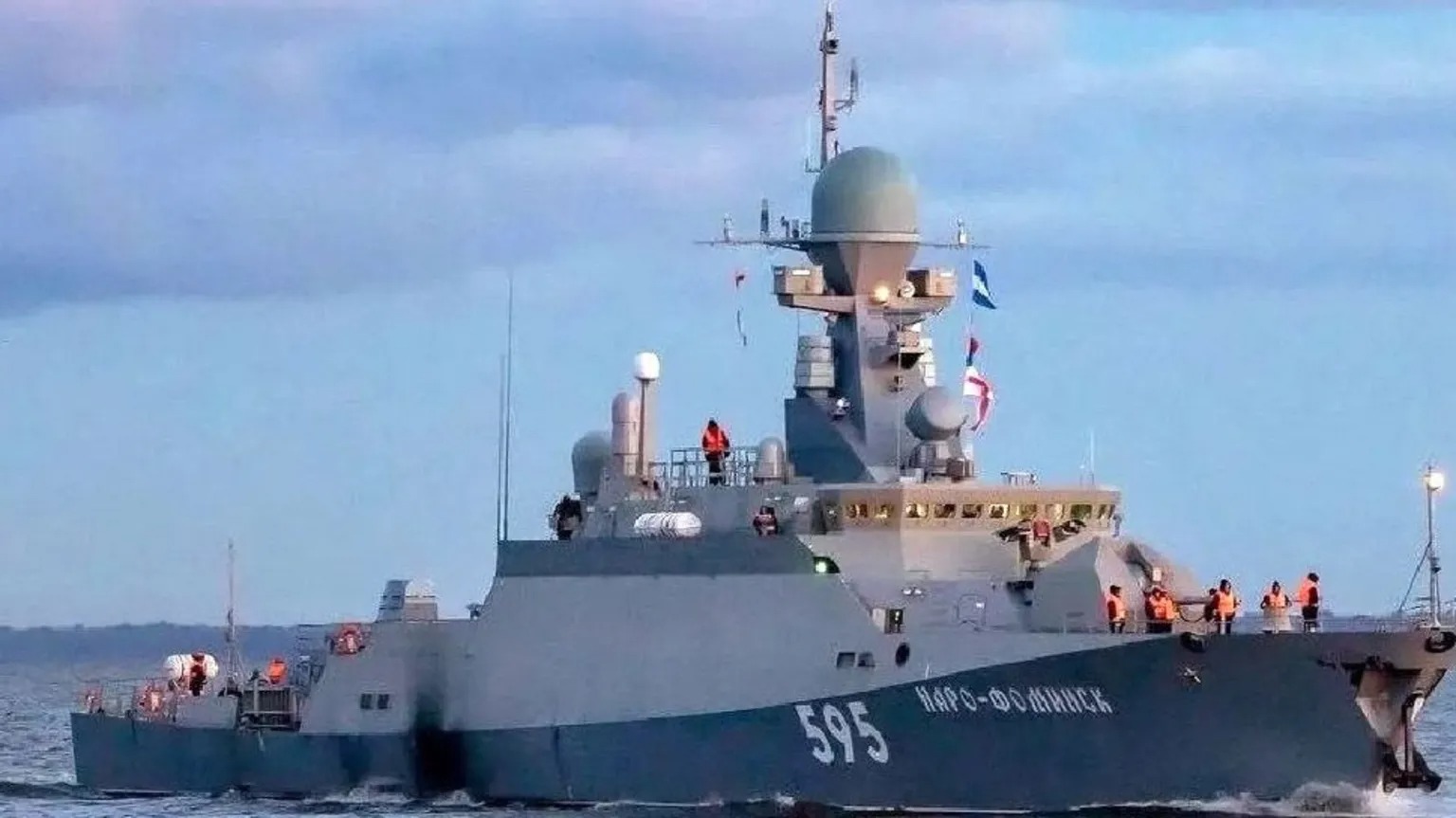
Ukraine is expanding its attacks on Russian vessels from the Black Sea toward the Mediterranean and Baltic Seas, drawing both regions further into the war.
Over the weekend, Ukrainian drones struck two Russian vessels in the Libyan city of Benghazi, sinking a frigate.
In March, a fully laden Russian liquefied natural gas (LNG) tanker in the Mediterranean was severely damaged by Ukrainian maritime drones, narrowly averting an environmental disaster.
Since Kyiv began attacking civilian Russian vessels in the Baltic Sea with drones, state agencies in Finland have also been warning of an environmental disaster.
Uncertainty is also growing in the Baltic Sea for civilian vessels belonging to EU member states. Ukraine’s wartime actions are accompanied by measures taken by the EU and individual EU member states against Russian merchant ships.
These vessels, subject to EU sanctions, are described as a “shadow fleet” and are increasingly being boarded by EU military personnel.
This is now happening not only in the Baltic Sea, but also in the Mediterranean and the Indian Ocean.
The EU and “shadow fleet” battles in the Baltic Sea
Non-combat operations against Russian merchant vessels in the Baltic Sea have been conducted for some time by various EU member states.
In every case, the target is vessels belonging to the “shadow fleet”. These are Russian tankers or cargo ships placed under EU sanctions and therefore barred from calling at EU ports or using services from EU countries.
This includes insurance services in particular, as the United Kingdom has complied with the sanctions in principle, affecting British insurance companies that hold a particularly large share of the market.
Contrary to how European politicians and the media frequently portray it, trading with “shadow fleet” vessels is not illegal, because EU sanctions apply only to EU countries and not to the rest of the world.
Some EU member states, such as Germany, Finland, Sweden and Denmark, persistently look for pretexts to detain “shadow fleet” vessels.
However, this is permissible at most within the zone extending 12 miles off their own coasts, where national laws apply.
Because attempts to board and even seize Russian ships continue, soldiers are increasingly travelling aboard these vessels; some Russian merchant ships are escorted by warships.
EU expands maritime policing role toward the Indian Ocean
Meanwhile, some EU member states and the EU as a whole are also taking action against Russian vessels in the Mediterranean and the Indian Ocean.
In the Mediterranean, troops operating under the EU’s Operation EUNAVFOR MED IRINI have repeatedly boarded Russian merchant vessels on allegations that they were sailing under false flags.
On August 2, for instance, Italian military personnel boarded the tanker Toa Payoh by helicopter while it was en route from Cotonou in Benin to Istanbul. Authorities claimed this was a legal inspection.
Similar actions took place on August 31 and most recently on November 13.
The EU has now included measures against the Russian “shadow fleet” in Operation IRINI’s official mandate. In doing so, the EU is increasingly assuming the role of the world’s policeman.
France has now gone so far as to tow Russian ships in the middle of the Indian Ocean. On October 12, French troops boarded the tanker DF Peak roughly 830 kilometres south of the French colony of La Réunion and began towing the vessel toward the island.
Russia’s Embassy in Paris described the action as a “blatant violation of international law”, which fundamentally guarantees freedom of navigation for all, and termed it “outright piracy”.
Ukraine takes the war to the Mediterranean
Ukraine, meanwhile, has for some time been going a step further: using military force at sea against civilian Russian merchant vessels, and no longer only in the Black Sea, where it is a littoral state.
Since December 2024, Russian vessels in the Mediterranean have repeatedly been attacked and severely damaged by sea mines or maritime drones; since December 2025, they have also been targeted by aerial drones.
On March 3, 2026, Ukraine attacked the Russian LNG tanker Arctic Metagaz, which was bound for Egypt, using maritime drones likely launched from Libya.
The Security Service of Ukraine (SBU) is believed to be behind the attack. The tanker was carrying 62,000 metric tonnes of LNG.
The vessel drifted in the Mediterranean for more than two months; an environmental disaster was narrowly averted.
Over the weekend, two more attacks took place in the port of Benghazi off the Libyan coast using maritime drones.
A Russian cargo ship was severely damaged, and a Russian Navy frigate was sunk.
Libya is effectively divided in two. While Russia cooperates with the eastern part of the country around Benghazi, Ukraine is reported to have signed an agreement with the Tripoli government on a military presence in western Libya, enabling the launch of drone attacks.
Drone strikes threaten civilian shipping in the Baltic Sea
In its latest move, Ukraine is expanding drone strikes against Russian ships, including civilian merchant vessels, into the Baltic Sea.
On November 11, near Russia’s Gogland Island in the maritime triangle between Russia, Finland and Estonia, Ukrainian drones attacked the Russian Navy’s Buyan-M class missile corvette Naro-Fominsk.
The incident marked the first known drone strike on a Russian warship in this part of the Baltic Sea.
The Naro-Fominsk had previously escorted vessels belonging to the “shadow fleet” to protect them from attacks by EU member states.
Ukraine’s attack can therefore also be interpreted as a step that paves the way for such strikes. Ukraine’s security service, the SBU, announced that it targeted the Naro-Fominsk as part of a broader drone operation against Russia’s Ust-Luga oil export terminal on the Baltic coast.
The SBU described the Russian vessel as a small Buyan-M type corvette carrying Kalibr and Oniks cruise missiles. There were also unconfirmed reports that Russian combat helicopters had been destroyed.
On Saturday, an attack was carried out on the cargo ship Sparta II; the vessel was severely damaged west of Gogland and is currently being towed to Russia. An environmental disaster was narrowly averted in this incident as well.
At the same time, civilian maritime shipping, including that of Western European countries, faces a growing danger of collateral damage caused by misdirected or downed drones.
If Ukraine destroys a Russian tanker in the Baltic Sea off the coast of Finland, where the Sparta II was hit, an oil spill off Finland will be virtually inevitable.
The same applies to Estonia and other countries bordering the Baltic Sea. In this way, Kyiv is dragging further parts of Europe into the war.








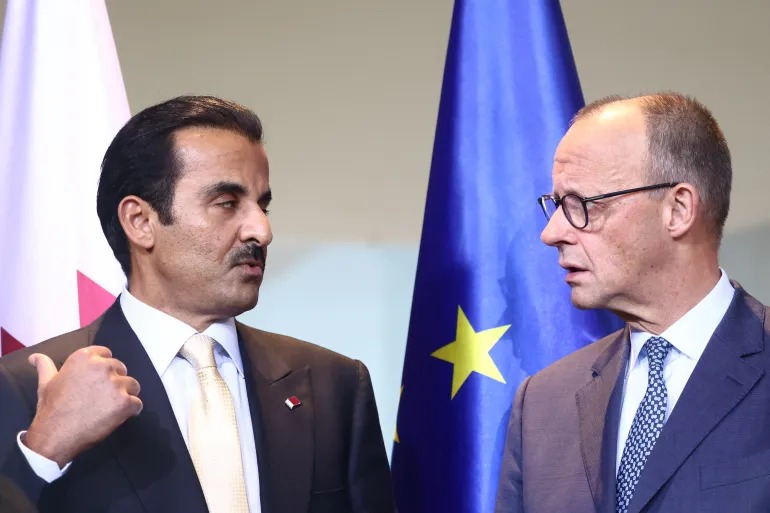
Qatar’s Emir Sheikh Tamim bin Hamad Al Thani held talks with German leaders in Berlin on expanding defence and diplomatic cooperation.
At a joint press conference with the emir on Friday, German Chancellor Friedrich Merz stated that Qatar had committed to an additional 15 billion euros ($16.5 billion) in investment, while the two governments planned closer cooperation in the fields of security and technology.
Merz noted that the investment would strengthen cooperation in artificial intelligence (AI), computer chips and aviation. He also expressed Germany’s interest in establishing partnerships with Qatar in the defence industry, while the two countries agreed to work together to improve protection against cyberattacks.
Sheikh Tamim also held talks with German President Frank-Walter Steinmeier, who proposed a regional security conference for the Middle East.
According to a joint statement from both countries, Friday’s talks addressed efforts to end the war against Iran and restore maritime traffic in the Strait of Hormuz.
Steinmeier proposed bringing regional governments together to build trust and resolve security disputes.
The emir invited Steinmeier to the Doha Forum, an international policy conference to be held in Qatar on December 5-6, to discuss the proposal in greater detail with other countries.
During the emir’s press conference with Merz, the German leader commended Qatar’s role in mediating between the US and Iran and called for the permanent reopening of the Strait of Hormuz. He also urged Tehran to halt its military nuclear programme.
Sheikh Tamim stressed that “peace and sustainable peace and security can only be achieved through a political settlement”, adding that dialogue was the only way forward. He also described Germany as an important partner.
Sheikha Alanoud bint Hamad Al Thani, a fellow at the Middle East Council on Global Affairs, a regional research institute, told Al Jazeera in Berlin that relations had previously been based primarily on trade.
“Now, however, we are seeing a strategic dialogue,” Sheikha Alanoud said, pointing to increasingly similar security concerns, including drone attacks targeting Qatar and hybrid warfare threats facing European countries.
This shift builds on a 2023 agreement to launch formal strategic talks between the two countries.
According to the Qatar News Agency (QNA), Sheikh Tamim told Steinmeier on Friday that Qatar wanted the first round of talks to take place.
Al Thani also met with Dr Hans Dieter Potsch, chairman of the supervisory board of the Volkswagen Group, and his accompanying delegation at his residence in Berlin on Friday.
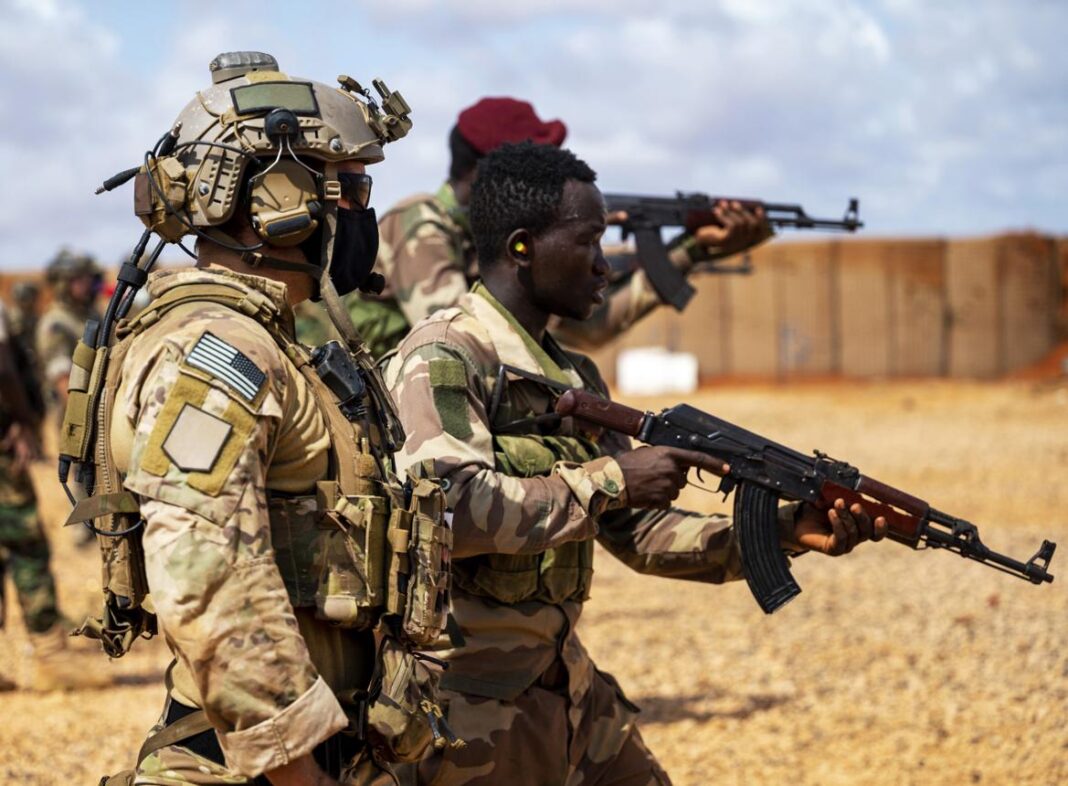
US military officials are reportedly preparing to return to base after an American security contractor operating in Somalia signed a new agreement covering the training and support of Somali security forces.
Having recently departed Baledogle Airfield in Somalia’s Lower Shabelle region, US officials plan to resume operations at the facility this week.
Meanwhile, recruitment has reportedly begun for new groups of Danab special forces personnel who will receive training and support from the US.
Bancroft Global Development, a contractor that has operated in Somalia for years providing military training, security assistance, and capacity-building, reportedly signed the new contract, paving the way for operations at the base to resume.
For an extended period, Bancroft Global Development has been involved in supporting and training Somali security forces, particularly the Danab forces, who play a critical role in the fight against Al-Shabaab.
Reports of activities resuming at Baledogle may be linked to efforts aimed at further strengthening the capabilities of the Danab forces, who are frequently deployed in combat missions and special operations targeting armed groups.
The formation of new Danab units may also indicate ongoing plans to train and develop Somali security forces in order to enhance their operational capabilities, combat skills, special operations capacity, and coordination with other security forces.
Located in Somalia’s Lower Shabelle region, Baledogle Airfield is one of the key installations supporting the training and development of Somali security forces, particularly the Danab special forces.
The base has long been associated with US military support. If confirmed, the return of US officials could signal continued military cooperation between the two countries, despite recent reports that US personnel and employees had withdrawn from the facility.
This development also comes at a time when Somalia is pursuing reforms to restructure its security forces.
The Federal Government continues to rely on support from international partners to bolster its military capacity and intensify operations against Al-Shabaab.
As one of Somalia’s most significant security partners over many years, the US provides assistance to Somali forces, particularly the Danab brigade, while simultaneously conducting operations targeting Al-Shabaab.
Furthermore, it has been reported that the US has extended its support for the AUSSOM and UNSOS missions to sustain security operations in Somalia and assist African Union forces operating in the country.
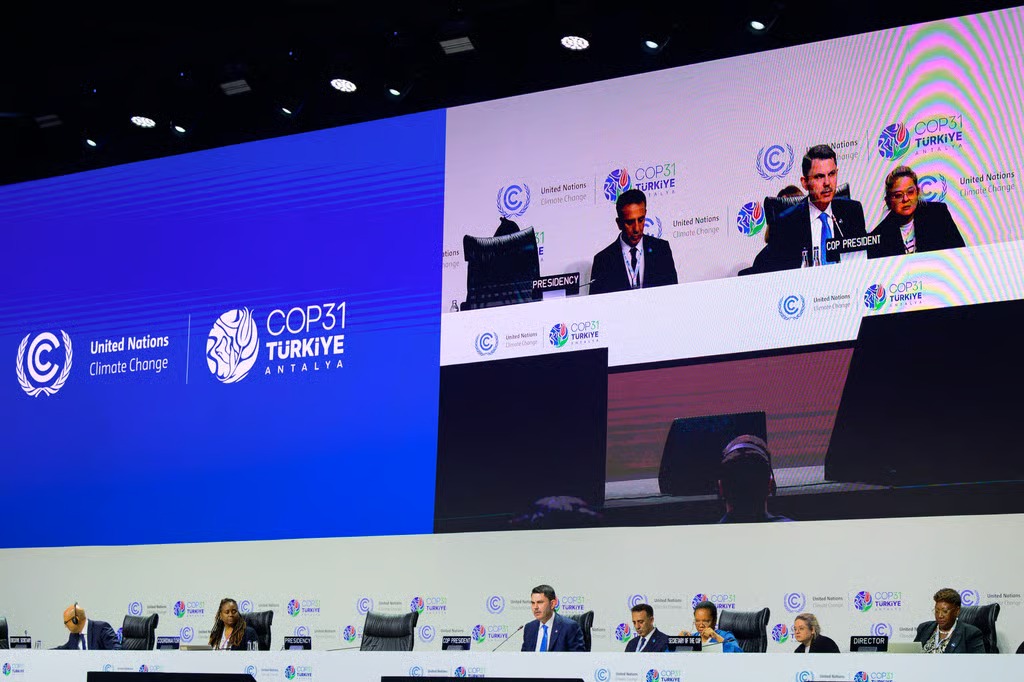
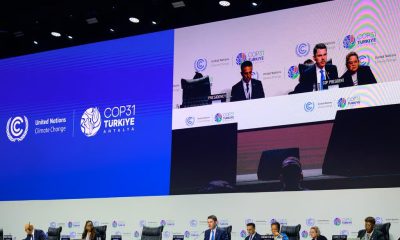
The closing declaration expected to be issued at the COP31 summit in Antalya had to be altered following a dispute over fossil fuels.
The talks collapsed principally because certain countries refused to permit any mention of fossil fuels in the final “cover decision” text, known as the “Antalya Pact”, while others refused to conclude the conference without it.
Led by the EU and the UK, a loose coalition of roughly 130 parties demanded that the final outcome of COP31 acknowledge the need to “transition away from fossil fuels”.
Their demands were rejected by a rival group led by Saudi Arabia.
Another flashpoint was a paragraph in earlier drafts of the agreement that placed controversial carbon capture technologies on an equal footing with clean energy sources such as renewables.
The anti-fossil fuel coalition pushed for these references to be excised from the text, arguing that such wording served the interests of Riyadh, which seeks to prolong the use of oil and gas.
Saudi Arabia pushed back on Sunday. Mohammad Ayoub, the country’s negotiator, said: “We cannot accept a posture that so clearly states we must keep the 1.5C target within reach, yet describes carbon capture, utilization and storage technologies as ‘greenwashing’.”
During a tense final plenary session, the EU and small island states, together with the UK, Norway, Switzerland, several Latin American countries, and a bloc representing the world’s poorest nations, rejected the agreement prepared by the conference’s co-hosts, Türkiye and Australia.
Speaking on behalf of the EU, Irish Climate Minister Darragh O’Brien said: “We will not endorse a decision that fails to respond to science, ignores the implementation gap, and actually risks deepening the chasm between global commitments and the actions required to correct the overshoot and bring the 1.5C target back within reach.” He continued:
“We will not endorse a cover-up decision that fails to mention fossil fuels, the primary driver of climate change. Nor will we accept negotiating backwards in time.”
All nations had previously agreed to “transition away from fossil fuels” at COP28 in Dubai in 2023.
Minister Murat Kurum, who chaired the discussions, also conceded “defeat”. Kurum departed the plenary hall shortly before the end of what had become the longest climate summit in the process’s 30-year history.
UN Climate Chief Simon Stiell told reporters on Sunday evening: “I share the frustration of many. We must also recognize that this COP process has two dimensions; under the action agenda, COP31 has delivered real progress and concrete results.”
Conference co-hosts Australia and Türkiye sought to turn the crisis into an opportunity by putting forward proposals to accelerate efforts to replace petrol-fuelled vehicles with electric alternatives, including electric vehicles (EVs).
However, their proposed headline target, incorporated into the final draft text, which aimed to raise electricity’s share of global energy consumption from 23% today to 35% by 2035, was rejected alongside all other proposals.
It was the negotiations surrounding this electricity target that triggered the dispute leading to the conference’s inconclusive outcome.
Not all nations rejected the text. China, India, and a group of African states indicated they would not stand in the way of its adoption.
Decisions at UN climate summits, however, require unanimous consensus among the nearly 200 participating countries.
Although developing nations formed the majority of the 130 countries assembled under the “progressive coalition”, many of them did not object to the “Antalya Pact” during the final session of COP31.
For many, this was because finance remained a far higher priority than fossil fuels.
A growing number of poorer nations face a debt crisis driven by the Covid-19 pandemic, inflation that has eroded their capital and inflated interest payments on their debt, and wealthy nations’ failure to acknowledge the problem.
Compounding this are the impacts of extreme weather events, which have begun exacting an increasingly heavy toll during this exceptionally severe El Nino year.
Many spend more on coping with the fallout of global warming on crop yields, infrastructure, and disasters than they allocate to core budgets such as health and education.
Wealthy nations had pledged funds to help them adapt to these consequences and transition to low-carbon economies.
At COP29 in Baku in 2024, wealthy nations committed $300 billion annually in public finance to poorer countries by 2035, alongside pledges to facilitate an additional $1 trillion in private sector financing.
Yet the delivery of this money to the countries in greatest need remains slow.
The primary demand of poorer nations, particularly those in Africa, was the fulfilment of the pledge made the previous year to triple adaptation finance.
According to The Guardian, however, they felt their demands had gone unheard and grew angry. African ministers remarked of COP31: “We did not come here to beg.”
Australia also made a strategic misstep by failing to engage parties on the finance issue at an early stage. As a developed nation, Australia is obliged under the Paris Agreement to provide climate finance to poorer countries.
Australia repeatedly parried finance questions by maintaining that “this is not a finance COP”. While factually correct, the stance was poorly received by developing countries, for whom funding is literally a matter of life and death.
All of this means that after two weeks of intensive negotiations, countries departed Antalya with only a series of technical agreements. No political consensus was achieved on “combating climate change”.
Stiell maintained that “real progress” was made at the summit, despite the failure to reach an agreement on the overarching text.
Others disagree. Speaking to Politico earlier in the week, Panamanian Climate Minister Juan Carlos Navarro said: “This ridiculous system requiring 192 countries and 100,000 people in Antalya to reach absolute consensus on everything is an invitation to disaster. The COPs have become a laughing stock.”
The gathering was the first climate conference held since the UN announced that the long-term goal of limiting global warming to 1.5C above pre-industrial levels would definitively be exceeded.
The failure to preserve the Paris Agreement’s most ambitious target of 1.5C was a source of grave concern.
Numerous countries cited this inevitable overshoot to justify calls for agreements on deeper pollution cuts, more robust disaster preparedness measures, and expanded financial support for poorer nations.
The International Energy Agency notes that achieving net zero emissions by mid-century, a critical milestone for meeting Paris Agreement targets, requires the global electrification rate to rise in step with the proposed goal; however, clean energy sources like wind and solar must also supply 90% of electricity demand by that point, compared with 42% today.
This prompted several nations to lobby for a deal on “clean” electrification, seeking to ensure that the drive towards power does not open the door to more polluting coal, oil, or natural gas.
“EU citizens will not accept a fossil-fuel COP,” a senior European official said on Friday afternoon, warning of a “no-deal scenario” due to “inadequate language on clean electrification” in the draft agreement.

Politico weighs five scenarios for future Russia-Europe security talks

Jared Kushner warns Israel risks becoming a “global pariah”

Gulf states spend at least $6.7 billion extra on subsidies

Ukraine expands maritime strikes against Russian ships to three seas

Qatar pledges 15 billion euros in investment to Germany
-
 America2 weeks ago
Absent Democrats derail floor vote on Pete Hegseth impeachment
-

 Opinion7 days ago
APEC Summit: How China Uses the Art of “Emotional Value” to Deal with Trump
-
 Europe2 weeks ago
Germany threatens EU budget veto over long-term Ukraine aid
-
 Middle East2 weeks ago
Journalist Dursunoğlu warns Iran removed missile limits as Gulf risks widen
-

 America2 weeks ago
Blue tsunami and Iran conflict expose deep US cracks, Dr. Tuğtan says
-
 Russia2 weeks ago
Europe ready for arms and missile control talks with Russia, FT says
-
 Europe2 weeks ago
Fico accuses Merz of blackmail over threat to veto EU budget
-
 Russia2 weeks ago
US raises NATO-style guarantees for Kyiv ahead of Abu Dhabi talks
