
America
US House panel unanimously passes bill to shield consumers from AI data center energy costs


Amid growing pushback in the US Congress over the rapid expansion of artificial intelligence infrastructure, a bipartisan bill aimed at capping the impact of data centers on residential electricity bills is gaining momentum in the House of Representatives.
The Ratepayer Protection Act mandates that state utility regulators evaluate standards that would shift the burden of electricity costs from individual consumers onto technology companies.
The proposed legislation cleared the House Energy and Commerce Committee in a unanimous 52-0 vote—a result demonstrating that public and political resistance to data center construction has breached party lines.
Designed to codify commitments made by tech executives to the White House earlier this year, the text requires state regulatory bodies to hold formal proceedings on the issue.
The measure mandates the consideration of a standard under which large data centers would be required to absorb the expenses of new power generation or transmission capacity necessitated by their electricity consumption; however, it stops short of compelling states to ultimately adopt those standards.
In a statement following the vote, Representative Brett Guthrie, the Republican chairman of the House Energy and Commerce Committee, said: “When evaluating the industry as a whole, it has become clear that there is only one body capable of standing alongside the families and communities who pay electricity bills—and that is this committee, along with our colleagues in Congress.”
The legislation has also found traction in the upper chamber. Republican Senator Jon Husted introduced a companion measure in the Senate last week. A spokesperson for Husted noted that the senator was pleased with the House committee’s approval and its bipartisan support, adding that he would continue working to pass the bill through the Senate Energy and Natural Resources Committee toward final enactment.
Despite its accelerating legislative pace, whether the measure will ultimately become law remains uncertain.
Matt VanHyfte, a spokesperson for the Republicans on the House Energy and Commerce Committee, noted in an emailed statement that he remains confident the bill will continue its advance following its successful committee passage.
Clara Summers, director of the Consumers for a Better Grid campaign at the Citizens Utility Board, observed that while the bill does not impose direct mandatory standards on states, directive language from Congress serves a useful purpose.
“There are states that have not addressed this issue proactively. Therefore, a signal from Congress stating, ‘You must at least place this topic on your agenda within a specified timeframe,’ represents a constructive incentive,” Summers said.
Summers emphasized that the standards submitted for state evaluation under the bill would hold data centers accountable for generation, transmission, distribution, and other associated costs, though the final determination on whether to act rests entirely with state authorities.
While supporting the measure, several Democrats on the Energy and Commerce Committee characterized the legislation as merely an initial step rather than a comprehensive solution.
Democratic Representative Nannette Barragán noted that while the bill recognizes a critical principle, it falls short of what is required. “We must do more to protect families from soaring electricity costs while simultaneously addressing the attendant health and environmental impacts,” Barragán said.
Data centers—the backbone of artificial intelligence development—are encountering intensifying grassroots resistance as technology firms push to construct new server warehouses and expand their computing power.
Local communities are challenging projects over rising electricity rates, high water consumption, and potential environmental pollution. Certain analysts also link this opposition to broader public anxieties regarding AI, including job displacement.
Public enthusiasm for data center developments, which until last year were widely viewed by both Democrats and Republicans as prime economic investments, is visibly eroding.
According to a survey published by Politico, 41% of Americans now oppose the construction of a data center in their local area, compared to 24% who support it. In January, opposition stood at 28%, with support at 36%.
Democratic Representative Kathy Castor, a co-sponsor of the bill, argued that the legislative package before the committee does not go far enough to resolve the underlying crisis.
Pointing to the Republican majority in the House, Castor said: “I believe the majority must take more decisive action right now to lower household electricity bills. Bipartisan bills are a good first step, but they fall short in this period of energy inflation.”
Castor expressed regret that her own proposal, which would require federal regulators to accelerate the grid interconnection process for new power sources, was not brought up for consideration by the committee.
Nevertheless, Castor commended the bill for sending a clear message to developers: “If a company wants to build a data center, it must pay for the power and grid upgrades it requires.”
Camden Weber, a senior climate and energy policy specialist at the Center for Biological Diversity, told The Hill that congressional focus on affordability was welcome, though incomplete. “It is positive that Congress is addressing pricing issues. We are experiencing an affordability crisis; people are struggling to pay their bills, particularly energy bills. However, concerns surrounding data centers extend well beyond this. There are environmental issues, water scarcity, and air pollution. While this bill appears well-intentioned, it does not go far enough,” Weber said.
Weber further criticized the legislation for establishing an optional framework for states rather than a binding mandate.
Conversely, several lawmakers view this structural flexibility as a primary strength of the text.
Democratic Representative Troy Carter emphasized during the committee markup that the federal government should refrain from overreach. “The key point is that Washington is not dictating terms to Louisiana. This bill does not force state regulatory commissions to adopt a specific rate structure. It establishes a federal standard for state public utility commissions to evaluate, leaving the ultimate implementation strategy to their discretion,” Carter said.
Carter added that local regulators are best positioned to assess the specific requirements of their own jurisdictions.
Responding via email regarding the policy impact of the legislation, Republican committee spokesperson Ben Mullany stated that lawmakers are working in tandem with states and utility providers to ensure grid efficiency.
“The Ratepayer Protection Act sends a strong signal from Congress to the states. States need to examine these massive computing loads and work to ensure that residential customers do not bear the financial burden of generating and transmitting the power required for these data centers,” Mullany said.
The proposed legislation has drawn resistance from the technology sector. The Data Center Coalition, an industry group backed by major tech firms, voiced strong opposition to recent modifications that narrowed the scope of the bill exclusively to data centers.
Josh Levi, president and chief executive officer of the Data Center Coalition, stated that while the organization initially supported the original version and intent of the legislation, the latest revisions were counterproductive.
“The amendments introduced by the Energy and Commerce Committee narrow the scope of the bill to target the data center industry exclusively. This leaves consumers unprotected against the costs associated with substantial load additions driven by other expanding sectors across the United States,” Levi said.













Microsoft declared a “code red” following the most widespread outage in the history of its Exchange Online email service, according to a Reuters report citing internal company documents.
The disruption that prompted the decision occurred on 12-13 November, lasting approximately 24 hours and disrupting email, Teams, Copilot, and other Microsoft 365 services.
Under the code red initiative, preventing outages and responding to technical failures are given priority.
In a message to staff, Jason Henderson, head of the M365 Core unit, said that never before had so many Exchange Online customers been left without email for such an extended period.
“Unfortunately, all the work we did over the years was not enough to protect us on Thursday,” Henderson wrote. “Code red means this work has the highest priority for our team.”
Microsoft said the outage was triggered by a hidden Windows flaw introduced in July, which was activated under increased system load.
The company stated that the incident was unrelated to a cyberattack or the actions of artificial intelligence agents.
Microsoft chief executive Satya Nadella publicly apologised for the disruptions.
In a separate message, Amanda Silver, corporate vice-president responsible for M365 Core and the Work IQ platform, compared the engineers’ working conditions to the “fog of war”.
According to Reuters, specialists exchanged more than 11,000 messages across 11 different Teams chats.
Diagnostic data being scattered across different internal systems complicated the tracking of potential causes and decisions taken during the response.
Silver noted that Microsoft Vice-President Charles Lamanna remarked during a post-incident review that the affected component experienced an outage volume equivalent to roughly a decade of acceptable downtime.
Microsoft set a goal to resolve similar incidents worldwide within one hour.
The plan includes capping system loads, partitioning traffic flows by geographic region, and accelerating recovery processes.
The company plans to use AI agents to analyse system health.
In another internal communication, Henderson recounted that in a recent incident, distributing an emergency Microsoft update globally took five to six days.
“For our most urgent security issues, we need to get from detection to safe worldwide rollout of an update within one hour,” Henderson wrote. “Needless to say, we are not there yet.”
A Microsoft spokesperson told Reuters that work on the fallout from the outage did not end once services returned to normal, adding that teams were applying the lessons learned around the clock and that leadership considered this a top priority.
During the November outage, complaints arrived from 74 countries and regions.
According to Downdetector data, reports of Outlook issues exceeded 131,000 at their peak.
At the time, Microsoft explained that several servers going offline increased the load on the remaining infrastructure, causing recovered servers to become unresponsive again once traffic returned.
The outage hit businesses, schools, and public bodies.
In the UK, operations ground to a halt across parliament, courts, police forces, and hospitals.
Members of parliament were unable to reply to constituents, and police units could not receive submissions made through online forms.
Healthcare organisations shifted to backup systems and paper records.
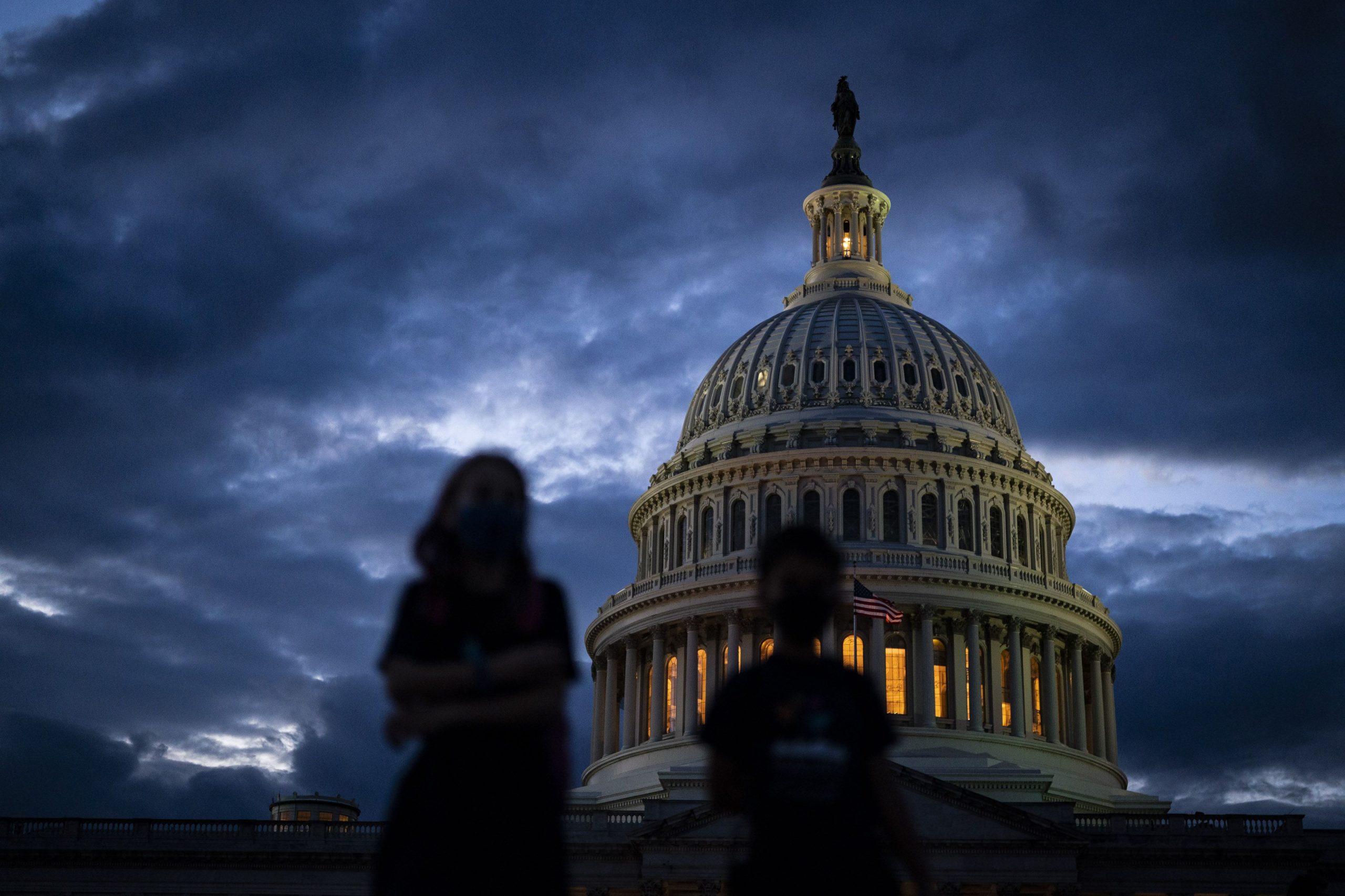
Democrats in the US have secured at least 258 seats in the 435-member House of Representatives, reaching their largest majority since 1992.
According to a report by the Associated Press (AP), Democrats have gained 44 seats so far, surpassing the 40-seat advance they achieved during the 2018 midterm elections in President Donald Trump’s first term.
Democrats reached the 258-seat threshold on Sunday after Democratic challenger Chuck Hubbard defeated Republican Representative Virginia Foxx in North Carolina.
Races remain uncalled in Minnesota and Tennessee, with one seat outstanding in each state, while two contests in Louisiana will head to a December runoff.
Republicans will hold a minority of at least 173 seats.
When Democrats take control of both the House of Representatives and the 100-member Senate in January, a divided government will emerge alongside a Republican president in the White House.
Senate Democrats secured 56 seats, achieving their widest margin in more than a decade.
This House majority matches or exceeds the 258 seats won when Bill Clinton was first elected president in 1992 and the 257 seats secured in Barack Obama’s 2008 victory, though it remains below the record of more than 300 seats held during Franklin D. Roosevelt’s presidency.
As AP reported, voter dissatisfaction with Trump, driven by high prices, anger over the war in Iran, and concerns about corruption, carried Democrats to victory across a broad geography ranging from Republican strongholds to the Midwest and the East Coast.
Democrats prepare 100-day agenda
Under a 100-day agenda drawn up to address the cost of living, Democrats plan rapid votes to reverse Republican cuts to Medicaid and restore expired tax credits under the Affordable Care Act.
Seeking to check presidential authority over the remainder of Trump’s second term, Democrats pledged to open numerous investigations using congressional subpoena power.
These initiatives include examining how Trump and his family acquired wealth following his return to office, while New York Democratic leader Hakeem Jeffries, the leading contender for House speaker, did not rule out an attempt to impeach Trump for a third time.
The White House warned Democrats over the planned oversight of the administration, asserting that these congressional inquiries, though a standard supervisory function, could “clearly constitute a crime”.
“Of course we should feel pressure,” said Representative Jason Crow, a Colorado Democrat and former US Army Ranger.
Speaking at the Capitol earlier this month, Crow said, referring to US Immigration and Customs Enforcement (ICE): “People in this country are dying, losing their health insurance, losing their livelihoods, losing their farms, and being terrorized by ICE.”
Crow continued: “If you do not feel a sense of urgency and pressure in this job, a commitment to deliver results for people, you do not belong under this Capitol dome.”
Representative Alexandria Ocasio-Cortez, a New York Democrat and prominent progressive voice, said at the Capitol: “This is a historic moment for our country. It is one of the largest classes we have seen.”
Ocasio-Cortez characterized the decisive seat total as a “mandate for change”.
Representative Tom Suozzi, a centrist New York Democrat and accountant by profession, said Democrats must dedicate 75% of their time to the cost of living and 25% to accountability.
“Everything has to come back to the people and how it affects them,” Suozzi said.
Emphasizing that inquiries into Trump’s financial dealings must make the same connection, Suozzi asked: “How does this affect people’s pocketbooks?”
New leadership prepares to take office with wide maneuvering room
Unlike Republican House Speaker Mike Johnson of Louisiana, who struggled to govern over the past two years with a single-digit margin that allowed small groups of Republican lawmakers to stall the legislative agenda, the incoming Democratic leadership will enjoy substantial maneuvering room.
If elected by his colleagues on 3 January 2027 as the first Black speaker of the House in US history, Jeffries could still reach the 218 votes required to pass legislation even if dozens of Democrats break ranks on any given roll call amid unified Republican opposition.
Representative Troy Carter, a Louisiana Democrat expected to lead the Congressional Black Caucus, said: “We are not a monolith. People come to the table with different ideas, and that’s okay.”
The Republican House seat total fell to one of its lowest levels in decades.
The party remains far below the 247 seats it won in the 2014 midterms late in the Obama administration, the 230 seats taken during Newt Gingrich’s 1994 wave, and its historical high of 301 seats in 1920.
Representative Jim Jordan of Ohio, elected by his peers as Republican minority leader, vowed to fight to regain power.
“For the next two years, House Republicans will fight for American families,” Jordan said.

The US Congress is closing in on a deal that would ban Chinese-origin cars from entering the US.
Sources speaking to Bloomberg said that Republicans and Democrats from car-making states behind the initiative aim to deliver a bill to President Donald Trump’s desk by the end of the year.
If the law takes effect, the lucrative US car market will be closed to car makers such as BYD and Geely, which have been rapidly gaining market share across Europe and South America with their low-cost, tech-packed electric vehicles.
Chinese cars are already effectively excluded from the US market due to high tariffs imposed by the Department of Commerce and restrictions on Chinese vehicle technology.
Enacting a statutory ban would take these measures a step further to address mounting concerns that the Chinese automotive industry poses “national and economic security threats”.
Details of the measure are still being worked out. According to the sources, Republican Senator Bernie Moreno briefed automotive manufacturer representatives on amendments under consideration to earlier legislation aimed at barring Chinese-origin connected vehicles from entering the US.
These amendments include provisions that would shield Mercedes from a complete ban.
According to the sources, car company representatives generally supported the initiative Moreno outlined, but a Mercedes official expressed reservations, and negotiations remain ongoing.
Sources noted that the bill’s backers are working to pass the measure before the new congressional term begins in January.
In a statement, Mercedes said: “We continue to talk with all stakeholders who share a common interest in seeing this important legislation become law during this session of Congress.”
A bill introduced by a Senate committee earlier this year would have prohibited manufacturers more than 15% owned by Chinese entities from selling vehicles equipped with technology capable of transmitting data.
Mercedes, which has lobbied for changes to this bill, is roughly 10% owned by Chinese state-owned car maker BAIC.
Li Shu Fu, the billionaire founder of Chinese car manufacturer Geely, also owns about 10% of Mercedes shares.
This puts the company above the 15% threshold set in the previous bill.
A source familiar with the talks, speaking on condition of anonymity, said members of Congress were in discussions with multiple parties, including Mercedes, and were optimistic that a deal could be reached this week.
Provisions under discussion include more flexible rules for firms with non-voting, passive shareholdings, as well as how such an approach would be structured and verified.
Republican Senator Katie Britt of Alabama, a key manufacturing hub for Mercedes sport utility vehicles (SUVs), said she was working on the bill with Moreno and expressed confidence that both Mercedes and Alabama would be protected:
“We understand that some adjustments need to be made, but we are confident that Mercedes can continue to thrive in our state and across the nation.”
Banning Chinese-origin cars would also contrast with the more flexible approach adopted by Europe and Canada.
Chinese car manufacturers have gained market share rapidly, particularly in Europe, triggering intense competition with domestic brands.
After Chinese car makers accelerated their market share gains in Europe, the EU began to push back, signing an agreement with China last month to limit imports of hybrid vehicles into the bloc.

Microsoft issues code red after historic Exchange Online outage

Poland urges NATO to weigh downing Russian missiles over Ukraine

Spain heads to snap election as housing crisis tests Sánchez

EU budget talks stall over Merz demand for Ukraine funds and cuts

Russia seaborne oil exports fuel rising global supply surplus
-

 Opinion1 week ago
APEC Summit: How China Uses the Art of “Emotional Value” to Deal with Trump
-

 Middle East2 weeks ago
Journalist Dursunoğlu warns Iran removed missile limits as Gulf risks widen
-

 America2 weeks ago
Absent Democrats derail floor vote on Pete Hegseth impeachment
-

 Middle East3 days ago
European Commission rejects Russia’s invite for bilateral security talks
-

 America2 weeks ago
Nvidia board prepares to remove CEO Jensen Huang amid scandal
-

 Europe2 weeks ago
Romania offers to pay US to keep troops stationed in the country
-

 Diplomacy2 weeks ago
CSTO strips Armenia of voting rights over two-year budget debt
-

 Europe1 week ago
Polish Constitutional Tribunal chief stripped of judicial immunity
