
America
US signs $59 billion contract with Lockheed Martin to triple Patriot missile production by 2030


The US Department of War has awarded American defense contractor Lockheed Martin a contract valued at approximately $59 billion to boost the production of PAC-3 interceptor missiles for Patriot air defense systems.
According to a report by Bloomberg, the new agreement expands upon a contract signed in April. The initial $4.7 billion award given to the company in April was amended to add $53.86 billion, covering a full seven-year period.
Under the plans, annual production of PAC-3 MSE missiles is projected to increase from roughly 600 units to 2,000 units by 2030. A single unit of these missiles costs approximately $4 million.
Lockheed Martin announced that it will hire 650 new employees to meet the production demands under the order. Following these hires, the workforce dedicated to Patriot missile manufacturing at the company’s facility in Camden, Arkansas, will reach 1,850 personnel.
Bloomberg noted that the contract forms part of US President Donald Trump’s administration program to ramp up defense manufacturing and replenish depleted stocks of missiles and interceptors used during the war with Iran.
Missile production expansion program launched in 2024
The initiative to scale up the production volume of Patriot missiles was launched in 2024. At that time, the US military signed a $4.5 billion contract with Lockheed Martin for the production of 870 PAC-3 MSE interceptors.
US military officials stated then that the deal would expand production capacity for missiles intended not only for the US armed forces, but also for Ukraine and other allies.
However, Lockheed Martin subsequently reported that it could not guarantee delivery timelines for interceptor missiles to allied nations due to rapidly surging demand.
In July of this year, the company announced that it was developing the lower-cost PAC-3 ACE missile, intended to complement the ammunition lineup for Patriot systems.


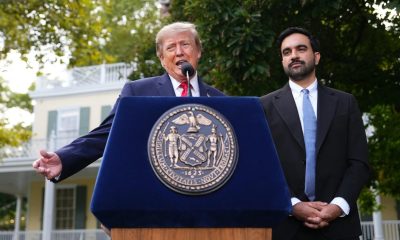
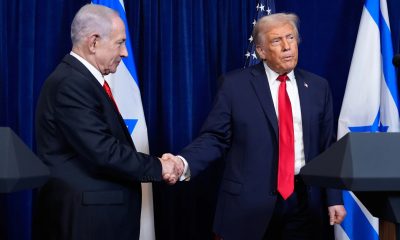


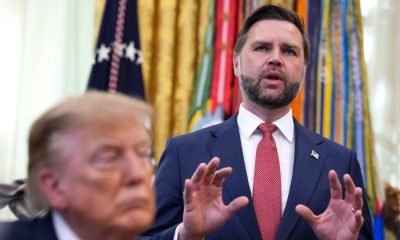


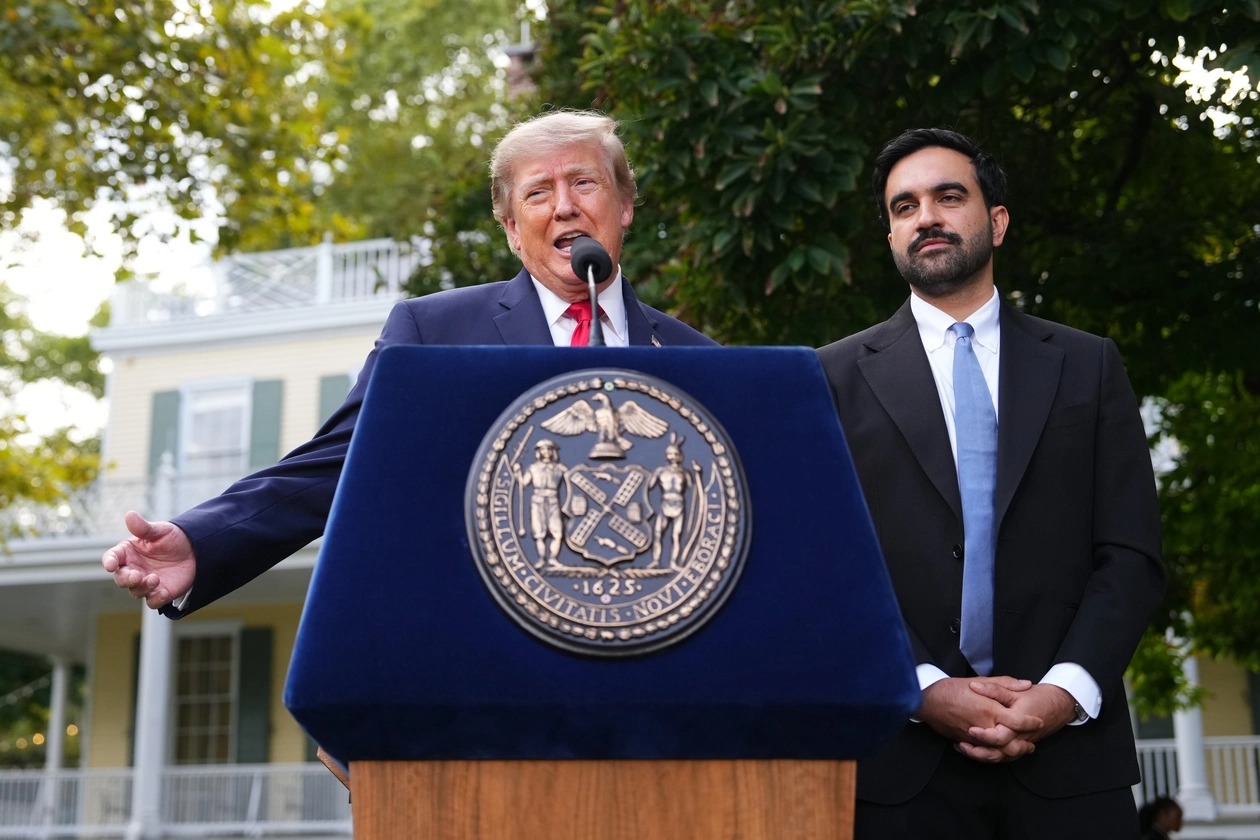
New York City Mayor Zohran Mamdani is using his rapport with US President Donald Trump to secure the release of selected detained immigrants.
According to reporting by Politico, Mamdani persuaded Trump during their second White House meeting in February to free a university student who had been detained that day by ICE.
The outcome served as validation for Mamdani, who pointed to the release of the Columbia University senior as proof that his surprisingly cordial relationship with Trump could produce tangible results for New Yorkers.
Mamdani subsequently continued to seek similar immigration-related interventions from the Republican president.
Since that February meeting, Mamdani and his aides have quietly forwarded the names of approximately two dozen immigrant New Yorkers held in ICE custody to Trump’s team, asking the president to order their release.
Two sources familiar with the matter said Mamdani most recently shared names of detained immigrants during a September meeting with Trump at Gracie Mansion.
The sources said the individuals in question had no serious criminal records, though they declined to disclose their identities, citing safety concerns.
According to Politico, these ongoing efforts regarding detained immigrants indicate Mamdani’s belief that he can leverage his rapport with Trump to advance causes the mercurial president might not ordinarily support.
Mamdani’s decision not to disclose these continued appeals publicly suggests an inclination to keep his interventions private to improve their chances of success.
Yet it remains unclear whether any immigrant besides Columbia University student Elmina Aghayeva has actually been released as a result of these efforts, and concern is mounting within City Hall that the window for securing such releases may be closing.
Mamdani’s aides working on the releases, including his Chief of Staff Elle Bisgaard-Church, communicated primarily with Trump’s White House Chief of Staff Susie Wiles, according to people familiar with the matter.
Last week, Trump replaced Wiles with Stephen Miller, the architect of the administration’s most hardline immigration proposals and one of the loudest internal voices urging the president to pursue a mass deportation agenda in his second term.
A person familiar with the Mamdani administration’s thinking said the mayor’s team views it as unlikely that Miller will continue cooperating in the manner Wiles did, given his stance on immigration.
Mamdani spokesperson Dora Pekec declined to comment on internal concerns regarding Miller and did not provide details about the immigrants whose release the mayor had requested.
Pekec noted, however, that Mamdani has “consistently advocated directly on behalf of New Yorkers in his calls and meetings with the president.”
Murad Awawdeh, a close Mamdani ally and president and CEO of the New York Immigration Coalition, said the mayor’s team should not halt engagement with the Trump administration on immigration matters because of Miller’s promotion:
“Stephen Miller is a cruel individual who has spent his career attacking immigrants, but he is not the president; Donald Trump is, and this is his deportation agenda. New York expects the president to work with the mayor to serve this city and end the terror in our communities. Miller’s promotion changes none of that.”
Mamdani’s warm dynamic with Trump has confounded both allies and critics.
During last year’s New York mayoral election, Trump referred to Mamdani as a “communist lunatic” and threatened to have him arrested.
In turn, the 35-year-old democratic socialist branded the president a “fascist” and pledged to fight him relentlessly if elected mayor.
Yet that animosity fell away late last year during their first White House meeting, where an amicable tone prevailed.
The thaw culminated in September at Gracie Mansion, where Trump said Mamdani had “great potential” to be a “terrific mayor.”
Mamdani returned the compliment by noting that the president had “built quite a bit of housing in our city.”
Despite the polite exchange, questions remain over how much substantive progress Mamdani can genuinely secure through Trump, including on immigration.
To date, Aghayeva’s release stands as one of the few concrete concessions Mamdani has obtained from Trump.
Aides on both sides are also discussing a multi-billion-dollar federally backed housing initiative in Queens, and last month Mamdani used his channel to Trump to help secure a temporary visa for a Ghanaian woman whose son was shot and killed in the Bronx.
Beyond those instances, few tangible results have emerged, though Trump’s decision not to enact punitive measures against New York is viewed by Mamdani’s allies as a win for the city.
Trump’s political standing is widely seen as weakened following the Republican Party’s loss of both houses of Congress in elections last Tuesday.
How this political shift will affect Trump’s willingness to engage with ideological adversaries such as Mamdani remains uncertain.
Miller’s appointment as chief of staff appears to signal little presidential interest in moderation, particularly on immigration policy.
Even so, the mayor said last week that he does not intend to stop seeking Trump’s assistance, despite “fierce” policy disagreements.
“We have found an area of common interest in the well-being of New York City, and as long as that can deliver for our city, I’m going to keep that door open,” Mamdani told Politico on Friday in Puerto Rico.
Mamdani and other elected officials from New York had gathered in Puerto Rico for the annual Somos political conference.
Two days later, in an interview on Fox News, a network Trump is known to watch regularly, Mamdani described a “productive relationship” with the president, saying the two text and speak by phone frequently:
“Through those conversations, we were able to get a New Yorker out of ICE detention. We were able to secure a visa for a grieving mother who would have otherwise had to watch her son’s funeral from thousands of miles away. What that tells me is: My job is to deliver for New Yorkers, and I have to work with whoever has the power to do that, wherever they may be.”

ExxonMobil has formalised negotiations with Venezuela regarding the operation of one or more oilfields.
The company’s CEO, Darren Woods, had previously described the country as “uninvestable” due to the prevailing situation following the abduction of Nicolas Maduro.
The company, based in Spring, Texas, said in a statement that ExxonMobil had signed a memorandum of understanding with the Venezuelan government and the state-run company Petroleos de Venezuela SA for “potential upstream opportunities”.
The agreement is non-binding and does not commit Exxon to any specific project.
“While this MOU is a meaningful first step, any future investment would require stable policies, clear regulations, strong investment protections, and competitive returns,” Exxon said in its statement.
The company did not disclose which projects or oilfields it was evaluating. Exxon would need to sign a definitive joint venture or production-sharing contract before participating in exploration or production activities.
Should Exxon proceed, the move would mark a major return to Venezuela after the government of late President Hugo Chavez seized the company’s assets.
It would also represent a political victory for US President Donald Trump, who has sought to reshape Venezuela’s oil sector with US companies taking a leading role following the abduction of President Nicolas Maduro by American forces in January.
At a signing ceremony broadcast by state television channel VTV, interim President Delcy Rodriguez welcomed Exxon back, expressing hope that the memorandum would soon lead to concrete agreements.
“We are pleased to welcome you back,” Rodriguez said, adding that Venezuela hopes this partnership will benefit both Exxon and the Venezuelan people. She also stated that Exxon would invest under favourable conditions and within a framework of legal certainty designed to protect its operations.
Prior to nationalisation, Exxon held a 41.67% stake in the Cerro Negro heavy crude project, now known as Petromonagas, alongside a 50% stake in the La Ceiba project located in the southern Maracaibo basin.
Exxon subsidiaries filed an arbitration claim against Venezuela in 2007 before the World Bank’s International Centre for Settlement of Investment Disputes (ICSID).
In 2014, ICSID ordered that Exxon be paid $1.6 billion plus interest. Venezuela challenged the ruling, and the dispute remains unresolved.
Earlier this year, after oil reforms spearheaded by Rodriguez opened the sector to new entrants, Exxon CEO Darren Woods noted that progress had been made on fiscal and legal terms, though he stressed that the company was “not in a rush”.
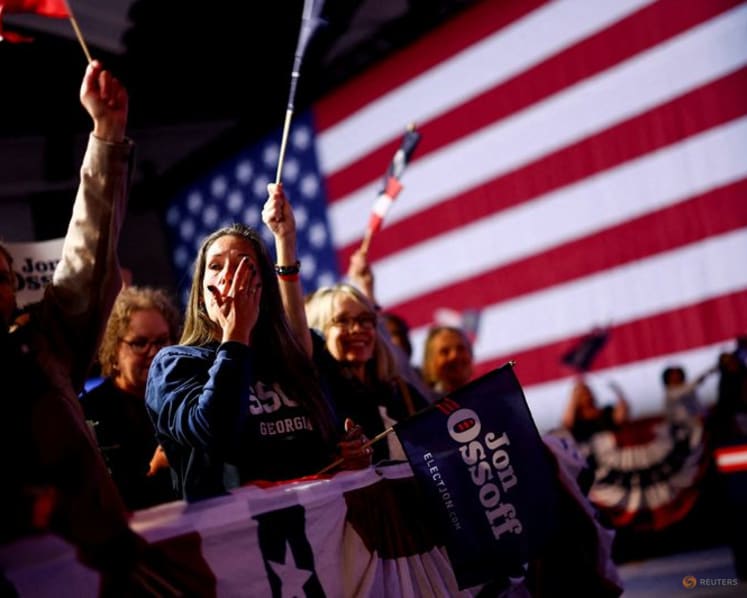
Assessing the seismic fallout of the latest US midterm elections, Dr Mehmet Ali Tuğtan, associate professor of international relations at Istanbul Bilgi University, delivered an exhaustive analysis of the shifting dynamics in American governance during an interview on the Harici YouTube channel.
Speaking with the program’s host, Tuğtan explained that while public opinion polling had pointed toward legislative setbacks for the Republican Party, the actual margins delivered a shock to the political establishment. Pre-election surveys had indicated that the Republicans were on track to yield the Senate by a margin of 53 to 47 and drop the House of Representatives by approximately 230 to 200 seats. However, the sheer scale of the defeat redefined expectations across the political spectrum.
“It wasn’t just losing; losing by such a wide margin was something no one expected,” Tuğtan said, recalling the nationwide anticipation leading up to the vote. “People were wondering, will it be a blue wave? Or will it be a blue tsunami? It turned out to be a blue tsunami.”
The conversation addressed the root drivers behind this historic electoral repudiation of Donald Trump and the broader Make America Great Again movement heading into the second term of his presidency. Tuğtan asserted that the electorate’s verdict represented both a direct reaction to Trump’s policy execution and a systemic transformation within the opposition party.
On the domestic and economic fronts, Tuğtan argued that the administration’s flagship initiatives produced severe unintended consequences that alienated ordinary voters. Trump had campaigned on terminating open-ended overseas conflicts, yet his administration found itself entangled in a widening military confrontation. “He said he would withdraw from the endless wars. He doesn’t even know how to get out of the war he started in Iran,” Tuğtan noted. The outbreak of hostilities in the Persian Gulf led directly to the closure of the Strait of Hormuz, an arterial transit corridor for global energy supplies, precipitating severe inflationary pressures across the domestic market. “Because of the Iran war, the Strait of Hormuz closed, and the cost of living skyrocketed,” Tuğtan pointed out. Concurrently, Trump implemented his pledge to dismantle conventional free-trade frameworks and erect protectionist trade barriers to shield domestic manufacturing, but the policy backfired. “As many economists warned, the reflection of this on the economy was negative,” Tuğtan said, adding that voter discontent was further compounded by public scrutiny surrounding his family’s business entanglements and ties to elite technology billionaires. “On one hand, there were the rumors of corruption involving his family and the dirty relationships with those ‘tech-bros,’ the tech billionaires around him. All of this was reflected back to the public.”
Simultaneously, the Democratic Party executed a generational and ideological pivot that resonated with an evolving electorate. Tuğtan pointed out that the party leadership decisively moved past its entrenched vanguard, discarding political figures who had maintained unconditional support for Israel, adhered rigidly to market-driven economic orthodoxies, and offered stale solutions to widening income disparity. In their stead, a demographic cohort emerged that reflected the country’s diverse social fabric. “The Democrats finally got rid of the old faces, those from the older generation who constantly said the same things, who unconditionally supported Israel in the Israeli-Palestinian issue, and who claimed more neoliberalism could solve problems like the society’s growing income inequality, and replaced them with a new generation of more communal, more left-leaning candidates,” Tuğtan observed. “With candidates representing all the colors of this mosaic, when the Democrats stepped up, success followed.”
“A new generation of leadership has taken over”
This structural realignment marked a clean break from the generational cohort that had steered the Democratic Party for decades. Tuğtan highlighted that the party skipped an entire intermediary generation in its succession process. Rather than passing power from octogenarians such as Joe Biden and Hillary Clinton to officials in their late sixties or seventies, authority transferred directly to figures in their thirties, forties, and early fifties. “A new generation of leadership has taken over in the Democratic camp,” Tuğtan said. “Some Turkish broadcasters call them the ‘boomers,’ the generation of Hillary Clinton and Joe Biden, who have finally retired. And in their place came not just the next generation, but the one after that. So those in their 80s retired. They weren’t replaced by those in their late 60s or early 70s. They were replaced by people in their late 40s, early 50s, or even some in their 30s. This generational change has brought a huge fresh wave of energy to the Democratic Party.”
When asked by the host how this emerging leadership engages with the traditional establishment, Tuğtan explained that the internal gravity of the party has shifted markedly. Even figures traditionally viewed as moderates or institutionally aligned, such as California Governor Gavin Newsom or Georgia Senator Jon Ossoff, operate substantially further to the left than their predecessors. “Even the establishment figures have shifted to the left within the Democratic Party,” Tuğtan emphasized, demonstrating that the center of political gravity has moved.
Defining the core tenets of this modern American leftism, Tuğtan outlined three structural elements: a revival of statism, the formal abandonment of trickle-down supply-side theory, and a fundamental critique of the neoliberal consensus that has governed economic policy since the 1980s. He contrasted the incoming cohort with the “Atari Democrats” of the 1990s, who rallied behind Bill Clinton’s “Third Way” philosophy. While Clinton accommodated global market flows, offshore manufacturing, and service-sector flexibilities to produce 17 million precarious jobs, that compromise eventually exhausted its utility. Subsequent administrations under Barack Obama and Biden failed to deliver equitable prosperity following the 2008 global financial crisis, eroding institutional credibility.
“Now, the new generation says openly, ‘We are public-minded.’ There are those among them who say, ‘We are socialists,'” Tuğtan remarked, summarizing their economic thesis. “In other words, ‘Brother, we no longer believe in the neoliberal order or the neoliberal prescription.’ Those who say, ‘We believe the state should ensure income justice through taxation, taking from the rich and transferring to the poor,’ are now in the majority in the new generation.”
“They meet at the horseshoe”
This ideological realignment extends far beyond fiscal policy into foreign affairs, where the incoming cohort has abandoned the uncritical interventionism that characterized previous administrations. While earlier Democratic centrists embraced global hegemony and accepted unilateral overseas expeditions, current lawmakers place primary emphasis on domestic civic welfare and heavily scrutinize long-standing strategic alliances.
“The new generation is much more inquisitive about this. Their priorities are America, the welfare of the American citizen, and most importantly, they are questioning the special relationships that this American hegemony has created with certain third parties abroad,” Tuğtan noted. “The most significant of these, in terms of American domestic politics, is the relationship with Israel. Of course, previous members of the Democratic Party who were close to the establishment never made the United States government’s special relationship with Israel a subject of debate. However, after Gaza, after the Gaza genocide, the new generation of Democrats in the world is much more inquisitive and much more critical of Israel.” Pointing to the Georgia senator as a clear manifestation of this shift, Tuğtan added: “Jon Ossoff is a profile that breaks all molds in this context. He is a leftist, Jewish senator who is currently critical of Israel. This is not a profile we were very used to seeing in the previous generation.”
Responding to the host’s observation that earlier progressive figures like Obama ultimately accommodated traditional foreign policy and Wall Street imperatives, Tuğtan detailed how structural constraints previously dictated executive appointments. “Back then, when Obama was coming to the White House, the Democratic Party establishment handed him Timothy Geithner like a briefcase. ‘Here, take this as your Treasury Secretary from Goldman Sachs,’ they said. Can you say no? You couldn’t say it in 2008. Now you can. That’s the biggest difference.”
According to Tuğtan, the traditional power structure suffered catastrophic institutional damage under Trump’s successive presidential terms, eroding its ability to control party machines. “The establishment, through Trump’s 2016 and subsequent 2024 presidencies, has largely lost its influence, having been bulldozed and trampled like a bull in a china shop,” he said. The recent midterm results laid bare this collapse: “In these last midterms, almost all billionaire-backed candidates lost. Elon Musk probably made the most inefficient purchase in his commercial history. He spent 475 million dollars and got absolutely nothing in return. Secondly, AIPAC-backed candidates. Almost all candidates of the American Israel Public Affairs Committee lost. If the establishment’s old power and influence were still in place, these things we’re saying wouldn’t be possible.”
This erosion has enabled populist figures to challenge establishment orthodoxy without fear of political marginalization. Tuğtan cited Michigan progressive Abdul El-Sayed as an example of a candidate who eschewed corporate political action committees, confronted AIPAC, and maintained explicit solidarity with marginalized populations without derailing his political trajectory. “You’re going to campaign without support from super PACs. You’re going to clash with AIPAC. You’re going to openly accuse Israel of genocide and get elected as a senator,” Tuğtan remarked, contrasting the current political climate with the rigid operational boundaries of 2008.
Analyzing the structural cleavages governing the contemporary political environment, Tuğtan posited that a dual axis now defines the landscape: the conventional left-right spectrum alongside a deep rift between globalists and anti-globalists. On matters of international trade and multilateral engagement, the progressive left and the populist right converge against party centers. “They meet at the horseshoe. Exactly that,” Tuğtan concurred with the host. Yet on domestic state functionality, the two factions diverge completely: while the populist right seeks the total privatization of public services, the democratic left insists on broadening bureaucratic capacity, strengthening social safety nets, and redistributing capital through progressive taxation. “Trump drove a bulldozer into the establishment and, in a sense, while tragic for him personally, he created this highway-like void that the left wing of the Democrats utilized,” Tuğtan noted.
“The issue of class has returned to America”
A critical breakthrough for the Democratic resurgence in these midterms was a conscious pivot away from hyper-individualized identity politics toward working-class material issues. Tuğtan argued that during the 1990s and 2010s, liberal elites substituted cultural and identity issues for structural class concerns, operating under the flawed premise that foundational economic problems had already been resolved.
“One of the most important characteristics of this new left, which we mentioned emerged in the 90s, was substituting identity issues for class issues. Meaning, the new left had an attitude like, ‘Class-related problems are now solved. We are the ones embracing identity-related problems,'” Tuğtan analyzed. “The Democratic Party candidates showed us that embracing identity issues does not eliminate the primacy of class issues; on the contrary, without talking about class issues, a significant portion of identity issues cannot be solved. This is one of the most significant innovations of this election for the left wing of the Democratic Party. The issue of class has returned to America.”
By neglecting the material hardships of the impoverished majority, earlier Democratic platforms inadvertently surrendered broad segments of the working class to the MAGA coalition. “The moment you do that, who are you leaving out? You are leaving out the white, Christian, heterosexual poor,” Tuğtan argued. “What are they worried about? They are worried about poverty. But they don’t hear this from the left. The Democratic Party worries about them being white, Christian, or American, but it doesn’t worry about their poverty. How will that work? How are they going to go and vote for the Democratic Party?”
In contrast, candidates such as El-Sayed neutralized polarizing culture-war attacks by grounding their campaigns strictly in collective material well-being. “They insisted on saying to Abdul El-Sayed, ‘You are a Muslim.’ ‘Do you have ties to the Muslim Brotherhood?’ ‘This or that?’ Almost the entire Republican campaign was based on this. He insisted on not answering any of them. ‘My concern is the food, the jobs, and the healthcare of the people of Michigan. It is having proper schools. Come to me with these,’ he said,” Tuğtan explained. By rejecting identity-based politics, the party successfully reclaimed core socioeconomic terrain: “Now, this new generation has taken class as a central issue again, and with discourse emphasizing its importance, that mass has shifted back to where it belongs.”
Looking ahead to the 2028 presidential cycle, Tuğtan suggested that while it remains premature to identify a definitive Democratic standard-bearer, leaders capable of bridging the wing-to-center divide will command a substantial advantage. He highlighted Ossoff, Newsom, and Texas Congressman James Talarico as figures to monitor once formal primary contests commence in late 2027. “I think Ossoff would be a suitable candidate. Precisely because of his status as a disruptor of the status quo,” Tuğtan assessed. “You can’t call the guy an antisemite. He is Jewish himself. You can’t say he has a marginal profile, that he hates the rich or is hostile to wealth. He isn’t. But if you say he isn’t a leftist, well, one must be honest; the man is a leftist in his rhetoric and actions.” The party demonstrated broad cohesion across the country, with only isolated defections, such as Michigan Representative Haley Stevens crossing party lines to endorse Republican Senate candidate Mike Rogers shortly before balloting.
“Donald Trump actually abused American state power”
Turning to international security, the discussion examined why Trump, despite running on an anti-interventionist platform, embroiled the country in an escalating war with Iran. Tuğtan rejected the notion that institutional deep-state pressures forced the administration’s hand, arguing instead that personal financial motives, family alliances, and sectarian electoral commitments dictated the decision.
“The thing that dragged Trump into the war was his own base rather than the establishment. Trump didn’t enter that war for the sake of the establishment,” Tuğtan stated. He explained that Trump’s primary political constituency includes an evangelical community that unconditionally endorses Israeli expansionism, while the administration maintained intricate personal and commercial ties with Israeli leadership. “On a personal level, he has extremely complicated relationships with leading figures of the Israeli government and business world, starting with his son-in-law Jared Kushner, including Netanyahu himself. The role Kushner played wasn’t just, ‘I’m going there in the name of America for diplomacy and peace’; we are talking about billions of dollars in wealth changing hands and trillions of dollars in fund flows. Therefore, Trump didn’t enter this war because he was interventionist in principle. He entered it directly for himself. In other words, Donald Trump actually abused American state power because his personal political and economic interests demanded it.”
Tuğtan added that external leverage, including public sensitivity surrounding the Jeffrey Epstein files, further constrained the president, who was ultimately misled by promises of a rapid military campaign. “He believed the ‘quick victory’ scenario that was sold to him,” Tuğtan explained. “Because there was no one around him to question it, criticize it, or stop him, he got himself into a situation he didn’t know how to get out of. And that, as a matter of fact, became his political end. Right now, he has a war on his hands that he doesn’t know how to end, and he has already paid the price for it politically.”
This dynamic makes the final two months of 2026, leading up to the January 2027 congressional swearing-in, extraordinarily hazardous. “Ironically, this is also Trump’s most dangerous time right now. Because he has nothing left to lose. There is no price left for him to pay politically. I mean, if oil hits $200 instead of $100 from now on, what harm will that do to Trump?” Tuğtan warned, pointing out that an outgoing Secretary of Defense faces no future electoral test. “Therefore, the upcoming two months, November and December, are very critical. People are saying they might attack this weekend. We shall see. I hope he doesn’t do anything that crazy, but you know, when Trump and craziness are mentioned together, the verb at the end usually isn’t ‘doesn’t.’ Rather, it usually is ‘does.’ So, we are all waiting anxiously.”
“He has run out of moves domestically”
In the Middle East, the political landscape in Israel mirrors this acute volatility following legislative elections where Prime Minister Benjamin Netanyahu lost power, prompting heightened regional tension. Facing domestic exhaustion, Netanyahu confronts an unprecedented challenge: Israeli Arab political parties have extended external backing to former Chief of General Staff Gadi Eisenkot, opening a path to form a government.
“Netanyahu also needs a game-changing move within these 2-3 months. He has run out of moves domestically,” Tuğtan observed. “Because Netanyahu was always playing on the lines between Israel’s Arab and Jewish citizens, which he believed were impassable. For the first time, we see that these lines can be crossed. After the Arab parties’ statements of support for Eisenkot, if these lines can indeed be crossed, it means the end of Netanyahu’s domestic policy built on marginalization, hatred, and polarization.”
Tuğtan characterized Eisenkot’s maneuvering as politically astute: “Eisenkot, very smartly, did not directly say, ‘I will not cooperate with the Arabs.’ He listed the fundamental principles that ensure Israel remains a Zionist state and said, ‘I will accept the support of anyone who doesn’t have an issue with these principles.'” This development represents an immense psychological breakthrough, particularly given Eisenkot’s personal tragedy: “The reason Eisenkot entered the race for prime minister is that his son died while fighting in the Gaza clashes on December 7, 2023. The man lost a son and two nephews in the Gaza clashes. This man is a former Chief of General Staff. Now, for a profile like this, accepting Arab support to form a government is truly a very difficult threshold to cross. If he succeeds in this, Netanyahu really has no moves left to make internally.”
Blocked at home, Netanyahu faces intense pressure to alter the regional equation through direct strikes against Iranian sovereign facilities. Tuğtan noted that commentator Tucker Carlson had repeatedly disclosed warnings regarding potential strikes on the Natanz nuclear site. “Tucker Carlson has been saying this since April. Since April, about once every month, he’s been saying nuclear weapons could be used at any moment. In this context, he has somewhat taken on the role of an unappointed Medvedev. But, of course, this doesn’t mean it won’t be used right now. The fact that this is constantly being repeated is a serious enough situation, and conditions in these next two months are quite favorable for this for both sides, that is, for both the Israeli and American sides. Therefore, this is, of course, the most disturbing situation for the international system and the region.”
“The Democrats might just reopen that page”
Looking toward the longer-term horizon when the newly elected Democratic majorities take office in 2027, Tuğtan predicted a comprehensive attempt to institutionalize human rights, civic welfare, and international law as core principles of US statecraft. While Washington’s capacity to unilaterally dictate terms to the broader international system has receded, Democratic leadership will likely demand that formal allies align with fundamental governance benchmarks.
“American leadership has come to an end in the context of the world. I mean, America lost the ability to impose this on the rest of the world a long time ago,” Tuğtan observed. However, regarding strategic partners such as Türkiye or India, expectations will shift away from transactional arrangements toward defined political standards: “The Democrats might just reopen that page. It might do this to its allies. It could present it as a prerequisite. Like, if you are an ally of America, you will be governed by democracy. You will have, for better or worse, a capitalist economy. You will abide by the rules-based international system established after the World War.” Rebuilding ties with traditional European partners, strengthening Pacific alliances involving Australia, South Korea, New Zealand, and the Philippines, and engaging New Delhi will form the foundation of this foreign policy architecture. “If the Democrats come with a claim of a new America, a restored American leadership, one, they will want their allies to resemble them. Two, they will bring the emphasis on a rules-based international system back to the agenda much more strongly. And that will be the most important difference between them and Trump,” he said.
Concluding the interview, Tuğtan addressed the self-critical remarks recently delivered by US Vice President JD Vance regarding the administration’s military adventures. Tuğtan characterized Vance as the primary voice of the Republican Party’s isolationist, secular-nationalist wing, which opposed the conflict with Iran from its inception and remains deeply critical of US interventionism. However, Vance faces an uphill battle in unifying a party fractured by profound internal contradictions.
“In the Republican Party, besides the wing-center integration, there are serious conflicts within the wings between the evangelical theopolitical wing and the more secular fascist wing,” Tuğtan pointed out. While Vance represents an isolationist faction seeking to dismantle bureaucratic regulations while opposing corporate bailouts, he remains constrained by the 80 million-strong evangelical voting bloc whose theological convictions mandate unwavering involvement in the Middle East. “You have to get the votes of 80 million people somehow,” Tuğtan explained, drawing parallels to the 100 million evangelicals in Brazil who formed the political backbone for Jair Bolsonaro.
“The wing Vance represents is currently extremely troubled by Trump’s foreign policy. Because they think the domestic consequences of that foreign policy are costing the Republican Party, they are criticizing Trump through Vance’s voice,” Tuğtan concluded. “If you look at it now, Vance is the strongest presidential candidate for the Republican Party for the 2028 elections. Therefore, there is nothing surprising about Vance having already started the campaign. However, he has a very big disadvantage. What is that? It is very difficult for a vice president not to pay his share of the bill for the actions of a Trump administration.”

Mamdani quietly asks Trump to release detained immigrants

Netanyahu urges Trump daily to renew military strikes on Iran, report says

ExxonMobil formalises talks with Venezuela on oilfield operations

US raises NATO-style guarantees for Kyiv ahead of Abu Dhabi talks

Vance leads indirect push for US-Iran ceasefire and nuclear talks
-

 Diplomacy1 week ago
Secular dress code dispute exposes deeper Türkiye-Azerbaijan strains
-

 Russia2 weeks ago
US and Russia weigh energy deals and corporate return in peace talks
-

 Europe2 weeks ago
Merz visits Asia to seek new markets for German defence firms
-

 Middle East2 weeks ago
US warns Gulf allies of possible Iran strikes after midterms
-

 Opinion2 weeks ago
Gaza exposes the myth of the “most moral army in the world”
-

 America2 weeks ago
Democrats target Trump-Putin Russian diesel deal with legal push
-

 America2 weeks ago
Bolsonaro reportedly leaves Brazil on jet linked to scandal-hit firm
-

 Europe4 days ago
EU urges citizens to prepare 72-hour survival kits for crises
