
Opinion
What is scale in foreign policy? How is success measured in foreign policy?


By its very nature, foreign policy feeds into and draws nourishment from numerous, disparate, and varied fields. It is a domain with manifold and diverse inputs. For foreign policy is examined alongside a broad array of subjects, ranging from geography to history, economics to intelligence, and military might to public diplomacy, commonly termed soft power elements.
The capacity of the state, that is, the scale of the state, or in other words the aggregate of its elements of power (namely political, economic, military, and soft power components), is decisive in foreign policy. Geography is decisive in foreign policy. Commercial relations are decisive in foreign policy. Energy dependence on another country or countries, if present, is decisive in foreign policy. Foreign policy cannot be conducted in spite of these four factors.
There is more. A country’s capacity, its scale, does not increase overnight, from one day to the next. It requires planning. It requires national consensus. It requires time. It requires preparation. Nor are these enough. The regional and global environment, the conjuncture, and the international plane must also allow for it. The stance of allies and adversaries is, of course, also important.
For the international environment is, by its nature, complex. It is an environment rife with contradiction, turmoil, conflict, and tension. To draw an analogy, the person in the driver’s seat of foreign policy is not a motorist speeding along the road as they please. There are things they must not forget, rules they must obey, red lights, vehicles speeding up from behind, a truck moving ahead, and a heavy vehicle hurtling toward them from the opposite direction.
Success in foreign policy does not arrive simply because a politician we like has become foreign minister. For a foreign minister is only as effective as the power, capacity, and weight of their country. One must accept this plain truth.
Moreover, there are simple, straightforward questions that reveal whether foreign policy, which some find deeply complex and inscrutable, is successful or not.
There are undoubtedly ways to measure the effectiveness, prestige, influence, and success of foreign policy.
For instance, the number of countries that respect a passport, how many countries can be visited visa-free, and how many countries impose visa requirements and grant those visas only with great difficulty are important indicators of a country’s standing.
Let us take ourselves as an example. Which countries require a visa for the Turkish passport? Which ones do not? Is it easy for our citizens to obtain visas for the countries they primarily wish to visit?
Let us give another example from the Turkic world.
On the Cyprus issue, which we regard as a national cause across government and opposition, right and left, Kemalist and Milli Görüş adherents alike, how many countries have we succeeded in having recognize the TRNC? Why do the Turkic states (Azerbaijan, Kazakhstan, Kyrgyzstan, Turkmenistan, Uzbekistan) not recognize the TRNC? Far from recognizing the TRNC, how do the Turkic states in Central Asia (Turkistan) explain to Ankara their developing relations with the Greek Cypriot Administration of Southern Cyprus, which Türkiye does not recognize, their appointment of ambassadors, and their recognition of Southern Cyprus as the island’s sole legitimate government?
We must also ask this question, of course: What is the state of Türkiye’s bilateral trade with the Turkic states?
Let us give an example of the relationship between foreign policy and big capital.
In which countries are big capital circles, among the greatest supporters of the ruling bloc, winning major tenders?
In our country, across both ruling and opposition ranks, there is a political party order that supports Türkiye’s EU membership. Yet how much progress has been made on EU membership?
Why is US President Trump not keeping the promises he made to Türkiye at the NATO summit held in Ankara a few months ago?
How many contracts has the new regime in Syria, the al-Sharaa administration, awarded to Turkish companies for the reconstruction of its country?
Has the government in Libya that Türkiye supports paid the money owed to Turkish construction firms, outstanding for years?
How does Qatar, with whom our relations are very good, explain its developing ties, energy agreements, and joint military drills with Greece and the Greek Cypriot Administration, disregarding our sensitivities?
Who is the addressee of the harsh statements used in recent weeks by Azerbaijan, which we view as “two states, one nation”? To what extent does Azerbaijan share Türkiye’s policy on Israel? What does Türkiye think about the scale, depth, and intimacy of Azerbaijan-Israel relations?
These questions can certainly be multiplied.
Yet without taking into account the scale of the state and observing the criteria for measuring foreign policy, no sound assessment can be made.











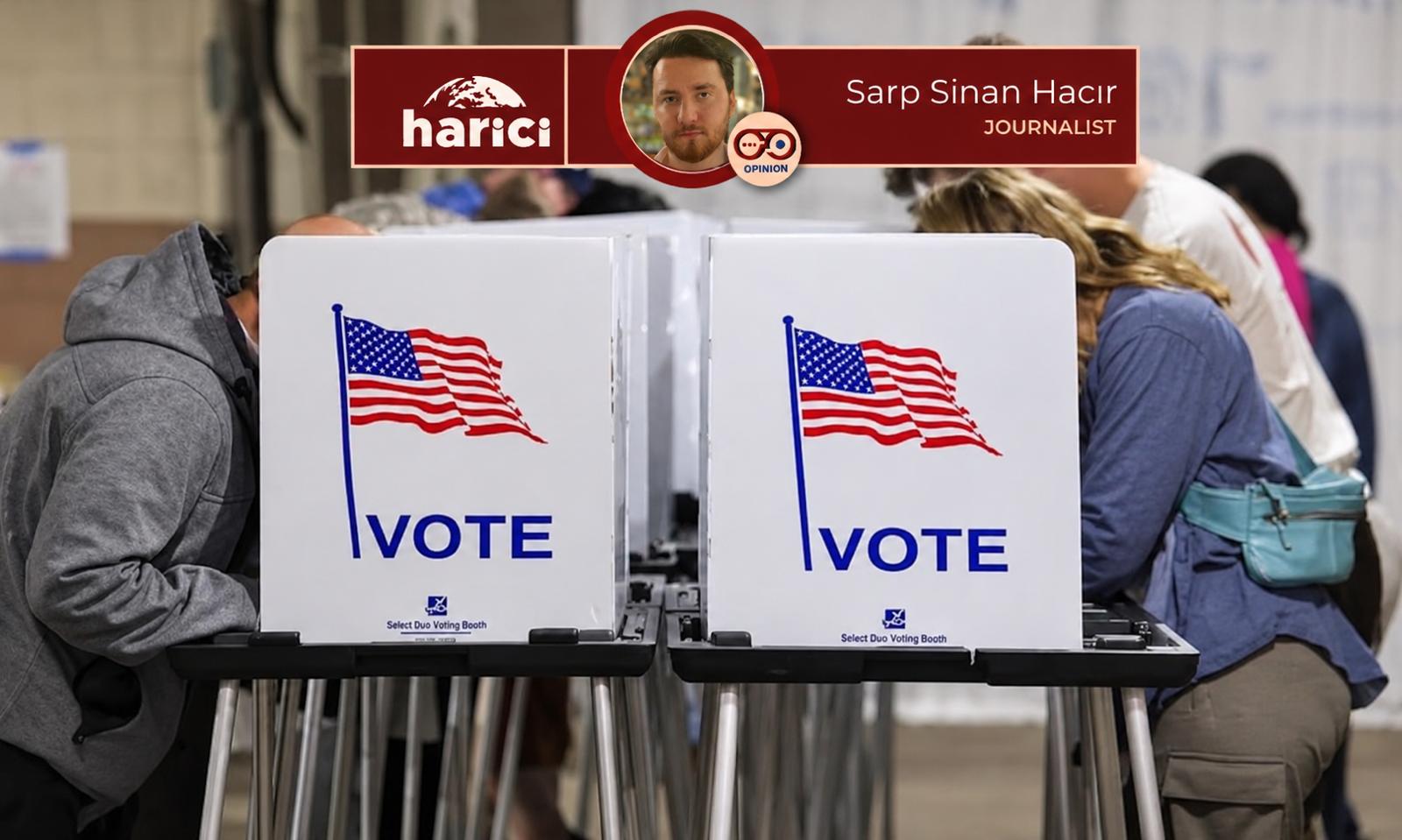
The US is heading to the midterms under the shadow of the Iran War. While the American media debates whether Trump will use nuclear weapons against Iran after the midterm elections, a more realistic tension looms over Mar-a-Lago: a blue wave.
If the Trump administration can wrap up the night having surrendered only the House of Representatives, I am certain Trump will frame this as a victory. In part, one might even say it would be. Amidst so much public discontent—economic troubles, oil and electricity prices, broken promises regarding wars—nobody could plausibly claim Trump had lost if he emerged from battle carrying the Senate on his back. In any case, it is hardly unusual for the governing party to forfeit one chamber of Congress in a midterm election.
Although expectations long pointed to the Senate either remaining red or coming down to a razor-thin outcome, the situation has turned even bleaker for the Trump administration over the past month. According to polls, Democrats are leading in every single neck-and-neck state in the Senate race.
Let me lay out the arithmetic:
Presently, Republicans hold a 53-to-47 majority in the Senate. If the Democrats pick up three states tonight without losing any of their own, they reach a 50-50 tie, which can be broken by the vice president’s vote. Consequently, the Democrats must flip four states blue. For this cycle, Alaska, Kansas, Iowa, Maine, Ohio, Texas, Michigan, and North Carolina can be considered the battleground states. Contests in Iowa and Kansas are particularly likely to be fierce. It is worth noting that Texas has not elected a Democratic senator since 1988, and Kansas has not done so since 1932.
Will the polls be wrong?
The accuracy of polling varies considerably from cycle to cycle in the US. In the 2024 elections, for instance, the forecasts proved roughly accurate. Even in 2024, however, Republican support was slightly understated in the final count. One should not automatically ascribe this to malice. While Republicans are generally strong in rural areas, urban Republicans often prefer to conceal their leanings in liberal settings. This complicates the work of pollsters.
It remains possible that the surveys are overly optimistic on behalf of Democrats. Nonetheless, the absence of Trump’s name on the midterm ballot demobilizes the Republican base. When the expected “red wave” failed to materialize in the 2022 midterms, it was claimed that Trump had lost his aura, prompting a search for new leadership. Tonight, too, Republican turnout may fall short of projections.
The road to 2028
Beyond determining the composition of Congress, this election carries another critical function: it will chart the course to 2028 for both parties. Although the Democratic Party has begun to attract interest due to Trump’s missteps, it faces formidable internal struggles, marked by both a leadership deficit and an ideological vacuum.
Following the 2024 debacle, as resentment swelled against centrist Democrats like Chuck Schumer, Kamala Harris, and the Clintons, a new current emerged on the progressive left. Spearheaded first by New York Mayor Zohran Mamdani and subsequently by Michigan Senate candidate Abdul El-Sayed, this 2026-model leftist movement dwells less on identity politics than its predecessor, striking Republicans directly at their points of vulnerability: the economy and Israel.
These two battlegrounds are the decisive factors in the 2026 midterms. Americans heading to the ballot box are squeezed by an electricity bill crisis stemming from the massive power consumption of expanding data centres following the AI boom, alongside oil prices driven by the Iran War and diesel costs tied to the Russia-Ukraine War.
In the first Trump term, an economy that performed well in its early years was derailed by the pandemic, costing him re-election. Now, however, Trump is being held accountable not for crises that developed outside his control, but for his own failures. He initiated the Iran War himself. He failed to honour his pledge to deliver peace regarding Ukraine.
El-Sayed and progressive leftists went before the public with promises to combat the cost of living and halt support for Israel, a message that resonated across the wider electorate. Yet, as in every election, what truly matters are the independents in the battleground states.
The Israel question
The Democratic Party’s mainstream establishment is uneasy with the party drifting away from Israel. Chuck Schumer, who could be regarded as the party’s leader, once even remarked, “my job is to keep the left with Israel.”
Yet centrist Democrats are currently avoiding an open confrontation with progressive leftists in light of their own recent failures. The pressure and dismissive conduct once directed at Bernie Sanders no longer seem tolerable to the party’s rank and file.
Dissenting voices persist, of course. For instance, Democratic Representative Haley Stevens of Michigan could not contain herself just days before the vote: not only did she withdraw her endorsement from El-Sayed, but she also crossed the aisle to back his Republican opponent, Mike Rogers!
Stevens faced fierce condemnation within her party, explaining her decision by claiming that “Sayed did not involve her in the campaign.” Those close to Stevens even suggested that she was pressured by her fiancé, who is Jewish, though she is not.
Radical Zionists like Stevens and Pennsylvania Senator John Fetterman are attempting to hold the line against internal party transformation.
Another major consequence of this election will be the fate of this new progressive leftist current, also characterized as “Woke 2.0.” El-Sayed is attempting to defend an already Democratic-held seat, and he looks strong in the polls. Should an upset occur and he loses, Democratic hopes of securing the Senate would require a miracle, and the progressive momentum inside the party could evaporate overnight. Ultimately, with El-Sayed, this new progressive left faces its first true test outside major metropolitan centres.
Rubio waits in the wings
This election holds significant stakes for the quiet rivalry playing out within Trump’s cabinet. If Republicans suffer a devastating defeat, Marco Rubio and JD Vance, both jockeying for the 2028 presidential nomination, may find their ambitions dampened. Entering an election weighed down by the record of an administration widely judged a failure would carry severe risks. That dynamic brought defeat to Kamala Harris, who bore the burden of Joe Biden’s missteps. Rubio is a politician who avoids unwinnable contests; because he remains well regarded by the establishment, he can afford to bide his time.
JD Vance, on the other hand, made a sudden ascent through the ranks straight to the vice presidency. While he enjoys support from Peter Thiel and his circle, his backing among the party’s senior leadership is far thinner. Because he is vice president, convention dictates that the broader party will defer to his candidacy. For that reason, 2028 remains Vance’s best opportunity despite everything.
Lame duck
In summary, while the situation heading into the midterms looks grim for Republicans, it is hardly bright for Democrats. A persistent lethargy has hung over them since 2024. They produce few compelling arguments, scarcely raising their voices against Trump as they once did. The rift between the centrist establishment and the progressive left may well generate more friction than the turmoil among Republicans. Trump exploited this fault line throughout his campaign. Conservative media and politicians did not hesitate to target El-Sayed over his Muslim faith and his ties to the controversial Turkish streamer Hasan Piker.
Should Trump truly suffer a rout tonight, the incoming Congress seated in January will curtail his room for manoeuvre on international matters. It is still too early to predict the course of the Iran War, as the political landscape that emerges in both Israel and the US will exert a direct influence on its trajectory.
Ultimately, the fate of the war also hinges on the blue wave that may crash ashore in Florida tonight.
The European Union (EU) has reportedly reacted against the agreement reached between US President Donald Trump and Russian President Vladimir Putin, which temporarily lifts US sanctions on Russian diesel. While Kaja Kallas, the EU High Representative for Foreign Affairs and Security Policy, demanded that pressure on Russia be intensified to end the war, the foreign ministers of EU member states stated that sanctions targeting Moscow would continue despite the US decision.
While this report is striking for laying bare the ignorance of those governing the EU, it also demonstrates that, contrary to European perceptions, the US does not view the EU as an ally and does not care about its sensitivities. Clearly, priorities, goals, concerns, definitions of threats, and threat perceptions between the two sides of the Atlantic are starkly different.
What those who govern Europe fail to understand is this: neither is the US the old US, nor is Europe the old Europe, nor is the world the old world. Sadly, the EU’s rulers are blind to this plain truth. Clearly, the ignorance that is so deeply organized and institutionalized in academia, politics, and the bureaucracy in our own country is widespread in Europe as well.
Those who rule Europe need to be reminded of the words of my late, revered master, Attila Ilhan: “If only you had known a little political economy.”
At international summits and in bilateral meetings, European leaders unashamedly applaud US President Trump even as he insults them to their faces.
Yet this is not the first time in history that the US has scolded Europe; it has done so before. It was none other than the US that drove Europe from the American continent, declared “America for the Americans” (the Monroe Doctrine), and defined Latin America as its backyard. Indeed, they were the first to introduce the term “backyard” into political science. They maintained that there was no room for any other state in their backyard. Under the Monroe Doctrine, no European power, including Spain, had any place anywhere in Latin America. Only the US was to call the tune across the continent. And for long years, with the exception of Cuba, that was precisely the case.
The dictators, the presidents, the prime ministers, the chiefs of the general staff, and the senior bureaucrats were all appointed by the US. Coups, political assassinations, and conspiracies were executed or orchestrated by the US. To that end, a school was even established in the US in 1946 for their training: The School of the Americas.
The political influence of the US in the region opened the wealth of regional countries – be it oil, coffee, gold, or sugar – to plunder by US corporations. In the end, the peoples of Latin America were reduced to impoverished watchmen over bountiful resources. They were ruthlessly exploited by politicians elected by themselves, yet working for and on behalf of the US. For that reason, the US could never stomach the changing political climate in Latin America, nor could it accept losing in Venezuela, Bolivia, Ecuador, Nicaragua, Paraguay, El Salvador, Guatemala, or Honduras. It feared the influence of Hugo Chavez’s line across the countries of the region. It viewed China’s growing weight, trade volume, and investments in the region as a threat.
Because Europe’s current leaders view the US as an unshakeable ally, they fail to grasp what the US has done, including its actions in Latin America, and how the US actually views its own hemisphere, the world, and Europe. What is more, they are afraid. And because they are afraid, they cannot respond to the humiliating remarks about Europe made by Trump and his close associates, or to their contempt for Europe’s history, values, culture, and political understanding. They dread finding themselves in the predicament that Ukrainian leader Zelensky faced at the White House a few years ago.
Those who govern Europe do not know this: no one respects those who lack self-respect, and a leader as insolent, arrogant, egotistical, and untrustworthy as Trump will have no respect for them at all.
Opinion
Energy and electoral politics in Gagauzia: the promise of Russian gas through Türkiye’s image

Dr. Violeta Stratan İlbasmış, lecturer
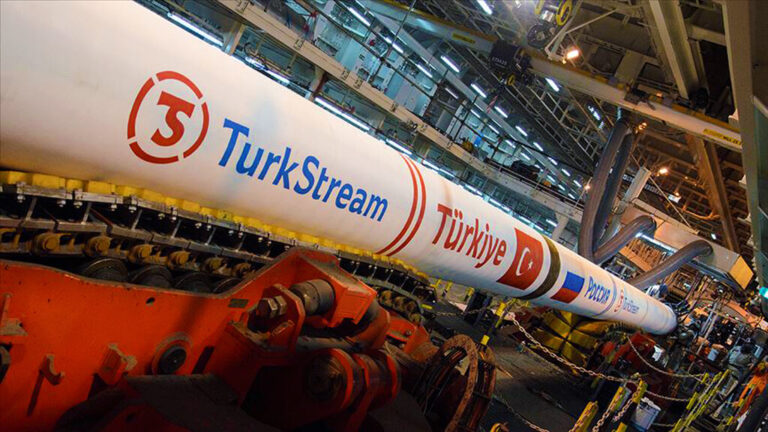
A few weeks before the presidential election scheduled for 15 November 2026 in Gagauzia, the promise of cheap natural gas is returning to the region’s political discourse. This time, the message in question is being linked to Türkiye, the TurkStream natural gas pipeline, and the possibility of procuring gas under more favourable terms. Beyond an economic pledge, this initiative raises a geopolitical question: How can Türkiye’s image be used to bolster Russia’s interests in the Republic of Moldova?
An electoral promise with geopolitical dimensions
Fiodor Gagauz, the candidate for the presidency of Gagauzia supported by the Socialist Party, announced on 21 October that he had been invited to the Verona Eurasian Economic Forum held in Istanbul on 22–23 October 2026. According to his statement, his son Dmitri Gagauz was to attend the event and discuss with Turkish partners the possibility of allocating a quota for supplying natural gas to Gagauzia under more advantageous conditions via the TurkStream pipeline.
This initiative comes at a time when Igor Dodon, leader of the Socialist Party and former president of the Republic of Moldova, announced that the socialists had reached an agreement with Russia regarding cheaper natural gas, and that a company was being sought to transport the gas to the border of the Republic of Moldova. To date, however, public statements lack sufficient detail regarding a concrete contract, the final price of the gas, transport costs, or actual delivery terms.
Türkiye: an image capable of lending credibility to Russian gas
Türkiye is a major regional actor and an economic partner to many countries, including the Republic of Moldova. It also plays a strategic role in the transit of Russian gas across the Black Sea via the TurkStream pipeline. This standing provides a concrete and credible basis for discussions concerning energy routes. In political communications, however, Türkiye’s image can serve a purpose extending well beyond the mere promotion of a transit route.
Associating the promise of cheap Russian gas with Türkiye can make the initiative more persuasive to the public: Russia is presented as the supplier of an affordable resource, and Türkiye as the regional partner capable of facilitating access to it. Thus, the image of a state with multifaceted economic and diplomatic ties can contribute to legitimizing a political message that ultimately promotes reliance on Russian gas.
From a geopolitical perspective, Russia seeks to maintain its influence in the Republic of Moldova and keep alive the notion that dependency on Russian energy sources can yield economic benefits. Particularly in a region where the cost of living and energy expenditures represent major concerns, promises of lower prices can feed this narrative. It should be noted here that citizens of the Republic of Moldova pay 26 Moldovan lei per cubic metre of natural gas, or roughly 1.30 euros.
The impact of the message can be examined independently of the actors’ intentions: Türkiye’s image can be utilized for political ends to make an offer involving Russian gas appear more credible and to serve Moscow’s geopolitical interests.
A relevant precedent: the promise of 10-leu natural gas
The issue of cheap natural gas is not being deployed in Gagauzia’s political arena for the first time. Supported by the fugitive politician Ilan Șor, who was sentenced to 15 years in prison in a finalized ruling concerning the Republic of Moldova’s bank fraud case, Evghenia Guțul pledged in 2023 to provide natural gas at a price of 10 lei per cubic metre. That offer was tied to the local company “NordGaz-Furnizare” and a chain of intermediaries, including the Türkiye-based Zen Solar Enerji. Investigative journalism published at the time raised questions regarding the supply model’s structure and feasibility. Ultimately, the promise did not materialize for consumers under the announced terms and within the stated timeframe.
This precedent demonstrates how potent the issue of cheap natural gas can be as an electoral tool, and how the names of foreign companies or partners can help generate a perception of reliability around an offer. Nevertheless, the involvement of a Turkish company in an earlier supply model does not, on its own, prove the involvement of the Turkish state or the existence of coordination orchestrated by Russia.
Beyond the price: who gains politically?
As the 15 November election approaches, the promise of cheap natural gas can operate on two levels simultaneously. On the economic plane, it offers voters the prospect of lower utility bills. On the political plane, it can reinforce the idea that the solution to the region’s difficulties must be sought in energy ties with Russia and in the partnerships that make this option appear viable.
The mention of Türkiye introduces a significant dimension to this message. Rather than being framed solely as an initiative tied to Russian gas, the proposal is linked to an influential regional power and an existing energy route. Türkiye’s image can thus play a role in legitimizing a pledge that serves the discourse advocating for the preservation of energy ties with Moscow.
Even so, the existence of the TurkStream pipeline does not automatically mean that Gagauzia can access natural gas at a preferential rate. Such an offer requires contracts, suppliers, transport capacity, compliance with the regulatory framework, and transparency regarding the final cost. Until verifiable documentation and explicit supply terms are put forward, this pledge remains an electoral promise.
The essential issue is not merely whether Gagauzia will receive cheaper natural gas, but how this promise is framed. When Türkiye’s image is paired with Russian gas to enhance the credibility of an electoral offer, the potential gains may extend well beyond the economic realm and help advance Russia’s geopolitical interests in the Republic of Moldova.

“Blue wave” fears at Mar-a-Lago: What will the midterms bring for the US?

What are Europe’s ignorant leaders failing to see?

Protesters storm Kyiv site holding soldiers over torture allegations

Right-wing calls to ban left parties and groups mount in Europe

Low EU gas stocks risk stoking global prices, IEA report warns
-

 America2 weeks ago
US wealthy demolish multimillion-dollar mansions for land
-

 Middle East2 weeks ago
Netanyahu unveils security doctrine and regional alliance map
-
 America2 weeks ago
At least 47 major US data centre projects halted or cancelled
-

 Europe2 weeks ago
EU rejects US proposal to resume Russian gas flows through Ukraine
-

 Diplomacy1 day ago
Secular dress code dispute exposes deeper Türkiye-Azerbaijan strains
-
 Middle East2 weeks ago
Netanyahu trails Eisenkot in Israeli polls despite Trump backing
-

 Europe1 week ago
Merz visits Asia to seek new markets for German defence firms
-

 Russia6 days ago
US and Russia weigh energy deals and corporate return in peace talks
