
Europe
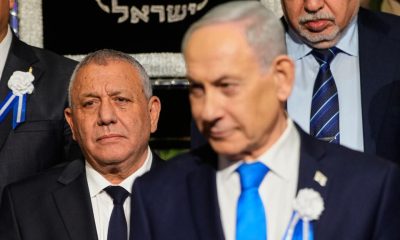
Left Party expels Berlin lawmaker Vanessa Emde from caucus

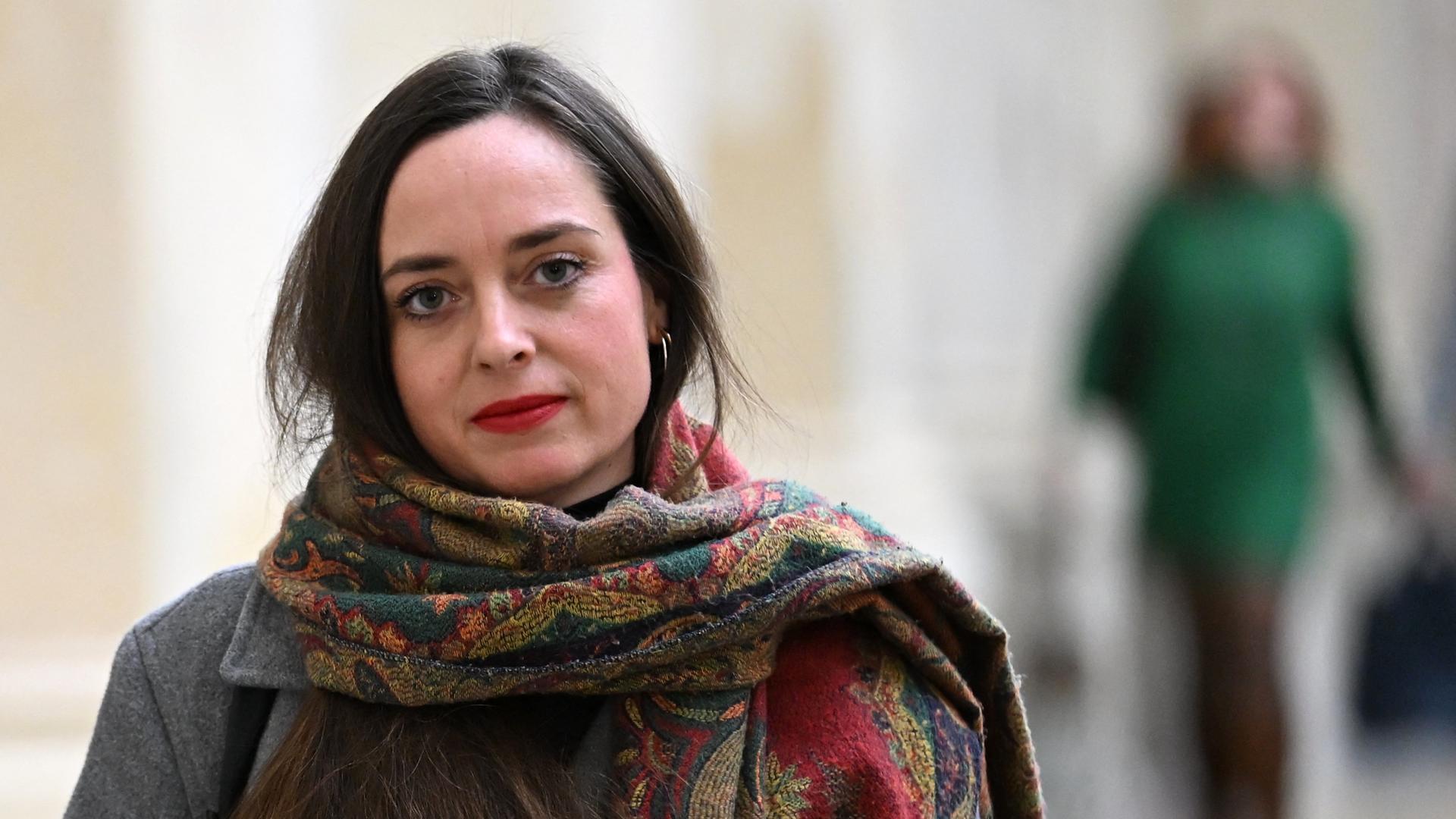
Vanessa Emde, a member of the Berlin House of Representatives for the Left Party, has been expelled from the party’s parliamentary group.
According to a statement from the Left Party, the required majority voted in favour of the motion submitted by group leadership, with 44 votes to 33.
The motion argued that Emde showed no willingness to find common ground for cooperation and cited a “loss of trust”.
The Emde dispute had for weeks held up the formation of a coalition government in Berlin among the Left Party, the Greens, and the SPD.
At the centre of the debate are Emde’s stance on the Middle East conflict and allegations of antisemitism based on claims that she questioned Israel’s right to exist.
The SPD had made Emde’s expulsion from the parliamentary group a precondition for forming a “red-green-red” coalition.
Emde criticised the decision, calling it a turning point for the Left Party. She said the parliamentary group had clearly caved in under pressure from the SPD, the Greens, and a “media smear campaign”.
Berlin SPD state leaders Krach and König welcomed the expulsion decision, saying it was good that the Left Party had now provided clarity.
Graf, leader of the Berlin Greens’ parliamentary group, expressed a similar view.
Schuster, president of the Central Council of Jews in Germany, said this was only a first step.
According to him, the coalition of the Left Party, the Greens, and the SPD must now show that it is willing to combat antisemitism effectively.
The leadership of the parliamentary group had submitted the motion to expel the 45-year-old member a week earlier.
Following the House of Representatives election, she, like all other Left Party representatives, had signed the parliamentary group declaration on “antisemitism and the protection of Jewish life”, but shortly afterwards distanced herself publicly from the statement.
On the sidelines of the Left Party congress held on 31 October, instead of attending the congress as a delegate, she organised a protest against the line pursued by the party leadership.
Emde rejected a demand from the party leadership to resign her parliamentary seat about two weeks ago.
The Left Party won the state parliament election on 20 September, and Emde was elected to the state parliament for the first time.
Setting a record by winning directly as a constituency representative in Neukölln with 46.2% of the first-preference votes, Emde had primarily focused on solidarity with Palestinians during the election campaign.
Consequently, Emde will continue to receive 8,161 euros a month as a member of the House of Representatives and will retain the ability to submit parliamentary questions to the Senate and to speak in plenary sessions, at least to a limited extent.
In an interview with t-online, Left Party Co-Chair Ines Schwerdtner argued that the Berlin Left Party had tried every route, adding that she herself had wanted to speak with Emde at the state party congress on 31 October, but that Emde chose to protest outside the door rather than enter the hall: “At this point we, as the party, have to say: We do not need these kinds of ego-driven shows.”
Maintaining that they do not share the recently frequent criticism describing Emde’s stance on Palestine as “antisemitic”, Schwerdtner said the real issue in the expulsion process was “how she behaved”:
“Her constant provocations, refusal to cooperate, and boundary-crossing behaviour undermine our objective of showing solidarity with Palestine and condemning human rights violations. And that is politically stupid behaviour.”









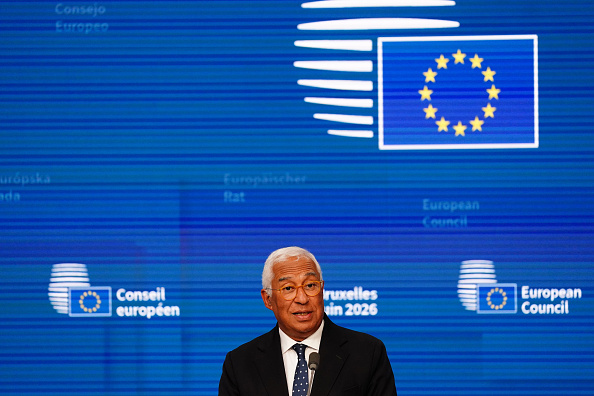
The budget compromise put forward by European Council President António Costa is smaller than the EU’s current long-term budget as a share of the bloc’s economy.
According to a European Commission document obtained by Rapporteur, the European Council president’s “negotiating box” announced on Saturday amounts to just 0.97% of EU gross domestic product (GDP), excluding pandemic-era debt repayments scheduled to begin in 2028.
These figures could help some governments sell the budget deal by arguing that their national contributions to Brussels are actually shrinking, particularly given that proposed new revenue streams would cover part of the EU’s debt repayments.
Conversely, capitals demanding a larger budget could use the data to push back against further reductions.
The EU’s current multiannual financial framework (MFF) stands at 0.98%, according to the EU executive’s latest economic forecast published last week.
Taking into account recent spikes in inflation triggered by the US-Israeli war against Iran, the new GDP figure sits below the 1.13% level recorded when the 2021-2027 budget was adopted.
This decline stems from rising energy costs and general inflation triggered by the war in Ukraine, which began in 2022, and more recently by the war in the Middle East, exceeding the 2% “deflator” rate fixed by the Commission in recent years.
Brussels uses the deflator to adjust the size of the MFF in line with expected price increases.
This means that if real inflation surpasses 2%, the budget shrinks in real terms.
According to the Commission’s latest projections, average inflation in the EU will rise to 3.3% this year before easing to 3.2% in 2027.
The updated figures come as wrangling among capitals over the budget reaches a climax.
Costa has stepped up pressure to secure an agreement before Christmas, convening leaders for an additional two-day summit in Brussels on Thursday and Friday.
The numbers also emerge amid calls from net recipient countries, predominantly in the EU’s south and east, to raise the size of the budget in order to step up spending on new priorities such as defence and competitiveness.
This push faces fierce resistance from several “frugal” member states led by Germany, which are demanding even deeper cuts than Costa has proposed.
Costa had stated that his proposed €204 billion reduction, which largely targets the EU’s new “Competitiveness Fund” rather than traditional budget areas such as agriculture and regional spending, represents a 10% cut compared with the Commission’s proposal when measured in current prices.
In proportional terms, however, the cuts appear even larger. Excluding pandemic-related debt repayments, the Commission’s proposal was equivalent to 1.15% of GDP when unveiled in July last year.
Since then, inflation has eroded the original proposal’s footprint to 1.09%, while Costa’s compromise entails an additional reduction equivalent to 0.12% of GDP.
Nevertheless, Costa’s “negotiating box” seeks to partially offset the impact of inflation on the budget’s scale by adjusting the deflator upward if inflation averages more than 3% over a three-year period.
This was a step proposed by neither Ireland nor Cyprus during their respective EU presidencies earlier this year.
Specifically, Costa had requested that if inflation exceeds 3%, the deflator rate should be adjusted upward by 50% of the difference between the three-year average inflation rate and the 2% reference rate.
However, he also proposed an equivalent reduction if inflation drops below 1%.
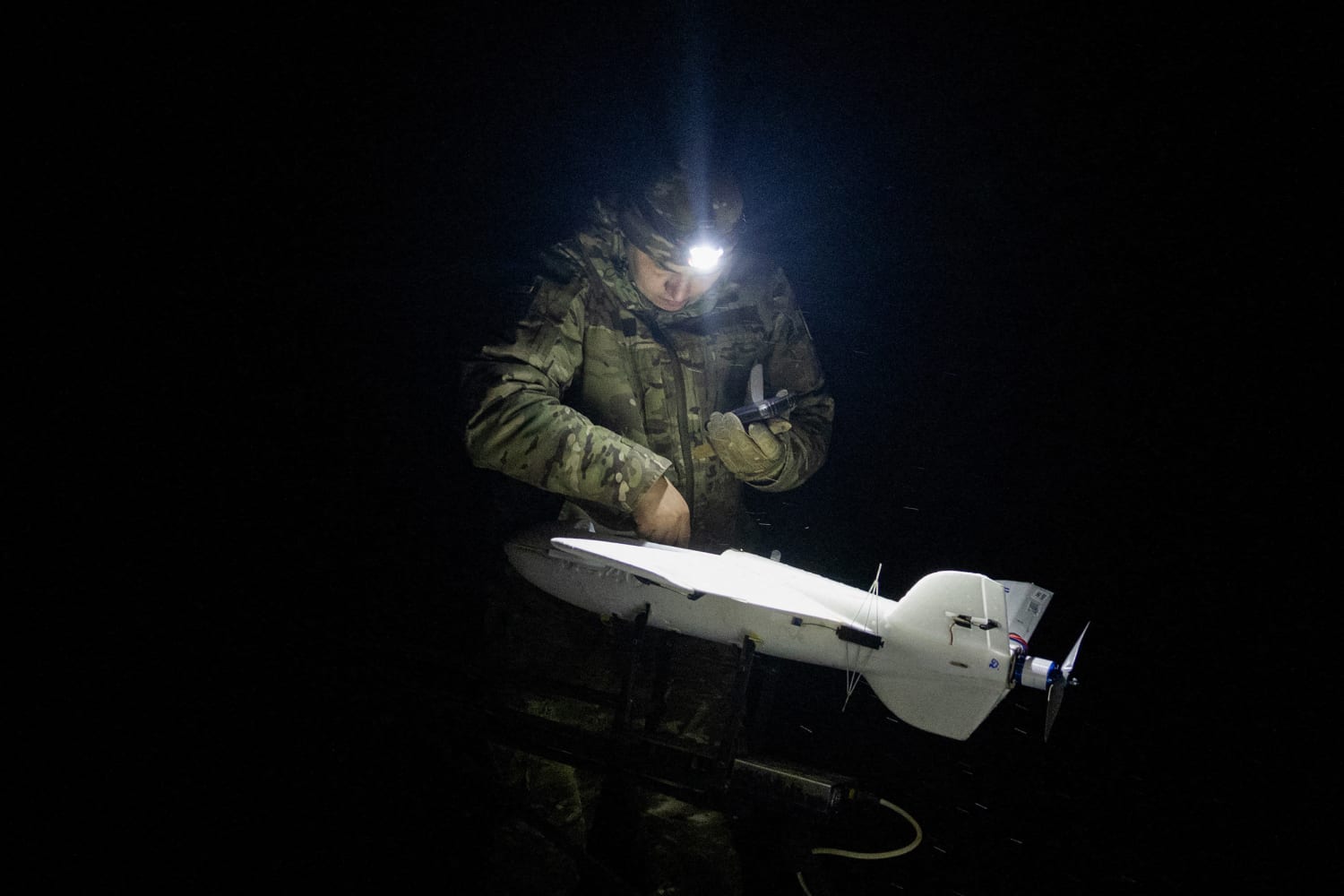
The UK government has warned companies supplying products to the Ukrainian Armed Forces against the risk of attacks.
According to a UK government statement, ministers and intelligence officials are holding closed briefings for executives from defence industry firms and critical national infrastructure organisations.
These closed-door meetings aim to bolster the protection of employees, technologies, and supply chains, while offering advice to companies on countering threats.
The briefings are attended by Minister for the Armed Forces Louise Sandher-Jones, Security Minister Dan Jarvis, and representatives from the intelligence services.
The decision to issue the warning is based on a notification from the National Protective Security Authority (NPSA), part of the UK domestic intelligence agency MI5, stating that British organisations supplying products to the Ukrainian military face various risks.
The authorities are advising firms to reduce digital vulnerabilities, improve the detection of hostile intelligence attempts, and step up the protection of critical facilities.
European Union (EU) member states periodically accuse Russia of conducting hybrid operations across European territory, such as cyberattacks, sabotage, airspace violations using unmanned aerial vehicles (UAVs), and damage to undersea cables.
The Moscow administration denies these allegations.
Responding in early November to European politicians’ statements regarding Russia-originated hybrid threats, Russian Security Council Secretary Sergey Shoygu said, “God forbid you should see the day when Russia unleashes hybrid warfare against you.”
Russian officials have also repeatedly stated that the country poses no military danger to EU countries.
Russian President Vladimir Putin previously described remarks by Western politicians suggesting Moscow could attack NATO countries as “sheer nonsense”.
Russian Foreign Minister Sergey Lavrov, meanwhile, said they would give a “full-scale military response” should Europe launch an attack.
Russian Defence Ministry published list of UAV manufacturers
In April, the Russian Defence Ministry published a list of enterprises across several countries that it reported were manufacturing UAVs and components for Ukraine.
At the time, the ministry argued that ramping up UAV production and shipments to Ukraine risked “a sharp escalation of the military and political situation across the entire European continent”.
Dmitry Medvedev, Deputy Chairman of the Russian Security Council, also characterised the published list as potential targets for the Russian armed forces.
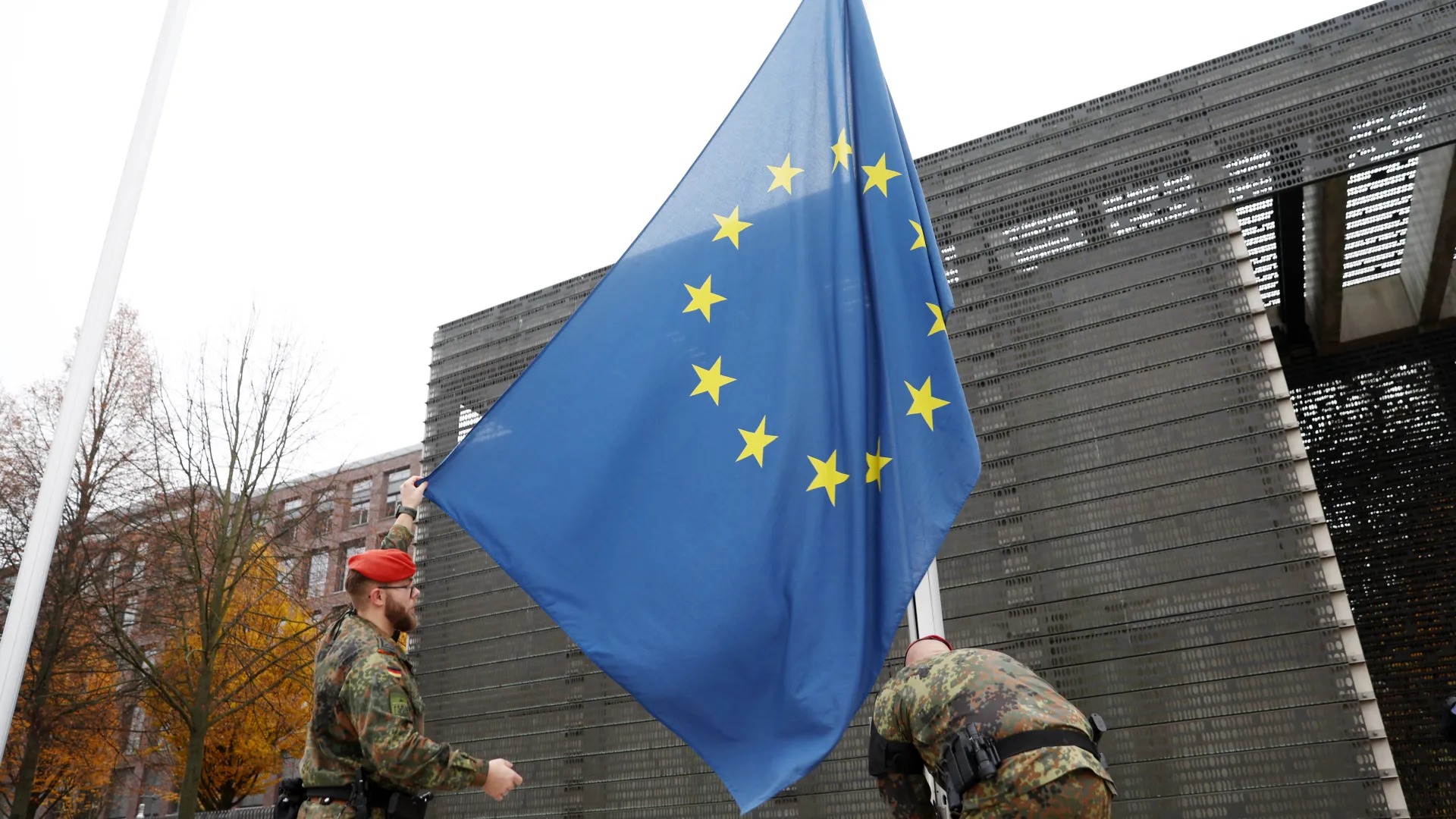
Politico has assessed five potential scenarios for reshaping Europe’s security architecture, alongside the feasibility of each option.
While the US and Russia are encouraging European states to review the continent’s security framework, European officials have set out their red lines for negotiations.
Citing former and current European officials, experts and NATO diplomats, the report states that Europe opposes holding talks without European participation, making unilateral decisions on Ukraine’s NATO membership, or concluding new agreements before the conflict in Ukraine ends.
The five scenarios outlined by Politico are expanding the role of the Organization for Security and Co-operation in Europe (OSCE), reviving the NATO-Russia Council, signing a new security treaty, establishing a new format for relations between the European Union (EU) and Russia, and leaving the existing structure unchanged.
Sources quoted in the report view maintaining the status quo as the most likely of the five options.
Expanding the OSCE’s role
The first scenario envisages expanding the functions of the OSCE, one of the few European security bodies of which Russia remains a member.
Speaking to Politico, OSCE Secretary General Feridun Sinirlioğlu said full use should be made of the platform to sustain dialogue, restore transparency, reduce risks and manage tensions.
Sinirlioğlu noted that the OSCE remains the core forum for rebuilding a more stable and predictable security architecture in Europe.
However, Sven Biscop, director of the Europe in the World Programme at the Egmont Institute, pointed to weaknesses in this option, citing the 57-member body’s unwieldy size and its consensus-based decision-making requirement.
Under the provisions of the Vienna Document, OSCE participating states are required to notify other members at least 42 days in advance of military activities involving 9,000 or more troops.
Debate over the NATO-Russia Council
The second scenario, reviving the NATO-Russia Council, is backed by US presidential son-in-law and negotiator Jared Kushner.
Speaking at a press conference following a meeting of the “coalition of the willing”, Kushner said: “We already have an infrastructure in Europe like the NATO-Russia Council that we could activate. I think it will be important in terms of generating decisions.”
NATO Secretary General Mark Rutte previously declared the format “dead”, referring to a council that last met a month before military action began in Ukraine.
A NATO diplomat and an alliance official said a channel of communication with Russia’s military leadership remains open, though the line is rarely used.
Two NATO diplomats believe reactivating the council after a peace agreement is signed could help prevent an escalation of tensions.
Established in 2002 as a mechanism for consultation and cooperation, the NATO-Russia Council aimed to forge common positions on core issues and, over the long term, elevate relations to a higher level with the potential for full membership.
The council has not convened since February 2022. Russian Foreign Minister Sergey Lavrov previously attributed the effective halt in dialogue in 2019 to NATO prioritizing the “Ukraine issue” and Russia’s refusal to discuss the subject within that format.
Deputy Chairman of Russia’s Security Council Dmitry Medvedev argued late last year that NATO had made the right decision in dismantling the council, saying, “NATO is our enemy. What council can we even talk about?” and quoting writer Maxim Gorky’s line: “If the enemy does not surrender, he is destroyed.”
Proposals for a new security treaty and bilateral pacts
The third scenario, a comprehensive European security treaty, is expected to face the fiercest resistance from Ukraine’s allies.
Biscop said a new treaty would allow current dynamics to be taken into account, including Finland and Sweden’s NATO membership, Ukraine’s goal of joining the EU, and emerging military risks linked to artificial intelligence.
“The geopolitical environment has changed. Therefore, you cannot simply pick up where you left off; you have to renegotiate,” Biscop said.
Amid prevailing concern in Europe that such an agreement would grant Russia excessive sway over the continent’s security architecture, German Foreign Minister Johann Wadephul said last week: “There is no reason to question existing alliances. We will not discuss such issues.”
Russia’s proposal to conclude separate agreements with individual NATO countries is viewed in Europe as even more unacceptable.
Speaking at the International Forum on Ensuring Collective Security in November, Alexey Drobinin, director of the Russian Foreign Ministry’s Foreign Policy Planning Department, suggested that NATO members could agree on bilateral security guarantees with Russia.
Drobinin said such arrangements could take the form of mutual non-aggression pacts, evolve into de facto defence alliances modelled on the Collective Security Treaty Organization or Russia’s treaties with Belarus and North Korea, or consist of political understandings in which neither side supports the other’s rivals in the event of an attack.
A NATO diplomat described the proposal as “completely unacceptable”, saying the option would give Moscow an opportunity to sow division among allies.
Conversely, Moscow rejects a US proposal to offer Ukraine NATO-style security guarantees.
Russian Deputy Foreign Minister Sergey Ryabkov said: “Finding a formula akin to semi-membership in NATO for Kyiv and seeking a creative solution in this area is an unacceptable option for us.”
A new EU format and preserving the status quo
Regarding the fourth scenario, creating a new format for EU-Russia relations, an EU diplomat noted that the bloc’s powers over trade, sanctions, visas and borders provide leverage and flexibility against Moscow in the postwar period, though its authority in security matters remains limited.
“As long as this format is perceived as replacing Europe’s existing security architecture, it cannot hold. It must be presented as a complement to the existing architecture,” the diplomat said.
Brussels insists that substantive discussions on the European security system can begin only after a ceasefire is achieved in Ukraine.
The fifth option, identified as the most likely scenario, is making no changes to the existing structure.
Noting that there is only one EU and one NATO, neither of which Russia can join, Biscop said: “Geopolitically, this means Russia is now Europe’s neighbour. We will never build a security architecture that allows us to make joint decisions.”
“This is not the best scenario, and the situation will be highly unstable,” Biscop added. “However, given Russia’s unrealistic demands, things are likely to end up precisely at this point.”

US sidelines commercial incentives for Russia in Ukraine peace talks

Huang’s Nvidia return brings Gulf states temporary relief on AI chips

Left Party expels Berlin lawmaker Vanessa Emde from caucus

Costa proposes major cut to EU budget below current spending share

UK briefs Ukraine defence suppliers on potential attack risks
-

 Opinion1 week ago
APEC Summit: How China Uses the Art of “Emotional Value” to Deal with Trump
-
 Middle East2 weeks ago
Journalist Dursunoğlu warns Iran removed missile limits as Gulf risks widen
-
 America2 weeks ago
Absent Democrats derail floor vote on Pete Hegseth impeachment
-
 Europe2 weeks ago
Germany threatens EU budget veto over long-term Ukraine aid
-
 Russia2 weeks ago
Europe ready for arms and missile control talks with Russia, FT says
-
 Russia2 weeks ago
US raises NATO-style guarantees for Kyiv ahead of Abu Dhabi talks
-
 Europe2 weeks ago
Fico accuses Merz of blackmail over threat to veto EU budget
-
 America2 weeks ago
Nvidia board prepares to remove CEO Jensen Huang amid scandal
