
Europe
AfD commits to NATO expansion and eyes trilateral summit with US, Russia

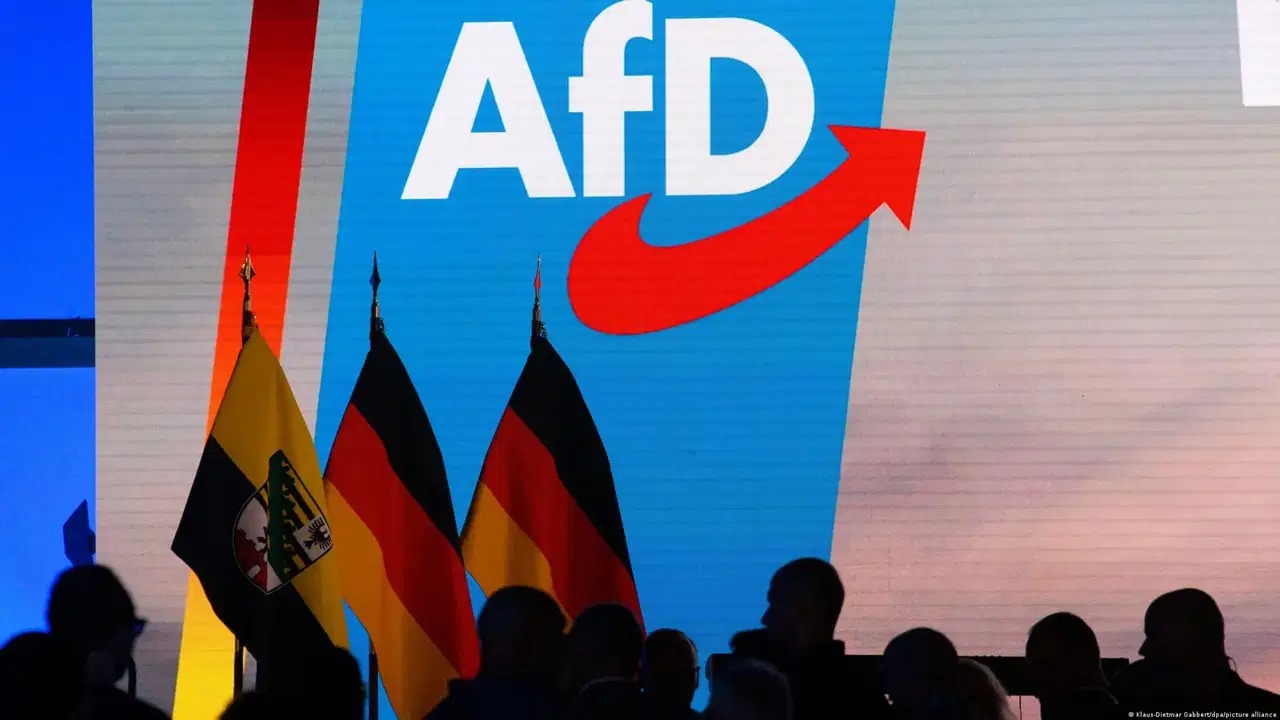
Following a consensus that Germany should remain in the EU, the AfD has now pledged active participation in NATO.
According to a position paper recently published by the leadership of the AfD parliamentary group in the Bundestag, NATO is described as “the strongest military alliance in the world”.
The party aims “to further develop this alliance together with the US and our European partners”.
The US under President Donald Trump is viewed by the AfD parliamentary group as the “most important Western partner”, as foreign policy spokesman Markus Frohnmaier emphasised.
Frohnmaier describes the US intervention in Venezuela as “understandable in terms of realpolitik” and praises the Trump administration for resolutely supporting “the conservative renaissance of the West”.
At the same time, the AfD is pushing for the normalisation of relations with Russia and, in particular, the reactivation of the Nord Stream pipelines, potentially in cooperation with US companies.
All of this is to be raised at a German-American-Russian “summit” in Abu Dhabi this spring; the AfD parliamentary group plans to organise this summit jointly with “special advisers” to the US and Russian presidents.
AfD fully backs US policy on Cuba and Venezuela
In the new position paper on transatlantic relations, the AfD parliamentary group in the Bundestag adopts a fundamentally highly favourable stance towards the policies of the Trump administration.
The AfD states that the White House is pursuing a “conservative Western renaissance” that will end “woke ideology”.
According to the party, this contributes to “preserving Europe as a Western cultural space”.
In addition, Washington’s actions aimed at securing its “global hegemony in the Western Hemisphere”, namely across the Americas, including the US invasion of Venezuela, the blockade of Cuba, and threats against Panama, are deemed legitimate. The paper states: “We welcome this reorientation in US foreign policy.”
According to the AfD, the invasion of Venezuela in particular is “understandable in terms of realpolitik, regardless of how it is assessed under international law”.
Nevertheless, the AfD wants Washington to end its “global interventionist policy” “beyond the Western Hemisphere”.
On the issue of Greenland, which is geographically considered part of the Americas and therefore of the “Western Hemisphere” but is also claimed by the EU, the AfD document states that Berlin should cooperate more closely with Washington and demand access to the island’s natural resources “within the framework of joint ventures”.
Backing for NATO and German remilitarisation
Furthermore, the AfD parliamentary group in the Bundestag explicitly commits itself to NATO in the new paper.
The document states, “NATO is the strongest military alliance in the world,” adding, “together with the US and our European neighbours, we want to further develop it as a defence alliance.”
In this context, as confirmed by Markus Frohnmaier, the foreign policy spokesman for the AfD parliamentary group, the US is described as the “most important Western partner”.
Like many other AfD politicians, Frohnmaier built close ties with the Trump administration over the past year and is currently developing these relations further.
The AfD document explicitly welcomes the withdrawal of US troops from Europe, which Trump has been gradually advancing.
At the same time, it states that it is “imperative to compensate” for this withdrawal “with an increase in the number of German soldiers”.
The AfD had already openly supported the dramatic military expansion required for this purpose in its recently presented European policy strategy paper.
The AfD’s overt support for NATO also comes at a time when the military alliance has initiated a process of “Europeanisation”.
The aim is to systematically increase the share of German and other European soldiers as well as weapons systems. This will expand the control exercised by European powers, and especially Germany, over the alliance.
AfD seeks German access to Ukrainian natural resources
On Monday, Frohnmaier and two other AfD members of the Bundestag presented a “working paper on German-Russian relations and the war in Ukraine”.
According to the document, the war is described as “a tragedy that must be ended as quickly as possible”.
Arguing that the federal government must cut material support to Ukraine to convince Kyiv to enter into serious peace negotiations with Russia, the AfD members urged the government “not to adopt Ukraine’s maximalist positions”.
According to the AfD politicians, Ukraine regaining Crimea, for example, is “entirely unrealistic”.
In addition, the AfD demands that Ukraine “must become a member of neither NATO nor the European Union”.
According to the party, Germany should advocate for “Ukraine to become a neutral state once again”.
Regarding the security guarantees sought by Kyiv, the document states that Germany should not provide them and must on no account deploy troops to Ukrainian territory.
However, the prospect of deploying UN peacekeepers to Ukraine is welcomed. Non-belligerent states, such as India, South Africa, Brazil, and Indonesia, should contribute to securing Ukrainian territory.
In return for the support provided by Berlin, Kyiv should be required to grant access to raw materials such as rare earth elements, other metals, and natural gas.
German-US partnership proposed for Nord Stream
On Russia, the AfD demands a complete policy reversal, including the lifting of all sanctions, the reintegration of Russia into the G7 to recreate the G8, and the resumption of Russian energy imports.
This applies particularly to pipeline gas. Frohnmaier said on Monday, “For us, one of the central goals of German energy sovereignty is that Nord Stream can be recommissioned as part of the system.”
The idea of reopening the Nord Stream pipelines in the long term, and even supplying gas to Europe in the short term via the legacy pipeline network traversing Ukrainian territory, was discussed between Russian and US negotiators in September.
In this context, the Trump administration plans to bring in a US company as an intermediary. Although the official rationale is to circumvent EU sanctions, in reality it is so that revenues from the gas deal can be channelled to the US, potentially to a member of the extended Trump family or an oligarch close to them.
Frohnmaier explicitly backed such an arrangement but is pushing for Germany to secure a larger share of the profits.
The AfD politician explained, for example, that a “German-American operating company” could be established instead of a purely US operating company.
AfD plans Abu Dhabi summit with US and Russia
As the next concrete step, the AfD parliamentary group in the Bundestag wants a “trilateral summit” to be organised with US and Russian representatives.
Frohnmaier said on Monday that the summit could take place in Abu Dhabi, noting that talks could be envisaged “at the level of special advisers”.
On the Russian side, Kirill Dmitriev, head of the Russian wealth fund and Vladimir Putin’s special representative for economic cooperation, has been informed of the plans; Dmitriev is ready to attend the meeting.
Frohnmaier held talks with Dmitriev in early June on the sidelines of the St. Petersburg International Economic Forum (SPIEF).
Dmitriev later shared a photograph with Frohnmaier on X, stating that he looked forward to “building a great future together with the AfD, the most popular party in Germany”.
The Russian representative suggested to Frohnmaier that they “restart the Russia-Germany-US business dialogue”.
Dmitriev is also involved in US-Russia talks on new Russian natural gas exports to the EU or the resumption of operations on the Nord Stream pipelines.
Whether the Trump administration will agree to the Abu Dhabi meeting remains unclear. Frohnmaier indicated that he hopes Dmitriev can persuade Trump to attend.







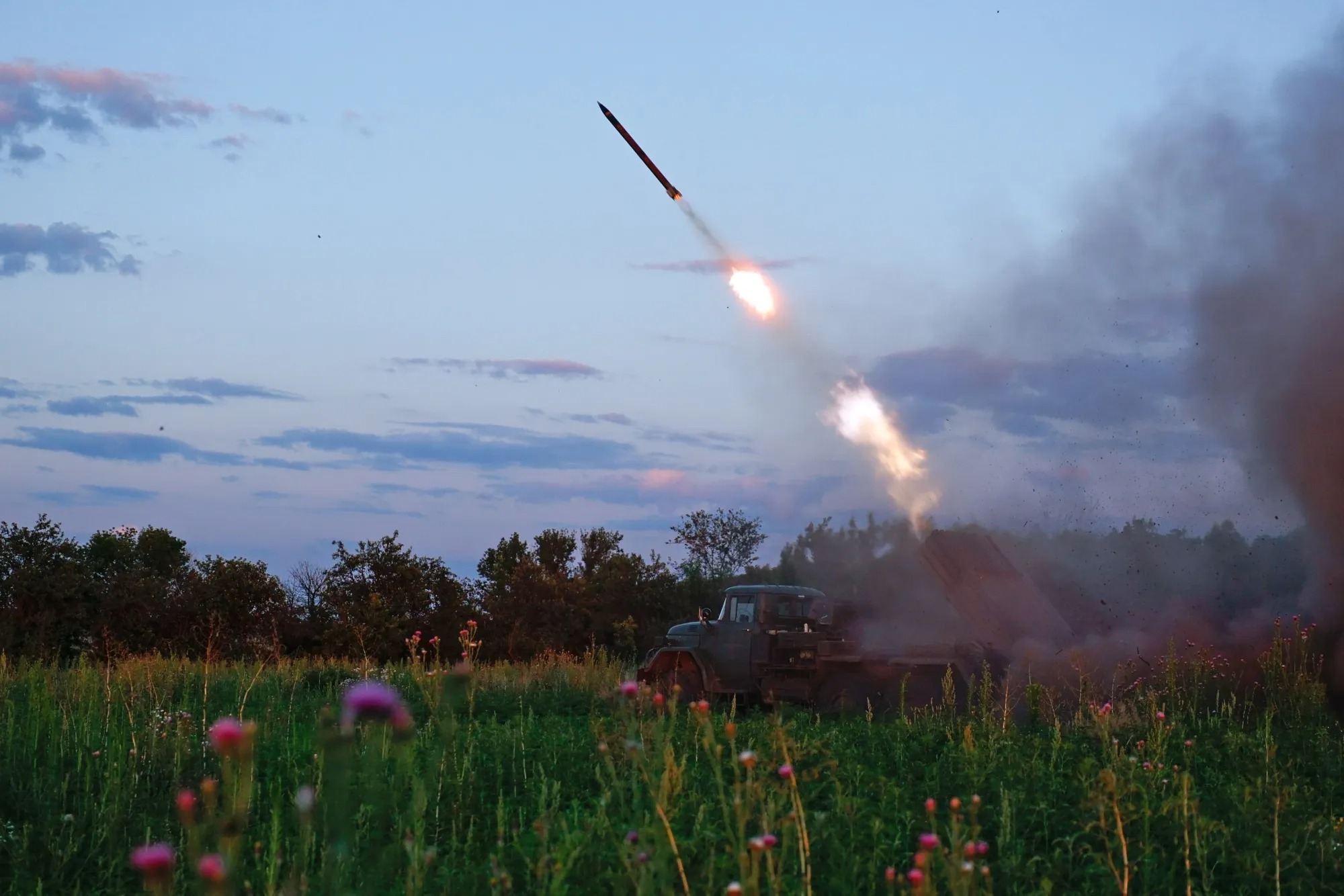
Poland has suggested that NATO allies consider intercepting missiles heading toward alliance territory while they are still in Ukrainian airspace, according to a Bloomberg report citing sources.
The issue was raised during a meeting of NATO ambassadors held in Brussels on 23 November.
Sources said some participants supported the proposal, but no decision was made during the preliminary discussion.
The concrete forces and assets that could be used to intercept the missiles were also not addressed at the meeting.
Bloomberg reported that the idea had caused controversy within the alliance because it carried the risk of exposing allies to the danger of direct conflict with Russia.
The report noted that such a move might require Ukraine to grant the alliance access to its airspace.
Sources pointed out that any potential step would require unanimity among NATO member states, but no such consensus currently exists within the alliance.
The Polish Ministry of National Defence announced on 20 November that two missiles and what was likely a jet-powered unmanned aerial vehicle had crashed in the southeastern part of the country.
Defence Minister Wladyslaw Kosiniak-Kamysz claimed that the fallen ordnance belonged to Russia, though he provided no evidence to support the assertion.
Polish Prime Minister Donald Tusk also maintained that the fallen elements were “Russian objects”.
Shortly afterward, NATO spokesperson Allison Hart announced that an airborne early warning and control (AWACS) aircraft would be deployed to Poland.
The AWACS system complements ground-based air defence networks by generating a complete picture of the airspace situation.
Russian officials reject the allegations of violating Polish airspace, noting that Warsaw has failed to provide evidence.
Russian President Vladimir Putin has repeatedly stressed that Moscow has no targets in Europe for conducting drone strikes.
The Russian Foreign Ministry had previously warned in 2024 that Russia could respond if Poland shot down Russian missiles over Ukrainian skies.
Russian Foreign Minister Sergey Lavrov also emphasised during his address to the UN General Assembly in September 2025 that his country does not direct missiles or drones toward Europe and NATO member states.
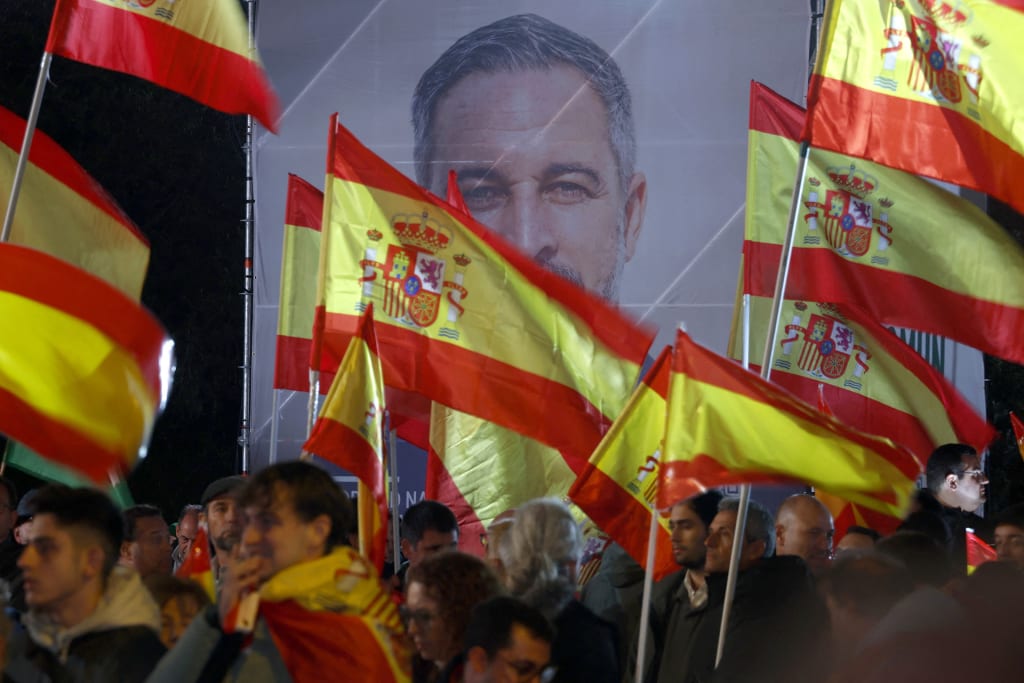
Spain is heading to a snap general election on Sunday 29 November following eight years of Socialist Party rule led by Prime Minister Pedro Sánchez.
In a country whose population is nearing 50 million, approximately 39 million eligible voters will head to the polls to elect members of the Congress of Deputies and the Senate.
Voting will begin on Sunday at 09:00 local time and conclude at 20:00, when the first exit polls will be released.
Voters will choose between the continuation of left-wing rule and a new government that the conservative Popular Party (PP) could form with the support of far-right Vox.
In most opinion polls, the PP, led by Alberto Núñez Feijóo, holds a narrow lead over Sánchez’s Spanish Socialist Workers’ Party (PSOE).
While it appears difficult for Feijóo to secure an outright majority, support from Vox, which ranks third in the polls, has assumed a decisive role.
Housing crisis triggers snap election
Sánchez brought the elections forward by eight months after lawmakers rejected plans to amend the housing law.
The crisis began when Maricarmen Abascal, an 87-year-old woman living in a rent-controlled flat in central Madrid since 1956, was evicted on 23 September and died shortly afterwards.
Abascal was removed from her home in a hospital bed after investment fund Urbagestión purchased the building and exploited a legal loophole to raise the rent fivefold.
The incident triggered nationwide protests and culminated in a general strike on 11 November, the first held in Spain since 2012, which drew 4 million participants according to trade union data.
Between 2015 and 2025, house prices and rents in Spain rose by more than 80%, while wages lagged behind that pace.
The Bank of Spain estimates that 700,000 new homes are needed to ease market pressures driven by high demand and inadequate supply.
Millions of Spaniards have lost the prospect of home ownership and live in fear of eviction due to rising rents.
The Sánchez government lost its parliamentary majority after Junts, the centre-right party in north-eastern Catalonia, withdrew its backing for the housing reform citing the protection of property owners’ rights.
While Sánchez has placed housing reform at the heart of his campaign, left-wing parties are pledging rent controls and eviction protections.
Right-wing parties, by contrast, advocate building more homes, tax cuts for homebuyers, and relaxing urban planning regulations.
Another factor influencing the electoral atmosphere has been a series of fatal railway accidents that shook public confidence in Spain’s high-speed rail network.
‘Current order is far more unstable and prone to social explosions’
In an article published in the New Left Review on 9 October 2026, Javier Moreno Zacarés observed that 15 years after the 15-M movement, Madrid’s Puerta del Sol square had once again become the focal point of a mass movement.
Zacarés emphasised that the general strike, organised by the Madrid tenants’ union Sindicato de Inquilinas, and the anger on the streets targeted not only the opposition, but also the PSOE and its coalition partner Sumar, who have been in power since 2023.
Interpreting the Catalan nationalist party Junts voting alongside the right-wing bloc in the parliamentary housing ballot as a distinctive contradiction of Spanish politics, Zacarés wrote that the government had maintained a fragile equilibrium based on the national question overriding class issues, yet all right-wing parties united around common interests on housing.
Noting that although tenants remain a 17% minority in a country where 73.3% of households own their homes, they wield political influence far beyond their numbers, Zacarés recalled that a new housing regime emerged after the state sold foreclosed properties to investment funds following the 2007-2014 property bubble.
“Economically, the new housing regime is more stable than the old,” Zacarés assessed. “Politically, however, the current order is far more unstable and prone to social explosions.”
According to Zacarés, the protests shifted the national agenda away from the right’s favoured topics of immigration and crime within days, directing public support toward rent regulation, including among a slight majority of right-wing voters.
“A political survivor as ever, Sánchez seized the moment with a characteristically audacious move,” Zacarés wrote, noting that the prime minister sought to turn the 29 November election into a referendum on the housing issue.
Zacarés shared the view that if the right secures a broad majority, harsh austerity policies and police repression could return, though this time facing a more organised and disciplined extra-parliamentary left.
Economic growth fails to reach voters’ pockets
On paper, Spain’s economy has led growth among developed economies over the past three years.
According to government and IMF data, the country generated approximately 41% of all new jobs created across the European Union last year and narrowed its budget deficit from 3.3% in 2023 to an expected 2.6% in 2026.
In the south-western region of Extremadura, one of the country’s poorest areas and a historic bastion of the left, minimum-wage earners saw pay rises of 66%, while public-sector salaries increased by over 20%.
Labour reforms curbing seasonal contracts also stabilised earnings in agriculture and tourism, the backbone of employment in the region.
Nevertheless, Eurostat data indicates that per capita income growth has not kept pace, leaving Spaniards’ purchasing power trailing the EU average.
According to an analysis by CaixaBank, real wages fell by an average of 0.3% between 2019 and 2025, and the proportion of the population at risk of poverty and social exclusion remained virtually unchanged over the past decade.
Price increases in housing, energy, and consumer goods eroded wage gains, with external shocks such as the Covid-19 pandemic and the US-Iran war that began in February driving the rise.
According to the National Statistics Institute, inflation climbed to 4.9% in October, reaching its highest level since February 2023.
Inflation averaged 2.75% from the start of Sánchez’s latest term in 2023 until the outbreak of the Iran war in February.
Juan Francisco Caro, director of social research firm Opina360, told Reuters: “When inflation overshadows everything, job growth or improved wages mean very little in people’s perception of the economy.”
According to a November survey by the state polling institute CIS, housing, economic difficulties, and working conditions rank ahead of immigration as voters’ chief concerns.
CIS data from July 2026 shows that the consumer confidence index, where figures above 100 represent positive sentiment, fell to 84.1 from 107 in June 2018 when Sánchez took office.
Reforms increasing workers’ wages also raised costs for small businesses, which constitute 95% of companies in Spain.
Salvador Illa, the president of Catalonia and a prominent Socialist Party figure, acknowledged to Reuters that growth was not evenly distributed: “Spain is producing wealth. Macroeconomically, the economy functions far better than those around us. But this prosperity is not shared fairly enough to reach certain segments of society or regions.”
While the PP promised to raise the average wage from approximately 29,500 euros to 50,000 euros ($54,700), it offered no concrete plan, prompting Economy Minister Carlos Cuerpo to accuse the party during a televised debate of misleading voters with “fictional” promises.
Vox, meanwhile, proposed broad tax cuts that it claimed would be financed by stripping funding from trade unions and political parties and restricting social benefits to Spanish citizens, though it provided no cost breakdown.
Corruption cases and migration debate strain campaign
Arguing that Spain is facing what is probably “the most important moment of the last 50 years”, Feijóo summarised his goal as “repairing the state, renewing democracy, reuniting the nation, and recovering Spain’s ambition and self-confidence.”
Feijóo accused the Socialists of being “the most corrupt party” Spain has seen, as legal cases surrounding Sánchez’s inner circle and family became central campaign themes.
Former Transport Minister José Luis Ábalos was sentenced to 24 years in prison for numerous corruption offences, including influence peddling related to Covid-19 face masks.
Senior party official Santos Cerdán is awaiting trial on bribery allegations, which he denies.
The prime minister’s wife, Begoña Gómez, faces trial over allegations of misusing public funds and leveraging her marriage for academic career advancement, charges she denies.
Sánchez’s brother, David Sánchez, was barred from public office for nine years over administrative irregularities.
Migration has also featured prominently in the campaign.
After tens of thousands of migrants crossed into the city of Ceuta from neighbouring Morocco in July, Feijóo accused his opponent of being “a problem for Europe on immigration.”
In November, a record number of migrants arrived on El Hierro in the Canary Islands, with 2,000 reaching the island on 24 November alone, prompting Vox leader Santiago Abascal to describe the influx as a “new invasion.”
Both the PP and Vox criticised the Socialist government’s move to regularise undocumented migrants, which drew 1.2 million applications this year.
The PP advocates a more controlled immigration policy, while Vox calls for mass deportations.
Prospect of a right-wing coalition
Support for the Socialists has declined compared with the 2023 elections, while the left-wing allies that kept Sánchez in power at the time, particularly the Broad Front (Frente Amplio), have lost votes.
Jacobo Ramos Folch, a visiting professor at the University of Navarra and political analyst, said: “There is an inertia among left-wing voters. Sánchez’s party is not doing well.”
Folch added: “The absence of a majority is now a reality, as is the rise of Vox. What enables majorities to change hands is the rise of Vox.”
Founded in 2013, Vox could nearly double its 33 seats in the Congress of Deputies, according to polls.
Campaigning under the slogan “national priority”, the party advocates prioritising Spanish citizens for social welfare, deporting irregular migrants, and promoting the “remigration” of foreigners who do not contribute to the country.
Feijóo stated that his goal is to secure a majority and negotiate “parliamentary support agreements” with Vox.
Saying he would respect the will of the electorate, Feijóo maintained that Abascal had not discussed cabinet portfolios with him.
The PP leader stressed that Vox’s national priority policy violates the Spanish Constitution and EU treaties, stating: “No one can sign illegal agreements.”
Camino Mortera-Martinez of the Centre for European Reform, a former European affairs adviser to a Spanish prime minister, told the BBC that even if a coalition were formed, Vox would not gain substantial influence: “They won’t get any of the key ministries. They won’t get defence, the interior, foreign policy, or the economy.”
Mortera-Martinez noted that even if they secured the education ministry, education policy is largely devolved to regional governments.
Starting in Castilla y León in 2022, Vox assumed regional coalition portfolios such as culture and tourism alongside the PP, subsequently entering coalitions in Valencia, Aragón, Murcia, and Extremadura in 2023.
After pulling out of these five administrations in 2024 over objections to the regional placement of unaccompanied child migrants, the party later signed new coalition pacts with the PP in Extremadura, Aragón, Castilla y León, and Andalusia.
Spain consists of 17 autonomous communities and two autonomous cities, each with its own parliament and powers, with Catalonia and the Basque Country operating their own police forces.
In the 350-seat parliament, Catalonia accounts for 48 seats on its own, and the Sánchez government has relied on the support of Basque separatist party Bildu and Catalan parties ERC and Junts.
Under the electoral system, each of the 50 constituencies returns at least two seats, Ceuta and Melilla receive one each, and the remaining 248 seats are distributed proportionally by electorate size.
Madrid elects 38 deputies, Barcelona 32, and Valencia 16, with parties requiring at least 3% of the vote at the provincial level to win seats.
What the markets say
Financial markets view the election as a bellwether for Europe ahead of votes in France, Italy, and Greece next year, as well as German local elections.
Lauren van Biljon, portfolio manager at Allspring Global Investments, noted: “Spain has been one of Europe’s top macroeconomic performers,” adding, “The early election serves as a reminder that the political side is somewhat more complicated.”
According to a Barclays analysis, a PP-led government could slow fiscal consolidation by pursuing tax cuts and tighter migration controls.
Even so, public finances are projected to remain relatively stable regardless of the outcome, with the deficit expected to stay below 3% of GDP in 2026 and 2027, and public debt forecast to decline from 100% in 2025 to just over 98% by late 2027.
Barclays anticipates that if Sánchez wins re-election, he will continue to prioritise social spending and migration for labour supply, though he would struggle to pass budgets through a fragmented left.
A right-wing government’s migration restrictions and the conclusion of the EU’s NextGeneration funds in 2026 could weigh on Spain’s strong economic performance.
UBS, meanwhile, believes strong underlying growth, a falling debt-to-GDP ratio, and cheaper energy prices driven by renewables provide a favourable starting point for any incoming government.
Having expanded by 2.6% last year, double the eurozone average, Spain’s 10-year sovereign bond trades at a yield spread of 60 basis points over German Bunds, compared with a 150-basis-point spread on French debt.
Paolo Grignani, an economist at Oxford Economics, told Reuters: “We expect Spain’s outperformance to continue for a few more years before growth gradually converges toward the eurozone average.”
Jefferies analysts anticipate a shift to the centre-right would benefit banks, even as the government on Tuesday extended a windfall tax on banks for an additional year to fund housing initiatives, targeting 1.4 billion euros ($1.5 billion) in revenue.
Jefferies does not expect the levy to be repealed entirely, but notes that restructuring it under a market-friendly administration would benefit CaixaBank, the country’s largest domestic lender by assets.
PP officials have also floated the phased sale of state shareholdings, which include an 18% stake in CaixaBank and 10% in Telefonica.
RBC analyst Fernando Garcia remarked that the PP’s proposal to extend the operational life of nuclear reactors indefinitely would benefit nuclear operators and grid utilities such as Iberdrola and Endesa.
Amid turmoil in France and Belgium alongside Spain’s snap poll, the euro hovered just below $1.10, touching its weakest levels since April 2025.
Noting that the single currency remains vulnerable to further downside, Van Biljon said: “In the very near term, there is ongoing risk not just from Spain, but also from France, which could resurface.”
Evelyne Gomez-Liechti, multi-asset strategist at Mizuho, said: “There is a broad drift to the right across Europe, raising questions about the future of centrist parties,” adding, “If we move toward extremes, that creates a less friendly environment for markets.”

Disputes over the European Union’s next multiannual budget show no signs of resolution following German Chancellor Friedrich Merz’s demand that every member state contribute more financing to Ukraine.
Speaking last Friday at an EU summit in Dublin, Merz said: “We are still very far from an agreement.”
The German chancellor had previously raised the threat of blocking budget negotiations unless all member states commit to transferring billions of euros in additional resources to Kyiv.
Slovakia, the Czech Republic, Hungary, and Bulgaria, representing Berlin’s biggest obstacle on the issue, are rejecting demands for supplementary financial contributions.
Slovak Prime Minister Robert Fico described Merz’s approach as “a textbook example of blackmail.”
Debate surrounding the EU’s new Multiannual Financial Framework (MFF) for the 2028-2034 period is also intensifying.
According to a report by German Foreign Policy, Berlin wants hundreds of billions of euros in spending cuts alongside a shift in expenditure that prioritises defence and competitiveness.
Many member states, however, are demanding that agricultural subsidies and cohesion funds be kept at their current levels, leaving little sign of consensus on this front as well.
Berlin seeks spending cuts of hundreds of billions of euros
Unlike annual budgets, the Multiannual Financial Framework establishes the EU’s broad seven-year financial blueprint, setting the total budget size and core spending priorities.
Negotiations over the 2028-2034 cycle have exposed deep divisions among member states.
The German government aims to leverage its considerable political influence within the EU to assert its own priorities.
Berlin’s plan for cuts focused on defence and competitiveness has drawn backlash from leaders of numerous countries reliant on agricultural aid and cohesion funding.
Reductions in farm support pose severe political complications especially for France, Spain, Italy, and Poland, which all face elections in the next twelve months.
Budget pressure mounts ahead of French elections
Marine Le Pen, leader of France’s far-right National Rally (RN), wants talks on the new MFF to wrap up only after next spring’s presidential election.
Such a timetable could offer Le Pen room to reshape budgetary priorities along the lines of French far-right policies.
The German government, by contrast, favours concluding the agreement before the French ballot takes place.
Berlin’s push on the schedule is viewed as connected to its desire to secure advance consensus on a fresh financing round for Ukraine.
Germany is also looking to use the new MFF structure to strengthen mechanisms for political leverage over member states.
Under the plan, modelled on the Covid-19 Recovery Fund, the disbursement of most budget resources would be conditional on countries meeting specific targets and milestones.
Berlin’s approach of tying payments to financial and political conditions has exerted substantial pressure on other member states in recent years.
Poland and Hungary had previously been persuaded by this method to enact political reforms aligned with German interests.
Demands for extra 70 billion euros for Ukraine draw pushback
EU member states are also locked in intense political discussions over the 2027 budget, the final annual budget of the current 2021-2027 framework.
EU heads of state and government agreed in December 2025 to extend a 90 billion euro loan facility to Ukraine.
Authorities in Kyiv, however, maintain that funds committed so far fall well short of meeting the country’s financial needs.
The Ukrainian government is seeking an additional 70 billion euros for next year.
While the EU is expected to cover roughly 45 billion euros of this figure, member states hope countries such as the UK, Canada, and Japan will also provide substantial contributions to sustain Ukraine’s war effort.
Hungary, Slovakia, Bulgaria, and the Czech Republic refuse to join the financing drive, viewing the additional billions as a bottomless pit.
Marine Le Pen has also declared that France would largely end its support for Kyiv if she wins the presidency.
The RN indicated it would maintain only select types of operational assistance alongside military training for Ukrainian troops.
The German government nevertheless insists on secure, high-volume funding allocations.
In Merz’s view, qualified majority voting should suffice for future financing directed to Ukraine.
Through this path, Berlin aims to bypass the existing principle of unanimity and strip member states of their veto power.
Merz reiterates threat to block budget talks
Christian Democratic Union (CDU) leader Friedrich Merz seeks to overcome opposition from multiple EU nations through a unilateral push.
Merz continues to threaten to stall EU budget negotiations unless every member state pledges extra financial support for Ukraine.
Merz reportedly put the condition in writing in a letter sent midweek to European Council President António Costa, with a copy forwarded to European Commission President Ursula von der Leyen.
“As an essential prerequisite for resolving this matter and particularly for discussing other issues with financial consequences, a joint commitment is required ensuring that all of us without exception contribute fairly to closing Ukraine’s financing gap,” Merz wrote in the letter.
Under the new Multiannual Financial Framework, the German chancellor wrote that member states “must find a solution supported by all member states that provides a robust, multi-year financing perspective for Ukraine starting in 2028, covering interest on existing debts as well.”
Central and Eastern European leaders brandish veto threat
Germany’s threats are running into fierce resistance across several Central and Eastern European member states.
Slovak Prime Minister Robert Fico, who characterized Merz’s approach as “a textbook example of blackmail,” warned that he could also wield his veto power.
“We have at least as much say on this matter as they do,” the Slovak side responded.
Czech Prime Minister Andrej Babiš likewise dismissed Berlin’s demands, stating: “Just as Mr Merz speaks of a veto, I can say the same. We possess the exact same veto right as the German Chancellor.”
Hungary’s new Prime Minister Péter Magyar adopted more measured phrasing at a joint press conference with Merz at the Federal Chancellery, saying: “I do not see this as blackmail.”
Magyar nevertheless made clear his opposition to sweeping cuts in the MFF and to redistributing the financial burden of Ukraine aid specifically to the detriment of Eastern and Southeastern European nations.
Referring to Germany’s position, the Hungarian prime minister noted: “I do not think this is necessarily the right direction.”
Dublin summit fails to deliver consensus
These topics were taken up at an informal EU summit in Dublin late last week, but participants failed to establish common ground.
Speaking after the gathering, Merz stated that he had conducted “a series of intensive talks” but “had to conclude that they remain very far from an agreement.”
Public support for Merz came only from the heads of government of Estonia and Latvia.
Estonian Prime Minister Kristen Michal said he shared Merz’s message that “support for Ukraine is part of our core security” and “must be part of our core financing.”
Latvian Prime Minister Andris Kulbergs stated that he agreed “completely” with Merz, emphasizing: “We must all pull in the same direction,” and adding that this applied equally to financial support for Ukraine.
It remains unclear how compromise can be achieved if Merz persists with his unprecedented ultimatum.
European Council President António Costa announced that proposals would be drafted to find a mutually acceptable stance.
If the German government hopes to reach an accord on the 2028-2034 Multiannual Financial Framework before the end of the year, time is rapidly running out.

Microsoft issues code red after historic Exchange Online outage

Poland urges NATO to weigh downing Russian missiles over Ukraine

Spain heads to snap election as housing crisis tests Sánchez

EU budget talks stall over Merz demand for Ukraine funds and cuts

Russia seaborne oil exports fuel rising global supply surplus
-

 Opinion1 week ago
APEC Summit: How China Uses the Art of “Emotional Value” to Deal with Trump
-
 Middle East2 weeks ago
Journalist Dursunoğlu warns Iran removed missile limits as Gulf risks widen
-
 America2 weeks ago
Absent Democrats derail floor vote on Pete Hegseth impeachment
-
 America2 weeks ago
Nvidia board prepares to remove CEO Jensen Huang amid scandal
-
 Diplomacy2 weeks ago
CSTO strips Armenia of voting rights over two-year budget debt
-

 Europe2 weeks ago
Romania offers to pay US to keep troops stationed in the country
-

 Middle East2 days ago
European Commission rejects Russia’s invite for bilateral security talks
-
 Europe1 week ago
Polish Constitutional Tribunal chief stripped of judicial immunity
