
America
California city to spend nearly $400,000 on a high-tech plan to oust Canada geese


A California city will spend $400,000 to get rid of geese Foster City in Northern California is preparing to spend nearly $400,000 to get rid of Canada geese.
Canada geese produce hundreds of pounds of feces daily, disrupting bacteria levels in local lagoons and sometimes frightening children.
The waterfowl have long been a problem for Foster City, a community of about 33,000 people that is home to as many as 400 birds at any given time. After several attempts with cheaper options, the San Francisco Bay Area city is ready to try everything to drive them away: hawk-shaped drones, border collies that mimic predators, and remote-controlled devices that can navigate the water.
“If we can find a way where the geese and people can coexist without conflict, that would be a huge success,” said Parks and Recreation Director Derek Schweigart. “The population has grown so much that it has become unbearable.”
Schweigart said the plan will begin in early September.
Cities and states across the country are dealing with “nuisance” animals in different ways. In Florida, local officials will approve a limited number of permits to allow black bear hunting in certain areas this year. The Michigan Natural Resources Commission voted in August to reinstate year-round coyote hunting.
In 2021, Foster City approved a plan to kill more than 100 geese but withdrew it following public backlash. The city then tried non-lethal methods such as egg addling—a population management technique that involves oiling eggs to stop their development—and erecting fences around parks, but this did not seem to reduce the goose population.
Melanie Weaver, an environmental scientist with the California Department of Fish and Wildlife’s waterfowl unit, said that Canada geese, a migratory species, used to leave northeastern California in the winter and migrate to the state’s warmer Central Valley region.
But in recent years, the geese have started staying in the north due to lush public parks, calm ponds, and an easy food supply.
“We as humans have collectively provided them with a great place to hang out and raise their young,” Weaver said. “There isn’t much that can eliminate them, except maybe a coyote or a golden eagle. People feed them. It’s like an invitation for disaster.”
The city has allocated approximately $390,000 for the pilot program. Schweigart said this investment will pay off in the long run, as it will save the city tens of thousands of dollars spent annually on increased maintenance and pressure washing costs due to the geese.
Wildlife Innovations, the company contracted by the city to run the program, will initially focus on seven parks where the geese are most concentrated and public complaints are highest.
Jake Manley, president of Wildlife Innovations, and Daniel Biteman, the company’s wildlife biologist, said they are considering various strategies because geese are intelligent animals that quickly notice changes in their environment.
“Part of it is not throwing everything at them at once,” Manley said. “Don’t put all your cards on the table at once. As they start to get used to it, you introduce new things they haven’t seen before.”
Biteman and Manley are considering using dog teams, such as border collies and other herding dogs, to mimic predators and make the geese flee.
Also on the agenda is the use of devices that operate on both land and water or drones that will fly over the animals to drive them from the area.
If the geese get used to normal drones, red flashing lights can be attached, or they can send out distress signals, said Biteman and Manley. Biteman added that other drones could be fitted with wings to make them look like hawks.
The goal is to make the environment as uncomfortable as possible for the geese while minimizing disturbance to people. “We are constantly making changes until they have no chance,” Manley said of the geese.
Weaver warned that if the geese leave Foster City, they will likely settle somewhere else nearby. “You have to cooperate with your neighbors” to avoid simply chasing the geese from city to city, Weaver said.
Schweigart acknowledged that there will always be some geese in Foster City, at least. “We created this environment. This environment is going to be attractive,” he said. “Our goal is to see a measurable reduction, not just in the number of existing geese, but more importantly, in the decreased amount of feces.”











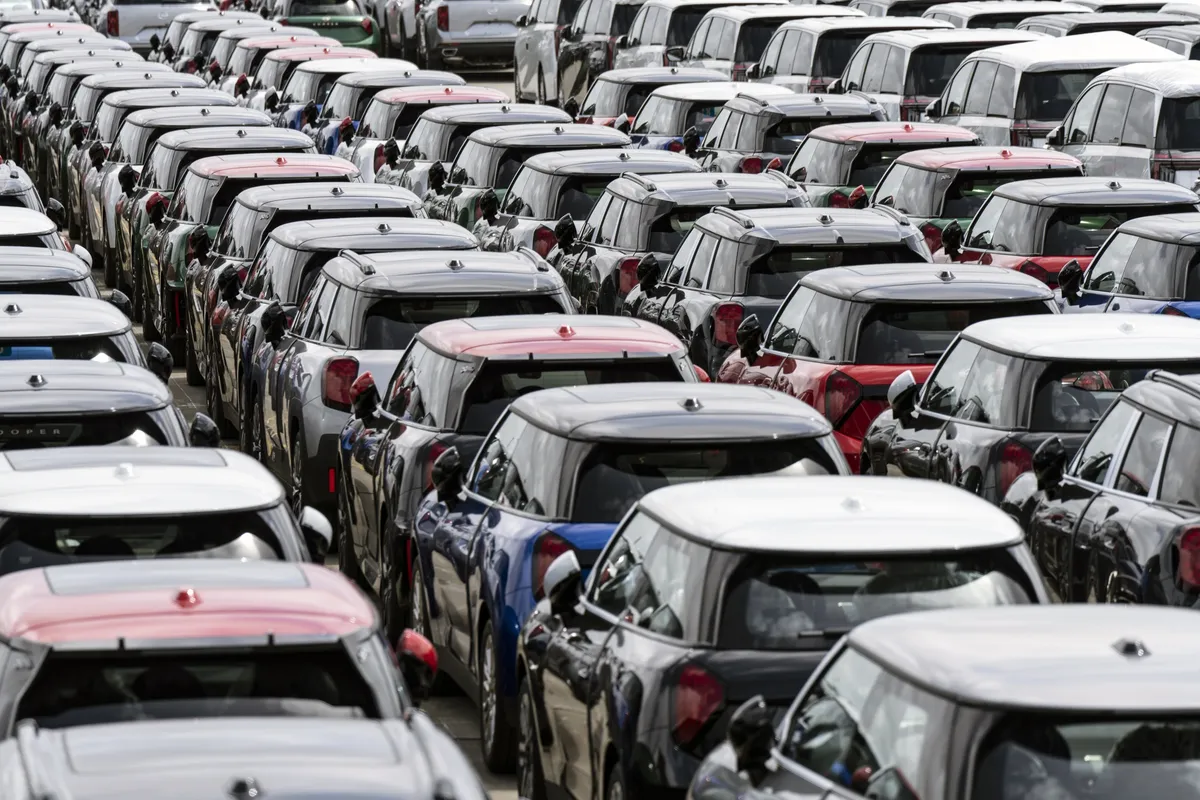
The US Congress is closing in on a deal that would ban Chinese-origin cars from entering the US.
Sources speaking to Bloomberg said that Republicans and Democrats from car-making states behind the initiative aim to deliver a bill to President Donald Trump’s desk by the end of the year.
If the law takes effect, the lucrative US car market will be closed to car makers such as BYD and Geely, which have been rapidly gaining market share across Europe and South America with their low-cost, tech-packed electric vehicles.
Chinese cars are already effectively excluded from the US market due to high tariffs imposed by the Department of Commerce and restrictions on Chinese vehicle technology.
Enacting a statutory ban would take these measures a step further to address mounting concerns that the Chinese automotive industry poses “national and economic security threats”.
Details of the measure are still being worked out. According to the sources, Republican Senator Bernie Moreno briefed automotive manufacturer representatives on amendments under consideration to earlier legislation aimed at barring Chinese-origin connected vehicles from entering the US.
These amendments include provisions that would shield Mercedes from a complete ban.
According to the sources, car company representatives generally supported the initiative Moreno outlined, but a Mercedes official expressed reservations, and negotiations remain ongoing.
Sources noted that the bill’s backers are working to pass the measure before the new congressional term begins in January.
In a statement, Mercedes said: “We continue to talk with all stakeholders who share a common interest in seeing this important legislation become law during this session of Congress.”
A bill introduced by a Senate committee earlier this year would have prohibited manufacturers more than 15% owned by Chinese entities from selling vehicles equipped with technology capable of transmitting data.
Mercedes, which has lobbied for changes to this bill, is roughly 10% owned by Chinese state-owned car maker BAIC.
Li Shu Fu, the billionaire founder of Chinese car manufacturer Geely, also owns about 10% of Mercedes shares.
This puts the company above the 15% threshold set in the previous bill.
A source familiar with the talks, speaking on condition of anonymity, said members of Congress were in discussions with multiple parties, including Mercedes, and were optimistic that a deal could be reached this week.
Provisions under discussion include more flexible rules for firms with non-voting, passive shareholdings, as well as how such an approach would be structured and verified.
Republican Senator Katie Britt of Alabama, a key manufacturing hub for Mercedes sport utility vehicles (SUVs), said she was working on the bill with Moreno and expressed confidence that both Mercedes and Alabama would be protected:
“We understand that some adjustments need to be made, but we are confident that Mercedes can continue to thrive in our state and across the nation.”
Banning Chinese-origin cars would also contrast with the more flexible approach adopted by Europe and Canada.
Chinese car manufacturers have gained market share rapidly, particularly in Europe, triggering intense competition with domestic brands.
After Chinese car makers accelerated their market share gains in Europe, the EU began to push back, signing an agreement with China last month to limit imports of hybrid vehicles into the bloc.
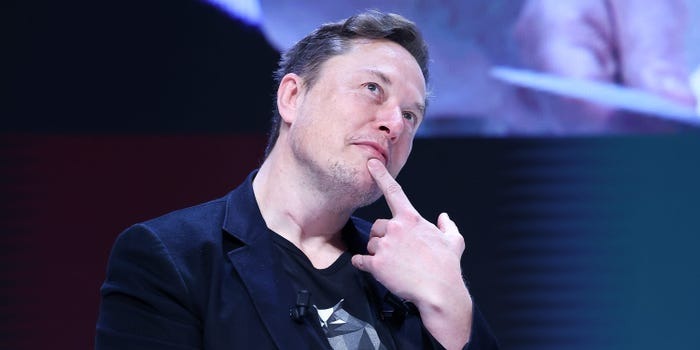
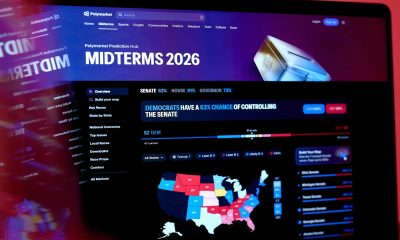
Tesla CEO Elon Musk has said he feels “pretty stupid” for spending $442 million on Republican campaigns after the party suffered heavy losses to Democrats in the 2026 midterm elections.
Speaking remotely at the DealBook Summit in an interview with New York Times columnist Andrew Ross Sorkin, Musk, the world’s richest person, stated that his primary objective had been to help Republicans maintain control of the Senate.
However, Democrats secured the majority, with Democratic candidate Mary Peltola winning the Alaska Senate race to bring the seat distribution to 56 for Democrats against 44 for Republicans.
“I feel pretty stupid spending that much money and not seeing much return on it,” Musk told Sorkin.
Musk added that the outcome could have been far worse without his spending, but noted: “It certainly shows that American elections are not just about money.”
Musk continued: “Clearly you can spend a ton of money on an election and have relatively little impact, which I think was the case here.”
Saying he would spend less if he could turn back the clock, Musk remarked that he did not have much personal interest in the elections because he was focused on growing SpaceX and Tesla.
Musk describes himself as “ideologically moderate”
Musk stated that heading into 2029, he wanted Republicans to control at least one of the House of Representatives, the Senate, or the White House, while wishing that neither Democrats nor Republicans attain a “supermajority”.
“I think we want to have checks and balances here,” Musk said, emphasising that this was his sole motivation.
Describing himself as “ideologically pretty moderate”, Musk said: “I do not think I like any extreme political views.”
Noting during the interview that he was “not MAGA” and was unsure what the term strictly meant, Musk added: “If it means blind adherence to a set of Republican Party policies, I certainly do not have that.”
Rapprochement with Trump and the DOGE era left behind
Musk had previously forged a close relationship with President Trump ahead of the 2024 presidential election, subsequently being appointed to lead the now-defunct Department of Government Efficiency (DOGE).
The pair’s working dynamic led some critics to allege they were operating a “co-presidency”.
However, following a disagreement between the two men, Musk stepped down from his post to focus on his companies, and DOGE closed in July upon the expiration of its mandate under an executive order.
Musk had described himself as “dark gothic MAGA” at an October 2024 Trump rally held at Madison Square Garden.
Critics claimed the font on the black MAGA cap he wore at that rally resembled the Fraktur typeface used by the Nazis during their rule in Germany, though experts later debunked the allegation.
Musk has also backed other right-wing political parties around the world.
In January 2025, he attended a rally of the far-right Alternative for Germany (AfD) party online.
Georgetown University researchers noted that the AfD’s sweeping victory in the German state of Saxony-Anhalt last month raised the possibility of “the first far-right state government in Germany since the Nazi era”.
The seven co-founders of Anthropic, the developer behind the Claude artificial intelligence models, are set to join the ranks of multi-billionaires following the company’s initial public offering on the NASDAQ stock exchange.
According to a report by The Wall Street Journal (WSJ), each of the seven founders is expected to make around $250 million from share sales in the IPO, which opened today.
Following the sale, the stake retained by each founder is projected to be worth roughly $18 billion.
The newspaper reported that all the company’s founders belong to millennial generation, with the group including two siblings, three PhD graduates, a former journalist, and a university drop-out.
Amodei siblings left OpenAI to build their own lab
Leading the list is Anthropic’s 43-year-old CEO, Dario Amodei.
Amodei, who holds a doctorate in biophysics, focused on cancer during his early research.
Having previously worked at Baidu and Google, Amodei was invited to OpenAI in 2016 by its CEO, Sam Altman.
Over time, as disagreements arose regarding the hazards tied to AI development, Amodei and six others left OpenAI in 2020 to establish their own laboratory.
Among those set to join the multi-billionaires is Dario’s 39-year-old sister, Daniela Amodei, who serves as Anthropic’s president and board chair.
After graduating from university, Daniela Amodei worked in politics and at the company Stripe. She later joined her brother at OpenAI, leading teams that developed early iterations of its flagship chatbot.
According to the WSJ’s assessment, Daniela Amodei’s greatest strength lies in understanding her brother’s way of thinking and helping to keep the company on the right path.
University drop-out and company “Swiss Army knife” on the list
Another co-founder poised to expand his fortune is 34-year-old Christopher Olah, who heads the company’s interpretability research.
According to Anthropic, Olah, who dropped out of university, has become a “founding figure” in this field.
Tom Brown, Anthropic’s 39-year-old head of computing resources, is also among those set to become multi-billionaires.
Described by the WSJ as a “Swiss Army knife”, Brown co-developed one of the fundamental concepts enabling AI systems to hold dialogue alongside Dario Amodei, negotiates chip deals, and conducts informal lobbying on behalf of the company.
According to the newspaper, Brown also used his connections with the Republican Party to resolve disputes involving SpaceX CEO Elon Musk and the US administration of President Donald Trump that posed threats to the company’s business.
Former journalist and physicists shaped the rules of AI
Anthropic’s fifth co-founder, 38-year-old Jack Clark, transitioned into the AI sector from journalism.
The WSJ noted that Clark, who previously worked as a technology writer at Bloomberg Businessweek, was drawn to the forms of machine learning that paved the way for Claude.
Leaving OpenAI to head Anthropic’s policy division, Clark now leads the Anthropic Institute, which examines the consequences of deploying powerful AI systems.
Another prospective multi-billionaire is theoretical physicist Jared Kaplan, 42, Anthropic’s chief science officer.
Kaplan, who has lectured at Johns Hopkins University since 2012, has scientific interests spanning from quantum gravity to machine learning.
Holding a doctorate in physics from Harvard, Kaplan served as a research consultant at OpenAI in 2019.
Kaplan is also the author of the paper that examined how the capabilities of AI models depend on computing resources, training data volume, and model parameter counts.
Within Anthropic, he continued developing the idea of governing AI systems under a framework of rules designed to keep them from spiralling out of control.
Finally, 36-year-old Sam McCandlish, Anthropic’s chief architect who oversees the parameter development for new models, will also join the ranks of multi-billionaires.
Having worked closely with Kaplan during their time at OpenAI, McCandlish is the co-author of the research paper on scaling laws.
IPO share price reported to potentially reach $83
Anthropic filed for its IPO on 26 October and began trading today on NASDAQ under the ticker ANT.
The IPO is being underwritten by various banks, led by Goldman Sachs and Morgan Stanley.
The company aims to float approximately 825 million shares within a price range of $70 to $78 per share.
Furthermore, according to a report by Bloomberg citing sources, the share price will surpass the designated range and reach roughly $83.
Anthropic is offering 801.4 million shares in the flotation, while existing shareholders plan to sell 23.6 million shares.
According to a company statement, Anthropic and its co-founders aim to raise up to $64.4 billion from the IPO and $26 billion through private sales.

What Did the Trilateral Summit in China Reveal?

The Chinese Approach Behind the Trilateral Summit: It May Pay to Get Familiar with It Sooner Rather Than Later

Colby exits Brussels Ukraine talks before defence minister speaks

US approved exports of 800,000 Nvidia and AMD chips to China

UK looks to Nordic allies to bolster crisis resilience plans
-
 America2 weeks ago
US midterms see 97 young winners as Gen Z representation triples
-
 Europe2 weeks ago
UK and Germany expand military pact with focus on Russian frontier
-
 America2 weeks ago
Nvidia investigates CEO Jensen Huang over link to Chinese spy
-
 America2 weeks ago
US secures 35% stake in Venezuelan firm NABEP under 50-year deal
-
 Europe2 weeks ago
George Szamuely dissects European decline and strategic rifts with US
-

 Opinion2 weeks ago
The Mecca Defence Agreement, the Ottoman Empire, and the facts
-

 Opinion2 weeks ago
Settle, deny, seal: Britain’s formula for colonial torture, from Kenya to Cyprus — 1
-
 America2 weeks ago
Absent Democrats derail floor vote on Pete Hegseth impeachment
