
Europe
Europe faces $3 trillion bill for tech sovereignty as governments drop US suppliers


Europe would need to spend approximately $3 trillion over the next decade to achieve digital independence and phase out US and Asian technology providers, according to a report by Bloomberg Intelligence Senior Analyst Mandeep Singh.
This projected capital outlay encompasses the development of cloud infrastructure, the construction of artificial intelligence data centers, the training of large language models, and investments across other technological domains.
Singh’s report noted that guaranteed demand generated through a “Buy European” mechanism could serve as the single most powerful leverage point for the EU to achieve its software sovereignty objectives.
A prominent example of this shift centers on Palantir, the US-based technology firm founded in 2003 by Peter Thiel. In June, French Armed Forces Minister Sébastien Lecornu announced that France would terminate its partnership with Palantir, despite having three years remaining on its contract with the French domestic intelligence service, the DGSI. Lecornu stated: “France must possess its own tools.”
The announcement followed a decision by US President Donald Trump to restrict access to leading AI models belonging to Anthropic. Lecornu identified ChapsVision, a domestic competitor, as the replacement for Palantir.
Palantir executives were caught off guard by the development, according to Bloomberg. One company official accused Lecornu of turning critical security decisions into a “Hollywood feud.” The official noted that the contract with the DGSI, France’s internal intelligence agency, had only recently been renewed for a three-year period.
In the UK, Member of Parliament Chi Onwurah proposed terminating Palantir’s £330 million ($440 million) contract with the National Health Service (NHS).
“They have a political agenda,” Onwurah said. “Palantir represents an unacceptable vulnerability in our digital infrastructure.”
Bloomberg reported that Palantir’s position in Europe is weakening, with security agencies in Germany and Poland actively seeking local providers. The Dutch Defense Minister pledged to replace Palantir with European vendors. In July, two British startups founded by former Palantir employees secured funding aimed directly at challenging their former employer.
At the center of these developments, ChapsVision has secured contracts across French government ministries and public institutions. According to Bloomberg Intelligence estimates, the DGSI contract alone is worth at least €100 million. Politico reported in May that Germany’s domestic intelligence agency, the BfV, selected ChapsVision to replace its existing arrangement with Palantir.
In an interview, ChapsVision Chief Executive Officer Silvano Sansoni said: “Our objective is to become a European champion.”
Sansoni stated that the company is currently in talks with all sensitive clients in Poland, adding that Germany represents its primary strategic focus in the near term. Acknowledging that ChapsVision cannot immediately replace Palantir’s full capabilities for French intelligence, Sansoni said: “The technology is complex, so we will not replace Palantir tomorrow.”
Industry experts interviewed by Bloomberg highlighted potential risks associated with the sovereign push. Retired General Richard Barrons, former commander of the UK’s Joint Forces Command, remarked: “Locking Palantir out would be madness. You cut yourself off from world-leading capability.”
Nick Patience, an analyst at The Futurum Group, observed that achieving 100% sovereignty in an interconnected world is unlikely. Patience pointed to ChapsVision’s partnership with Alcatel Lucent Enterprise, a company majority-owned by the Chinese state-owned enterprise China Huaxin.
Bloomberg reported that following Trump’s decision to ban foreign access to the Fable 5 and Mythos 5 AI models, Europe and Canada resolved to urgently develop sovereign AI capabilities to avoid dependency on foreign policy decisions.
In early June, the Financial Times reported, citing sources, that the US National Security Agency (NSA) could deploy Anthropic’s Claude Mythos model to execute cyber operations.
One source noted that the system could be utilized to penetrate network infrastructure in countries such as China or Iran.







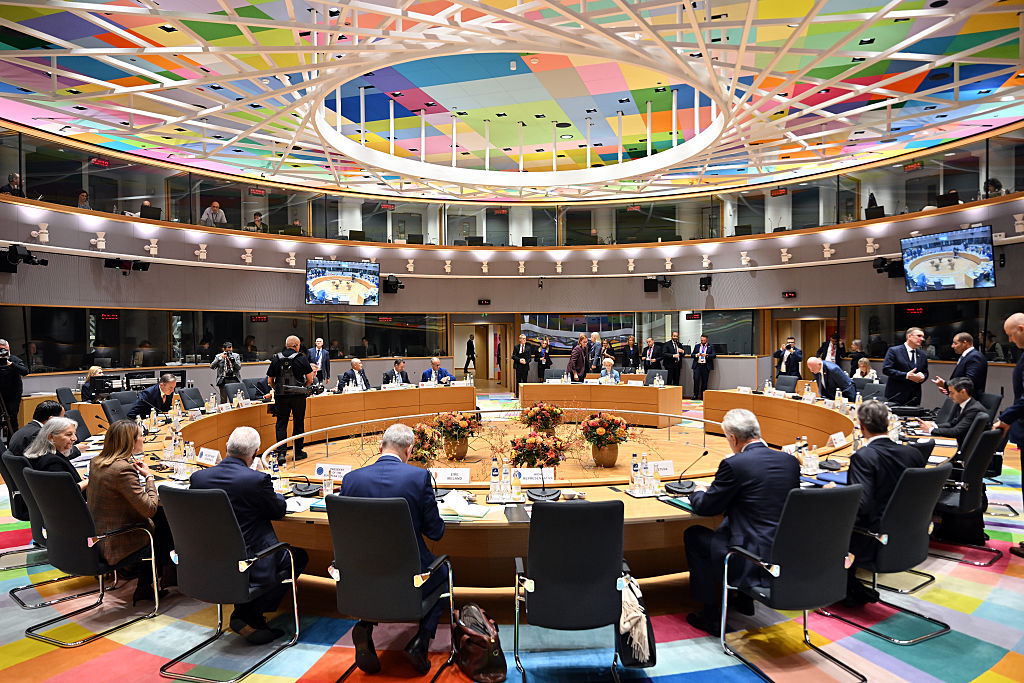
As the US continues to mediate talks between Ukraine and Russia, the debate within the EU over who will sit at the table is intensifying.
Negotiations between Russia and Ukraine scheduled for next week in Abu Dhabi, mediated by the US, will take place without European participation.
There are currently no expectations of a breakthrough, but this has not prevented infighting within the EU over representation.
Italian Prime Minister Giorgia Meloni added fresh friction to the debate yesterday, 5 November, stating that the EU gives “the impression of a Europe moving in different directions.”
In a letter to European Council President António Costa, she argued that the 27 EU leaders must unite behind a single representative before the end of the year.
According to Rapporteur, an “alphabet soup” of diplomatic formats, such as the E2, E3, E5, or the CoW (Coalition of the Willing), is competing to take centre stage in discussions concerning the future of Ukraine.
Facing elections next year, Meloni has long pushed back against the assertive stance adopted by the E3 format, which brings together the UK, France, and Germany, in their efforts to represent European interests in ending the war and shaping the continent’s future security architecture.
Last month, the Italian leader said:
“If France, Germany, and Great Britain believe that within that renowned E3 format they can achieve more alone than we can all achieve together, then they should at least do so in the name of everyone, with an official mandate from all parties.”
An EU diplomat remarked: “When we speak of the E3, we are talking about geopolitical influence, military strength, and financial power. This does not mean Italy is excluded, but Rome clearly believes it must have a seat at the table.”
Meloni has the backing of Poland, another major military power and the only other large EU country sharing a border with Ukraine.
However, her counterpart Donald Tusk has been less explicit about seeking a direct role in top-level talks.
“As you know, we have many different formats,” Tusk told reporters in Warsaw on Thursday. “We have a clear position as the EU and as the Coalition of the Willing. I am fully engaged in these processes.”
Foreign Minister Radosław Sikorski, however, proved considerably more outspoken. “The last thing we want is Western Europe dealing with Russia while bypassing Eastern Europeans,” Sikorski said, drawing parallels to the 1930s and the 1945 Yalta Conference:
“You cannot exclude Eastern Europe and Scandinavia from these talks. We are roughly 120 million people. Finland borders Russia, Norway borders Russia, the Baltic states border Russia, and Poland borders both Russia and Ukraine.”
Berlin argues that the E3 remains the natural representative group, given that Germany, France, and the UK are the three strongest military powers capable of underwriting future security guarantees for Ukraine.
Like Italy, Poland favours the E5 configuration, which would allow Warsaw and Rome to take part.
Yet Sikorski also floated another leadership lineup to meet Putin: António Costa, EU foreign policy chief Kaja Kallas, and UK Prime Minister Andy Burnham.
Sikorski argued that under EU treaties, the Costa-Kallas pairing holds the legal authority to represent the bloc.
Speaking to journalists in Lisbon on Thursday, the EU’s top diplomat, Kaja Kallas, said: “I agree with Prime Minister Meloni; we must not speak with different voices. We must remain united in stating that these matters sought by Russia require Europe’s decision as well.”
Meloni is not alone in pointing out cracks in the EU’s posture. Last week, Danish Prime Minister Mette Frederiksen, a close ally of Meloni on the European Council, questioned a phone call made to Putin by the leaders of Finland and Norway, asking what they truly hoped to achieve.
Finnish President Alexander Stubb and Norwegian Prime Minister Jonas Gahr Støre defended the conversation as a useful step taken in full coordination with Kyiv.
According to an EU official, the pair would be “more than happy” to discuss appointing a special envoy for Ukraine.
The official stressed, however, that the call was not “a bid” to position Stubb and Støre for the role.
Regardless, the war is unlikely to end this winter, even as Europeans explore fresh mechanisms to finance Ukraine.
“We must be realistic about peace talks and extremely cautious regarding Russia’s true intentions,” Donald Tusk said. “During the winter months, Putin may have less motivation to reach an agreement.”
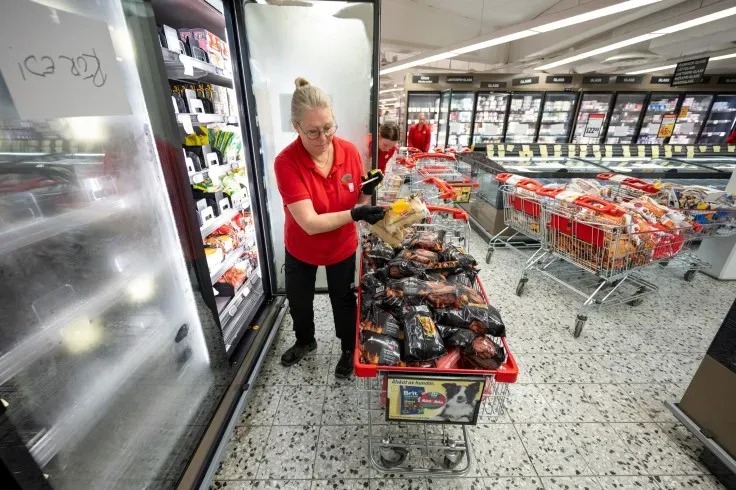
European Union citizens should be prepared to meet their basic needs independently for the first 72 hours of an emergency until public services can organize relief, according to new guidelines.
Hadja Lahbib, the European Commissioner for Equality, Crisis Management and Preparedness, presented the non-binding advisory guidance at the European Civil Protection Forum.
In her remarks on the initiative, Lahbib said: “When a disaster strikes, the first hours can be vital. Every European must know what to do, how to protect their family and how to help others. Preparedness begins in our homes, our schools and our communities.”
The Brussels leadership explained that the new measures are prompted by Europe facing increasingly frequent and complex crises.
Under the recommendations, the European Commission advised citizens to stockpile essential supplies and keep pre-packed emergency grab bags ready.
These steps aim to ensure that individuals can address their primary necessities independently during the first three days of a crisis, before state aid is mobilized.
The guidelines also encompass three additional priority areas: preparing children for emergency situations, making safety measures accessible to individuals with disabilities, and ensuring the public is better informed about potential threats.
Citing the 2001 founding anniversary of the EU Civil Protection Mechanism, the European Commission also proposed designating 23 October as “EU Preparedness Day” each year starting in 2027.
EU member states are preparing for an extensive hybrid attack scenario that could result in casualties, according to a Politico report citing European diplomats and officials.
The report noted that divisions have emerged within the EU over the bloc’s security role and whether its initiatives duplicate the functions of NATO.
According to the same report, ambassadors from the 27 EU member states held closed-door meetings focusing on deploying emergency response teams and allocating resources from EU funds to an affected country.
Following the outbreak of hostilities in Ukraine in 2022, both the EU and NATO intensified their preparations for a potential military confrontation with Russia.
In its “White Paper on European Defence – Preparedness 2030”, presented in March 2025, the European Commission identified Russia as one of the primary threats to European security.
The document outlines plans to boost defence production and improve air and missile defence, unmanned systems, and military mobility.
Meanwhile, Estonia, Latvia, and Lithuania have begun drafting contingency action plans for a potential Russian attack, including measures for the evacuation of hundreds of thousands of civilians.
The three Baltic states decided in May 2025 to cooperate in the field of civil defence.
Lieutenant General Christian Freuding, head of the German Army, also stated that Berlin must be prepared for a Russian attack by 2029 or earlier.
On the other hand, Russian President Vladimir Putin stressed in a statement in September that Moscow is not preparing for war with Europe.
Putin stated that Moscow has no such plans and that there are no justifications or real reasons to escalate the situation with Europe.
Criticising the European stance, Putin described rhetoric from European nations regarding a Russian threat and the necessity of preparing for war as a “provocation” and a “deliberate incitement of the situation.”
The Kremlin also noted that the EU is turning into a “military-political-economic bloc” by spending vast budgets to weaponize its economies.
Russian Foreign Minister Sergey Lavrov warned that statements by EU nations regarding the risk of war with Russia are driving European rearmament, which could ultimately become a “self-fulfilling prophecy.”
In earlier remarks, Lavrov assessed that “if Europe attacks the Russian Federation, it will be a completely different war, and it will be over very quickly.”
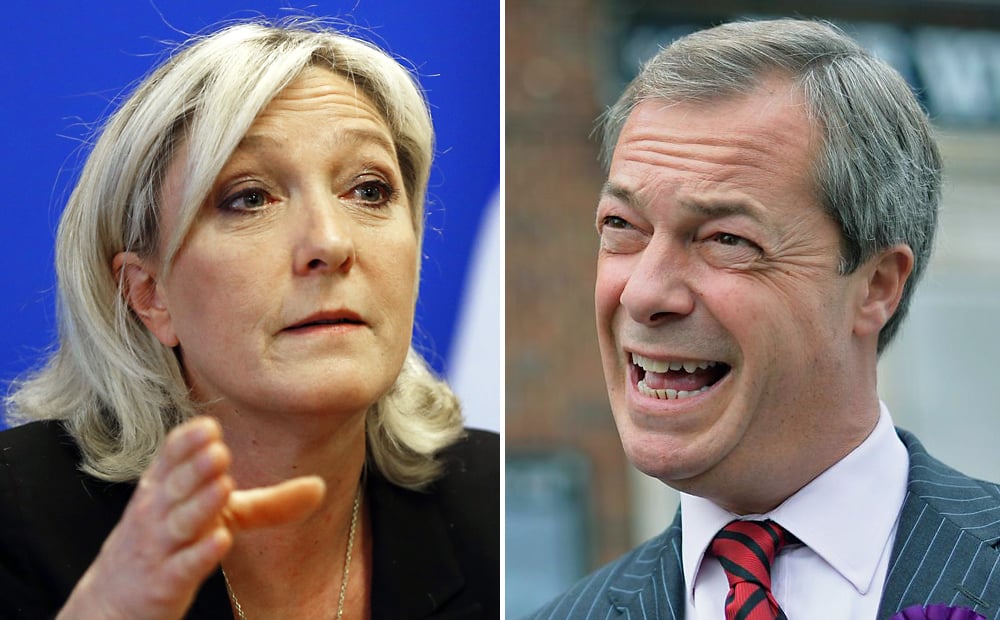
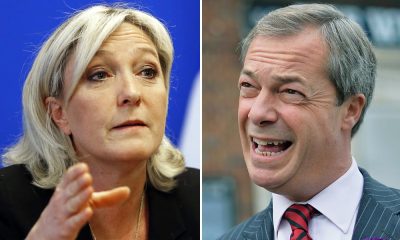
Plans for a meeting in Paris between Reform UK leader Nigel Farage and French far-right National Rally (RN) figurehead Marine Le Pen remain uncertain.
Farage’s planned visit to France, which he announced for October as part of an effort to establish ties with figures on the European right before the end of the year, has yet to be officially scheduled by Le Pen’s camp.
Speaking to Politico on condition of anonymity to discuss sensitive inter-party relations, four National Rally officials familiar with Le Pen’s schedule said no visit to the party leader had been planned.
Multiple party figures said they saw no urgency in drawing media attention to relations with Reform UK or to the migration pact signed in September.
One official noted that the “costs and benefits” of holding a meeting with Farage needed to be weighed.
Political circumstances for both parties have shifted markedly since the prospect of a meeting with Le Pen, widely viewed as the candidate most likely to win the first round of the 2027 French presidential election, was first mooted.
Jordan Bardella, the National Rally’s second-in-command, attended Reform UK’s conference in Birmingham in early September as guest of honour.
Bardella and Farage announced an agreement proposing the return to France of all migrants reaching the UK through unauthorised Channel crossings in small boats.
The proposal triggered a backlash across different political factions in France, where critics questioned why the country should accept the return of asylum seekers.
Internal problems also emerged within Reform UK during the Birmingham conference.
Reform UK, which had maintained its polling lead over the Labour Party led by Andy Burnham, who took over as prime minister from Keir Starmer, was shaken by an undercover investigation published on the eve of the conference.
The development, which raised fresh questions over the party’s financial structure, led to the resignation of Farage’s two most senior aides.
Labour subsequently recovered in the polls, while a rise in the Conservative Party’s share of the vote began to challenge Reform UK’s second-place standing.
The initial announcement that Farage would travel to France to meet Le Pen before the end of October was also made at the Birmingham conference in early September.
Referring to a trip to Paris after Bardella delivered a speech in English, Farage said: “The only downside is I think they’re going to invite me to Paris, and I will have to speak French, but never mind, we’ll get round it.”
However, no official invitation has been confirmed.
As October drew to a close and it became clear that Farage would not pay a return visit to the National Rally’s conference in Orleans, a senior Reform UK official maintained that the meeting was on the calendar for this year.
The leadership in Paris does not confirm that schedule.
The four officials familiar with Le Pen’s plans said they were unaware of any scheduled visit for Farage before Christmas. One of Le Pen’s advisers suggested that a meeting could instead be offered with Bardella, whose standing inside the party has weakened in recent months.
Questioning the merits of the party leader appearing alongside Farage, another adviser to Le Pen said: “We need a bit more time to think through the costs and benefits.”
Thibaut Francois, an official with the National Rally’s European Parliament delegation, said that “regular contacts” with Reform UK continued and that the two parties would meet “very soon”, though he did not clarify whether that would take place this year.
A senior Reform UK official said: “Reform’s primary objective is to become battle-ready for British elections; parading on the international stage right now would add nothing to the UK message.”
Charles-Henri Gallois, an economic adviser to Bardella, argued that there was no need for further contact between the two parties, asserting that the migration agreement was “ready and waiting to be implemented” should both parties come to power.
“There is no need to discuss this further,” Gallois told Politico. “Critics of the agreement do not understand migration flows. This agreement is entirely in France’s interest.”
With French voters wary of a UK-style exit, Le Pen has long distanced herself from efforts to pull France out of the European Union.
Jean-Yves Camus, a far-right specialist at the Jean-Jaures Foundation think-tank, said: “Farage still supports Brexit, whereas Le Pen abandoned the idea [of Frexit] because it was too frightening for French voters. Donald Trump’s defeat in the midterms will also reinforce Le Pen’s distrust of Trumpism and its European counterparts.”
The level of internal support within the National Rally for the migration deal signed by Bardella and Farage was a subject of debate even as it was being concluded.
Since the party conference in September, Bardella’s position has continued to weaken following antisemitism allegations, which he has firmly denied.
Before reaching the agreement with Bardella, Farage had proposed launching “the largest military operation in the Channel since the Second World War” to push small boats back to the French coast.
A figure close to Le Pen told Politico at the time: “Why would we take [them] back to France if they are not French?”

Ukraine faces demographic collapse as fertility rates slide

EU divisions deepen over who should negotiate with Vladimir Putin

EU urges citizens to prepare 72-hour survival kits for crises

Paraguay President Peña resigns over catastrophic bank collapse

Republican push raises prospect of House vote to impeach Hegseth
-
 Diplomacy4 days ago
Secular dress code dispute exposes deeper Türkiye-Azerbaijan strains
-
 Europe1 week ago
Merz visits Asia to seek new markets for German defence firms
-
 Russia1 week ago
US and Russia weigh energy deals and corporate return in peace talks
-
 Europe2 weeks ago
AfD drops Dexit to back single market in new Europe strategy
-
 Middle East2 weeks ago
US envoy says Syria interim leader Sharaa seeks Israel normalization
-

 Interview2 weeks ago
“The AfD is an expression of internal contradictions within German big capital”
-

 Europe2 weeks ago
Serbia opposition wins snap vote as Vucic concedes defeat
-

 America2 weeks ago
Pentagon prepares US bases for 90-day siege in global war plan
