
Europe
European unions urge governments to scrap all Palantir deals

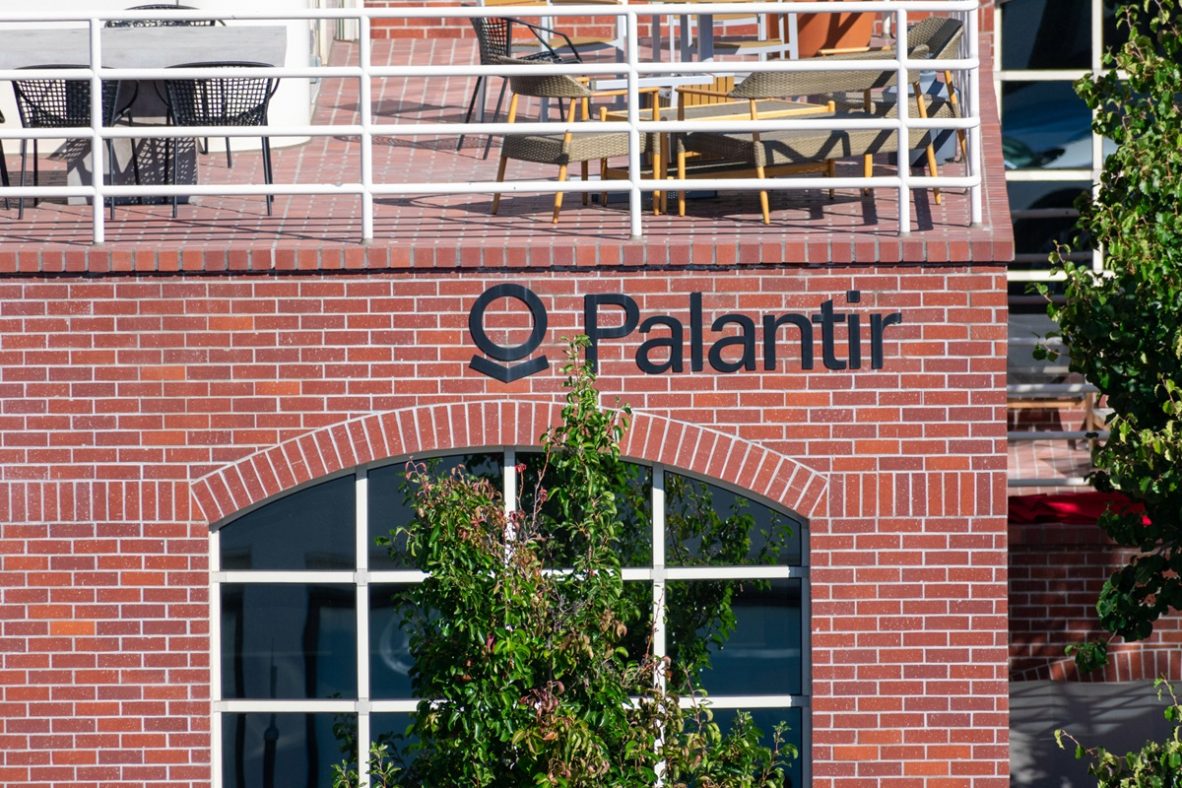
A coalition of trade unions and civil society organisations is demanding that European governments and institutions terminate all contracts with Palantir.
Palantir has long been a controversial company, with co-founder Peter Thiel and CEO Alex Karp publicly voicing their views on political matters.
Applications of the company’s technologies also actively raise concerns, with its clients including police forces, militaries, and immigration authorities.
On Monday, groups from 30 countries and across the European level argued in an open letter that there should be no place for Palantir in a “democratic Europe”.
The letter highlighted the company’s provision of technology to US immigration authorities and Karp’s strong support for Israel, which faces a genocide case before the International Court of Justice.
The organisations also warned that Europe’s heavy dependence on a single US company poses a risk to its sovereignty:
“The company’s proximity to Trump’s American nationalist administration makes this dependence irrational, as the president has demonstrated a great willingness to weaponise US economic and trade relations.”
The letter calls on governments and institutions to terminate all existing contracts with Palantir, bar the company from future contracts, and develop alternative solutions.
They are also urging investors, such as pension funds, to divest from their Palantir shares.
Palantir has built relationships with many European governments over the years. For example, French security services signed a contract following the 2015 Paris attacks.
Other governments turned to the company’s specialised solutions for the healthcare sector during the Covid-19 pandemic, while NATO approved Palantir’s military software for its own use this summer.
Nevertheless, in recent times, political disputes and anxieties surrounding Europe’s technological reliance on the US appear to have begun affecting Karp’s firm as well.
Numerous European companies, from Britain’s Quantexa to Ireland’s Siren and Octostar, are competing to position themselves as independent rivals to Palantir.
This month, French technology giant Thales also unveiled an alternative to Palantir’s military software.
French security services are likewise preparing to replace Palantir by opting for local competitor Chapsvision, the strongest European rival to emerge so far in the civilian domain.
Silvano Sansoni, CEO of the Paris-based firm of more than 1,000 employees, recently spoke to Euractiv about expansion efforts into Germany, where regional governments are actively debating their existing ties with the US giant.
In recent months, Palantir has also faced criticism over the amount of tax it pays in Europe.






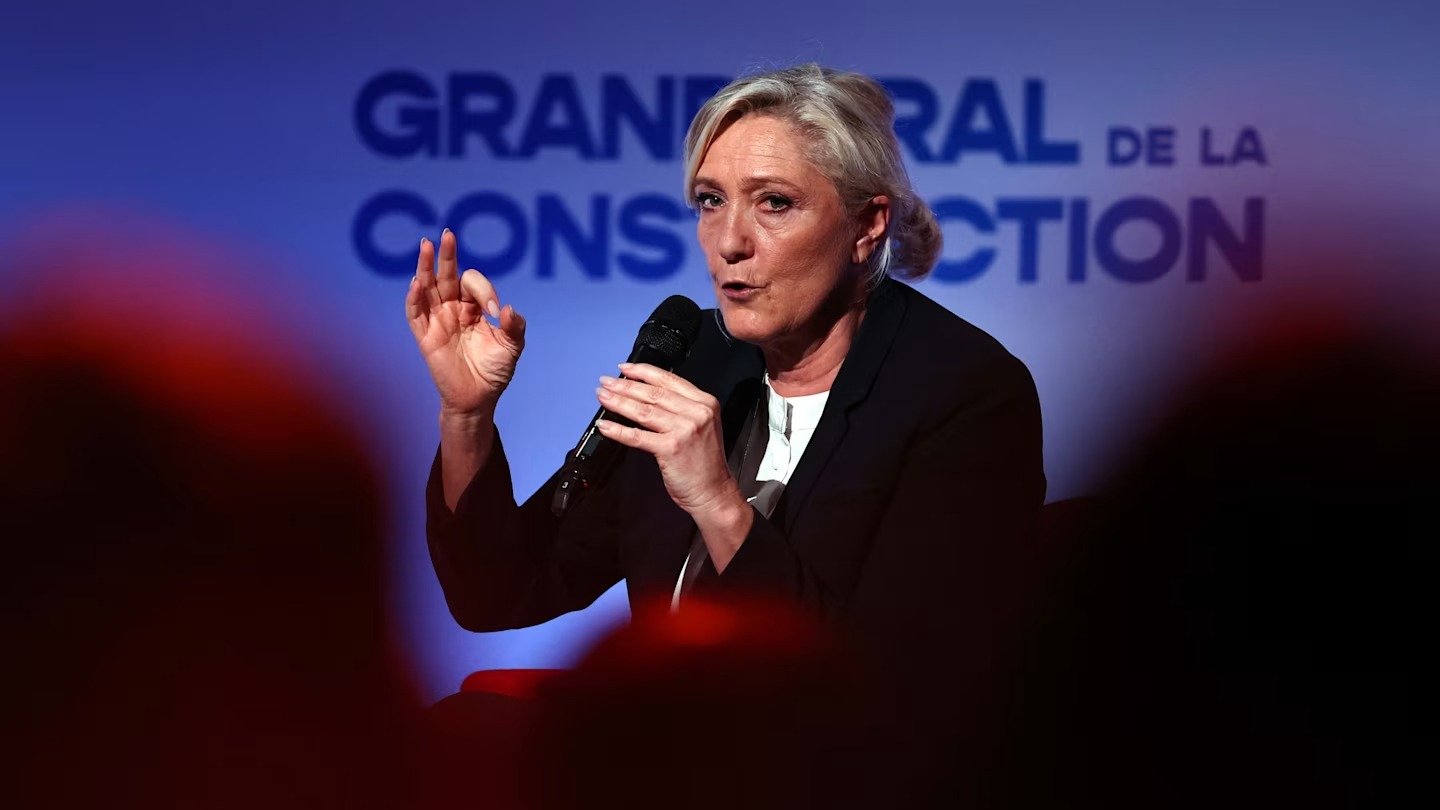
Germany and France are attempting to safeguard the European Union’s next seven-year budget against a potential victory by Marine Le Pen.
Leading in polls ahead of the French presidential election scheduled for spring, Le Pen says she would halve the country’s net contribution to the EU budget and halt funding provided to Ukraine.
According to a source close to her who spoke to the Financial Times, Le Pen has also signalled that she could refuse to approve the EU budget agreement.
Two officials close to the negotiations said the French government has requested an additional 35 billion euros in agricultural subsidies in the EU budget that will take effect in 2028.
The officials stated that this request aims to maximise France’s gains and make it harder for Le Pen to disrupt the agreement should she win the election.
Germany, meanwhile, wants future Ukraine funding incorporated into EU budget law to ensure that any additional support for Kyiv cannot be vetoed by France or any other member state.
One official noted that Germany’s request aims to make Ukraine support “Le Pen-proof”.
“She hangs like a shadow over all the files on our table,” said a senior EU diplomat involved in the budget negotiations.
A second EU diplomat stated that ensuring the budget agreement does not fall apart is an issue constantly on the agenda in the negotiations.
Le Pen’s ability to carry out her threats regarding the EU budget may depend partly on whether National Rally wins a parliamentary majority, but the threat alone worries other capitals.
EU leaders gathering in Brussels on Thursday and Friday will hold an initial discussion on the budget proposals.
Officials, for their part, aim to reach an agreement by the end of the year.
Once the leaders reach an agreement on the budget, member states will negotiate with the European Parliament. Parliament will need to approve the agreement and pass a series of laws.
Only then will EU countries be able to begin the ratification process, which requires parliamentary votes in many countries, including France.
Officials pointed out that the French parliament will go into recess at the end of February, meaning it is unlikely the process can be concluded in time for ratification before the presidential election in April.
On Thursday, Le Pen welcomed France’s push on EU agricultural subsidies, but said the reasons behind it had “nothing to do with defending our farmers”:
“The aim is to prevent us from defending France’s interests in European budget negotiations if the French entrust us with governing responsibility. Our country is on the brink of bankruptcy and social unrest. Instead of resorting to base political manoeuvres to stop the French people from expressing their democratic will, our leaders should work to get the country back on its feet.”
The extra 35 billion euros in farm subsidies requested by France would be funded by cuts to the rest of the budget allocated to priorities such as regional development, migration, and social programmes.
An Élysée official said, “What we want is for this allocated portion to allow us to maintain the ‘current level’ of agricultural subsidies that France receives.”
However, some countries are reluctant to bow to French demands, suspecting that Paris is exaggerating the fallout from a “far-right” president.
“The French are trying to benefit by threatening us with a Le Pen government,” an EU diplomat said.
Meanwhile, German Chancellor Friedrich Merz has explicitly tied his approval of the EU budget to securing long-term funding for Ukraine.
Germany, which covers roughly a quarter of EU expenditure, will not approve the budget unless member states agree to provide support for Kyiv.
Hungary, Bulgaria, Slovakia, and the Czech Republic have already opposed providing additional funding to Ukraine.
Yet all four countries are net recipients of EU funds and have an interest in maintaining existing spending levels.
The European Commission initially proposed 100 billion euros in support for Ukraine over seven years, but this sum is widely viewed as insufficient.
Berlin wants to ensure that the additional funding can be approved by a majority of member states rather than by the existing EU-27 consensus.
Member states must also agree on how to cover more than 50 billion euros in interest costs on outstanding EU debt linked to aid provided to Kyiv.
Senior EU officials want these costs covered in addition to the proposed 100 billion euros, while Hungary and the other three countries have underlined their opposition to providing any additional funding for Ukraine.
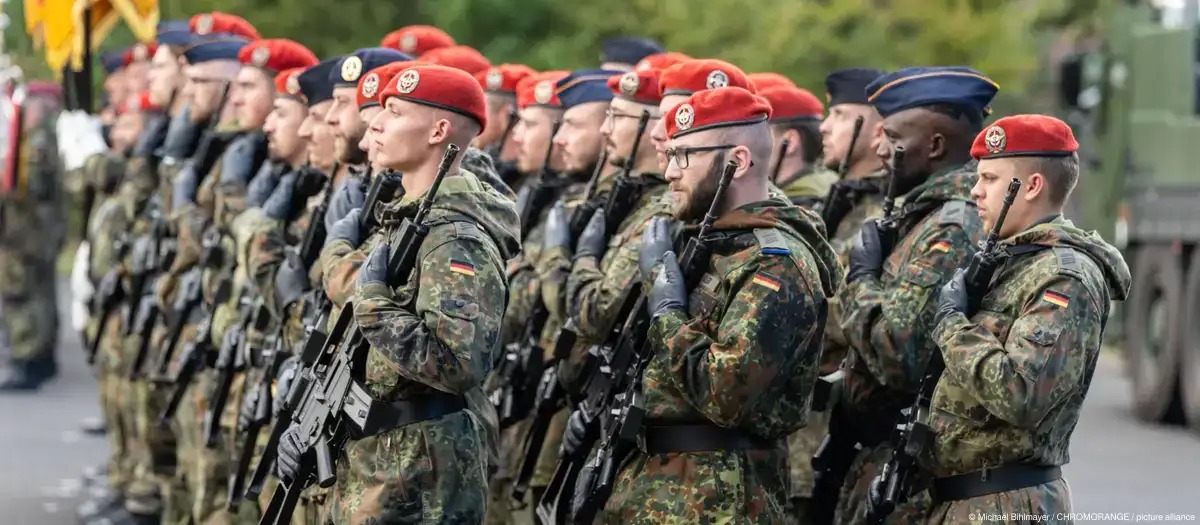
A clear majority of the German public rejects the goals put forward by the federal government to justify the dramatic expansion of the military budget and the sharp, parallel cuts imposed on social programmes.
According to a report by German Foreign Policy, 64% of Germans oppose the Federal Republic of Germany assuming any military leadership role in Europe.
Chancellor Friedrich Merz has explicitly set the goal of turning the Bundeswehr (the German Armed Forces) into “Europe’s strongest conventional army”, thereby positioning Germany as the continent’s pre-eminent military power.
In line with this, Berlin is driving the military budget, including special-purpose borrowing, up to 140 billion euros, whilst slashing the health budget by more than a third to 14.3 billion euros. This figure amounts to roughly one-tenth of the military budget.
On Wednesday, Merz announced further cutbacks to social services. The Chancellor stated that everyone would have to “give up some of the concepts we hold dear”. According to Merz, tax revenues can no longer finance things that people have grown “far too accustomed to for far too long”.
Funds pour into arms as health spending drops
The rise in the federal budget from 525 billion euros in 2026 to 555 billion euros in 2027 stems almost entirely from increased allocations for the military and debt service.
The military budget is set to expand by nearly one-third, reaching just under 110 billion euros. The “Federal Debt” budget line will rise by roughly 30% to reach 43.6 billion euros.
This item consists almost exclusively of interest payments and will grow rapidly over the coming years, as the special debt facility (“special fund”) allocated for the Bundeswehr adds to the total interest burden and must be repaid.
Consequently, part of Germany’s defence spending remains concealed under the “federal debt” heading.
Official figures for the military budget remain misleading because they still do not include the funds drawn from the special debt announced in 2022 by then-Chancellor Olaf Scholz. These funds will reach 29.6 billion euros in 2027.
This means Germany’s actual defence budget stands not at 110 billion euros, but at approximately 140 billion euros, accounting for more than a quarter of the total federal budget rather than 19.8%.
This figure will continue to rise. Under the federal government’s plans, it will approach just below 200 billion euros in 2030, a level expected to represent at least one-third of the federal budget.
Most other budget items are facing cuts, some of them substantial. For instance, the Federal Ministry of Health’s budget is being reduced by more than a third, leaving it at just 14.3 billion euros.
In another instance, cuts of several billion euros to federal pension subsidies have made headlines.
Education is also receiving less funding than before, with a reduction of over 4% pushing the education budget down to 15.5 billion euros.
Given the frequently dilapidated school infrastructure and other glaring deficiencies across the German education system, the Education and Science Workers’ Union (GEW) strongly advocates creating an “education special fund of at least 130 billion euros”.
This sum is less than a single year’s military budget; nevertheless, meeting this demand remains entirely out of the question for the federal government.
At the same time, room has been found to raise funding for the Federal Police by 2%, the Federal Criminal Police Office by around 10%, and the domestic intelligence service (the Federal Office for the Protection of the Constitution) by approximately 25%.
The budget for the Federal Intelligence Service (BND) is increasing by 22.6% to 1.85 billion euros.
Poverty on the rise in Germany
While expenditure on the military, the repressive apparatus, and intelligence agencies surges, neglect persists across education, healthcare, and transport infrastructure, as well as several other areas.
Housing shortages represent one of the most critical issues. According to the Federal Statistical Office, 11.7% of the population lived in overcrowded housing conditions last year.
Poverty is widespread, with statistical sources offering slightly differing figures. According to the Paritätische Poverty Report, a total of 13.3 million people live in poverty in Germany, placing the poverty rate at just over 16.1% of the population.
Among people aged 65 and older, the proportion affected by poverty stands at 19.5%, climbing to approximately 21.3% among women aged 75 and above.
More than a fifth of the population (21%) could not afford a one-week holiday in 2025.
A total of 3.8 million people live in households unable to pay their electricity, gas, and water bills in full. Some 4.7 million people (5.7% of the population) were unable to heat their homes adequately.
These figures also date to 2025, and thus precede the oil and gas price shock triggered by the US and Israeli invasion of Iran.
According to UNICEF, more than one million children lack “heated homes, nutritious meals, or a second pair of shoes”.
CDU-SPD government steps on the militarisation gas
As Chancellor Friedrich Merz confirmed in the Bundestag on Wednesday, the current wave of social cutbacks is set to intensify in the coming years.
Remarking that “we have only just begun to be truly honest”, Merz declared that the “financial sustainability” of Germany’s social security systems has finally become the topic of “a broader sociopolitical debate”.
Only a few weeks after youth protests (“Gen Z Takes Charge”) brought approximately 120,000 young people onto the streets across Germany to protest against disastrous conditions in the education system, the threat of compulsory military service, and increasingly bleak prospects for the future, Merz said regarding the budget:
“This takes everyone into account, including, and above all, the younger generation.”
Merz argued that the fact that roughly 60% of all young people plan to start a business or enter a trade at some point in their working lives demonstrated “how confident and optimistic the younger generation in particular is”.
German public stands against militarism
The majority of the German population rejects the Merz government’s goals.
This is corroborated by a recent survey conducted by the Hamburg-based Körber Foundation.
According to the poll, only 46% of Germans still back military assistance to Ukraine, whilst 61% believe Germany and Europe are not making sufficient efforts to encourage peace negotiations between Russia and Ukraine.
Approximately 48% advocate greater restraint by Germany in international crises, compared to only 40% who favour more active intervention.
Yet within that latter group, 77% support diplomatic efforts, whilst only 13% endorse military action.
The proportion of people explicitly rejecting a military leadership role for Germany in Europe climbed from 61% in 2025 to 64% in 2026.

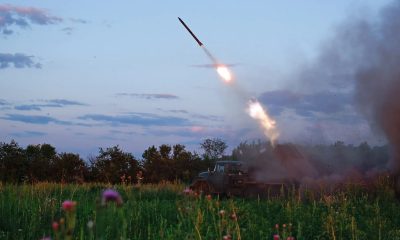
An industrial cooperation initiative on unmanned aerial vehicles launched between the EU and Ukraine is preparing to broaden its scope.
Although the EU-Ukraine Drone Alliance has held only two meetings since launching during the summer, it has already generated so much interest that it could soon more than triple in size.
Four industry representatives told Rapporteur that a decision has been taken to expand the alliance from its current 18 members up to 80.
The European Commission also confirmed the plan to Rapporteur.
According to two of the industry sources, a call for applications will be published soon.
At the inaugural meeting, European Commissioner Andrius Kubilius outlined the alliance’s objectives of facilitating joint ventures, developing readiness to scale up production, and contributing under Defence Projects of Common European Interest (DECODER).
As Kyiv attempts to push back Russian forces along the front line, drones have turned into a critical battlefield technology.
The 18 founding drone manufacturers (nine from the EU and nine from Ukraine) have just finalised their governance structure, electing Germany’s Quantum Systems and Ukraine’s UFORCE as co-chairs for the next six months.
More than 400 companies applied for membership in the first round. A second call for applications is planned in the near future to increase the number of members.
“The terms of reference must be updated, and then a new call will be published very soon,” one representative said.
A member of the alliance noted that this could take place in December, as no additional approval is required from the steering board.
Founding companies will retain their exclusive governance status, and interested industry players will be able to apply to join the expanded alliance as full members.
Existing members have set up four working groups focusing on supply chains, secure industrial cooperation, scaling up production, and operational training.
Several members expressed interest in creating a joint EU-Ukraine drone market.
Kubilius highlighted the intense interest during the alliance’s latest meeting in early November:
“People outside this room are asking how they can join your work. And the alliance is ready to grow.”
The founding group will hold its next meeting in February.

EU weighs UK deal and Türkiye exclusion in Made in Europe dispute

Berlin and Paris push to shield EU budget from potential Le Pen win

Most Germans reject military leadership as Berlin boosts arms budget

EU-Ukraine drone alliance set to expand membership up to 80 firms

EU tech fund faces limits over targets with Delaware parent firms
-

 Opinion1 week ago
APEC Summit: How China Uses the Art of “Emotional Value” to Deal with Trump
-

 Middle East3 days ago
European Commission rejects Russia’s invite for bilateral security talks
-

 Europe2 weeks ago
Romania offers to pay US to keep troops stationed in the country
-
 Europe1 week ago
Polish Constitutional Tribunal chief stripped of judicial immunity
-
 Europe2 weeks ago
Polish manufacturers seek EU protection against Chinese competition
-
 Diplomacy1 week ago
British scholar Richard Sakwa warns of permanent conflict in Ukraine
-
 America2 weeks ago
White House weighs Lutnick dismissal after Nvidia scandal
-
 Asia1 week ago
Xi urges free trade against protectionism at APEC CEO Summit
