
America
Half-billion-dollar oil trade before Trump Iran post sparks market questions

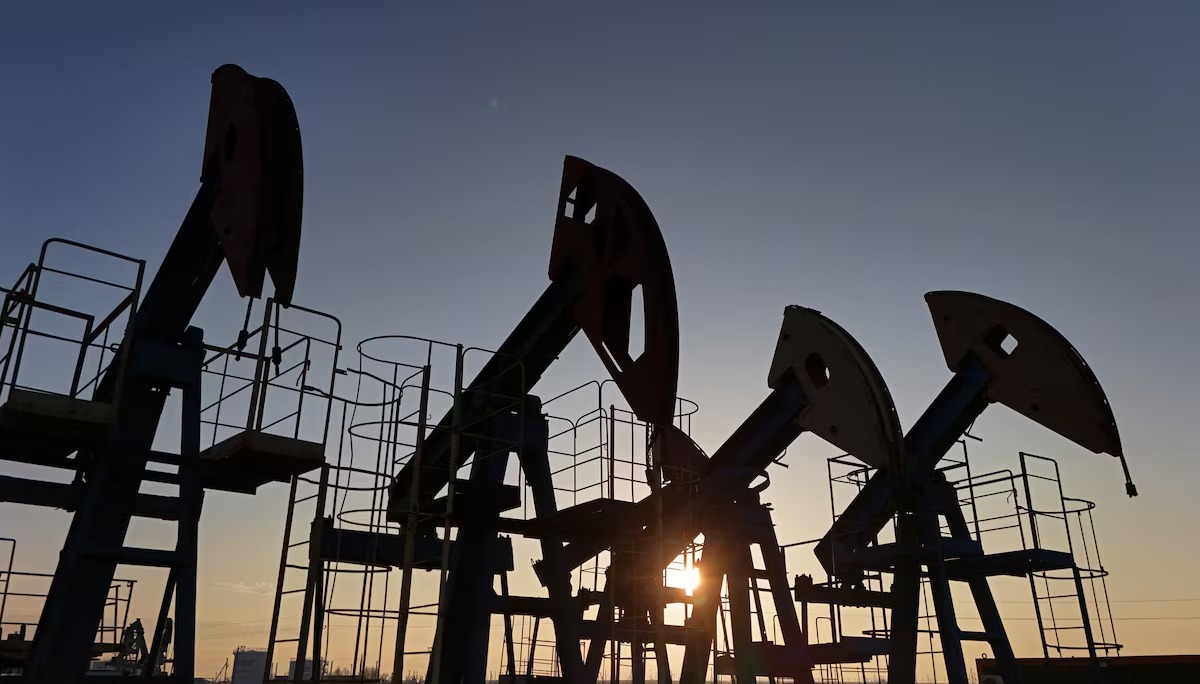
Investors executed roughly half a billion dollars in oil trades just minutes before Donald Trump announced “productive” talks with Iran, prompting questions about timing and market awareness.
On Monday, between 06:49 and 06:50 New York time, approximately 6,200 Brent and West Texas Intermediate futures contracts changed hands. The transactions occurred about 15 minutes before the US president posted on Truth Social that recent discussions with Tehran aimed at ending the war had been “productive.”
Calculations by the Financial Times, based on Bloomberg data, put the notional value of those trades at $580 million.
Trading volumes in Brent and WTI spiked simultaneously 27 seconds before 06:50. Shortly after the oil trades, futures tracking the S&P 500 rose, with volumes also increasing markedly during that interval.
It was not clear whether a single institution or multiple entities were behind Monday’s trades.
At 07:04, Trump’s statement triggered a sharp sell-off in global energy markets as investors scaled back expectations of a prolonged conflict. At the same time, S&P 500 futures and European equities moved higher.
The well-timed transactions echoed a recent wave of highly profitable bets on the prediction market Polymarket, where traders had speculated on the timing of US strikes on Iran and Venezuela.
A market strategist at a US brokerage, referring to Monday’s activity, said: “It’s hard to prove causality… but you have to wonder who was being relatively aggressive in selling futures 15 minutes before Trump’s post.”
White House spokesperson Kush Desai said: “President Trump and officials in the Trump administration are solely focused on doing what is best for the American people.”
Desai added: “The White House does not tolerate any official profiting illegally from inside information, and suggestions made without evidence that officials engaged in such activity are baseless and irresponsible reporting.”
Several hedge funds said the trades were one of many recent instances of large market moves preceding official US government announcements.
A trader at a large hedge fund said energy consultants had recently identified several sizable block trades whose timing appeared “unusual.”
Another portfolio manager said a series of large, well-timed trades had created a sense of “frustration” among investors:
“My instinct, from watching markets for 25 years, is that this is really abnormal. On Monday morning, there was no major data, no Fed speaker you’d want to front-run. It’s an unusually large trade for a day without event risk… someone just got a lot richer.”
Later on Monday, in a post on X, Iran’s parliament speaker Mohammad Bagher Ghalibaf denied that any negotiations had taken place between Washington and Tehran.
“False news is being used to manipulate financial and oil markets and to help the US and Israel out of the quagmire they are stuck in,” he said.
His remarks pushed global equities lower and prompted renewed buying in energy markets.
A commodities trader said the scale of the oil futures selling was not exceptionally large compared with volumes in what had already been a volatile pre-war market. However, the trader noted a sharp move in Europe’s TTF gas benchmark at roughly the same time.
Tim Skirrow, head of derivatives at consultancy Energy Aspects, said: “This is higher volume than I would have expected at that time in Brent and WTI, but not extremely high. I struggle somewhat to connect the dots here.”
Skirrow added that Brent futures and options markets had seen “significant inflows” from funds in recent weeks.
“Looking at the price reaction, almost everyone appears to be long. That is almost inevitably a precursor to a move of this magnitude,” he said.








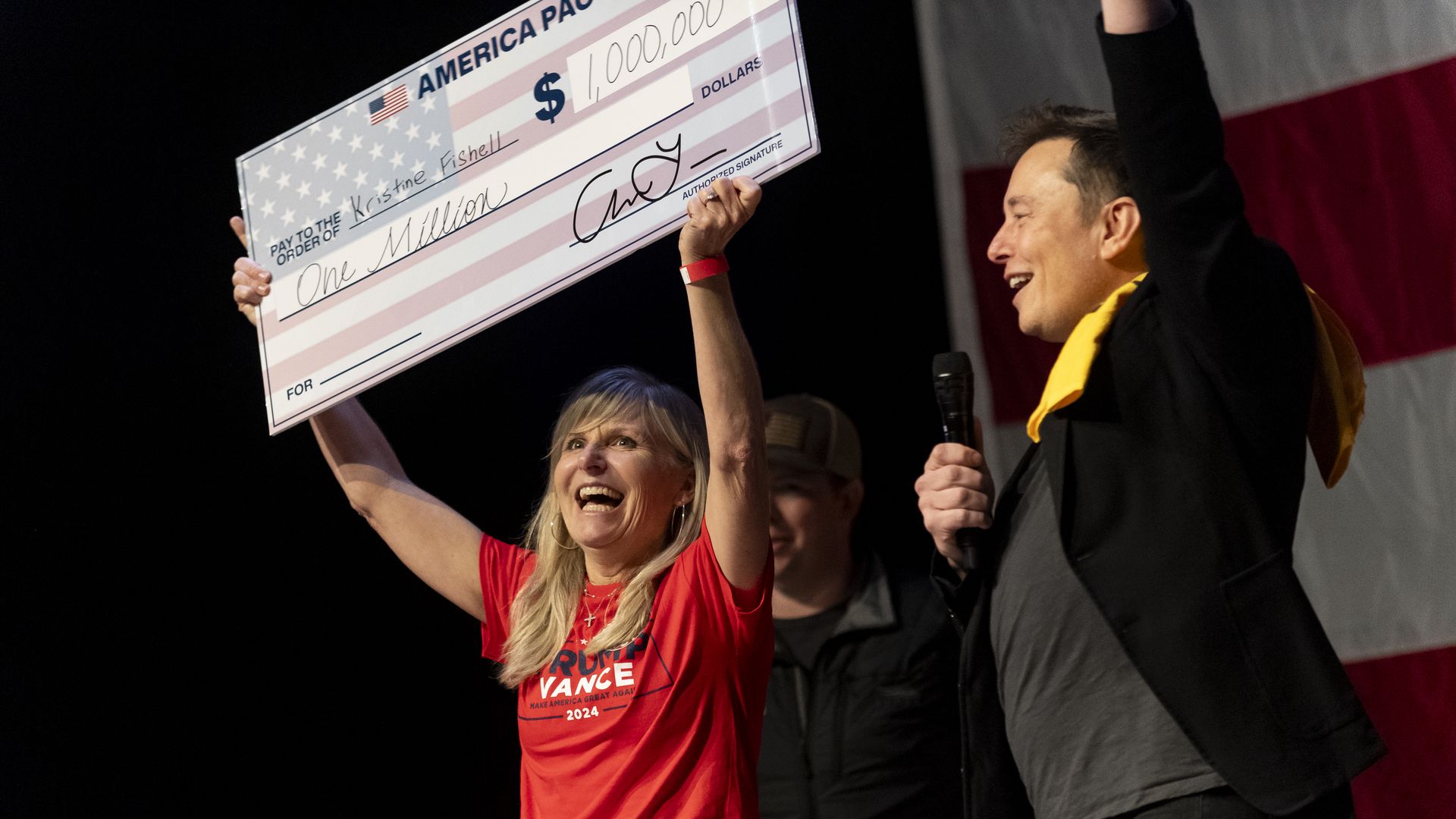
The world’s richest person, Elon Musk, has donated $276 million over the past three months to political action committees and conservative organizations supporting Republicans ahead of the upcoming US midterm elections.
The latest transfer brings the total midterm donations from Musk, the chief executive of Tesla and SpaceX, to $366 million.
First reported by The New York Times, the figures were confirmed to The Hill by a spokesperson for America PAC, which Musk founded. These latest expenditures establish Musk as the largest known donor of the 2026 midterms.
The bulk of Musk’s financial backing between July and September was directed towards congressional races.
The US billionaire transferred $158 million to the Senate Leadership Fund, a super PAC supporting Republican Senate candidates, and $20 million to the Congressional Leadership Fund, which finances House Republicans.
Millions divided among various committees
Musk, who provided more than $76 million during the period to America PAC, an entity he founded during the 2024 election cycle, also funded state-level contests.
The businessman transferred $10 million to the Lone Star Liberty PAC, which supports Texas Republican Senate candidate Ken Paxton, while donating $10 million to the Republican Governors Association and $2 million to the Republican Attorneys General Association.
In statements given to The New York Times and confirmed by The Hill, America PAC spokesperson Andrew Romeo argued that if Democrats take control in Washington and win critical state races, the country faces the risk of becoming one with indefensible borders.
Romeo said the investments enable the Republican apparatus to deliver its messages to voters.
Field spending continues despite talk of retreat
Musk, who kept his distance from politics for many years, entered the arena by spending hundreds of millions of dollars for Donald Trump during the 2024 election.
Accompanying Trump on campaign trails, Musk subsequently took charge of the Department of Government Efficiency (DOGE), which sparked controversy through federal employment and budget cuts.
Musk stepped down from his White House role in late May 2025 and remained politically quiet for months following a public rift with Trump.
After announcing last May that he would sharply scale back his political spending, Musk told The Economist in a July interview that he had become overly involved in politics and had gone too far.
Despite those remarks, Musk pressed ahead with political activity in July by authorizing America PAC to spend between $100 million and $120 million on a fresh field operation aimed at driving conservative voter turnout in the 2026 midterms.
Having repaired ties with Trump following their public spat, Musk joined the US president on an official visit to China in May and was also present during Chinese President Xi Jinping’s visit to Washington last month.

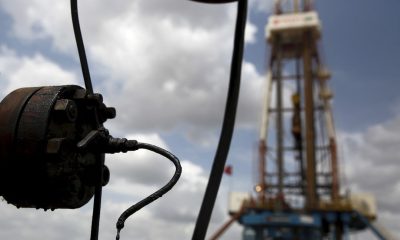
US President Donald Trump is reportedly preparing to issue a new presidential directive soon in a bid to rein in escalating diesel prices across the country.
According to a report by the Reuters news agency citing three oil industry sources, the White House is weighing the enactment of the prepared package of measures directly in the form of a presidential memorandum.
The memorandum in question will reportedly instruct multiple US federal agencies to find and implement ways to lower diesel fuel costs, primarily by expanding oil extraction operations and refinery output.
White House plans to deploy Defense Production Act
According to information shared in the report, the Trump administration is exploring legal avenues to overcome restrictions imposed on energy production by state administrations and local government authorities.
The administration could reportedly invoke the Cold War era Defense Production Act to that end.
The legislation in question grants the US president the authority to provide state loans and financial guarantees to expand the production of materials of strategic importance. The law also makes it possible to require private companies to prioritise government orders.
Reuters reported that the White House is comprehensively examining the prospect of putting this legal mechanism into effect.
In contrast, oil refinery executives were noted to have made a recommendation to government officials last month.
Industry representatives suggested allocating federal budget resources toward modernising existing operational refineries and expanding their capacity, rather than establishing new facilities from scratch.
Plant managers stated that building new facilities would require substantially more time and higher costs.
The Wall Street Journal newspaper also highlighted in a report published in mid September that US-based oil companies were warning of the onset of a global fuel crisis.
The newspaper noted that during the period in question, diesel prices broke records, whilst the price per barrel of crude oil approached the $101 mark.
American Automobile Association (AAA) data show that as of Thursday, 8 October, the average diesel fuel price nationwide stood at $6.28 per gallon (approximately 3.8 litres).
High fuel costs pose risk ahead of congressional elections
It was pointed out that the increase in diesel fuel prices creates political risks for the Republican Party ahead of the congressional elections to be held on 3 November.
It was noted that the outcome of the vote will determine whether Republicans can maintain their majority in Congress.
Because diesel is heavily consumed in freight transport, the agricultural sector, and home heating in particular, price rises in the fuel were stressed as driving headline inflation higher.
Trump previously announced that he had reached an understanding with Russian President Vladimir Putin regarding the supply of Russian diesel fuel to both the American and global markets. The US president also thanked Putin for the arrangement concerning Russian diesel.
The US Department of the Treasury extended a temporary waiver licence permitting commercial transactions involving Russian diesel fuel until 7 April 2027.
Under the delivery schedule shared by Donald Trump, Russia will immediately ship more than 300,000 tonnes of fuel.
Shipments will reportedly continue with 500,000 tonnes in November, followed by the delivery of an additional 1 million tonnes of fuel. Over the remainder of the process, Moscow could send a further 3 million tonnes of diesel depending on the overall technical condition of refineries.
Following the announcement of the consensus between the two leaders, US diesel futures fell by approximately 5% to reach $4.64 per gallon.
Meanwhile, energy analysts consulted by Reuters express doubt as to whether the additional shipments arriving from Russia will suffice to secure a lasting price decline across the markets.
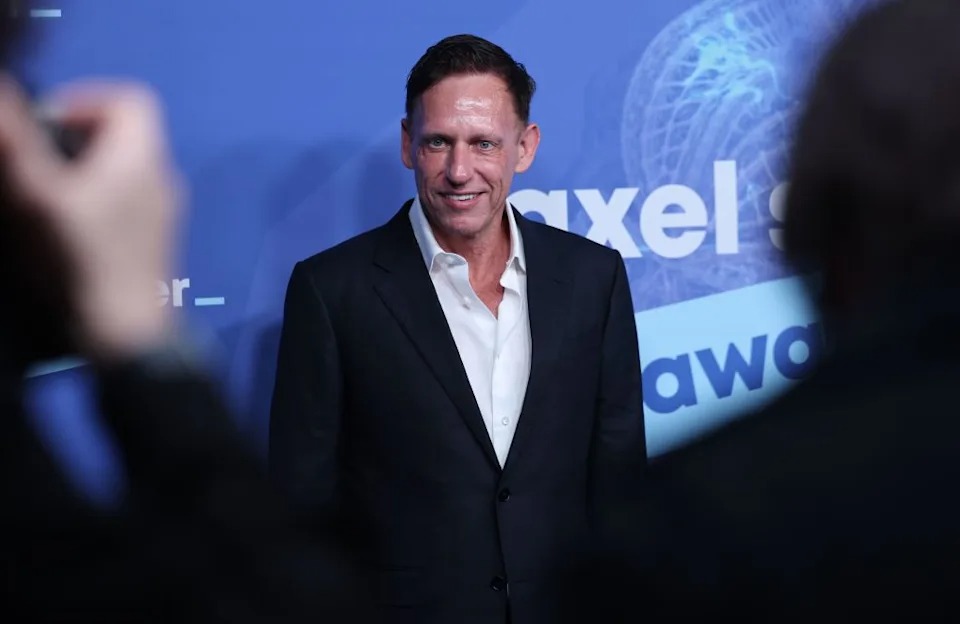
Peter Thiel has argued that former President Barack Obama and Pope Leo XIV are stoking public fears over artificial intelligence merely to enhance their own popularity.
In newly disclosed “Antichrist” lectures obtained by Politico, Thiel specifically targeted the two leaders while warning against the Antichrist, which he sees as halting technological progress and advocating a regulatory “one-world government”.
“A lot of people know that AI is politically unpopular, and they want to use that to boost their own popularity,” Thiel reportedly said during his address in Nashville.
Thiel continued:
“Both Obama and the pope fall into this category. Obama knows that Democrats have no ideas, but at least they can oppose AI.”
Obama recently called on Democrats to develop a comprehensive approach to the regulation of artificial intelligence.
Referring to Leo’s first encyclical on AI, “Magnifica Humanitas”, Thiel said: “The Church needed a politically popular issue to divert attention from child sexual abuse scandals, and it found it in AI.”
On the pontiff, he stated verbatim:
“AI is the greatest threat to late modernity. The pope realizes this. That is why he wrote his first encyclical… The Church needed a politically popular issue to divert attention from child sexual abuse scandals, and it found it in AI.”
In recent months, Pope Leo has gone on the offensive against artificial intelligence. The leader of the Catholic world recently said that this technology could create a “paradise of machines” that could endanger humanity.
Thiel’s relationship with the Catholic Church is fraught. This spring, largely in response to Thiel’s earlier lectures on the “Antichrist”, Vatican adviser Father Paolo Benanti penned an article entitled “The American Heresy: Should We Burn Peter Thiel?”
Throughout the lectures, Thiel framed familiar technology debates in religious terms.
Citing Matthew 24:24, for instance, the investor quoted:
“For false christs and false prophets will arise and perform great signs and wonders, so as to deceive, if possible, even the elect.”
Regarding this verse, he asked in Nashville: “And what about the psychology of the Antichrist? Could he see himself as the Christ?”
In his Nashville lectures, he also delved into the concept of the “Katechon”, drawn from the Second Epistle to the Thessalonians, which restrains the arrival and rise to power of the Antichrist.
Figures who may have briefly assumed the role of the Katechon throughout history included Charlemagne and Klemens von Metternich.
“If anti-communism is the Katechon holding back communists trying to create a communist one-world state, then neoliberalism is anti-communism in a world without communists,” Thiel said.
In both San Francisco and Nashville, Thiel devoted a significant portion of his opening lecture to addressing “effective altruism”.
This ideology rests on the premise that human beings should always act to minimise existential risk to the species and maximise positive long-term impact.
Many effective altruists and affiliated groups are based in San Francisco and work on artificial intelligence research.
In Nashville, Thiel criticised their ideas. This stance reflects the fact that they have dominated much of the recent AI safety debate, showing Thiel’s concern over the growing influence of this group.
Thiel stated:
“One reason [the effective altruists’] strategy works, of course, is that an apocalypse is impossible to undo. You only have one planet. Even Greta [Thunberg] was right about that. … So you can’t just ignore the risks. But we must also take seriously that when you establish a near-totalitarian one-world government empowered to stop all dangerous scientific work, undoing that will not be easy either… There is no historical example suggesting this global warden would willingly surrender power. Effective altruist ideology has brainwashed a significant portion of the people working on AI.”
The remarks delivered by Thiel in his lectures on 28 September and on Monday provide a rare glimpse into the conservative tech billionaire’s shifting political priorities over time.
Thiel’s opposition to regulation is not new. That perspective is widely shared among Silicon Valley venture capitalists.
What distinguishes Thiel from his peers in the conservative tech sector is his decision to frame political disputes in religious terms while simultaneously attacking the leader of the Catholic Church.
This shift could reverberate across the political arena. Thiel was an early backer of President Donald Trump and served as a major financial sponsor of Vice President JD Vance’s transition from venture capital into politics.
Politico noted that Thiel’s attacks on the church could complicate matters for Vance, a Catholic convert.
Democrats positioning themselves for the 2028 presidential election have already begun targeting Vance over his ties to the billionaire investor.

What is scale in foreign policy? How is success measured in foreign policy?

Musk boosts Republican midterm funding despite pledge to curb spending

IMF warns global economy is nearing the limits of its resilience

NATO unveils 32-nation defence strategy to counter adversaries

Germany detains two Turkish suspects over Polish Starlink arson
-
 Europe2 weeks ago
German interior ministers drop unanimity rule to counter AfD veto
-
 Diplomacy2 weeks ago
US Ambassador Guilfoyle faces backlash in Greece over alleged remarks
-
 Europe2 weeks ago
Key European allies excluded from US-led NATO meeting in Poland
-
 Diplomacy2 weeks ago
While the West breeds crises, Eurasia weaves peace and development, says Prof. Zhang Weiwei
-

 Middle East2 weeks ago
Netanyahu holds secret UAE talks with Saudi Arabia and Arab officials
-
 Europe2 weeks ago
EU drafts plan to curb national vetoes in radical expansion reform
-

 America2 weeks ago
Canada diversifies oil and gas exports away from US
-
 Diplomacy2 weeks ago
The European Union’s peace project has collapsed, MEP von der Schulenburg says
