Diplomacy
International experts in Istanbul chart a path for Palestinian statehood beyond genocide

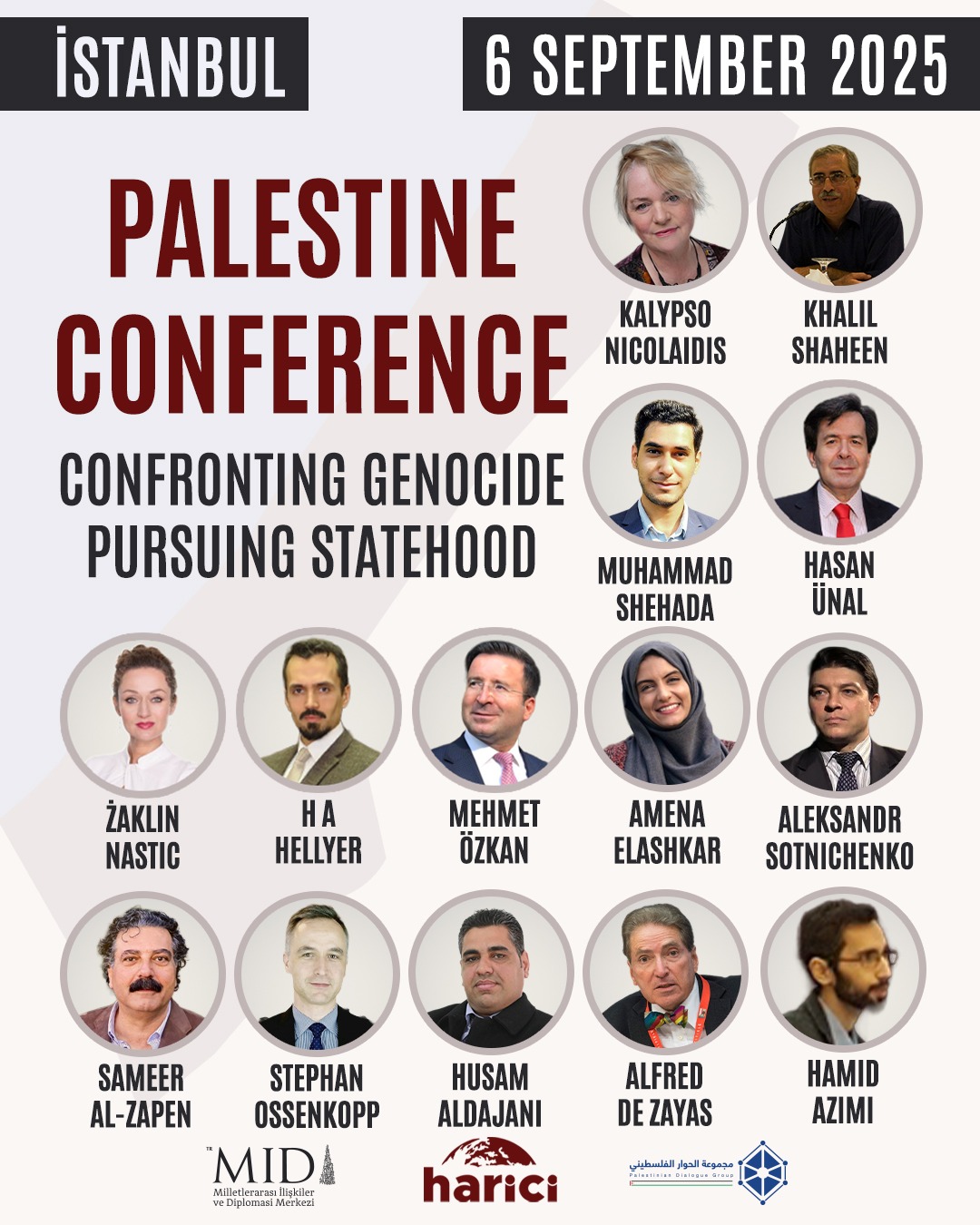
Palestinian and international experts convened in Istanbul for the international conference titled From Genocide to the Building of the Palestinian State, bringing together specialists from Palestine, Türkiye, Egypt, Iran, Saudi Arabia, Russia and Europe. Speakers addressed the humanitarian crisis in Gaza, which they described as a genocide, the challenges in Palestine’s state-building process, and the role of the international community. The conference emphasized the need to overcome internal Palestinian divisions and increase diplomatic pressure on Israel. Former High Representative of European Union Joseph Borrell sent his greetings to the conference.
Palestinian opinion leaders, academics, and regional experts from various countries gathered for the international conference, From Genocide to the Building of the Palestinian State.
The humanitarian crisis in Gaza, the Palestinian statehood process, and the role of the international community were discussed in a multifaceted manner at a conference jointly organized in Istanbul by Harici Media, the Palestinian Dialogue Group, and the Center for International Relations and Diplomacy (MID).
In his opening speech, Tunc Akkoc, Editor-in-Chief of Harici, highlighted the two contrasting aspects of the Palestinian issue.
“On one hand, we are witnessing perhaps the greatest tragedy in the history of the Palestinian people. On the other, critical steps are being taken towards the international recognition of a legitimate Palestinian state,” Akkoc said.
Describing the Palestinian issue as one of the world’s most pressing problems, Akkoc stated that they would address it from various perspectives. “We aim to make a small contribution to the solution by reaching a wide audience through the power of media and online publications,” he commented.
Head of Palestinian Dialogue Group Sadeq Abu Amer, said in his opening speech, “The Palestinian people have been facing genocide, ethnic cleansing, and attempts to erase their identity for a century; today, this tragedy has reached its most dangerous stage in Gaza.” Drawing attention to the double standards of the international system, Abu Amer said, “However, the unprecedented solidarity among peoples around the world could become a new tool for political pressure.” He emphasized, “The Palestinian cause is not only the responsibility of Palestinians, but also the shared humanitarian responsibility of everyone who believes in freedom and justice.”
Mehmet Rakipoglu, Information Production and Publishing Coordinator of MID, noted that Israel’s genocide has been registered by international institutions. “We must now focus on the question of ‘what can we do next, how can Palestinian statehood be achieved?'” he stated.
Rakipoglu argued that not only Israel’s military power but also its system of knowledge and thought must be dismantled. “For this reason, we must build an epistemological Al-Aqsa Flood,” he said.
“The Palestinian national movement has lost its ability to evaluate its mistakes”
Researcher and journalist Yusuf Fakir al-Din drew attention to the internal problems within the Palestinian national movement. “The Palestinian national movement has lost its ability to evaluate and correct its own mistakes. Division has intensified accusations, accelerating national dissolution and weakening the resistance,” he assessed.
He emphasized that national dialogue is the most urgent priority to end the war and regain the initiative.

“Europe must no longer remain on the sidelines”
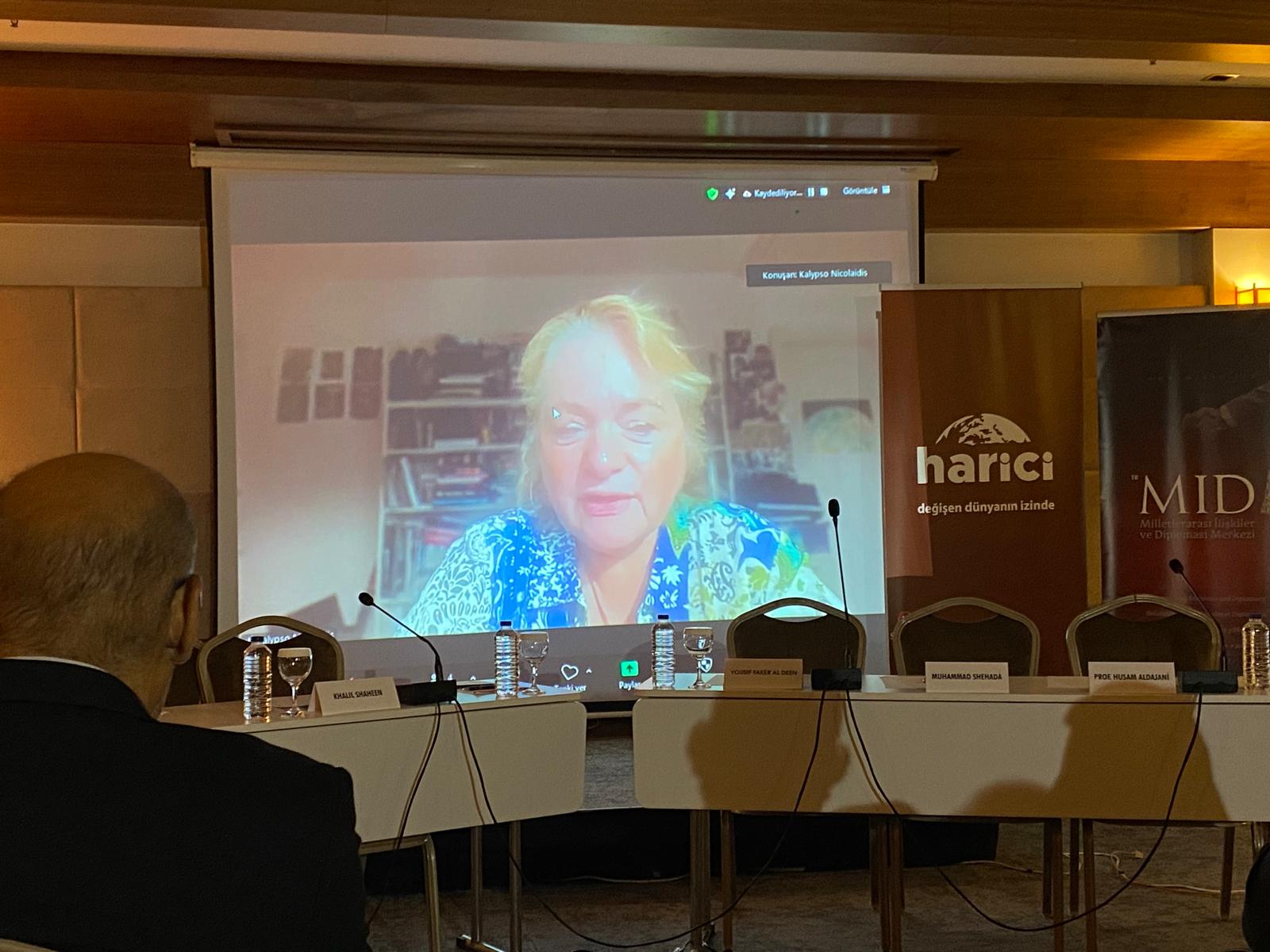
Professor Kalypso Nicolaidis from the European University Institute stated that the meeting, held before the United Nations (UN) General Assembly, was of critical importance.
“Many countries, including France and the United Kingdom, are joining the 147 states that recognize Palestine. This step has the potential to change the balance in the Security Council,” Nicolaidis said.
She noted that Europe must no longer remain on the sidelines and should approach the Israeli-Palestinian conflict with a more decisive plan.
Nicolaidis also said that former High Representative European Union Joseph Borrell had sent his greetings to the conference.
“Israel’s goal is to expel Palestinians”
Khalil Shaheen, Director of the Palestinian Center for Policy Research and Strategic Studies (MASARAT), analyzed the objectives of the political transformation in Israel.
“The transformation that has been ongoing in Israel for three decades, with the rise of the religious Zionist right, aims for the forced expulsion of Palestinians. The attempt at forced migration and altering the demographic balance in Gaza is being pursued just as dangerously in the West Bank,” he explained.
Palestinian researcher and journalist Sameer Al Zapen expressed that the Palestinian issue has become incomprehensible due to the endless division between Hamas and Fatah.
“Today, the Palestinian issue has become incomprehensible; political discourse is now detached from real meaning. After the Al-Aqsa Flood, the Palestinian cause faces either liquidation or a transformation similar to the 1948 Nakba,” al-Zaben said.
“Türkiye’s mediation was rejected by Israel”
Professor Husam al-Dajani from Ummah University in Gaza discussed mediation efforts. “Türkiye’s mediation attempt was categorically rejected by Israel. The circle of mediation remained between Egypt, Qatar, and the US, with Washington not advancing the process without Israel’s approval,” he shared.
Al-Dajani said that previous mediations did not address the occupation, which is the root of the problem, and that any solution must begin with stopping the genocide.
“Words are not enough to describe Gaza”
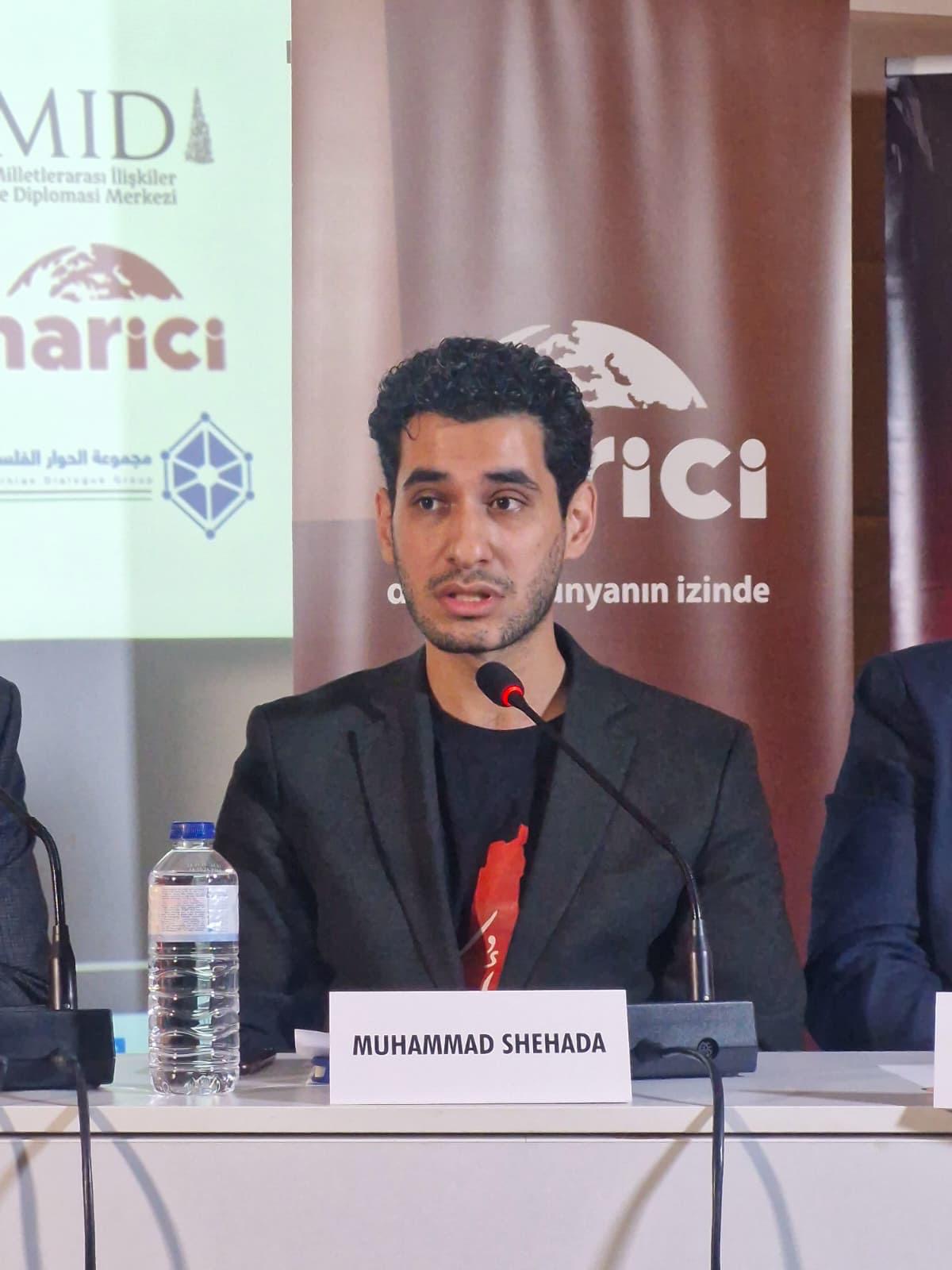
Mohammed Shehadeh from the European Council on Foreign Relations (ECFR) stated that there are no words left to describe the situation in Gaza. “Words are not enough to describe Gaza; catastrophe, apocalypse, dystopia—none are sufficient to convey what is happening. UN reports first described Gaza as a ‘graveyard for children,’ then a ‘disaster zone,’ and finally said, ‘there are no words left,'” he expressed.
Shehadeh said that Israel is emptying words like “genocide” of their meaning and highlighted the importance of international activism.
“A European official told me, ‘If you want to mobilize us, protest day and night in front of our ministry, take us to court.’ If activism slows down, they will gain time to make people forget the genocide,” he added.

“The issue is not Palestine, but an Israel problem”
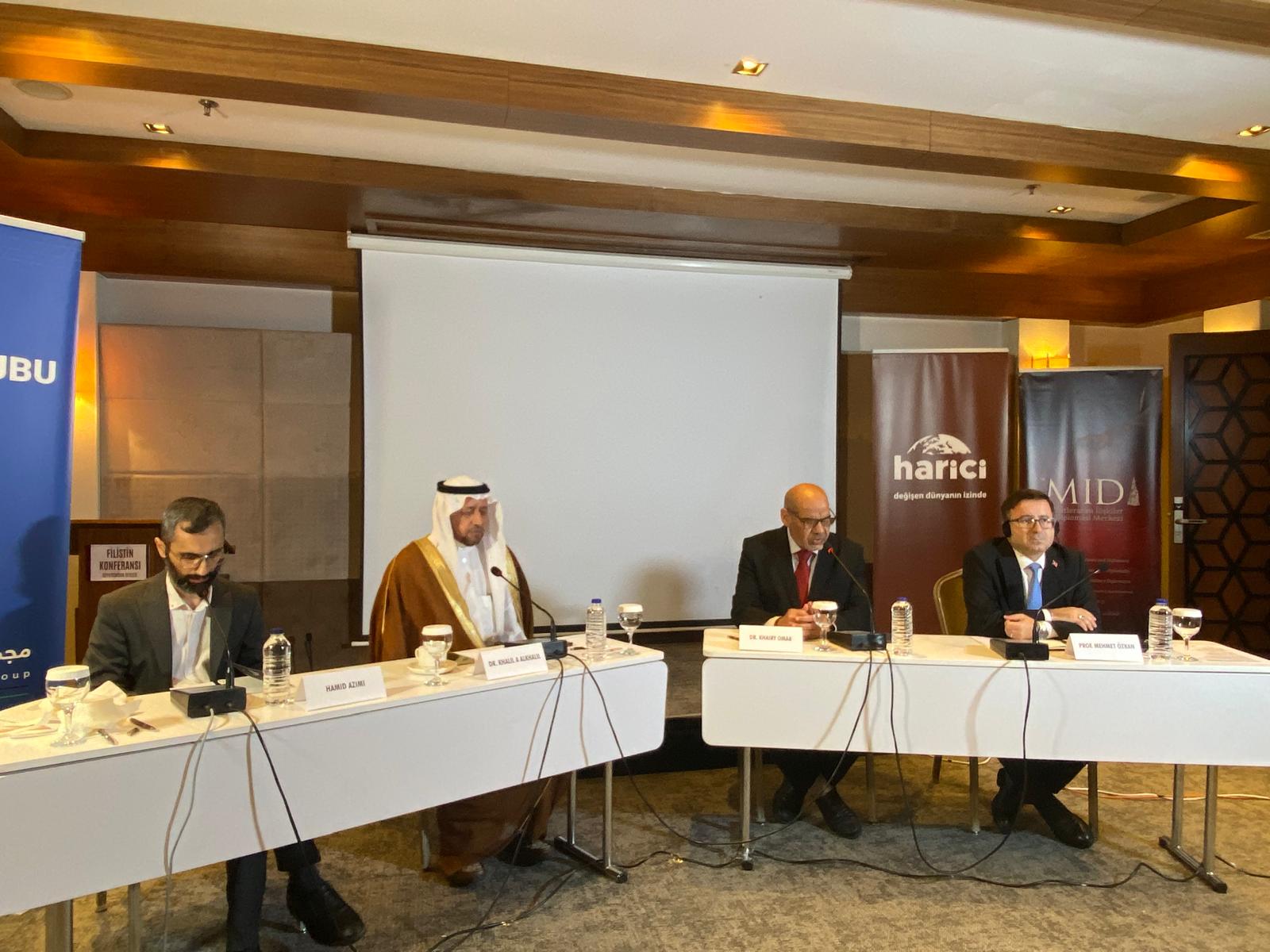
Professor Dr. Mehmet Ozkan from the Turkish National Defence University, argued that the problem needs to be correctly identified. “We should no longer be talking about a Palestinian issue in our region, but directly about an Israel problem; its aggressive and expansionist policies have become clear,” he said.
Ozkan recalled that Türkiye has been one of the countries showing the strongest reaction against Israel from the very beginning.
Dr. Khalil A. al-Khalil from Saudi Arabia said that the Palestinian cause has a universal character and that Israel is becoming increasingly isolated in the international arena.
Hamid Azimi from the Iran Mersad Strategic Research Center noted that the recognition of a Palestinian state is a tool, while the existence of the people and their land is what truly matters.
“Public reaction in Europe has not been reflected in policy”
Dr. H.A. Hellyer from the Royal United Services Institute (RUSI) stated that the United Kingdom and many European countries are preparing to recognize a Palestinian state, but this should not be seen as a reward or punishment.
“Public opinion in Europe is clearly opposed to what Israel is doing in Gaza, but this reaction has not yet been fully reflected in state policies and practices,” Hellyer noted.
Stephan Ossenkopp from the Schiller Institute expressed that the world’s transition to a multipolar order offers an opportunity for a just solution for Palestine, but Germany has not changed its policy of full support for Israel.
“Germany is violating its ‘Never again’ pledge”
Former member of the German Bundestag, Zaklin Nastic, said that Germany is openly violating its “Never again!” pledge by complicity in the genocide in Gaza through arms shipments and political support.
“When they say ‘Never again!’, we ask: For whom? The responsibility for universal human rights and the protection of the oppressed is being abused in Germany today,” she stated.
Russian academic and diplomat Aleksandr Sotnichenko noted that liberal utopias have collapsed and that the siege of Gaza can be compared to the 1941-44 siege of Leningrad.
Professor Dr. Hasan Unal from Baskent University predicted that the world is moving towards a multipolar order no longer dominated by the West, and this will weaken Western support for Israel over time.
“Israel’s policy of declaring everyone an enemy is not sustainable,” he added.