
America
Iran war costs US economy $265 billion as household burden mounts

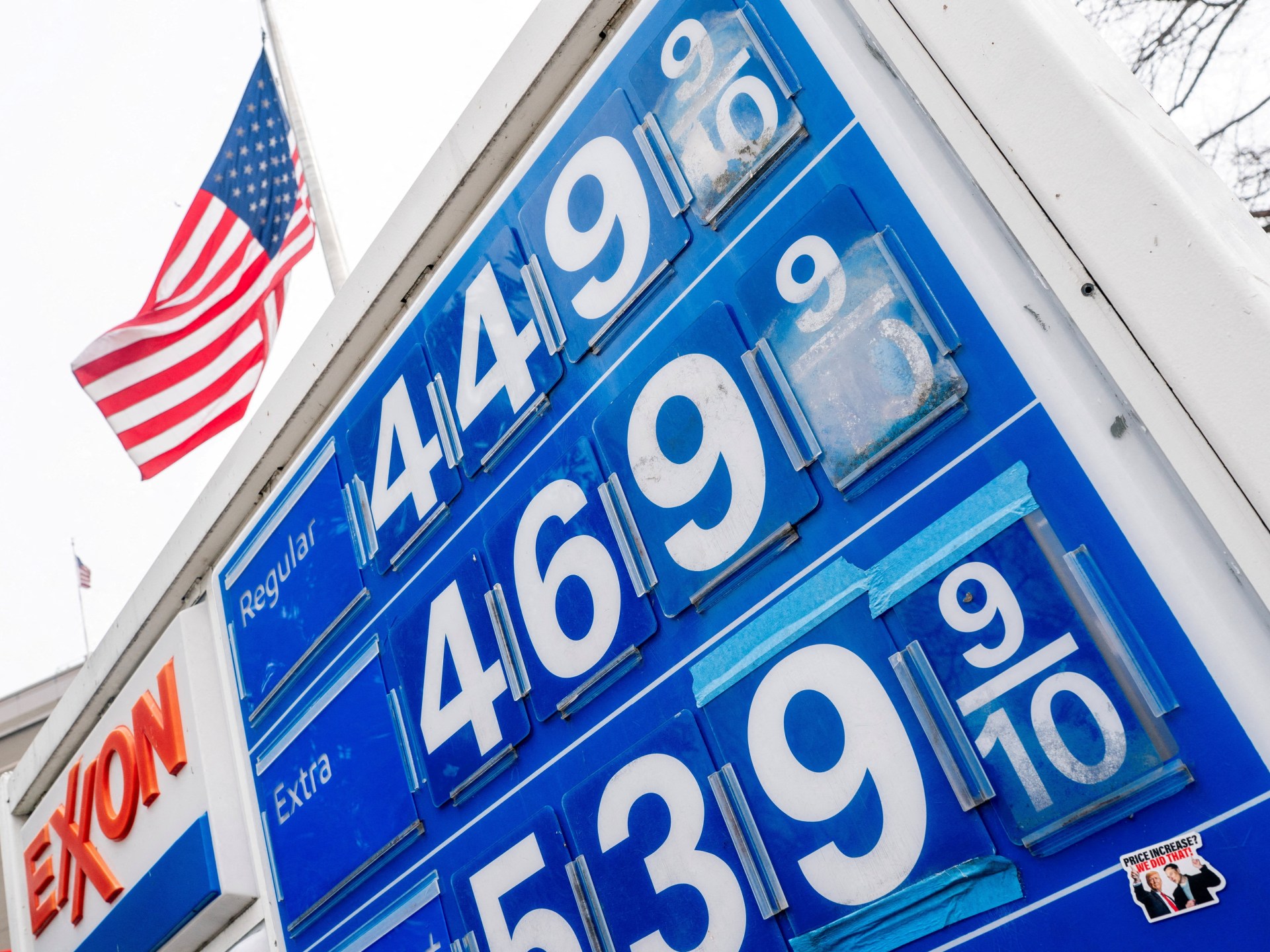
The economic toll of the conflict on the US has reached $265 billion in the roughly eight months since the start of joint US and Israeli strikes against Iran.
According to calculations by Moody’s Analytics Chief Economist Mark Zandi, this amount imposes an additional burden of approximately $2,000 on the budget of an average American family.
Sharing data on his X account on Tuesday, Zandi noted that the cost per household since the war began stands at about $2,000, with nationwide economic losses reaching $265 billion.
This estimate is seven times higher than the direct military spending figure reported to Congress by Secretary of War Pete Hegseth, which covers the period between the start of the strikes on 28 February and the end of July.
While Hegseth’s official figures cover only direct military operations, the conflict’s impact on global markets and oil prices is driving up inflation and day-to-day living costs, deepening the real burden on household budgets.
Fuel and heating costs strain budgets
Energy items account for the largest share of the additional expenses facing American households. The surge in fuel, home heating, and transport costs has generated an extra bill of about $1,100 per family.
Zandi noted that the price of regular petrol, which hovered just below $3 per gallon before the war, has risen to $4.37, while diesel has exceeded $6 and jet fuel has nearly doubled.
Pointing out that a marked rise in residential heating fuel costs is driving up spending as winter approaches, Zandi said current price levels continue to add roughly $50 a week to family budgets.
Researchers at Brown University’s Watson Institute for International and Public Affairs are also tracking the impact of rising fuel prices on consumers.
According to data from the institute, US consumers have paid an extra $133.3 billion for fuel products since 28 February.
During this period, petrol prices rose by more than 46% and diesel climbed by over 70%. Of this additional burden borne by consumers, $73.5 billion stemmed from petrol and $59.8 billion from diesel. This calculation translates into an extra cost of $1,017.76 per household nationwide.
Loan interest rates and operational outlays inflate the bill
Another decisive factor in the economic picture has been the rise in interest rates.
Zandi reported that climbing interest rates have created a cost of approximately $540 per household.
Fixed-rate home mortgage rates, which stood below 6% before the war, have climbed to roughly 7.5%, Zandi said, adding that long-term rates have also increased substantially.
Direct military operations, meanwhile, represent a cost of $360 per household based on Pentagon data.
However, experts point out that repair, maintenance, and equipment replenishment expenses are excluded from the published figures, meaning actual military spending on the ground could exceed Pentagon estimates.
Linda Bilmes, a war budget specialist who teaches public policy at Harvard Kennedy School, said she is certain the conflict’s bill will reach $1 trillion, adding, “Maybe we’re already there.”
Trump defends spending as public support drops
The mounting economic strain is fuelling backlash against the military campaign and US President Donald Trump’s handling of the process.
A Pew Research Centre survey conducted on 28 September-4 October among 5,062 adults revealed that 65% of Americans disapprove of the way Trump is handling the Iran strikes.
The proportion of those who consider the use of military force justified dropped four percentage points compared with March, falling to 34%.
Emphasizing that the total cost has wiped out roughly half of the average American household’s income gains over the past eight months, Zandi said it is natural for public support for the war to remain so low.
According to figures shared by pollster Nate Silver, Trump’s net approval rating has tumbled to an all-time low of minus 23.5 points.
Defending the military intervention against Iran, Trump described the costs as “a small price to pay to keep our country and the world safe.”
With the surging cost of living piling pressure on Republicans ahead of the November midterm elections, Trump announced last month that he would provide a $5,000 cash payment to every adult in the country if his party maintains its majorities in both chambers of Congress.









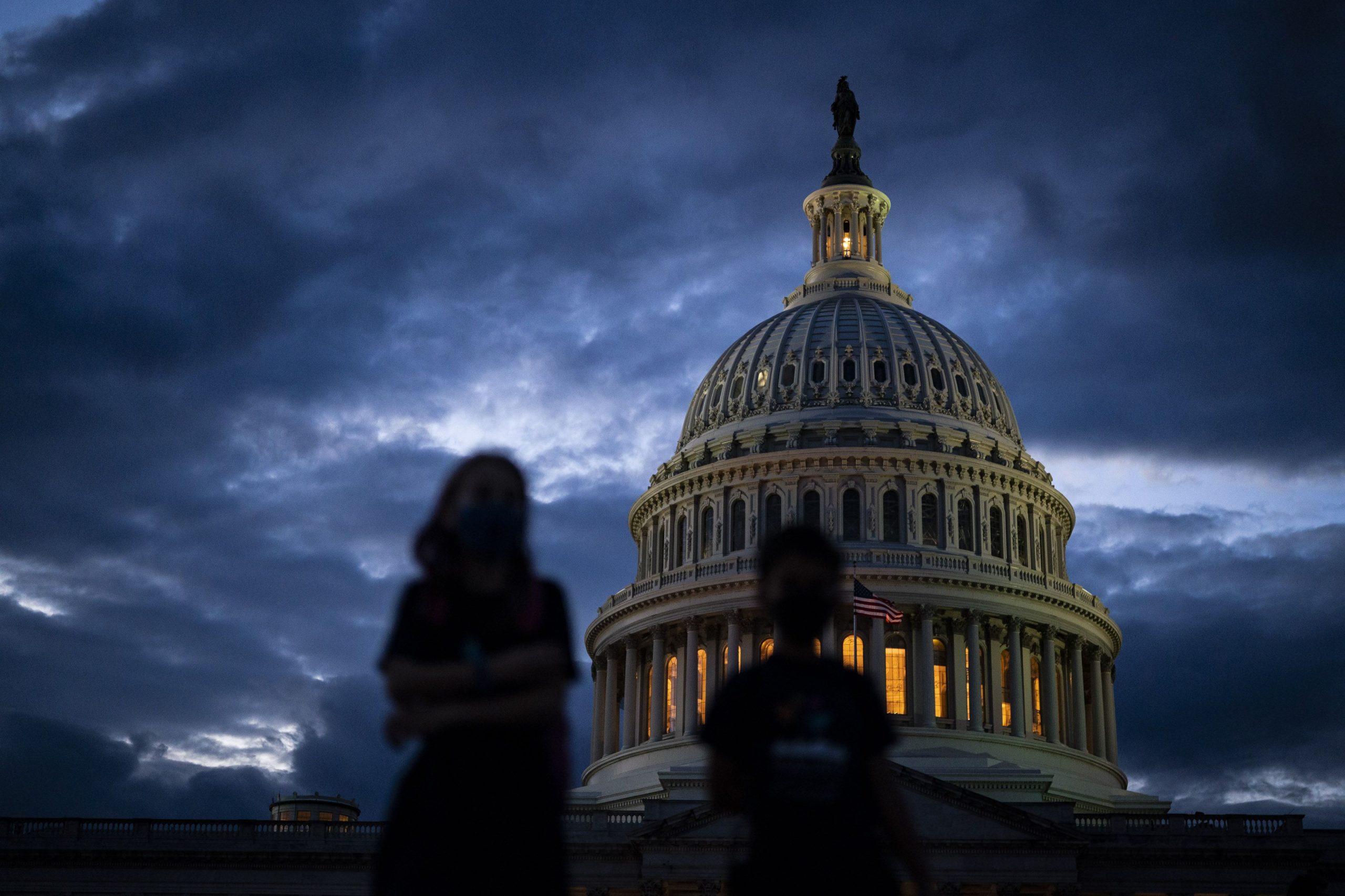
Democrats in the US have secured at least 258 seats in the 435-member House of Representatives, reaching their largest majority since 1992.
According to a report by the Associated Press (AP), Democrats have gained 44 seats so far, surpassing the 40-seat advance they achieved during the 2018 midterm elections in President Donald Trump’s first term.
Democrats reached the 258-seat threshold on Sunday after Democratic challenger Chuck Hubbard defeated Republican Representative Virginia Foxx in North Carolina.
Races remain uncalled in Minnesota and Tennessee, with one seat outstanding in each state, while two contests in Louisiana will head to a December runoff.
Republicans will hold a minority of at least 173 seats.
When Democrats take control of both the House of Representatives and the 100-member Senate in January, a divided government will emerge alongside a Republican president in the White House.
Senate Democrats secured 56 seats, achieving their widest margin in more than a decade.
This House majority matches or exceeds the 258 seats won when Bill Clinton was first elected president in 1992 and the 257 seats secured in Barack Obama’s 2008 victory, though it remains below the record of more than 300 seats held during Franklin D. Roosevelt’s presidency.
As AP reported, voter dissatisfaction with Trump, driven by high prices, anger over the war in Iran, and concerns about corruption, carried Democrats to victory across a broad geography ranging from Republican strongholds to the Midwest and the East Coast.
Democrats prepare 100-day agenda
Under a 100-day agenda drawn up to address the cost of living, Democrats plan rapid votes to reverse Republican cuts to Medicaid and restore expired tax credits under the Affordable Care Act.
Seeking to check presidential authority over the remainder of Trump’s second term, Democrats pledged to open numerous investigations using congressional subpoena power.
These initiatives include examining how Trump and his family acquired wealth following his return to office, while New York Democratic leader Hakeem Jeffries, the leading contender for House speaker, did not rule out an attempt to impeach Trump for a third time.
The White House warned Democrats over the planned oversight of the administration, asserting that these congressional inquiries, though a standard supervisory function, could “clearly constitute a crime”.
“Of course we should feel pressure,” said Representative Jason Crow, a Colorado Democrat and former US Army Ranger.
Speaking at the Capitol earlier this month, Crow said, referring to US Immigration and Customs Enforcement (ICE): “People in this country are dying, losing their health insurance, losing their livelihoods, losing their farms, and being terrorized by ICE.”
Crow continued: “If you do not feel a sense of urgency and pressure in this job, a commitment to deliver results for people, you do not belong under this Capitol dome.”
Representative Alexandria Ocasio-Cortez, a New York Democrat and prominent progressive voice, said at the Capitol: “This is a historic moment for our country. It is one of the largest classes we have seen.”
Ocasio-Cortez characterized the decisive seat total as a “mandate for change”.
Representative Tom Suozzi, a centrist New York Democrat and accountant by profession, said Democrats must dedicate 75% of their time to the cost of living and 25% to accountability.
“Everything has to come back to the people and how it affects them,” Suozzi said.
Emphasizing that inquiries into Trump’s financial dealings must make the same connection, Suozzi asked: “How does this affect people’s pocketbooks?”
New leadership prepares to take office with wide maneuvering room
Unlike Republican House Speaker Mike Johnson of Louisiana, who struggled to govern over the past two years with a single-digit margin that allowed small groups of Republican lawmakers to stall the legislative agenda, the incoming Democratic leadership will enjoy substantial maneuvering room.
If elected by his colleagues on 3 January 2027 as the first Black speaker of the House in US history, Jeffries could still reach the 218 votes required to pass legislation even if dozens of Democrats break ranks on any given roll call amid unified Republican opposition.
Representative Troy Carter, a Louisiana Democrat expected to lead the Congressional Black Caucus, said: “We are not a monolith. People come to the table with different ideas, and that’s okay.”
The Republican House seat total fell to one of its lowest levels in decades.
The party remains far below the 247 seats it won in the 2014 midterms late in the Obama administration, the 230 seats taken during Newt Gingrich’s 1994 wave, and its historical high of 301 seats in 1920.
Representative Jim Jordan of Ohio, elected by his peers as Republican minority leader, vowed to fight to regain power.
“For the next two years, House Republicans will fight for American families,” Jordan said.

The US Congress is closing in on a deal that would ban Chinese-origin cars from entering the US.
Sources speaking to Bloomberg said that Republicans and Democrats from car-making states behind the initiative aim to deliver a bill to President Donald Trump’s desk by the end of the year.
If the law takes effect, the lucrative US car market will be closed to car makers such as BYD and Geely, which have been rapidly gaining market share across Europe and South America with their low-cost, tech-packed electric vehicles.
Chinese cars are already effectively excluded from the US market due to high tariffs imposed by the Department of Commerce and restrictions on Chinese vehicle technology.
Enacting a statutory ban would take these measures a step further to address mounting concerns that the Chinese automotive industry poses “national and economic security threats”.
Details of the measure are still being worked out. According to the sources, Republican Senator Bernie Moreno briefed automotive manufacturer representatives on amendments under consideration to earlier legislation aimed at barring Chinese-origin connected vehicles from entering the US.
These amendments include provisions that would shield Mercedes from a complete ban.
According to the sources, car company representatives generally supported the initiative Moreno outlined, but a Mercedes official expressed reservations, and negotiations remain ongoing.
Sources noted that the bill’s backers are working to pass the measure before the new congressional term begins in January.
In a statement, Mercedes said: “We continue to talk with all stakeholders who share a common interest in seeing this important legislation become law during this session of Congress.”
A bill introduced by a Senate committee earlier this year would have prohibited manufacturers more than 15% owned by Chinese entities from selling vehicles equipped with technology capable of transmitting data.
Mercedes, which has lobbied for changes to this bill, is roughly 10% owned by Chinese state-owned car maker BAIC.
Li Shu Fu, the billionaire founder of Chinese car manufacturer Geely, also owns about 10% of Mercedes shares.
This puts the company above the 15% threshold set in the previous bill.
A source familiar with the talks, speaking on condition of anonymity, said members of Congress were in discussions with multiple parties, including Mercedes, and were optimistic that a deal could be reached this week.
Provisions under discussion include more flexible rules for firms with non-voting, passive shareholdings, as well as how such an approach would be structured and verified.
Republican Senator Katie Britt of Alabama, a key manufacturing hub for Mercedes sport utility vehicles (SUVs), said she was working on the bill with Moreno and expressed confidence that both Mercedes and Alabama would be protected:
“We understand that some adjustments need to be made, but we are confident that Mercedes can continue to thrive in our state and across the nation.”
Banning Chinese-origin cars would also contrast with the more flexible approach adopted by Europe and Canada.
Chinese car manufacturers have gained market share rapidly, particularly in Europe, triggering intense competition with domestic brands.
After Chinese car makers accelerated their market share gains in Europe, the EU began to push back, signing an agreement with China last month to limit imports of hybrid vehicles into the bloc.
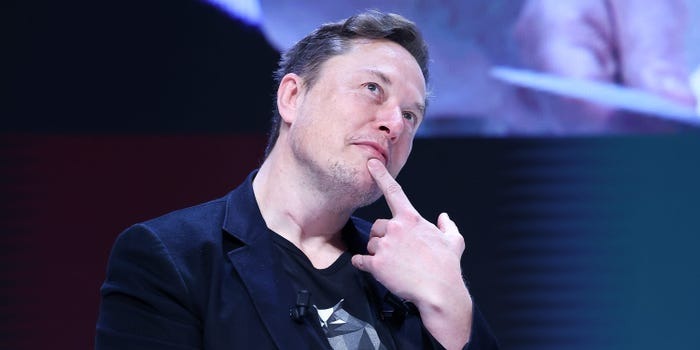
Tesla CEO Elon Musk has said he feels “pretty stupid” for spending $442 million on Republican campaigns after the party suffered heavy losses to Democrats in the 2026 midterm elections.
Speaking remotely at the DealBook Summit in an interview with New York Times columnist Andrew Ross Sorkin, Musk, the world’s richest person, stated that his primary objective had been to help Republicans maintain control of the Senate.
However, Democrats secured the majority, with Democratic candidate Mary Peltola winning the Alaska Senate race to bring the seat distribution to 56 for Democrats against 44 for Republicans.
“I feel pretty stupid spending that much money and not seeing much return on it,” Musk told Sorkin.
Musk added that the outcome could have been far worse without his spending, but noted: “It certainly shows that American elections are not just about money.”
Musk continued: “Clearly you can spend a ton of money on an election and have relatively little impact, which I think was the case here.”
Saying he would spend less if he could turn back the clock, Musk remarked that he did not have much personal interest in the elections because he was focused on growing SpaceX and Tesla.
Musk describes himself as “ideologically moderate”
Musk stated that heading into 2029, he wanted Republicans to control at least one of the House of Representatives, the Senate, or the White House, while wishing that neither Democrats nor Republicans attain a “supermajority”.
“I think we want to have checks and balances here,” Musk said, emphasising that this was his sole motivation.
Describing himself as “ideologically pretty moderate”, Musk said: “I do not think I like any extreme political views.”
Noting during the interview that he was “not MAGA” and was unsure what the term strictly meant, Musk added: “If it means blind adherence to a set of Republican Party policies, I certainly do not have that.”
Rapprochement with Trump and the DOGE era left behind
Musk had previously forged a close relationship with President Trump ahead of the 2024 presidential election, subsequently being appointed to lead the now-defunct Department of Government Efficiency (DOGE).
The pair’s working dynamic led some critics to allege they were operating a “co-presidency”.
However, following a disagreement between the two men, Musk stepped down from his post to focus on his companies, and DOGE closed in July upon the expiration of its mandate under an executive order.
Musk had described himself as “dark gothic MAGA” at an October 2024 Trump rally held at Madison Square Garden.
Critics claimed the font on the black MAGA cap he wore at that rally resembled the Fraktur typeface used by the Nazis during their rule in Germany, though experts later debunked the allegation.
Musk has also backed other right-wing political parties around the world.
In January 2025, he attended a rally of the far-right Alternative for Germany (AfD) party online.
Georgetown University researchers noted that the AfD’s sweeping victory in the German state of Saxony-Anhalt last month raised the possibility of “the first far-right state government in Germany since the Nazi era”.

Authorities in Sweden and Italy scrutinize Revolut over illicit flows

US military personnel prepare to return to Somali airbase

European builders target 620 billion euro defence boom

Antalya COP31 climate talks collapse over fossil fuel dispute

US Democrats secure House majority in largest advance since 1992
-
 America2 weeks ago
US midterms see 97 young winners as Gen Z representation triples
-

 Europe2 weeks ago
UK and Germany expand military pact with focus on Russian frontier
-
 America2 weeks ago
Nvidia investigates CEO Jensen Huang over link to Chinese spy
-

 America2 weeks ago
US secures 35% stake in Venezuelan firm NABEP under 50-year deal
-

 Europe2 weeks ago
George Szamuely dissects European decline and strategic rifts with US
-

 Opinion2 weeks ago
The Mecca Defence Agreement, the Ottoman Empire, and the facts
-

 America2 weeks ago
Absent Democrats derail floor vote on Pete Hegseth impeachment
-

 Opinion2 weeks ago
Seize, delete, deny: Israel’s war on its own record, from the Mavi Marmara to Gaza – 2
