
Europe
Ireland offers EU budget cuts but Germany rejects proposal as too low

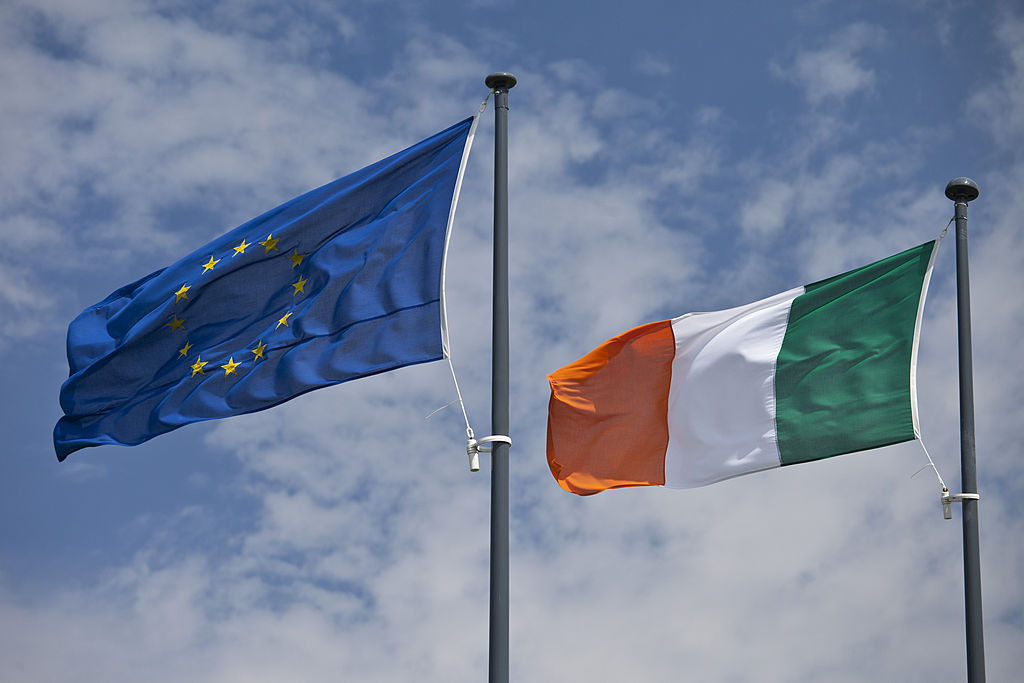
Ireland proposed cutting as much as 159 billion euros from the European Commission’s draft budget of approximately 2 trillion euros, but Germany found the reduction insufficient.
Thomas Byrne, Ireland’s Minister of State for European Affairs, described the proposed cut as a “significant step” while presenting the “negotiating box”, which outlines billions in budget items in detail for the talks.
Yet, facing mounting pushback from traditionally “frugal” member states, including Germany and the Netherlands, which want an even smaller budget, Minister Byrne acknowledged that the work was far from complete.
“The negotiating box we are presenting today is not the final outcome,” the Irish politician told reporters on Saturday, stating instead that the package should serve as a “catalyst” for reaching an agreement by Christmas.
Holding the presidency of the Council of the European Union, Ireland proposed a budget of 1.83 trillion euros in current prices for the 2028-2034 period.
This represents an 8% reduction compared with the proposal put forward by the EU executive.
Industry and research funds suffered the heaviest blow, facing a 75 billion euro cut, or 13%, compared with the proposal from the EU executive.
However, the “frugal” group of nations led by Germany immediately voiced sharp criticism of the new proposal.
German Chancellor Friedrich Merz said in a statement: “The level of the new proposal does not form a basis for an agreement.”
Echoing this view, Dutch Finance Minister Eelco Heinen questioned the objective of securing a compromise by Christmas, saying: “At this rate, an agreement will not be reached before the end of the year.”
Austrian Minister for Europe Claudia Bauer, who described the reductions in administrative lines as a “step in the right direction”, noted that the Irish draft remained “still very far from receiving Austria’s approval”.
By contrast, reactions from the “pro-cohesion” camp were more moderate.
Poland’s Minister for European Union Affairs Ignacy Niemczycki wrote in a social media post that work must continue on the “shape of own resources” and stated that the proposed size of the budget did not match the bloc’s ambitions.
An EU diplomat told Rapporteur: “Now is not the time to praise anything. If you say you like it now, they will take more from you.”
The Irish proposal contains cuts across all budget lines, but these reductions are uneven.
A major reduction targets the competitiveness budget, which faces a cut of approximately 13%, or 75 billion euros.
The proposal envisages allocating 362 billion euros to the European Competitiveness Fund, including the Horizon research programme.
This figure is lower than the 409 billion euros proposed by the Commission.
Funding for “Global Europe”, the bloc’s external action arm, would drop by about 38 billion euros, or more than 17%.
Administrative expenditure would be cut by around 10 billion euros, or 9%.
Funding for national plans (NRPPs), including cohesion and agricultural funds, was left largely untouched, with a proposed reduction of approximately 3%. Ireland proposes reducing the Commission’s proposal by 28 billion euros, bringing it to 837 billion euros.
An earlier proposal by Cyprus had reduced the Commission’s draft by 2%, or roughly 33 billion euros.
That draft had proposed cuts of around 4% in competitiveness and external action, while largely shielding national spending plans covering agriculture and cohesion.
Alongside the overall scale and allocation of the funds, the question of how to finance the budget remains a point of contention.
Several capitals view the proposed new “own resources” critically, including EU levies aimed at easing the burden on strained national treasuries.
The Commission plans to generate roughly 66 billion euros annually through levies on electronic waste, tobacco products, corporations, and carbon emissions. This requires the unanimous support of all member states.
The new “own resources” component is among the most contentious elements of the negotiations.
Although the Irish draft excludes the European Parliament’s proposals and revises the EU executive’s revenue estimate downwards, it still includes all five of the Commission’s proposals.
The text includes revisions regarding own resources based on the carbon border adjustment mechanism, seen as one of the most prominent options, as well as the ETS-based levy, which Poland has sharply criticised.
The issue of own resources is expected to feature prominently in talks among EU leaders next week.
European Council President António Costa, who is tasked with ultimately concluding the agreement, will chair the summit opening on 15 October.


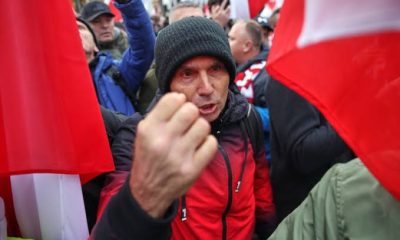





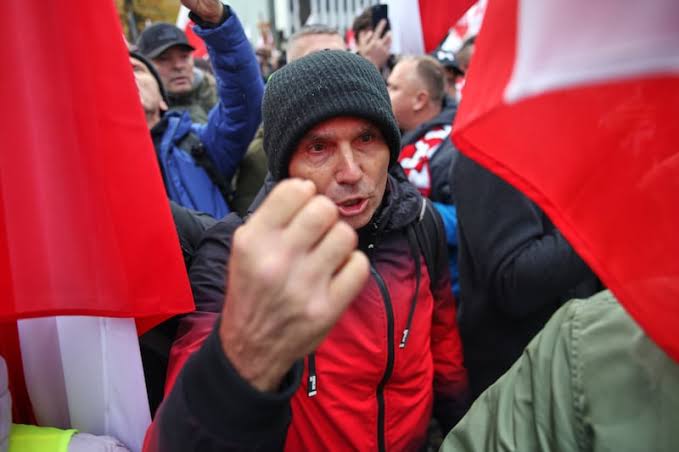
Polish presidential spokesperson Rafał Leśkiewicz announced that a criminal complaint will be lodged with prosecutors against three individuals, citing a violation of President Karol Nawrocki’s immunity during a scuffle at the Constitutional Tribunal building on Friday night.
Speaking on Radio Wnet on Sunday, Leśkiewicz stated that the head of state’s bodily inviolability was infringed during the incidents that occurred overnight between Friday and Saturday.
The presidential spokesperson emphasized that Anna Korwin-Piotrowska, who took over the administration of the court, along with judges Maciej Berek and Krystian Markiewicz, who were elected by the current Sejm, had no right to lay hands on the president.
Leśkiewicz noted that the presidential office would initiate criminal complaint proceedings against these three individuals.
“Neither Ms Anna Korwin-Piotrowska nor Mr Krystian Markiewicz are judges of the Constitutional Tribunal; they blocked the entrance door of the Constitutional Tribunal to Mr President and violated the immunity of the head of state,” spokesperson Leśkiewicz said.
Defending Nawrocki’s visit to the court building, Leśkiewicz stated that the president acted as a citizen exercising his rights and aimed to observe the de facto situation within the institution in person.
In his remarks, Leśkiewicz said: “This is a public office established for citizens to conduct their affairs, and Mr President entered to understand the actual situation inside the Constitutional Tribunal.”
Karol Nawrocki, who cut short his visit to Senegal and returned to Poland as tensions escalated around the Constitutional Tribunal, found himself caught in a scuffle between opposing parties outside the court building shortly afterwards.
Sharing one of the videos circulating on social media, Judge Maciej Berek described the situation as “disturbing and scandalous.”
In a post on the platform X, Berek wrote: “The president moved with great speed directly at Judge A. Korwin-Piotrowska and began pushing his way through the group of other judges.”
Speaking to broadcaster TVN24, Judge Anna Korwin-Piotrowska said the president “virtually trampled over” them.
Addressing Korwin-Piotrowska’s remarks during his Radio Wnet interview, Leśkiewicz rejected the claim and argued that the judge was attempting to defend herself.
“Ms Korwin-Piotrowska is trying to build a line of defence for herself in this manner; this is natural because, just like Mr Berek or Mr Markiewicz, she will undoubtedly bear criminal liability for this conduct,” Leśkiewicz said.
Describing the nighttime recordings on social media as “dramatic”, Leśkiewicz claimed the footage constituted a “ready-made indictment” against Prime Minister Donald Tusk and the three individuals in question.
Leadership dispute escalates into midnight crisis
The crisis at the Constitutional Tribunal began when court president Bogdan Święczkowski and deputy president Bartłomiej Sochański were announced to have had their duties suspended.
The administration of the court was assumed by Judge Korwin-Piotrowska, who was elected by the Sejm.
Leaving the court building on Saturday morning, President Nawrocki held successive consultations with representatives of political parties in parliament, arguing that the constitutional order had been violated.
Addressing the nation that same evening, Prime Minister Donald Tusk closed the door to any compromise regarding the Constitutional Tribunal.
In an earlier assessment, Prime Minister Tusk had said, “It is our duty to restore the rule of law.”
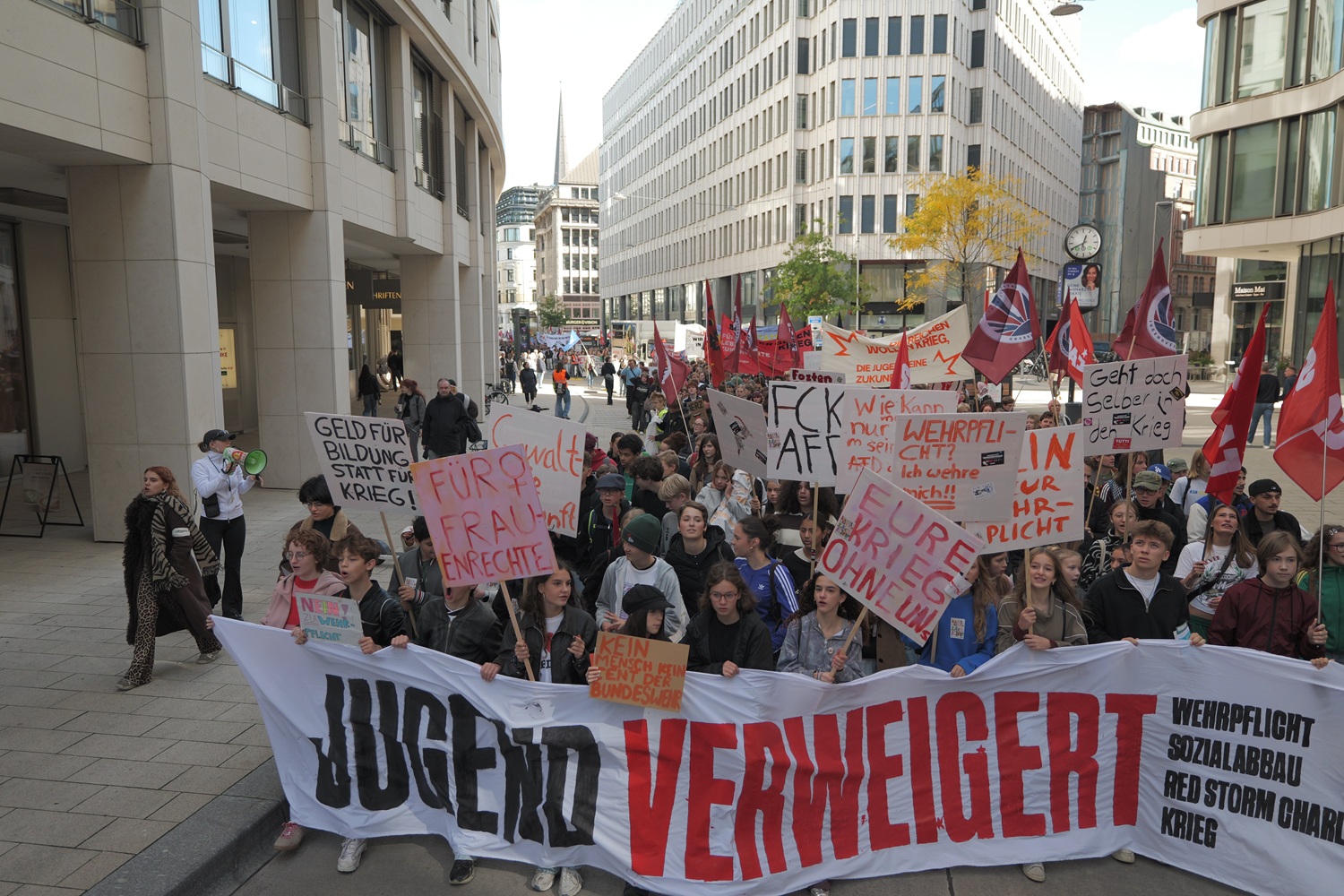
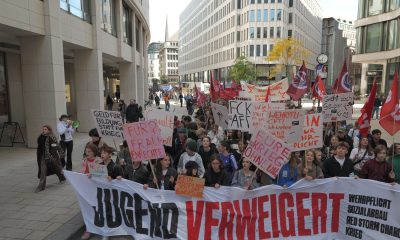
As school strikes against the reintroduction of compulsory military service continue across Germany, the Christian Democratic Union (CDU) has faced calls to deploy the military against student demonstrations.
The next nationwide school strike in the country is scheduled for 20 November. Like earlier school walkouts, it is primarily directed against the reintroduction of compulsory military service, which is clearly looming on the horizon.
In addition, coalitions of high school and university students are calling for fresh demonstrations this Saturday (31 October). These actions take French student protests as a model, but go even further in opposing mass militarization in Germany.
So far, demonstrations have been announced in just under a dozen cities, and these protests also face the threat of growing state repression.
In Hamburg, for instance, a police spokesperson announced that there would be a “very strong police presence” and that drones would also be deployed against demonstrators.
Going a step further, the Berlin-Mitte branch of the Junge Union (JU), the CDU youth wing, demanded the deployment of the Bundeswehr [German Armed Forces] as a precautionary measure against high school and university student demonstrations “to defend our liberal order.”
Meanwhile, debates over banning political parties are currently underway within conservative circles, echoing developments in France with La France Insoumise (LFI).
Years ago, during his tenure as secretary general of the Christian Social Union (CSU), Federal Interior Minister Alexander Dobrindt raised the possibility of banning Die Linke (the Left Party).
Frankfurter Allgemeine Zeitung (FAZ), an influential German newspaper, also recently brought the issue to the fore.
In an editorial, the newspaper asked openly: “Why not ban Die Linke?”
Against this backdrop lies Die Linke’s victory in the Berlin Senate elections. If the party becomes too powerful, the threat of a ban looms.
According to author Jasper von Altenbockum, the Left Party can act as it pleases in Berlin because the Social Democratic Party (SPD) and the Greens have not applied the “firewall” strategy against it that the CDU maintains against the Alternative for Germany (AfD).
Describing the party’s lead Berlin candidate, Elif Eralp, as “the vanguard of a movement that sympathises with leftist and Islamist terrorism, shows ‘respect’ to organised criminals, fuels immigrant and radical left antisemitism, and seeks to practice anticapitalism through expropriation,” the author continued:
“If the standards applied to extremism in the AfD were applied to the Left Party’s rhetoric, tactics, and ideology, then a debate on banning the party would emerge, and politicians from the Left Party would be subjected to the same treatment as those at the other end of the ‘horseshoe.’ But that is not the case at all: Left Party politicians are fixtures on morning shows; Left Party politicians determine who may call themselves a democrat and who may not.”
Arguing that the SPD and the Greens in Berlin face the exact same predicament that the CDU confronts in Saxony-Anhalt, Thuringia, or Saxony, the FAZ author contends that if the Christian Democrats fail to devise a counter-strategy, they will have to accept either a “red-green” coalition in Berlin or a shift of votes toward the AfD.
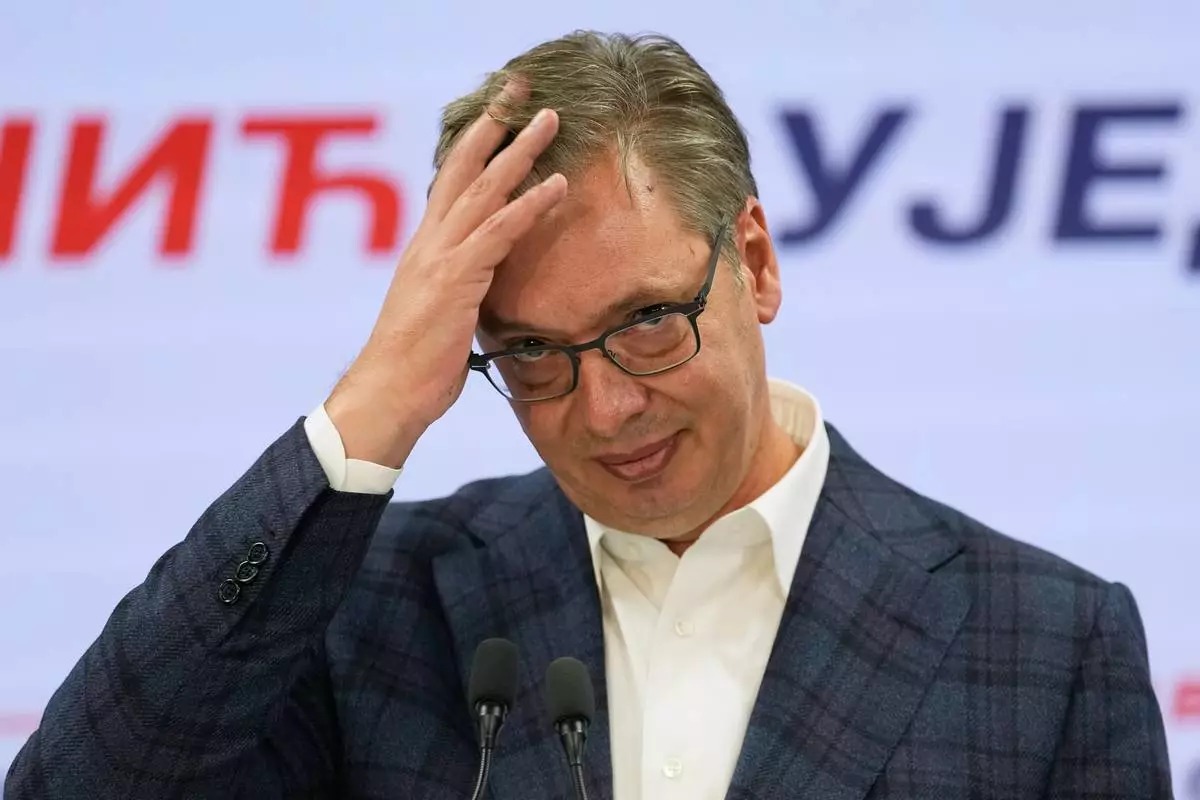
Former Serbian President Aleksandar Vučić was preparing to retain power by force following the country’s parliamentary elections, according to a report by the British newspaper The Times, citing politicians and a former commander of a specialised police unit.
However, he abandoned this scenario after receiving phone calls urging him to back down.
Spasoje Vulević, the former head of the Serbian police counter-terrorism unit, told the newspaper that 4,000 police officers and 3,000 people whom he described as “thugs” were deployed to central Belgrade on voting day, 25 October.
According to Vulević’s assessment, Vučić was preparing to reject the election results.
Vučić’s spokeswoman denied the claim. Speaking to The Times, she said the police presence in Belgrade was a response to threats of violence from protesters and was unrelated to any attempt to seize power.
Member of the European Parliament Sandro Gozi also said he received alarming messages from diplomatic sources on election day indicating that Vučić was preparing for a scenario involving the use of force.
According to the newspaper, Gozi’s political group issued a statement around 21:00 local time, as initial projections were being released, warning that supporters of Vučić’s party could be mobilized to provoke clashes.
Where did the calls forcing Vučić to back down come from?
Radomir Saičić, a leading candidate from the winning Student List, also argued that plans had been made to alter the results by force if the vote margin between the sides was narrow.
“If the results were close, there were plans to overturn the outcome of the vote by brute force,” Saičić said. “However, according to the information I obtained, numerous calls to him from the police and other figures prompted him to change his mind. They convinced him that executing this plan would end very badly for him.”
Former commander Vulević, on the other hand, was sceptical that police officers could have played a decisive role.
Noting that Vučić personally selected the unit commanders in Belgrade and that these figures were unlikely to oppose him, Vulević said: “I suspect that representatives of European governments called Vučić; these were talks conducted at the highest level.”
European Parliament member Gozi did not confirm the claim that the telephone calls had a decisive effect.
“I cannot rule out the possibility that phone calls took place, but in any case, the vote margin against him was far too large,” Gozi said. “Vučić was stunned.”
According to The Times, roads were closed in Belgrade during the evening, gendarmerie personnel appeared on the streets, and groups of men dressed in black headed toward the city’s Pioneers Park (Pionirski Park).
Vulević claimed these individuals arrived in groups of 20 to 30. However, the newspaper reported that at 21:30, an hour and a half after polls closed, Vučić backed down and his assembled supporters dispersed.
From the Novi Sad collapse to early election defeat
Early parliamentary elections were held in Serbia on 25 October.
According to Election Commission data, after processing results from 8,139 ballot boxes, the Student List secured 52.65% of the vote, while Vučić’s United Serbia coalition remained at 39.22%.
Vučić conceded defeat without waiting for the final results.
“It is obvious that we have lost these elections. The Student List has won,” the politician said, attributing the opposition’s success to support from European countries and the US “deep state”.
Prior to the election, the country was the scene of prolonged mass protests that began after the collapse of a railway station canopy in the city of Novi Sad in November 2024.
Protesters initially demanded accountability for those responsible and an investigation into corruption allegations, before subsequently calling for the government’s resignation.
Having dissolved parliament in September 2026 and announced his resignation from the presidency, Vučić was subsequently nominated as the candidate for prime minister by his party.

ICE contractors steer over $12m to US campaigns ahead of midterms

Ex-Mossad operative assisted Flavio Bolsonaro Brazil escape, probe says

Venezuela to privatize assets and return firms, Delcy Rodríguez says

Poland’s presidency to file complaint against three judges over scuffle

China expands Africa arms sales, displacing France and Western rivals
-
 America2 weeks ago
How Elon Musk fuses private empire with state power, Ben Tarnoff explains
-
 Europe2 weeks ago
AfD leader Weidel calls funding lost Ukraine war a grave mistake
-
 Middle East2 weeks ago
Egypt delays parliamentary vote on deploying troops to Saudi Arabia
-

 America2 weeks ago
US wealthy demolish multimillion-dollar mansions for land
-

 Middle East2 weeks ago
Netanyahu unveils security doctrine and regional alliance map
-
 Europe2 weeks ago
EU rejects US proposal to resume Russian gas flows through Ukraine
-

 America2 weeks ago
At least 47 major US data centre projects halted or cancelled
-
 Middle East2 weeks ago
Netanyahu trails Eisenkot in Israeli polls despite Trump backing
