
America
James Carden warns US foreign policy elite cling to global dominance

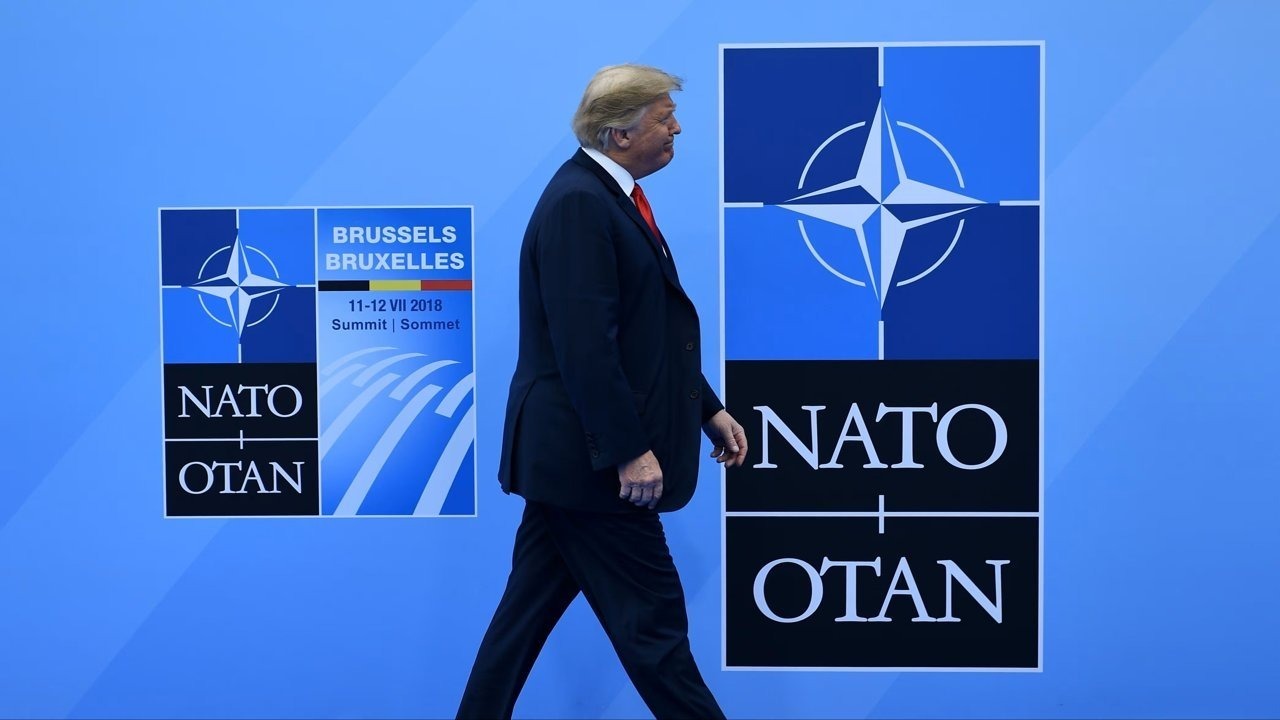
In an in-depth interview broadcast on the Harici YouTube channel, James W. Carden, an American journalist, author, and former foreign affairs adviser to the US State Department during the administration of President Barack Obama, conducted an exhaustive assessment of global geopolitics and Washington’s foreign policy trajectory with journalist Sarp Sinan Hacır. Carden, who served as a special adviser on US-Russia policy, addressed recent international speculation surrounding reported intelligence contacts in Moscow, the long-term drivers of the armed conflict in Eastern Europe, Washington’s military and economic campaign against Iran, shifting dynamics across the Middle East, escalating pressures in Latin America, and the institutional dogma shaping American strategic posture toward major Eurasian powers including Türkiye.
Opening the dialogue, Hacır raised reports concerning a visit to Moscow by US Central Intelligence Agency Director John Ratcliffe amid heightened Western narratives alleging an imminent Russian attack against a North Atlantic Treaty Organization member state. Hacır asked whether Moscow truly represents a threat to Western nations or if the current framing is driven by political rhetoric.
Carden unequivocally dismissed the assertion that Moscow maintains expansionist military ambitions against Western capitals, offering a direct critique of prevailing mainstream media narratives and intelligence leaks.
“No, I don’t think that Russia poses a threat to the West. It certainly doesn’t pose a threat to the United States,” Carden stated. “It does pose a threat to Ukraine and the leadership in Kiev. And I think that part of the reason for Ratcliffe’s trip was to find a way out to perhaps spur the Russians to the negotiating table.”
He explained that official political posturing sharply diverges from the realities established across the battlefront.
“Because the facts on the ground are that the US ally, the European ally in this war, Ukraine, is losing the war,” Carden said. “Ukraine is not winning the war, despite the recent spate of headlines that we see coming out of Western corporate media. So I think that the report in the New York Times today is unfortunately very typical of the sorts of reports that we see from the Times. The Times is basically acting not as reporters and journalists should, but as stenographers for the intelligence community.”
“The Origin Story of the Ukraine Crisis Begins With NATO Expansion”
Asked by Hacır to assess whether the conflict in Ukraine could have been averted through different policy choices under the Obama administration—which faced domestic criticism from hawkish factions over its handling of Russia’s 2014 annexation of Crimea—Carden underscored that the crisis stems from foundational miscalculations dating back decades.
“Well, your second question is the easiest one to answer. And the answer is, yes, of course, this whole thing could have and should have been avoided,” Carden noted. “With regard to President Obama’s interest in Russia and Eastern Europe, it was minimal. Mr. Obama outsourced his policy on Russia and Ukraine to very hawkish people with a long history of wanting to surround and isolate Russia. And the policies reflected that.”
Carden argued that starting the historical timeline in 2014 obscures the root causes of the broader confrontation.
“So while people might claim that, you know, Obama should have met the annexation of Crimea with force or with a stronger reaction, well, they kind of are missing the point,” Carden said. “If you begin your timeline with the Russian annexation of Crimea, then you’re missing the whole story, or at least you’re starting in the middle of the story, and you’re neglecting the beginning of the story. And the beginning of the story goes back even before Mr. Obama took office. It goes back to when President Bill Clinton was in office. And the story begins with NATO expansion. And NATO expansion was the policy that sparked this entire thing.”
He continued: “And it was a bipartisan project launched in the early 1990s for really no apparent reason. And the Russians, whether it be Mikhail Gorbachev, Boris Yeltsin, Vladimir Putin, the entire Russian foreign policy and defence establishment had been warning the United States that their red lines for NATO expansion were Ukraine and Georgia, which, of course, had been integral parts of the Soviet Union. But we ignored those red lines constantly.”
“And so the genesis, right, the origin story of the Ukraine crisis begins in the 1990s with the decision to expand NATO and then later decisions to expand NATO all the way to Russia’s borders,” Carden emphasised. “That’s where the story has to begin. And Mr. Obama and the people that he surrounded himself with did not heed Russia’s red lines, did not heed the advice of people like Bill Burns, who would later become CIA director under Joe Biden. And it was Bill Burns who, while serving as ambassador to Russia, said that Ukrainian membership in NATO was the brightest of Russia’s red lines that we should not cross. But we tried to cross it, and now we see what happened.”
“Ukraine Is Going to Be a Shadow of Itself, a Rump State”
Turning to the internal ideological balance within previous and current administrations, Hacır noted that early realists who cautioned against foreign entanglements appeared to have lost ground. Questioned on the strength of the realist faction during his tenure in the Obama administration, Carden pointed out a recurrent historical trend wherein American chief executives discard initial restraint over the course of their presidencies.
“Yes, at first,” Carden replied. “So during the first year or so, there were people who were inclined, I wouldn’t necessarily even call them realists, but they were people who had learned the lessons of the Iraq War, the 2003 Bush-Cheney War in Iraq. And so Mr. Obama himself was, when he entered office, something of a realist. They were men who were going to be more cautious about the exercise of American power. But with time, and this happens with American presidents, as I document in a new book that I have coming out, what happens is that over time, they become less cautious, progressively less so. And that’s what happened to Mr. Obama.”
Regarding realism within the inner circle of President Donald Trump, Carden expressed deep scepticism about the presence of genuine realist advisers.
“With regard to there being, you know, realists in the Trump administration, I’m not really sure who you could point to anymore,” he said. “One could have made an argument that Tulsi Gabbard was one such realist, but she’s gone. And Donald Trump really only listens to people within his inner circle of friends and family anyway. And those people happen to be—and I think that I’m trying to put this in a charitable way—they tend to be unofficial, perhaps agents of Israeli influence. And so Mr. Trump’s actions with regard to Iran reflect that. They do not reflect in any way the recommendations or advice laid out by the realists in Washington, such as there are. And I think that that’s a very, very small group of people.”
Addressing the military trajectory of the Donbas campaign and the final political disposition of Ukraine, Carden projected severe demographic, territorial, and economic fallout for Kiev.
“Well, I think what Ukraine looks like at the end of this is going to be somewhat similar to what happened in Kosovo, but on a very, very large scale,” Carden stated. “Ukraine is going to be a shadow of itself. It’s going to be a rump state. It is certainly going to, you know, lose the Donbas. It’s never going to get Crimea back and it may also lose the port at Odessa. So it’s going to be hemmed in by Russia.”
Carden argued that a fundamental diplomatic resolution requires political change in Kiev.
“What you are going to see at some point is a change at the top. There has to be a change at the top in Ukraine in order for there to be a serious effort to be made at ending the war,” Carden said. “And it’s my view that, you know, there’s intransigence on both sides. Right. However, Mr. Zelensky has, it seems to me, to be singularly opposed to serious talks about ending the war. And so this is a terrible, in the end anyway, this is a terrible tragedy for Ukraine. It’s a terrible tragedy for its people.”
Outlining the catastrophic structural transformation of the country, he added: “And you know, it’s going to go from a country that at the end of the Cold War had something like 53 to 55 million people and was the largest country in Europe outside of Russia, and now is going to perhaps have 20 million people with Russia controlling fully 20, maybe eventually 25% of the territory that it once had. And the Ukrainians who left, the millions and millions of Ukrainians who have fled are not going to come back.”
Carden also criticised European institutional promises regarding accession: “But still worse is the fact that European Union nations are telling Ukraine, they’re lying to Ukraine, telling them that, ‘Oh sure, we’re going to let you into the EU and everything will be better.’ I don’t believe that for a second and neither should they. So in the process of also losing an entire generation of young people at war with casualties probably well over a million, they’ve alienated what was once their largest trading partner, Russia.”
“So this idea that Ukraine has a happy future in the West, I think is a myth and I think it’s a cruel myth that our leaders in the West have sold credulous leaders like Zelensky,” Carden remarked. “And I think the whole thing was preventable because we didn’t have to and should not have pursued a policy of NATO expansion. So the whole thing is a waste and it’s a terrible stain, I think, on the conscience of the United States and the West.”
“This Has Been a Terribly Counterproductive, Stupid War by Donald Trump”
Hacır moved the conversation to the conflict surrounding Iran, reviewing the legacy of the Joint Comprehensive Plan of Action (JCPOA) negotiated under Obama and subsequently abandoned by the Trump administration. Asked whether a diplomatic framework resembling the JCPOA could be revived, Carden pointed out that American credibility has been severely compromised.
“Well, that second question is a difficult one, because in order for a deal like that to have a chance, you have to have buy-in by the parties,” Carden said. “And it’s very difficult for me to envision Iran ever trusting the word of the United States again, particularly after its experience with Donald Trump. Now, with regard to the JCPOA and its success, I think that it could have been a success. The problem was is that as soon as Donald Trump got into office, he tore it up. But I think that that was one of a handful of actual successes of the Obama administration in the realm of foreign policy.”
Carden warned that coercive policies have produced the exact nuclear escalation they purported to prevent.
“You know, the tragedy of the Iran war, aside from the very obvious human cost, is that what Trump has done is basically ensured the outcome that we have been claiming that we’re fighting against,” he stated. “In other words, there was no evidence that the Iranians were pursuing the nuclear option. None. Even our own intelligence services in the United States had come to that conclusion. Right. But once Trump decided to assassinate, you know, the Iranian leader, the very Iranian leader who issued a fatwa against nuclear weapons, they all but ensured that hardliners would come into the government. And probably now they are going to pursue it when there was no evidence prior that they had any interest in doing so.”
“And so the JCPOA had codified this outcome that we and the Israelis claimed that we wanted,” Carden noted. “So this has been a terribly counterproductive and, if I may say, stupid war on the part of Donald Trump. And we are in far worse shape now strategically in the region than we were six months ago when he decided to launch this thing. So anyway, this has been a terrible, terrible mistake by the administration.”
Asked directly whether he anticipates Tehran developing an operational nuclear deterrent, Carden affirmed: “I think they might try now. I think now they have the motive. Now they’ve seen what the word of the United States is really worth, which is very little, and they may well do so. They have ample motivation now to do it.”
“Washington Doesn’t Learn Very Quickly”
When asked about the future footprint of the US military in the Middle East following drawdowns in Syria and Iraq alongside base damage incurred during hostilities with Iran, Carden expressed deep pessimism regarding Washington’s strategic learning capacity.
“Unfortunately, we don’t have a good track record of learning lessons in the United States,” Carden remarked. “So my wish is very different from what my analysis is going to be. Obviously I would like for the United States to withdraw from the region. I don’t believe that we have any business in the region and that it’s been detrimental to not only the region, but to us. I suspect, however, that we are going to remain and we’re going to find a way to do so.”
He added: “My guess is that the anchor of our presence in the region is going to be the Gulf and on the Arabian Peninsula. And you already see that Trump has been busy deepening our ties to the Kingdom of Saudi Arabia over the past several years. And I think that in short order we will be rebuilding the bases that were destroyed by Iran and rebuilding our presence in the Emiratis. So the short answer is that Washington doesn’t learn very quickly. So we’ll be back to where we were in the Middle East, in West Asia, if you will.”
Hacır then raised the newly emerging Mecca security agreement signed by Saudi Arabia, Pakistan, and Türkiye, querying whether it represented a defensive pact or an anti-Israeli or anti-Iranian alignment.
“That’s a good question,” Carden replied. “I mean, the little that I read about it, there seems to be—and you can correct me on this if I’m wrong—there were some comments coming from the alliance that they were kind of leaving the door open a little bit even for Iran to eventually join, which is pretty notable given the divisions between the Sunni Arab states and Iran. If it’s a purely defensive alliance, I don’t see how we can possibly make an argument against it. After all, for 80 years we’ve been touting the benefits of our so-called purely defensive alliance in Europe.”
“From an American strategic point of view, the way I look at it is that if the major powers in the Middle East want to band together to come up with a way to coordinate regional defence and regional military matters, that’s none of the business of the United States,” Carden stated. “However, and here’s where we come to a lot of the problems in Washington: there is a country in the Middle East that I could see being rather upset about this, and that country is Israel. And so if the Israelis are upset about this, then we’re going to be upset about it.”
He continued: “Our decisions and our force posture is largely dictated by what the Israelis want. So the real question to me anyway is how are the Israelis going to react to this? If they react favourably, then we should be fine. If they begin to find a reason to dislike or disrupt this new alliance, then unfortunately we’re going to be dragged into some kind of confrontation, which I hope doesn’t happen.”
“Netanyahu Is Capable of Any Sort of Atrocity”
Evaluating escalating tensions between Israel and Türkiye following Israeli strikes in northern Syria near the Turkish border, alongside domestic political pressures facing Israeli Prime Minister Benjamin Netanyahu, Carden warned of extreme instability.
“Well, it’s anyone’s guess. You can never really predict what Netanyahu is going to do,” Carden said. “I would say that as the election in Israel approaches and his prospects dim, he’s capable of doing anything. And so I think that we’re in a real, real dangerous period over the next, what is it, about a month and a half or so before the election. He’s capable of any sort of atrocity, as we have seen. So I think it’s a dangerous period. But I can’t predict. I don’t know.”
Hacır noted statements from US Vice President JD Vance criticising foreign lobbying operations that target American public opinion, asking whether Washington’s alignment with Israel faces an institutional fracture.
“I think that’s a possibility,” Carden observed. “I think what’s interesting is that the criticism came from the vice president, and I think this points to something that I long suspected: that views in the United States about Israel are divided along generational lines. So Vice President Vance is fully a generation or more, a generation and a half younger than the president. And among the president’s generation, among the so-called baby boom generation, there’s very little appetite for criticising Israel. But that isn’t so among people of JD Vance’s generation. JD Vance is fully a decade younger than I am. And so people of my generation and younger are more comfortable criticising Israel and want to see the United States treat Israel as just another country.”
“The special relationship has not been good for Israel; it’s not been good for the United States,” Carden stressed. “And what we want is for Israel to exist, but exist as a member in good standing of the international community within recognised borders. And many of us believe that Netanyahu’s project to create a ‘Greater Israel’ out of the territory of his neighbours has been an absolute disaster, resulting in the moral atrocity of Gaza. So I think that Israel will have American support, but down the line, when a new generation of American leaders comes into power, they’re not going to have the blank check that they’ve had since at least 1967. That’s going to change.”
“The Pivot to Asia Is Dead in the Water”
Examining Washington’s strategic prioritisation, Hacır highlighted how initial pledges to pivot resources away from foreign battlegrounds to confront China have stalled amid military entanglements in the Middle East and Eastern Europe.
“Yes, I think that the pivot to Asia, which was a policy that was inaugurated under President Obama, where we were going to spend less of our resources and time meddling in Europe and meddling in the Middle East, and we were going to begin to focus on trying to contain China—that’s dead in the water, at least for now,” Carden said. “Precisely because we are overstretched not only in the Middle East, but in Ukraine. Ukraine has been bleeding the US armaments industry. So we are currently fighting on two fronts in Europe and in the Middle East. Neither effort is going well. So, yes, I think that for now any plans to confront or isolate China are on hold. And I think that that’s a very good thing.”
Regarding Latin American policy, where US actions in Venezuela, covert operations in Mexico, and heightened economic sanctions against Cuba have surged, Carden drew a clear distinction between anti-narcotics policing and ideological regime-change campaigns.
“Well, I think that there’s a difference, or I hope there is, between US involvement in Mexico and US objectives in Cuba,” Carden explained. “The objective in Mexico seems to be aimed at drug running and waging a kind of covert war on the drug cartels. Cuba seems to be an outright case of regime change. I don’t think that, or at least I hope we aren’t trying to overthrow the democratically elected president of Mexico.”
He singled out US Secretary of State Marco Rubio’s ideological priorities regarding Havana: “I do suspect that it is Secretary of State Marco Rubio’s fervent wish to overthrow the Communist regime in Cuba. And this doesn’t get a lot of press here because we’re busy elsewhere, but we’re busy cutting that country off, starving it, waging an economic war on a country that’s already very poor. And it’s unconscionable. But Marco Rubio comes from a community of Cuban exiles in South Florida, and all they care about is Cuba. They don’t care about the United States, and when they do, they only care about it as a means to overthrow the government in Cuba.”
“So I suspect that before Marco Rubio leaves office—and I don’t think that he’s going to serve out the entire term because I strongly suspect he’s going to run for president—Mr. Rubio is going to get his war and get his desired result in Cuba,” Carden said. “Because the administration, the lessons that they learned from the Venezuela operation was that we can do these things quick and easy with very little loss of life, and we can decide the governments of the region. I think that that’s atrocious and wrong and it’s a terrible lesson to draw, but that seems to be the lesson that they’re drawing.”
“American Foreign Policy Elites Believe America Must Rule the World”
Assessing the domestic political landscape ahead of the upcoming US midterm elections, Carden dismissed suggestions that electoral losses for the Republican Party in Congress would constrain White House foreign operations.
“I don’t think that the midterm results are going to affect US foreign policy at all,” Carden said. “I think that the Democrats are going to win the House, but they will not win the Senate, which gives them very limited leverage over the administration. The Iran war will go on as long as Netanyahu wants it to go on. Now, will a change in leadership in Israel mean a different policy? I don’t know. Do I think that there are other surprises in store? I do. I think that Cuba is probably next on the list. So the Trump administration has a lot of life left in it, unfortunately, regardless of what happens in November.”
Addressing the broader structural shift toward multipolarity, Hacır cited remarks by Mark Carney regarding the erosion of the unipolar global order, asking whether a future Democratic administration in 2028 would depart from the interventionist policies of previous decades.
“Well, I’m glad that you mentioned Mark Carney’s speech because I think when we look back at this era, the speech will stand out as a visionary statement,” Carden said. “That was a very, very important statement, especially coming as it did from an American ally. The problem, however, with Carney’s vision is that it is unlikely to be accepted by any Democratic president. The Democrats are every bit as enthralled to the vision and the idea of American exceptionalism and American global leadership as the Republicans are. And that is a function partially of personnel, of the people who make up the Democratic elite.”
“And so I fear that no matter who wins in 2028, be it a Democrat or Republican or even a progressive left-leaning Democrat, as unlikely as that is, nothing will change,” Carden stated. “Because the American foreign policy elite are still united around the idea that America must rule the world. And I think that that’s a very dangerous idea. It’s an idea that we should abandon. It’s an idea that has hurt us and hurt the world. But unfortunately that’s what is on offer in 2028.”
“Erdogan Is Seen as a Force for Authoritarianism”
In the final segment of the interview, Hacır requested Carden’s analysis of US-Turkish bilateral relations, observing that tensions during the Obama and Biden administrations had partially eased under Trump, and asking how a potential Democratic return to power in 2028 might impact ties with Ankara.
Carden detailed how ideological paradigms among Democratic foreign policy thinkers perpetuate friction with Türkiye.
“So with regard to the Democrats, Türkiye has an image problem,” Carden said. “It is an image problem not quite as serious as the image problem that Russia has, but it is an image problem all the same. And the problem is that Democratic foreign policy elites are deeply invested in a vision of the world that is divided. It’s a new Cold War mentality. So the old Cold War, as you remember, the world was divided between capitalists and communists, right? Democracies and communist countries.”
He concluded: “The vision of the world that they now embrace is a world divided between democracies and authoritarians. And the authoritarians in their telling are oligarchic, they’re kleptocratic, they’re deeply corrupt, they kill their own people, etc. And obviously the face of the global authoritarian axis, as they have it, is Vladimir Putin. However, there are other important players on the other side of the democratic divide: Xi Jinping obviously, and President Erdogan. And so Erdogan is seen as a force for authoritarianism. And that’s a big problem because the Democrats deeply believe that the global democracies have to square off against these so-called global authoritarians. So I don’t expect relations between the United States and Türkiye to improve if a Democrat wins in 2028. Quite the contrary.”










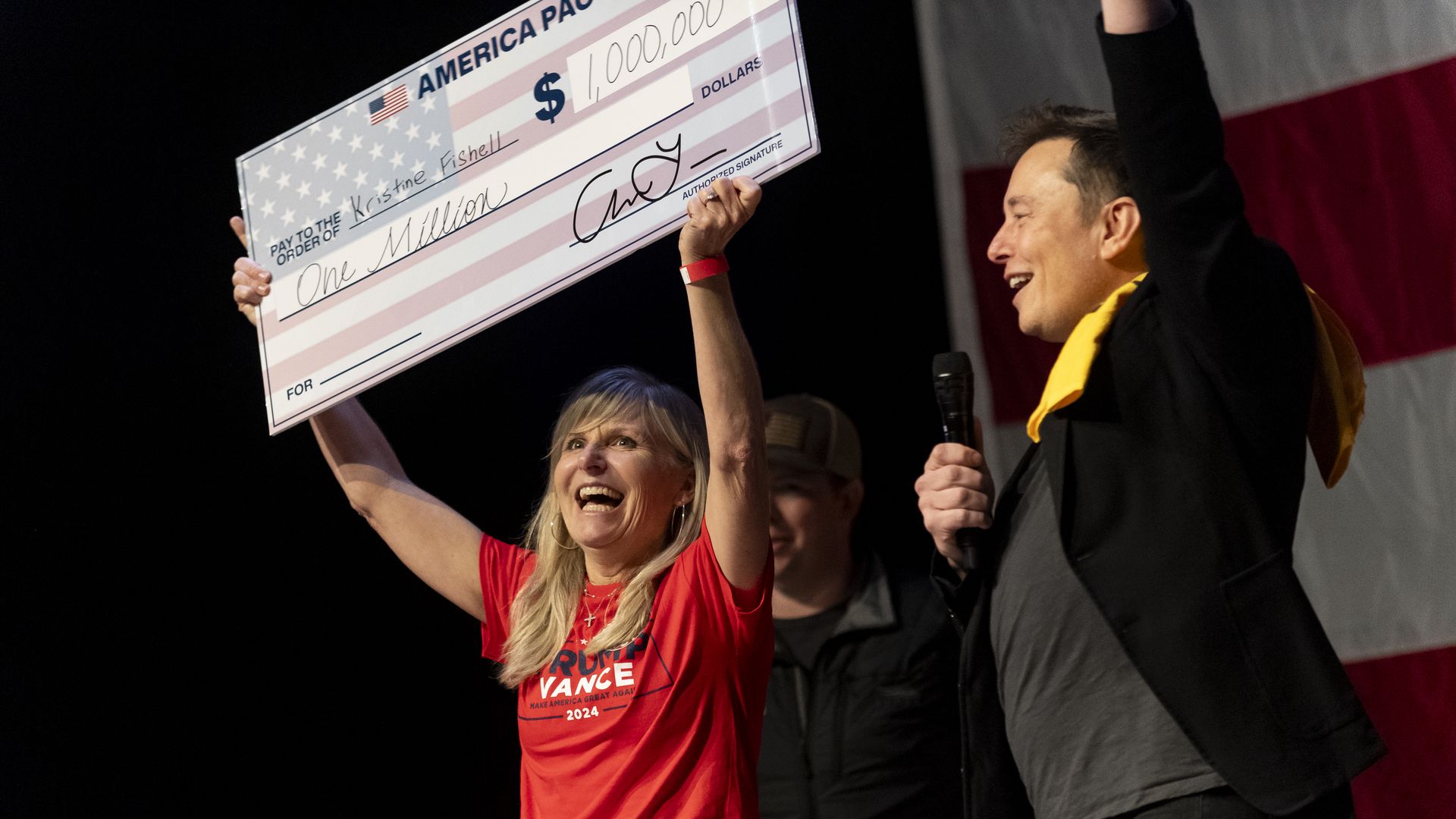
The world’s richest person, Elon Musk, has donated $276 million over the past three months to political action committees and conservative organizations supporting Republicans ahead of the upcoming US midterm elections.
The latest transfer brings the total midterm donations from Musk, the chief executive of Tesla and SpaceX, to $366 million.
First reported by The New York Times, the figures were confirmed to The Hill by a spokesperson for America PAC, which Musk founded. These latest expenditures establish Musk as the largest known donor of the 2026 midterms.
The bulk of Musk’s financial backing between July and September was directed towards congressional races.
The US billionaire transferred $158 million to the Senate Leadership Fund, a super PAC supporting Republican Senate candidates, and $20 million to the Congressional Leadership Fund, which finances House Republicans.
Millions divided among various committees
Musk, who provided more than $76 million during the period to America PAC, an entity he founded during the 2024 election cycle, also funded state-level contests.
The businessman transferred $10 million to the Lone Star Liberty PAC, which supports Texas Republican Senate candidate Ken Paxton, while donating $10 million to the Republican Governors Association and $2 million to the Republican Attorneys General Association.
In statements given to The New York Times and confirmed by The Hill, America PAC spokesperson Andrew Romeo argued that if Democrats take control in Washington and win critical state races, the country faces the risk of becoming one with indefensible borders.
Romeo said the investments enable the Republican apparatus to deliver its messages to voters.
Field spending continues despite talk of retreat
Musk, who kept his distance from politics for many years, entered the arena by spending hundreds of millions of dollars for Donald Trump during the 2024 election.
Accompanying Trump on campaign trails, Musk subsequently took charge of the Department of Government Efficiency (DOGE), which sparked controversy through federal employment and budget cuts.
Musk stepped down from his White House role in late May 2025 and remained politically quiet for months following a public rift with Trump.
After announcing last May that he would sharply scale back his political spending, Musk told The Economist in a July interview that he had become overly involved in politics and had gone too far.
Despite those remarks, Musk pressed ahead with political activity in July by authorizing America PAC to spend between $100 million and $120 million on a fresh field operation aimed at driving conservative voter turnout in the 2026 midterms.
Having repaired ties with Trump following their public spat, Musk joined the US president on an official visit to China in May and was also present during Chinese President Xi Jinping’s visit to Washington last month.

US President Donald Trump is reportedly preparing to issue a new presidential directive soon in a bid to rein in escalating diesel prices across the country.
According to a report by the Reuters news agency citing three oil industry sources, the White House is weighing the enactment of the prepared package of measures directly in the form of a presidential memorandum.
The memorandum in question will reportedly instruct multiple US federal agencies to find and implement ways to lower diesel fuel costs, primarily by expanding oil extraction operations and refinery output.
White House plans to deploy Defense Production Act
According to information shared in the report, the Trump administration is exploring legal avenues to overcome restrictions imposed on energy production by state administrations and local government authorities.
The administration could reportedly invoke the Cold War era Defense Production Act to that end.
The legislation in question grants the US president the authority to provide state loans and financial guarantees to expand the production of materials of strategic importance. The law also makes it possible to require private companies to prioritise government orders.
Reuters reported that the White House is comprehensively examining the prospect of putting this legal mechanism into effect.
In contrast, oil refinery executives were noted to have made a recommendation to government officials last month.
Industry representatives suggested allocating federal budget resources toward modernising existing operational refineries and expanding their capacity, rather than establishing new facilities from scratch.
Plant managers stated that building new facilities would require substantially more time and higher costs.
The Wall Street Journal newspaper also highlighted in a report published in mid September that US-based oil companies were warning of the onset of a global fuel crisis.
The newspaper noted that during the period in question, diesel prices broke records, whilst the price per barrel of crude oil approached the $101 mark.
American Automobile Association (AAA) data show that as of Thursday, 8 October, the average diesel fuel price nationwide stood at $6.28 per gallon (approximately 3.8 litres).
High fuel costs pose risk ahead of congressional elections
It was pointed out that the increase in diesel fuel prices creates political risks for the Republican Party ahead of the congressional elections to be held on 3 November.
It was noted that the outcome of the vote will determine whether Republicans can maintain their majority in Congress.
Because diesel is heavily consumed in freight transport, the agricultural sector, and home heating in particular, price rises in the fuel were stressed as driving headline inflation higher.
Trump previously announced that he had reached an understanding with Russian President Vladimir Putin regarding the supply of Russian diesel fuel to both the American and global markets. The US president also thanked Putin for the arrangement concerning Russian diesel.
The US Department of the Treasury extended a temporary waiver licence permitting commercial transactions involving Russian diesel fuel until 7 April 2027.
Under the delivery schedule shared by Donald Trump, Russia will immediately ship more than 300,000 tonnes of fuel.
Shipments will reportedly continue with 500,000 tonnes in November, followed by the delivery of an additional 1 million tonnes of fuel. Over the remainder of the process, Moscow could send a further 3 million tonnes of diesel depending on the overall technical condition of refineries.
Following the announcement of the consensus between the two leaders, US diesel futures fell by approximately 5% to reach $4.64 per gallon.
Meanwhile, energy analysts consulted by Reuters express doubt as to whether the additional shipments arriving from Russia will suffice to secure a lasting price decline across the markets.
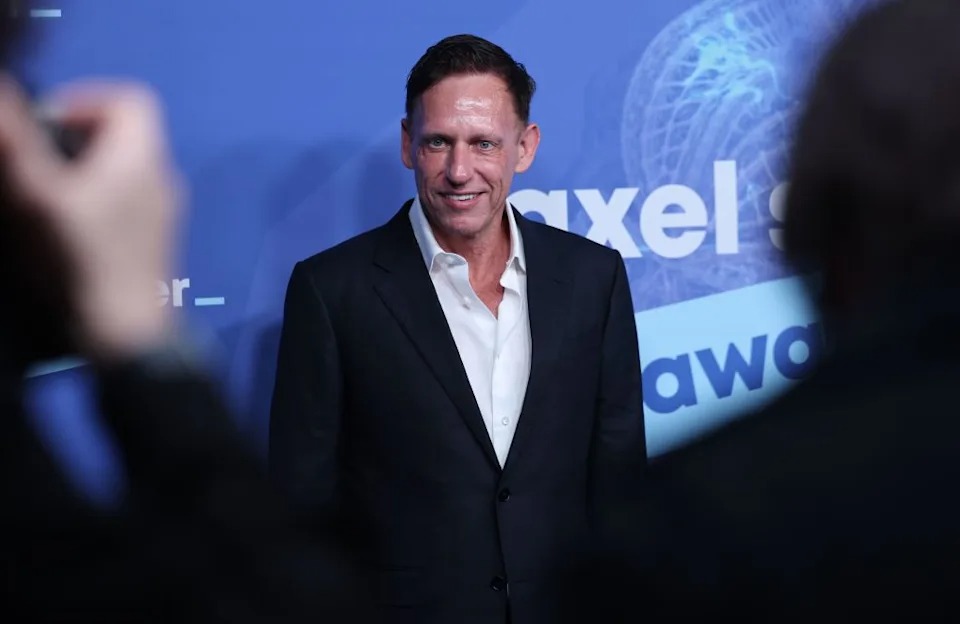
Peter Thiel has argued that former President Barack Obama and Pope Leo XIV are stoking public fears over artificial intelligence merely to enhance their own popularity.
In newly disclosed “Antichrist” lectures obtained by Politico, Thiel specifically targeted the two leaders while warning against the Antichrist, which he sees as halting technological progress and advocating a regulatory “one-world government”.
“A lot of people know that AI is politically unpopular, and they want to use that to boost their own popularity,” Thiel reportedly said during his address in Nashville.
Thiel continued:
“Both Obama and the pope fall into this category. Obama knows that Democrats have no ideas, but at least they can oppose AI.”
Obama recently called on Democrats to develop a comprehensive approach to the regulation of artificial intelligence.
Referring to Leo’s first encyclical on AI, “Magnifica Humanitas”, Thiel said: “The Church needed a politically popular issue to divert attention from child sexual abuse scandals, and it found it in AI.”
On the pontiff, he stated verbatim:
“AI is the greatest threat to late modernity. The pope realizes this. That is why he wrote his first encyclical… The Church needed a politically popular issue to divert attention from child sexual abuse scandals, and it found it in AI.”
In recent months, Pope Leo has gone on the offensive against artificial intelligence. The leader of the Catholic world recently said that this technology could create a “paradise of machines” that could endanger humanity.
Thiel’s relationship with the Catholic Church is fraught. This spring, largely in response to Thiel’s earlier lectures on the “Antichrist”, Vatican adviser Father Paolo Benanti penned an article entitled “The American Heresy: Should We Burn Peter Thiel?”
Throughout the lectures, Thiel framed familiar technology debates in religious terms.
Citing Matthew 24:24, for instance, the investor quoted:
“For false christs and false prophets will arise and perform great signs and wonders, so as to deceive, if possible, even the elect.”
Regarding this verse, he asked in Nashville: “And what about the psychology of the Antichrist? Could he see himself as the Christ?”
In his Nashville lectures, he also delved into the concept of the “Katechon”, drawn from the Second Epistle to the Thessalonians, which restrains the arrival and rise to power of the Antichrist.
Figures who may have briefly assumed the role of the Katechon throughout history included Charlemagne and Klemens von Metternich.
“If anti-communism is the Katechon holding back communists trying to create a communist one-world state, then neoliberalism is anti-communism in a world without communists,” Thiel said.
In both San Francisco and Nashville, Thiel devoted a significant portion of his opening lecture to addressing “effective altruism”.
This ideology rests on the premise that human beings should always act to minimise existential risk to the species and maximise positive long-term impact.
Many effective altruists and affiliated groups are based in San Francisco and work on artificial intelligence research.
In Nashville, Thiel criticised their ideas. This stance reflects the fact that they have dominated much of the recent AI safety debate, showing Thiel’s concern over the growing influence of this group.
Thiel stated:
“One reason [the effective altruists’] strategy works, of course, is that an apocalypse is impossible to undo. You only have one planet. Even Greta [Thunberg] was right about that. … So you can’t just ignore the risks. But we must also take seriously that when you establish a near-totalitarian one-world government empowered to stop all dangerous scientific work, undoing that will not be easy either… There is no historical example suggesting this global warden would willingly surrender power. Effective altruist ideology has brainwashed a significant portion of the people working on AI.”
The remarks delivered by Thiel in his lectures on 28 September and on Monday provide a rare glimpse into the conservative tech billionaire’s shifting political priorities over time.
Thiel’s opposition to regulation is not new. That perspective is widely shared among Silicon Valley venture capitalists.
What distinguishes Thiel from his peers in the conservative tech sector is his decision to frame political disputes in religious terms while simultaneously attacking the leader of the Catholic Church.
This shift could reverberate across the political arena. Thiel was an early backer of President Donald Trump and served as a major financial sponsor of Vice President JD Vance’s transition from venture capital into politics.
Politico noted that Thiel’s attacks on the church could complicate matters for Vance, a Catholic convert.
Democrats positioning themselves for the 2028 presidential election have already begun targeting Vance over his ties to the billionaire investor.

What is scale in foreign policy? How is success measured in foreign policy?

Musk boosts Republican midterm funding despite pledge to curb spending

IMF warns global economy is nearing the limits of its resilience

NATO unveils 32-nation defence strategy to counter adversaries

Germany detains two Turkish suspects over Polish Starlink arson
-

 Europe2 weeks ago
German interior ministers drop unanimity rule to counter AfD veto
-
 Diplomacy2 weeks ago
US Ambassador Guilfoyle faces backlash in Greece over alleged remarks
-
 Europe2 weeks ago
Key European allies excluded from US-led NATO meeting in Poland
-
 Diplomacy2 weeks ago
While the West breeds crises, Eurasia weaves peace and development, says Prof. Zhang Weiwei
-

 Middle East2 weeks ago
Netanyahu holds secret UAE talks with Saudi Arabia and Arab officials
-
 Europe2 weeks ago
EU drafts plan to curb national vetoes in radical expansion reform
-

 America2 weeks ago
Canada diversifies oil and gas exports away from US
-

 Diplomacy2 weeks ago
The European Union’s peace project has collapsed, MEP von der Schulenburg says
