
Middle East
Netanyahu unveils security doctrine and regional alliance map

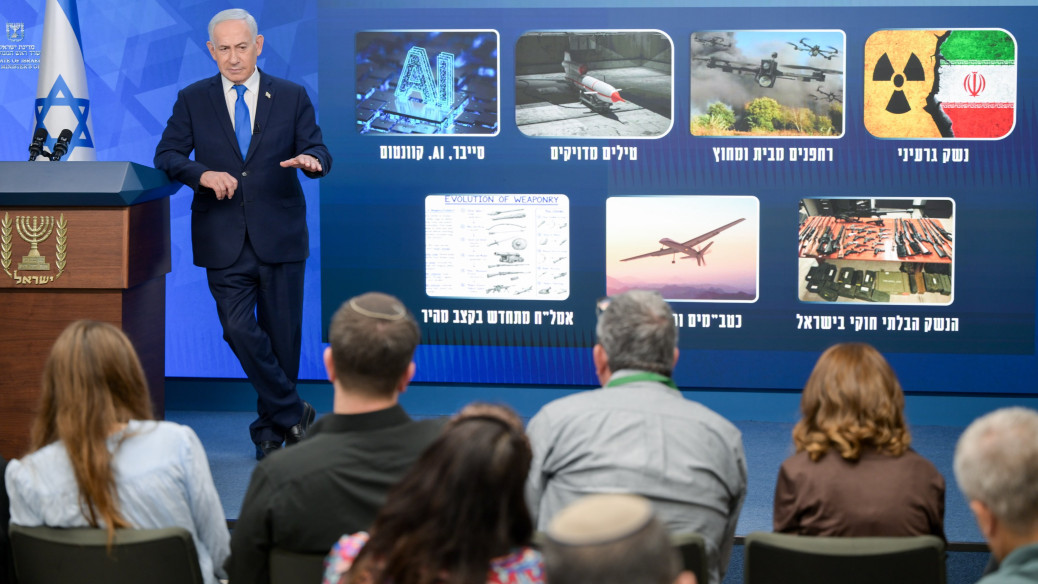
Israeli Prime Minister Benjamin Netanyahu has shared an updated security doctrine with the public ahead of general elections scheduled for 27 October.
Announced by the Prime Minister’s Office on 18 October and shaped with contributions from the National Security Council, the work includes a detailed map classifying Israel’s regional allies, adversaries, and spheres of influence.
The new doctrine aims to eliminate elements defined as threats directly through pre-emptive military interventions rather than containing them, to expand buffer zones, and to establish new regional partnerships.
Al Jazeera points out that this approach has effectively been put into practice during Israel’s recent military operations and strikes against neighbouring countries.
Regional blocs and allies classified on the map
The map presented by Netanyahu classifies not only sovereign states into blocs, but also armed groups, de facto administrations, and territories controlled by various forces.
The terms “alliance” and “friend” used on the map do not imply that formal and binding partnerships have been established with all these entities.
The “Hexagon Alliance” on the Israel-United Arab Emirates (UAE) axis and parties considered “friends” of this bloc are shown in blue and light blue shades.
This group includes Azerbaijan, Greece, southern Cyprus, the Druze in Syria’s As-Suwayda province, eastern Libya under Khalifa Haftar’s control, Ethiopia, Somaliland, Puntland, areas in Yemen held by the UAE-backed former Southern Transitional Council, and territories controlled by the Rapid Support Forces in Sudan.
The “Sunni Diamond Alliance”, formed by Türkiye, Egypt, Pakistan, and Saudi Arabia, alongside peripheral actors, is distinguished by green and light green shades.
This cluster marks Azerbaijan, Syria, Qatar, Kuwait, areas in Yemen controlled by the Saudi-backed Presidential Leadership Council, Eritrea, Sudan, the West Bank, Jordan, the Lebanese government, Northern Cyprus, and Somalia. In Libya, both the Tripoli-based western administration and the Haftar-dominated eastern administration are shown as linked to this bloc.
Iran and the Axis of Resistance are defined in red and pink colours. Hashd al-Shaabi in Iraq, eastern and southern parts of Lebanon where Hezbollah is active, Ansar Allah-controlled areas in Yemen, and Hamas-administered Gaza find a place within this axis. Russia is marked on the map in pink under “friend” status to this bloc.
Orange and yellow markings are also used around NATO members, alliance partners, and actors with friendly relations with Washington. The lines also illustrate the permeability between blocs.
For instance, Azerbaijan is presented with two-toned stripes as a friend of both the Israel-UAE axis and the Türkiye-led bloc, while India stands out as the only actor classified as a “friend” to all parties.
The map in question was reportedly prepared in May by Marc Saxer and Marcus Schneider for the Germany-based Friedrich Ebert Foundation, which has engaged with Israeli governments since 1978.
Pre-election rhetoric of the “indispensable leader”
Netanyahu is facing voters in a bid to retain power amid ongoing corruption proceedings and continued criticism over his management of the 7 October 2023 attacks and subsequent conflicts.
According to Al Jazeera’s analysis, releasing the security doctrine and map on the eve of elections rests on Netanyahu’s strategy of establishing himself as the only capable leader who can protect Israel.
Backed by electoral support from US President Donald Trump, Netanyahu pointed during his presentation to a potential change of administration in the White House.
Arguing that an administration distant or hostile to Israel could take office in Washington within two years, Netanyahu said his country must expand its network of alliances and become an attractive regional partner because of that possibility.
Mohanad Hage Ali, deputy director for research at the Malcolm H. Kerr Carnegie Middle East Center, noted that this presentation, built on rival blocs and security corridors, deepens existential anxieties within society.
According to Hage Ali, this approach reinforces voters’ perceived need for a tough leader, and Netanyahu is attempting to rally support from populations wary of uncertainty through this reassurance.
Fierce backlash from the Israeli opposition
The publication of the document provoked reactions in Israeli domestic politics.
Gadi Eisenkot, leader of the Yashar Party and former chief of general staff, criticised the work as consisting of “two empty pages filled with slogans that have nothing to do with an actual security doctrine”.
Emphasising that the Netanyahu government was responsible for the “gravest failure and disaster in Israel’s history” on 7 October, Eisenkot said subsequent escalating regional clashes had also left every front engulfed in flames.
Eisenkot argued that the document exposes a lingering strategic vacuum, while the prime minister is reviving fears to divert attention from misleading claims in his election pledges.
Yesh Atid leader and former prime minister Yair Lapid also described the text as superficial.
“Even by Netanyahu’s current standards, which are defined by exhaustion and detachment from reality, this document looks as if it was written using a free version of an AI chatbot,” Lapid said.
Lapid added that a text consisting merely of bulleted headings cannot be deemed a doctrine, and that the effort is nothing more than an attempt to cover up the disasters caused by the prime minister.
The buffer zone model
The buffer zone concept featured in the strategy document is based on Israel establishing direct military control over cross-border territories.
Al Jazeera notes that the current occupation conditions in Gaza and southern Lebanon are practical reflections of this policy.
Mohanad Hage Ali warned that a plan based on making military control permanent could bring fresh conflicts and the risk of ethnic cleansing.
Hage Ali also noted that portraying actors such as the Rapid Support Forces in Sudan and Haftar’s forces within the Israel-UAE axis could damage their legitimacy in the Arab world.
Arguing that this choice reflects Netanyahu’s domestic priorities, Hage Ali observed: “What Israelis think becomes more important than the reputation of your allies and the sustainability of these alliances.”
Netanyahu’s proposal for a “hexagon of alliances”, raised at the beginning of the year and covering India, Greece, southern Cyprus, and unspecified Arab, African, and Asian nations, has yet to be formalised.
While international analyses describe the initiative as a diplomatic branding exercise rather than a binding defence pact, observers recall that actors such as India prioritise commercial interests and non-alignment over rigid blocs.
Finally, Hage Ali stated that the presented map will provide propaganda material for the Tehran government and its allies, reinforcing arguments that Israel harbours regional expansion and domination ambitions.




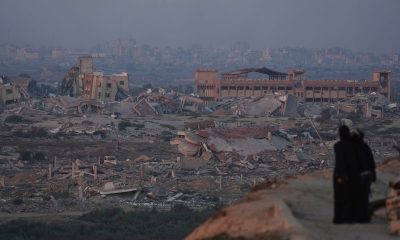







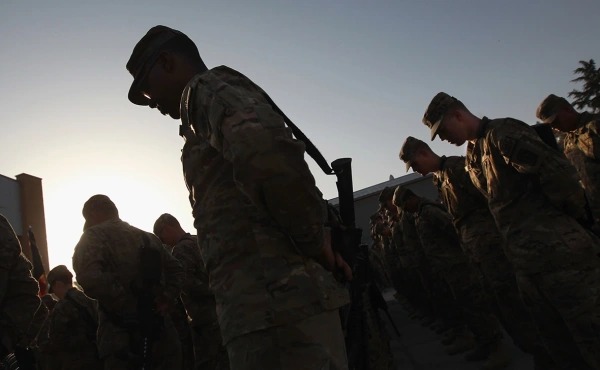
The US administration has notified several Gulf allies that it could launch a short but intensive military campaign against Iran immediately following the congressional midterm elections on 3 November. Washington urged regional states to prepare for this contingency.
According to a Wall Street Journal report citing sources with direct knowledge of the discussions, the warning did not specify which countries were briefed. Meanwhile, military activity on the ground has accelerated alongside these disclosures.
The US military has deployed a Patriot air defence battery from Texas to the Middle East, while beginning to pull its personnel back from exposed bases within range of Iranian ballistic missiles and drones to more secure positions. These moves reinforce indications that the US and Israel are preparing for a direct, wide-scale confrontation with Tehran.
The White House declined to comment on sensitive military plans whose existence has not been officially confirmed. An official statement emphasized, however, that President Donald Trump keeps all options on the table to prevent Iran from acquiring a nuclear weapon.
The New York Times reported last week that US and Israeli armed forces have stepped up joint military drills based on a short but intensive operational scenario. Potential targets identified by the newspaper include Iran’s nuclear facilities, critical energy infrastructure, and production centres for missiles and armed unmanned aerial vehicles.
The same report noted that while seen as an unlikely outcome, Trump could approve the operation before the end of October, though he might also opt against authorizing any military action. In recent months, Trump has repeatedly suspended decisions to re-enter active hostilities at the last moment.
The current active conflict between the two nations was triggered on 28 February by a joint US-Israeli strike on Iranian targets. Trump explained the primary rationale for the operation as ensuring that Tehran can under no circumstances attain a nuclear weapon.
These military actions follow the 12-day war fought in June 2025. During that air campaign, Washington directly targeted and struck Iran’s primary nuclear installations at Fordow, Natanz, and Isfahan.
International Atomic Energy Agency (IAEA) Director General Rafael Grossi outlined the latest situation on the ground during an address to the UN Security Council. Grossi stated that the agency has found no evidence indicating that Tehran is repairing or rebuilding from scratch the nuclear infrastructure damaged in the 2025 and 2026 strikes.
Criticizing the continued exclusion of monitors, Grossi urged Iran to grant international inspectors immediate access to all its nuclear sites, including damaged locations. Since the US bombardment in June 2025, the IAEA has been unable to independently verify the current status of Tehran’s stockpile of highly enriched uranium.
According to official agency records, Iran held 440.9 kilograms of uranium enriched to 60% purity prior to the June 2025 war. In nuclear physics, 60% enrichment is technically regarded as exceptionally close to the roughly 90% threshold required for weapons grade.
Following the bombings, Tehran barred international inspectors from entering the struck facilities. Because of this restriction, the regulatory body cannot ascertain how much of this critical stockpile remains intact or where it is currently stored.
Mounting military costs fuel domestic political pressure
President Trump maintains that the June 2025 air strikes demolished Iran’s nuclear capabilities. Nevertheless, the prolonged military operations have destabilized economic conditions, and soaring domestic fuel prices in particular are placing the governing Republican Party under severe political strain ahead of the midterms.
Trump has pushed back against criticism over rising energy costs, arguing that absorbing higher prices at the pump is necessary to prevent Tehran from acquiring nuclear arms.
Pentagon budget records reviewed by Reuters indicate that total US military spending on the Iran conflict has surpassed $47 billion. This figure stands 25% above official estimates released by defence officials in July.
The largest portion of total expenditures, $29 billion, was allocated to replenishing depleted munitions stocks, while $6 billion went toward replacing worn military hardware. It remains unclear whether repair bills for US bases damaged by retaliatory Iranian missile and kamikaze drone strikes are included in this official $47 billion sum.
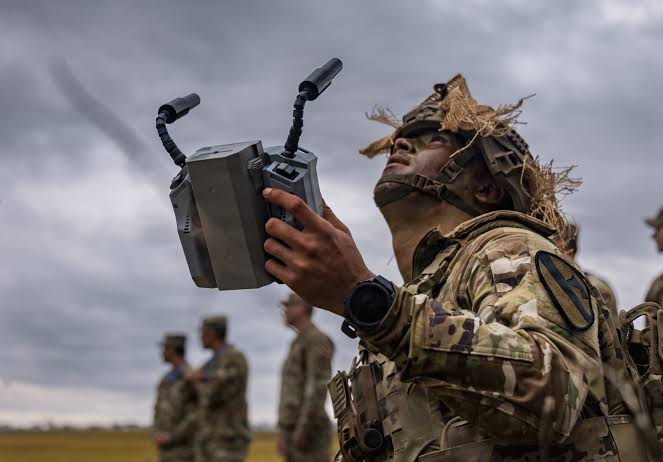
The total cost of US military operations against Iran has reached $47 billion.
According to a report by the American newspaper The Hill, citing an assessment by US Central Command (CENTCOM), the operation’s budget grew by more than $3 billion in the past month alone.
A detailed breakdown of the spending appears in a document prepared by the command. The largest share of the budget is accounted for by munitions shipments, totalling $29 billion.
Additional expenses arising directly from conducting the military operation stand at approximately $12 billion, whilst replacing lost military equipment and gear requires $6.1 billion.
Funding allocated to support military personnel deployed to the region, air transport, communications, and transport operations within the operational theatre is calculated at $7.6 billion.
Moreover, this overall total does not include the expenditure required to repair and rebuild US military bases in the Middle East.
According to information reported by The Hill, US President Donald Trump is weighing the possibility of launching fresh strikes against Iran following the country’s midterm elections.
Trump had previously described the military operation against Iran as one of the best decisions of his presidency.
Congress steps in as budget deficit deepens
The bill for the operation climbed swiftly in a short period. In a statement on 22 July, US Secretary of War Pete Hegseth announced that the cost of the Iran campaign had reached $37.5 billion.
Hegseth noted that the figure covered both expenses already incurred and projected spending through the end of the fiscal year on 30 September.
A day before Hegseth’s statement, The Washington Post reported that the Pentagon was facing a severe cash crunch due to the war with Iran.
The newspaper reported that the White House had requested an emergency supplemental appropriation of $67 billion from Congress to cover military expenses, warning that the military would be forced to cut other spending items if the request were rejected.
Following these developments, the House of Representatives approved a $1.15 trillion defence budget.
The relevant resolution includes allocating $73 billion in additional funding to the Pentagon and intelligence agencies, primarily to cover the costs of the war being waged with Iran.

The Israeli army’s siege of the city of Hebron in the occupied West Bank has entered its fifth day. More than 3,000 Palestinians have been forced to flee their homes as raids, house demolitions, and forced evictions continue across the city.
According to data shared by Hebron Municipality on 26 October, the number of displaced people has reached 3,189. More than 200 of them are infants.
Municipal authorities announced that roughly half of the total displaced population consists of children and youths under the age of 18.
Palestinian officials in the besieged city declared a state of emergency and established an urgent crisis desk.
Rami Khamis, a member of the crisis desk, highlighted civic solidarity in remarks to Al Jazeera, saying local residents and benefactors who refused to let their fellow citizens stay in temporary shelters opened their homes to displaced families.
A Palestinian forced to abandon his home in haste recounted his ordeal to Al Jazeera on 26 October.
Explaining that they fled with only the clothes on their backs, the resident said their savings, household goods, and official documents were left behind. After placing his family in a relatively safe place, he attempted to return to salvage their belongings, but could not reach the house because the area was no longer safe.
The siege began immediately after an attack on 23 October in which two Israeli soldiers were killed. The two Palestinians who carried out the assault were killed at the scene by Israeli forces.
Citing this incident, the Israeli army blockaded the city and launched wide-ranging operations. The British newspaper The Guardian described the measures carried out in Hebron as “collective punishment”.
Hamas official Mahmoud Mardawi also condemned both the siege in Hebron and the military incursions spreading across the occupied West Bank in a statement on 26 October.
Emphasising that these steps constitute collective punishment, Mardawi warned that escalating tensions on the ground could lead to grave consequences.
Mardawi further argued that Prime Minister Benjamin Netanyahu and his government are using these attacks for propaganda and electoral calculations, stating that military pressure will not break Palestinian resilience and that calculations regarding annexation and mass expulsion will fail to achieve their goal.
Operation rift in Israeli leadership
As the blockade entered its fifth day, a divergence of opinion emerged between Israel’s military brass and the government.
According to a report in the Yedioth Ahronoth newspaper, Chief of Staff Eyal Zamir and Prime Minister Benjamin Netanyahu clashed over the future of the operation.
Zamir argued that the military campaign on the ground had delivered whatever benefit it could provide and that it was now time to bring it to an end.
Military officials said tangible gains achieved throughout the operation remained limited, indicating that whether to sustain the current push required reassessment.
Indeed, the newspaper reported that Israeli forces managed to seize only a limited number of weapons in the city, failing to uncover any unusual arsenals or major arms caches.
However, Chief of Staff Zamir’s proposal to end the operation was rejected. Prime Minister Netanyahu and the Defence Minister dismissed the recommendation and decided to continue the offensive.
At least 70 Palestinians have been detained in Hebron since the siege and operations began. The Israeli army is also continuing extensive demolition activities targeting civilian homes across the city.

Blue tsunami and Iran conflict expose deep US cracks, Dr. Tuğtan says

The Mecca Defence Agreement, the Ottoman Empire, and the facts

George Szamuely dissects European decline and strategic rifts with US

Nvidia investigates CEO Jensen Huang over link to Chinese spy

US secures 35% stake in Venezuelan firm NABEP under 50-year deal
-

 Diplomacy1 week ago
Secular dress code dispute exposes deeper Türkiye-Azerbaijan strains
-

 Russia2 weeks ago
US and Russia weigh energy deals and corporate return in peace talks
-

 Europe2 weeks ago
Merz visits Asia to seek new markets for German defence firms
-

 Europe2 weeks ago
Serbia opposition wins snap vote as Vucic concedes defeat
-
 America2 weeks ago
Pentagon prepares US bases for 90-day siege in global war plan
-

 Europe2 weeks ago
AfD drops Dexit to back single market in new Europe strategy
-

 America2 weeks ago
Lula defeats Flavio Bolsonaro to seal historic Brazilian comeback
-
 Middle East2 weeks ago
US warns Gulf allies of possible Iran strikes after midterms
