
Middle East
Palestinian factions confront legitimacy crisis at Istanbul talks

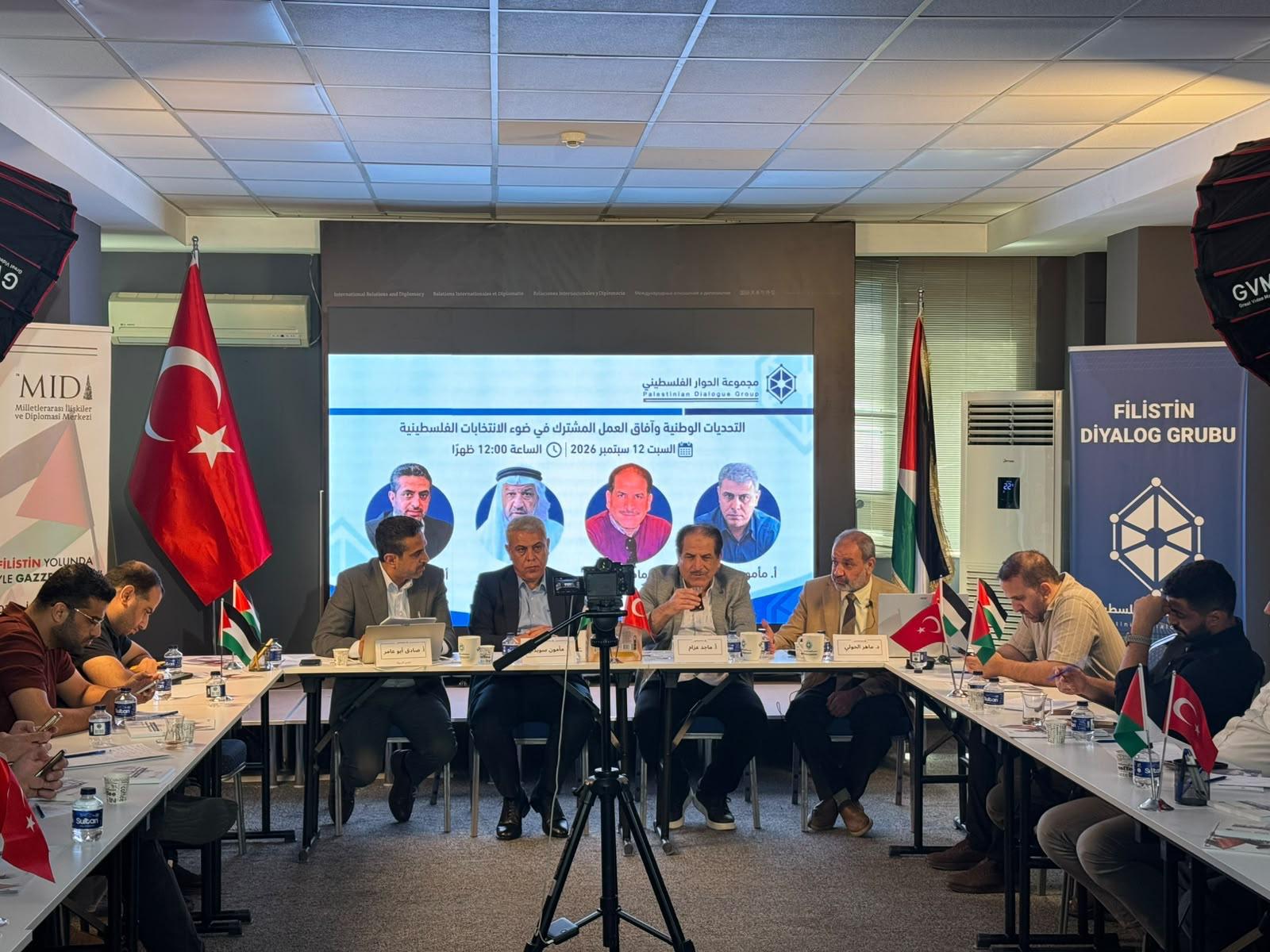
A meeting organised in Istanbul by the Palestinian Dialogue Group has revealed that the election debate points to a crisis far larger than the ballot itself.
Elections are back on the agenda in Palestine. Yet a question looms larger than whether ballot boxes will be set up: can Palestinian politics overcome years of accumulated legitimacy crises?
At the gathering in Istanbul on 12 September, two figures close to Fatah and Hamas, an independent Palestinian researcher, and a journalist came together around the same table. Hosted and moderated by the head of the Palestinian Dialogue Group, Sadiq Abu Amer, the meeting included Mamoun Sweidan, who serves as an adviser at ministerial and gubernatorial rank in the Palestinian Presidency Court; Prof. Dr Maher Hamed Al-Houli, adviser to the head of the Hamas Political Bureau; and independent researcher and journalist Majed Azzam.
For Palestinian observers, one of the most striking aspects of the meeting was the gathering of senior figures from Fatah and Hamas circles in a debate of this scale for the first time.
To summarise the mood of the gathering in two sentences: the cause faces grave peril. Yet there is no magic formula to overcome the hurdles.
28 November: An election or a political turning point?
According to the timetable of the Palestinian Central Elections Commission, elections for the 132-seat Legislative Council are scheduled to take place on 28 November 2026 across the West Bank, East Jerusalem, and the Gaza Strip.
Candidate registrations will run from 26 September to 7 October, followed by the election campaign between 6 and 26 November.
If the polls go ahead, Palestinians will elect a new Legislative Council for the first time since 2006.
However, although the election timetable has been announced, political and on-the-ground conditions remain uncertain.
The new reality emerging in Gaza following the war, whether voting can be conducted in East Jerusalem, the Fatah-Hamas divide, and the future administration of Gaza represent core obstacles facing the vote.
The Central Elections Commission continues its preparations. Contacts are underway in Gaza with civil society organisations, political groups, and local actors, alongside inspections of prospective polling centres.
Yet criticism focuses on the very same point: preparations started late, and the feasibility of the 28 November timetable remains disputed.
It is precisely here that the election debate ceases to be a technical matter.
A legitimacy crisis accumulated over two decades
In Palestine, the problem is not merely when ballot boxes will be placed.
A new Legislative Council has not been elected since 2006. The Fatah-Hamas rift has become entrenched. The renewal of Palestinian political institutions and the transfer of power through the ballot box have failed to materialise.
For this reason, the planned elections are no ordinary vote.
If ballot boxes are re-established after a gap of nearly two decades, the issue will not merely be the selection of new lawmakers. Whether the Palestinian political system can regain legitimacy will also be put to the test.
Yet holding elections will not eliminate division on its own.
The fundamental question is this:
Will Palestinians respect the election outcomes even when the results fall outside their own political calculations?
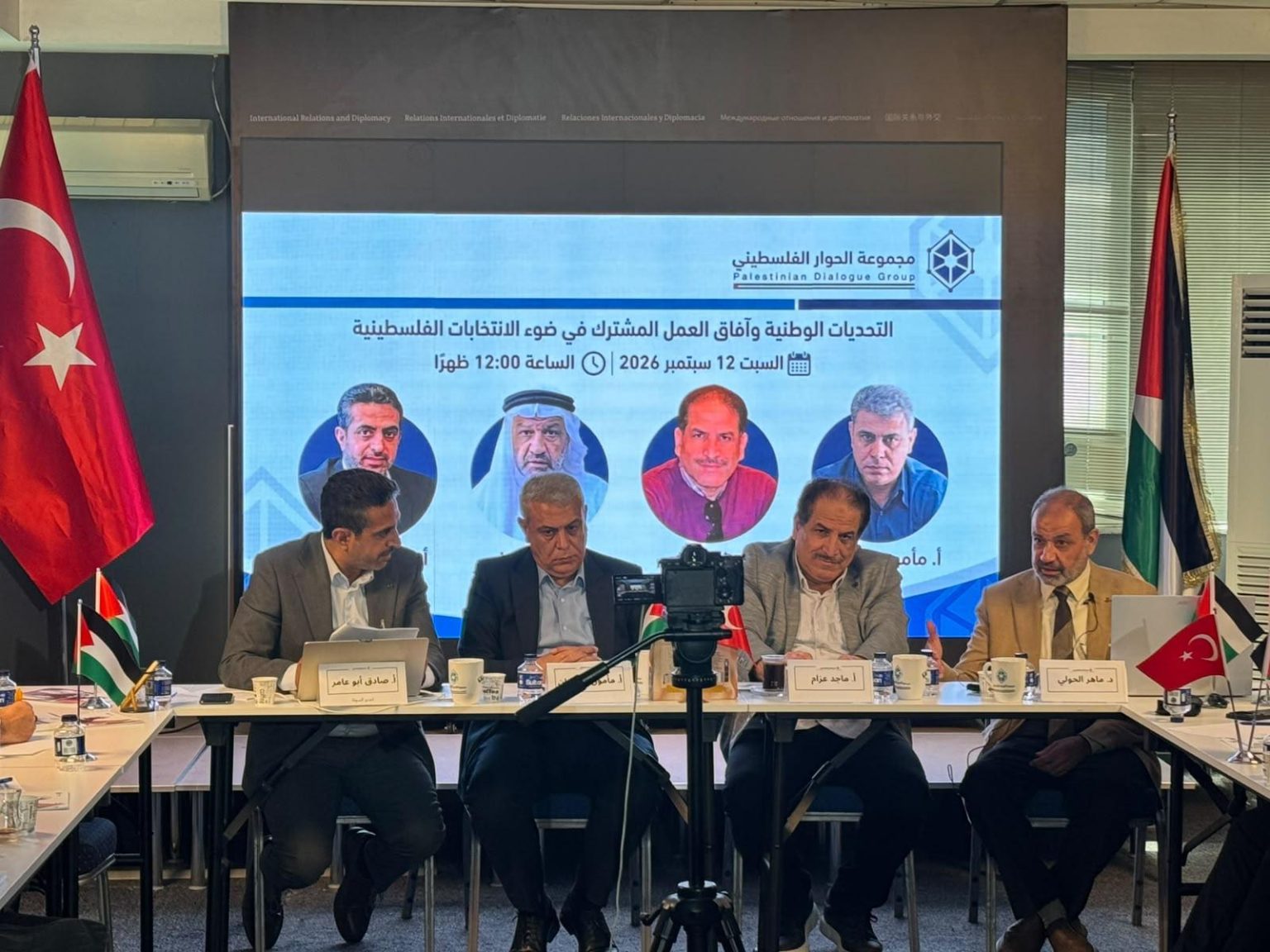
Sweidan: “We went from a national committee to a Peace Council”
The future of Gaza took centre stage in Mamoun Sweidan’s address.
Sweidan explained that following the war, the idea of creating a “national committee” composed of Palestinians to govern Gaza had been raised.
Stating that this committee needed to be formed within the institutional framework of the Palestinian National Authority, Sweidan noted that the political factions, foremost Fatah and Hamas, could not agree on representation quotas for the body.
The problem, in short, was this: everyone wants a national committee, but no consensus can be reached on who will sit on it and in what proportions.
According to Sweidan, prolonged delays eventually pushed the issue into a different arena.
Instead of a national committee, a dynamic emerged in which an international mechanism assumed a greater role in Gaza’s future.
At this point, Sweidan criticised Hamas.
In his view, the initial concept of a national committee established by Palestinians drifted towards an externally shaped “Peace Council” model.
This question lies at the heart of the debate:
Will Palestinians decide Gaza’s future, or will decision-making mechanisms shift increasingly into the hands of external actors?
Al-Houli: “We must not abandon elections”
Prof. Dr Maher Hamed Al-Houli, adviser to the head of the Hamas Political Bureau, argued that elections must not be abandoned.
Al-Houli noted that the election call should be approached positively. However, he stressed that Palestinians must base their decisions on the broader national interest rather than external pressures.
Recalling the 1996 and 2006 elections, Al-Houli maintained that those polls were fair and transparent.
He stated that both Palestinian factions and the international community must respect the results emerging from the ballot box.
Another topic Al-Houli highlighted was societal participation.
He noted that families, clans, mukhtars, opinion leaders, and reconciliation figures could assume a more active role in the electoral process.
He suggested that these actors should not only guide voters to the polls, but also play a part in resolving disputes between Fatah and Hamas. He added that they could even participate in the elections through independent candidates or electoral lists.
Al-Houli’s approach thus shifted the election discussion to another dimension:
Will a new election merely refresh the old political structure, or will it open the path for new actors to enter politics?
Azzam: “In my view, elections will not take place”
Independent researcher and journalist Majed Azzam took a more distant view of the electoral timetable.
Stating that he was speaking neither pessimistically nor optimistically, but offering a realistic and objective assessment, Azzam said: “In my view, elections will not take place, and I am saddened by this.”
Azzam’s primary objection rests on an assertion broader than the election date itself.
According to him, electoral rhetoric could be a “smoke grenade” concealing an entirely different political process.
Azzam raised the claim that preparations are underway to form the Palestinian National Council through appointment rather than through elections.
If this claim proves true, the direction of the debate changes completely.
The question then ceases to be “When will elections occur?” but rather “If elections do not take place, how will the Palestinian political system be reconstituted?”
Can there be an election without Gaza?
The fate of Palestinian elections cannot be separated from Gaza.
The commission is proceeding with technical preparations. However, the destruction wrought by the war in Gaza, the dispersal of the population, infrastructure breakdowns, and disputes over future governance pose severe challenges to the electoral process.
Alongside this, the question of East Jerusalem remains unresolved.
Consequently, 28 November is not merely a matter of ballot boxes.
Under which political framework Gaza will be governed, how election results will be implemented there, and how relations between the Palestinian Authority and Hamas will be structured are all components of the same equation.
A new generation enters politics
Another critical reality is demographic shift.
Since the 2006 vote, an entire Palestinian generation has reached adulthood. A substantial proportion of these individuals have never cast a ballot in any general election in their lives.
Therefore, if elections take place, a new Legislative Council will not be all that is chosen.
Simultaneously, a new generation of voters will become direct participants in political decision-making for the first time.
For this reason, how youth, independents, and societal actors will be integrated into the political system stands as another major subject within the election debate.
A common goal, divergent roadmaps
It is not possible to say that the Istanbul meeting produced a shared political roadmap.
Sweidan advocates safeguarding Palestinian institutions and national decision-making, arguing that Gaza’s future must be determined within a Palestinian framework. He considers Hamas’s posture to have created fertile ground for external actors to intervene further.
Al-Houli says elections must not be abandoned. In his view, elections should reflect the will of the Palestinian people rather than external pressures, and societal participation must be expanded.
Azzam, by contrast, does not believe elections will be held at all. He suspects that another political restructuring may be underway behind the cover of the election debate.
Where these three approaches converge is far more significant:
The Palestinian cause confronts a profound existential crisis.
The future under debate is not simply that of Hamas or Fatah, but that of the Palestinian political structure as a whole.
Elections are not a magic formula
This remains one of the strongest messages left behind by the Istanbul meeting.
Elections may be vital for renewing legitimacy. Yet they cannot end division on their own.
They may establish a new Legislative Council. Yet they cannot resolve all the problems of the Palestinian political system.
They may bring youth and independents into politics. Yet the factions must accept the outcome of the vote.
For this reason, the significance of 28 November reaches far beyond the ballot box.
If elections are held, a new political space will open before Palestinians.
If they are not held, the question of how to fill the political vacuum will grow even larger.
And perhaps the real question will be this:
Will 28 November mark another milestone in years of ongoing division, or will it herald the beginning of renewed unity in Palestinian politics?
We shall see together.
For now, the only certainty is this: the question of elections in Palestine is no longer merely a question of elections.











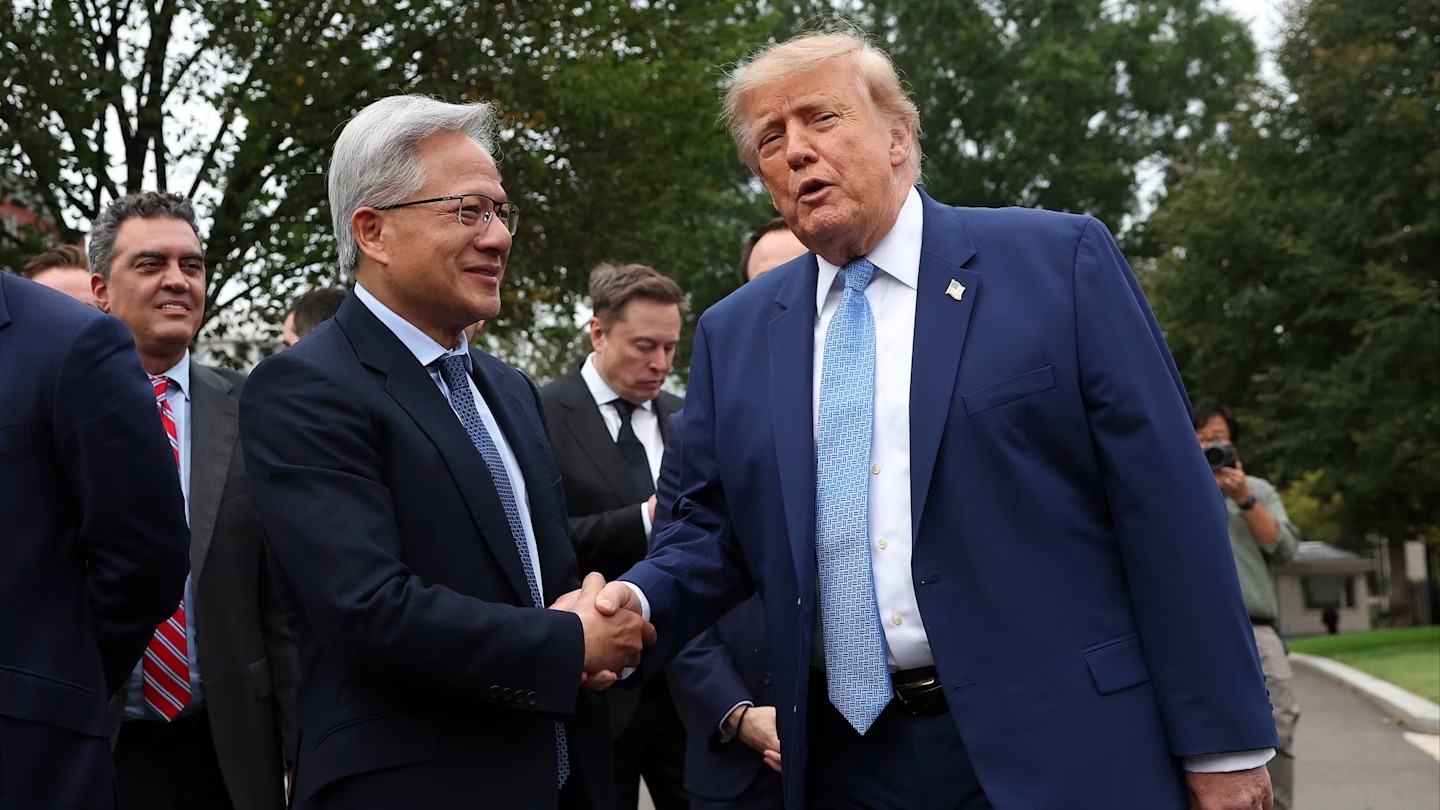
Jensen Huang’s return to Nvidia has brought temporary relief to Gulf countries competing to build the world’s most advanced artificial intelligence hubs.
According to a report by AGBI, Gulf states believe they can continue purchasing Nvidia microchips and partnering with US data centre developers and cloud providers, at least until the end of President Donald Trump’s term.
Analysts noted that Huang’s return as Nvidia chief executive officer with White House backing signals continued support from the Trump administration for US technology firms seeking to expand global sales of their artificial intelligence products.
However, this support conflicts with the view of national security circles in Washington advocating tighter restrictions to prevent China from accessing advanced US technology.
The controversy surrounding Huang stems from concerns in Washington that easing limits on international sales of American AI chips could ultimately help China catch up with cutting-edge US technology.
Tech sector executives, led by Huang and backed by administration figures such as Commerce Secretary Howard Lutnick and to some degree Trump himself, argue that selling their products widely and deploying the American AI stack globally benefits both themselves and the country.
Mohammed Soliman, director of computing infrastructure at McLarty Associates and senior fellow at the Middle East Institute, said: “Gulf states do not have a major stake in Washington’s fight with China. What Riyadh, Abu Dhabi, and Doha care about is whether the flow of American AI hardware continues so they can build substantial computing infrastructure at home.”
Following Huang’s resignation, national security hawks led by Secretary of State Marco Rubio appeared to gain ground, as the Commerce Department imposed new restrictions on sales of US AI chips to third-country data centres that lease large amounts of computing power to Chinese firms.
According to Soliman, Huang’s return could ease Gulf countries’ access to Nvidia chips.
Yet Soliman warned against assuming “hawks have lost the fight on China”:
“They have already closed the loophole on remote access in compute. They will constantly track whether chips are reaching places they should not, including third-country data centres.”
The process is also likely to remain bumpy due to continuing bipartisan disputes in Washington.
Andrew Leber, a visiting fellow at the Carnegie Endowment for International Peace in Washington, noted that the new Democratic majority in Congress following this month’s US midterm elections will examine AI-related deals involving Gulf states and other nations, with China hardliners worried these arrangements could grant Beijing back-door access to computing power.
Reactions from both Democrats and Republicans to Huang’s reinstatement, which took place under pressure from Trump and amid an ongoing investigation into his relationship with an alleged Chinese intelligence operative, highlight the intense scrutiny Nvidia will probably face.
Huang is scheduled to testify before Congress next week.
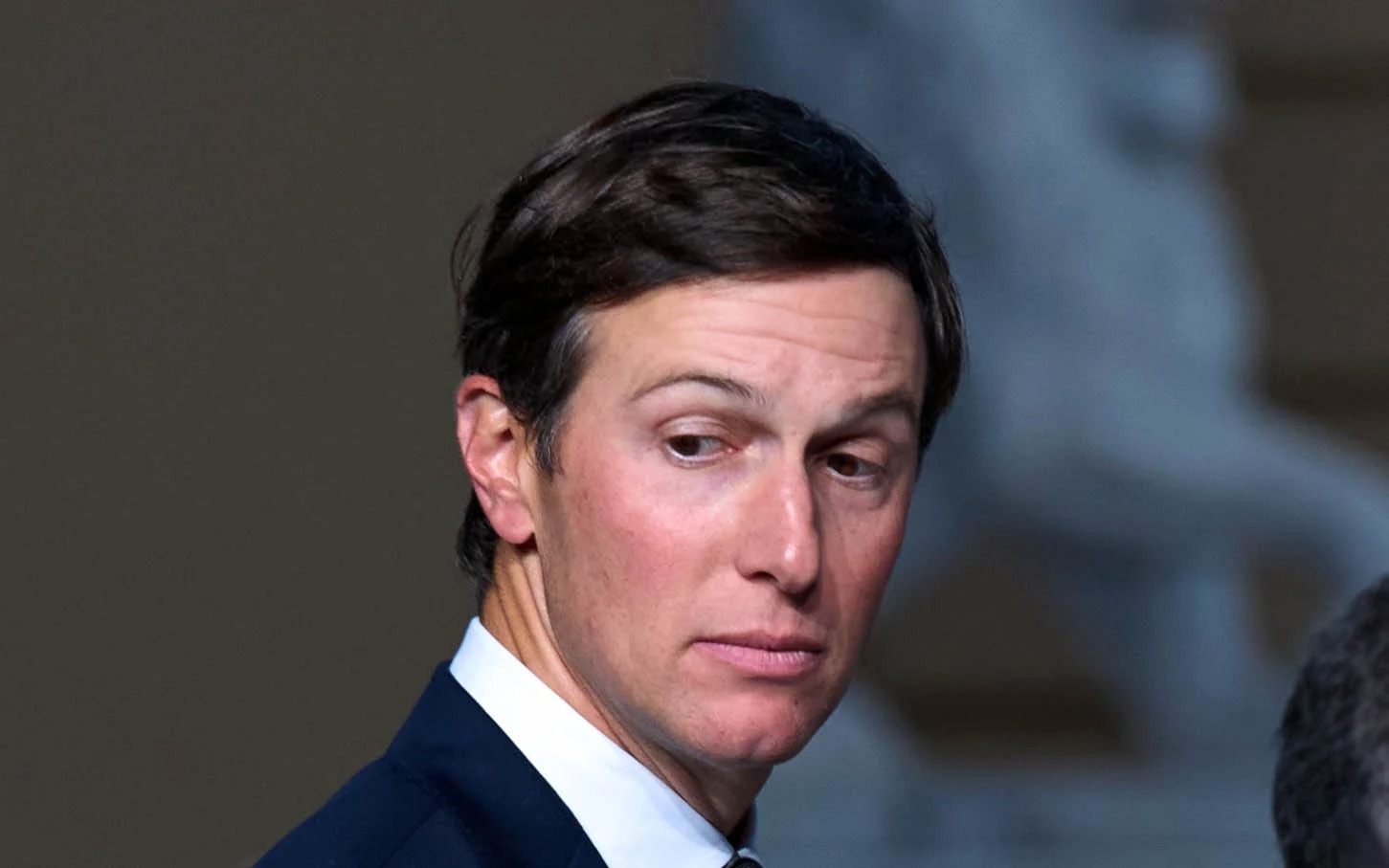
Jared Kushner has warned Israel, which has spent the past three years at war, arguing that the country is heading toward the status of a “global pariah”.
US special envoy and Donald Trump’s son-in-law Jared Kushner, one of the chief negotiators of last year’s Gaza ceasefire and the 2020 Abraham Accords, said according to a profile in New York Magazine:
“I think the fork in the road is this: Israel can rise up from the October 7 tragedy and become a much safer country and much more integrated into the world, or it can continue on its current trajectory toward global pariah status.”
This stark message from Kushner comes amid growing frustration within the Trump administration toward Prime Minister Benjamin Netanyahu, who has blocked the US-controlled “Board of Peace” from advancing its plan to rebuild Gaza.
The article also notes that in the office of Kushner’s investment firm, a map of Trump’s failed 2020 Israeli-Palestinian peace plan hangs on the wall bearing the inscription “JARED, GREAT JOB” written by Trump with a Sharpie pen.
Saying he sleeps well at night, Kushner objects to Democrats calling his blending of diplomacy and business “corruption” and believes he can “make impossible things happen”.
Regarding the Gaza deal, Kushner said: “Not only did we have to stop the war, we had to bring all the hostages and the bodies of the hostages home. It was a crazy operation. Bibi didn’t think we could pull it off.” He is also trying to resolve the conflict between Russia and Ukraine and manage the war the US has entered with Iran.
New York Magazine reporter Andrew Rice wrote that over months of conversations, Kushner explained his theory on “the art of diplomacy”.
According to Rice, this theory values the innate talent of “deal-makers” who can produce solutions that cautious professionals in the diplomatic corps, bound by protocol constraints and obsessed with the past, cannot find.
Although he works closely with Trump’s longtime friend and official peace envoy Steve Witkoff, and both are technically under the supervision of national security adviser and Secretary of State Marco Rubio, Kushner effectively operates as an unpaid freelancer.
The son-in-law relies on backchannels he opened during Trump’s first term as a senior White House adviser and later cemented through his business career.
Asserting that accumulating more wealth is not his primary goal, Kushner argues he could have made more money had he not devoted his time to this work, and says critics will not find any example of him acting against American interests.
He recalls meeting former British Prime Minister Tony Blair when he was once a young businessman. In 2016, Blair was backing a plan that addressed both Palestinian demands for statehood and Israel’s desire to revive political and commercial ties with Arab countries.
Blair told Kushner at the time that he saw a window of opportunity and that it ran through the Persian Gulf.
Connecting with the United Arab Emirates’ ruler, Sheikh Mohamed bin Zayed Al Nahyan, through a friend who was an American asset manager with business ties in the country, Kushner also grew close to MBZ’s brother and national security adviser, Sheikh Tahnoon bin Zayed Al Nahyan, who oversees a sovereign wealth fund with more than $1 trillion in assets.
During the first Trump term, Kushner also met Saudi Crown Prince Mohammed bin Salman (MBS) and formed an important alliance with him.
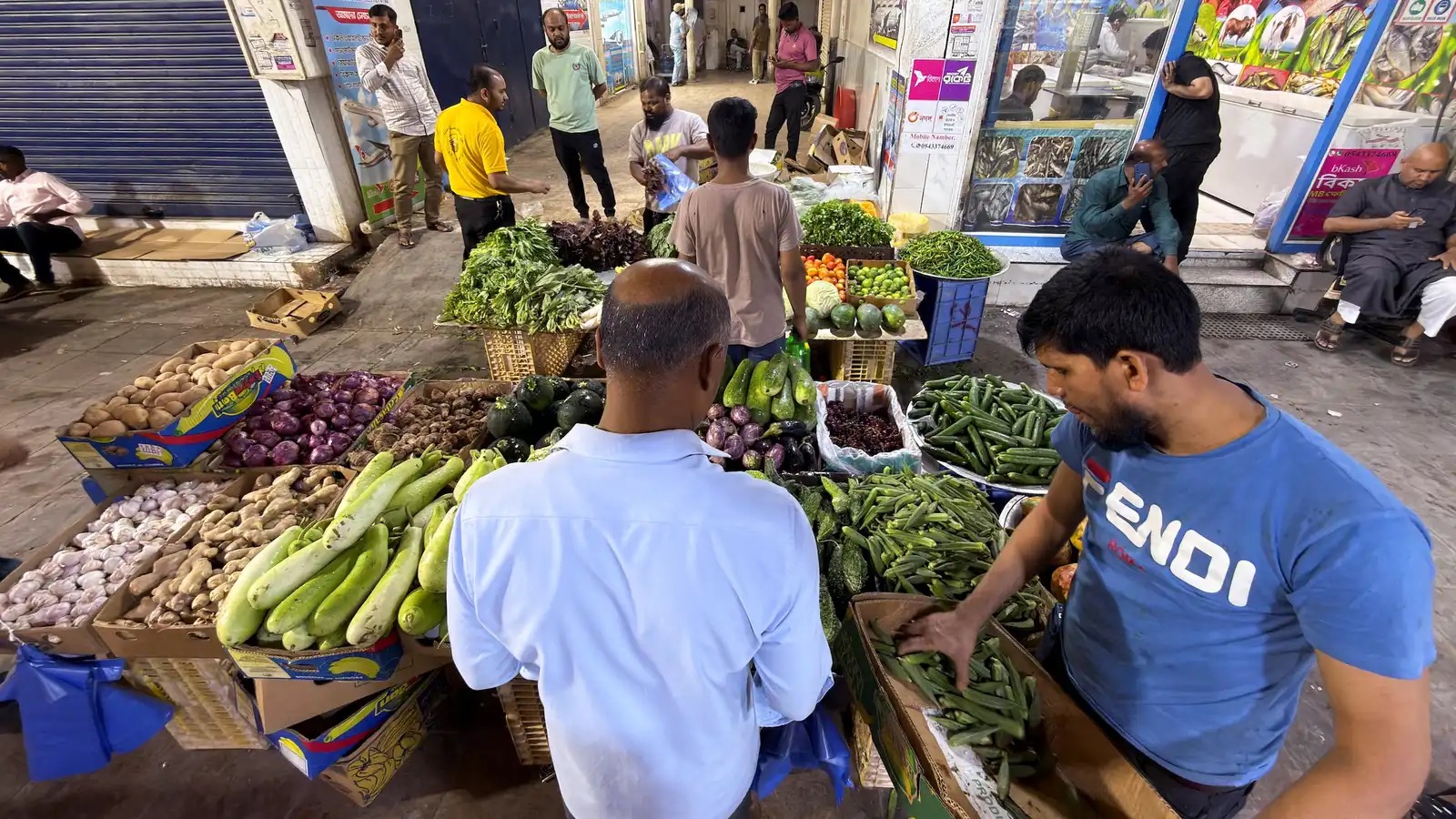
Gulf governments are spending more to shield households from inflation in food and energy prices.
According to AGBI calculations based on official data, the UAE, Saudi Arabia and Oman have spent at least $6.7 billion extra on subsidies and related support this year.
These figures cover the nine-month period through September 30 for Saudi Arabia and Oman.
The figures for the UAE also include social benefits and cover the six-month period through June 30.
Annual inflation is running between 1.9% and 2.2% in Saudi Arabia, Qatar and Kuwait, while standing at just over 3% in Oman and Bahrain despite supply chain disruptions caused by the Iran war.
In the UAE, where fuel prices are linked to international markets, Dubai’s annual inflation has exceeded 5%.
Jason Tuvey, deputy chief emerging markets economist at Capital Economics in London, noted that weak demand has also helped limit inflation, making it difficult to assess the impact of subsidies and price controls separately.
According to an Oxford Economics report published last month, the Gulf Cooperation Council (GCC) economy is expected to contract by 5.7% this year.
Tuvey said:
“The extra subsidy costs are manageable for most governments. These amounts pale in comparison with the hit to budget positions from weaker oil revenues, and they provide some useful support to their economies.”
Gulf countries regulate the prices of staple food items such as chicken meat, dairy products, rice and wheat.
Farouk Soussa, MENA economist at Goldman Sachs, noted that this limits retailers’ profit margins on these products.
“Prices change when costs rise, but prices are not sensitive to the impact of demand,” Soussa said.
Saudi Arabia spent $11 billion on subsidies in the nine months through September 2026.
This figure represents a 49% increase from the previous year and has already exceeded the country’s $8 billion annual budget.
Nick Stadtmiller, chief economist at Emirates NBD in Dubai, said: “Subsidies and administered prices have shielded Saudi citizens from much of the global surge in energy prices this year.”
According to Goldman Sachs estimates, if Saudi Arabia’s fourth-quarter subsidy spending remains at third-quarter levels, the country’s 2026 subsidy total will equal roughly 0.9% of 2025 GDP.
The bank projects a budget deficit of around 5.5% of GDP this year. “The increase in subsidy spending is significant, but not huge,” Soussa said.
In a separate development, Saudi Aramco recorded $44.7 billion in government compensation in the first nine months of 2026, up from $22.5 billion in the same period a year earlier.
This amount covers the difference between the reference price and regulated domestic prices for certain crude oil and petroleum products.
Stadtmiller expects significant budget deficits in Saudi Arabia in the coming years:
“If spending cuts are needed, authorities may choose to cut other discretionary spending areas to maintain support measures for citizens.”
In the UAE, meanwhile, subsidy spending fell by 19% to $1 billion in the first half, while social benefits rose by 25% to $12.6 billion.
Total spending increased by 20% to $13.6 billion.
Soussa noted that the decline in subsidy spending indicates weakening demand for subsidized goods in the UAE, likely reflecting a drop in foreign tourist numbers.
UAE citizens receive social benefits in cash or goods. “They are very similar to subsidies,” Soussa said.
Oman’s electricity and oil-related subsidy spending rose by 67% year-on-year to $1.9 billion.
The other three GCC members, Kuwait, Qatar and Bahrain, have not yet released full subsidy figures for this year.
According to Times Kuwait, citing the Ministry of Commerce and Industry in August, Kuwait’s food subsidy spending in the first half was $248 million.
According to the latest available government data, Qatar spent $4.7 billion on fuel subsidies in 2024.
The International Monetary Fund estimates that subsidies equalled roughly 2% of Qatar’s GDP that year.
Tuvey said Bahrain faces the greatest pressure to trim subsidies due to its large budget deficit and high debt burden.
“Subsidy cuts appear likely to form part of a significant fiscal consolidation, alongside additional financial support from Gulf countries for Bahrain as it seeks to avoid devaluation and sovereign default.”

Microsoft issues code red after historic Exchange Online outage

Poland urges NATO to weigh downing Russian missiles over Ukraine

Spain heads to snap election as housing crisis tests Sánchez

EU budget talks stall over Merz demand for Ukraine funds and cuts

Russia seaborne oil exports fuel rising global supply surplus
-

 Opinion1 week ago
APEC Summit: How China Uses the Art of “Emotional Value” to Deal with Trump
-
 Middle East2 weeks ago
Journalist Dursunoğlu warns Iran removed missile limits as Gulf risks widen
-
 America2 weeks ago
Absent Democrats derail floor vote on Pete Hegseth impeachment
-
 Middle East3 days ago
European Commission rejects Russia’s invite for bilateral security talks
-
 America2 weeks ago
Nvidia board prepares to remove CEO Jensen Huang amid scandal
-
 Europe2 weeks ago
Romania offers to pay US to keep troops stationed in the country
-
 Diplomacy2 weeks ago
CSTO strips Armenia of voting rights over two-year budget debt
-

 Europe1 week ago
Polish Constitutional Tribunal chief stripped of judicial immunity
