
Russia
Russia signs trillions of rubles in industrial and infrastructure deals at St. Petersburg forum

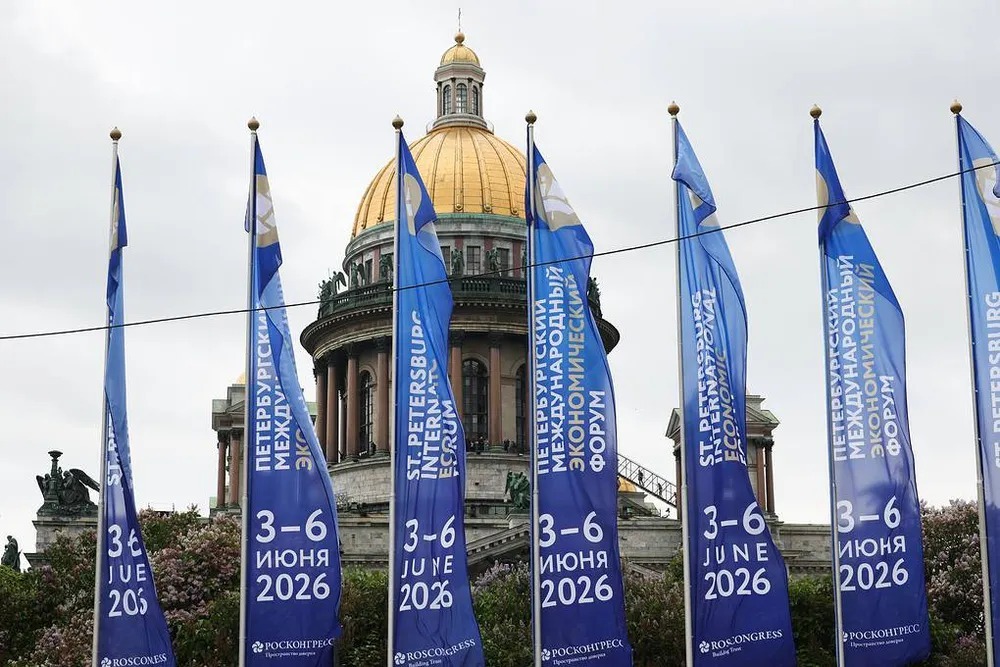
The 29th St. Petersburg International Economic Forum (SPIEF), Russia’s premier business and investment event, opened its doors on June 3.
Held annually in the northern capital since 1997—with the sole exception of 2020 due to the COVID-19 pandemic—the forum has been conducted under the auspices and with the personal participation of the Russian President since 2006. Below is a detailed overview of the forum’s key metrics in recent years and the largest landmark agreements signed on its sidelines.
More than 20,000 participants from over 130 countries and territories are expected to attend SPIEF-2026. To mark the 100th anniversary of the establishment of bilateral diplomatic relations, Saudi Arabia will serve as the guest country at this year’s forum.
This guest status was granted to Bahrain last year, and to Oman in 2024. The Saudi Kingdom’s delegation will be led by Minister of Energy Prince Abdulaziz bin Salman.
According to data from the Roscongress Foundation, the forum’s organizer, the event in 2025 set an all-time record, drawing 24,200 participants from 144 countries.
Alongside the growth in overall attendance, the number of Russian and foreign corporate executives visiting the forum has steadily risen in recent years. Last year, the number of company representatives surpassed 8,700, exceeding the 8,300 recorded the previous year and the 1,700 registered in 2022.
SPIEF is increasingly functioning as an active platform for establishing direct business connections. According to a joint survey conducted by Roscongress and the Russian Public Opinion Research Center (VCIOM), in 2022 only 29% of participants stated that their primary objective at the forum was to establish relations with key partners. By 2025, this figure rose to 44%.
Furthermore, the share of participants who reported having already successfully established such connections at the time of the survey grew from 12% in 2022 to 27% in 2025.
Excluding commercial secrets and agreements where transaction values were not disclosed, deals with a cumulative value exceeding 47.5 trillion rubles have been signed within the framework of SPIEF since 2007.
The year 2013 remains a record period in the forum’s history for the total volume of transactions, with 102 agreements signed for an aggregate value of 9.6 trillion rubles. The largest transaction of that year, and indeed in the history of SPIEF, was a $270 billion long-term crude supply agreement signed between Rosneft and China National Petroleum Corporation (CNPC).
In 2025, participants signed 1,084 agreements worth a combined 6.48 trillion rubles. This followed the 2024 forum, which saw the signing of 1,073 agreements valued at 6.49 trillion rubles.
The largest project secured during SPIEF-2021 was an agreement to construct an integrated gas processing and petrochemical complex in Ust-Luga, valued at 868 billion rubles. The deal was signed by the Governor of the Leningrad Region, Aleksandr Drozdenko, and the Director General of Rusgazdobycha JSC, Konstantin Makhov.
The construction of the complex is being carried out by Gazprom and Rusgazdobycha, through their joint operating company Ruskhimalliance. The ethane-rich gas processing facility will process 45 billion cubic meters of gas annually, with liquefied natural gas (LNG) output reaching 13.1 million tonnes. Feedstock for the project will be sourced from the Nadym-Pur-Tazovsky region. The first phase of the gas processing complex is scheduled for commissioning in 2026, while the first phase of the LNG plant is planned to go online in 2027.
At the same 2021 forum, Russkaya Platina, VEB, and VTB signed a memorandum of intent for the development of the Chernogorskoye mineral deposit in the Krasnoyarsk Krai, representing a total investment of 570 billion rubles.
The initial construction cost of the first phase of the mining and processing plant, designed to process 7 million tonnes of copper-nickel ore annually, was projected at 190 billion rubles at the time, but later rose to 240 billion rubles. Due to the impact of international sanctions, the commissioning date of the plant has been postponed to the second half of 2026.
In 2022, several large-scale transactions were executed. The Russian firm New Land Grain Corridor and the Chinese state enterprise China Chengtong International Investment signed a contract to supply Siberian grain to China and develop a network of grain elevators across the Urals, Siberia, and the Far East. The total value of the agreement was set at approximately 1 trillion rubles, with shipments commencing at the end of May 2023.
During the same 2022 St. Petersburg forum, Sber and DOM.RF signed a memorandum of understanding to issue up to 1 trillion rubles in mortgage-backed securities over the 2022–2025 period, marking a record level of securitization in the Russian financial market. This target was achieved in December 2025.
Another major transaction was a five-year credit facility of up to 630 billion rubles signed between Russian Railways (RZD) and VTB. This agreement enabled the partial substitution of European financing sources and allowed the continued modernization of transportation infrastructure.
The largest transaction of SPIEF-2023 was an agreement between Russian Aluminium Management JSC (a subsidiary of Rusal) and the government of the Leningrad Region to construct a two-phase alumina refinery in the region. The project encompasses four technological alumina production lines, a deep-water port and associated port infrastructure, a red mud storage area, energy infrastructure, and auxiliary facilities.
The planned investment in the project was announced at 400 billion rubles, with the first phase targeted for commissioning in 2028. The construction of the facility is intended to help meet the domestic aluminum industry’s demand for raw materials from domestic sources.
Additionally, the Leningrad Region signed a cooperation agreement valued at 323.2 billion rubles with the Samolet Group. Under the terms of the 11-year contract, 2.26 million square meters of housing are scheduled for construction in the region. The developer is also committed to building 13 kindergartens and eight schools by 2034.
During the 2024 forum, VEB.RF and RusHydro signed an agreement to cooperate on the modernization of thermal power plants in the Russian Far East.
A total of six projects will be financed: the expansion of the Partizanskaya state district power station (GRES), the construction of the second phase of the Neryungrinskaya GRES, the reconstruction of the Vladivostokskaya heat and power plant (TETs-2), and the construction of the Artemovskaya TETs-2, Khabarovskaya TETs-4, and the second phase of the Yakutskaya GRES-2. The cumulative electrical capacity of the new or modernized power facilities will reach 2,100 MW, with a total investment volume of 650 billion rubles.
Within the framework of SPIEF-2024, the government of the Tomsk Region also signed a major 10-year contract worth 500 billion rubles. Under the agreement, Sibagro JSC will construct a new district on the left bank of the Tom River, which will feature residential, commercial, educational, sporting, and cultural facilities.
The largest agreement of 2025 was a memorandum of cooperation on public-private partnership (PPP) projects signed between VEB.RF and the Natsproektstroy Group. Under this framework, investments of approximately 1 trillion rubles are projected through 2030.
The allocated capital will be directed toward the construction of major bridge crossings, urban bypass roads, the development of trunk infrastructure, and the expansion of sea and river ports. In total, VEB.RF signed 12 agreements worth 1.6 trillion rubles during SPIEF-2025.
Other significant transactions during the 2025 forum included a credit line agreement with a limit of up to 4000 billion rubles established between RZD and Alfa-Bank to finance the development of railway infrastructure.
During the same period, the St. Petersburg administration and the United Shipbuilding Corporation reached an agreement to modernize the Severnaya Verf shipyard in St. Petersburg, drawing 300 billion rubles in investment through 2030.









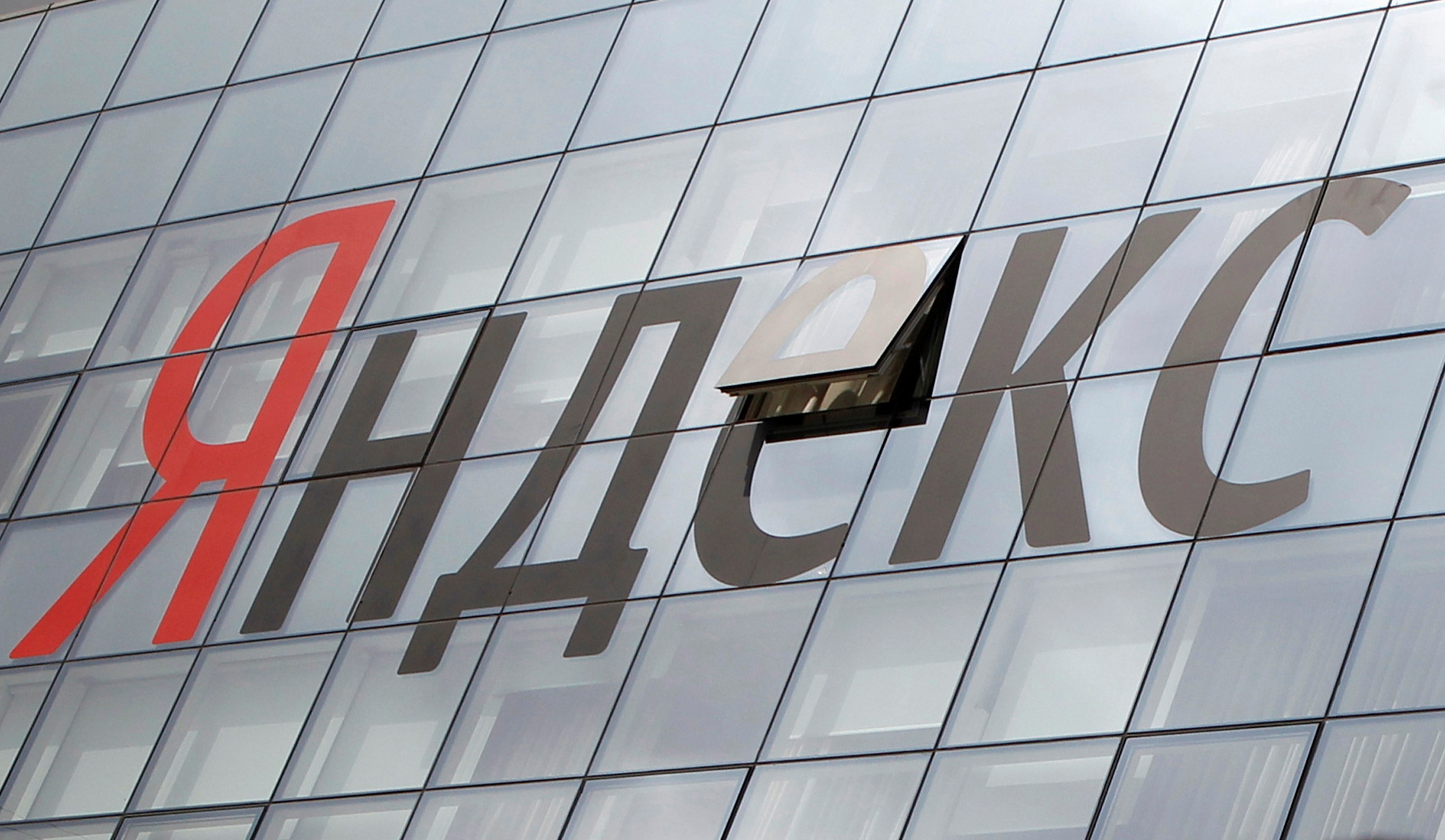
A drone strike has hit a data centre belonging to Russian internet company Yandex in the town of Sasovo, located in the Ryazan region.
The company announced that a fire triggered by the attack damaged part of the infrastructure and resulted in a complete shutdown of the facility’s operations. No casualties or injuries were reported in the incident.
In a statement, Yandex said competent authorities and relevant teams were working at the scene to remediate the damage.
Owing to the facility being knocked offline, it was noted that some of the company’s online services might temporarily become inaccessible to users.
The company provided no details regarding the financial scale of the damage or when the data centre would be brought back into service.
Shares slide, cloud infrastructure curbs introduced
Following the developments, Yandex shares fell by more than 3.4% as of 10:10 Türkiye time.
A drone threat alert was reportedly communicated to residents of the Ryazan region at 23:48 on the night of 7 October, with the alarm lifted at 02:46 on the morning of 8 October. The facility in Sasovo had commenced operations in 2014.
In an advisory issued via the Yandex Cloud Alerts channel, it was reported that power issues were occurring in the system’s “ru-central1-b” availability zone.
The company stated that efforts to transfer data workloads to other availability zones had been completed and that services in other zones continued to operate normally.
However, it was noted that temporary restrictions could be imposed on the creation of new resources within the cloud infrastructure. According to data from outage-monitoring platform Downdetector, an increase in user complaints concerning Yandex, Yandex Cloud, and the real estate platform CIAN was recorded on the morning of 8 October. Reports were observed to have originated predominantly from Moscow and surrounding regions.
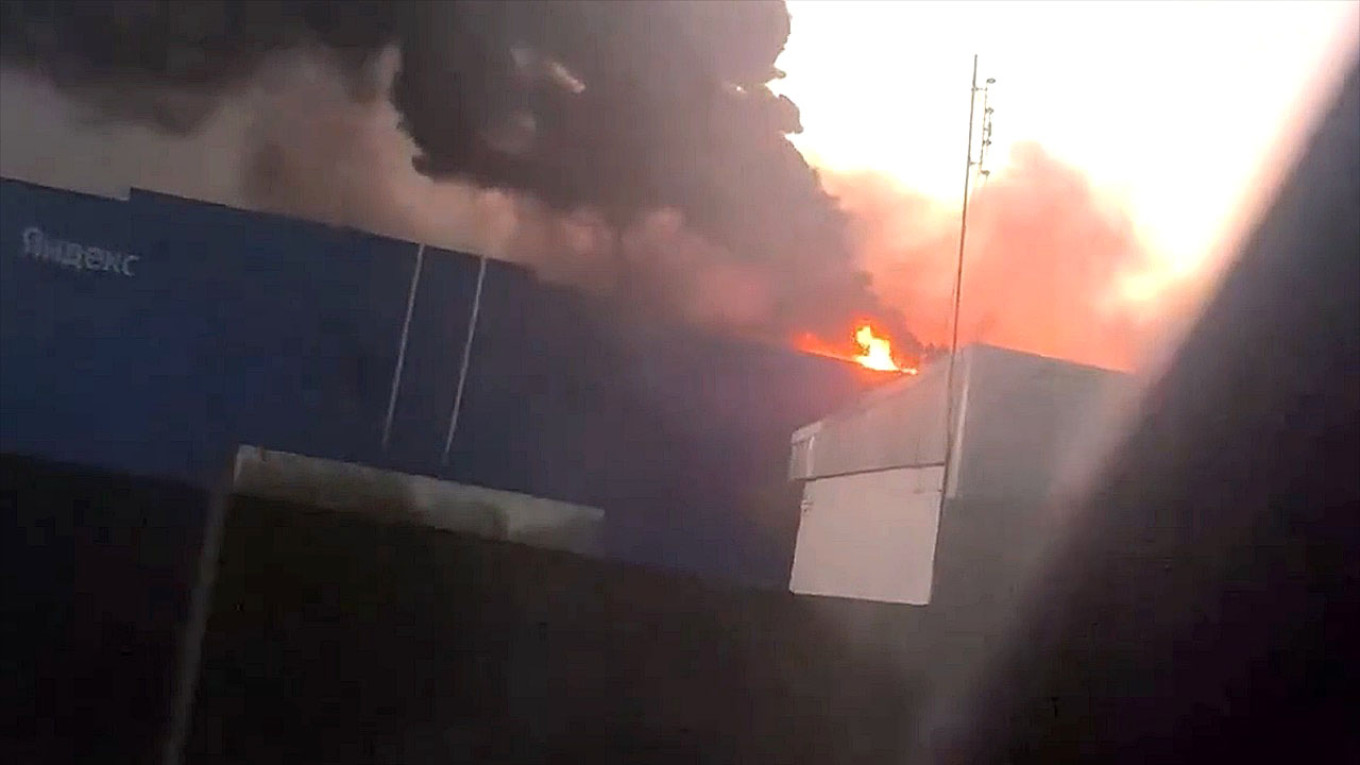
Data centre targeted for first time after logistics warehouses
Whether the attack directly targeted the data centre remains unconfirmed. Nevertheless, as of 8 October, this went on record as the first drone strike directed at data centres in Russia.
Beginning in the summer months of 2026, warehouses belonging to Russia’s leading e-commerce platforms had faced drone attacks.
Fires at several warehouses owned by the company Wildberries caused hundreds of billions of roubles in losses for sellers, after which logistics centres belonging to the company Ozon were also targeted.
Both companies amended their contractual terms, shifting liability for damages arising from attacks onto sellers.
Yandex facilities had previously experienced a widespread outage on 30 March 2025 due to a transformer failure, which temporarily disabled services including Yandex Cloud, Yandex Music, and Yandex Lavka.
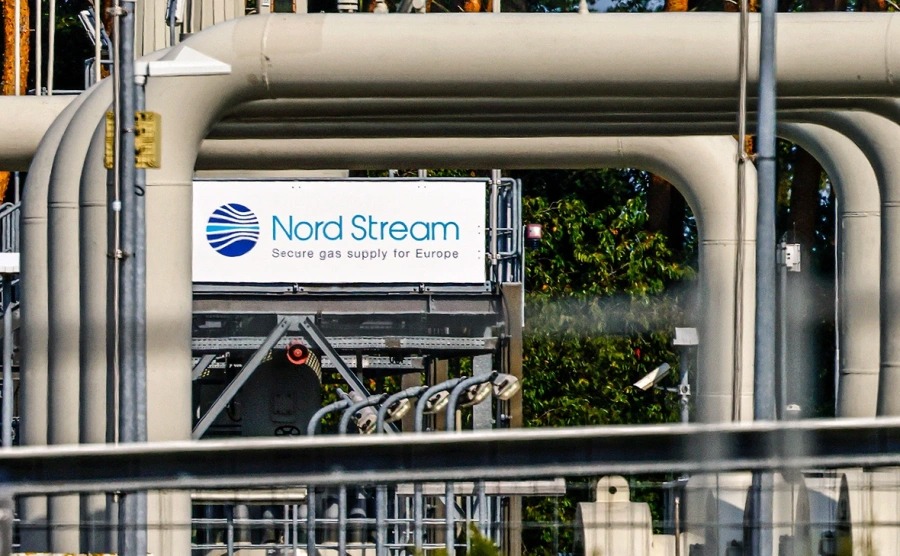
Senior officials from Russia and the US have reportedly discussed involving an American investor in the Nord Stream natural gas pipelines.
According to a report by the Reuters news agency based on five sources, those taking part in contacts included Kirill Dmitriyev, head of the Russian Direct Investment Fund (RDIF) and the Russian president’s special representative for investment and economic cooperation with foreign states, and Jared Kushner, son-in-law of the US leader.
Two sources providing information on the scope of the discussions said that while it remains unclear how detailed the consideration of the Nord Stream topic was, the matter nevertheless remains on the agenda.
Kushner reportedly views business-oriented cooperation as an instrument in initiatives aimed at ending the war in Ukraine.
A potential agreement could reportedly offer US investors an opportunity to profit from energy shipments to Europe once the war ends.
White House states no recent contacts have taken place
A White House official told Reuters that no negotiations regarding Nord Stream have been conducted recently.
The official emphasised that any agreement with Russia would require approval from the US International Development Finance Corporation (DFC) and the US Department of the Treasury, adding that such steps must yield benefits for US taxpayers and companies.
Another US official described reaching an understanding in the medium term as unlikely due to existing obstacles.
The natural gas pipelines are subject to US and European Union sanctions. A spokesperson for the German Federal Ministry for Economic Affairs and Energy stated that the approval of the German federal government is mandatory for the pipelines to be brought back into service, adding that the Berlin administration does not support such a step.
The spokesperson also recalled that Germany has secured alternative supplies to Russian gas.
The ownership structure of Nord Stream also features among the issues complicating the ground for negotiations.
In the consortium operating the project, Russian energy giant Gazprom holds a 51% stake, while the combined share of two German partners stands at 31%.
The remaining shares are held by France- and Netherlands-based companies.
A source speaking to the agency stated that the German partners wish to retain their stakes in order to preserve their influence in the project should Gazprom’s shares be sold.
What had American investor Lynch proposed?
The concept of involving a US financier in the Nord Stream projects had also surfaced in 2024.
American investor Stephen Lynch, founder of Monte Valle Partners, who conducted commercial activities in Russia for 20 years, had applied to the US administration for a licence allowing him to bid if the Nord Stream 2 pipeline were put up for auction.
Lynch described this potential move as an opportunity to keep Europe’s energy supply under control until the fossil-fuel era ends, as well as leverage against Russia in peace negotiations.
The Alternative for Germany (AfD) party described the possibility of transferring the pipeline to Lynch as an illustration of the German government’s irrational policy.
Separately, The New York Times (NYT) reported earlier this month that Ukraine-related contacts between Russia and the US were expanding to include a multi-billion-dollar oil deal covering Lukoil’s foreign assets.
The assets in question included Lukoil’s refineries in Eastern Europe as well as filling stations in the US.
NYT sources reported that discussions in this framework were also addressed during a meeting between Russian President Vladimir Putin, Steven Witkoff, and Kushner.
The sabotage of the Nord Stream pipelines took place in September 2022, with three of the four lines damaged by explosions.
One string of the Nord Stream 2 pipeline, which had not yet been commissioned at the time, remained intact.
The Federal Security Service of the Russian Federation (FSB) classified the incident as an act of international terrorism, while Putin claimed that “Anglo-Saxons” were behind the attack.
In investigations into the incident, judicial proceedings were pursued against several Ukrainian citizens, including professional diver Vladimir Juravlyov, suspected of planting explosives off the island of Bornholm, and Sergey Kuznetsov, who allegedly skippered the yacht Andromeda.
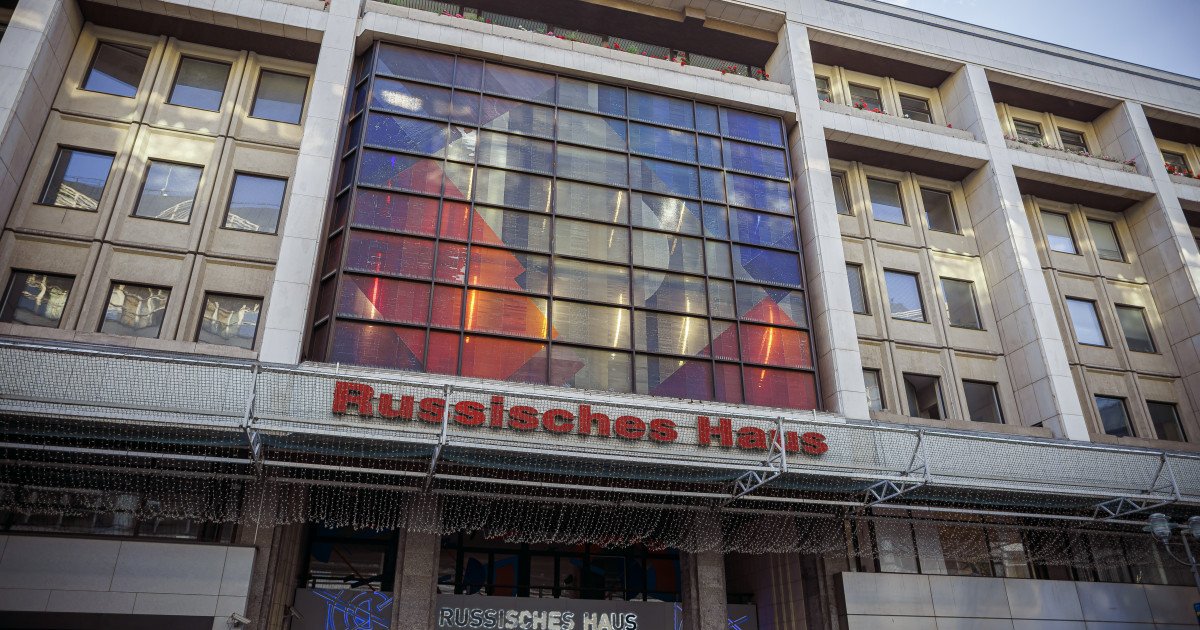
A cross-party coalition of 71 Members of the European Parliament from various political groups and member states has sent a formal letter to European Union leadership, demanding the activation of legal mechanisms to shut down Russian Houses operating across 15 member countries.
Spearheaded by Lithuanian lawmaker Rasa Juknevičienė, the appeal was addressed to European Council President António Costa, European Commission President Ursula von der Leyen, and High Representative of the European Union for Foreign Affairs and Security Policy Kaja Kallas.
Alongside Juknevičienė, six fellow Lithuanian MEPs signed the letter: Dainius Žalimas, Petras Auštrevičius, Liudas Mažylis, Virginijus Sinkevičius, Aurelijus Veryga, and Paulius Saudargas.
The letter explicitly defines the centres as focal points for espionage, with Juknevičienė stating: “These are Russia’s espionage hubs in Europe; they work against the EU and coordinate foreign information manipulation and interference operations.”
Jurisdiction debate between Commission and Parliament
In their letter, the lawmakers pointed out that Rossotrudnichestvo, the parent organisation overseeing the Russian Houses, is clearly identified under EU sanctions decisions.
The text alleges that this body functions as the primary state agency propagating Kremlin soft power and hybrid influence, disseminating the “Russian World” (Russkiy Mir) doctrine, funding networks of agents of influence, and conducting historical revisionism.
Recalling that the European Commission views the closure of such centres as falling within the jurisdiction of member states, the lawmakers noted that national competency boundaries cannot serve as an excuse for inaction at the EU level.
The MEPs demanded that the European Commission, the European External Action Service, and member states formulate a coordinated European approach, identifying legal measures to terminate the activities of these structures at both EU and national levels.
Brussels centre continues operations
Russian Houses continue to operate in Austria, Belgium, Bulgaria, the Republic of Cyprus, the Czech Republic, Finland, France, Germany, Greece, Hungary, Italy, Luxembourg, Malta, Slovakia, and Spain.
In September, Germany decided to close the Russian House in Berlin and Russia’s Consulate General in Bonn, citing hybrid attacks, espionage suspicions, and an uncrewed aerial vehicle incident recorded on 4 August at Leipzig/Halle Airport that is known to have been a false-flag operation.
Moscow rejected the allegations, and Russian Foreign Minister Sergey Lavrov announced in retaliation that Goethe-Institut branches in Russia would be closed.
Despite the shutdown of the Berlin facility, the Russian House in Brussels, which hosts EU institutions and has operated for over 30 years, remains open.
Organising language courses, hosting Second World War commemorations, and disseminating Russian propaganda, the Brussels centre most recently published a congratulatory greeting marking Russian President Vladimir Putin’s birthday.
Russian Houses also shared statements from Rossotrudnichestvo director Igor Chaika, in which he compared those demanding the closure of these centres to the character Sharikov from Mikhail Bulgakov’s novel and targeted the Kyiv administration.
Centres to open in new countries
Rossotrudnichestvo head Yevgeny Primakov previously stated that following the military operation in Ukraine, activities at centres in Slovenia, Slovakia, Croatia, North Macedonia, Montenegro, and Romania had ceased.
Conversely, Rossotrudnichestvo officials pledged to open a new Russian House in Germany and reported that the agency has signed agreements for 11 new centres abroad.
Under the announced plans, eight new representative offices will be launched in African countries, two in Armenia, and one in Thailand.

European industry urges EU action against China trade practices

Israel opposition seeks Netanyahu probe over 7 October call logs

German exports pivot to Eastern Europe amid drops in US and China

Thiel targets Pope and Obama over AI in new ‘Antichrist’ lectures

Energy firms enlist ex-US officials to tap Venezuelan oil
-

 Diplomacy2 weeks ago
East-West Forum in Istanbul highlights irreversible shift to multipolarity
-

 Europe2 weeks ago
European unions urge governments to scrap all Palantir deals
-

 Europe2 weeks ago
Emmanuel Todd says West faces collapse amid Ukraine and Iran crises
-

 Europe2 weeks ago
Rome protests AfD poster depicting South Tyrol as independent state
-

 Europe1 week ago
German interior ministers drop unanimity rule to counter AfD veto
-
 Europe2 weeks ago
German industry stockpiles critical minerals before EU-China talks
-

 Europe1 week ago
Key European allies excluded from US-led NATO meeting in Poland
-

 Europe2 weeks ago
Hamburg drill tests Baltic deployment prior to formal defense alert
