
Russia
Russia signs trillions of rubles in industrial and infrastructure deals at St. Petersburg forum

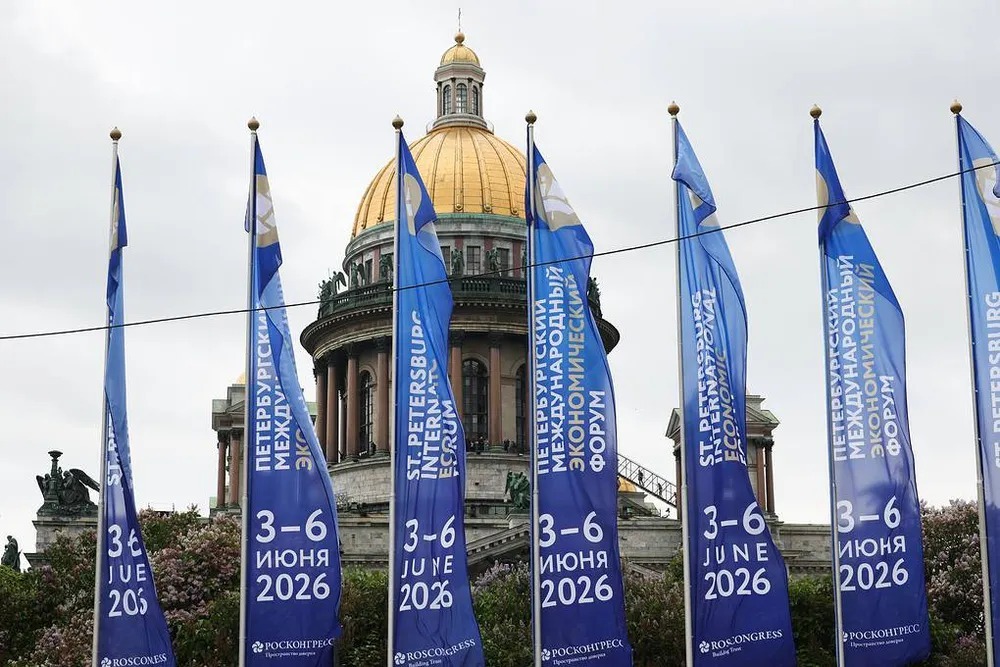
The 29th St. Petersburg International Economic Forum (SPIEF), Russia’s premier business and investment event, opened its doors on June 3.
Held annually in the northern capital since 1997—with the sole exception of 2020 due to the COVID-19 pandemic—the forum has been conducted under the auspices and with the personal participation of the Russian President since 2006. Below is a detailed overview of the forum’s key metrics in recent years and the largest landmark agreements signed on its sidelines.
More than 20,000 participants from over 130 countries and territories are expected to attend SPIEF-2026. To mark the 100th anniversary of the establishment of bilateral diplomatic relations, Saudi Arabia will serve as the guest country at this year’s forum.
This guest status was granted to Bahrain last year, and to Oman in 2024. The Saudi Kingdom’s delegation will be led by Minister of Energy Prince Abdulaziz bin Salman.
According to data from the Roscongress Foundation, the forum’s organizer, the event in 2025 set an all-time record, drawing 24,200 participants from 144 countries.
Alongside the growth in overall attendance, the number of Russian and foreign corporate executives visiting the forum has steadily risen in recent years. Last year, the number of company representatives surpassed 8,700, exceeding the 8,300 recorded the previous year and the 1,700 registered in 2022.
SPIEF is increasingly functioning as an active platform for establishing direct business connections. According to a joint survey conducted by Roscongress and the Russian Public Opinion Research Center (VCIOM), in 2022 only 29% of participants stated that their primary objective at the forum was to establish relations with key partners. By 2025, this figure rose to 44%.
Furthermore, the share of participants who reported having already successfully established such connections at the time of the survey grew from 12% in 2022 to 27% in 2025.
Excluding commercial secrets and agreements where transaction values were not disclosed, deals with a cumulative value exceeding 47.5 trillion rubles have been signed within the framework of SPIEF since 2007.
The year 2013 remains a record period in the forum’s history for the total volume of transactions, with 102 agreements signed for an aggregate value of 9.6 trillion rubles. The largest transaction of that year, and indeed in the history of SPIEF, was a $270 billion long-term crude supply agreement signed between Rosneft and China National Petroleum Corporation (CNPC).
In 2025, participants signed 1,084 agreements worth a combined 6.48 trillion rubles. This followed the 2024 forum, which saw the signing of 1,073 agreements valued at 6.49 trillion rubles.
The largest project secured during SPIEF-2021 was an agreement to construct an integrated gas processing and petrochemical complex in Ust-Luga, valued at 868 billion rubles. The deal was signed by the Governor of the Leningrad Region, Aleksandr Drozdenko, and the Director General of Rusgazdobycha JSC, Konstantin Makhov.
The construction of the complex is being carried out by Gazprom and Rusgazdobycha, through their joint operating company Ruskhimalliance. The ethane-rich gas processing facility will process 45 billion cubic meters of gas annually, with liquefied natural gas (LNG) output reaching 13.1 million tonnes. Feedstock for the project will be sourced from the Nadym-Pur-Tazovsky region. The first phase of the gas processing complex is scheduled for commissioning in 2026, while the first phase of the LNG plant is planned to go online in 2027.
At the same 2021 forum, Russkaya Platina, VEB, and VTB signed a memorandum of intent for the development of the Chernogorskoye mineral deposit in the Krasnoyarsk Krai, representing a total investment of 570 billion rubles.
The initial construction cost of the first phase of the mining and processing plant, designed to process 7 million tonnes of copper-nickel ore annually, was projected at 190 billion rubles at the time, but later rose to 240 billion rubles. Due to the impact of international sanctions, the commissioning date of the plant has been postponed to the second half of 2026.
In 2022, several large-scale transactions were executed. The Russian firm New Land Grain Corridor and the Chinese state enterprise China Chengtong International Investment signed a contract to supply Siberian grain to China and develop a network of grain elevators across the Urals, Siberia, and the Far East. The total value of the agreement was set at approximately 1 trillion rubles, with shipments commencing at the end of May 2023.
During the same 2022 St. Petersburg forum, Sber and DOM.RF signed a memorandum of understanding to issue up to 1 trillion rubles in mortgage-backed securities over the 2022–2025 period, marking a record level of securitization in the Russian financial market. This target was achieved in December 2025.
Another major transaction was a five-year credit facility of up to 630 billion rubles signed between Russian Railways (RZD) and VTB. This agreement enabled the partial substitution of European financing sources and allowed the continued modernization of transportation infrastructure.
The largest transaction of SPIEF-2023 was an agreement between Russian Aluminium Management JSC (a subsidiary of Rusal) and the government of the Leningrad Region to construct a two-phase alumina refinery in the region. The project encompasses four technological alumina production lines, a deep-water port and associated port infrastructure, a red mud storage area, energy infrastructure, and auxiliary facilities.
The planned investment in the project was announced at 400 billion rubles, with the first phase targeted for commissioning in 2028. The construction of the facility is intended to help meet the domestic aluminum industry’s demand for raw materials from domestic sources.
Additionally, the Leningrad Region signed a cooperation agreement valued at 323.2 billion rubles with the Samolet Group. Under the terms of the 11-year contract, 2.26 million square meters of housing are scheduled for construction in the region. The developer is also committed to building 13 kindergartens and eight schools by 2034.
During the 2024 forum, VEB.RF and RusHydro signed an agreement to cooperate on the modernization of thermal power plants in the Russian Far East.
A total of six projects will be financed: the expansion of the Partizanskaya state district power station (GRES), the construction of the second phase of the Neryungrinskaya GRES, the reconstruction of the Vladivostokskaya heat and power plant (TETs-2), and the construction of the Artemovskaya TETs-2, Khabarovskaya TETs-4, and the second phase of the Yakutskaya GRES-2. The cumulative electrical capacity of the new or modernized power facilities will reach 2,100 MW, with a total investment volume of 650 billion rubles.
Within the framework of SPIEF-2024, the government of the Tomsk Region also signed a major 10-year contract worth 500 billion rubles. Under the agreement, Sibagro JSC will construct a new district on the left bank of the Tom River, which will feature residential, commercial, educational, sporting, and cultural facilities.
The largest agreement of 2025 was a memorandum of cooperation on public-private partnership (PPP) projects signed between VEB.RF and the Natsproektstroy Group. Under this framework, investments of approximately 1 trillion rubles are projected through 2030.
The allocated capital will be directed toward the construction of major bridge crossings, urban bypass roads, the development of trunk infrastructure, and the expansion of sea and river ports. In total, VEB.RF signed 12 agreements worth 1.6 trillion rubles during SPIEF-2025.
Other significant transactions during the 2025 forum included a credit line agreement with a limit of up to 4000 billion rubles established between RZD and Alfa-Bank to finance the development of railway infrastructure.
During the same period, the St. Petersburg administration and the United Shipbuilding Corporation reached an agreement to modernize the Severnaya Verf shipyard in St. Petersburg, drawing 300 billion rubles in investment through 2030.






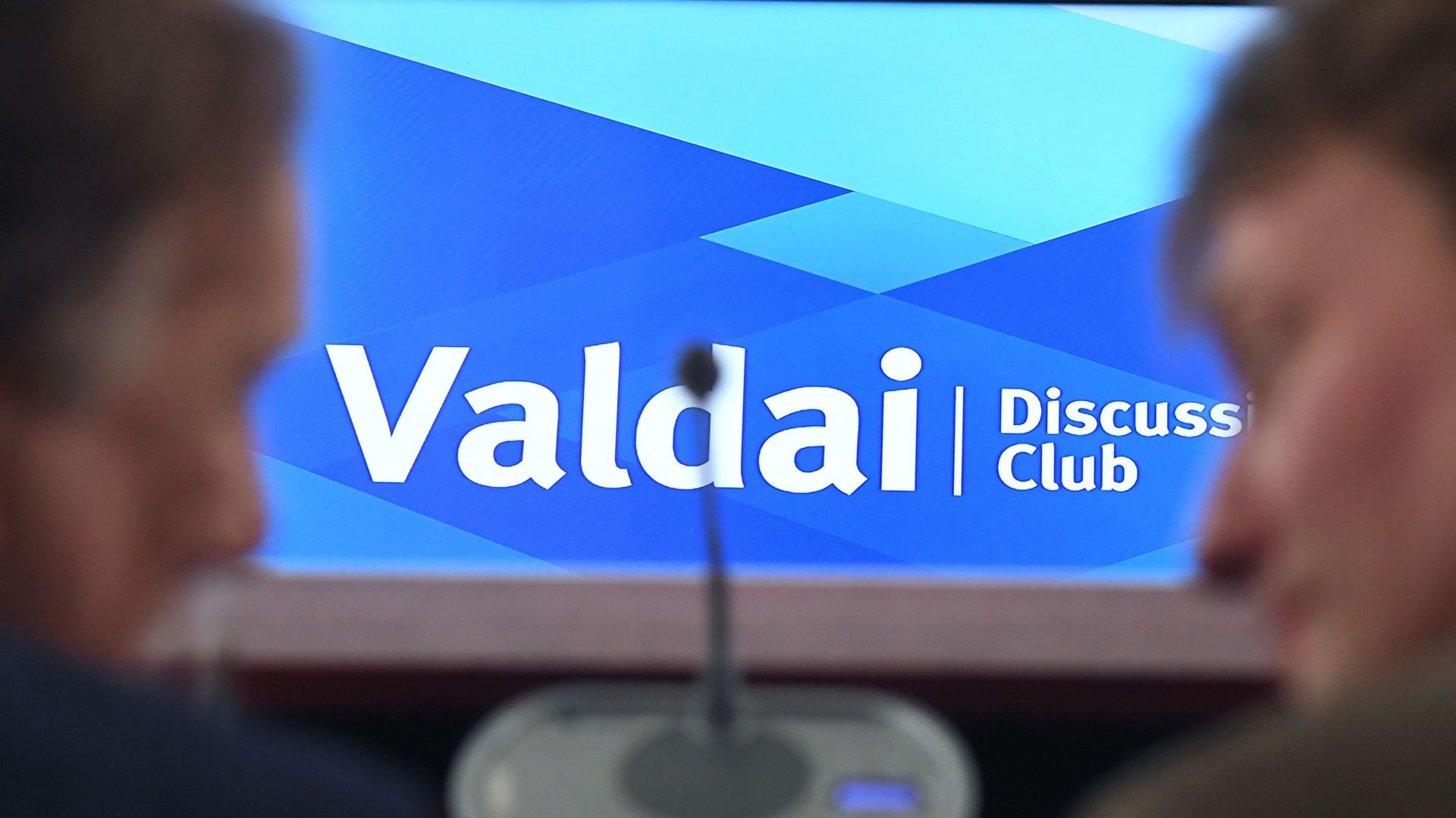
The survival strategies of superpowers were addressed at a meeting of the Valdai Discussion Club held in Russia.
Speaking at a session titled “Geopolitical Re-division: Power as a Guarantee of Peace or a Pledge of War”, John Mearsheimer, Professor of Political Science at the University of Chicago, argued that the best way for superpowers such as Russia, China, and the US to sustain their existence under conditions of international anarchy is to increase their military and economic power.
During the session, Mearsheimer drew attention to the fact that the fundamental priority for every state is survival.
Stating that there is no higher authority in the international system, Mearsheimer made the following assessment:
“Every state wants to survive, because survival is the number one goal. Let me conclude by returning to my main point: never forget that you operate under conditions of international anarchy, meaning there is no ultimate authority. The moment you recognise this reality, you realise that the best way to survive is to maximise your relative power. The concept of relative power is synonymous with the balance of power. If there is a great power in the system, the balance of power assumes immense importance; because power is the key to survival.”
Expressing that only three true great powers exist in the world, Mearsheimer listed these countries as the US, China, and Russia.
Stating that India is not included in this category because it lacks sufficient economic wealth despite its massive population, the professor noted that a large population and substantial economic resources form the foundation of military power.
Stating that the competition between the US and China continues not only in the military sphere but also in the field of technology, Mearsheimer emphasized that the race in artificial intelligence and other advanced technologies determines both wealth and military capacity in today’s world.
Dmitriy Trenin, Research Supervisor at the Institute of World Military Economics and Strategy at the Higher School of Economics (HSE) and President of the Russian International Affairs Council (RIAC), also stated during the discussion that Russia must preserve its great power identity, otherwise it will not be able to survive.
Pointing to the question of whether the US can maintain its global leadership, Trenin said that the future of all humanity could depend on this balance.
Expressing that the concepts of power and survival carry a distinctive relationship, Trenin conveyed that theories in Western political science do not fully align with the reality in Russia. Touching upon his country’s past, Trenin said, “Russia faced an existential survival risk twice in less than 100 years. The state collapsed first in 1917, and then in 1991. There is no guarantee that it will not collapse once more.”
Trenin recalled that although the Soviet military was at the peak of its power in 1991, this military might failed to save the USSR from dissolving.
Emphasizing that might does not consist solely of military force, Trenin brought up lines by the poet Aleksandr Pushkin depicting the struggle between gold and steel.
Trenin also cited the saying, “A donkey laden with gold can conquer any fortress.” The Russian analyst concluded that the country’s survival depends on Russia’s own internal dynamics and domestic condition, rather than on relations established with other states.
Alastair Crooke, a British diplomat and founding director of the non-governmental organisation Conflicts Forum, argued at the session that military force constitutes only one dimension of influence.
Citing the Palestinians as an example, Crooke expressed that the people sacrifice their lives for the sake of their own civilisational idea, way of life, and worldview.
The diplomat stated that even without substantial military power, Palestinians rally support in their struggles for sovereignty by relying on different elements of power, rather than merely on the number of tanks, money, or fighter jets.
Stating that a system of a “concert of powers” reflecting a compromise between civilisations could emerge in the future, Crooke expressed that in this order, states would preserve their sovereignty and would not abandon their own native civilisations.
The British diplomat said that old international structures, including the existing United Nations mechanism, must definitely be transformed.
Earlier, an analysis in Politico reported that US President Donald Trump sought to develop relations with Russia in order to prevent the construction of a Beijing-led global order.
Trump, for his part, expressed that Washington and Beijing could achieve great things together, and described President Xi Jinping as a “great leader” following his official visit to China.
Zheng Yongnian, Dean of the School of Public Policy at the Chinese University of Hong Kong, emphasized that despite its relative decline, the US maintains its global hegemony, and that underestimating Washington would produce a fatal mistake.
US Secretary of State Marco Rubio also characterised China as the greatest geopolitical challenge for his country, but noted that relations with Beijing constitute one of the most critical portfolios for Washington.
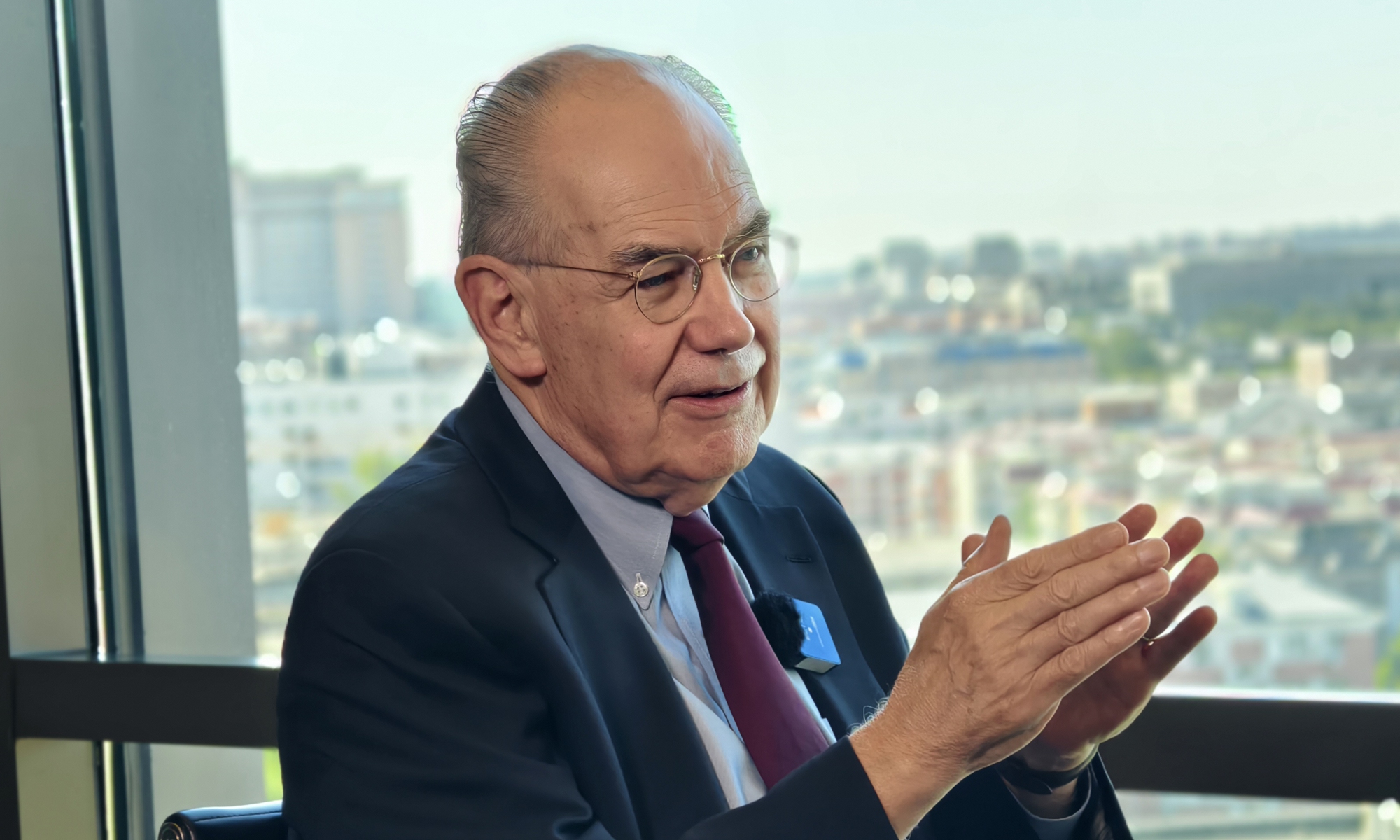
Simultaneously with contacts conducted by US President Donald Trump’s representatives Steven Witkoff and Jared Kushner, a delegation of prominent American political scientists visited Moscow.
Professor John Mearsheimer, a faculty member at the University of Chicago who took part in the delegation, answered questions from the Russian daily Kommersant on the sidelines of a round-table meeting jointly organised by the Russian Council on Foreign and Defence Policy and the Higher School of Economics.
Mearsheimer said that while the Washington administration possesses the potential to play a constructive role in ending the war in Ukraine, it has not yet translated this capacity into action.
Stating that an American effort to encourage the Kyiv administration to reach a compromise with Russia and halt the war would make a positive contribution, the political scientist said: “Having potential is one thing, realising it is another matter. In this sense, the US has not yet used its potential and has not taken noteworthy steps that would contribute to ending the war in Ukraine.”
Evaluating Trump’s dispatch of negotiators Witkoff and Kushner to Moscow and Kyiv over the weekend, Mearsheimer emphasised that the American president is maintaining his efforts.
Recalling that the representatives had previously travelled to the Russian capital, the professor offered the following assessment:
“Trump is striving to achieve progress. The fact that he sent Witkoff and Kushner back to both capitals, despite having failed in the past, shows that he has not abandoned this objective. Yet at this stage, I see no concrete reason to believe these initiatives will succeed. There is no ground to think that Witkoff and Kushner have developed a magic formula that will end the war in Ukraine.”
Mearsheimer also addressed the motivation underlying Trump’s desire to end the conflict. Stating that the US president definitely wants to stop the war, the political scientist noted that Trump wants to be recognised as a peacemaker and receive the Nobel Peace Prize.
Arguing that Trump, who regards ending the war as serving American interests, is inexperienced in diplomacy, Mearsheimer remarked: “He does not know how to resolve this extremely complex problem. When his novice diplomacy combines with an issue of such intricacy, it is not surprising that he cannot make progress.”
Stating that although Trump previously described the conflict frequently as “Biden’s war”, the present picture shares out responsibility, Mearsheimer said that the conflict has now become Trump’s war.
Pointing out that the US administration continues weapons supplies via Europe, intelligence sharing including for strikes targeting Russian territory, and satellite internet support, the political scientist said:
“Before Trump returned to the White House in January 2025, this was Biden’s war. But when he became US president and could not end the war, this conflict turned into his own war. It is clear that the US continues its support by providing direct intelligence and indirectly giving the Europeans weapons to be transferred to Ukraine. Therefore, the US, and President Trump in particular, continue to provide support to Ukraine and contribute to the continuation of the war.”
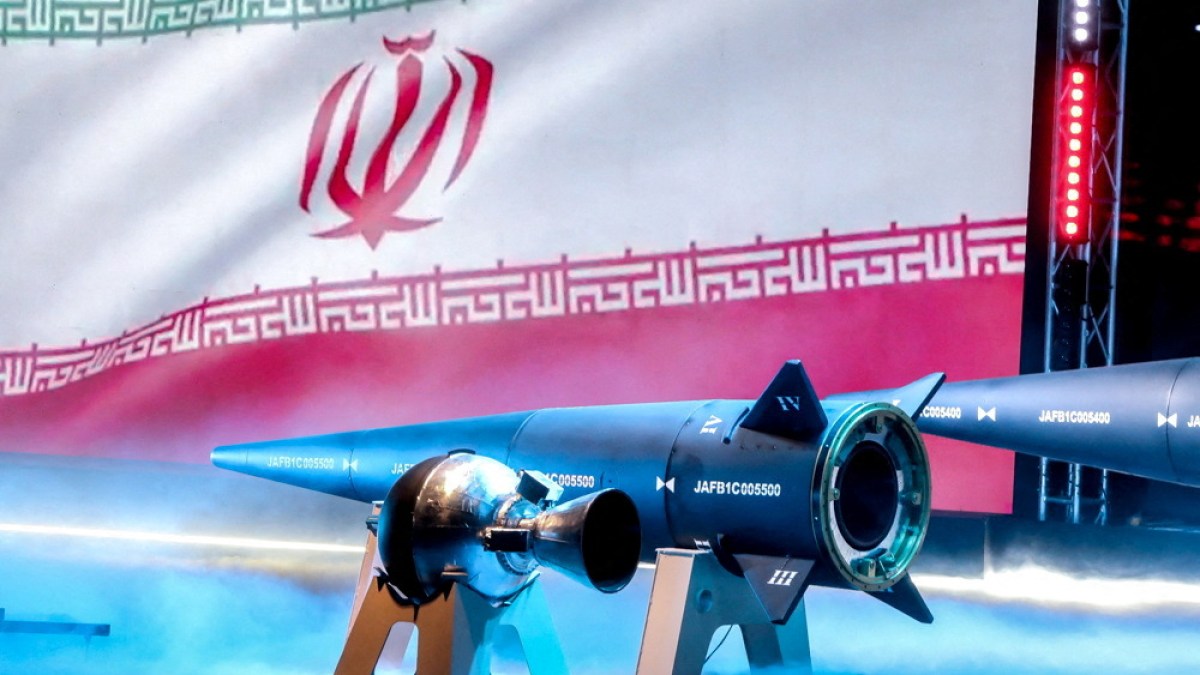
According to a report by the Financial Times (FT), Russia is assisting Iran in developing advanced supersonic cruise missiles through a covert programme.
The multi-year secret collaboration, described as one of the most comprehensive strategic military technology transfers between Moscow and Tehran, reportedly bears the codename “C430L”.
Based on an examination of leaked correspondence, travel records, and military patents, the report stated that the programme, which began in 2023, continued during the war waged against Iran by the US and Israel.
Under the programme, experienced Russian missile specialists were reported to have supported Iran in developing a new class of weapons capable of threatening US aircraft carriers and warships in the Middle East.
Ramjet technology aimed at breaching air defence systems
According to the report, the primary objective of the C430L programme is to assist Iran in developing a ramjet propulsion system that enables a cruise missile to fly at several times the speed of sound.
Military experts point out that the technology in question is designed for use in anti-ship and land-attack cruise missiles.
Fabian Hinz, an expert at the UK-based arms monitoring group Conflict Armament Research, emphasised that this strategic transfer, which the Iranians have sought to obtain for decades, would require approval at the highest political level in Russia.
Jim Lamson, an expert at the James Martin Center for Nonproliferation Studies and a former CIA analyst, stated that this system would provide Iran with a new strategic weapon capable of threatening US naval assets.
Supersonic cruise missiles combine high speed with low-altitude flight capabilities, narrowing the time available for advanced air defence systems to detect and intercept the missile. This represents a strategic advantage for the Tehran government along the Persian Gulf line, where the US and its regional allies possess land- and sea-based defence systems.
The report noted that while Iran had built the ramjet system and conducted flight tests, there was no concrete evidence that a Russian-backed supersonic missile had yet been deployed in the field.
State enterprises and chief engineers involved
The supersonic missile assistance programme is reportedly coordinated by Russia’s state-owned arms export company Rosoboronexport, with the project being executed alongside NPO Mashinostroyenia.
NPO Mashinostroyenia, which was placed on the US sanctions list in 2014, is known for its work on cruise missile systems launched from ships, submarines, and land platforms, as well as Russia’s nuclear forces comprising intercontinental ballistic missiles.
Leaked travel records show that senior Russian engineers and export officials travelled to Iran multiple times before a contract was signed with Iran’s Ministry of Defence and Armed Forces Logistics in November 2023.
These figures include Aleksandr Dergachev, chief designer of naval missiles at NPO Mashinostroyenia; Aleksander Chebakov, a ramjet specialist; Yuri Prokhorchuk, head of the aerodynamics department; and Vladislav Kuzmichev, head of the Defence Technologies and Space Department at Rosoboronexport.
The documents indicate that by 2025, the company had received extensive Iranian technical materials regarding the ramjet propulsion system, analysed telemetry data obtained from a flight test, and submitted detailed queries to Tehran on topics including the fuel system, combustion stability, and the air intake.
In April 2025, Rosoboronexport proposed sending a delegation of around twenty experts to Iran for technical consultations.
Military cooperation between the two countries deepens
The programme is regarded as part of a deepening military partnership between Tehran and Moscow. Iran had previously supplied Shahed-type armed unmanned aerial vehicles used by Russia in the Ukraine war and assisted in their production within Russia.
Western officials also accuse Russia of providing satellite imagery and weapon components to Iran during the ongoing hostilities with the US and Israel.
The report recalled that Russian President Vladimir Putin, during his meeting with Iranian President Masoud Pezeshkian in Kyrgyzstan, said Moscow was “striving to provide the necessary aid and goods in this difficult period”.
Nicole Grajewski of Sciences Po University in Paris stated that the covert ramjet programme demonstrated “Russia’s effort to widen the war in Ukraine and draw the US to different fronts”, noting that Moscow no longer attached as much importance to regional red lines as it once did.
Leaked correspondence reveals that the C430L programme continued into 2026, with the parties continuing to negotiate technical reports and the next phase of the development process.

Big Tech profits from AI extinction hype, Ken Klippenstein says

Israel military weighs legal steps against Gaza documentary makers

Finkelstein says US campus clampdown has surpassed McCarthyism

DeepSeek engineer warns AI will lead to communism or Cyberpunk

Israel pledges full Greek control over Achilles’ Shield source code
-
 Europe2 weeks ago
Germany’s CDU drafts tougher citizenship rules to counter AfD
-

 America2 weeks ago
Pentagon launches mass polygraph inquiry over munitions leaks
-

 Asia2 weeks ago
China leads $54bn capital injection into state banks and insurers
-
 America6 days ago
Milanovic declares global neoliberalism dead, warns of plutocracy
-
 Russia2 weeks ago
Mearsheimer says Trump seeks Ukraine peace but lacks diplomacy skills
-

 Europe2 weeks ago
AfD secures sweeping victory in Saxony-Anhalt state election
-
 Middle East2 weeks ago
Iran weighs 1980 hostage crisis playbook for US midterms
-
 Diplomacy2 weeks ago
US drafts post-war Middle East strategy focused on Iran
